

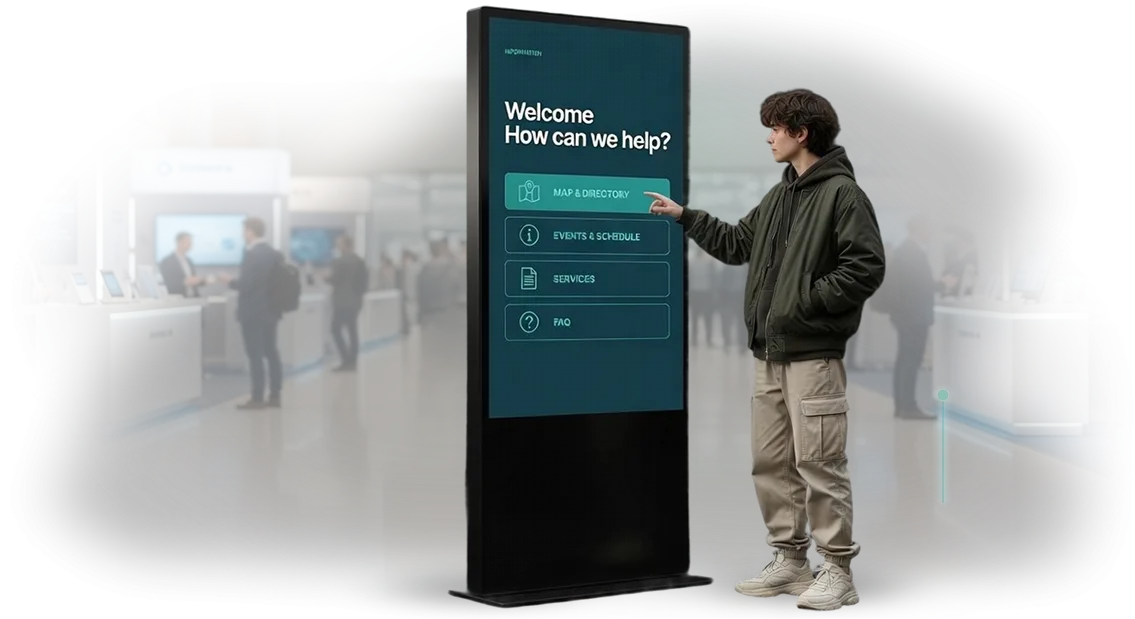
מאבדים מבקרים במרכז העסקים שלכם? השתמשו בקיוסק אינטראקטיבי
בכל יום, מרכז עסקים מאבד מבקרים שאינם יכולים למצוא במהירות את המשרד, חדר הישיבות או בית הקפה הנכון. אדם מבלה 10–15 דקות בחיפוש, נלחץ, ועוזב עם רושם שלילי—השוכרים מאבדים לקוח לפני שהם בכלל מגיעים לדלתם.
קיוסק אינטראקטיבי פותר את הבעיה הזו: במקום לשאול מאבטחים ולקרוא שלטי נייר, המבקר מקבל מסלול, מידע על שוכרים ולוח אירועים תוך 30 שניות.
שירות עצמי מוריד את העומס מהמנהלים והופך את ההתמצאות במרכז העסקים לברורה מהצעד הראשון.
עבור בעל הבניין, זהו שיפור ישיר בשירות: נאמנות גבוהה יותר של שוכרים, פחות תלונות ויותר ביקורים חוזרים. כאשר מבקרים יכולים למצוא את דרכם בקלות, הם מבלים זמן בפגישות, קניות ומשא ומתן במקום לשוטט בין הקומות.
הקיוסק פועל כנקודת כניסה לכל שירותי המרכז—מהזמנת חדרי ישיבות ועד לוחות אירועים. מבקרים מפסיקים ללכת לאיבוד ומתחילים להשתמש במתקני הבניין, כלומר כל מטר רבוע עובד ביעילות רבה יותר.
אנו מתכננים קיוסקים אינטראקטיביים שמשתלבים בפנים ובממשק של המרכז שלכם. תוכנה שפותחה באופן מקצועי, ומלוטשת על פני עשרות אתרים, מספקת פעולה יציבה ללא מעורבותכם—אתם מקבלים שיפור נראה לעין בשירות, ואנחנו מטפלים בצד הטכני.
מה משתנה לאחר התקנת קיוסק אינטראקטיבי
במרכז עסקים, מאות אנשים מחפשים מדי יום משרד, חברה או חדר ישיבות ספציפי. השאלות הנפוצות ביותר בדלפק הקבלה הן תמיד זהות: איך מגיעים לאנשהו, איפה מוצאים שוכר, אילו שירותים הבניין מציע. זה לוקח זמן גם מהמבקרים וגם מהצוות.
קיוסק אינטראקטיבי משנה את המצב: הוא לוקח על עצמו את הבקשות החוזרות הללו. מבקרים מוצאים באופן עצמאי מידע על מיקומי חברות, קומות, שעות פעילות ותשתית המרכז—ללא תורים או המתנה. זו תמיכת מידע ברמה חדשה.
התוצאה המעשית העיקרית היא תורים קצרים יותר. בעוד חלק מהאורחים עובדים עם הקיוסק, דלפק הניהול מתפנה לשאלות מורכבות באמת. אנשים מבלים פחות זמן בהמתנה ומגיעים למשימותיהם מהר יותר, בעוד המרכז נראה מאורגן ומקפיד על פרטים.
עבור בעל הבניין, משמעות הדבר היא נאמנות רבה יותר משוכרים ולקוחותיהם. כאשר אורח מגיע ליעדו במהירות ומקבל ניווט ברור, הוא מרגיש דאגה וביטחון.
השוכרים מקבלים יותר אינטראקציות חיוביות, והמרכז מחזק את תדמיתו כמקום עסקים מודרני. בנוסף, הקיוסק עובד ללא ימי חופש ולעולם לא מתעייף—היתרון ברור.
יתרונות הקיוסק נראים מיד: פחות כאוס, תשובות מדויקות ושירות צפוי. זו השקעה שעובדת למען המוניטין שלכם מדי יום ומשתלמת דרך האמון של מבקרים ושוכרים כאחד.
פורמטים של קיוסק אינטראקטיבי למרכז עסקים
מרכז עסקים מקבל מאות אנשים מדי יום: עובדים, אורחים, משתתפי פגישות. הם צריכים למצוא במהירות את החברה או חדר הישיבות הנכון, ואתם צריכים שתהליך זה יימנע מתורים ולא יעמיס על המנהלים.
קיוסקים אינטראקטיביים מכסים תרחישים אלה: הם עוזרים בהתמצאות, מציגים שוכרים ואוספים משוב ללא מעורבות צוות.
להלן שלושת הפורמטים שהכי מזמינים בעלי ומנהלי מרכזי עסקים. כל אחד פותר משימה עסקית משלו.
פורמטי קיוסק וערך ללקוח
| פורמט קיוסק | למי | מה הוא נותן ללקוח |
|---|---|---|
| קיוסק ניווט | מבקרים ועובדים | מפחית את זרם השאלות לדלפק הקבלה, עוזר למצוא משרדים, חדרי ישיבות ובתי קפה תוך דקות |
| קיוסק פרסום | שוכרים ושיווק | מקדם שירותי שוכרים על מסך משותף—ערוץ הכנסה חדש והרחבת טווח הגעה |
| קיוסק משוב | חברת ניהול | אוסף דירוגים ותלונות במקום: אתם רואים בעיות מיד ופותרים אותן לפני שהופעות שליליות מופיעות |
קל לשלב בין הפורמטים הללו. לדוגמה, ניתן לחבר קיוסק ניווט עם קיוסק פרסום: מבקר בונה מסלול ורואה הודעות חברות לאורך הדרך.
קיוסק משוב יכול להעביר נתונים אוטומטית למערכת החשבונאות שלכם—ללא גיליונות אלקטרוניים ידניים או סקרים.
אנחנו יכולים לעזור לכם לבחור את הפורמט האופטימלי, למקם קיוסקים במקומות עם תנועה גבוהה ולמלא אותם במידע עדכני. אתם מקבלים כלי שמגביר את נאמנות השוכרים, חוסך זמן למבקרים ומחזק את רווחיות מרכז העסקים מהיום הראשון.
איך מתנהל פרויקט קיוסק: מהבריף ועד ההשקה
אתם לא צריכים לטבוע בפרטים—אתם צריכים קיוסק עובד בזמן. לכן התהליך מעוצב כך שאתם שולטים בכל שלב מבלי להתעסק בבעיות טכניות. אנחנו מטפלים בכל דבר מהבריף הראשוני ועד ההשקה והתמיכה השוטפת.
- בריף. אתם מספרים לנו על משימות הקיוסק, הקהל שלכם והתוצאה הצפויה. אנו שואלים שאלות הבהרה, מתעדים את הדרישות ומציעים פתרון המותאם למרכז העסקים שלכם.
- אב-טיפוס. אנו מראים כיצד מבקר יתקשר עם הקיוסק: מבנה, תרחישים וטקסטים. אתם רואים את המוצר העתידי לפני תחילת הפיתוח ויכולים לבצע שינויים ללא עלויות נוספות.
- עיצוב ותוכן. אנו מתאימים את הממשק לסגנון מרכז העסקים ומכינים טקסטים, תמונות וחומרי וידאו כך שהקיוסק ייראה כחלק טבעי מהחלל.
- פיתוח ואינטגרציות. אנו בונים את המערכת ומחברים את השירותים הנדרשים—לדוגמה, לוח אירועים, מפת קומות או ספריית שוכרים. אתם מקבלים גרסת בדיקה ובודקים אותה מול תרחישים אמיתיים.
- השקה. אנו מתקינים את הקיוסק, מגדירים אותו באתר ומקיימים סשן הדרכה קצר לצוות שלכם. אתם מקבלים כלי עובד ללא השבתה או החמצת מועדים.
- תמיכה ופיתוח. לאחר ההשקה, אנו נשארים בקשר: אנו מעדכנים תוכן, מוסיפים פונקציות ומגיבים במהירות למשוב מבקרים.
בסופו של דבר, אתם מקבלים כלי אמין שמאיץ את ניווט האורחים, מקל על המנהלים ומשפר את תדמית מרכז העסקים. כל שלב שקוף: אתם תמיד יודעים מה קורה בכל שלב ומתי התוצאה תהיה מוכנה.
מה כלול במסירה: חבילה ללקוח
עבור מרכז עסקים, קיוסק מידע אינו רק דוכן עם מסך—זה כלי עבודה שחייב לפעול מהיום הראשון מבלי להסיח את דעתו של המנהל.
לכן חבילת המסירה שלנו כוללת כל מה שדרוש להשקה ולפעילות יומיומית: מתוכנה מוכנה ועד הדרכת צוות ותמיכה טכנית.
הנה מה שאתם מקבלים:
- תוכנה המוגדרת לצרכי מרכז העסקים: ניווט שוכרים, אירועים, תשתית ובלוקים פרסומיים. עדכוני תוכן מטופלים מפאנל אחד ללא מעורבות מתכנת.
- ממשק ניהול: פאנל פשוט הנגיש דרך דפדפן, שבו פקיד קבלה או איש שיווק יכולים לשנות באנרים, להוסיף חדשות ולעדכן את רשימת החברות תוך דקות.
- עיצובים ותבניות מסך המותאמים לסגנון המותג שלכם. אורחים רואים מראה אחיד, לא מעטפת תבניתית.
- הדרכת צוות: סשן קצר למנהלים ומנהלי תוכן, בתוספת הוראות כתובות ווידאו. הצוות שלכם מתחיל לעבוד בביטחון מיד לאחר ההשקה.
- תמיכה טכנית: ניטור קיוסק, עדכוני תוכנה מרחוק ותגובה מהירה לפניות. אם משהו משתבש, אנו פותרים זאת ללא ביקור באתר או השבתה.
- תיעוד והנחיות: הוראות הפעלה, נהלים למקרי חירום ולוח זמנים לעדכון תוכן. הכל שקוף וברור לכל משמרת.
חבילה זו מכסה את הצורך העיקרי של לקוח מרכז עסקים—מינימום טרחה לאחר ההשקה. אתם מקבלים קיוסק עובד, לא "קופסה" שאתם צריכים לבנות בעצמכם.
אנחנו מטפלים הן בהתקנה והן בתחזוקה, כך שהצוות שלכם מתמקד בתפקידיו הישירים בעוד הניווט והפרסום פועלים בצורה חלקה.
מקרה בוחן: איך הקיוסק השתלם במרכז עסקים
מבקרים במרכז עסקים מבזבזים לעתים קרובות זמן במציאת המשרד או הפגישה הנכונים, ודלפק הקבלה מוצף בשאלות חוזרות. כאשר חברה לא יכולה להתמצא במהירות, זה יוצר חוויות שליליות ומוריד את הסיכויים לחידוש חוזי שכירות.
קיוסק אינטראקטיבי פותר בעיה זו—הוא עוזר למצוא ארגון, לבנות מסלול ולהגיש פנייה מיידית.
מנהל מרכז העסקים Business District פנה אלינו עם המשימה להקל על דלפק הניהול ולהגדיל פניות השכרה. פיתחנו קיוסק עם מפת קומות, רשימת שוכרים וטופס משוב. ההתקנה ארכה כמה ימים, והדרכת הצוות ארכה שעה אחת.
תוצאות לאחר ההשקה
בתוך שלושת החודשים הראשונים, הקיוסק החזיר את עלותו במלואה. מספר פניות המבקרים גדל פי 1.6—בעיקר בזכות בקשות השכרה שנהגו ללכת לאיבוד בדלפק הקבלה.
זמן הניווט הממוצע ירד משבע דקות לשתיים, והמנהל מפנה כעת 40% מהשאלות הסטנדרטיות לקיוסק, ומפנה זמן לפגישות אישיות עם שוכרים.
מדד ההחזר הגיע אפילו טוב יותר מהתחזית: הפרויקט החזיר את ההשקעה תוך ארבעה חודשים. המנהל קיבל פאנל סטטיסטיקות המציג את הבקשות והקומות הפופולריות ביותר—זה עוזר בהחלטות לגבי מיקום חברות חדשות ופיתוח תשתית.
גורם ההצלחה המרכזי היה שהקיוסק הפך לא רק לנקודת מידע אלא לנקודת מגע עם שוכרים פוטנציאליים. טופס הפנייה שולח בקשות ישירות למערכת החשבונאות, כך שאף בקשה לא הולכת לאיבוד.
כתוצאה מכך, בעל מרכז העסקים מקבל לא רק שירות נוח אלא גם צמיחה מדידה בהכנסות מהשכרה.
איך לבחור את פורמט הקיוסק האינטראקטיבי הנכון?
בחירת פורמט קיוסק אינטראקטיבי מתחילה לא במסך אלא בשאלות: אילו משימות הקיוסק צריך לפתור עבור מרכז העסקים, והיכן הוא ימוקם?
דבר אחד הוא לעזור למבקר למצוא את המשרד הנכון; דבר אחר הוא להציג שוכרים, להראות לוח אירועים או להזמין פגישות. התשובות קובעות את הממדים, שיטת ההתקנה והממשק.
קריטריון הבחירה הראשון הוא מטרה פונקציונלית. לניווט, מסך מגע בגודל בינוני עם מפה פשוטה מספיק. להצגת שירותי שוכרים ומבצעים מיוחדים, פאנל עם מסך גדול וגרפיקה באיכות גבוהה עובד טוב יותר.
ואם הקיוסק צריך לתפקד כדוכן הזמנות, תצטרכו מודול עם מדפסת, סורן ומארז מאובטח.
הקריטריון השני הוא תנועה ומיקום. בלובי מרווח עם תנועה רגלית כבדה, קיוסק עומד שנראה בבירור מרחוק עובד הכי טוב.
במבואת מעליות צרה או במסדרון, אפשרות צמודת קיר מעשית יותר—היא לא חוסמת מעבר ונשארת בטווח ראייה. העריכו כמה אנשים עוברים בשעה ואיזה מידע הם מחפשים לרוב.
הקריטריון השלישי הוא ניהול תוכן ואינטגרציה. חשוב שתוכלו לשנות מידע על שוכרים או אירועים ללא מעורבות מתכנתים.
לכן, בבחירת פורמט, חפשו פאנל ניהול פשוט ויכולת חיבור למערכות הזמנת חדרי ישיבות או מעקב מבקרים.
המסקנה פשוטה: אין קיוסק אוניברסלי, אבל בחירת הפורמט הופכת ברורה כשמתחילים ממשימות מרכז העסקים, הפריסה ותרחישי המבקרים. אנו עוזרים לנתח את התשומות הללו, לבחור את הפתרון האופטימלי ולהגדיר אותו לפי המפרט שלכם.
כתוצאה מכך, הקיוסק לא הופך ל"עוד מסך" אלא משפר באמת את הנוחות לשוכרים ולמבקרים.
ספקות נפוצים בהזמנת קיוסק אינטראקטיבי
לקוחות מרכזי עסקים דוחים לעתים קרובות התקנת קיוסק אינטראקטיבי בגלל ספקות: מה אם החומרה תתקלקל, מי יתחזק אותה, וכמה זה עולה?
במציאות, קיוסק מודרני הוא כלי למשיכת שוכרים ומבקרים בדיוק כמו דלפק קבלה או שילוט—רק שהוא עובד עבורכם מסביב לשעון. במשך שנים של יישומים, אספנו שאלות טיפוסיות ואנו מוכנים להתייחס לחששות העיקריים.
מי יתחזק את הקיוסק?
אנו מגדירים את הקיוסק למשימותיכם ומפעילים ניטור מרחוק—אתם רואים את מצב הפעולה בחלון דפדפן פשוט. החלפת חומרי מידע וחומרים מתכלים אורכת דקות, ובמידת הצורך נשלח הוראות או נעזור בטלפון.
תפקיד הצוות מוגבל להעלאת סרטונים ופוסטרים; אין צורך במומחה IT ייעודי.
אילו ערבויות יש, ומה קורה אם זה מתקלקל?
אנו מספקים אחריות רשמית הן על החומרה והן על התוכנה. אם משהו נכשל, אנו מספקים תחליף תוך שני ימי עסקים ולוקחים את המכשיר לתיקון. זמן התגובה מוגדר בחוזה, כך שלעולם לא תישארו ללא קיוסק עובד ביום חשוב.
האם הקיוסק בנוי לשימוש אינטנסיבי?
מרכז עסקים פועל בקצב מהיר: הקיוסק ליד המעליות פועל מבוקר עד ערב ללא הפסקה. אנו משתמשים ברכיבים בדרגה תעשייתית ובמארזים נגד ונדליזם המיועדים למגעים מתמידים ולפגיעות מקריות.
תוחלת החיים הממוצעת של מכשיר כזה היא מעל 5 שנים, ואם מתעוררות בעיות, רובן נפתרות מרחוק.
כמה זמן לוקח לקיוסק להשתלם?
הקיוסק משתלם לא רק באמצעות פרסום שוכרים אלא גם בהפחתת העומס על דלפק המידע והגברת נאמנות המבקרים.
עם שוכרים שרוצים להציג את שירותיהם על המסך, תקופת ההחזר יורדת לשנה, ולאחר מכן הכלי מייצר הכנסה טהורה.
אם עדיין יש לכם ספקות, צרו קשר—נסביר כיצד הקיוסק משתלב במרכז העסקים שלכם ונכין חישוב לפי התנועה והמשימות שלכם.מוכנים לשפר את השירות בבניין שלכם? השאירו פנייה
השאירו פנייה לפיתוח, ובשיחה הראשונה נדון כיצד קיוסק אינטראקטיבי ישתלב במרכז העסקים שלכם ואילו משימות הוא יכסה—מניווט מבקרים ועד מתן מידע על שוכרים ואירועים. אתם לא צריכים להבין בטכנולוגיה—אנו נציע פתרון למשימות ולתקציב שלכם.
לאחר פנייתכם, תקבלו:
- שיחת ייעוץ — נסקור אילו תרחישי שימוש בקיוסק יניבו את הערך הרב ביותר ספציפית בבניין שלכם.
- הערכת עלות ולוח זמנים ראשונית — הצעת מחיר מדויקת ללא עמלות נסתרות, ובהירות לגבי שלבי הפרויקט מהיום הראשון.
- בחירת פורמט לפנים שלכם — קיוסק עומד, צמוד קיר או שולחני שמתאים לארכיטקטורת הלובי או אזור הקבלה שלכם.
- ביקורת על השירות הנוכחי שלכם — נזהה היכן מבקרים הולכים לאיבוד לרוב וכיצד הקיוסק יפחית את העומס על מנהלים ומאבטחים.
- דוגמאות לפתרונות למרכזי עסקים — נראה כיצד הקיוסקים שלנו עובדים בבניינים דומים ומה הם השיגו עבור בעלים.
- מפרט טכני ותוכנית השקה — תדעו בדיוק מתי הקיוסק יעלה לאוויר ומי אחראי על כל שלב.
צרו קשר בכל דרך שנוחה לכם—בטלפון, במייל או באמצעות הטופס באתר שלנו. נגיב תוך יום עסקים אחד ונכין הצעה מלאה תוך 2–3 ימים לאחר הבריף. נתחיל בשיחה פשוטה על המשימה שלכם—אנחנו נטפל בשאר.