

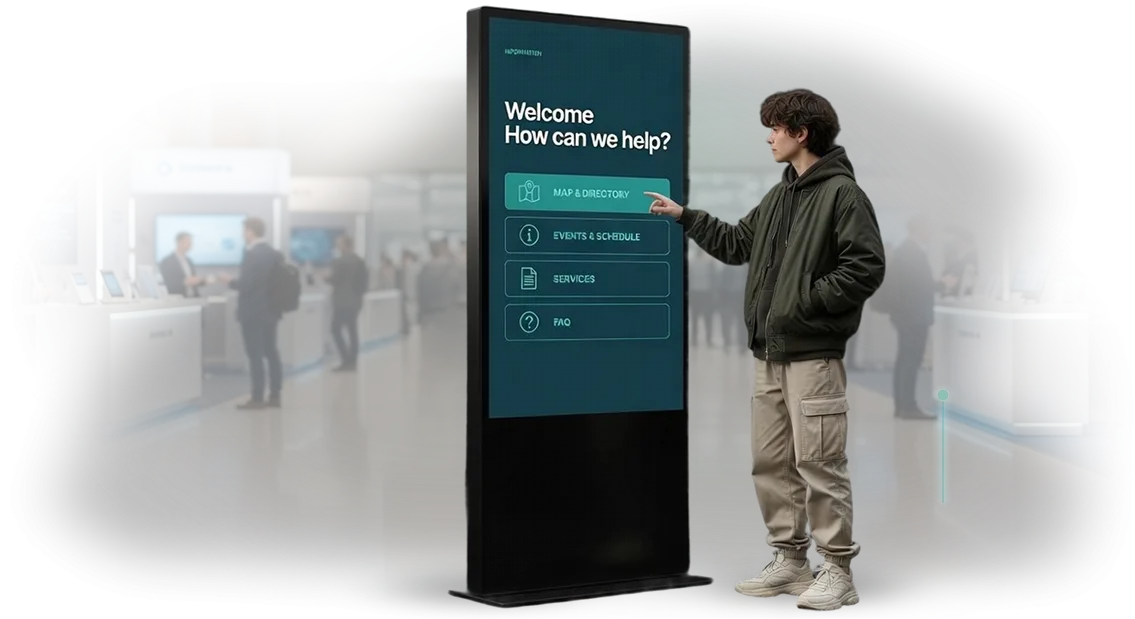
מרכז הבילוי לילדים מאבד מבקרים? פתרו את זה ב-3 צעדים
מבקרים מגיעים בשביל חוויות, וילדים הם הקהל הכי כנה בהקשר הזה. אם ילד משתעמם תוך חצי שעה, המשפחה מתאספת במהירות ועוזבת — לפעמים לתמיד, ולפעמים למתחרה בקניון השכן.
הורים מצביעים עם הארנק למקום שבו הילד שלהם מוכן לבלות יותר זמן ורוצה לחזור. לכן ירידה בתנועת המבקרים כמעט תמיד מתחילה בשאלה: "מה יש לכם חדש ומעניין?"
מרכז בילוי לילדים לא צריך עוד מתקנים; הוא צריך סיבות להישאר: בזמן שההורים שותים קפה, הילד צריך להיות עסוק במשהו מרתק יותר מטלפון.
לוח מידע רגיל או שלט סטטי לא יפתרו את זה — אנשים מסתכלים עליהם כמה שניות ועוברים הלאה.
אבל קיוסק אינטראקטיבי למרכז ילדים הופך את ההמתנה לבידור: הילד בוחר משחק, משתתף בחידון, או אוסף פרס וירטואלי — וכבר לא רוצה לעזוב.
בידור אינטראקטיבי כזה לילדים עובד על החזקת תשומת לב ומניב תוצאות מדידות: זמן השהייה גדל, החשבון הממוצע עולה, ואחרי הביקור הילדים עצמם מבקשים מההורים לחזור.
לבעל המרכז, זה גם כלי לאיסוף אנשי קשר ומשוב — הורים משאירים מספר טלפון כדי לקבל תוצאות משחק או תמונה של הילד שלהם, ואתם מקבלים מאגר להזמנות חוזרות.
כבר עזרנו לעשרות מרכזי בילוי וקניונים להחזיר אורחים: התקנו קיוסקים אינטראקטיביים באזורי המתנה וליד מתחמי האוכל, התאמנו תרחישי משחק לקהל, וחיברנו את הבידור לתוכנית הנאמנות.
כתוצאה מכך, הפנאי של ילדים בקניון הפסיק להיות "משני" — הוא הפך לסיבה להגיע דווקא אליכם.
כדי לתקן את המצב, לא צריך לבנות מחדש את כל המרכז. מספיקים שלושה צעדים פשוטים: להבין איפה ואיך הולכת לאיבוד תשומת הלב של האורחים, להתאים את הקיוסק האינטראקטיבי לפורמט שלכם, ולהשיק אותו עם מעקב תוצאות. עוד על כל צעד בהמשך.
אילו יתרונות מביא קיוסק אינטראקטיבי לאזור הילדים
קיוסק אינטראקטיבי הוא בדיוק מה שמושך ילדים באופן מיידי בכל חלל בילוי. הממשק הבהיר, המשחקים והאנימציה מעוררים סקרנות טבעית: הילד נמשך למסך בזמן שההורים מחליטים מה לעשות עם המשפחה.
כתוצאה מכך, הקיוסק הופך בשקט למרכז הכובד של אזור הילדים ומחזיק את תשומת הלב של האורחים יותר מהרגיל.
עבור העסק, זה עובד בעיקר להגדלת החשבון הממוצע. בזמן שהילדים עסוקים בבידור אינטראקטיבי, ההורים מזמינים בשלווה משקאות, קינוחים או כרטיסים למתקנים נוספים.
הקיוסק מציע לאורחים משהו שעוד לא ניסו — וזה הופך למכירות נוספות ללא מאמץ פעיל מצד הצוות.
אזורי פנאי אינטראקטיביים נתפסים בעיני ההורים כדאגה לילדים שלהם. הקיוסק מעסיק את הילד, מספק בידור ורגשות חיוביים — וזה בונה נאמנות מבקרים ישירות.
משפחות חוזרות למקומות שבהם הילד שלהם היה נרגש וההורה קיבל הפוגה. ביקורים חוזרים הופכים להרגל, ואורחים משתפים רשמים חיוביים עם חברים — זו פרסום חינם למרכז.
כל קיוסק כזה ניתן להתאמה אישית למשימות של מקום ספציפי: מידע עזר, מפת אזורים, הפעלת אנימציה, תרחישי חג, משימות.
כל זה הופך את החלל לתוסס ועשיר יותר, ואזור המנוחה עצמו מפסיק להיות רק חלל המתנה — הוא הופך לחוויית בידור מלאה.
עבור בעל העסק, התוצאה מורכבת מדברים מדידים: חשבון ממוצע גבוה יותר, זמן שהייה ארוך יותר של אורחים, נאמנות לקוחות ומכירות נוספות.
הקיוסק מחזיר את ההשקעה בכך שהוא הופך את הביקור למעניין יותר עבור ילדים ונוח יותר עבור הורים — מבלי להגדיל את מספר העובדים או את תקציב הפרסום.
פורמטים של קיוסק אינטראקטיבי למשימות שונות
קיוסק אינטראקטיבי הוא לא "מסך בפינה", אלא כלי שפותר משימה עסקית ספציפית: להדריך אורח, לבדר ילד או לערב הורים.
כדי שהמרכז יעבוד ביעילות, חשוב לבחור את הפורמט הנכון למקרה השימוש — ואז הציוד מחזיר את ההשקעה דרך נאמנות, זמן שהייה וביקורים חוזרים.
אנחנו בונים קיוסקים לנקודות מגע שונות של מבקרים, לא רק "מתקינים טרמינלים". כל פורמט מעוצב תוך מחשבה על זרימת התנועה, נוחות לילדים בגבהים שונים ושליטה של המנהל.
ניווט, קונסולה, אנימציה — מה לבחור
| פורמט | למי זה מיועד ואיפה ממקמים | מה זה נותן ללקוח |
|---|---|---|
| קיוסק ניווט עם מסך מגע | בכניסה, אזור קבלה | מפחית עומס על הצוות, עוזר לאורחים למצוא במהירות אזור או שירותים, בונה מסלול דרך המרכז |
| מפה אינטראקטיבית של הקניון | לובי, אזור המתנה | מציגה תפוסת אזורים, זמני המתנה, מפנה לנקודות מכירה — מגדילה את החשבון הממוצע |
| קונסולת משחק | אזור משחקים, טרקלין הורים | מעסיקה ילד למשך 10–20 דקות בזמן שההורים שותים קפה או מחכים לסיום המסיבה |
| קיוסק אנימציה | אולמות אירועים, אזור מסיבות | תרחישים למשימות ומופעים: ילדים מתקשרים עם המסך, מקבלים משימות, אנימטור מנהל את התהליך |
איך הפורמט משפיע על התוצאות שלכם
קיוסק ניווט חוסך זמן של מנהל — אורחים פונים פחות עם שאלות סטנדרטיות כמו "איפה הטרמפולינות?" ו"איך מגיעים לבית הקפה?" מפה אינטראקטיבית עובדת בנוסף ככלי למכירה נוספת: היא מציגה בית קפה, מכונות ארקייד או אזור מסיבות שהאורח לא תכנן לבקר בהם במקור.
קונסולת משחק היא לא בידור לשם בידור. היא מגדילה את הזמן שמשפחה מבלה במרכז, מה שמשפיע ישירות על מספר ההזמנות בבית הקפה ועל רכישת סשנים נוספים של משחק.
לאנימציה, הקיוסק הופך ל"אנימטור שני": הוא עוזר לערב ילדים בתרחיש, לוכד את הרגשות והתמונות שהורים משתפים ברשתות החברתיות.
--- חשוב: הטבלה בתוך סעיף זה תואמת לתפקיד formats_table. הסגנון עקבי: אין מפרטים טכניים, רק ערך ללקוח (עומס על הצוות, זמן שהייה, חשבון ממוצע, מעורבות).
איך אנחנו בונים את הקיוסק: שלבי עבודה עבור הלקוח
שלחתם הודעה ריקה. נראה שהטקסט לא נטען. כתבו את הבקשה שלכם — אני יכול לעזור עם הטקסט, מבנה הסעיף או ניתוח תחרותי. במידת הצורך, אייעץ כיצד לנסח את המשימה.
מה כלול במסירה ובהשקה של הקיוסק
כשאתם מזמינים קיוסק אינטראקטיבי למרכז בילוי לילדים, חשוב להבין ממה מורכב המחיר ומה בדיוק תקבלו בסופו של דבר.
עשינו את התהליך לשקוף: החבילה כוללת כל מה שצריך להשקה ולפעילות שוטפת, מציוד ועד תמיכה. להלן רשימת בדיקה שתעזור לכם לבדוק את המסירה ולוודא שלא פספסתם דבר.
- ערכת מסירה — עמדת מגע עם מארז עמיד בפני פגיעות, כל מה שצריך לחיבור והתקנה. אנחנו מספקים, מתקינים ומחברים את הציוד באתר — אתם לא צריכים לרכוש רכיבים או להעסיק קבלנים נוספים.
- תוכן תוכנתי — הממשק ומודולי הבידור מפותחים תוך התחשבות בגיל האורחים ובמאפייני המרכז שלכם. ילד מגיע לתפריט אינטואיטיבי ללא הוראות ומתחיל להשתמש בקיוסק מיד, מה שאומר פחות תורים ויותר מבקרים מרוצים.
- מודול ניהול — פאנל פשוט לצוות: אפשר להעלות פוסטר, לעדכן לוח זמנים, להוסיף מבצע או לשנות חידון תוך דקות ספורות. אין צורך לקרוא למתכנת או להתעסק בהגדרות מורכבות — כל מערכת הניהול מעוצבת לעובד ללא רקע טכני.
- הוראות לצוות — מדריך חזותי והדרכה קצרה לצוות שלכם. העובדים ילמדו איך להדליק ולכבות את הקיוסק, לשנות תוכן, לטפל בשאלות בסיסיות של מבקרים ולדעת מתי לפנות לתמיכה.
- התקנה והשקה — מומחים מגיעים לאתר, מגדירים את הקיוסק, בודקים את לוגיקת הפעולה ומבצעים השקת ניסיון עם אורחים אמיתיים. עד שעת הפתיחה, המרכז שלכם מקבל נקודת בידור מוכנה לחלוטין שעובדת ללא תקלות.
- תמיכה טכנית ועדכונים — אחרי ההשקה אתם נשארים מכוסים: סיוע מרחוק, שיפורים שוטפים בממשק וגיבוי הגדרות. פניות מטופלות במהירות — בשעות פעילות, מענה תוך לא יותר משעה, ורוב הבעיות נפתרות מרחוק.
פורמט מסירה זה מוריד מכם את התפקיד של מנהל טכני: אתם מתמקדים באורחים ובפיתוח המרכז, בעוד כל "החלקים הפנימיים" של הקיוסק מתפקדים כמנגנון אחד.
בדקו כל פריט ברשימה — מאחורי כל אחד עומדת משימה עסקית ספציפית, לא רק סט של חומרה וקוד.
מקרה בוחן: איך קיוסק הגדיל את זמן השהייה של אורחים
שמירה על אורחים היא המשימה המרכזית של מרכז בילוי לילדים: ככל שמשפחה נשארת יותר זמן, כך קורות יותר רכישות בקופה ובבית הקפה. אבל ילדים מחליפים תשומת לב במהירות, והורים מבזבזים זמן בתורים — ואז הולכים הביתה.
פארק משפחתי בשם "ושרי דבוריק" פנה אלינו עם אתגר: אורחים בילו כשעתיים ועזבו, גם אם קנו כרטיס לכל היום. היינו צריכים להחזיק את תשומת הלב של הילדים ולהפחית את לחץ ההמתנה של ההורים.
הצענו קיוסקים אינטראקטיביים באזור ההמתנה וליד הכניסה. אלה לא מדריכי מידע אלא חלק מהבידור: ילדים משלימים משימות קטנות, והורים רואים את המפה והמבצעים.
מדדנו את תוצאת היישום אחרי חודש: זמן השהייה גדל משעתיים ל-3 שעות (כמעט +45%). ביקורים חוזרים בחודש גדלו בשליש, והחשבון הממוצע עלה — אורחים התחילו להזמין חטיפים ומשקאות לעתים קרובות יותר.
משוב לקוח — מנהל הפארק: "בעבר, ילדים הפכו לחסרי מנוחה אחרי שעה או שעה וחצי, ואיבדנו הכנסות. עכשיו אורחים מבקשים לשחק עוד, והורים יושבים בשקט בבית הקפה. הקיוסק החזיר את ההשקעה בחודש הראשון."
המקרה של פארק הילדים הראה: הקיוסק הנכון עובד כמו מגנט — הוא מחזיק תשומת לב בהפסקות שבהן זמן הולך לאיבוד. אם אתם רוצים לא רק טרמינל אלא צמיחה במדדים מרכזיים, ספרו לנו על המשימה שלכם — נציע פתרון מותאם לפורמט שלכם.
איך לבחור פורמט קיוסק אינטראקטיבי למשימה שלכם?
בחירת פורמט קיוסק אינטראקטיבי מתחילה לא בדגם אלא במטרות של המרכז שלכם. אותו קיוסק יכול להיות מדריך ניווט, טרמינל בידור עם משחקים או תפריט אלקטרוני של בית קפה.
חשבו מה חשוב יותר: לעזור להורים למצוא במהירות את האזור הנכון, להעסיק ילד בתור או לעדכן על ימי הולדת וחברויות — לכל מטרה יש פורמט משלה.
אם הבעיה המרכזית היא זרימת מבקרים ובלבול במרחב, בחרו קיוסק עומד עם מפה ברורה.
כדי להחזיק תשומת לב וליצור אווירה חגיגית, פאנלים גדולים עם מסך מגע, אנימציה ומשחקים עובדים טוב יותר: ילדים זוכרים רגשות בהירים, והורים נהנים לצלם — זו חשיפה טבעית ברשתות החברתיות.
באזור בית הקפה או ליד הכניסה, עמוד קומפקטי עם לוח זמנים ומבצעים עובד היטב — הוא לא חוסם את תנועת הרגליים ופועל כמנהל מכירות נוסף.
חשוב להתחשב לא רק בשטח אלא גם בגיל האורחים. לקטנטנים צריך ממשק עם כפתורים גדולים וללא תרחישים מורכבים; לתלמידי בית ספר — משימות וחידונים; להורים — גישה מהירה למחירים, תמונות ואנשי קשר.
אם הקיוסק יפעל באולם רועש, שימו לב למעמד יציב והגנה מפני נגיעות מקריות — זה יחסוך לכם מאמץ בתחזוקה.
אנחנו עוזרים ללקוחות להימנע מבלבול בין האפשרויות. במהלך הייעוץ, אנחנו שואלים כמה שאלות על מספר מבקרים, פריסה ומטרות, ואז מציעים פורמט שכבר הראה תוצאות במרכזי ילדים דומים.
במידת הצורך, אנחנו מגיעים לאתר, מעריכים תאורה, שקעים ותנועת רגליים — ורק אז קובעים את הפתרון. ככה אתם מקבלים קיוסק שעובד למען התוצאות שלכם, לא רק עומד מול קיר.
השאירו פנייה — נדון במטרות המרכז שלכם ונבחר פורמט שיחזיר את ההשקעה בתוך החודשים הראשונים. זה ללא התחייבות.
שאלות נפוצות על קיוסקים לבידור משפחתי
מרכזי בידור משפחתיים פועלים עם זרימת מבקרים גבוהה, כך שכל לקוח מתמודד עם שלוש שאלות: האם הקיוסק יאכזב בשעות השיא, כמה מהר אפשר לעדכן מידע על מחירים וסשנים, ומי יתחזק את הציוד אחרי ההשקה. אנחנו עונים ישירות — ללא פרטים טכניים, רק מה שמשפיע על העסק שלכם.
להלן אנו מכסים את החששות הנפוצים ביותר לפני הזמנה. אם השאלה שלכם לא ברשימה — פשוט צרו קשר, נספר לכם בפירוט.
מה קורה אם הקיוסק קופא ביום העמוס ביותר?
אנחנו בונים קיוסקים על ציוד מקצועי ותמיד מבצעים בדיקות עומס לפני ההשקה — אנחנו מדמים תנועת שיא. כך המערכת מתמודדת עם שעות עמוסות כשעשרות משפחות ניגשות למסך בזו אחר זו.
אם בכל זאת מתרחשת תקלה בלתי צפויה, הקיוסק מאתחל את עצמו אוטומטית ללא כל פעולה מצד הצוות שלכם. במהלך האתחול, מסופק מצב תצוגה חלופי — אורחים לא נשארים ללא מידע, ואתם לא מאבדים מבקרים.
באיזו תדירות אפשר לעדכן תוכן: מחירים, פוסטרים, לוח זמנים?
התוכן מתעדכן דרך פאנל ניהול פשוט — ללא מתכנת וללא אישורים ארוכים. בצעו שינוי, לחצו על "פרסם" — תוך שניות המידע על המסכים.
אפשר לשנות מחירים, מבצעים, פוסטרים, שעות פעילות, להוסיף עיצובי חג ואפילו לתזמן פרסומים מראש. לרשת קיוסקים, ניהול מרכזי זמין: אתם משנים מידע פעם אחת, והוא מופיע בכל המיקומים בבת אחת.
מי יטפל בקיוסק אחרי ההשקה?
אנחנו לוקחים על עצמנו את התחזוקה הטכנית. אחרי ההשקה, אנחנו מחברים ניטור מרחוק של הציוד ואבחון אוטומטי — רוב הבעיות נפתרות מרחוק, מבלי לחכות שתשימו לב לבעיה.
אם נדרשת תיקון או תחזוקה מונעת, המומחה שלנו מגיע אליכם. הכל מסודר כך שהקיוסק לא יושב בטל וממשיך להועיל לכם כל יום. אפשר גם לחתום על חוזה תחזוקה ארוך טווח כדי שלעולם לא תצטרכו לחשוב על הצד הטכני.
מוכנים להשיק קיוסק? בואו נדון במשימה שלכם
האם אתם כבר יכולים לדמיין איך קיוסק אינטראקטיבי מבדר אורחים קטנים בזמן שהורים נרגעים והמנהל לא עונה על אותן שאלות שוב ושוב?
ספרו לנו על המרכז שלכם — נייעץ לכם איך הקיוסק מתאים למקום שלכם ואילו תרחישים יספקו את הערך הרב ביותר.
הייעוץ ללא התחייבות. נחשב את העלות לפרויקט שלכם, נציע פתרון מותאם אישית ונטפל בהשקה במפתח אחד.
מה תקבלו אחרי הפנייה:
- ייעוץ: נבין אילו פונקציות קיוסק המרכז שלכם באמת צריך.
- חישוב עלות מדויק ללא עמלות נסתרות או אפשרויות כפויות.
- פרויקט אישי: משחקים, חידונים ועיצוב התואמים לנושא המרכז שלכם.
- עזרה במיקום ובשילוב עם זרימת העבודה של המנהל והקופה.
- השקה במפתח אחד: הגדרה, בדיקות והדרכת צוות שנעשו עבורכם.
- תוכנית עבודה ברורה עם תאריך השקה — עוד לפני תחילת הפיתוח.
- תמיכה טכנית ועדכוני תוכן אחרי הפתיחה.
מלאו טופס קצר או התקשרו אלינו — נדון במשימה שלכם, נענה על שאלותיכם ונכין פתרון שיחזיר את ההשקעה בחודש הראשון לפעילות. אתם רק צריכים לעשות את הצעד הראשון.