

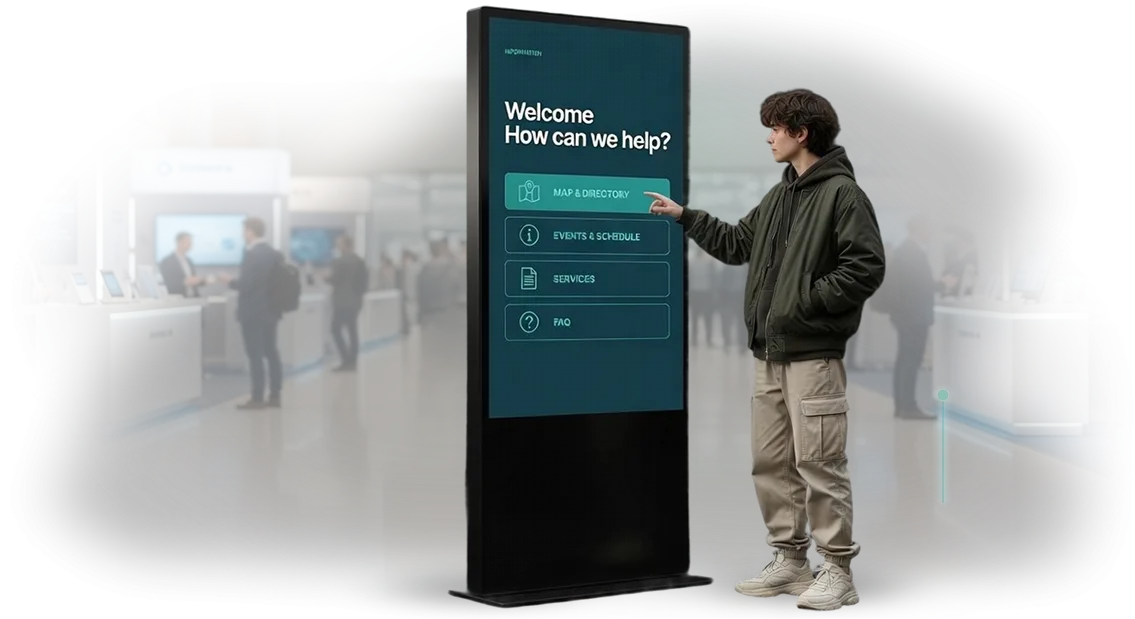
מוסד ממשלתי ללא עמדת מידע פירושו תורים
כל יום עבודה במוסד ממשלתי מתחיל באותה דרך: תור בכניסה, מבקרים עייפים, עובדים עמוסים. אנשים מבזבזים זמן בהמתנה, עובדים מבזבזים זמן בחזרה על אותן הוראות, והמנהל מקבל זרם של תלונות.
עמדת מידע עם תור אלקטרוני מסירה את העומס הזה: מבקרים נרשמים בעצמם, מקבלים את המידע שהם צריכים, ומופנים למשרד הנכון.
הטמעת עמדת מידע אינה רק הצבת ציוד בלובי; היא דרך להביא סדר לזרימת המבקרים. בעוד חלק מהמבקרים משתמשים בשירות עצמי, העובדים מתמקדים במשימות הליבה שלהם במקום לענות על אותן שאלות שגרתיות.
כתוצאה מכך, התורים מתקצרים, עומס העבודה על העובדים פוחת, והמתח באולם יורד — שביעות הרצון של האזרחים עולה, וזה משפיע ישירות על האופן שבו מוערך ביצועי המוסד.
עבור מנהל, זו גם החלטה ניהולית. תור אלקטרוני מספק סטטיסטיקות שקופות: כמה אנשים הגיעו, מתי מתרחש עומס שיא, וכמה מהר הם מקבלים שירות.
בהתבסס על נתונים אלה, קל יותר להקצות עובדים ולפתוח דלפקים נוספים — ללא ניחושים או הסתמכות על אינטואיציה.
כבר יישמנו פתרונות כאלה עבור לקוחות ממשלתיים ועירוניים. אנו מגדירים את עמדת המידע לשירותים ספציפיים, מחברים את התור האלקטרוני, משתלבים עם מערכות קיימות, וגם לוקחים על עצמנו את ההשקה והתמיכה.
כתוצאה מכך, המוסד מקבל שירות מודרני, והמבקרים מקבלים ביקור צפוי במקום שעות של עמידה בתור.
מה עמדת מידע תיתן למוסד שלך
עמדת מידע הופכת לעוזרת הראשונה הן עבור מבקרים והן עבור עובדים. היא מטפלת במשימות שגרתיות: עונה על שאלות טיפוסיות, מראה את הדרך למשרד הנכון, ומפרטת מסמכים נדרשים.
עבור המוסד, זו לא רק מסך בלובי אלא כלי שמשפר את איכות השירות ומפחית את עומס העבודה על העובדים. הניסיון שלנו בצוות שלנו — יותר מ-10 שנים ועשרות פרויקטים כאלה — מאשר שעמדת מידע משתלמת באמצעות נוחות ומוניטין.
נוחות למבקרים
מבקרים מוצאים באופן עצמאי את המידע שהם צריכים: שעות פעילות, רשימות מסמכים ומיקומי משרדים. הם כבר לא צריכים לתפוס את עינו של עובד או לעמוד בתור רק כדי לקבל הפניה פשוטה.
עמדת המידע עובדת ללא הפסקות, מדברת בשפה ברורה, ומתחשבת בצרכים של קבוצות שונות של אזרחים — כולל גופנים גדולים והנחיה קולית. זה מפחית את הלחץ של אנשים עוד לפני שהם מוזמנים פנימה.
זמני המתנה קצרים יותר והפחתת עומס העבודה על העובדים
כאשר עמדת המידע מטפלת בשאלות שגרתיות, העובדים מתפנים למשימות מורכבות וייעוצים אישיים. התורים בשעות השיא נעלמים, השירות הופך למהיר יותר, והמבקרים ממתינים פחות.
מנהלים רואים את תפוקת המוסד משתפרת ללא הרחבת הצוות או שינוי שעות העבודה.
שירותים נגישים לכולם
עמדת המידע הופכת את השירותים לנגישים גם למי שאינו משתמש בסמארטפון או שאין לו גישה לאינטרנט. מבקרים מבינים מיד לאן ללכת, מה למלא, ואילו מסמכים להכין.
כתוצאה מכך, יש פחות שגיאות בפניות ופחות ביקורים חוזרים — זה משפיע ישירות על איכות העבודה של המוסד ועל המוניטין שלו.
הטמעת עמדת מידע היא השקעה בנוחות המבקרים ובשקט הנפשי של העובדים. כל יתרון משרת את המטרה המרכזית: להפוך את המוסד לפתוח, ברור ומודרני.
פורמטים של עמדות מידע למשימות שונות
עבור מוסד ממשלתי, עמדת מידע היא לא רק דוכן עם מסך אלא דרך להפחית את עומס העבודה על העובדים ולזרז את מתן השירות. מבקרים מוצאים את המשרד, מידע עזר, תור או טופס בעצמם — ללא שאלות ארוכות או המתנה.
הפורמט הנכון תלוי בשטח, במספר המבקרים ובמשימה המרכזית: ניווט, מידע או עיבוד בשירות עצמי.
הטבלה שלהלן מציגה פורמטים נפוצים, למי הם מתאימים, ואילו תוצאות הם משיגים עבור המוסד.
הפורמט הנכון לכל משימה
| פורמט | למי הוא מיועד | מה הוא נותן ללקוח |
|---|---|---|
| עמדת רצפה | ללובי, אזורי המתנה וזרימות מבקרים גבוהות | עוזרת למבקרים להתמצא בבניין באופן עצמאי, מפחיתה תורים בדלפק המנהל ואת מספר השאלות כמו "איפה…" |
| עמדת קיר | למסדרונות, ליד משרדים ואזורי קבלה | תופסת מעט מקום, מספקת מידע מהיר על לוחות זמנים, שירותים, מסמכים ומומחים |
| עמדת חוץ | לכניסה למוסד ולשטח סביב הבניין | עובדת לפני הפתיחה ואחרי הסגירה, מיידעת על שעות פעילות ורשימת השירותים, ופותר חלק מהשאלות עוד לפני שהמבקרים נכנסים |
| מסוף מגע | לתרחישים אוניברסליים של המוסד | משלב ניווט, תור אלקטרוני, קביעת פגישות ומידע עזר בחלון אחד — נוח למבקרים ולעובדים |
עדיף לבחור את הפורמט לאחר ניתוח קצר של זרימות המבקרים במוסד. במהלך ייעוץ, נייעץ לך איזה סוג יפתור את הבעיות המרכזיות שלך — מתורים ועד מבקרים שאבדו.
כיצד פיתוח עמדת מידע עובד לפי בקשתך
אנו מבינים שמוסד ממשלתי אחראי בפני מבקרים ורשויות גבוהות יותר על תוצאות.
לכן תהליך פיתוח עמדת המידע בנוי כמסלול שקוף עם שלבים קבועים: אתה תמיד יודע מה קורה, מה מאושר, ומתי נשיק. להלן איך זה עובד בפועל.
- בריף וגילוי צרכים — אנו לומדים את המשימות שלך: אילו שירותים והפניות מבקרים מקבלים לרוב, אילו שאלות הם שואלים, והיכן נוצרים תורים. אנו מתעדים דרישות למראה ולתרחישי שימוש.
- אב טיפוס ואישור — אנו מציגים את מבנה המסכים ואת היגיון הניווט במודל ברור. אתה רואה מראש כיצד מבקר יחפש מידע ויכול לבצע שינויים לפני תחילת הפיתוח.
- עיצוב והתאמה — אנו יוצרים ממשק בסגנון המוסד שלך: צבעים, לוגו, גופנים. אנו מתחשבים בדרישות נגישות — כפתורים גדולים, ניגודיות, ניסוח פשוט.
- פיתוח ובדיקות — אנו מרכיבים את המערכת על ציוד מקצועי ובודקים תרחישים מרכזיים: קביעת פגישה עם מומחה, קבלת תמצית, ותשלום אגרה ממשלתית. אנו מתקנים שגיאות לפני ההתקנה.
- השקה והדרכה — אנו מתקינים את עמדת המידע, מגדירים חילופי נתונים עם מערכות המידע שלך, ומכשירים את הצוות שלך. אתה מקבל נקודת שירות עצמי פעילה מהיום הראשון.
- תמיכה ופיתוח — לאחר ההשקה, אנו עוקבים אחר יציבות, מעדכנים ספריות ומוסיפים שירותים חדשים ללא השבתה. התמיכה הטכנית מגיבה במהירות כך שעמדת המידע לעולם לא מפריעה לשירות המבקרים.
רצף זה אינו פורמליות. הוא עוזר להימנע מתיקונים ברגע האחרון, להעביר את הפרויקט בזמן, ולספק שירות ברור ואמין שגם העובדים וגם המבקרים מתרגלים אליו במהירות.
מה אתה מקבל כתוצאה מהפרויקט
בסוף הפרויקט, אתה מקבל לא רק קוד אלא כלי מוכן לשימוש מלא עבור המוסד שלך. אנו מוסרים כל מה שדרוש להשקה ולפעילות יומיומית — מתוכנה ועד הדרכת צוות. כל משלוח כולל הגדרה ובדיקות באתר שלך.
- תוכנת עמדת מידע עם ממשק מותאם למשימות המוסד שלך: ניווט, קביעת פגישות, תשלום שירותים או הגשת בקשות — מבקרים פותרים את הבעיות שלהם ללא תורים.
- לוח ניהול: אתה מעדכן לוחות זמנים, חדשות ומידע עזר בעצמך, ללא סיוע של מפתחים.
- תיעוד מלא — הוראות למפעילים, מנהלים ומדריך למצבים נפוצים (מחסור בנייר, החלפת מחסנית וכו').
- הדרכת צוות: מפגש מעשי עם הצוות שלך כדי שעובדים יוכלו לעבוד עם עמדת המידע בביטחון מהיום הראשון.
- אחריות ותמיכה: לאורך כל תקופת החוזה, אנו אחראים לפעולה יציבה ולפתרון תקלות מהיר.
- עדכונים: שיפורים שוטפים בממשק ובפונקציונליות בהתאם לשינויים בפעילותך ולפניות מבקרים.
כך, אתה מקבל לא רק משלוח אלא שירות עובד עם תמיכה שוטפת. אנו מטפלים בפרטים הטכניים, בעוד הצוות שלך מתמקד במה שחשוב ביותר — מתן שירות איכותי למבקרים.
מקרה בוחן: הפחתת תורים במוסד ממשלתי פי 3
המשימה
מרכז שירות ממשלתי מחוזי שירת עד 700 מבקרים ביום. אנשים הגיעו להפניות, תמציות וייעוצים, אך רוב הזמן בוזבז בהמתנה בתור.
העובדים בילו עד 40% מזמן העבודה שלהם על שאלות חוזרות: אילו מסמכים נדרשים, לאיזה משרד ללכת, ומהן שעות הקבלה.
הצענו להעביר שאלות שגרתיות לעמדות מידע. הצוות שלנו פיתח מסופים אינטראקטיביים עם תפריט ברור: מבקרים בוחרים שירות בעצמם, מקבלים הנחיות לחלון הנכון, ומקבלים כרטיס תור אלקטרוני. יועצים נשארים זמינים לבעיות מורכבות באמת.
התוצאה
תוך חודשיים מפעולת עמדות המידע, זמן ההמתנה הממוצע ירד מ-45 ל-15 דקות — הפחתה פי שלושה. התורים כמעט נעלמו, וזרימת האנשים הפסיקה להיערם בכניסה. לפי סקרים, שביעות הרצון עלתה מ-58% ל-87%. העובדים התמקדו בפניות חיות במקום לחזור על הוראות.
המוסד עצמו העריך את התוצאות: לאחר שישה חודשים, הם הזמינו אצווה שנייה של עמדות מידע לסניף שכן והוסיפו תכונת קביעת פגישות למסופים. הפרויקט החזיר את עצמו באמצעות הפחתת זמן העובדים ושיפור איכות השירות.
כיצד לבחור פורמט עמדת מידע למוסד שלך?
פורמט עמדת מידע אינו שאלה עיצובית; זו שאלה של איזו משימה היא תפתור. עבור מוסד ממשלתי, חשוב שמבקרים יוכלו לקבל במהירות את ההפניה שהם צריכים, להצטרף לתור, או לשלם עבור שירות ללא ייעוצים נוספים. זה קובע את סוג המעטפת, גודל המסך ושיטת ההתקנה.
קריטריון הבחירה הראשון הוא תרחיש השימוש. אם מבקרים משתמשים בעמדת המידע באופן עצמאי, ללא סיוע צוות, בחר דגם עם מסך גדול וממשק ברור.
אם עמדת המידע משלימה את עבודת הצוות — למשל, הצגת סטטוס בקשה או הנפקת כרטיסי תור — דגם שולחני קומפקטי יעבוד היטב.
הקריטריון השני הוא השטח והנגישות. בלובי עם תנועה רבה, עמדות רצפה עובדות הכי טוב: הן נראות ויציבות, וניתן להזיזן לאולם אחר אם צריך. דגמי קיר חוסכים מקום וטובים לאזורי המתנה קטנים.
חשוב שהעיצוב לא יחסום מבקרים עם מוגבלות בניידות — זה יתרון מובהק ברכישה למוסד ממשלתי.
הקריטריון השלישי הוא תקציב, תוך התחשבות במחזור החיים המלא. עמדת רצפה עולה יותר לייצור ומשלוח, אך יש לה אורך חיים ארוך יותר ואמינות גבוהה יותר.
דגם קיר עולה פחות בהתחלה אך דורש קיר שטוח ושקע חשמל קרוב. אנו מחשבים את העלות עבור התרחיש הספציפי שלך — מפורמט המעטפת ועד עדכוני תוכנה שוטפים — כך שתקבל הערכה שקופה ללא חיובים נסתרים.
אם אינך בטוח איזה סוג עמדת מידע לבחור, שלח לנו תיאור של המוסד שלך, זרימת המבקרים ורשימת השירותים. אנו נבחר את הפורמט האופטימלי שמתאים גם לשטח וגם לתקציב שלך, ונכין תוכנית מיקום המתחשבת בבטיחות ונגישות.
שאלות נפוצות על פיתוח והטמעת עמדות מידע
לקוחות ממוסדות ממשלתיים חוששים לעתים קרובות שהטמעת עמדת מידע תיקח יותר מדי זמן, תפריע לתהליך הקבלה, או תדרוש שיפוץ גדול.
בפועל, זה נפתר בשלב התכנון: אנו מתעדים דרישות, לוחות זמנים ותחומי אחריות מראש כך שלא יהיו הפתעות לאחר ההשקה.
להלן תשובות לשאלות שמנהלים שואלים לרוב לפני אישור פרויקט. אם השאלה שלך אינה ברשימה, שלח לנו פנייה — נכין הערכת עלות ותוכנית הטמעה באופן אישי.
כמה זמן לוקח פיתוח עמדת מידע?
לוח הזמנים הסטנדרטי הוא ארבעה עד שמונה שבועות מאישור האבות טיפוס ומבנה התפריט. תקופה זו כוללת יצירת ממשק, הגדרת ציוד והשקת ניסיון.
עבור תרחיש סטנדרטי של "תור אלקטרוני + מידע עזר," אנו עומדים בארבעה שבועות. אם נדרשת אינטגרציה מורכבת עם מסד נתונים מחלקתי, לוח הזמנים גדל — אנו נותנים הערכה מדויקת לאחר הבריף.
כיצד עובדת האינטגרציה עם המערכות הקיימות של המוסד?
עמדת המידע אינה מחליפה את תוכנות החשבונאות שלך; היא מתחברת אליהן בזהירות. אנו עובדים עם תורים אלקטרוניים, מסדי נתונים ושירותי ניהול מסמכים פנימיים.
האינטגרציה מתבצעת באמצעות פרוטוקולי חילופי נתונים מוכחים — המערכת ממשיכה לעבוד גם במהלך כשל תקשורת זמני.
אנו מקצים מהנדס ייעודי להטמעה, המתאם את התוכנית עם מחלקת ה-IT שלך ואחראי לנכונות העברת הנתונים.
מהן הדרישות לשטח שבו תותקן עמדת המידע?
אתה צריך שקע חשמל 220 וולט, גישה לרשת, ושטח שטוח של כשני מטרים רבועים. איננו דורשים שיפוץ או שיפוץ מיוחד.
ניתן למקם את עמדת המידע בלובי או באזור המתנה — חשוב שיהיה נתיב ברור למבקרים, כולל אנשים עם מוגבלויות. לאחר ההתקנה, המהנדס שלנו בודק את הגדרות המסך והעוצמה עבור החדר הספציפי.
איזו אחריות ניתנת, ומה קורה אם עמדת המידע מתקלקלת?
אנו מספקים אחריות רשמית על ציוד ותוכנה — משנה אחת. במהלך תקופה זו, חלקי חילוף מסופקים ללא תשלום נוסף.
התמיכה הטכנית פועלת בשעות העבודה של המוסד: בטלפון, בדוא"ל או באמצעות גישה מרחוק מאובטחת. במקרים קריטיים, אנו מגיעים לאתר תוך יום או יומיים, ובמידת הצורך, מספקים עמדת מידע חלופית בזמן ביצוע התיקונים.
האם ניתן לשנות את הממשק לאחר ההשקה?
כן, אנו בונים את היכולת לבצע עדכונים מרחוק ללא עצירת עמדת המידע. אתה יכול לשנות לוחות זמנים, שירותים פעילים, אנשי קשר ומסמכים ללא מעורבות מתכנת.
אם אתה צריך להוסיף פונקציונליות חדשה — למשל, קביעת פגישה עם מומחה ספציפי או הדפסת כרטיסים — זה נעשה כשלב נפרד בהתבסס על הממשק שכבר אושר.
עלות השינוי קבועה בהערכה לפני תחילת העבודה, כך שלא יהיו הוצאות בלתי צפויות.
בואו נדבר על פרויקט עמדת המידע שלך?
עמדת מידע במוסד ממשלתי אינה רק ציוד; היא פתרון שמפשט את עבודת הצוות והופך שירותים לברורים יותר עבור מבקרים.
אנו מיישמים פרויקטים כאלה כבר יותר מ-10 שנים ויודעים כיצד להימנע מעיכובים טיפוסיים ומממשקים לא נוחים.
אנו מזמינים אותך לדון בפרויקט שלך. ספר לנו אילו פונקציות אתה צריך: קביעת פגישות, ניווט, תשלום אגרות או שירותי מידע. נייעץ לך ללא תשלום, נבחר את האפשרות הטובה ביותר, ונחשב את העלות. אין התחייבות — תקבל תמונה ברורה ותוכל לקבל החלטה בשלווה.
מה אתה מקבל לאחר יצירת קשר:
- ייעוץ עם מומחה שמבין את המאפיינים של מוסדות ממשלתיים;
- הערכת עלות לתרחיש שלך — ברורה וללא חיובים נסתרים;
- הדגמה של פעולת עמדת מידע בהתבסס על פרויקטים דומים;
- תוכנית הטמעה המתחשבת בתקנות הפנימיות שלך;
- הדרכת צוות ותמיכה מלאה לאחר ההשקה;
- סיוע בהכנת המפרט הטכני, אם נדרש.
גישה זו מאפשרת לך להזמין עמדת מידע שפותרת את המשימות האמיתיות של המוסד שלך, לא כזו שרק "עומדת בלובי." אנו מטפלים בכל המסע — מהממשק ועד ההתקנה והאחריות — כך שתקבל פתרון עובד מושלם.
השאר בקשה באתר — נחזור אליך תוך יום עסקים אחד, נציג לך הדגמה ונכין הערכת עלות. התחל בשיחה קצרה: זה יחסוך לך זמן.