

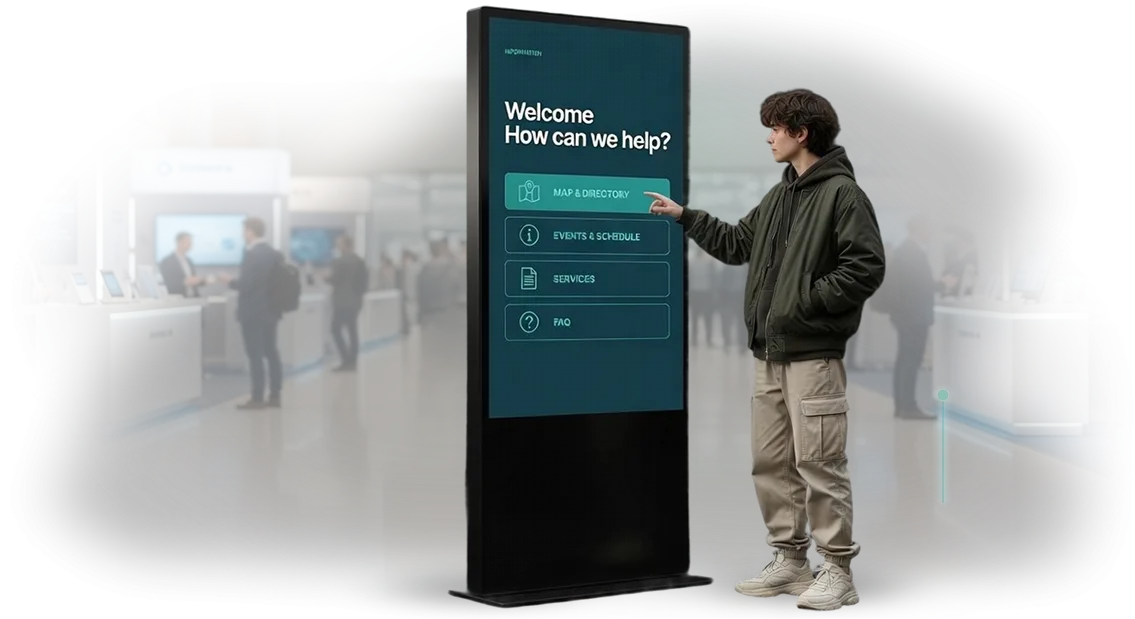
אכסניות מאבדות אורחים ללא קיוסק אינטראקטיבי
אכסניות מאבדות אורחים ברגע הקריטי ביותר — במהלך הצ'ק-אין.
בערב, אחרי טיסה או מסע ארוך, אדם רוצה לקבל את המפתח תוך 5 דקות וללכת לישון במקום לעמוד בתור בדלפק הקבלה, שבו מטפלים בו-זמנית בהזמנות, תשלומים ובעיות מזוודות.
זו הרושם הראשוני של האכסניה, ואם הוא נהרס — האורח לא יחזור וישאיר ביקורת שלילית שאלפי מטיילים אחרים יראו.
התחרות בין אכסניות גוברת: היום אורחים משווים לא רק מחיר ומיקום, אלא גם את רמת השירות. בערב נוצר תור בדלפק: מישהו הגיע מוקדם, מישהו רוצה להאריך את השהות, מישהו שואל על טיולים.
המנהל פיזית לא יכול לעמוד בקצב של כולם בבת אחת, וכתוצאה מכך, חלק מהאורחים ממתינים 15–20 דקות. זה בדיוק השירות המיושן שמרחיק מטיילים מודרניים.
קיוסק אינטראקטיבי לאכסניה פותר את הבעיה הזו. האורח בוחר באופן עצמאי מיטה, רואה את החוקים, המבצעים והמידע החשוב, ומשלם עבור השהות — ללא מעורבות המנהל. התהליך אורך כמה דקות במקום תור ארוך.
בינתיים, הצוות פנוי לתקשורת חיה עם אורחים: הצעת מסלול, עזרה במזוודות, יצירת אווירה חמה — בדיוק מה שאכסניות מקבלות עליו ביקורות טובות.
הקיוסק עובד מסביב לשעון ולעולם לא מתעייף; בשעות השיא של הצ'ק-אין הוא מקל על דלפק הקבלה, והבעלים מקבל פחות שליליות, יותר צ'ק-אין חוזר ותפוסה יציבה גם בעונה הגבוהה.
קיוסק אינטראקטיבי לאכסניה הוא פתרון מודרני שמגביר את מהירות השירות ומפחית את עומס העבודה של הצוות מדי יום. הבחירה פשוטה: להמשיך לאבד אורחים לתורים או לתת להם את השירות שהם כבר מצפים לו.
5 יתרונות מרכזיים של קיוסק אינטראקטיבי לעסק שלך
אורחי אכסניות מעריכים מהירות ופשטות. קיוסק אינטראקטיבי בדלפק הקבלה פותר את שתי המשימות: הצ'ק-אין אורך כמה דקות במקום תור, ולמנהל יש זמן לתקשורת חיה.
החברה שלנו בונה קיוסקים כאלה כבר למעלה מ-10 שנים — הנה חמשת היתרונות העיקריים שעסק מקבל.
- צ'ק-אין מיידי — האורח מזין את פרטיו, בוחר מיטה ומקבל כרטיס מפתח. התורים נעלמים גם כשמגיעה קבוצה שלמה.
- חוויית אורח — ממשק אינטואיטיבי עם הנחיות מפתיע לטובה, ומסך עם מפת העיר והמלצות מעצב תדמית חיובית של האכסניה.
- חיסכון בזמן הצוות — המנהל לא צריך להזין ידנית נתוני דרכון: הקיוסק מעביר את המידע למערכת הניהול. העובדים משקיעים את השעות שהתפנו בעזרה לאורחים ובטיפול בבקשות לא שגרתיות.
- גידול בהזמנות ישירות — קל להציג על המסך הצעה מיוחדת לביקור חוזר, והאורח מזמין חדר מיד בלי לעבור דרך אגרגטורים. זה מגדיל את חלק ההזמנות הישירות ומפחית עמלות.
- ביקורות חיוביות — אורחים שנהנו מהצ'ק-אין משאירים יותר דירוגי חמישה כוכבים במפות ובשירותי ביקורות. דירוג גבוה משפיע ישירות על תפוסת האכסניה ועל דירוגי החיפוש.
הקיוסק מחזיר את ההשקעה באמצעות חיסכון בזמן והגדלת הזמנות חוזרות. רוצים תוצאה דומה? צרו קשר — נמצא פתרון לאכסניה שלכם.
פורמטים של קיוסק אינטראקטיבי לאכסניות
אורחים מגיעים לעתים קרובות בערב ולא רוצים לעמוד בתור לרישום. המנהל מבזבז זמן על אותן שאלות: איפה ה-Wi-Fi, איך מגיעים לחדר, מה כדאי לראות.
קיוסק שירות עצמי באכסניה מטפל במשימות אלה — האורח נרשם בעצמו, מקבל את המפתח ואת המידע הדרוש, בעוד הצוות מתמקד בתקשורת חיה ובמצבים לא שגרתיים.
כדי שהקיוסק באמת יעבוד, צריך את הפורמט הנכון. אנו משתמשים בשלוש אפשרויות עיקריות — כל אחת מכסה תרחיש משלה: מלובי קומפקטי ועד זרימת אורחים מסביב לשעון.
השוואת פורמטים של קיוסק לאכסניות
| פורמט | למי זה מיועד | מה זה נותן לאכסניה |
|---|---|---|
| קיוסק מסך מגע עומד | תנועת אורחים גבוהה, אזור קבלה | צ'ק-אין עצמי מהיר, מסך גדול, מבנה יציב |
| קיוסק צמוד קיר | לובי צר, אזור ליד הכניסה | חיסכון במקום, זמינות קבועה, ניווט נוח |
| קיוסק טאבלט | בר, טרקלין, נקודות ניידות | גמישות, תקציב נמוך, עדכוני תוכן קלים |
| דלפק צ'ק-אין | אוטומציה של צ'ק-אין | מעורבות מינימלית של צוות, אינטגרציה עם מערכת הניהול, פחות שגיאות |
איזה פורמט לבחור? קיוסק עומד — אם יש לכם הרבה אורחים וצריך להפחית את התור. צמוד קיר — אם כל מטר רבוע חשוב. טאבלט — להתחלה וגמישות.
נתאים את הפורמט לתכנון החלל ולתנועת האורחים שלכם — ונראה איך הקיוסק ישתלב בעיצוב הפנים.
איך מפתחים קיוסק: מבריף ועד השקה
כל בעל אכסניה רוצה שהקיוסק יעבוד ללא תקלות ולא ידרוש מהם ידע טכני. לכן בנינו תהליך שבו אתם שולטים בהתקדמות הפרויקט ומבינים מה קורה בכל שלב. אין קסם — רק שלבים ברורים, מהשיחה הראשונה ועד ההשקה והתמיכה השוטפת.
- בריף ותוכנית עבודה. אנו דנים במשימות הקיוסק: אילו מדורים האורחים צריכים — צ'ק-אין, מידע על האכסניה, מפת אזור, אנשי קשר, טיולים. אתם מספרים איך השירות שלכם עובד, ואנחנו קובעים את לוח הזמנים והתקציב כך שתדעו מראש את היקף העבודה.
- אישור עיצוב. אנו מראים איך המסכים ייראו: מיקום כפתורים, צבעים, טקסטים. אתם עורכים תיקונים ומאשרים את העיצוב לפני תחילת הפיתוח — כששינויים לא משפיעים על לוח הזמנים או העלות.
- פיתוח המערכת. אנו כותבים את לוגיקת ההפעלה של הקיוסק על ציוד מקצועי וכלים מוכחים. עבורכם, זו "קופסה שחורה" שעושה בדיוק מה שאישרתם בעיצוב: מגיבה במהירות לאורחים, לא קופאת, וקלה לעדכון.
- בדיקת קיוסק. אנו עוברים על כל התרחישים: אורח נרשם, מחפש Wi-Fi, מבקש אנשי קשר, צופה במפה. אנו מתקנים בעיות לפני שהקיוסק מופיע בלובי — אתם מקבלים פתרון מוכן ללא הפתעות.
- השקה. אנו מתקינים את הקיוסק במקום הנכון, מחברים אותו לרשת ולשירותים הפנימיים של האכסניה. אנו מאמנים את הצוות ומספקים מדריך הפעלה ברור: איך להפעיל, לאתחל ומה לעשות במצב חירום.
- תמיכה ופיתוח. לאחר ההשקה, אנו נשארים בקשר: מעדכנים מידע, מוסיפים מדורים חדשים ככל שהאכסניה גדלה, ומנטרים פעילות יציבה. אתם לא צריכים להיכנס לפרטים טכניים — אתם פשוט משתמשים בתוצאה.
גישה זו חשובה במיוחד לאכסניות שבהן אורחים חדשים מגיעים מדי יום והקיוסק חייב לפעול ללא הפרעות. אתם רואים את התוצאה בהדרגה, לא "בסוף", ויכולים להשפיע על כל פרט.
בסופו של דבר, אתם מקבלים כלי שחוסך את זמן המנהל, עוזר לאורחים להיקלט מהר יותר ומשאיר להם רושם נעים מהשירות שלכם.
מה כלול בחבילת הקיוסק
כשאתם מזמינים קיוסק לאכסניה, חשוב להבין: אתם מקבלים לא רק מכשיר, אלא פתרון שלם ומפתח-ביד.
החבילה כוללת כל מה שצריך כדי להתחיל לעבוד מיד לאחר ההתקנה — מתוכנה מוגדרת ועד הכשרת צוות ושירות אחריות.
-
תוכנת קיוסק — מותקנת מראש ומוגדרת לצרכים הספציפיים של האכסניה: צ'ק-אין אורחים, מפת עיר, לוח זמנים של הסעות, Wi-Fi, תפריט בית קפה. מנהלים לא צריכים להבין בטכנולוגיה — הממשק ברור גם לאורחים וגם לצוות.
-
מדריך משתמש — מדריך פשוט למנהלים ולאורחים: איך להשתמש בקיוסק, מה לעשות אם הוא תקול, איך לשנות במהירות מידע על המסך (למשל, מבצעים, הגעות, אירועים מקומיים).
-
הכשרת צוות — מפגש מעשי קצר לצוות שלכם. אנו מראים איך לנהל את הקיוסק, לעדכן תוכן ולפתור בעיות נפוצות. הצוות שלכם עובד בביטחון מהיום הראשון בלי צורך להעסיק מומחה טכני.
-
תיעוד טכני — סט מסמכים מלא לצוות התמיכה או למחלקת ה-IT שלכם: דיאגרמת חיבור, לוח זמנים לתחזוקה, המלצות הפעלה. זו הגנה מפני הפתעות ובסיס לעבודה עצמאית עתידית.
-
שירות אחריות — כל החבילה מכוסה באחריות. במהלך תקופת האחריות, אנו פותרים בעיות במהירות ותומכים בפרויקט לאחר ההשקה. אתם לא צריכים לדאוג לתיקונים או לחיפוש קבלנים — פשוט להשתמש בקיוסק.
הודות לחבילה זו, הצ'ק-אין באכסניה מהיר יותר, המנהלים מפסיקים להיות מוסחים על ידי משימות שגרתיות, והאורחים מקבלים שירות מודרני שמבדל אתכם מהמתחרים.
הכל כבר כלול במשלוח — כל מה שנשאר זה לחבר את הקיוסק ולקבל את פני האורחים הראשונים.
מקרה בוחן: קיוסק מקצר את זמן הצ'ק-אין בחצי
המנהל של אכסניה עם 40 חדרים בילה 20–30 דקות על כל אורח בשעות השיא: בדיקת מסמכים, מילוי טפסים, חלוקת מפתחות. התורים גדלו, האורחים התעייפו, והצוות לא עמד בקצב השאלות. עבור הבעלים, זה אומר זמן אבוד וביקורות שליליות בשירותי הזמנות.
פיתחנו קיוסק אינטראקטיבי לאכסניה זו שלקח על עצמו את המשימות השגרתיות: האורח סורק את המסמך, ממלא את הטופס ומקבל את מפתח החדר. רק האימות הסופי נשאר למנהל — זה לוקח פחות מדקה.
מה השתנה לאחר ההשקה
לאחר חודש, זמן הצ'ק-אין הממוצע נחתך בחצי — מ-12 ל-6 דקות. פי שניים יותר אורחים עברו בשעה, ותפוסת האכסניה גדלה ב-15%: חדרים התפנו והוכנו להגעה הבאה מהר יותר.
האורחים החלו לדרג את "מהירות הצ'ק-אין" בנקודה אחת גבוה יותר, והדירוג הכללי באגרגטורים עלה ל-9.2.
העדות של הבעלים
אלכסנדר, בעל האכסניה, משתף את התוצאות: "הקיוסק החזיר את ההשקעה תוך חודשיים. נהגנו לאבד אורחים לתורים בימי שיא; עכשיו הצ'ק-אין מהיר גם בתפוסה מלאה. אנחנו כבר מתכננים להתקין קיוסקים דומים בשתי האכסניות האחרות שלנו."
מקרה בוחן זה הראה: אוטומציה של צ'ק-אין היא לא רק תחליף למנהל, אלא כלי להגדלת תפוסה ונאמנות אורחים. התאמנו את הפתרון לצרכי האכסניה ואנחנו מוכנים ליישם אותו בנכס שלכם.
איך לבחור את פורמט הקיוסק המתאים לצרכים שלכם?
בחירת פורמט קיוסק מתחילה לא במסך ובמעטפת, אלא בשאלה: מה בדיוק הוא אמור לפתור באכסניה שלכם.
אם תור של אורחים עם שאלות כמו "איך מגיעים" ו"איפה אפשר לאכול" נוצר כל הזמן מול המנהל, דגם קומפקטי עם מפה ולוח זמנים מספיק.
אם אתם צריכים להקל על דלפק הקבלה בשעות הצ'ק-אין והצ'ק-אאוט, קבלו קיוסק עם אפשרות צ'ק-אין עצמי.
קריטריון הבחירה העיקרי הוא תרחיש השימוש של האורח. ספרו אילו שאלות נשאלות הכי הרבה פעמים למנהל והפכו אותן לפריטי תפריט: מפה, טיולים, הסעות, חוקי אכסניה, מחירון לשירותים בתשלום.
קיוסק כזה משפיע על ההכנסות: האורח מזמין שירותים נוספים בעצמו, בעוד הצוות מקדיש זמן למי שבאמת צריך עזרה.
התקציב לקיוסק תלוי בפורמט ובעומס העבודה. לאכסניה קטנה, דגם צמוד קיר או מעמד טאבלט עם סט מידע בסיסי יספיקו. לנכס גדול עם תנועה מסביב לשעון — יחידה עומדת עם מסך גדול ועמיד בפני נזקים. אל תשלמו יותר מדי עבור אפשרויות נוספות: הפונקציות של הקיוסק צריכות לכסות במלואן את הדרישות שלכם.
קחו בחשבון את תנאי ההפעלה. קיוסק באכסניה פועל מסביב לשעון באזור עם תנועה גבוהה, ולכן מעטפת מוגנת ועדכוני תוכן מרחוק חשובים — ניתן לשנות מבצעים ומפות דרך האינטרנט בלי להגיע לנכס. הציוד חייב לעמוד בעומס קבוע ללא תקלות.
אם אתם לא בטוחים איזה פורמט מתאים ביותר לאכסניה שלכם, שלחו לנו תיאור של המשימות שלכם וזרימת האורחים הצפויה. נתאים תצורה לתקציב שלכם ונעזור לכם להשיק קיוסק שמקל על הצוות מהיום הראשון.
שאלות נפוצות על יישום קיוסק
יישום קיוסק באכסניה הוא דרך להאיץ את הצ'ק-אין, להקל על המנהל ולתת לאורחים שירות נוח 24/7.
אבל לפני ההשקה, בעלים שואלים את אותן שאלות: עד כמה החומרה אמינה, מה קורה אם היא מתקלקלת, האם הקיוסק לא יפחיד אורחים עם ממשק מורכב, איך לאמן את הצוות.
אספנו תשובות המבוססות על ניסיון הצוות שלנו — במשך למעלה מ-10 שנים השקנו עשרות פרויקטים כאלה.
מה קורה אם הקיוסק מתקלקל?
כל הקיוסקים מכוסים באחריות, והתיקונים אורכים בממוצע יומיים-שלושה. אם המכשיר קריטי לפעילות, אנו מביאים קיוסק חלופי — אורחים אף פעם לא נשארים ללא שירות. כל ההתחייבויות מפורטות בחוזה.
האם זה בטוח להתקין קיוסק באכסניה?
הקיוסק מעביר נתוני אורחים בערוצים מאובטחים, ורק למנהל יש גישה אליהם. המכשיר עצמו מקובע למעמד, כך שנפילות או נזק מקרי נשללים. בכל שנות הפעילות שלנו, לא היו לנו מקרים של פרצות מידע.
האם אורחים בגילאים ורמות מיומנות שונות יכולים להתמודד עם זה?
הממשק מעוצב סביב תרחישי אכסניה: כפתורים גדולים, הנחיות בכל שלב, מידע בכמה שפות. אורחים ללא ניסיון מציינים במהירות שהכל ברור, והמנהל יכול לעזור במקרים מורכבים.
איך מאמנים צוות ועובדים חדשים?
אנו מקיימים הכשרה למנהלים — היא אורכת בדרך כלל כשעה, כולל תרגול. אנו גם מוסרים מדריך עזר מהיר וסרטון, כך שקליטת עובדים חדשים אורכת זמן מינימלי.
קבלו ייעוץ על פיתוח קיוסק
שלחו בקשת פיתוח — ותוך יום תקבלו שיחת ייעוץ. ננתח את המצב שלכם: אילו אורחים ישתמשו בקיוסק הכי הרבה, אילו תרחישים הכי חשובים, ואיך הקיוסק ישתלב בזרימת העבודה של מנהל האכסניה.
לאחר הייעוץ, תקבלו חישוב עלות לקיוסק עם פירוט ברור לפי שלבים — ללא עבודה נסתרת או "הפתעות" באמצע הפרויקט.
ואם אתם צריכים לקבל החלטה מהר יותר, נכין אב-טיפוס של קיוסק: תראו את מבנה המסכים, לוגיקת הניווט, ותבינו איך אורחים יתקשרו עם המערכת.
מה תקבלו לאחר פנייה:
- שיחת ייעוץ על התרחיש שלכם: צ'ק-אין, צ'ק-אאוט, תשלום, מסירת מפתח, שירותים נוספים
- ניתוח זרימות אורחים ובחירת פורמט הקיוסק המתאים — עומד, צמוד קיר או טאבלט
- הערכת עלות פיתוח ולוח זמנים שמתאים לתקציב שלכם — ללא ז'רגון טכני
- אב-טיפוס קיוסק לפני תחילת הפיתוח: אתם רואים איך הכל יעבוד ועורכים תיקונים מראש
- תוכנית השקת פרויקט ברורה: מבריף ועד התקנה והכשרת צוות
- תמיכה לאחר ההשקה: עדכונים, התאמות וייעוץ למנהלים
השקת הפרויקט אורכת משבועיים — במהלך זמן זה תקבלו קיוסק עובד שמפחית את העומס על דלפק הקבלה ומאיץ את צ'ק-אין האורחים.
שלחו את בקשתכם, ונכין הצעה לאכסניה שלכם — תוך התחשבות במספר המיטות, המיקום והמאפיינים הספציפיים של האוטומציה שלכם.