

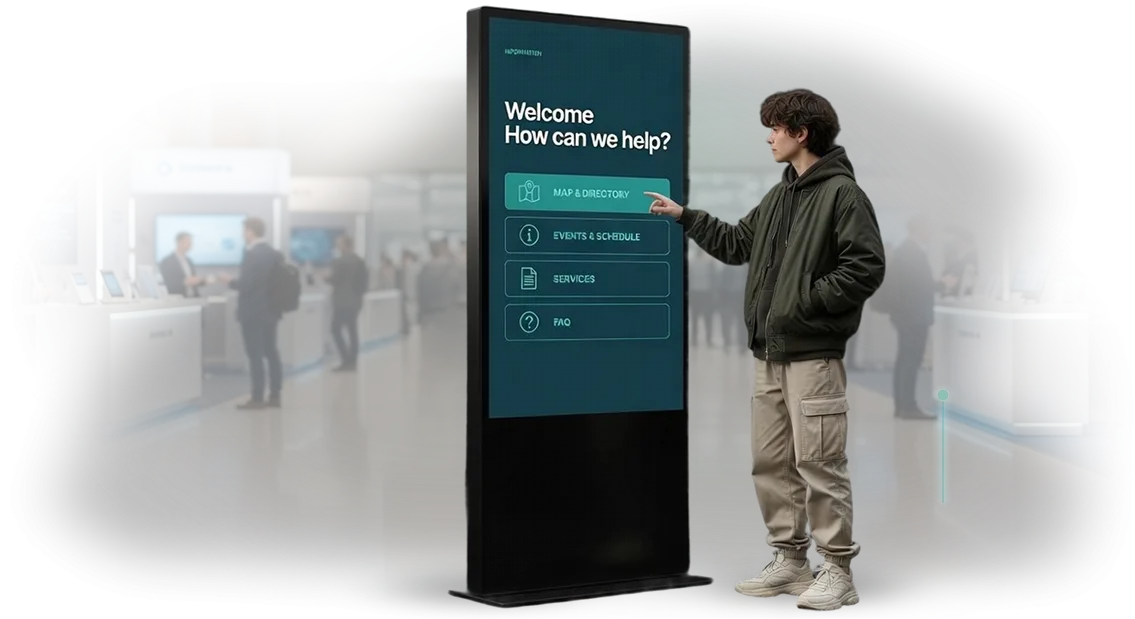
קיוסקי מידע למרכזי כנסים: ניווט ללא תורים
במרכז כנסים מתקיימים במקביל מספר אירועים: הרצאות, תערוכות, הפסקות קפה. המשתתפים צריכים למצוא במהירות את האולם, המרצה או אזור האוכל הנכון — וכל שאלה כזו נופלת על הצוות.
בשעות השיא, דלפק המידע הופך לצוואר בקבוק של תורים, והאורחים מבזבזים זמן ונעשים לחוצים במקום לשקוע בתכנית.
קיוסק מידע למרכז כנסים פותר את נקודת הכאב הזו: על מסך המגע, האורחים מוצאים את האולם בעצמם, צופים בלוח הזמנים האלקטרוני של המושבים, ומקבלים מסלול בין הקומות.
תשובות לשאלות חוזרות כבר לא תלויות בגורם האנושי ולא דורשות צוות נוסף בדלפק המידע. המארגנים לא צריכים להוציא תקציב על כוח אדם נוסף בימי שיא.
למבקרים, הניווט במרכז הכנסים הופך לנוח באמת: ללא תורים וללא איחורים. אדם רואה את לוח הזמנים העדכני, מבין מיד לאן ללכת, ולא מסיח את דעתם של המנהלים עם עניינים פעוטים.
בינתיים, צוות מרכז הכנסים יכול להתמקד בעבודה משמעותית: קבלת פנים לאורחים חשובים, פתרון משימות לא שגרתיות, ושמירה על הסדר.
אנחנו יוצרים קיוסקים כאלה במתכונת turnkey: אנו חוקרים תרחישי מבקרים טיפוסיים, מגדירים את המפה ואת לוח הזמנים, והופכים את הממשק לאינטואיטיבי. אנו עובדים על ציוד מקצועי שמתמודד באופן אמין עם העומס במהלך אירועים גדולים — כך שהתוצאה צפויה.
אילו משימות קיוסק פותר במרכז כנסים עבור מארגנים ואורחים
במרכז כנסים פועלים בו-זמנית מספר אולמות, אזורי רישום וחדרי ישיבות. אורחים מבזבזים זמן במציאת המושב הנכון, בעוד המארגנים עונים על מאות שאלות חוזרות.
קיוסק מידע מסיר את הנטל הזה והופך את הניווט לכלי מדויק עבור כל המשתתפים.
הנה מה שמשתנה לאחר התקנת הקיוסק:
- לאורחים — מפה אינטראקטיבית של המתחם. אולם, חדר ישיבות, בית קפה, מלתחה — במרחק כמה נגיעות. הכיוונים נוצרים מיידית — אין צורך ללמוד תוכניות נייר או לשאול את הצוות.
- לאורחים — תכנית היום עם מושבים והרצאות. משתמשים יכולים לבחור נושאים שמעניינים אותם ולראות מיד זמן, מיקום ושינויים בלוח הזמנים. זה מפחית את הבלגן ועוזר להימנע מהחמצת מושבים חשובים.
- למארגנים — נקודת מידע אחת. לוח הזמנים, חוקי ההשתתפות ותשובות לשאלות נפוצות כבר לא צריכים לחזור על עצמם על ידי הצוות בדלפק. העובדים מטפלים במשימות חיות במקום לחזור על אותם דברים.
- למארגנים — סטטיסטיקה ברורה. הקיוסק מציג מושבים פופולריים ודפוסי תנועת מבקרים. נתונים אלה עוזרים לתכנן כנסים עתידיים בצורה מדויקת יותר ולחלק את הזרימות ביעילות רבה יותר.
- למותג ולשותפים — אמצעי פרסום נוסף. ניתן להציג חומרי ספונסרים והודעות על המסך. זה מגדיל את החשיפה ללא הוצאות על דפוס וקבצים מצורפים.
- לכולם — פחות תורים ופחות לחץ. אורחים מגיעים לאירועים מהר יותר, מטרידים את הצוות פחות, והאירוע עצמו מתנהל בצורה חלקה ומשאיר רושם של עבודה מאורגנת.
פורמטים של קיוסק מידע לצרכי האירוע שלך
בבחירת פורמטים של קיוסק למרכז כנסים, קל לטעות: כל אפשרות נראית מודרנית, אבל כל אחת עובדת אחרת.
קיוסק עומד, קיוסק צמוד קיר או דלפק מגע הם לא רק מארזים שונים — הם תרחישים שונים של אינטראקציה של אורחים עם מידע. אם הפורמט לא תואם את הפריסה ואת זרימת המבקרים, אפילו תוכנה איכותית תיעלם מעיניהם.
השווינו את האפשרויות העיקריות לפי המשימות הטיפוסיות שמארגני אירועים מתמודדים איתן. השתמשו בטבלה כגיליון רמאות כשאתם מתכננים ניווט במרכז הכנסים שלכם.
| פורמט | מי / היכן משתמשים בו | מה הוא נותן ללקוח |
|---|---|---|
| קיוסק עומד | לובי מרווח, זרימות גדולות, אזור רישום | חיפוש מהיר של אולם ולוח זמנים, נראה מרחוק, מפחית שאלות לצוות |
| קיוסק צמוד קיר | מסדרונות צרים, לובי מעליות, אזורי כניסה | חוסך מקום, נראה על קירות, נוח לשאלות מהירות: איפה בית הקפה, השירותים, היציאה |
| דלפק מגע | אזור מידע ליד הקבלה, נקודות קומפקטיות | פתרון קומפקטי לבקשות ממוקדות: זמני מושבים, שינויים בתכנית, מסלול לאולם |
לאחר בחירת הפורמט, המשימה העיקרית נשארת — מילוי הקיוסק במידע עדכני על התכנית וארגון ניהול נוח. אנו עוזרים בכך בכל שלב: אנו בוחרים את המארז המתאים, מגדירים את התפריט ומחברים אותו לנתונים שלכם.
כתוצאה מכך, אורחים מוצאים את המידע שהם צריכים בעצמם, והצוות שלכם מתמקד באירוע במקום לענות בלי סוף על אותן שאלות.
איך הפיתוח עובד: מהבריף ועד השקת הקיוסק
יצירת קיוסק למרכז כנסים היא פרויקט עם היגיון ברור ותוצאה צפויה. מבננו את התהליך כך שבכל שלב אתם רואים מה אתם מקבלים ויכולים להשפיע על מהלך הפיתוח.
להלן הנתיב הסטנדרטי מהבריף ועד ההשקה: הוא חזר על עצמו בעשרות פרויקטים ומאפשר לנו לספק קיוסקים בזמן.
-
בריף והתעמקות במשימה. אנו חוקרים את מרכז הכנסים שלכם: פריסה, זרימות מבקרים, תרחישי שימוש בקיוסק. אנו מגדירים את המטרות — עזרה בניווט, הצגת התכנית, איסוף בקשות לחדרי ישיבות. הפלט הוא מסמך דרישות עם הערכות זמן.
-
אישור אב-טיפוס ומבנה. אנו בונים מודל אינטראקטיבי של הממשק העתידי: קטעים, היגיון ניווט, מסכים מרכזיים. אתם רואים ו"מרגישים" את הקיוסק עוד לפני שלב התכנות ויכולים לבצע שינויים ללא אובדן תקציב.
-
קונספט עיצובי. אנו מעצבים את הממשק כך שיתאים למותג שלכם: צבעי חברה, גופנים, תמונות אולם. אנו מתחשבים בעובדה שמשתמשים כוללים אנשים בגילאים ורמות מיומנות שונות — כפתורים גדולים, רמזים ברורים, ניווט נוח.
-
פיתוח תוכנה ואינטגרציה. אנו כותבים את היגיון התפעול של הקיוסק ומחברים אותו למערכות שלכם: לוח זמנים, מסד נתונים של אולמות, אנשי קשר. אנו משתמשים בכלים מוכחים שנבדקו באירועים עם אלפי מבקרים, כך שאתם מקבלים עבודה יציבה ללא הפתעות.
-
טעינת תוכן ובדיקות. אנו מעלים מידע עדכני על האירוע, תוכניות קומות וחומרי עזר.
אנו עורכים בדיקות באתר: בודקים תרחישים כמו "אורח שמגיע בפעם הראשונה", "צריך אולם מסוים", "הגשת בקשה". אנו מבצעים התאמות אחרונות.
-
השקה והדרכת צוות. אנו מתקינים את הקיוסק, מגדירים אותו לרשת ולציוד שלכם, ונותנים בריף קצר למנהלים ולמתנדבים.
לאחר ההשקה, אנו נשארים בקשר: אתם מקבלים אחריות ויכולת להמשיך לפתח את הקיוסק — הוספת קטעים, שינוי התכנית, עדכון מפות.
מחזור זה אורך שבועיים עד ארבעה שבועות — תלוי במורכבות ובנפח התוכן. אתם תמיד יודעים באיזה שלב נמצא הפרויקט ומקבלים כלי מוגמר שעובד מהיום הראשון.
מה כלול במסירת קיוסק המידע
חבילת מסירה מלאה היא יותר מסתם דלפק מגע. אנו מוסרים ללקוח פתרון turnkey: חומרה, תוכנה מותקנת מראש, התקנה והדרכת צוות.
לא תצטרכו לתאם מספר קבלנים או להיכנס לפרטים טכניים — אתם מקבלים קיוסק עובד שמוכן מיד למשימה.
החבילה הסטנדרטית כוללת:
- דלפק מגע ומארז — מבנה עמיד לוונדליזם, מתאים לאזורים עם תנועה גבוהה. אנו מיישרים את העיצוב עם אזור ההתקנה והסגנון הארגוני.
- תוכנת קיוסק — ממשק, ניווט, לוח זמנים, מפות, חדשות. המערכת קלה לעדכון: מנהל יכול לשנות תוכן ללא מתכנתים.
- התקנה וחיבור — אנו מספקים, מתקינים במקום הנכון, מגדירים רשת וחשמל. אנו מוודאים שהכל עובד לפני הפתיחה.
- התאמה לצרכי מרכז הכנסים שלכם — מבנה קטעים, חיפוש אירועים, אינטגרציה עם לוח הזמנים ורישום משתתפים.
- חומרי הדרכה והוראות — מדריך קצר לצוות: איך להפעיל, לעדכן מידע, לפתור בעיות פשוטות.
- אחריות ותמיכה טכנית — אנו מטפלים בפניות בשעות העבודה, מתחברים מרחוק במידת הצורך, או שולחים טכנאי לאתר.
- אביזרים נוספים — מדפסת תוויות, סורק קוד QR, קורא כרטיסים. הכל משולב עם התוכנה.
גישה זו מבטלת הפתעות לאחר ההשקה: כל רכיב מסוכם ונבדק מראש. בסופו של דבר, אתם מקבלים לא "חומרה עם מסך" אלא כלי שפותר משימות ניווט ומידע לאורחים — מהיום הראשון של פעילות מרכז הכנסים.
ניסיון ביישום: קיוסקים באירוע עם אלפי אורחים
עבור מרכז הכנסים "Vertical", פרסנו קיוסקים אינטראקטיביים לפורום תעשייתי מרכזי. כל יום ביקרו במקום כמה אלפי אורחים — משתתפי מושבים, מציגים, עיתונאים.
ההתמצאות במבנה הייתה מאתגרת: מספר קומות, אירועים מקבילים, ודלפק המידע פעל בקיבולת מלאה.
לפני ההשקה, ניתחנו את זרימות המבקרים והצבנו קיוסקים בנקודות עם תנועה מרבית — ליד כניסות, מעליות ואזור הרישום. זה אפשר לאורחים לקבל עזרה מיידית ללא בזבוז זמן בחיפוש דלפק.
מסכי המגע היו אינטואיטיביים: תוך 20 שניות, אדם מצא את האולם, הדוכן או לוח ההרצאות הנכון.
תוצאות הפרויקט נמדדו בשינויים אמיתיים, לא בספירת קליקים. הזמן הממוצע למציאת מיקום ירד מ-12 ל-4 דקות, ומספר הפניות לדלפק המידע החי ירד ב-70%. בשעות השיא, כל קיוסק טיפל בעד 150 בקשות ביום, ולא נוצרו תורים.
לפי סקרי מבקרים, 94% מהמשתתפים אמרו שהקיוסקים פשטו משמעותית את הניווט. המארגנים זכו לא רק לאורחים מרוצים אלא גם להפחתת עומס על הצוות.
בסופו של דבר, הם הזמינו קיוסקים לשנה הבאה — עכשיו כפתרון קבוע לכל אירועי המרכז.
מקרה זה מאשר: קיוסקים מוגדרים כראוי חוסכים זמן לאורחים ומפחיתים עלויות למארגנים. עבור מרכז כנסים, זה לא רק מסכים עם מפה — זה כלי להגברת נאמנות המשתתפים והזמנות חוזרות למקום.
תרחישי שימוש בקיוסק: מרישום ועד משוב
קיוסק במרכז כנסים עובד לאורך כל האירוע — מהדקה הראשונה של הרישום ועד לאיסוף המשוב הסופי.
בזמנים שונים, אורחים פותרים משימות שונות, והקיוסק עוזר להם לקבל במהירות את מה שהם צריכים מבלי ליצור תורים או להסיח את דעת הצוות.
| תרחיש | מתי הוא רלוונטי | מה הוא נותן ללקוח |
|---|---|---|
| רישום אורחים | כניסה, שעות שיא בתחילת האירוע | מפחית תורים, מזרז את תחילת התכנית, אורחים לא הולכים לאיבוד |
| ניווט באולמות | לאורך כל היום | אורחים מוצאים בקלות את האזורים שהם צריכים, הצוות לא עונה על שאלות חוזרות |
| תכנית האירוע | לפני ההתחלה ובין מושבים | לוח זמנים עדכני תמיד לעין, שינויים מגיעים לאורחים מיידית |
| משוב | סיום האירוע, אחרי הרצאות | אוסף דירוגי אורחים ואנשי קשר, מחזק את זיכרון האירוע |
גישה זו הופכת את הקיוסק לעוזר דיגיטלי מלא.
הוא מטפל בשאלות שגרתיות של אורחים — מ"איך מגיעים לאולם B" ועד "מה יש אחרי הפסקת הקפה". הצוות שלכם מתמקד בארגון ובאינטראקציה חיה במקום להפנות כל מבקר עשירי.
הקיוסק רץ על חומרה מקצועית ותוכנה משופרת, כך שהוא לא יאכזב אתכם ברגע הקריטי ביותר. אנו מגדירים את הממשק לתרחיש האירוע שלכם, ובמידת הצורך, מעדכנים את לוח הזמנים או ההכרזות מרחוק — ללא ביקור באתר או השבתה.
כתוצאה מכך, הקיוסק מחזיר את השקעתו לאחר האירוע הראשון: פחות בלגן, אורחים מרוצים, ונתונים מוכנים לדיווח ללקוח.
שאלות נפוצות של לקוחות על יישום קיוסקים
כשלקוח שוקל התקנת קיוסקים במרכז כנסים, מה שמדאיג אותו ביותר הוא לא פרטים טכניים אלא שאלות מעשיות: כמה מהר הכל יעבוד, מי יתחזק את הציוד, ומה קורה אם משהו משתבש. להלן תשובות לחששות הנפוצים ביותר שעולים לפני חתימת חוזה.
כמה זמן אורך יישום הקיוסק?
פרויקט סטנדרטי אורך שבועיים עד ארבעה שבועות — מהבריף ועד ההשקה. לאירועים דחופים, אנחנו יכולים להכניס את זה לכמה ימים אם חלק מהתוכן כבר מוכן. כל המועדים קבועים בחוזה, כך שתוכלו לתכנן את האירוע ללא סיכון.
מי אחראי על תחזוקת הקיוסק לאחר ההשקה?
אנחנו לוקחים על עצמנו תמיכה מלאה: עדכון מידע, ניטור ביצועי ציוד, החלפת חומרים מתכלים. אתם לא צריכים לשכור מומחה ייעודי — הצוות שלנו מטפל בכל הבעיות מרחוק ובמידת הצורך שולח מישהו לאתר.
מה אם הקיוסק מתקלקל במהלך אירוע?
אנחנו מספקים ציוד גיבוי ותמיכה טכנית מסביב לשעון. אם מכשיר נכשל, אנו מביאים תחליף תוך 2-4 שעות — אורחים לא ישימו לב לכלום, והתכנית שלכם נמשכת ללא הפרעה.
באיזו תדירות יהיה צורך לעדכן את המידע על הקיוסק?
המידע משתנה כרצונכם: לוח זמנים, מרצים, מפות אולמות. עדכונים אורכים דקות ספורות דרך לוח בקרה אישי, ללא צורך במתכנת. אתם שולטים בדיוק הנתונים בעצמכם, ואנחנו עוזרים להכין את הפריסות.
תשובות אלה מכסות את רוב החששות לפני ביצוע הזמנה. בחלק הבא, נבחן כיצד קיוסקים משפרים את הנוחות למבקרים ומקלים על צוות מרכז הכנסים.מה אם יש לכם דרישות ספציפיות לקיוסק?
זה מצב סטנדרטי — רוב הפרויקטים מתחילים עם פריסה לא שגרתית או תרחיש תפעול מיוחד. אנו מתחשבים בכך מההתחלה: אנחנו לא מציעים פתרון תבניתי אלא מעצבים את הקיוסק סביב המשימות שלכם.
קיוסק לא סטנדרטי הוא לא בעיה עבורנו — זו הזדמנות ליצור פרויקט אינדיבידואלי באמת שמשתלב באופן אורגני במקום שלכם.
ספרו לנו על הדרישות הספציפיות שלכם — אנו ננתח את זרימות המבקרים, נקודות המיקום והמאפיינים של אזור ההתקנה.
הקיוסק יכול להיות מובנה בעמוד, בעל צורת מארז יוצאת דופן, לעבוד ללא חיבור אינטרנט יציב, או לשרת מספר פונקציות בו-זמנית — מניווט ועד הזמנת חדרי ישיבות. בכל מקרה, נציע פתרון שמתייחס למשימה שלכם, לא להיפך.
מאחורינו מעל 10 שנות ניסיון ועבודה על ציוד מקצועי, כך שאפילו תנאים ארכיטקטוניים מורכבים לא משפיעים על היציבות והמהירות. הצד השרתי והכלים המוכחים מוגדרים לנפח המידע הספציפי שלכם ולמספר המשתמשים בו-זמנית. לא תצטרכו לשנות את התהליכים שלכם עבור הקיוסק — הקיוסק יתאים את עצמו אליהם.
בסופו של דבר, אתם מקבלים לא "קופסה אוניברסלית" אלא פתרון שנראה כמו חלק מהפנים, ברור למבקרים וקל לתחזוקה עבור הצוות שלכם.
ממשק, פונקציות, עיצוב ותרחישי אינטראקציה — הכל מסוכם לפני תחילת הפיתוח, כך שאין הפתעות לאחר ההשקה. אז אם יש לכם דרישות ספציפיות — אל תהססו לתאר אותן לנו. נציע פרויקט אינדיבידואלי שפותר את הבעיה במקום להוסיף טרחה.