

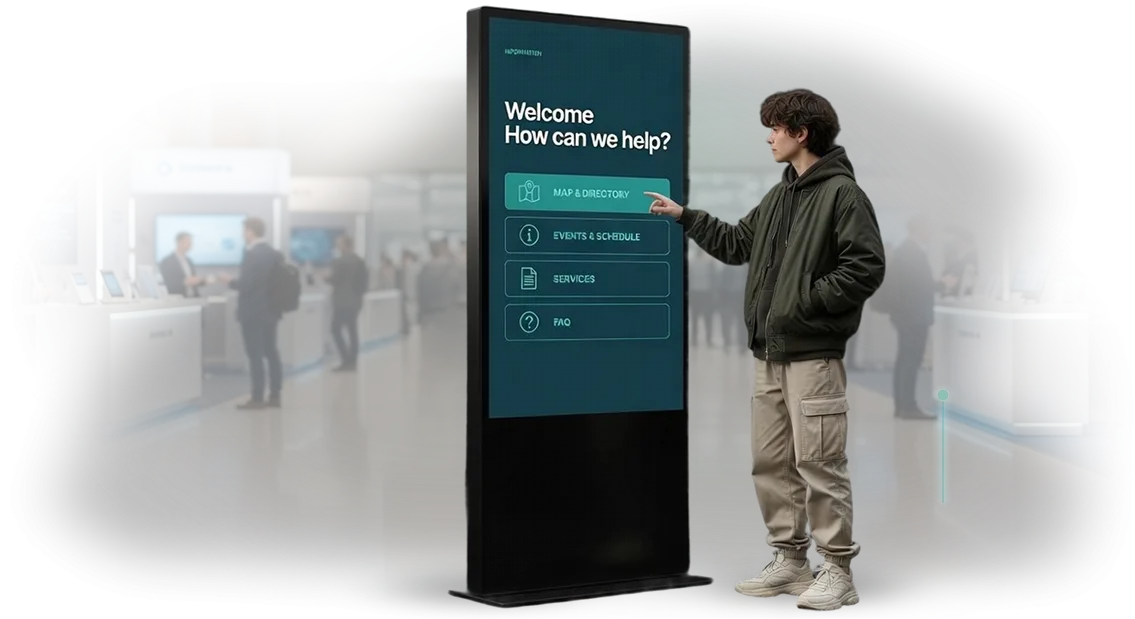
כיצד היכל קונצרטים מאבד אורחים ללא קיוסק אינטראקטיבי
מבקר מגיע להיכל קונצרטים לחוויה רגשית, והדבר הראשון שהוא נתקל בו הוא חיפוש מידע. איפה הבמה הנכונה, מתי מתחילה ההופעה, אילו מקומות פנויים, ואיך מגיעים למלתחה?
ללא תשובות לשאלות אלה, האורח הולך לאיבוד עוד לפני שהקונצרט מתחיל, מבזבז זמן בתורים לפקידי הקבלה, ומגבש דעה על איכות המקום כבר מהדקות הראשונות.
בזמן שהקהל מחפש את לוח הקונצרטים על פוסטרים מנייר או שואל את הצוות, העניין באירוע דועך. חלק מהאורחים עוזבים בלי לקנות כרטיס, אחרים מאחרים ומפספסים רגעים חשובים.
כתוצאה מכך, ההיכל מפסיד הכנסות, וביקורות שליליות על ארגון לקוי מופיעות ברשתות החברתיות — מוניטין שנבנה במשך שנים נפגע בגלל בעיית ניווט לא פתורה.
קיוסק אינטראקטיבי להיכל קונצרטים משנה את התרחיש הזה. האורח מוצא את לוח הקונצרטים העדכני, את מפת ההיכל ואת המקומות הפנויים בעצמו, בלי לפנות לצוות.
קיוסק מידע למבקרים עובד כמו עוזר אישי: הוא מציג את התכנית, עוזר בניווט בהיכל, ומצביע על מיקום המזנון, המלתחה והיציאות.
אנחנו יוצרים פתרונות כאלה במפתח מלא — מתרחישים ועד התקנה ותמיכה. המבקר זוכה לביטחון ונוחות, והמקום זוכה למכירות כרטיסים גבוהות יותר ולנאמנות אורחים.
זהו מקרה שבו השקעה בקיוסק אחד משתלמת עם קהל מרוצה וביקורים חוזרים.
מה קיוסק ייתן לאורחים ולניהול שלכם
אורחים מגיעים להיכל קונצרטים בשביל חוויות, אבל לפני תחילת ההופעה הם נתקלים לעתים קרובות בתורים, בחיפוש אחר הכניסה הנכונה ובצוות מבולבל.
קיוסק אינטראקטיבי מסיר את המחסומים האלה: המבקר מקבל שירות ברמה של מלון יוקרה, והניהול מקבל זרימת מבקרים צפויה.
אנחנו עוזרים להיכלים להעביר משימות שגרתיות לאוטומציה, כך שכל עובד עובד עם אנשים במקום עם דיאגרמות מנייר.
ניווט מהיר ללא לחץ ותורים
במקום לשאול "איפה המלתחה?" ו"איך אני מוצא את השורה שלי?", האורח רואה מפה אינטראקטיבית של ההיכל על המסך ומסלול למושב שלו, ללובי, למזנון או ליציאה.
זה מקצר את זמן החיפוש מכמה דקות לכמה נגיעות במסך — פחות בלגן, יותר רוגע לפני תחילת ההופעה.
הניווט עובד גם בכיוון ההפוך: המבקר מוצא את האזור הנכון בעצמו בלי להסיח את דעת הצוות.
עבור מקומות גדולים עם מספר קומות וכניסות, זה חשוב במיוחד — הקיוסק מטפל במידע הראשוני ומקל על הפקידים בשעות השיא.
טכנולוגיית אירוח: צוות למשימות חיות
כשתשובות שגרתיות והנחיות עוברות לאוטומציה, העובדים מתמקדים במה שדורש מעורבות אישית: קבלת פנים לאורחים מכובדים, פתרון מצבים יוצאי דופן וטיפול בפרטים.
הקיוסק לא מחליף אנשים — הוא לוקח את זרם השאלות החוזרות שיכול להגיע לעשרות בקשות בדקה במהלך ההפסקה.
הניהול רואה את העומס האמיתי ויכול לחלק מחדש את הצוות למשרד הכרטיסים או לקבוצות הכניסה. זו לא רק נוחות אלא גם שקיפות ניהולית: אתם תמיד יודעים איפה צריך חיזוק ואיפה האוטומציה כבר עובדת ביעילות.
שירות מבקרים שמגביר נאמנות
אורחים זוכרים לא רק את האמנים אלא גם איך קיבלו אותם. ניווט מהיר וברור, גישה למידע על אירועים קרובים, יכולת לסרוק קוד QR ולשמור את התכנית — זה השירות שגורם לקהל לרצות לחזור. קיוסק נוח הוא חלק מחוויית הערב, כמו תאורה חמה ואקוסטיקה נקייה.
עבור ההיכל, זה אומר יותר ביקורים חוזרים והמלצות חיוביות. נקודת מידע אינטראקטיבית הופכת לעובד הדיגיטלי שלכם, שעובד בכל רגע שיש לאורח שאלה — ועושה זאת באדיבות מושלמת.
פורמטי קיוסק להיכל קונצרטים
כל היכל קונצרטים מתמודד עם זרם מבקרים עם אותן שאלות: איפה השורה שלי, איך מגיעים למלתחה, מה בתכנית היום. הצוות שלנו מפתח קיוסקים אינטראקטיביים שמקלים על העומס ומאיצים את הניווט. בהתאם למשימה, אנחנו בוחרים את הפורמט — מסך מגע אינטראקטיבי, נייד או נייח.
| פורמט | למי הוא מיועד | מה הוא נותן ללקוח |
|---|---|---|
| קיוסק מסך מגע | לובי, אזור כניסה, אזור המתנה | אורחים מוצאים את השורה שלהם, בודקים את לוח הזמנים וקונים כרטיסים בעצמם — פחות תורים |
| קיוסק נייד | אזורי קידום, אירועים זמניים | נע ברחבי ההיכל ואוסף נתוני מבקרים — גמישות בפריסה |
| קיוסק נייח | כניסות ראשיות, לובי מעליות | פעולה יציבה בשעות השיא, תכנית ומידע עזר — הזמנה לפני תחילת הקונצרט |
עבור הלקוח, זהו כלי לניהול זרימת אורחים. אתם בוחרים איפה הקיוסק הכי נחוץ — בכניסה, ליד המלתחה או ליד הבר — ומקבלים דוחות שימוש.
קיוסק מסך מגע אידיאלי לאינטראקציות ארוכות יותר: האורח חוקר את תכנית העונה, מסתכל על מפת ההיכל ונרשם לעדכונים. פורמט נייד מתאים לאירועים עם פריסות לא סטנדרטיות, כשההיכל משנה את התצורה שלו להופעה. קיוסק נייח מטפל בשגרה בנקודות קבועות — צוות חי מתמודד עם אורחים חיים.
ההשפעה העיקרית היא הפחתת עומס על הצוות ושביעות רצון גבוהה יותר של מבקרים. אנשים מגיעים למושבים שלהם מהר יותר וחוזרים ברצון רב יותר, ואתם מקבלים ערוץ תקשורת עם הקהל לפני, במהלך ואחרי הקונצרט.
שלבי פיתוח קיוסק אינטראקטיבי לפרויקט שלכם
פיתוח קיוסק אינטראקטיבי להיכל קונצרטים אינו התקנה חד-פעמית של "קופסה" אלא פרויקט מובנה וברור מהיום הראשון. אנחנו עובדים לפי תכנית שקופה: מהבריף ועד תמיכה לאחר ההשקה.
אתם תמיד יודעים באיזה שלב נמצאת המשימה, מה מאושר ומתי הקיוסק יתחיל לספק ערך.
-
בריף וניתוח משימה. אתם מספרים לנו על ההיכל, הקהל והמטרות: מידע על קונצרטים, מכירת כרטיסים, ניווט באזורים. אנחנו לומדים את הרפרטואר, פריסות המושבים ושאלות אופייניות של אורחים כך שהקיוסק יענה על צרכים אמיתיים.
-
אישור קונספט ופריסה. אנחנו מציעים את המבנה של המסך העתידי: לוגיקת סעיפים, נתיבי ניווט וסגנון ויזואלי שמתאים לעיצוב הפנים של ההיכל. אתם מאשרים את הפריסה לפני תחילת הפיתוח — בלי הפתעות בשלב הסופי.
-
פיתוח ממשק ולוגיקה. אנחנו בונים מערכת אינטראקטיבית שעובדת בצורה אמינה גם עם קהל גדול של מבקרים. בשלב זה, אתם רואים גרסאות ביניים של המסכים ויכולים להתאים טקסטים או הרכב סעיפים אם צריך.
-
בדיקות וניפוי שגיאות. אנחנו בודקים תרחישי משתמש, מחיפוש מהיר של אירוע ועד קניית כרטיס. אנחנו מתחשבים בצרכים של אנשים שונים — גיל, היכרות עם מסכי מגע. כל הליקויים מתוקנים לפני ההשקה כך שהקיוסק יעבוד ללא תקלות מהיום הראשון.
-
השקת הקיוסק. אנחנו מתקינים את התוכנה, מגדירים את החיבור לתכנית וללוח הזמנים, ובודקים אינטגרציה עם המערכות שלכם. אנחנו מפעילים את הקיוסק ומספקים הדרכה קצרה לצוות.
-
תמיכה ופיתוח. אנחנו לא נעלמים אחרי ההשקה: אנחנו מעדכנים תוכן, מוסיפים פונקציות חדשות ומנטרים יציבות. אם ההיכל משנה את התכנית או מוסיף שירותים — הקיוסק משתנה איתכם.
מה כלול בחבילת המסירה וההתקנה
לאחר סיום הפרויקט, אתם מקבלים קיוסק מוכן לעבודה — לא רק ציוד אלא פתרון מלא שנדלק ועובד מהיום הראשון. בלי הרכבה עצמית, בלי חיפוש קבלני משנה, בלי התעסקות בקונפיגורציה: כל מה שצריך להשקה כבר כלול.
- חומרת קיוסק — מארז מסך מגע מקצועי עם מסך נגד ונדליזם ורכיב שרת יציב, המיועד לפעולה מסביב לשעון בלובי של היכל קונצרטים.
- תוכנה — ממשק מבקרים (תכנית, מפת היכל, ניווט, מידע על אירועים) ולוח בקרה ברור לצוות שלכם. עדכון תוכן לוקח דקות ואינו דורש קריאה למומחה.
- תוכן מותאם להיכל שלכם — תכנית, רפרטואר, מידע על אמנים וכללי כניסה. אנחנו עוזרים לכם לבנות את התוכן ואז לשמור אותו מעודכן לפי בקשתכם.
- התקנה והגדרת קיוסק — אנחנו מספקים, מרכיבים, מחברים ובודקים את הפעולה במקום. אתם מקבלים מכשיר מוכן לקבל את האורחים הראשונים בלי לערב את הצוות שלכם.
- הדרכת צוות — מפגש מעשי קצר למנהלים ולקופאים: איך לשנות לוחות זמנים, לנהל את התכנית ולטפל בשאלות אופייניות של מבקרים.
- תמיכה טכנית — ערוץ תקשורת ייעודי עם הצוות שלנו. אנחנו מגיבים במהירות, מתחברים מרחוק במידת הצורך ופותרים בעיות לפני שהן הופכות למורגשות לאורחים.
- אחריות ותחזוקה — אחריות רשמית על ציוד ותוכנה, בתוספת תחזוקה מתוזמנת כך שהקיוסק לעולם לא יאכזב אתכם ביום קונצרט.
בסופו של דבר, אתם מקבלים שירות עובד ולא אוסף חלקים: הצוות יודע לנהל אותו, המבקרים יודעים如何使用 אותו, והתמיכה הטכנית מטפלת בכל מה שבעבר היה דורש מאמץ משלכם.
הניסיון שלנו: הטמעת קיוסק במוסדות תרבות
עבור מוסדות תרבות, בעיית התורים והניווט תמיד הייתה כואבת: מבקרים מבזבזים זמן במשרדי כרטיסים ובמלתחות, ומנהלים עונים על אותן שאלות שוב ושוב.
הטמענו קיוסק אינטראקטיבי בהיכל הקונצרטים "סימפוניה" — והתוצאה הייתה מורגשת כבר מהחודש הראשון.
איך עברה ההטמעה
ראשית, ניתחנו את זרימת המבקרים וזיהינו בדיוק איפה נוצרים עומסים. לאחר מכן התקנו קיוסק בלובי וחיברנו אותו למערכת הכרטוס של ההיכל: אורחים בוחרים אירועים, צופים במפת ההיכל, קונים כרטיסים או מזמינים מקומות בעצמם.
עבור מבקרים מבוגרים, יצרנו ממשק גדול עם רמזים; עבור קהל צעיר יותר, חיפוש מהיר לפי תאריכים וז'אנרים.
חודשיים לאחר ההשקה, התור במשרד הכרטיסים ירד ב-40%, ו-65% מהאורחים הפסיקו לגשת לדלפק המידע לעזרה. הזמן הממוצע לפעולה ירד משלוש דקות לדקה אחת, והמנהלים קיבלו זמן פנוי למשימות חשובות יותר.
משוב לקוח
מנהל ההיכל ציין: "לא ציפינו שהקיוסק יהפוך לעוזר המרכזי בלובי. אורחים מתמצאים ברוגע, והצוות שלנו מתמקד באלה שבאמת זקוקים לעזרה." המוסד מתכונן כעת לשלב השני — קיוסקים במלתחה ובבית הקפה.
המדדים אישרו את החזר ההשקעה: עומס הצוות ירד, מהירות השירות עלתה, ושביעות רצון המבקרים עלתה ב-30% לפי הסקר.
הלקוח כבר המליץ על הפתרון לשני עמיתים מאזורים שכנים — עבורנו, זה המדד העיקרי לעבודה איכותית.
איך לבחור פורמט קיוסק למשימות ההיכל שלכם?
בחירת פורמט קיוסק להיכל קונצרטים אינה עניין של טכנולוגיה אלא של איך אורחים יתקשרו עם המקום שלכם.
לפני שמסתכלים על מסכים ומארזים, הגדירו את העיקר: מה הקיוסק צריך לעשות — לעזור בניווט, למכור כרטיסים, להציג את התכנית, או להחליף פקיד בדלפק המידע. זה קובע את הגודל, המיקום והממשק.
השטח וזרימת המבקרים הם קריטריוני הבחירה הראשונים. בלובי קטן עם תנועה כבדה, מבנים קומפקטיים צמודי קיר או עומדים על הרצפה שאינם חוסמים מעבר או יוצרים תורים נוחים יותר.
עבור אזורים מרווחים עם הרבה אורחים, קיוסקים אינטראקטיביים נייחים עם מסכים גדולים מתאימים — הם נראים מרחוק, מושכים תשומת לב ומאפשרים למספר מבקרים לעבוד בו זמנית.
המטרות של ההיכל קובעות את הפונקציונליות. אם הקיוסק נחוץ למכירת כרטיסים והזמנת מקומות, מהירות ואינטגרציה עם מערכת הכרטוס שלכם חשובים.
אם הוא לניווט ומידע על אירועים, ממשק ברור ויכולת לעדכן תוכן במהירות בלי לערב מפתחים עומדים בראש. קיוסק אינטראקטיבי להיכל יכול לשלב כמה תרחישים, מצפייה בתכנית ועד איסוף משוב אורחים.
קריטריון נוסף הוא נוחות לצוות שלכם. קיוסק טוב לא צריך לדרוש ניהול מתמיד: תוכן מתעדכן מרחוק, וסטטיסטיקות שימוש עוזרות לכם להבין אילו פונקציות מבוקשות.
אם יש לכם כמה נקודות בהיכל, כדאי לבחור פתרון אחיד שקל לנהל אותו מרכזית.
כדי להימנע מטעויות, התחילו בייעוץ: תארו את השטח, הפריסה, זרימת המבקרים הצפויה והמשימות. בהתבסס על נתונים אלה, נציע את האפשרות האופטימלית — תוך התחשבות בתקציב ובסיכויי הפיתוח של המקום.
קיוסק שנבחר נכון מחזיר את עצמו באמצעות הפחתת עומס על הצוות, עלייה במכירות מקוונות ושביעות רצון גבוהה יותר של אורחים.
התייחסות לספקות ושאלות לפני ההזמנה
לפני תחילת פרויקט, לקוחות שואלים את אותן שאלות: מה קורה אם הציוד מתקלקל, כמה זמן ייקחו ההתקנה והדרכת הצוות. אנחנו עונים על החששות המרכזיים כדי שתוכלו לקבל החלטה בבהירות מלאה.
מה קורה אם הקיוסק מתקלקל במהלך אירוע?
תקלה ברגע הקריטי ביותר היא הפחד הגדול ביותר של כל מארגן. אנחנו מתכננים את המערכת כך שתקלות קריטיות מתרחשות לעתים רחוקות ביותר — ואם הן מתרחשות, הן נפתרות במהירות.
בכל השלבים, מבחירת רכיבים ועד פיתוח תוכנה, אנחנו משתמשים בפתרונות אמינים ומוכחים. זה אומר שהקיוסק פועל ביציבות גם בעומס גבוה בימי בכורה ובתאריכי פסטיבלים.
אנחנו גם מספקים ניטור מרחוק: הצוות שלנו רואה את מצב המערכת ויכול להתערב לפני שהמצב הופך למורגש לאורחים.
האם ציוד יקר יתקלקל, ומי אחראי על האחריות?
הקיוסק מגיע עם אחריות רשמית — המכסה גם את החומרה וגם את התוכנה. במהלך תקופת האחריות, אנחנו פותרים כל בעיה הקשורה לפעולת המערכת ללא תשלום.
אנחנו עובדים מרחוק בכל רחבי המדינה, כך שמהירות התגובה אינה תלויה בגאוגרפיה. ברוב המקרים, אנחנו פותרים את הבעיה מרחוק — דרך חיבור מאובטח לקיוסק. אם צריך להחליף חלקים, אנחנו מסכמים על לוחות זמנים ומסדרים הכל עם זמן השבתה מינימלי.
האם קשה להתקין את הקיוסק ולהדריך את הצוות?
ההתקנה אינה דורשת עבודות בנייה או שינויי פריסה. המנהל הקבוע שלכם יכול להתמודד עם תרחישים בסיסיים תוך כמה שעות, והוראות מפורטות וחומרי הדרכה תמיד זמינים.
אנחנו לא נוטשים אתכם אחרי ההשקה. במהלך ההפעלה, המומחה שלנו מלווה את התהליך, בודק את כל התרחישים ועונה לשאלות הצוות. אחרי זה — תמיכה טכנית בטלפון ובאפליקציות מסרים, כך שהעובדים שלכם תמיד יכולים לקבל ייעוץ מהיר.
אילו עלויות נסתרות יהיו אחרי ההשקה?
אנחנו מספקים חישוב שקוף של עלות בעלות כוללת: אתם יודעים מראש את התקציב לתחזוקה, עדכוני תוכן ותמיכה טכנית. בלי חיובים מפתיעים על "ביקורי חירום" או "תיקוני באגים".
יתר על כן, הקיוסק מחזיר את עצמו על ידי הפחתת העומס על המנהלים ומשרד הכרטיסים: אורחים מוצאים את המידע שהם צריכים, קונים כרטיסים וחוקרים את התכנית בעצמם. אתם חוסכים בפעולות שגרתיות ומגדילים הכנסות ממכירות נוספות בלובי.
אם עדיין יש לכם שאלות — פשוט כתבו לנו. נספר לכם איך הקיוסק ישתלב בחלל שלכם ונכין פתרון אישי לצרכי ההיכל שלכם.בואו נדבר על הפרויקט שלכם: הזמינו ייעוץ
היכל קונצרטים מקבל מאות אורחים מדי יום: מבקרים מחפשים מקומות, מלתחה, בית קפה או חנות מזכרות. מנהלים עונים על אותן שאלות מאה פעמים, ומבקרים מבזבזים זמן.
קיוסקים אינטראקטיביים מקלים על הצוות ונותנים לאורחים גישה לתכנית, מפת היכל, כרטיסים והצעות מיוחדות. אבל פתרון סטנדרטי לא מתאים לכל היכל — אז התחילו בשיחה איתנו.
ייעוץ הוא סקירה מעשית של המשימה שלכם, לא מצגת כללית. תוך 30–40 דקות, נדון באתגרי המקום, באפשרויות מיקום הקיוסק ובאיך הם משתלבים בעיצוב הפנים. כתוצאה — תכנית פעולה והערכת עלות כנה ללא התחייבויות.
תלמדו:
- איך תורים יתקצרו והמנהלים יקבלו הקלה;
- אילו פורמטים מתאימים למקום שלכם;
- איך לחבר קיוסקים לתכנית ולמערכת הכרטוס;
- כמה זמן ייקחו הפיתוח וההשקה;
- אילו חומרים נדרשים ואיך עובד האישור;
- איך מסודרת תמיכה טכנית לאחר ההטמעה.
נסקור גם דוגמאות: איך קיוסקים עזרו למקומות קונצרטים להגדיל מכירות נלוות, להפחית תורים ולשפר את חוויית האורחים.
שלחו בקשת פרויקט — ספרו לנו את שם ההיכל ותארו בקצרה את המשימה. נחזור אליכם תוך יום עסקים אחד, נבחר זמן נוח ונענה על שאלותיכם. התחילו בייעוץ על קיוסקים — זה הצעד הראשון לעבר היכל יעיל.