

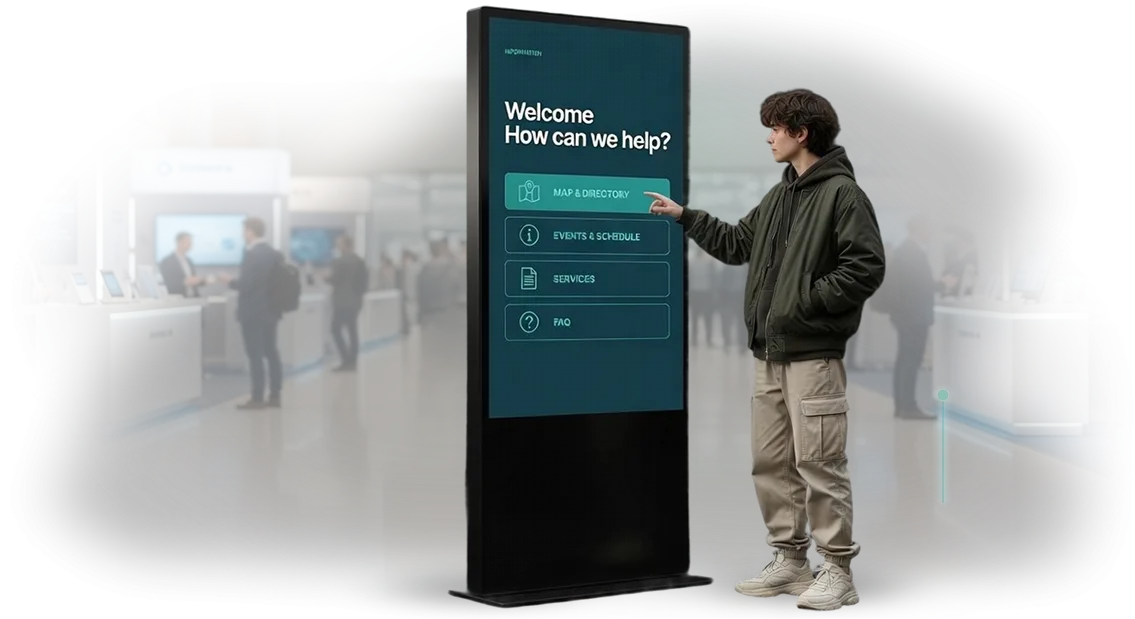
קיוסקים אינטראקטיביים במטרו: איך להחזיק את תשומת הלב של הנוסעים
נוסעי המטרו לא מוכנים לבזבז זמן בחיפוש מידע. הם רוצים להבין במהירות איך להגיע ליציאה הנכונה, איפה השירותים הקרובים ביותר, או איך להגיע לתחנה שהם צריכים.
אם קיוסק אינטראקטיבי גורם להם לפענח את הממשק או לחכות לטעינה ארוכה, התסכול מבטל את התועלת שלו. כתוצאה מכך, אפילו שירות שימושי נשאר ללא שימוש.
ניווט במטרו הוא לא רק מפת קווים. נוסעים מחפשים מידע על מעברים, זמני הגעת רכבות, אירועי עיר, ואיך מתקנים סמוכים עובדים. ככל שהקיוסק מכסה יותר משימות, כך הוא בעל ערך רב יותר לעיר ולמפעיל. אבל כל שלב נוסף בממשק הוא שניות אבודות, ובזרימת מטרו, כל שנייה חשובה.
מפות נייר ושלטים לא יכולים לעמוד בקצב השינויים: יציאות סגורות, מסלולים מנותבים מחדש, מתקנים חדשים. קיוסק אינטראקטיבי תמיד מציג את התמונה העדכנית ומסתגל מיידית למצב.
זה חשוב במיוחד במצבי חירום כאשר נוסעים צריכים להתמצא במהירות.
אנחנו מתכננים קיוסקים אינטראקטיביים כך שהתשובה מופיעה מיידית. אנחנו מתכננים תרחישים לסוגים שונים של נוסעים: נוסעים קבועים, תיירים עם יכולות שפה מוגבלות, קשישים. אנחנו עוזרים לקצר את הדרך משאלה לתשובה לנגיעה אחת או שתיים. המידע לנוסע הופך חלק וטבעי — אדם מקבל את מה שהוא צריך וממשיך בדרכו.
התוצאה — פחות תורים בדלפקי המידע, זרימת נוסעים מהירה יותר, שביעות רצון גבוהה יותר מהנסיעה. אלה המדדים המרכזיים עבור מפעיל תחבורה ועבור העיר.
זו הסיבה שלקוחות חוזרים אלינו כדי להרחיב את המערכת: הם מוסיפים תרחישים חדשים, מחברים נתוני תנועת רכבות, והופכים את הקיוסק לשימושי עוד יותר.
מה מקבלים מהתקנת קיוסק אינטראקטיבי
קיוסק אינטראקטיבי במטרו הוא לא רק נקודת מידע אלא ערוץ תקשורת מלא עם הנוסעים. בניגוד למפות סטטיות והודעות, הוא תמיד מציג מידע עדכני: שינויים בשירות, תעריפים חדשים, שירותים שימושיים.
גישה זו מפחיתה מצבי קונפליקט והופכת את הנסיעה לנוחה יותר — וזה משפיע ישירות על המוניטין שלכם כמפעיל.
נוסעים מעריכים כשהמטרו חוסך להם זמן. קיוסק אינטראקטיבי עונה מיידית על שאלות נפוצות: איך מגיעים, איפה היציאה, כמה עולה כרטיס, אילו שירותים זמינים בקרבת מקום.
זה בונה הרגל של שימוש בשירות שלכם ומגביר נאמנות: אנשים חוזרים למטרו שבו הדברים היו קלים וברורים. בנוסף, הקיוסק עובד מסביב לשעון, כך שנוסע אף פעם לא נשאר ללא עזרה גם בשעות העומס או בלילה.
יתרון נוסף הוא הקלה על הצוות. עובדי המטרו מפסיקים לענות על אותן שאלות ומתמקדים במשימות חשובות יותר: בטיחות, עזרה לנוסעים עם מוגבלות בניידות, פתרון מצבים לא שגרתיים.
הקיוסק הופך את השגרה לאוטומטית, כך שאין צורך להחזיק שירות מידע נוסף או להכשיר צוות לטפל בנפח גדול של פניות. זה חיסכון בתקציב ובזמן.
מטרו מודרני צריך להיראות מתקדם טכנולוגית — נוסעים וקהילת העיר שמים לב לכך מיידית. התקנת קיוסקים אינטראקטיביים מראה שהחברה עוקבת אחרי המציאות הדיגיטלית ומוכנה להשקיע בנוחות.
קיוסק כזה הופך לחלק מעיצוב התחנה, תומך בזהות המותג, ונותן לאנשים סיבה לדבר עליכם בחיוב. לפעמים הפרטים האלה הם מה שמכריע בין התחבורה שלכם לחלופות.
בסך הכול, קיוסק אינטראקטיבי פותר שלוש משימות בו-זמנית: מתן מידע לנוסעים, הפחתת העומס על הצוות, וחיזוק התדמית של מפעיל מודרני.
אם אתם מתכננים לעדכן את מערכת המידע במטרו, אנחנו נעזור לפתח וליישם פתרון לצרכים שלכם — מעיצוב תרחישים ועד אינטגרציה מלאה. צרו קשר כדי לדון בפרטי הפרויקט שלכם.
פורמטים של קיוסקים אינטראקטיביים למטרו ולעסקים
אנחנו בוחרים את פורמט הקיוסק למשימה ספציפית — וכאן חשוב להתחשב במיקום ההתקנה, בתנועת הרגליים ובתרחיש השימוש. מעברים תת-קרקעיים ולובי מטרו דורשים פתרונות קומפקטיים ואמינים; מרכזי עסקים ואולמות דורשים מבנים מרשימים יותר.
בצוות שלנו אנחנו מפתחים ומייצרים קיוסקים במפתח מלא: מפאנל מגע קטן ועד עמדת מולטימדיה בעיצוב מותאם אישית.
בחירת הפורמט משפיעה ישירות על נוחות המבקרים ועל החזר ההשקעה. כדי להקל על ההחלטה, ריכזנו את האפשרויות העיקריות והיתרונות שלהן:
| פורמט | איפה הוא עובד | מה הוא נותן ללקוח |
|---|---|---|
| פאנל קיר קומפקטי | קבוצות כניסה, לובי צרים, אולמות מעליות | חוסך מקום, גישה מהירה למידע, עלות נמוכה |
| קיוסק עומד | לובי מטרו, מעברים, אולמות מרכזי עסקים | עמיד בפני קהל, גובה מסך נוח, תחזוקה קלה |
| קיוסק דו-צדדי | אזורים עמוסים, תורים, אזורי המתנה | שני מסכים — שני זרמי מבקרים, תורים קצרים יותר |
| עמדת מולטימדיה | אטריומים, אזורי תצוגה, גלריות קניות גדולות | הצגת תוכן מרשימה, אפקט תדמיתי, מושך תשומת לב |
לכל פרויקט אנחנו מכינים תכנון אישי, בוחרים חומרים וציפויי הגנה לפי עוצמת השימוש. אנחנו מגדירים תוכנה לתרחיש שלכם — מניווט תחנות ועד מכירת כרטיסים ואינטגרציה עם שירותי עיר.
אנחנו נמליץ על הפורמט האופטימלי לחלל ולמשימות שלכם, וניקח על עצמנו ייצור, התקנה ותמיכה.
איך עובד פיתוח קיוסק למטרו: מבריף ועד השקה
פיתוח קיוסק למטרו הוא לא רק התקנת מסך עם תוכנה. הלקוח צריך כלי ניווט עובד שעוזר לנוסעים מהיום הראשון ואינו דורש פיקוח מתמיד.
לכן בנינו את התהליך משלבים ברורים: אתם תמיד יודעים מה קורה ומתי יגיע התוצאה. להלן הדרך מהפגישה הראשונה ועד השקת הקיוסק.
-
בריף ומטרות. אנחנו דנים היכן יוצב הקיוסק, מי הקהל העיקרי, ואילו פונקציות חשובות: חיפוש תחנות, זמני הגעה, מפת קווים. אנחנו קובעים לוחות זמנים וקריטריוני קבלה.
-
אישור תוכנית. אנחנו מכינים תרחיש שימוש ואב-טיפוס של המסך העתידי. אתם רואים את מבנה התפריט ואת היגיון הניווט לפני תחילת הפיתוח — זה מונע עבודה חוזרת ועלויות נוספות.
-
פיתוח ממשק. אנחנו יוצרים ממשק נוח ובולט, ומתאימים אותו למאפייני הקיוסק: תאורה, זווית צפייה, שליטה באצבע. אנחנו חושבים על התוכן — מפה, לוח זמנים, בלוקי פרסום — כך שהקיוסק יועיל לנוסעים.
-
בדיקות ותיקון תקלות. אנחנו בודקים פעולה בתנאים קרובים למציאות: עמידות בעומס, לחיצות על מסך, מהירות טעינת עמודים. אנחנו מתקנים הכל לפני ההתקנה כך שההשקה תתבצע ללא הפתעות וללא צורך במעורבות שלכם.
-
השקה וקבלה. אנחנו מתקינים את התוכנה, מחברים את הקיוסק למערכות הנדרשות ומכשירים את הצוות. יחד אנחנו בודקים את התרחישים וחותמים על דו"ח הקבלה — אתם מקבלים מסך מוכן.
-
תמיכה ועדכונים. לאחר ההשקה אנחנו נשארים בקשר: מעדכנים מידע, מוסיפים פונקציות ופותרים בעיות במהירות. הקיוסק פועל ביציבות, ואתם לא צריכים להיכנס לפרטים טכניים — זה התפקיד שלנו.
מה כלול במסירת קיוסק אינטראקטיבי למטרו
קיוסק אינטראקטיבי למטרו הוא לא רק מארז עם מסך אלא שירות מוכן לנוסעים. כדי שהוא יעבוד מהיום הראשון, אנחנו מוסרים חבילה מלאה — מחומרה ועד הוראות ותמיכה, לא "ערכת הרכבה" של חלקים נפרדים.
חבילת מסירה מלאה
- קיוסק עמיד לוונדליזם עם מארז מוגן — מתוכנן לפעילות 24/7 בלובי, עמיד בפני אבק, לחות ופגיעה מכנית.
- תוכנה עם ממשק מגע — מפת מטרו, בניית מסלול, תעריפים, חדשות ותרשים יציאות; מתעדכן מרכזית ללא ביקור טכנאי באתר.
- עיצוב מותאם אישית של טפסי מסך — מותאם לסגנון הניווט של המטרו ולמותג שלכם כך שהקיוסק נראה חלק מהמערכת, לא מכשיר חיצוני.
- התקנה והפעלה — אנחנו מספקים, מתקינים, מחברים ובודקים את כל תרחישי הפעולה באתר.
- הכשרת צוות — מפגש מעשי קצר לעובדים: איך לתחזק את הקיוסק, לטפל בשאלות נפוצות של נוסעים, ומה לעשות במצב חירום.
- תיעוד טכני — הוראות ברורות לתחזוקה שוטפת, טעינת חומרים מתכלים ותגובה מהירה.
- אחריות ותמיכה טכנית — מכסה גם ציוד וגם תוכנה; אנחנו מקבלים פניות לאורך כל זמן פעולת הקיוסק.
גישה זו נותנת לכם נקודת אחריות אחת: כל הרכיבים כבר נבדקו לתאימות, והנוסעים מקבלים שירות יציב ללא השבתות.
אתם לא צריכים לתאם בין קבלנים שונים — אתם פשוט מקבלים פתרון מוכן ומפעילים אותו.
מקרה בוחן: קיוסקים אינטראקטיביים הגבירו את נאמנות הנוסעים
נוסעי המטרו רגילים ללחץ: בשעות העומס קשה למצוא במהירות את היציאה הנכונה, את המעבר או את הלוח עם זמני הגעה. כתוצאה מכך, התורים בדלפק המידע גדלים, ואנשים עייפים זוכרים את הנסיעה כחוויה לא נעימה.
עבור המטרו של מוסקבה זה היה בולט במיוחד — לתחנות המרכזיות יש זרימת נוסעים עצומה, וכל נוסע שאבד יוצר מתח.
התקנו קיוסקים אינטראקטיביים עם מפה גדולה, חיפוש תחנות ורמזים ברורים. במקום לחפש עובד, אדם מוצא את המסלול בעצמו תוך 10–15 שניות.
הקיוסק עובד ללא תקלות גם בעומס כבד, והממשק כל כך פשוט שאנשים בכל גיל משתמשים בו.
התוצאה עלתה על הציפיות: בשלושת החודשים הראשונים, מספר הפניות לדלפק המידע ירד בשליש. הנוסעים החלו להתמצא מהר יותר, פחות פספסו רכבות, ועשו מעברים ברוגע יותר. הנאמנות למטרו גדלה — אושרה בסקרים ובירידה במספר התלונות.
"בעבר, צוות דלפק המידע לא יכול היה לעמוד בקצב הזרימה, ועכשיו יש להם זמן לעזור למי שבאמת צריך קשר אישי. הנוסעים מרגישים דאגה, לא תסכול", אומר ראש מחלקת שירותי הנוסעים.
לאחר הצלחה כזו, הרחבנו את רשת הקיוסקים לתחנות שכנות ואנחנו ממשיכים לפתח את הפרויקט הזה.
מקרה זה מראה: ניווט נכון הוא לא רק מסך עם מפה אלא כלי שמפחית את העומס על הצוות והופך נסיעה יומיומית לחוויה נוחה. קיוסק אינטראקטיבי מחזיר את ההשקעה לא רק דרך הפחתת עלויות אלא גם דרך אמון גובר במותג התחבורה.
איך לבחור את פורמט הקיוסק הנכון למשימה שלכם?
פורמט הקיוסק הנכון משפיע ישירות על המהירות שבה מבקר מקבל את המידע שהוא צריך ועל השאלה אם הוא יוצר תור. קודם כל, אנחנו מסתכלים על שלושה דברים: תנועת רגליים, החלל והמשימות שהקיוסק צריך לפתור.
תנועת רגליים היא הגורם המרכזי. אם כמה מאות אנשים עוברים בשעה, פורמט עם מסך אחד יכול להפוך לצוואר בקבוק. במקרה כזה, עדיף לתכנן כמה נקודות כניסה או שני קיוסקים מקבילים.
בתנועה נמוכה, עמדה קומפקטית אחת מספיקה — היא לא תופסת מקום נוסף ואינה דורשת פיקוח מתמיד.
החלל קובע את הממדים ואת סוג המבנה. בלובי מטרו צר, פאנל מגע צמוד קיר נוח יותר; באולם מרווח, מסוף עצמאי עם מסך גדול.
חשוב להתחשב בתאורה כדי שהתמונה תישאר קריאה, ובמיקום יחסית למסלול הנוסעים הראשי.
המטרות גם משפיעות על בחירת הפורמט. לניווט, מפה וחיפוש תחנות מספיקים; למידע על אירועים, ויטרינת תוכן; למוקד שירות אינטראקטיבי, תרחיש מבוסס תפריט עמוק יותר. ככל שהמשימה מורכבת יותר, כך מוקדשת יותר תשומת לב לממשק ולמהירות התגובה.
בפועל, הפתרון האופטימלי מתבהר לאחר ניתוח קצר. אנחנו מספקים ייעוץ, מעריכים את תנועת הרגליים בחלל שלכם ומכינים חישוב עלות לפורמט הספציפי שלכם — כך אתם מקבלים קיוסק שפותר את הבעיה, לא רק מסך יפה.
שאלות נפוצות על קיוסקים אינטראקטיביים
לרוב הלקוחות מודאגים לא מהחלקים הפנימיים של הקיוסק אלא מהפעולה האמינה שלו: מה קורה אם הוא מתקלקל בשעות העומס, מי אחראי על התחזוקה, וכמה מהר הקיוסק יחזור לפעולה.
זה הוגן — זרימת הנוסעים והעומס על שירותי המטרו תלויים ביציבות העמדות. אנחנו שמים את כל ההסכמות בחוזה: זמני תגובה, תיקונים ואחריות.
מהי האחריות על הקיוסק?
אנחנו מספקים אחריות רשמית של 12 חודשים או יותר על ציוד והתקנה. במקרה של תקלה, אנחנו מחזירים לפעולה על חשבוננו — אבחון, חלקים ועבודה כבר כלולים.
מי מטפל בתחזוקה?
אנחנו לוקחים על עצמנו שירות מלא: בדיקות תקופתיות, עדכונים, חומרים מתכלים, ניקוי. ניטור מרחוק מזהה חריגות מראש — אתם צריכים רק שיחה אחת למוקד השירות.
מה לעשות אם הקיוסק מתקלקל?
לקיוסק יש פרטי קשר לתמיכה, והחוזה מפרט את זמן התגובה — בדרך כלל 2–4 שעות. צוות שירות מגיע ומחליף את היחידה התקולה באתר; במידת הצורך, אנחנו מספקים קיוסק חלופי למשך התיקון.
כמה מהר התקלה תתוקן?
אנחנו מתקנים 90% מהתקלות באותו יום; מקרים מורכבים תוך 48 שעות. החוזה קובע את הסטנדרטים, כך שלוחות הזמנים הם התחייבות, לא הבטחה.
הזמינו פיתוח קיוסק אינטראקטיבי עכשיו
הזמינו פיתוח קיוסק אינטראקטיבי עכשיו
שליחת בקשה היא לא התחייבות אלא דרך לקבל תשובות תוך יום אחד. אנחנו נשלח חישוב עלות פרויקט, לוח זמנים ליישום והמלצה על פורמט הקיוסק למשימות שלכם: ניווט, מידע, מכירת כרטיסים או שירותי נוסעים.
מה מקבלים לאחר שליחת בקשה
- חישוב עלות פרויקט — עלות הפיתוח והאינטגרציה לתקציב שלכם, ללא תוספות נסתרות.
- לוח זמנים — לוח זמנים ריאלי מבריף ועד השקה, תוך התחשבות באישורים מצדכם.
- בחירת פורמט — קיוסק עומד, צמוד קיר או מובנה: נעזור לכם לבחור לפי תנועה וחלל.
- ייעוץ — נסביר איך הקיוסק משתלב בתשתית המטרו הקיימת ואילו שירותים יביאו את הערך הרב ביותר.
- מפרט טכני — נתעד את הדרישות לממשק ולתרחישי נוסעים כדי שתבינו על מה אתם משלמים.
איך אנחנו עובדים
אתם שולחים בקשה — אנחנו יוצרים קשר תוך יום עסקים אחד ושואלים 5–7 שאלות הבהרה על המשימה. לאחר מכן אנחנו מכינים הצעה מסחרית ומצגת פתרון.
לאחר אישור, אנחנו מתחילים בפיתוח, בודקים על תרחישי נוסעים אמיתיים, ומוסרים את הפרויקט עם הכשרה לצוות שלכם.
למה להתחיל עכשיו
כל חודש של השבתה פירושו נוסעים שלא קיבלו את המידע שהם צריכים וצוות שמוסח על ידי שאלות חוזרות. קיוסק אינטראקטיבי מקל על הצוות ומשפר את הרושם מהנסיעה.
שלחו בקשה — ועד מחר תדעו כמה עולה הפתרון ומתי הוא יעלה לאוויר.
הצעד הבא שלכם
מלאו את הטופס או כתבו לנו — זה ייקח שתי דקות. נשלח חישוב עלות, לוח זמנים והמלצות, ואתם תחליטו אם האפשרות מתאימה לכם. אם לא — בכל זאת תצאו עם ייעוץ שימושי וללא התחייבויות.