

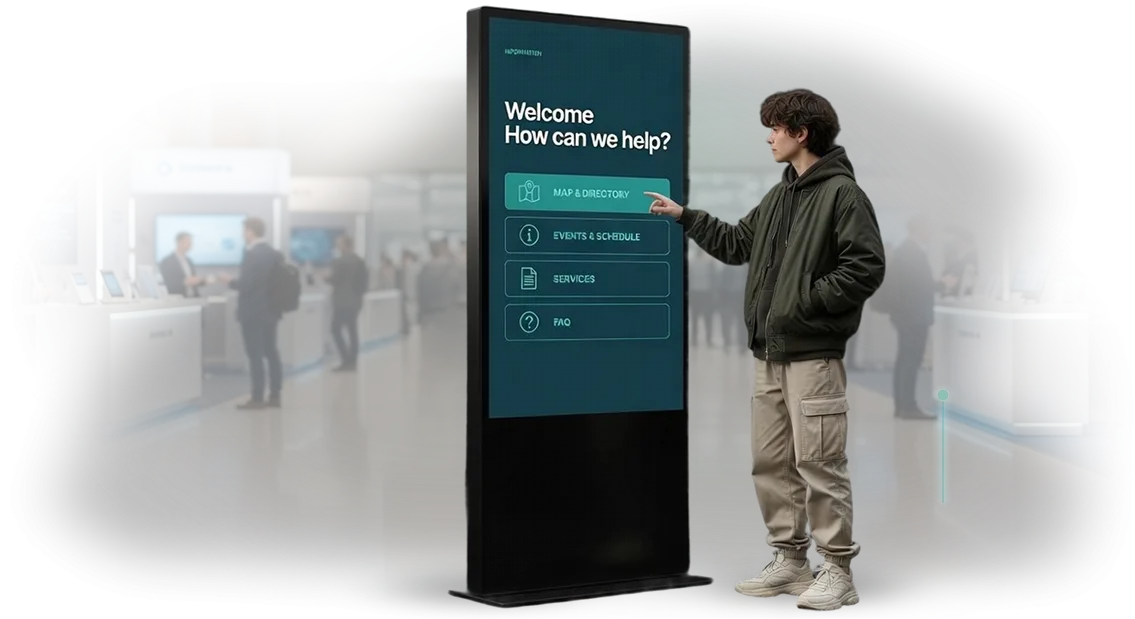
מוזיאון ללא אינטראקטיביות מאבד מבקרים — איך לתקן את זה
מוזיאון הוא לא רק מחסן של מוצגים, אלא מקום שבו המבקרים צריכים לחוות סיפור. אבל ללא אינטראקטיביות מודרנית, האורחים עוברים בין האולמות ב-20 דקות, מצלמים את השלטים, ועוזבים כשלא נשאר להם דבר מלבד עייפות.
כיום, מוזיאון מתחרה בסמארטפון שבידו של כל מבקר — והוא מפסיד אם הוא לא נותן להם סיבה להישאר.
הבעיה ברורה: ויטרינות קלאסיות ודוכנים סטטיים לא מעוררים עניין, בעוד שהקהל מצפה לדיאלוג. אורחים צעירים יותר רוצים לשלוט בתוכן, לשאול שאלות ולקבל משוב מיידי.
ללא זה, מוזיאון מאבד לא רק את טווח ההגעה אלא גם את המוניטין שלו כמקום מודרני — מה שאומר שהוא מפסיד הכנסות מכרטיסים וממזכרות.
הפתרון — קיוסק אינטראקטיבי (עמדת מידע) שהופך התבוננות פסיבית לחקר פעיל.
המבקרים בוחרים את עומק ההתעמקות שלהם: חלקם צריכים רק שלוש עובדות, בעוד אחרים מוכנים להשקיע שעה בחקר מפה אינטראקטיבית או שחזור וירטואלי.
זה שומר על תשומת הלב, מגביר את המעורבות, וגורם לאנשים לשתף את התרשמותם ברשתות החברתיות — מה שמביא אורחים חדשים בחינם.
המוזיאון זוכה ליתרון חשוב נוסף: כל קיוסק אוסף נתונים על אילו מוצגים מעניינים את המבקרים. זה עוזר לשפר את התערוכה ולהציע הצעות שמגדילות את מספר הביקורים החוזרים.
עמדת מידע מודרנית מחזירה את השקעתה באמצעות גידול בערך הכרטיס הממוצע ועלייה של 30–50% בזמן השהייה במוזיאון.
אנחנו לוקחים על עצמנו את כל התהליך — מהקונספט ועד ההשקה והתמיכה, כך שאתם מקבלים כלי אמין, לא כאב ראש. אנחנו עובדים עם ציוד מקצועי ותוכנה המותאמת לצרכים הייחודיים של מוזיאונים, שקל לעדכן מבלי להפריע לפעילות התערוכה.
גלו כיצד קיוסק אינטראקטיבי יכול לפתור את האתגר שלכם — נדון בתרחיש שלכם במהלך ייעוץ.
אילו יתרונות מקבל מוסד מקיוסק
קיוסק אינטראקטיבי במוזיאון פותר כמה משימות בבת אחת: הוא עוזר למבקרים לחקור את התערוכה באופן עצמאי, ועוזר למוסד להיראות מודרני ומתקדם טכנולוגית.
במקום לחפש מדריך או ללמוד משילוט נייר, האורח מקבל מידע בכמה נגיעות — זה מגביר באופן ניכר את המעורבות ואת ההנאה מהביקור.
ניווט מוזיאוני מחושב הוא אחד היתרונות הראשונים של קיוסק. מפה אינטראקטיבית עם אולמות, מוצגים מרכזיים ומסלולים מאפשרת למבקרים לתכנן בקלות את סיורם, במיוחד אם המוזיאון גדול או שהתערוכה זמנית.
כתוצאה מכך, אנשים הולכים לאיבוד פחות, שואלים את הצוות שאלות חוזרות בתדירות נמוכה יותר, ומצליחים לראות יותר.
הקיוסק עובד גם למען תדמית המוסד. מסך מגע עם תוכן איכותי נתפס כסימן לגישה מודרנית לעבודה עם מבקרים.
זה מגביר את ההכרה במוזיאון, בונה תדמית חיובית ברשתות החברתיות, ומושך קהל צעיר יותר שמצפה לפורמטים דיגיטליים גם בחללים קלאסיים.
ערך ייחודי הוא איסוף נתוני התנהגות מבקרים. הקיוסק מתעד אילו מוצגים מייצרים את העניין הרב ביותר, אילו מסלולים בוחרים האורחים, ובאילו שעות היום המוזיאון מבוקש ביותר.
מידע זה עוזר לתכנן תערוכות בצורה מדויקת יותר, לקבוע סדרי עדיפויות בסיורים מודרכים, ולקבל החלטות המבוססות על ביקוש אמיתי ולא על הנחות.
לבסוף, הקיוסק מפחית באופן ניכר את העומס על הצוות. העובדים מפסיקים לשמש כדלפק מידע ויכולים להקדיש יותר זמן לעבודה מהותית: העברת סיורים, טיפול במוצגים ואינטראקציה עם מבקרים.
כך, המוסד זוכה לאפקט מקיף — מנוחות האורחים ועד לגידול בביקורים חוזרים ובביקורות חיוביות.
פורמטים של קיוסקים אינטראקטיביים למוזיאונים ותערוכות
מוזיאונים ותערוכות פותרים כמה משימות בבת אחת: עוזרים למבקרים להתמצא במהירות, שומרים על תשומת הלב שלהם במוצג, ומושכים קהל שאינו יכול לבקר פיזית.
האורח המודרני רגיל לאינטראקטיביות — הוא מצפה שמידע יהיה זמין בנגיעה, לא רק תלוי על קיר. מסך אחד אוניברסלי לא מכסה את כל התרחישים הללו, ולכן אנחנו מחלקים קיוסקים אינטראקטיביים לפורמטים. כל פורמט פותר משימה ספציפית ומספק תוצאה מדידה למוזיאון.
| פורמט | למי | מה הוא נותן ללקוח |
|---|---|---|
| קיוסק מסך מגע | מבקרים בכניסה, בלובי וליד מעליות | ניווט מהיר בין אולמות, חיפוש מוצגים, לוחות זמנים של סיורים; פחות שאלות למדריכים, עומס עבודה מופחת לצוות |
| פאנל אינטראקטיבי | אורחים במוצגים בודדים או באזורים תמטיים | התעמקות עמוקה: תמונות, סרטונים, רקע היסטורי, מציאות רבודה; מבקרים נשארים זמן רב יותר במוצג וזוכרים מידע טוב יותר |
| סיור וירטואלי | צופים מרוחקים, קבוצות בית ספר, עיתונות | חקר המוזיאון ללא נוכחות פיזית; הרחבת קהל, תוכן מוכן לרשתות חברתיות ולאתר, ערוץ קידום נוסף |
כל הפורמטים פועלים על ציוד מקצועי וקל לעדכן אותם: התוכן משתנה ללא תכנות מחדש, והניהול אינו דורש ידע טכני מעמיק. זה חשוב למוזיאון שבו הצוות עסוק במבקרים, לא בהגדרת מערכות.
בחירת הפורמט תלויה במקום שבו יפעל הקיוסק ובמשימה שהוא פותר. בכניסה בדרך כלל נחוץ קיוסק מסך מגע; באולמות — פאנלים אינטראקטיביים; ולמשיכת קהלים חדשים — סיורים וירטואליים.
אנחנו עוזרים לבחור את השילוב האופטימלי למוזיאון ספציפי ולהגדיר אותו כך שהמבקרים ישתמשו בקיוסק ללא הדרכה, בעוד המוזיאון מקבל מספרים ברורים על נוכחות ומעורבות.
כיצד מתנהל הפרויקט: מהבריף ועד ההשקה
שלבי הפרויקט ליצירת קיוסק אינטראקטיבי למוזיאון בנויים כך שתמיד תבינו מה קורה ואילו החלטות מתקבלות בכל שלב. אנחנו מתקדמים ללא הפתעות: מהבריף הראשון ועד ההשקה והתמיכה השוטפת.
- בריף — אתם מספרים לנו על המבקרים שלכם, על התערוכה ועל המשימה שהקיוסק צריך לפתור. אנחנו מבהירים פרטים ומתעדים ציפיות כדי שלא יהיו חילוקי דעות בהמשך.
- קונספט ותרחיש — אנחנו חושבים על מבנה המדורים, הטקסט והלוגיקה של האינטראקציה. אנחנו מראים כיצד מבקר יעבור בין החומרים ומציעים רעיונות לשמירת תשומת הלב.
- אישור אב טיפוס — אתם רואים מודל אינטראקטיבי של הקיוסק העתידי לפני תחילת הפיתוח. אנחנו מבצעים תיקונים במבנה ובסגנון — זה מהיר וזול יותר מאשר לשנות מוצר מוגמר.
- עיצוב ופיתוח — אנחנו יוצרים עיצוב ויזואלי ברוח התערוכה שלכם ומיישמים את הלוגיקה התפעולית. במקביל, אנחנו מכינים טקסטים, תמונות וסרטונים אם הם נדרשים.
- ייצור והתקנה — אנחנו מייצרים את המעטפת, מתקינים את הציוד וממקמים את הקיוסק במקום הרצוי באולם. הכל מחובר באתר כך שהמערכת עובדת מהיום הראשון.
- השקה והדרכה — אנחנו בודקים התנהגות בתנאים אמיתיים ומלמדים את הצוות שלכם לטעון מחדש תוכן ולטפל בשאלות נפוצות של מבקרים.
- תמיכה ופיתוח — אנחנו נשארים בקשר לאחר ההשקה: עוזרים לעדכן מידע, לתקן אי-דיוקים ולהוסיף מדורים חדשים ככל שמופיעים מוצגים חדשים.
מה כלול במסירה: חבילת מפתח
כשקיוסק מוזמן בחלקים, קל לאבד שליטה: או שהדוכן לא תואם את העיצוב, או שהתוכנה לא נטענת, או שההתקנה נמשכת שבועות.
אנחנו מאחדים את כל השלבים בחבילה אחת — אתם מקבלים פתרון מוכן שעובד מיד לאחר ההתקנה.
הנה מה שכלול במסירה:
- ציוד: מסך מגע, מעטפת, תושבות והגנה מפני בלאי. אנחנו בוחרים את התצורה בהתאם לתנועת המבקרים במוזיאון שלכם — מדוכני רצפה קומפקטיים ועד פאנלים אינטראקטיביים גדולים.
- אב טיפוס עיצובי: עיצוב ממשק ומעטפת ברוח התערוכה שלכם. האורחים מזהים מיד את המותג שלכם, בעוד הממשק נשאר ברור למבקרים בכל גיל.
- תוכנה: מערכת ניהול תוכן וכלי אנליטיקה. אתם יכולים לשנות טקסטים, תמונות וסרטונים בעצמכם מבלי לפנות למפתחים.
- התקנה והפעלה: אנחנו מספקים, מתקינים ובודקים את פעולת הקיוסק באתר. עד יום הפתיחה הכל יהיה מוכן — לא תצטרכו לסיים דבר בעצמכם.
- הדרכת צוות: מדריך קצר למדריכים ולמנהלים שלכם. הצוות ילמד במהירות להפעיל את הקיוסק, לשנות תוכן ולטפל בשאלות נפוצות של מבקרים.
- אחריות ותחזוקה: במהלך תקופת האחריות, אנחנו מתקנים תקלות ומעדכנים את תוכנת הבסיס ללא תשלום. אם קורה משהו — אתם יודעים למי לפנות.
בסופו של דבר, אתם מקבלים קיוסק עובד במפתח וגורם אחראי יחיד לתוצאה. אין עבודה נסתרת ואין הסכמים מסובכים בין קבלנים — רק הערכת עלות ברורה ולוחות זמנים קבועים.
מקרה בוחן: גידול במעורבות אורחים בפועל
עבור המוזיאון הממלכתי להיסטוריה עירונית, פיתחנו והשקנו קיוסקים אינטראקטיביים: ניווט באולמות, סיפורי מוצגים וחידונים קצרים לילדים. המוזיאון פנה אלינו עם נקודת כאב ברורה — אורחים עברו בתערוכה ב-40 דקות ולא חזרו. הקיוסקים נועדו לשנות את ההתנהגות הזו.
תוך חודש מההשקה, זמן הביקור הממוצע גדל מ-40 דקות לשעה ו-20 דקות. מספר המבקרים שהגיעו לאולמות הרחוקים גדל ב-50%.
ביקורות במפות מקוונות ובספר האורחים החלו לכלול משפטים כמו "הקיוסק עזר לנו לראות הכל", "הילד לא רצה לעזוב". אבל הכי חשוב — חלקם של הביקורים החוזרים גדל ברבע, והנוכחות בימי חול עלתה ביותר מ-15%. האורחים התחילו להביא חברים ועמיתים.
מה המוזיאון הרוויח
- הכפלה של זמן השהייה הממוצע — ללא הרחבת צוות או שינוי תוכנית הסיורים.
- הגדלת טווח ההגעה לאולמות הרחוקים: מוצגים שהיו פעם "בלתי נראים" כלולים כעת במסלול של כל מבקר שני.
- ביקורות חיוביות במפות מקוונות וברשתות חברתיות — הקיוסקים הפכו לסיבה עצמאית להמלצות.
- נתונים על המוצגים המבוקשים ביותר: המוזיאון רואה עניין אמיתי של אורחים ומתכנן תערוכות חדשות בצורה מדויקת יותר.
כיום, קיוסקים אלה פועלים ככלי שיווקי מתמשך. קיבלנו הזמנה חוזרת לעדכון תוכן לתערוכה עונתית — המוזיאון אישר שאינטראקטיביות משפיעה ישירות על נאמנות וביקורים חוזרים.
עבורנו, התוצאה המרכזית היא שאורחים תופסים כעת את המוזיאון לא כ"מחסן של ויטרינות" אלא כמרחב חי שהם רוצים לחזור אליו.
איך לבחור פורמט קיוסק למשימות המוזיאון שלכם?
בחירת פורמט קיוסק מידע מתחילה לא בדגם הציוד אלא במשימות המוזיאון. מה חשוב יותר: לעזור למבקרים להתמצא בתערוכה, לספק חומר נוסף לתערוכה, או לערב אורחים במשחק אינטראקטיבי?
התשובה לשאלה זו קובעת כיצד ייראו המסך, הממשק ותרחיש האינטראקציה — ולצדם, התקציב.
לדוגמה, קיוסק מסך מגע קומפקטי מתמודד עם ניווט ותזמון אירועים. אם המוזיאון מתכנן מדריך מולטימדיה או אזורים אינטראקטיביים, יידרשו ציוד שונה ויותר עבודת תוכן.
אנחנו עוזרים למצוא את האיזון: אנחנו מתאימים את הפורמט למשימות ומראים היכן לא כדאי לשלם יותר מדי.
לוחות זמנים הם גורם חשוב לא פחות מהתקציב. ניווט בסיסי יכול להיות מוכן תוך כמה שבועות, בעוד מערכת אינטראקטיבית מלאה עם תוכן מקורי דורשת יותר זמן.
במהלך הייעוץ, אנחנו נותנים לוחות זמנים ריאליים לכל אפשרות כדי שתוכלו לתכנן תערוכה או פתיחת אולם חדש ללא לחץ של הרגע האחרון.
אנחנו מתחילים בייעוץ: אנחנו מנתחים את חלל המוזיאון, מסלולי מבקרים ויעדים שלכם. לאחר מכן, אנחנו מציעים פורמט אחד או שניים עם תיאור של מה ייעשה ובאיזה מסגרת זמן.
כך, אתם בוחרים במודע — בהתבסס על צרכי המוסד, לא על התצוגה הכי מושכת את העין.
בסופו של דבר, פורמט הקיוסק הופך לפתרון למשימה ספציפית: שיפור ניווט, הגברת מעורבות אורחים, או הרחבת התערוכה מבלי להגדיל את שטח הרצפה. והוא מתאים גם לתקציב וגם ללוחות הזמנים שהגדרתם בתחילת הפרויקט.
שאלות נפוצות על קיוסקים: אחריות ותמיכה
עבור מוזיאון, קיוסק הוא אלמנט של התערוכה שחייב לעבוד בצורה אמינה כל יום. לקוחות חוששים מתקלה ביום הפתיחה, מעדכוני מידע מסובכים ומתיקונים ארוכים.
אנחנו מכסים סיכונים אלה ברמת התכנון והשירות — אתם מקבלים כלי אמין, לא מקור לבעיות.
מה קורה אם הקיוסק מתקלקל במהלך תערוכה?
רכיבים קריטיים מוגנים מפני התחממות יתר ונחשולי מתח, כך שתקלות הן נדירות. הציוד והתוכנה מכוסים באחריות. במקרה של תקלה, מהנדס מבצע אבחון מרחוק ובמידת הצורך מגיע לאתר. לאירועים חשובים, אנחנו מסדרים רכיבי חילוף מראש — ההחלפה אורכת כמה שעות.
האם קשה לשנות מידע בקיוסק?
התוכן מתעדכן על ידי איש צוות במוזיאון ללא מתכנת. לוח הניהול מאפשר להעלות תמונות, טקסטים וסרטונים, לשנות את סדר העמודים ולבטל מדורים שאינם נחוצים.
אנחנו מאמנים את הצוות ביום אחד ומספקים מדריך עזר, ובמידת הצורך, אנחנו מעדכנים תוכן מרחוק מהצד שלנו.
איזו אחריות ניתנת ומה כוללת התמיכה הטכנית?
האחריות מכסה ציוד ותוכנה לכל התקופה המצוינת בחוזה. התמיכה הטכנית פועלת בשעות פעילות המוזיאון: ייעוץ לצוות, עזרה בהגדרות ותיקון שגיאות. לפי בקשה, אנחנו יכולים לחתום על הסכם מורחב עם זמן תגובה קצר יותר.
כל התנאים מתועדים בחוזה: תקופות אחריות, זמני תגובה ורשימת השירותים. אתם יודעים מראש כיצד נפעל בכל מקרה ויכולים לתכנן את פעילות המוזיאון ללא הפתעות.השאירו פנייה — נכין עבורכם פתרון
במוזיאון, קיוסק מידע הוא לא רק מסך עם טקסט, אלא כלי שמקל על המדריכים, מדריך מבקרים ומאריך את זמן השהייה בתערוכה. אבל כדי שזה יעבוד כך, אנחנו צריכים להבין במדויק את המשימות שלכם ואת המאפיינים הספציפיים של המקום.
השאירו פנייה לקיוסק — ולמחרת נקיים ייעוץ שבו נדון היכן למקם את הקיוסק, אילו תרחישים לכלול ומה יהיה אפקטיבי עבור הקהל שלכם.
לאחר מכן, נכין הערכת פרויקט: היקף עבודה, לוח זמנים ותוצרים — כדי שתוכלו לקבל החלטה המבוססת על מספרים, לא על הבטחות.
כיצד פועלת הטמעה במפתח:
- אתם משאירים פניית קיוסק באתר או בטלפון — אנחנו קובעים זמן לשיחה.
- אנחנו מקיימים ייעוץ: הבהרת משימות המוזיאון, מאפייני התערוכה והתנהגות מבקרים.
- אנחנו מכינים את הערכת הפרויקט: תיאור היקף העבודה, פורמטי תוכן, לוח זמנים ושלבים.
- אנחנו מסכמים על תרחישים וממשק — אתם רואים כיצד הקיוסק יעבוד לפני הפיתוח.
- אנחנו מפתחים את הפתרון, מתקינים אותו ומגדירים אותו על הציוד שלכם.
- אנחנו מבצעים ריצת ניסיון עם הצוות והמבקרים שלכם, ומבצעים התאמות.
- אנחנו מוסרים את הפרויקט במפתח: הכשרת הצוות שלכם, מסירת תיעוד והישארות לתמיכה.
פורמט זה מבטל הפתעות: אתם יודעים מראש מה תקבלו ומתי. השאירו פנייה — ונכין פתרון למוזיאון שלכם, לא נציע "משהו דומה".