

האם בית המלון שלכם מאבד אורחים בגלל תורים בקבלה?
אורח נכנס ללובי לאחר מסע ארוך — ורואה תור בדלפק הקבלה. כל דקת המתנה הופכת את שמחת ההזמנה לתסכול, ואורחים שאולי היו מזמינים ארוחת ערב או שירותי ספא פשוט הולכים לחדרם, סוגרים את הדלת ונושמים לרווחה.
כך, בית המלון מאבד לא רק את הרושם הראשוני, אלא גם ביקורים חוזרים והכנסה ממוצעת נוספת.
זה כואב במיוחד בשעות השיא: מספר אורחים מגיעים בבת אחת, בעיית צ'ק-אין מוקדם נפתרת בדלפק, מישהו מבקש להאריך את שהותו.
כתוצאה מכך, חלק מהאורחים ממתינים, אחרים מתעצבנים, ופקיד הקבלה נקרע בין שיחות טלפון לאורחים נוכחים. ברגע זה האורח מחליט אם לחזור בפעם הבאה — או לבחור במלון שכן שבו הכל היה מהיר ונעים יותר.
קשה להבחין באובדן אורחים עקב תורים: אדם לא אומר "עזבתי בגלל ההמתנה", הוא פשוט לא מזמין שוב. אבל לזכות בחזרה באורח כזה קשה אפילו יותר — זה דורש תקציב פרסום ומאמצים של אנשי מכירות.
במקביל, הבעיה עצמה נפתרת לא על ידי גיוס פקיד קבלה שני, אלא על ידי ארגון נכון של תהליך הצ'ק-אין ושירותים דיגיטליים שמטפלים בשגרה לפני שהאורח בכלל מגיע.
אנחנו בונים קיוסקים אינטראקטיביים למידע שמקלים על דלפק הקבלה והופכים את תהליך הצ'ק-אין המשעמם לתהליך מהיר וברור. אורחים מאשרים את ההזמנה בעצמם, מקבלים מפתח ומידע על המלון — ללא תורים או לחץ.
פקיד הקבלה מתמקד בתקשורת אישית ובנושאים שבאמת דורשים את תשומת ליבו. כך, בית המלון שומר על אורחים, מגדיל את החשבון הממוצע ומשאיר רושם של דאגה מהדקות הראשונות.
מה מספקת התקנת קיוסק אינטראקטיבי
קיוסק אינטראקטיבי הופך את הצ'ק-אין מהליך שגרתי לשירות מהיר ונעים. האורח משקיע כמה דקות ברישום במקום לחכות בתור, ובית המלון מקבל יכולת לטפל ביותר אורחים ללא הרחבת צוות.
צ'ק-אין מהיר יותר משפיע ישירות על הרושם מהמגע הראשון. כשהאורח מגיע לאחר נסיעה, הוא לא רוצה לעמוד בדלפק — הוא רוצה לקבל את המפתח ולנוח. הקיוסק פותר זאת: הוא קורא את הדרכון, ממלא את הכרטיס ומנפיק כרטיס מפתח.
הצוות לא נעלם — הם מתערבים במצבים מורכבים ופשוט מפקחים על התהליך במצבים סטנדרטיים.
הקלה על הצוות היא היתרון המרכזי השני. פקידי קבלה מפסיקים לבצע פעולות שגרתיות ומתמקדים באינטראקציה חיה עם אורחים, בטיפול בבקשות חריגות ובמכירת שירותים נוספים. זה משפר את איכות השירות ומפחית את עומס העבודה על העובדים, מה שבתורו מוריד את תחלופת העובדים.
נאמנות האורחים גדלה בזכות גישה מודרנית. מבקרים רבים מעריכים את היכולת לבצע צ'ק-אין מקוון: הם שולחים את הפרטים שלהם מראש ופשוט מאשרים אותם בקיוסק עם ההגעה. זה חוסך זמן ויוצר תחושת דאגה.
שירות נוח עבור המלון הוא גם הזדמנות לאסוף משוב מיד לאחר הצ'ק-אין, להציע שירותים נוספים ולבנות בסיס לביקורים חוזרים.
אנחנו מפתחים קיוסקים שמשתלבים בקלות בתשתית שלכם ופועלים ללא תקלות. חומרה מקצועית ותוכנה מכווננת היטב מבטיחים יציבות גם בשעות השיא.
בסופו של דבר, המלון מקבל לא רק טרמינל, אלא כלי שמאיץ את הצ'ק-אין, מקל על הצוות ומגביר את נאמנות האורחים.
פורמטים של קיוסקים אינטראקטיביים למלונות
בחירת פורמט קיוסק היא לא עניין של עיצוב אלא עניין של התרחישים שהמלון צריך לכסות.
דלפק הרישום עמוס בבוקר, ואורחים לא אוהבים תורים; פקיד הקבלה מבזבז זמן על שאלות חוזרות, ומלאי החדרים יושב בטל אם הצ'ק-אין איטי.
כל פורמט פותר משימה ספציפית משלו — מהקלה על דלפק הקבלה ועד ניווט בנכס 24/7.
להלן שלושה תרחישים טיפוסיים שמלונות עובדים איתם. הפורמטים נבדלים במיקום ההתקנה, בשיטת האינטראקציה ובתועלת שהמלון מקבל.
| פורמט קיוסק | היכן הוא ממוקם | משימה עיקרית | מה המלון מקבל |
|---|---|---|---|
| קיוסק דלפק | קבלה, אזור קבלת פנים | האצת צ'ק-אין וצ'ק-אאוט | פחות תורים, פקיד קבלה פנוי לאינטראקציה אישית |
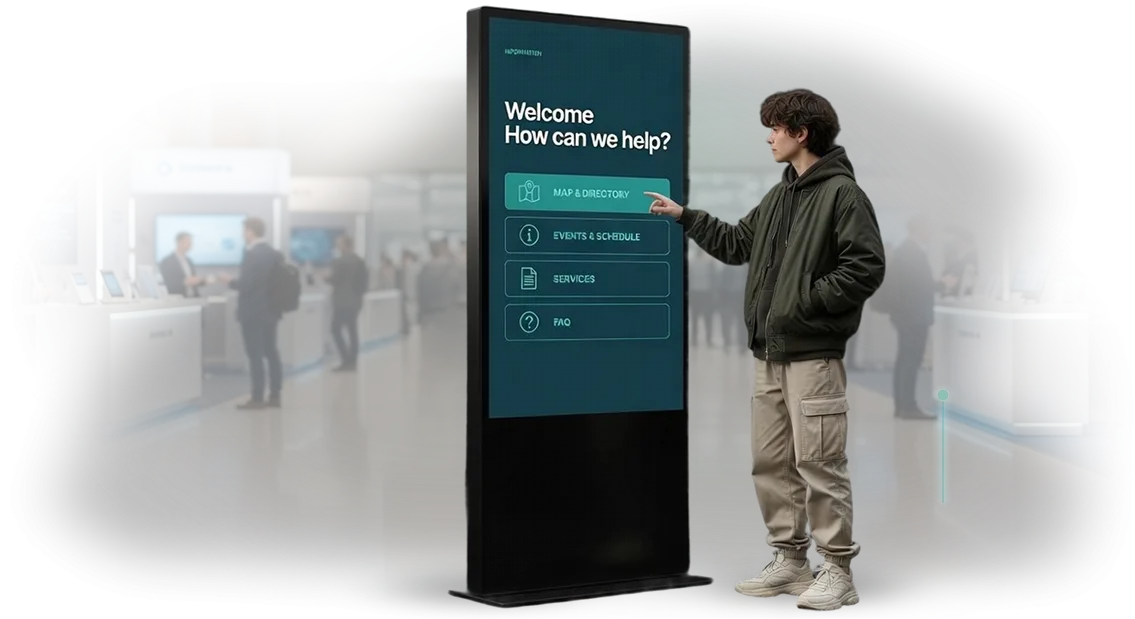
| קיוסק מידע עומד | לובי, אולם, מעברים | ניווט, מפה, שירותי מלון, אטרקציות | אורחים מוצאים תשובות בעצמם, עומס עבודה מופחת על הצוות |
| קיוסק רישום עצמי | אזור נפרד ליד הכניסה או החניה | מחזור צ'ק-אין מלא ללא פקיד קבלה | צ'ק-אין 24/7, הקלה בשעות השיא, מהיר פי 2-3 |
על ידי שילוב פורמטים, המלון מכסה מספר משימות בבת אחת: קיוסק הרישום העצמי מטפל בזרם הבוקר של אורחים, בעוד הקיוסק העומד בלובי עונה על שאלות כמו "איפה המסעדה?" ו"איך מגיעים לספא?"
בפועל, לקוחות מתחילים עם קיוסק דלפק יחיד, ולאחר הערכת העומס, מוסיפים תרחישים של קיוסקים עומדים. ספרו לנו אילו אתגרים עומדים בפני המלון שלכם — נציע את הפורמט שיחזיר את ההשקעה הכי מהר.
איך פועל פרויקט הטמעת קיוסק
בנינו את תהליך הטמעת הקיוסק כך שלא יסיח את דעתכם מהפעילות השוטפת. השלב הראשון הוא בריף קצר: אתם מספרים לנו על תפוסת החדרים, שאלות אופייניות של אורחים והאזורים שבהם הזמן הכי מבוזבז.
בהתבסס על כך, אנו מכינים את מבנה התפריט והתרחישים לשירות שלכם — מצ'ק-אין ועד הזמנת שירותים נוספים.
- בריף וניתוח — אנו נפגשים או מתקשרים, מגדירים את משימות הקיוסק: צ'ק-אין, מידע על המלון, מכירת שירותים נוספים.
- אב-טיפוס ממשק — תוך 2-3 ימים אנו מראים כיצד האורח ינוע על המסך ומיישרים את ההיגיון עם פקידי הקבלה.
- אישור עיצוב — אנו מתאימים את המסכים לזהות המותג של המלון, בוחרים גופנים ותמונות כך שהקיוסק ישתלב בעיצוב הפנים.
- הרכבה והגדרה — אנו מתקינים את התוכנה על הקיוסק ומחברים אותו למערכת ההזמנות ולשירות משק הבית.
- השקה ניסיונית — יחד עם הצוות שלכם, אנו עוברים על תרחישים כמו "הגעה מוקדמת", "יציאה מאוחרת", "הזמנת הסעה", ומתקנים ניואנסים.
- השקה והדרכה — אנו מעבירים הדרכה לפקידי הקבלה: כיצד לטפל במצבים בלתי צפויים ולעדכן תוכן.
- תמיכה — לאחר ההשקה אנו נשארים בקשר, מעדכנים תפריטים ומוסיפים שירותים חדשים אם ההיצע של המלון משתנה.
בכל שלב, אתם רואים את התוצאה הבינונית ומקבלים החלטות במקום לחכות ל"הפתעה" בסוף. המחזור המלא מבריף ועד קיוסק עובד אורך 2-3 שבועות, תלוי באישורים מצדכם.
אם התהליך כבר בעיצומו ומצב בלתי צפוי דורש פתרון מהיר, אתם אף פעם לא נשארים לבד עם הבעיה. תמיכה כלולה בפרויקט, כך שהמלון ממשיך לפעול כרגיל גם בימים הראשונים לאחר ההטמעה.
מה כלול במסירת והשקת הקיוסק
חבילת המסירה מהצוות שלנו היא פתרון מוכן למלון: ציוד מגע, תוכנה מותקנת מראש וכל מה שצריך להשקה. אתם מקבלים חבילה מלאה ללא חיפוש קבלנים או בדיקת תאימות.
כל הרכיבים כבר נבדקו והוגדרו — הקיוסק עובד מיד עם הוצאתו מהקופסה, פשוט הדליקו והשתמשו. אנו מביאים את הפרויקט למצב עובד ומוסרים שירות מוכן לאורחים שלכם.
בסופו של דבר, הלקוח מקבל סט שקוף של שישה רכיבים:
- ציוד והתקנה — קיוסק מגע, התקנה, תקשורת, התקנה באתר והגדרה ראשונית.
- רישיון תוכנה — זכות רשמית לשימוש בתוכנית עם עדכונים ותמיכה טכנית.
- תוכן ראשוני — עיצוב ממשק בסגנון המלון, מפת נכס, תפריט מסעדה, לוח זמנים של פעילויות וטיולים.
- הדרכת צוות — מפגש הדרכה קצר לפקידי קבלה ואנשי משק בית: כיצד לשנות מידע, להוסיף חדשות ולטפל בבקשות אופייניות של אורחים.
- תיעוד — הוראות לצוות ולאורחים, דיאגרמת שירות, מדריך עדכון תוכן.
- אחריות ותמיכה — תחזוקת ציוד ותוכנה לכל התקופה, מענה לפניות תוך יום עסקים אחד.
כל פריט קבוע בחוזה ומושלם בשלב ההשקה, כך שעבור המלון מדובר בפרויקט צפוי ללא עבודה נסתרת. אתם לא צריכים להבין בפרטים טכניים — רק לקבל החלטה ולאשר את התוכנית, אנחנו נעשה את השאר.
הקיוסק מקל על דלפק הקבלה ועוזר לאורחים למצוא את המידע שהם צריכים מהר יותר, בעוד הצוות חוסך זמן על שאלות חוזרות. אורחים מעריכים את הנוחות, ואתם מקבלים שירות מודרני ללא עלויות כוח אדם נוספות.
מקרה בוחן: מלון עם 200 חדרים הגדיל את מהירות הצ'ק-אין
מצב טיפוסי במלון עם 200 חדרים: בערב יש תור בדלפק הקבלה, אורחים ממתינים 15-20 דקות למפתחות, הצוות נקרע בין צ'ק-אין למענה על שאלות, ובביקורות מזכירים יותר ויותר "לקח להם נצח לבצע צ'ק-אין". הגענו למלון וולנה עם משימה פשוטה — להסיר חיכוך בכניסה ולשחרר את פקידי הקבלה לאינטראקציה חיה עם אורחים.
פיתחנו קיוסקים אינטראקטיביים למידע שמטפלים בשגרה: רישום עצמי, בחירת חדר, תשלום עבור שירותים נוספים, הנפקת מפתח וצ'ק-אאוט.
לצוות נשארים מצבים חריגים וקבלת פנים חמה, בעוד האורחים מקבלים שליטה על התהליך — ללא תורים או טפסי נייר.
תוצאות במספרים
מהירות הצ'ק-אין גדלה פי 5: כ-3 דקות לאורח במקום 15. שביעות רצון האורחים עלתה מ-82% ל-96% לרבעון, ומספר התלונות על המתנה כמעט נחתך בחצי.
עומס דלפק הקבלה בשעות השיא ירד ב-30% — לפקידי הקבלה יש כעת זמן להתמקד באורחים במקום בהעתקות דרכונים.
הקיוסק מציע אוטומטית שירותים נוספים — ארוחות בוקר, ספא, הסעות — וכל הזמנה רביעית החלה לעבור דרכו. זה נתן למלון עלייה בחשבון הממוצע ללא עובד נוסף אחד.
ההשקעה בקיוסקים החזירה את עצמה תוך 7 חודשים: חיסכון בשכר וגידול במכירות נוספות כיסו את עלות הפתרון כבר בעונה הראשונה.
אותה תוצאה ניתנת להרחבה בקלות לכל מתקן אירוח — המפתח הוא לבנות תרחישים סביב האורח שלכם. אנחנו עושים זאת יחד איתכם בשלב הבריף, כך שהקיוסק עובד כחבר צוות נוסף ולא כ"עוד פיסת חומרה בלובי".
שאלות נפוצות על תפעול הקיוסק
קיוסק חייב לעבוד ללא תקלות בשעת הצ'ק-אין העמוסה ביותר — זה מה שמדאיג את בעלי המלונות ביותר. אורח רגיל לא יסלח על המתנה בדלפק, וטכנולוגיה יכולה להיכשל ברגע הגרוע ביותר.
להלן תשובות לדאגות טיפוסיות: מה לעשות אם המכשיר מתקלקל, כמה קל לשנות תוכן, ועד כמה בטוח להפקיד בידי המערכת נתונים אישיים.
מה קורה אם הקיוסק מתקלקל?
אנו משתמשים בציוד המיועד לפעילות 24/7 בעומס גבוה. אנו פותרים את רוב הבעיות מרחוק — זה לוקח 15-20 דקות, והאורח אפילו לא מבחין בתקלה.
אם הבעיה דורשת התערבות באתר, אנו מגיעים תוך 24 שעות ומספקים מכשיר חלופי למשך התיקון.
האם קשה לעדכן תוכן?
לא. כל המידע — תעריפים, מבצעים, לוחות זמנים, תיאורי שירותים — משתנה דרך פאנל ניהול פשוט. מספיקות כמה לחיצות, ותוך כמה דקות העדכון על המסך. אין צורך לקרוא למתכנת או לחכות לקבלן.
האם הקיוסק משתלב עם מערכת ניהול המלון שלנו?
כן. הקיוסק מתחבר למערכת הניהול שלכם: הוא מסנכרן הגעות, הזמנות וגישה לחדרים. המסך תמיד מציג נתונים עדכניים על האורח והשירותים שלו. האינטגרציה מוגדרת לתוכנה שלכם, כך שלא תצטרכו לוותר על המערכת הרגילה שלכם.
עד כמה מאובטחים נתוני האורחים?
אנו פועלים לפי תקני אבטחה בתעשייה: הצפנה במהלך העברה, בקרת גישה ואחסון של מידע נחוץ בלבד. הקיוסק אינו מאחסן פרטי תשלום — הם עוברים ישירות לשער התשלום שלכם. עבור האורח, זה מציע את אותה רמת אמון כמו תשלום בדלפק הקבלה.
מי מטפל בתחזוקה ובניטור?
אנחנו. אתם מקבלים לוח זמנים של תחזוקה מונעת, ואנחנו דואגים לשירות המתוכנן. אם תרצו, אנו מגדירים ניטור מרחוק: הקיוסק מדווח על בעיות פוטנציאליות לפני שהן הופכות למורגשות לאורח. כך, אתם נמנעים מהשבתות ושומרים על רמת השירות המובטחת.
אם נותרה שאלה ללא מענה — בואו נדון בפרטים עבור המלון שלכם: ניקח בחשבון תפוסה, פורמט שירות ומאפייני תשתית. קיוסק צריך להקל על עבודת הצוות, לא ליצור משימות חדשות.הזמינו פיתוח קיוסק למלון שלכם
אורחים מעריכים מהירות ועצמאות: הם לא רוצים לעמוד בתור בקבלה כדי לבדוק לוח זמנים או להזמין שירות. קיוסק מידע פותר זאת — הוא מקל על הצוות, מאיץ את השירות ויוצר תדמית מודרנית למלון. כל שנותר הוא לבחור קבלן אמין שיעשה הכל "מפתח ביד".
אנו מפתחים קיוסקים תוך התחשבות במאפייני ענף האירוח: מהממשק ועד אינטגרציה עם מערכת ההזמנות שלכם. כשאתם מזמינים, אתם מקבלים לא רק מכשיר אלא כלי מוכן שמגביר את נאמנות האורחים ומפחית את עומס העבודה על העובדים. כדי להתחיל, פשוט השאירו פנייה — משם, אנו מטפלים בכל השלבים.
מה אתם מקבלים לאחר פנייה אלינו:
- ייעוץ — ננתח את המשימות של המלון שלכם ונציע אילו פונקציות קיוסק יניבו את האפקט הגדול ביותר.
- חישוב עלות תוך יום עסקים אחד — הערכה שקופה ללא תשלומים נסתרים, המותאמת לתקציב שלכם.
- הדגמת ממשק — תראו איך הקיוסק ייראה ויפעל לפני תחילת הפיתוח.
- ביקור באתר — מהנדס יגיע למלון כדי להעריך את מיקום ההתקנה והחיבור כך שהכל יתנהל חלק.
- השקה והדרכת צוות — נגדיר את הציוד, נראה לעובדים כיצד להשתמש בו ונמסור הוראות.
- אחריות ותמיכה — אנחנו אחראים על תפעול הקיוסק ופותרים בעיות במהירות לאחר ההשקה.
קחו את הצעד הראשון — שלחו פנייה לפיתוח קיוסק. ניצור איתכם קשר תוך שעה, נענה על שאלותיכם ונציע את הפתרון האופטימלי. האורחים שלכם יעריכו את הנוחות, ואתם תעריכו את המשאבים ששוחררו לצוות שלכם.
איך לבחור פורמט קיוסק לצרכי המלון שלכם?
בבחירת פורמט קיוסק למלון, השאלה הראשונה שיש לענות עליה היא: איזו בעיה מדויקת הוא פותר?
צ'ק-אין מהיר יותר, מידע לאורחים, בידור בלובי או הקלה על דלפק הקבלה — המטרה קובעת אם אתם צריכים דלפק קומפקטי בלובי, פאנל מידע או שולחן אינטראקטיבי.
למלון קטן או הוסטל, מכשיר קומפקטי יחיד עם פונקציות צ'ק-אין, מפת עיר ואנשי קשר לשירותים לרוב מספיק.
מלונות גדולים עם זרם אורחים גבוה צריכים קיוסק רב-תכליתי: הזמנת שירותים נוספים, הזמנת מוניות, משוב ואינטגרציה עם מערכת ניהול הנכס שלכם.
קחו בחשבון את סוג המלון. במלון עסקי, מהירות ופרטיות הם בראש סדר העדיפויות — אורחים יעריכו צ'ק-אין עצמי. במלון משפחתי — ניווט בנכס ותוכן לילדים. במלון ספא — הזמנת טיפולים ותפריט מסעדה. כל פורמט פותר משימה משלו.
אל תשכחו את התקציב. עלות הבעלות כוללת לא רק ציוד אלא גם חיסכון בכוח אדם: הקיוסק מטפל בשאלות שגרתיות ומפחית תורים בקבלה. התצורה הנכונה מחזירה את ההשקעה באמצעות שירות מהיר יותר ונאמנות אורחים מוגברת.
אנו עוזרים למלונות לבחור את הפורמט המתאים למשימות ולתקציב שלהם: אנו מנתחים את זרם האורחים, תרחישי שימוש ותהליכים קיימים, מציעים את הפתרון האופטימלי ותומכים בהשקה. אתם מקבלים קיוסק שמתחיל לעבוד עבור התוצאות שלכם מיד.