

תחנת רכבת ללא ניווט מאבדת נוסעים
נוסע בתחנה צריך לפתור שלושה דברים: איפה הרציף שלו, מתי היציאה, ואיך לא לאחר.
כשהתשובות לא מגיעות תוך 30 שניות, מתחיל כאוס — אנשים רצים לכיוון הלא נכון, שואלים צוות, נצמדים ללוחות היציאות, ונכנסים לחרדה עוד לפני העלייה לרכבת.
עבור התחנה, זה אומר הפסדים ישירים: נוסע שלא מצא את הרכבת שלו כנראה לא יחזור — הוא יבחר אמצעי תחבורה אחר. והמונים בדלפקי המידע מגבירים את העומס על הצוות ומפחיתים את התפוקה גם עם לוח זמנים מאורגן היטב.
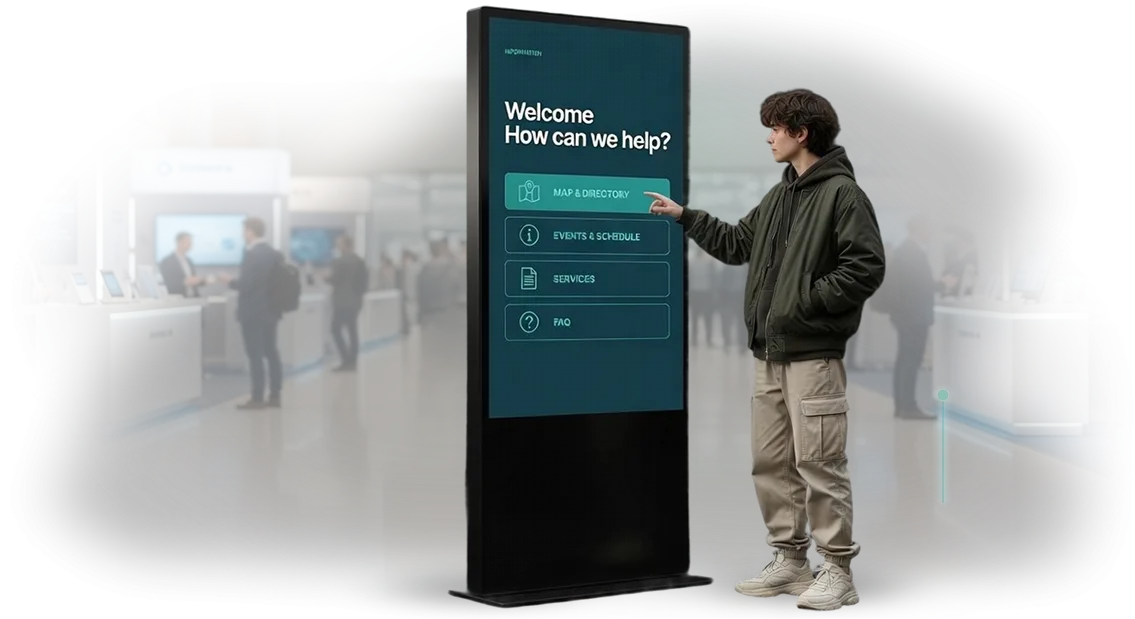
קיוסק מידע בתחנה פותר את הבעיה הזו: הנוסע מוצא את המסלול לרציף שלו בכמה הקשות, רואה את לוח הזמנים העדכני של הרכבות, ומבין כמה זמן נשאר לו. זה מפחית לחץ, מקל על הצוות, והופך את התחנה לצפויה.
אנחנו מייצרים בדיוק קיוסקים כאלה — עם ממשק גדול שאנשים בכל גיל יכולים להבין, ומפה שמדריכה את הנוסע מהכניסה עד לקרון הנכון.
התחנה מפסיקה להיות מקום של לחץ והופכת למקום שבו הנוסע מרגיש שליטה על הנסיעה שלו.
מה קיוסק מודרני מביא לתחנה שלך
נוסעים לא אוהבים תורים, ובתחנה כל דקה חשובה. כשנוצר תור בדלפק המידע, אנשים נהיים חרדים ומתחילים לאחר; הצוות חוזר על אותו דבר עשר פעמים. קיוסק מידע מקל על הלחץ הזה.
טרמינל שירות עצמי מודרני מאפשר לנוסעים למצוא באופן עצמאי את לוח הזמנים, המסלול, מספר הרציף, זמן הנסיעה ומיקום תאי האחסון. בלי תורים ובלי שאלות מיותרות — רק המידע הדרוש בכמה הקשות.
בשעות השיא, הקיוסק מטפל בעד שליש מכל הפניות, מקל על שירות המידע ומאיץ את זרימת הנוסעים אל הרכבות.
הקיוסק עובד גם עבור התדמית של התחנה. מסך מגע מסודר במעטפת מודרנית מבדיל את המתקן שלך מלוחות תצוגה רגילים ושלטי נייר.
המסך יכול גם לשאת פרסום של שותפים, הודעות על שירותי תחנה ומידע ציבורי — הכנסה נוספת וערך לנוסעים. אנליטיקה מובנית מראה אילו שאילתות נעשות בתדירות הגבוהה ביותר, כך שתוכל לשפר את הניווט והשירותים.
ההשפעה מאושרת על ידי הלקוחות שלנו. הלקוח שלנו, חברת נוסעים פרברית, ציין כי לאחר התקנת הקיוסקים, העומס על דלפק המידע ירד בכמעט חצי והמשוב החיובי מהנוסעים גדל באופן ניכר.
הזמן הממוצע למציאת מידע ירד לכמה דקות — אנשים מגיעים לרכבות שלהם מהר יותר ודואגים פחות.
אנחנו מפתחים קיוסקים לצרכים הספציפיים של כל תחנה: אנחנו מתכננים ממשק ברור, משלבים אותו עם המערכות שלך, ומספקים תמיכה לאחר ההשקה. אתה מקבל פתרון שמפחית את העומס על הצוות, מגביר את התפוקה ומחזק את האמון בתחנה.
פורמטים של קיוסק מידע לתחנת רכבת
נוסעים בתחנה מתנהגים בצורה שונה: חלק ממהרים לעלות, חלק מחכים לרכבת שלהם, חלק מחפשים את היציאה הנכונה בפעם הראשונה.
אין קיוסק אחד שמתאים לכל תרחיש — לכן אנחנו מציעים שלושה פורמטים שנבדלים במבנה, במיקום ההתקנה ובשימוש.
| פורמט | למי | מה זה נותן ללקוח |
|---|---|---|
| קיוסק עומד | זרימת הנוסעים העיקרית באולם או ליד הכניסה | חיפוש מהיר של מסלולים, לוחות זמנים ושירותים — מפחית את התור בדלפק המידע |
| טרמינל צמוד קיר | קופות פרבריות, מעברים, יציאות רציף | חוסך מקום ומספק ניווט ברור במקום שבו אי אפשר להתקין קיוסק גדול |
| שולחן מולטי-טאץ' | אולם המתנה, אזור נוחות פרימיום | מפה אינטראקטיבית מרתקת של התחנה והסביבה — נוסעים מבלים זמן באופן פרודוקטיבי וזוכרים את המותג |
הקיוסק העומד הוא הפורמט הפופולרי ביותר לתחנה. הוא נראה מרחוק, מתמודד בקלות עם עומס כבד, ועוזר לנוסעים לקבל את מה שהם צריכים תוך 30 שניות: זמן רכבת, מספר רציף, מסלול לקופה או ליציאה. זה מקל ישירות על צוות דלפק המידע ומפחית את לחץ הנוסעים בשעות השיא.
הטרמינל צמוד הקיר תופס מקום מינימלי ומשתלב יפה בפנים הבניין. הוא מותקן במקום שבו חשוב לא להעמיס על החלל, אבל המידע עדיין צריך להיות בהישג יד.
שולחן המולטי-טאץ' פותר את המשימה ההפוכה: הוא מושך תשומת לב, מרכז אנשים סביבו, והופך את ההמתנה לרכבת לאינטראקציה חיה עם מפת התחנה.
על ידי שילוב שלושת הפורמטים, אתה מכסה את שני התרחישים המרכזיים: הדחוף — "מצאתי תוך חצי דקה" — והרגוע — "חקרתי את המפה והסביבה." אנחנו בוחרים תצורה לתקציב שלך, לזרימת הנוסעים ולגודל המתקן, בעוד אנחנו מטפלים בעיצוב, בממשק ובצד הטכני בעצמנו.
איך עובד פיתוח קיוסק במפתח מלא
כשאתה מזמין קיוסק לתחנת רכבת, אתה מקבל תהליך שקוף עם שלבים ברורים. אנחנו מנהלים את הפרויקט במפתח מלא: מהבריף הראשוני ועד ההתקנה וההשקה, ומתאמים כל שלב איתך. אתה תמיד יודע מה קורה ויכול להשפיע על התוצאה.
- בריף וניתוח צרכים. אנחנו מבהירים אילו משימות הקיוסק צריך לבצע: ניווט בתחנה, לוחות זמנים של רכבות, מידע עזר, פרסום. אנחנו מזהים את קהל היעד ומיקום ההתקנה כך שהממשק יהיה נוח ככל האפשר לנוסעים.
- סקיצות ואב-טיפוס. אנחנו יוצרים ייצוג חזותי של המסך העתידי — מבנה התפריט, מיקום הכפתורים והסגנון הכללי. אתה רואה את הממשק לפני שהתכנות בכלל מתחיל ויכול לבצע שינויים ללא עלויות נוספות או עיכובים.
- אישור הפרויקט. אנחנו מאשרים את העיצוב, רשימת התכונות והמפרט הטכני. לאחר האישור, אנחנו נועלים את ציר הזמן של הפיתוח וההשקה — אתה יודע מתי הקיוסק יהיה פעיל.
- פיתוח ממשק ומערכת ניהול. אנחנו מתכנתים את לוגיקת הפעולה של הקיוסק, משלבים עם לוחות זמנים ושירותי תחנה, ומקימים לוח בקרה נוח לצוות שלך. כל אחד יכול לעדכן תוכן ללא ידע טכני מיוחד.
- בדיקות על חומרה אמיתית. אנחנו בודקים את הקיוסק בתנאים קרובים לפעולה אמיתית: מהירות תגובה, קריאות ממרחקים שונים ועמידות בעומס. אתה מקבל ערובה שהמערכת לא תיכשל בשעות השיא.
- התקנה והשקה. אנחנו מספקים ומתקינים את הקיוסק, מחברים תקשורת ומגדירים את החומרה. אנחנו מאמנים את הצוות שלך לעבוד עם המערכת — הקיוסק מוכן לחלוטין ביום ההשקה.
- תמיכה ועדכונים. לאחר מסירת הפרויקט, אנחנו נשארים בקשר: אנחנו עוזרים לעדכן לוחות זמנים, מוסיפים תכונות חדשות ומבצעים תחזוקה מונעת. הקיוסק פועל בצורה אמינה במשך שנים, והנוסעים תמיד מקבלים מידע עדכני.
מה כלול במסירת קיוסק
קיוסק לתחנת רכבת נחוץ לנוסעים, לא למהנדסים: הוא חייב להראות במהירות לוחות זמנים, לעזור בניווט ולהפחית את העומס על שירות המידע. לכן אנחנו מספקים פתרון מלא מוכן לשימוש — מהמעטפת ועד הכשרת הצוות.
-
מעטפת ומבנה. המעטפת המחוזקת מיועדת לתחנות עם תנועה גבוהה: היא עמידה בפני נזקים, שימוש מתמיד וניקוי יומיומי. היא נראית מסודרת בפנים אולם ההמתנה והקופות.
-
מסך מגע. מסך תצוגה גדול ומגיב מגיב למגע אצבע פשוט — נוסעים מבינים אותו ללא הוראות, גם עם מטען ביד. בלי מחוות "מיוחדות" או תפריטים מסובכים.
-
תוכנה מותקנת מראש. התוכנה כבר טעונה ומוגדרת: לוחות זמנים של רכבות, מפת תחנה, שירותים והודעות. אין צורך במומחה נפרד להשקה — הקיוסק עובד מרגע החיבור.
-
לוח בקרה. צוות התחנה מעדכן נתונים בעצמו: משנה לוחות זמנים, מוסיף הודעות ועורך מפות. התהליך אורך דקות ואינו דורש ידע בתכנות.
-
הכשרת צוות. אנחנו מספקים הכשרה לצוות שלך: איך לעדכן מידע, לפתור תקלות קטנות ולהתמודד עם מצבים חריגים. הצוות עובד בביטחון עם הקיוסק מהיום הראשון.
-
תמיכה ואחריות. אנחנו נשארים בקשר לאחר ההשקה: אבחון מרחוק, ייעוץ טלפוני והחלפת רכיבים מהירה כשצריך. הקיוסק לא ייצא משירות ברגע הכי קריטי.
חבילה זו חוסכת לך תיאום עם קבלנים מרובים ועלויות התאמה נסתרות. אנחנו לוקחים אחריות על כל הפרויקט — מהעומס הראשון ועד פעולה יציבה בשעות השיא.
מקרה בוחן: קיוסק תחנה עזר להקל על דלפק המידע
בתחנה, הנוסעים מבזבזים את הזמן הכי הרבה בעמידה בתור בדלפק המידע. אותה שאלה חוזרת עשרות פעמים ביום: איפה למצוא תאי אחסון, מתי הרכבת יוצאת, איך להגיע לרציף הנכון. הצוות עונה מכנית, ובשעות השיא התור גדל ואנשים נהיים חרדים.
הצוות שלנו התקין קיוסק אינטראקטיבי בתחנת רכבת בנובוסיבירסק. הוא החליף מפות נייר וחלק מתפקודי דלפק המידע: לוחות זמנים, מחירי כרטיסים, מסלולים לרכבות ומיקומי בתי קפה ובתי מרקחת. נוסעים צריכים רק שתיים או שלוש הקשות על המסך כדי לקבל תשובה עדכנית.
התוצאה
זמן ההמתנה בדלפק המידע נחתך בחצי — הבחינו בכך גם הנוסעים וגם צוות התחנה. שאלות פשוטות עברו לקיוסק, ואנשים כבר לא עומדים בתור בשביל פיסת מידע אחת.
האינטראקציה הממוצעת אורכת פחות מדקה: הנוסע מקבל תשובה ומיד פונה ליציאה הנכונה.
הקיוסק הזה מקל על לחץ הצוות בשעות השיא. לעובדי דלפק המידע יש זמן לטפל במצבים חריגים ולסייע לנוסעים עם מוגבלות בניידות במקום לחזור על אותן תשובות.
הנוסעים תופסים את התחנה כשירות מודרני ואכפתי — זה משפיע על המוניטין שלה ועל זרימת הנוסעים הכללית.
לאחר ההשקה המוצלחת, הנהלת התחנה הזמינה התאמות נוספות לתרחישים משלהם. הקיוסק לא רק חוסך זמן אלא גם הפך לחלק מהניווט: נוסעים בודקים אותו לפני שהם פונים לרציף.
כתוצאה מכך, דלפק המידע כבר לא מהווה צוואר בקבוק, והנוסעים מקבלים שירות ברור וללא לחץ.
איך לבחור את פורמט הקיוסק הנכון לתחנה שלך?
בחירת הפורמט מסתכמת בארבעה קריטריונים מעשיים: גודל המתקן, זרימת הנוסעים, בקשות הנוסעים האופייניות והתקציב. אלה קובעים כמה קיוסקים תצטרך, היכן למקם אותם ובאיזו פונקציונליות לצייד אותם.
גודל המתקן קובע את סוג המבנה. דגמים קומפקטיים צמודים לקיר שאינם חוסמים תנועה עובדים היטב במעברים צרים ואולמות קטנים.
באזורי המתנה מרווחים, קיוסקים עצמאיים ומבני עמוד יעילים — הם נראים, עובדים משני צדדים ומפחיתים תורים גם בשעות השיא.
זרימת הנוסעים קובעת את מספר היחידות ואת הביצועים שלהן. אם התחנה מטפלת באלפי אנשים ביום, קיוסק אחד לא מספיק: אתה צריך שרשרת של מכשירים שמגבים זה את זה.
עם זרימה גבוהה, המסך חייב להגיב במהירות והאינטראקציה חייבת להיות קצרה — הנוסע פותר את הבעיה שלו ב-30–60 שניות במקום לחקור תפריט.
סוגי הבקשות קובעים את התצורה. אם המשימות העיקריות הן לוחות זמנים ומפת תחנה, מסך מגע עם ניווט ברור מספיק. אם נוסעים קונים כרטיסים או מבצעים צ'ק-אין לרכבת, תצטרך מדפסת מובנית, קורא ברקוד ומעטפת עמידה.
מפה אינטראקטיבית עם שכבות שירות עוזרת לנוסעים למצוא קופות, תאי אחסון ויציאות מהר יותר.
לבסוף, התקציב הוא לא רק עלות הציוד — הוא כולל גם את עלות התמיכה. קיוסקים אמינים מפחיתים את העומס על דלפק המידע והקופות, מה שמוריד עלויות כוח אדם ומגביר את מהירות השירות.
אנחנו עוזרים לך לבחור פורמט לבניין, לזרימה ולמשימות שלך, ובשלב הבריף אנחנו מחשבים את מספר היחידות האופטימלי ואת ציר הזמן של ההשקה.
שאלות נפוצות מלקוחות
לקוחות שמתקינים קיוסקים בתחנות בדרך כלל מודאגים מאותם דברים: האם הציוד יעמוד בזרימת הנוסעים המתמדת, האם המערכת תיכשל ברגע הכי גרוע, ומי יהיה אחראי אם משהו ישתבש. אספנו את השאלות הנפוצות ביותר ואנחנו עונים עליהן בכנות.
עד כמה הקיוסק אמין בסביבת תחנה?
אנחנו משתמשים ברכיבים ברמה תעשייתית המיועדים לפעולה 24/7 ועומסים כבדים. המכשירים עוברים בדיקות עם סימולציה של זרימת מבקרים בשיא, והמעטפת מגנה מפני אבק ופגיעות מכניות.
אם הקיוסק פועל במיקום מאתגר עם תנודות טמפרטורה, זה גם נלקח בחשבון בשלב התכנון.
מה האחריות מכסה וכמה מהר אתם מגיבים?
אנחנו מספקים אחריות גם על חומרה וגם על תוכנה — בממוצע שנתיים על כל הרכיבים. זמן התגובה הממוצע לפנייה הוא 24 שעות: אנחנו פותרים את רוב הבעיות מרחוק, ואם צריך, שולחים טכנאי לשטח או מחליפים את המכשיר במהירות. זה קריטי לתחנה, ולכן אנחנו שומרים ערכת חלקי חילוף במלאי.
איך מתעדכנת התוכנה?
עדכוני תוכנה מתרחשים מרחוק, ללא עצירת הקיוסק וללא מעורבות הצוות שלך. אנחנו מעדכנים מודולים בודדים — כמו לוחות זמנים, מפת תחנה ולוחות יציאות — וכן את כל המערכת כשנדרש. אתה לא צריך להתעסק בצד הטכני: אנחנו מטפלים בתצורה ובניטור.
האם אפשר לעצב את הקיוסק כך שיתאים למותג התחנה?
כן, זה חלק סטנדרטי מהעבודה שלנו. אנחנו מתאימים את הממשק למותג שלך: לוגו, צבעי חברה, גופנים וסגנון כפתורים. גם המעטפת ממותגת — עם הדפסה, מדבקה או צבע.
הקיוסק נראה כמו חלק מהתחנה ולא כמו מסך זר, תוך שמירה על ניווט נוח וברור לנוסעים.
אם לא מצאת את התשובה לשאלתך, כתוב לנו. נספר לך יותר על אמינות, אחריות וצירי זמן פיתוח ספציפית לתחנה שלך.בקש ייעוץ על פיתוח קיוסק
תחנה היא זרימת נוסעים שעבורם כל דקה חשובה. קיוסק מידע חייב לעבוד ללא תקלות ולספק את המידע הדרוש מיד.
אבל כדי להזמין קיוסק כזה, אתה לא צריך להיכנס לפרטים טכניים — פנייה אחת מספיקה, ואנחנו נכין הצעה ברורה עם אפשרויות יישום וצירי זמן השקה.
ייעוץ הוא תהליך קצר ומובנה שאורך מיום עסקים אחד עד שבוע בהתאם למורכבות. אתה מקבל לא מילים מופשטות אלא תוכנית פעולה קונקרטית והצעה מסחרית. כך נראה התהליך:
- פנייה — אתה משאיר בקשה דרך האתר, האימייל או המסנג'ר. אנחנו מגיבים תוך יום עסקים אחד ומסכמים על זמן נוח לשיחה.
- בריף קצר — אנחנו מתקשרים אליך, ואתה מתאר את המשימות של הקיוסק, הציפיות והמאפיינים של התחנה שלך. זה לוקח 15–20 דקות.
- שיחה עם מהנדס — אנחנו מבהירים פרטים, עונים על שאלות ובוחרים את פורמט הציוד והפונקציונליות הנכונים לזרימת הנוסעים שלך.
- הצעה מסחרית — אנחנו שולחים שלוש אפשרויות יישום: מבסיסית ועד מתקדמת. כל אפשרות כוללת צירי זמן השקה והיקף עבודה.
- אישור והתאמות — אנחנו מבצעים שינויים אם אתה צריך לשנות את מערך התכונות או את סדר השלבים. אתה מקבל את הגרסה הסופית לאישור מול ההנהלה שלך.
- השקה — לאחר האישור, אנחנו מתחילים בפיתוח, בדיקות והתקנת הקיוסק. אנחנו תומכים בך בכל שלב, כולל הכשרת צוות.
גישה זו מאפשרת לך לקבל החלטה ללא סיכון או בזבוז זמן. השאר בקשה — ואנחנו נכין הצעה מסחרית שתוכל מיד להראות להנהלה שלך ולכלול בתוכנית העבודה של התחנה שלך.