

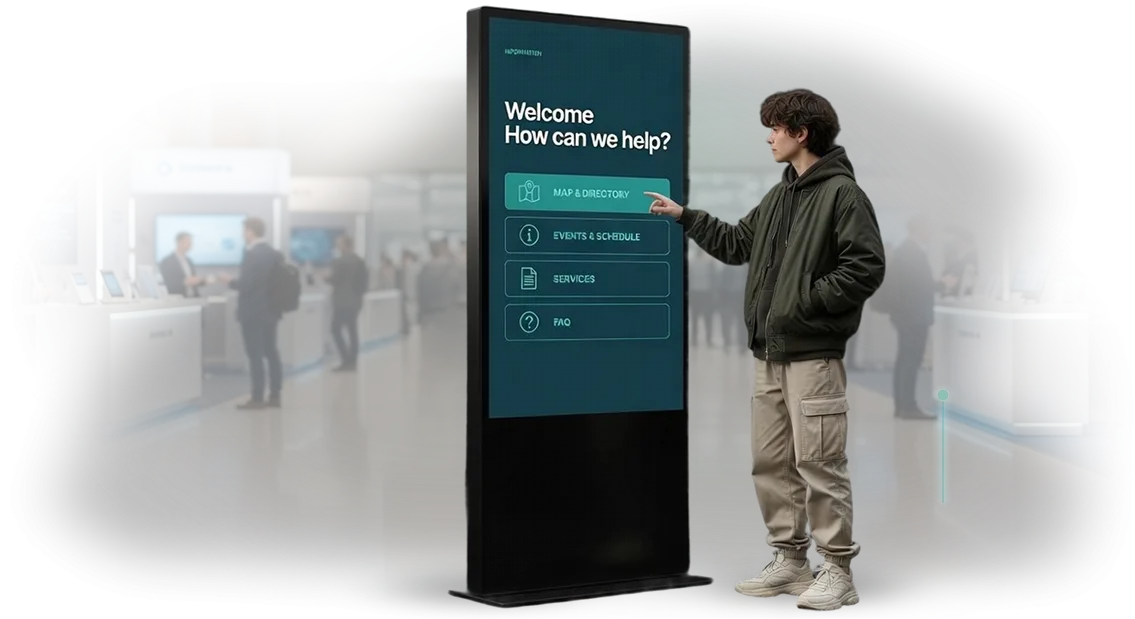
מדוע העסק שלך צריך CMS לקיוסקים למידע?
מבקר שניגש לקיוסק מידע מצפה לתשובה מדויקת ועדכנית. אם המסך מציג מבצעים מיושנים, סניפים סגורים או חדשות מאתמול, האמון במותג יורד מיד.
האדם לא מתעניין באשמה של מי זה — הוא פשוט עוזב למתחרה, ואתה מאבד לקוח בנקודה שבה הכל אמור לעבוד לטובתך.
הבעיה היא שעדכון תוכן בקיוסקים רגילים הופך למטלה. כדי לשנות הודעה אחת, צריך לנסוע לאתר, להתחבר למכשיר ולהעלות קבצים ידנית.
עם רשת של עשרות קיוסקים, מדובר בימי עבודה ובסיכון מתמיד שמידע במקום כלשהו נשאר מיושן. ושלטים דיגיטליים חיים את חייהם — כל מסך צריך להיות מוגדר בנפרד.
CMS לקיוסקים הוא מערכת שמביאה את כל ניהול התוכן לחלון אחד. אתה משנה לוחות זמנים, מחירים, באנרים או הודעות פעם אחת — והם מופיעים מיד בכל קיוסקי המידע והשלטים הדיגיטליים.
אין דיסקים ניידים, אין נסיעות עסקים, אין עדכונים שנשכחו: נקודת שליטה אחת גלויה גם למנהל וגם לעובד שקיבל את המשימה.
מעבר למהירות, אתה מקבל יכולת חיזוי. CMS לקיוסקים מאפשר לך להקצות אחריות, לקבוע זמני תצוגה ולהבטיח שכל מסך פועל לפי התרחיש הנוכחי.
זה מפחית את העומס על הצוות ומבטל את הכאוס שבו קיוסק אחד מציג תוכנית ישנה והשכן שלו מציג חדשה. לקוחות רואים תמונה עקבית, והעסק שלך רואה פחות פניות שאבדו.
אנחנו עוזרים ליישם CMS לקיוסקים למשימה הספציפית שלך: אנחנו מחברים קיוסקי מידע, מגדירים ניהול תוכן ומכשירים את הצוות שלך.
כתוצאה מכך, אתה מקבל מערכת שמתעדכנת תוך דקות, מפחיתה עלויות תמיכה ומבטיחה שהשלטים הדיגיטליים והקיוסקים שלך תמיד עובדים למען המוניטין וההכנסות שלך.
מה אתה מקבל ממערכת ניהול תוכן מודרנית
קיוסק הוא הדבר הראשון שלקוח רואה בלובי, בחנות או בדלפק מידע. אם התוכן מיושן או שהמסך קופא, האמון בחברה יורד מיד.
מערכת ניהול תוכן מודרנית (CMS) הופכת קיוסק משלט סטטי לכלי מכירה וניווט חי. אנחנו מתכננים בדיוק מערכת כזו לצרכי העסק שלך.
אמון לקוחות
מבקר סומך על קיוסק כשהוא רואה מחירים עדכניים, מבצעים טריים ותיאורים מדויקים. אף אחד לא יקנה אם המסך מציג מחיר אחד והקופה מציגה מחיר אחר. ה-CMS שלנו מסנכרן נתונים אוטומטית עם המערכות שלך, כך שפערים בלתי אפשריים. זה מפחית את העומס על הצוות ומסיר שאלות מיותרות של אורחים.
הגברת מעורבות
תמונה סטטית משעממת לא תופסת תשומת לב. תרחישים אינטראקטיביים — קטלוגים, מפות, ייעוץ וירטואלי — מערבים את המבקר ועוזרים לו לקבל החלטה מהירה יותר.
בפרויקטים שלנו, זמן האינטראקציה עם קיוסק גדל פי כמה, וחלק מהלקוחות חוזרים כבר עבור מוצר ספציפי.
קלות עדכון
עדכון תוכן לא צריך לדרוש מתכנת. בלוח הבקרה, המנהלים שלך משנים באנרים, מחירים ולוחות זמנים תוך דקות ספורות, והשינויים חלים על כל הקיוסקים בו-זמנית.
זה חשוב במיוחד לרשתות: לחיצה אחת — והמבצע החדש כבר על כל מסך.
אנליטיקה ברורה והחזר השקעה
המערכת אוספת נתונים על אילו קטעים נצפים בתדירות הגבוהה ביותר וכמה זמן מושקע בקיוסק. אתה רואה מה מועיל ומה צריך שיפור. כתוצאה מכך, ההשקעה בקיוסקים מחזירה את עצמה מהר יותר, והחלטות מבוססות על עובדות ולא על ניחושים.
פורמטי יישום של CMS לקיוסקים למשימה שלך
קיוסקים פותרים משימות שונות: אחד צריך קטלוג וקבלת תשלומים, אחר — מכירת כרטיסים והזמנת פגישות, שלישי — מפת בניין אינטראקטיבית עם ניווט.
אין אפשרות אוניברסלית "מוכנה מראש", ולכן אנחנו מציעים שלושה פורמטי יישום של CMS לקיוסקים — עבור תהליך עסקי ספציפי, תקציב ולוח זמנים. להלן טבלה שעוזרת לך לבחור את האפשרות הנכונה.
| פורמט | למי | מה זה נותן ללקוח |
|---|---|---|
| פתרון מוכן | התחלה מהירה: קיוסק מידע, תפריט, לוח זמנים | השקה תוך 1-2 שבועות ללא אישורים ארוכים |
| פיתוח מותאם אישית | תרחיש לא סטנדרטי: אינטגרציה עם מערכת הנהלת חשבונות, ממשק ייחודי | הקיוסק עובד בדיוק עבור התהליך שלך, לא "כמו של כולם" |
| שירות ענן | רשת קיוסקים במיקומים וערים שונות | נקודת ניהול אחת: עדכוני תוכן, אנליטיקה, ניטור |
פתרון מוכן מתאים כשאתה צריך פונקציונליות צפויה ומחיר כניסה מינימלי. פיתוח מותאם אישית מוצדק אם הקיוסק חייב להפוך לחלק מתשתית ה-IT שלך ולהתחשב בתקנות פנימיות.
פורמט הענן נבחר כשהתוכן משתנה כל יום ואתה צריך שליטה על כל הרשת ממסך אחד.
בשלב הבריף, אנחנו עוזרים לך לבחור את הפורמט: אנחנו בוחנים את המשימות שלך, מוכנות התשתית ותוכניות ההתרחבות. אם אתה לא בטוח, התחל עם תרחיש מוכן והרחב אותו מאוחר יותר למותאם אישית או לענן. העיקר ש-CMS לקיוסקים יפתור את המשימה שלך, לא שאתה תתאים את עצמך למערכת.
איך אנחנו עובדים: שלבי יישום מערכת ניהול תוכן
אנחנו לא נוטשים את הפרויקט אחרי מכירת הקיוסקים. יישום מערכת ניהול תוכן עוקב אחר תוכנית ברורה: אתה תמיד יודע איפה העבודה עומדת ומה תקבל כתוצאה.
-
בריף ואודיט. אנחנו מתעדים את מטרות הפרויקט: איפה הקיוסקים ממוקמים, מי המשתמשים, איזה תוכן נדרש. זה נכנס למסמך שמגן מפני עבודה חוזרת ומחלוקות.
-
אב-טיפוס ותוכנית. אנחנו מציגים את מבנה המסך, לוגיקת הניווט ותרחישי השימוש לפני הפיתוח. אתה רואה את הממשק העתידי ועורך שינויים ללא עלויות נוספות.
-
פיתוח המערכת. אנחנו מגדירים את לוח הבקרה למשימות שלך: העלאת קבצים, לוח זמנים לתצוגה, תפקידי עובדים. המנהל שלך מעדכן תוכן ללא עזרת מתכנת.
-
מילוי תוכן ואינטגרציה של שירותים. אנחנו מעבירים חומרים — פוסטרים, קטלוגים, מפות, ומחברים עדכון חדשות או מסד נתונים של מוצרים. עד ההשקה, הקיוסקים כבר עובדים עם מידע עדכני.
-
בדיקות והדרכה. אנחנו בודקים תרחישים על מכשירים אמיתיים ומלמדים את הצוות שלך לעבוד עם המערכת. אתה מקבל מוצר מוגמר, לא פרויקט "גולמי".
-
השקה ותמיכה. אנחנו משיקים את הקיוסקים, מספקים הוראות ברורות ונשארים בקשר: אנחנו מעדכנים קטעים, מוסיפים פונקציות ומנטרים יציבות. במידת הצורך, אנחנו מרחיבים את המערכת למשימות חדשות.
מה כלול במסירה: חבילה מלאה להשקת קיוסקים
קבלת קיוסקים היא רק חצי מהעבודה. כדי שיהיו שימושיים מהיום הראשון, אתה צריך חבילה מלאה: מערכת מוגדרת, ניהול תוכן פשוט ותמיכת צוות. אנחנו מרכיבים את המסירה כך שתוכל להשיק קיוסקים ללא מעורבות מפתחים ואישורים ארוכים.
הנה מה שהחבילה כוללת:
- מערכת מוגדרת ולוח בקרה — ה-CMS כבר פרוס, תפקידי משתמשים ותבניות מוכנים. אתה משנה מבצעים, לוחות זמנים ותפריטים תוך דקות ספורות בלי לחכות למתכנתים.
- הוראות למנהלים ולצוות — מדריכים קצרים שלב-אחר-שלב: איך לעדכן תוכן, להחליף מדיה, מה לעשות במצב חירום. הכל כתוב בשפת העובדים, ללא ז'רגון טכני.
- הדרכה לצוות שלך — מפגש מעשי שלאחריו האנשים שלך עובדים עם המערכת בביטחון. אנחנו מסבירים באמצעות תרחישים אמיתיים: העלאת מחירון, שינוי באנר, צפייה בסטטיסטיקה.
- אינטגרציות עם השירותים שלך — חיבור למערכת הנהלת חשבונות, תוכנית נאמנות או אנליטיקה חיצונית. נתונים מקיוסקים מגיעים אוטומטית; אין צורך לאסוף אותם ידנית.
- תמיכה בהשקה — המהנדסים שלנו עוזרים בהתקנה, בודקים את פעולת הקיוסק ופותרים בעיות במהירות בימים הראשונים. אתה לא נשאר לבד עם הטכנולוגיה.
- תוכן התחלתי ותבניות עיצוב — הקיוסק כבר נראה מסודר ותואם למותג שלך. כל שנותר הוא למלא את הדפים בחומרים שלך — ואתה יכול להשיק.
זה אומר שאחרי מסירת החבילה, יש לך הכל לפעילות יומיומית: ניהול תוכן, הוראות, הדרכה ותמיכה. כל שנותר הוא להכריז על ההשקה ולהתחיל לאסוף תוצאות ראשונות.
מקרה בוחן: איך עדכנו רשת קיוסקים והגברנו מעורבות
קיוסק מידע רגיל בקניון הוא מסך שמעטים שמים לב אליו. רשת האלקטרוניקה Atlas התמודדה עם בעיה: אורחים חלפו על פניו, ואלה שעצרו לא יכלו למצוא מוצר במהירות ופנו ליועצים.
המשימה
הבעלים רצו להפוך קיוסקים לכלי שמגדיל מכירות. המעורבות הייתה נמוכה: זמן מגע ממוצע במסך היה כחצי דקה, ורבים מעולם לא נגעו במסך כלל.
כל הרשת — כ-40 מכשירים — הייתה צריכה להתעדכן מבלי לעצור את פעילות החנויות או להחליף ציוד.
אודיט הראה: הממשק היה עמוס, ודף הבית לא ענה על השאלה המרכזית של הקונה — "האם הפריט במלאי ואיפה הוא ממוקם."
הפתרון והתוצאה
עיצבנו מחדש את מבנה המסך והניווט: מבקר רואה מיד חיפוש לפי קטגוריה וזמינות, וכרטיס המוצר מציג מחיר, מפרט ומיקום על המדף.
במקביל, עדכנו את מערכת ניהול התוכן המרכזית — צוות החנות משנה עכשיו מבצעים ומוצרים חדשים בעצמם.
בחודשיים הראשונים, זמן ממוצע מול המסך גדל מ-30 שניות לשתי דקות, ומספר האינטראקציות עם לוח המגע עלה ב-60%. הזמנות דרך הקיוסק עלו בשליש, ובחנויות הפעילות ביותר — הוכפלו. לקוחות החלו למצוא מוצרים בעצמם והסיחו פחות את דעת הצוות.
אחרי הצלחת הפיילוט, הרשת הזמינה פיתוח נוסף לפורמטים חדשים: קיוסקים לאיסוף הזמנות מקוונות ומסכים אינטראקטיביים עם המלצות. העדכונים בוצעו מרחוק, ללא ביקורים באתרים — השקת פונקציות חדשות התקצרה משבועות לכמה ימים.
איך לבחור פורמט מערכת ניהול תוכן למשימה שלך?
ראשית, בחירת פורמט מערכת ניהול התוכן קובעת באיזו מהירות תוכל לשנות מידע בקיוסקים ללא מעורבות מפתחים. אם התוכן מתעדכן פעם בחודש ואדם אחד אחראי, מספיק ממשק פשוט עם העלאת קבצים.
אם אתה מנהל רשת קיוסקים בערים שונות ומבצעים משתנים כל שבוע, תצטרך פתרון מרכזי עם הרשאות גישה ותזמון פרסום.
שים לב לשלוש דרישות: מי יעבוד עם המערכת, באיזו תדירות ישוחררו עדכונים, ועד כמה קריטית פעילות רציפה של הקיוסק. עבור צוות לא טכני, ממשק ברור חשוב ללא צורך להבין בקוד.
לרשת גדלה — היכולת להוסיף מיקומים חדשים מבלי לעצור את הקיימים ולנהל אותם מרחוק. ולשיווק — השקת קמפיינים מהירה בלחיצה אחת, לא דרך פנייה למחלקת ה-IT.
יש לבחור את פורמט המערכת לפי מקרה השימוש, לא לפי טכנולוגיות אופנתיות. מערכת ענן נוחה כשצריך לסנכרן נתונים בין קיוסקים בזמן אמת, בעוד מערכת מקומית שימושית כשחשוב לעבוד גם בזמן ניתוק חיבור.
בשני המקרים, קריטי שהממשק יהיה ידידותי ושניתן יהיה לתת את הזכות לשנות תוכן לעובדים ספציפיים ללא סיכון לשבירת העיצוב.
אנחנו בוחרים את הפורמט למשימה שלך בשלב הבריף: אנחנו מתעדים מי ישנה מידע ובאיזו תדירות, אילו פורמטי תוכן נדרשים וכמה מיקומים מתוכננים.
המהנדסים שלנו מגדירים את המערכת כך שתעמוד בדרישות העסקיות שלך, לא להיפך. אתה מקבל כלי ניהול מובן שקל להרחיב, בתוספת אחריות שהקיוסקים יפעלו ביציבות והתוכן יתעדכן בזמן.
לסיכום: בחר מערכת ניהול תוכן לא לפי מספר הפונקציות, אלא לפי כמה מהר היא מאפשרת לך להגיב לשינויים בשוק. הפורמט הנכון הוא כשהעובדים שלך חוסכים שעות בפעולות שגרתיות ולקוחות תמיד רואים מידע עדכני. אנחנו נעזור לך להחליט וליישם פתרון שעובד במיוחד לתוצאות שלך.
שאלות נפוצות על יישום מערכת ניהול תוכן
יישום מערכת ניהול תוכן לקיוסקים מעלה בדרך כלל את אותן שאלות: האם הפעילות תיעצר, מה לעשות במקרה של תקלות, וכמה מהר לעדכן מידע. אנחנו עונים על החששות המרכזיים שמנהלים נתקלים בהם בהשקת פרויקטים כאלה.
האם קשה ליישם את המערכת והאם הקיוסקים יפסיקו לעבוד במהלך ההתקנה?
היישום מתבצע בשלבים ואינו דורש עצירת העסק שלך. אנחנו מתחברים לקיוסקים קיימים או מתקינים חדשים, מגדירים את המערכת ומכשירים צוות — בדרך כלל התהליך כולו אורך כמה ימים.
אין צורך להיכנס לפרטים טכניים. הצוות שלנו מטפל באינטגרציה, ואתה מקבל לוח מחוונים אחד לניהול תוכן. כל שלב מלווה בדוחות קצרים כדי שתוכל לראות התקדמות.
מה קורה אם קיוסק מתקלקל או תוכן מפסיק להיטען?
לאחר ההשקה, אנחנו מספקים תמיכה וניטור תקינות המערכת. אם מתרחשת תקלה, אתה פונה לשירות התמיכה — רוב הבעיות נפתרות מרחוק תוך שעה-שעתיים, ללא אובדן נתונים.
למצבים לא סטנדרטיים, קיימת процедура שחזור: מהנדס מתחבר בזמן מוסכם, ובמקביל הקיוסק ממשיך להציג את הגרסה היציבה האחרונה של התוכן. כך שגם בזמן בעיות, מבקרים אף פעם לא רואים מסך ריק.
באיזו תדירות אפשר לעדכן תוכן ומי עושה את זה?
העדכונים מתבצעים דרך ממשק פשוט תוך דקות ספורות — המנהל שלך משנה מבצעים, מחירים וחדשות בעצמו ללא מעורבות מפתחים. הגישה מוגדרת לכל עובד לפי תפקיד: חלק יכולים לערוך, אחרים יכולים רק לצפות.
ניתן גם להגדיר לוח זמנים לפרסום כך שמידע יופיע אוטומטית בזמן הנכון. זה חוסך זמן לצוות ומבטל את הסיכון לטעויות בהחלפת נתונים ידנית.
מי יתחזק את המערכת בעוד חודש או שנה?
אנחנו נשארים בקשר לאחר ההשקה. החוזה מפרט את תנאי התמיכה: זמן תגובה, מועדי פתרון בעיות ותהליך עדכון המערכת. לפי בקשה, אנחנו מוסיפים בדיקות תקופתיות של קיוסקים באתר.
אתה לא נשאר לבד עם הטכנולוגיה. אתה מקבל צוות ייעודי שמכיר את הפרויקט שלך, מנטר את ביצועיו ומייעץ כיצד להרחיב את הפונקציונליות — מפורמטי תוכן חדשים ועד תרחישי אינטראקציה נוספים עם מבקרים.
מוכן לעדכן את הקיוסקים שלך? בוא נדבר על המשימה שלך
אם הקיוסקים שלך הפכו ל"מעמדי פרסום" ולקוחות חולפים על פניהם, הגיע הזמן לעדכון. קיוסק מודרני לא רק מציג מידע: הוא עוזר ללקוחות לבחור, להזמין, לשלם ולהפחית תורים. אלה בדיוק הפתרונות שמגדילים את ההכנסות של מיקום ואת נאמנות המבקרים.
אנחנו עובדים מהמשימה, לא מתבנית מוכנה. ראשית, אנחנו מבינים מה קורה במרחב שלך כרגע, איפה אובדים תשומת הלב ומהירות השירות, ורק אז מציעים פתרון לתקציב ולקנה המידה שלך. בוא נדבר — ותראה איך הקיוסקים שלך יכולים להשתנות.
מה תקבל אחרי הפנייה שלך:
- ייעוץ ואודיט של תרחישי הקיוסק הנוכחיים.
- הצעות קונקרטיות להגדלת המרות וזמן השהייה של לקוחות.
- הערכה שקופה ולוחות זמנים ללא עמלות נסתרות או "הפתעות".
- בחירת פתרון למשימות שלך — מניווט מגע ועד שירות עצמי ותשלום.
- הדגמת ממשק לפני ההשקה: אתה רואה איך המערכת תעבוד.
- הדרכה לצוות שלך ותמיכה לאחר ההשקה — אנחנו לא נוטשים אותך באמצע הדרך.
לרשת החנויות Stolichny, עדכנו 14 קיוסקים באולם, והסל הממוצע גדל ב-18% — כי הצוות הפסיק להיות מוסח משאלות פשוטות, ולקוחות מצאו מוצרים ושילמו על הזמנות בעצמם. הזמן מהבריף ועד ההשקה היה שלושה שבועות. אותה תוצאה אפשרית גם עבורך.
השאר בקשה לייעוץ — נחזור אליך תוך יום עסקים, נדון בקיוסקים שלך ונציע את נקודת ההתחלה המשתלמת ביותר. ללא התחייבויות, רק ערך מעשי. ספר לנו על המשימה שלך — ונציע תוכנית שמובילה לצמיחה מדידה במדדים שלך.