

עיצוב דלפק קבלה כדרך להתבלט מול המתחרים
אורחים לעיתים קרובות לא שמים לב לדלפק הקבלה — הוא משתלב בעיצוב הפנים ונתפס כאלמנט חובה בלובי ולא כנקודת מגע עם השירות.
מבקרים חולפים על פניו, לא רואים מידע על שירותים, לא מתעכבים על המותג שלכם, ועוזבים עם רושם ניטרלי בלבד.
עיצוב נכון של הדלפק הופך אותו מרהיט פסיבי לכלי למשיכת תשומת לב ולהגדלת הכנסות.
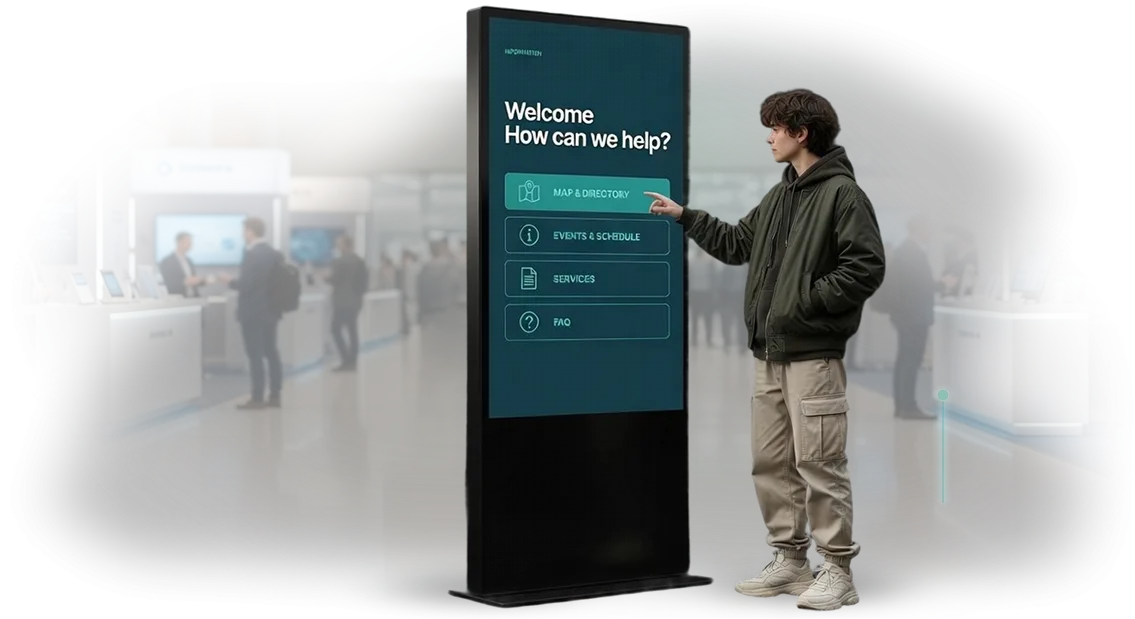
קיוסק אינטראקטיבי למלון המשולב בעיצוב דלפק הקבלה עוזר לאורחים להתמצא בכוחות עצמם, לצפות בשדרוגי חדרים או להזמין שירות — ללא תורים וללא המתנה לפקיד קבלה.
אנו יוצרים עיצובי דלפק שעובדים עבור העסק שלכם: הם מושכים אורחים, קובעים את הטון לכל הביקור, ומגדילים את החשבון הממוצע באמצעות הצעות לא פולשניות.
הדגשים ויזואליים מחושבים, פתרונות תאורה ומסכי מידע עוזרים לכם להתבלט מול המתחרים ולהשאיר את התדמית שלכם בזיכרון המבקרים.
היתרונות של קיוסק אינטראקטיבי למלונות ולאורחים
אורחים לא אוהבים תורים בדלפק הקבלה: ההמתנה יוצרת רושם שהמלון לא מתחשב בזמן של המבקרים. הקיוסק האינטראקטיבי מסיר את הגורם המעצבן העיקרי — אורחים לא צריכים לעמוד בתור המשותף כדי לקבל מפתחות או למלא טופס. אלה היתרונות של הקיוסק שנראים מיד גם לאורחים וגם לפקידי הקבלה.
אוטומציה של תהליך הצ'ק-אין מצמצמת אותו לכמה דקות: האורח מזין נתונים, מאשר את ההזמנה ומקבל כרטיס מפתח. התור מתקדם מהר יותר, וצוות דלפק הקבלה מקדיש זמן רק לבקשות לא שגרתיות ולתקשורת אישית עם מי שזקוק לעזרה.
כתוצאה מכך, העומס על הצוות פוחת, ולפקידי הקבלה יש הזדמנות להקדיש יותר תשומת לב לכל ביקור — זה משפר את איכות השירות ואת רצון הטוב של האורחים.
הקיוסק האינטראקטיבי משמש גם ככלי להגברת נאמנות האורחים. הוא זוכר העדפות, מציע שירותים נוספים ומציג מידע על המלון והסביבה — כל זה יוצר תחושת דאגה עוד לפני שהאורח עולה לחדר.
רושם ראשוני נעים משפיע ישירות על הרצון לחזור ולהמליץ על המלון לחברים, כך שהקיוסק מחזיר את ההשקעה לא רק באמצעות חיסכון בזמן אלא גם באמצעות הגדלת הזמנות חוזרות.
בנוסף לתפקוד המעשי שלו, הקיוסק הופך לאלמנט עיצובי מרכזי באזור הקבלה: גוף מסודר עם מסך, המשולב בעיצוב הפנים, מחליף דלפקים מגושמים מכוסי ניירות והופך את הלובי למודרני.
פתרון כזה הוא חלק מעיצוב דוכן הקבלה, שעובד עבור תדמית המלון מהדקה הראשונה של שהיית האורח.
אנו מפתחים קיוסקים בהתאמה לסגנון ולצרכים של נכס ספציפי: מדגמים קומפקטיים למלונות קטנים ועד טרמינלים רב-תפקודיים למתחמים גדולים — תמיד תוך התמקדות בכך שהכל יהיה פשוט ונוח לאורחים.
פתרונות דלפק קבלה מוכנים לצרכי המלון
אורחים שופטים מלון לפי הדקות הראשונות בלובי, ודלפק הקבלה קובע את הטון לכל השהות.
דלפק מעוצב היטב לא רק יוצר רושם נכון אלא גם פותר בעיות מעשיות: מקצר תורים, עוזר לאורחים לבצע צ'ק-אין במהירות ולמצוא את המידע שהם צריכים. אנו מפתחים ומייצרים פתרונות אלה במפתח מלא — מהעיצוב ועד להגדרת הקיוסק האינטראקטיבי.
להלן הפורמטים האופייניים שמלונות בוחרים לרוב. כל אחד מהם מותאם לעיצוב הפנים שלכם, לתקציב ולמספר החדרים.
| פורמט קיוסק | מתאים לאיזה מלון | מה הוא נותן לאורחים ולמלון |
|---|---|---|
| דלפק קומפקטי עם קיוסק רישום | מלונות עם 20–50 חדרים | צ'ק-אין וצ'ק-אאוט מהירים ללא תורים, הפחתת עומס על פקידי הקבלה |
| דלפק פינתי עם שני מסכים | מלונות עסקיים ומלונות עם 50–100 חדרים | פעולה מקבילה של הצוות ורישום עצמי של אורחים |
| דלפק אי עם אזור המתנה | מלונות נופש ומלונות גדולים | חלוקת תנועה יעילה, מראה לובי מרשים |
| דלפק מודולרי עם קיוסק מידע | דירות מלונאיות ואכסניות | ניווט עצמי, הזמנת שירותים נוספים, חיסכון בכוח אדם |
בזכות העיצוב המודולרי, אנו משלבים את הקיוסק בדלפק קיים או בונים חדש מאפס — תוך התחשבות בסגנון הארגוני ובהגיון זרימת האורחים. אתם מקבלים פתרון מוכן שעובד מהיום הראשון: ללא התקנה ממושכת וללא השבתה.
שלבי פיתוח קיוסק: מהבריף ועד ההשקה
בנינו את התהליך כך שתבינו מה קורה בכל שלב ואיזו תוצאה תקבלו בסופו. ללא "קסמים" או הפסקות ארוכות — רק שלבים ברורים שבהם אתם מקבלים החלטות ואנחנו מבצעים.
זה מסיר את הסיכון לבזבוז התקציב ולקבלת קיוסק שלא מתאים לצרכים שלכם.
- בריף וניתוח משימה. אתם מספרים לנו היכן ימוקם הקיוסק, מי המבקרים העיקריים שלו, ואיזו בעיה הוא צריך לפתור: ניווט, הצגת שירותים, קביעת פגישות או בידור אורחים. אנו שואלים שאלות הבהרה ומתעדים את הדרישות — כך אנו עובדים בדיוק לפי המצב שלכם מההתחלה.
- קונספט עיצובי. המעצבים שלנו מציעים את מראה הקיוסק ופריסת המסך, תוך התחשבות בסגנון הארגוני שלכם ובמאפייני החלל. אתם רואים אבטיפוס לפני תחילת התכנות — זה מאפשר להתאים את הסגנון וההגיון ללא עלויות נוספות.
- אישור ומפרט טכני סופי. אנו דנים בקונספט המוצע, מבצעים תיקונים ומאשרים את הפתרון הסופי. בשלב זה אתם יודעים בדיוק איך ייראה הקיוסק ואילו פונקציות הוא יבצע.
- יישום ותוכן. מהנדסים מרכיבים את המעטפת והאלקטרוניקה, ומפתחים יוצרים את הממשק. אתם מקבלים גרסת בדיקה שניתן לצפות בה על המסך, ואנו בודקים יחד אם תרחישי השימוש נוחים.
- בדיקה בתרחישים אמיתיים. אנו מריצים מצבים אופייניים: מציאת המחלקה הנכונה, הגשת בקשה, צפייה במידע על החברה. אנו מוודאים שהקיוסק לא קופא, מגיב במהירות ומובן גם למשתמשים בפעם הראשונה.
- השקה באתר. אנו מספקים את הקיוסק, מתקינים אותו במיקום הנכון, מחברים אותו לרשת ומגדירים אותו לסביבה שלכם. אנו בודקים את פעולתו באתר ומדריכים את הצוות שלכם לניהול תוכן.
- תמיכה ופיתוח. לאחר ההשקה, אנחנו לא נעלמים: ניתן לפנות אלינו לעדכוני מידע, הוספת מדורים חדשים או שינוי המראה. במידת הצורך, אנו מסייעים בהחלפת חומרים מתכלים ובתחזוקה.
גישה זו מאפשרת לכם לשלוט בכל שלב ולקבל בדיוק את התוצאה שהעסק שלכם צריך — ללא הפתעות בלתי צפויות בסוף הפרויקט.
מה כולל חבילת הקיוסק האינטראקטיבי
כשאנו אומרים "חבילה", אנחנו לא מתכוונים לקופסה של חומרה, אלא לפתרון מוכן שעובד מהיום הראשון. אתם מקבלים לא רק מכשיר, אלא כלי מוגדר במלואו לאינטראקציה עם מבקרים. להלן כל מה שכלול בחבילה הסטנדרטית.
- חומרת הקיוסק. מעטפת מחומרים עמידים לפגיעות, מסך מגע, יחידת מחשוב — הכל בדרגה תעשייתית ומיועד לפעילות 24/7. זה אומר שהקיוסק לא יקפא ברגע הקריטי ביותר או יתקלקל אחרי חודש.
- עיצוב ומיתוג מותאם אישית. המראה מפותח סביב הסגנון הארגוני שלכם: צבע, לוגו, חומרים. הקיוסק הופך לחלק מהעיצוב הפנימי, מושך תשומת לב ומחזק את ההכרה במותג.
- תוכנה. ממשק, מערכת ניהול תוכן, יכולת עדכון מידע ללא מעורבות מפתחים. אתם יכולים לשנות מבצעים, קטלוגים או חדשות בעצמכם תוך דקות ספורות — ללא צורך להמתין למתכנת.
- התקנה וחיבור באתר. המהנדסים שלנו מגיעים, מתקינים את הקיוסק, מחברים אותו לרשת ובודקים את כל הפונקציות. אין צורך לחפש קבלן להתקנה — מומחי הצוות שלנו עושים הכל.
- הדרכת צוות. אנו מקיימים מפגש מעשי קצר לעובדים שלכם: כיצד להפעיל, לעדכן ולפתור תקלות נפוצות. זמן מינימלי להפעלה — והצוות שלכם עובד עם המערכת בביטחון.
- אחריות ותמיכה טכנית. אנו מספקים אחריות רשמית על הציוד והעבודה. אם עולות שאלות, קיים קו תמיכה ייעודי — אנו מגיבים במהירות ופותרים את הבעיה כך שהקיוסק ימשיך לספק ערך.
כך אתם מקבלים קיוסק אינטראקטיבי מוכן במפתח מלא — מהייעוץ הראשון ועד לפעילות השוטפת. ללא שלבים נסתרים, הוראות מסובכות או קבלנים נוספים.
מקרה בוחן: כיצד קיוסק אינטראקטיבי הגביר את נאמנות האורחים
בשעות הצ'ק-אין העמוסות, נוצר תור בדלפק הקבלה של המלון: אורחים עייפים מהדרך, פקיד הקבלה עונה על אותן שאלות, ומצב הרוח מתדרדר עוד לפני הצ'ק-אין.
עבור רשת המלונות Grand Avenue, עיצבנו קיוסק אינטראקטיבי שלקח על עצמו את המשימות השגרתיות ושינה את הרושם הראשוני מהמלון.
מה השתנה
האורח ניגש לקיוסק, מזין את פרטי ההזמנה, ותוך דקות ספורות מקבל כרטיס מפתח ופתק עם מסלול לחדר. פקיד הקבלה מתערב רק כשצריך לפתור בעיה לא שגרתית: צ'ק-אין מוקדם, שירותים נוספים, צ'ק-אאוט מאוחר. התור הפסיק להיות צוואר בקבוק, והצוות התמקד באינטראקציה אישית עם האורחים.
תוצאות היישום
- זמן הרישום ירד ב-50% — מ-8 ל-4 דקות לאורח.
- שביעות רצון האורחים השתפרה: ביקורות מזכירות פחות המתנה, ודירוגי שירות הלובי עלו באופן ניכר.
- הזמנות חוזרות גדלו ב-18% תוך חצי שנה — אורחים זכרו את הצ'ק-אין המהיר והנעים.
- העומס על פקידי הקבלה ירד: הם מקבלים את פני האורחים במקום לעבד טפסים בחיפזון.
הקיוסק הפך גם למרכז מידע: הוא מציג מפת מלון, לוח ארוחות בוקר, אטרקציות מקומיות ומזג אוויר. אורחים פונים פחות לדלפק הקבלה עם שאלות קטנות — זה מקל נוסף על הצוות ומאיץ את השירות.
לאחר חודשי הפעילות הראשונים, המלון הזמין הרחבה: הוסיפו קיוסק שני באזור הלובי ופונקציית תשלום ללא מגע עבור שירותים נוספים.
דוגמה זו מראה: קיוסק מחזיר את ההשקעה לא רק בהפחתת תורים אלא גם בהגברת הנאמנות, מה שמשפיע ישירות על הכנסות המלון.
כיצד לבחור את פורמט הקיוסק המתאים למלון שלכם?
אין פורמט קיוסק אחד שמתאים לכולם — וזו בשורה טובה. בחירת קיוסק מסתכמת בשלושה קריטריונים: גודל החלל, זרימת האורחים והתקציב לפתרון.
אם אלה נשקלים מראש, הקיוסק מחזיר את ההשקעה במהירות במקום להפוך לאלמנט דקורטיבי יקר.
החלל והתנועה קובעים את הפורמט הפיזי. ללובי קומפקטי או אזור המתנה, מתאים דלפק צמוד קיר צר שאינו חוסם את המעבר.
באולם מרווח עם תנועת אורחים גבוהה, קיוסק עצמאי עם מסך גדול יעיל יותר: הוא יכול לשרת כמה אורחים בו זמנית ולהפחית את התור בקבלה.
אם אורחים ניגשים לעיתים קרובות בזוגות או במשפחות, כדאי לספק עיצוב שנוח לשימוש של שני אנשים. הקריטריון פשוט: הקיוסק צריך להפחית את זמן ההמתנה, לא ליצור צוואר בקבוק חדש.
התקציב לקיוסק הוא לא רק עלות הציוד וההתקנה, אלא גם החיסכון שהוא מספק. קיוסק אחד משחרר את פקיד הקבלה מפעולות שגרתיות: רישום עצמי, תשלום, קבלת מפתחות, הזמנת שירותים נוספים.
למלון קטן, זה חוסך כמה שעות עבודת צוות ביום; למלון גדול, זו הזדמנות להאיץ את הצ'ק-אין בשעות השיא ולהגדיל הכנסות ממכירות נוספות.
לכן כשאנו בוחרים פורמט, אנו מחשבים לא את המחיר אלא את תקופת ההחזר ואת ההשפעה על העומס התפעולי.
אנו בוחרים את התצורה למלון ספציפי: אנו מעריכים את הפריסה, זרימת האורחים האופיינית ותרחישי הצ'ק-אין, ואז מציעים 2-3 פורמטים עם תקציבים ומערכי תכונות שונים.
כתוצאה מכך, אתם מקבלים קיוסק שמתאים לעיצוב הפנים, מתמודד עם עומסי שיא ומספק תועלת מוחשית מהיום הראשון.
חששות נפוצים בהזמנת קיוסק אינטראקטיבי
הזמנת קיוסק אינטראקטיבי היא השקעה, ולכל מנהל יש ספקות בריאים. אנו עונים על העיקריים: מתי הוא יחזיר את ההשקעה, מה אם הוא יתקלקל, והאם האינטגרציה קשה. ללא אותיות קטנות.
האם הקיוסק מחזיר את ההשקעה במהירות?
תקופת ההחזר תלויה בתרחיש. בקמעונאות ובמזון מהיר, קיוסק מחזיר את עצמו תוך 8–14 חודשים באמצעות הגדלת החשבון הממוצע והקלת העומס על הצוות. בלובי של חברה, זה מהיר יותר אם מחשבים את החיסכון בהדפסות ואת מהירות שירות האורחים. אנו מחשבים את הכלכלה לפני ההשקה ומציגים את ציר הזמן לפני תחילת הפרויקט.
מה קורה אם הקיוסק מתקלקל?
הקיוסק פועל על ציוד מקצועי ומיועד לשימוש אינטנסיבי. אבל חומרה עלולה להיכשל, ולכן אנו מספקים אחריות וניטור מרחוק. במקרה של תקלה, מהנדס מתחבר מרחוק ובדרך כלל פותר את הבעיה תוך כמה שעות. חלקי חילוף נשלחים תוך יומיים.
האם קשה לשלב את הקיוסק בתהליכים קיימים?
אנו מחברים את הקיוסק למערכות החשבונאות שלכם מבלי לעצור את פעילות החברה. נתוני הזמנות ומלאי מסונכרנים אוטומטית וזורמים לדוחות המוכרים. עבור העובדים, התהליך נשאר פשוט — הם עובדים באותם חלונות. האינטגרציה אורכת בין כמה ימים לשבועיים.
אחריות, תמיכה, החזר השקעה ואינטגרציה — הכל מכוסה. אם עדיין יש לכם ספקות — שאלו אותנו שאלה; נציג חישובים ודוגמאות מהתחום שלכם.קבלו הערכת עלות אישית לפרויקט הקיוסק שלכם
השאירו בקשה לקיוסק — ובאותו יום תקבלו ייעוץ מהמהנדס שלנו. נבהיר אילו משימות הקיוסק צריך לפתור: מידע, ניווט, עיבוד הזמנות, תמונות או קבלת תשלומים. זה מספיק כדי להכין הערכת עלות ראשונית ולהציע אפשרויות יישום מתאימות.
ביום הבא תקבלו הצעה מוכנה: עלות, לוח זמנים ותוכנית עבודה. ללא "כוכביות" — ההערכה הסופית קבועה לפני תחילת הפרויקט ואינה משתנה לאורך הדרך.
מה כלול בהערכת העלות ובייעוץ:
- הערכת עלות ראשונית לתרחיש השימוש שלכם. המחיר קבוע בהתחלה — הוא לא יעלה במהלך הפרויקט.
- בחירת פורמט ועיצוב: מדלפק קומפקטי ועד אזור אי מלא. נבחר אפשרות לחלל ולתקציב שלכם.
- בחירת תצורה לפי זרימת המבקרים הצפויה. הקיוסק יתמודד אפילו עם שעות שיא — ללא קפיאות או תורים.
- לוחות זמנים לייצור והתקנה מדויקים עד השבוע. תדעו את תאריך ההשקה מראש — תוכלו לתכנן פרסום ופתיחה.
- ייעוץ בנושא תוכן: איזה תוכן וממשק יהפכו את הקיוסק לשימושי עבור הלקוחות שלכם ויגדילו את החזר ההשקעה.
- דוגמאות לפרויקטים דומים בתחום שלכם. נראה כיצד קיוסקים אינטראקטיביים פותרים משימות עסקיות — מקמעונאות ועד שירותים.
- תשובות לשאלות על אחריות ותחזוקה. נסביר כיצד תקבלו תמיכה לאחר ההשקה.
קיוסק אינטראקטיבי במפתח מלא הוא לא רק חומרה, אלא גם עיצוב, תוכנה, התקנה והגדרה. אנו מטפלים בכל השלבים, ואתם מקבלים פתרון עובד עם לוח זמנים ברור ונקודת אחריות אחת לתוצאה.
השאירו בקשה — נחשב את עלות הפרויקט תוך יום עסקים אחד. אם עוד לא בטוחים בפרטים, פשוט כתבו או התקשרו — נעזור לכם להחליט.