

רעיונות לדלפק קבלה בסגנון הודי: למה אורחים חולפים על פני דלפק הקבלה
דלפק הקבלה הסטנדרטי נתפס בעיני האורחים כנקודת רישום חובה: קבל את המפתח — ולך לחדר. שירותי מלון נוספים — ספא, מסעדה, טיולים — נותרים בלתי מורגשים כי אין על הדלפק שום דבר שמושך את העין. כתוצאה מכך, האורח לא מוציא יותר, לא חוזר, ולא מספר לחברים עליכם.
רעיונות לדלפק קבלה בסגנון הודי פותרים בדיוק את הבעיה הזו. זה לא רק עניין של עיצוב בסגנון לאומי — הדלפק הופך לנקודת משיכה שאורחים באמת רוצים לעצור בה.
האורח רואה לא דלפק פקיד משעמם, אלא מרחב שבו הם יכולים לגלות משהו מעניין ושימושי.
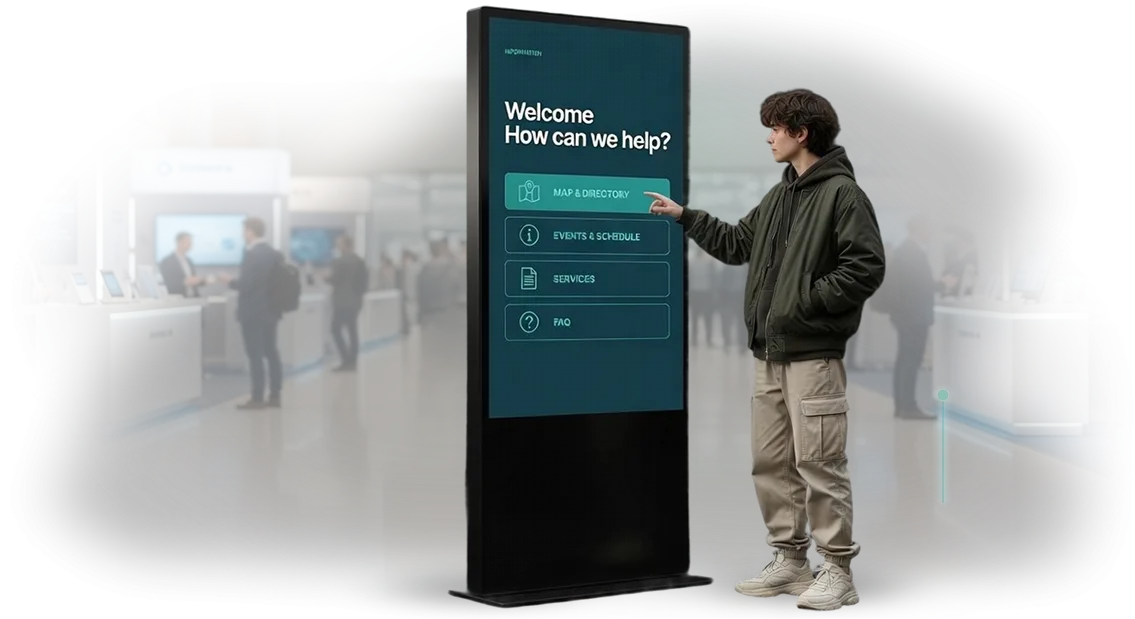
קיוסקים אינטראקטיביים בדלפק הקבלה עוזרים לאורחי המלון לגלות שירותים נוספים בעצמם: לצפות בתפריט המסעדה, להזמין טיפול ספא, לחקור את מפת האזור.
זה מקל על הצוות ומוכר בו זמנית — האורח מקבל החלטה ללא לחץ, בקצב נוח.
עבור המלון, גישה זו מניבה תוצאות מדידות: חשבון ממוצע גבוה יותר באמצעות שירותים נוספים, יותר הזמנות ישירות לביקורים חוזרים, וביקורות חיוביות פעילות.
האורח זוכר את תשומת הלב לפרטים וחוזר — וזה מפחית את עלות רכישת הלקוחות.
אנחנו מכסים את זה: אנחנו מתכננים את דלפק הקבלה והקיוסקים האינטראקטיביים לצרכי המלון שלכם — מרעיון ואב-טיפוס ועד התקנה ותמיכה. אתם מקבלים נקודת משיכה שמניעה הכנסות, לא רק מקום למסירת מפתחות.
אילו יתרונות דלפק אינטראקטיבי יביא לעסק שלכם
חשבון ממוצע מוגדל
הדלפק האינטראקטיבי בלובי מציע שירותים שהאורח לא ידע עליהם: ספא, טיולים, מסעדה. לפי Hotel Tech Report, המלצות כאלה מגדילות את החשבון הממוצע ב-15–25%. האורח מקבל החלטה ממש בדלפק — ומסכים לתוספת תשלום לעתים קרובות יותר.
הזמנות ישירות ללא עמלות
הקיוסק בדלפק הקבלה מקבל הארכות שהייה, הסעות ושירותים נוספים ישירות. המלון מפסיק להיות תלוי במתווכים ושומר 10–15% מכל הזמנה. ההבדל הזה נראה מיד בהכנסות.
נאמנות אורחים
שירות דיגיטלי מודרני משפר את הרושם של המלון ומבדל אותו מהשכנים. אורחים מקבלים את המידע שהם צריכים מהר יותר וחוזרים פי 1.5 יותר. ביקורים חוזרים מייצרים הכנסה יציבה ללא תקציב פרסום.
הקלה על הצוות
שאלות סטנדרטיות — איך מגיעים למקום מסוים, מה להזמין, איך מזמינים מונית — הדלפק האינטראקטיבי מטפל בהן בעצמו. הפקיד מתמודד עם אורחים חיים, לא עם שגרה מונוטונית. מהירות השירות גדלה, והצוות מתעייף פחות עד סוף המשמרת.
החזר השקעה מהיר
החבילה מחזירה את עצמה תוך 4–6 חודשים באמצעות הגדלת מכירות ישירות וחיסכון בעמלות. אחרי זה, הדלפק עובד כמו עובד מסביב לשעון שלא מבקש משכורת ולא לוקח ימי חופש.
פורמטים של קיוסק אינטראקטיבי: בחרו את זה שמתאים למשימות שלכם
אין קיוסק אוניברסלי לכל המלונות: מלון מיני-קומפקטי לא צריך טרמינל רצפתי מונומנטלי, ולמתחם גדול לא יספיק פאנל צמוד קיר בלובי.
אנחנו בוחרים את הפורמט על סמך השטח, התנועה והמשימות שהקיוסק צריך לפתור — מניווט ועד מכירות נוספות.
בחירת הפורמט משפיעה ישירות על הרושם של האורח: קיוסק צמוד קיר מאיץ בשקט את השירות, קיוסק עומד מושך תשומת לב לשירותים, ושולחן מגע הופך את ההמתנה לחוויה אינטראקטיבית. להלן שלוש אפשרויות בסיסיות לתרחישי מלון טיפוסיים.
| פורמט | למי זה מיועד | מה זה נותן ללקוח |
|---|---|---|
| קיוסק צמוד קיר | מלונות קטנים, הוסטלים, קבלות פנים קומפקטיות, מסדרונות ומבואות מעליות | מידע מהיר על שירותים, מפת הנכס, הזמנת מונית או חדרנות ללא תור לפקיד |
| קיוסק עומד | מלונות בינוניים וגדולים, לובי, אזורי המתנה | הצגה מרשימה של שירותים ובידור, מפה אינטראקטיבית, הזמנת שולחנות וטיפולי ספא |
| שולחן מגע | מלונות בוטיק, אזורי טרקלין, חדרים יוקרתיים, חדרי ישיבות | בחירה משותפת של מסלולים או תפריטים, הצגת המלון לאורחים, מעורבות אינטראקטיבית |
הטבלה הזו היא נקודת התחלה: בכל פרויקט אנחנו מתאימים את העיצוב והלוגיקה לפנים ולתרחישי האורחים שלכם. בסופו של דבר, הקיוסק הופך לחלק מהשירות, לא רק מסך על הקיר.
איך הפרויקט עובד: 6 שלבים ברורים
הפרויקט עוקב אחר תהליך ברור: מהבריף הראשוני ועד תמיכה לאחר ההשקה. בכל שלב אתם רואים את התוצאה, שולטים בלוח הזמנים, ולא צריכים לנחש מה יקרה בהמשך. להלן ששת השלבים שאנחנו עובדים דרכם.
-
בריף פיתוח — אנחנו מגדירים את המשימות של הקיוסק: מה הוא צריך להציג, אילו תרחישים לאורחים, ואיך הוא משתלב בחלל. אתם מקבלים הבנה ברורה של היקף העבודה והערכת עלות ראשונית.
-
אישור אב-טיפוס ומודל — אנחנו יוצרים את מבנה המסך ואת לוגיקת הניווט. אתם רואים איך אורח יעבור בתרחיש ויכולים לבצע עריכות לפני תחילת הפיתוח. זה חוסך זמן ותקציב על עבודות חוזרות.
-
עיצוב והתאמת מותג — אנחנו מחדדים את הסגנון החזותי: צבעים, גופנים, אנימציות, הצגת תוכן. הקיוסק נראה כמו חלק מהחלל שלכם, לא רק "מסך על הדלפק".
-
פיתוח והרכבת תוכן — אנחנו מעלים חומרים, מגדירים תרחישים ומחברים מודולים נוספים: סקרים, שאלונים, חידונים, אינטגרציות עם השירותים שלכם. אתם מקבלים מוצר עובד, לא אב-טיפוס.
-
בדיקות והשקת קיוסק — אנחנו בודקים הכל על ציוד אמיתי, מתמודדים עם תקלות ומצבים לא סטנדרטיים. אנחנו משיקים בחלל שלכם ומכשירים את הצוות שלכם אם צריך.
-
תמיכה לאחר השקה — אנחנו מעדכנים תוכן, עוקבים אחר יציבות ומבצעים עריכות בזמן. הקיוסק ממשיך לעבוד כמו שצריך, ואתם לא מוסחים על ידי פרטים טכניים.
כתוצאה מכך, אתם מקבלים כלי מוכן שעושה ערך מהיום הראשון. והתהליך השקוף מאפשר לכם לשלוט בכל שלב ולהיות בטוחים בתוצאה.
מה כלול במסירת קיוסק למלון
קיוסק למלון הוא פתרון סוהר מלא. החבילה כוללת כל מה שצריך להשקה ותפעול יומיומי: מהקונספט העיצובי ועד הכשרת צוות ותמיכה טכנית — ללא פריטים נסתרים או חיובים נוספים עבור "אפשרויות הכרחיות".
- קונספט עיצובי למעטפת, מסכים וממשק בסגנון המלון — הקיוסק משתלב בהרמוניה בחלל הקבלה ומדגיש את רמת השירות.
- תוכנה עם פאנל ניהול ברור: אתם מעדכנים מבצעים, תפריטים, תיאורים ותמונות בעצמכם ללא פנייה למפתחים.
- תוכן בשפות הנדרשות — מפות, אטרקציות, שירותי מלון, אנשי קשר, בתוספת אפשרות להוסיף חומרים חדשים בכל עת.
- הכשרת צוות: פקידים ומנהלים לומדים לעבוד עם הקיוסק, לשנות מידע ולעזור לאורחים. אנחנו מקיימים הכשרה פרונטלית או מרחוק.
- הוראות הפעלה מפורטות לעובדים ולאורחים, כמו גם מדריך למצבים טיפוסיים — כל מה שמפשט את ההשקה ומונע שאלות.
- אחריות על חומרה ותוכנה, תמיכה טכנית חינם לכל תקופת האחריות, ואפשרות להאריך את החוזה.
- התקנה, הגדרה ובדיקות באתר — לאחר ההרכבה, הקיוסק מקבל מיד את האורחים הראשונים, ואתם מקבלים סט מלא של מסמכי סגירה.
מקרה בוחן: דלפק אינטראקטיבי במלון: גידול בהזמנות נוספות
השלמנו פרויקט למלון 4* Atlantic. צוות הניהול שם לב: אורחים מזמינים חדר אבל ממעטים לקנות שירותים נוספים — ספא, מסעדות, טיולים.
רובם פשוט לא יודעים על האפשרויות של המלון, ובערב נוצר תור של שאלות "מה יש לעשות כאן?" בדלפק הקבלה. מכירות אבדו כל יום.
כדי לשנות את זה, הצענו להתקין דלפק אינטראקטיבי בלובי. אורחים בוחרים על המסך בעצמם: צופים בתפריט המסעדה, מזמינים טיפול ספא, בודקים את לוח הטיולים. זה הקל על הקבלה והפך את המידע לזמין בכל שעה ביום. ההתקנה ארכה יומיים, ועוד יום אחד להכשרת צוות.
תוצאות הפרויקט
חודש לאחר ההשקה, מספר הזמנות השירותים הנוספים גדל ב-34%, והזמנות מסעדה וספא ב-27%. כל אורח שני בחודש הראשון השתמש בדלפק — יותר מ-2,500 אינטראקציות.
אורחים החלו להזכיר את המלון יותר בביקורות: הם אוהבים שהכל ניתן לבירור ללא תור וללא היסוס.
צוות המלון קיבל כלי ברור שמגדיל את החשבון הממוצע ללא הרחבת צוות. הדלפק עובד מסביב לשעון ואינו דורש שליטה מתמדת.
אנחנו מרחיבים כעת את הפרויקט למלונות אחרים ברשת — זה המדד הטוב ביותר לכך שהתוצאה סיפקה את הלקוח.
קבלה: איך לבחור את פורמט הקיוסק למלון?
פורמט הקיוסק לדלפק הפקיד נבחר על סמך שלושה דברים: שטח, תנועת אורחים ותרחיש השימוש העיקרי. קיוסקים צמוד קיר, עומדים ושולחנות מגע פותרים משימות שונות — והבנת המשימות האלה תחסוך לכם הוצאות מיותרות.
קיוסק צמוד קיר הוא פתרון למלונות קומפקטיים. הוא תופס מינימום מקום, משתלב בדלפק ועונה על שאלות אורחים טיפוסיות: איפה המסעדה, איך מצ'ק-אין, איזה אינטרנט זמין. התור נמס כי חצי מהפניות נפתרות ללא פקיד.
קיוסק עומד מוצדק כשיש הרבה אורחים: בלובי גדולים ובמלונות עסקיים הוא נראה מרחוק ומקבל על עצמו ניווט, רישום והזמנת שירותים.
בעוד חלק מהאורחים עסוקים בדלפק, אחרים מקבלים מידע בעצמם — מהירות השירות עולה.
קיוסק שולחן מגע מיועד להצגות: הוא נוח להצגת חדרים, שירותים והסביבה, ואורחים עם ילדים מקבלים מעורבות אינטראקטיבית. אבל השולחן דורש שטח פתוח, כך שהוא מתאים למלונות עם לובי מרווח.
| פורמט | מתי לבחור | מה זה נותן למלון |
|---|---|---|
| קיוסק צמוד קיר | מעט מקום, מידע בסיסי | חוסך שטח רצפה, מפחית תורים |
| קיוסק עומד | תנועת אורחים גדולה, ניווט | מקל על הצוות, מאיץ צ'ק-אין |
| שולחן מגע | לובי מרווח, אורחים משפחתיים | מערב אורחים, מגדיל מכירות נוספות |
לפעמים משלבים פורמטים: יחידה צמודת קיר בדלפק לפעולות מהירות, ושולחן מגע בלובי לחקר המלון. אנחנו בוחרים את הפורמט לשטח, לתנועה ולתקציב שלכם כך שהקיוסק באמת מקל על הצוות ומביא ערך לאורחים.
שאלות נפוצות על קיוסקים ואחריות
לפני השקת קיוסק, ללקוחות תמיד יש שאלות: מה אם זה יתקלקל? איך מעדכנים תוכן? האם נתוני המבקרים יהיו בטוחים? גם — כמה זמן תיקח ההתקנה ואיך זה ישפיע על התקציב? אספנו תשובות לחששות העיקריים — ללא אותיות קטנות או תנאים נסתרים.
אנחנו צוות הפיתוח שתומך בקיוסקים בכל השלבים: מהתקנה ועד החלפת ציוד. להלן תשובות לשאלות תכופות והאחריות שכתובה בחוזה. אם השאלה שלכם לא כאן — שאלו אותנו ישירות, אנחנו פתוחים לדיאלוג.
איזו אחריות ניתנת על הקיוסק?
אנחנו מציעים עד שנתיים על ציוד ועל כל העבודות. אם משהו מתקלקל, אנחנו מתקנים על חשבוננו, ובזמן שהתיקון מתבצע אנחנו מספקים קיוסק חלופי כדי שהשירות לא ייפסק.
איך עובדות ההתקנה והתחזוקה?
ההתקנה וההגדרה אורכות 2–5 ימים סוהר. לאחר ההשקה, אנחנו חותמים על חוזה תחזוקה מונעת ותמיכה מרחוק, ומגיבים לתקלות תוך 48 שעות.
האם נוכל לעדכן תוכן בעצמנו?
אנחנו מחברים פאנל ניהול: עובד ללא הכשרה טכנית יכול לשנות מבצעים, מחירים ומידע תוך דקות. הרשאות גישה מוגדרות בנפרד.
איך נתוני המבקרים מוגנים?
נתונים אישיים לא נשמרים על הקיוסק; ההעברה עוברת בערוצים מאובטחים. עדכוני אבטחה מותקנים אוטומטית, והדרישות החוקיות מתקיימות.
למה המחיר הסופי עשוי להיות שונה?
אנחנו קובעים את ההערכה בחוזה לאחר הבריף. לא יהיו תשלומים נוספים אלא אם תשנו דרישות במהלך הפרויקט.
השאירו בקשה לפיתוח קיוסק
השאירו בקשה — ותוך זמן קצר תהיה לכם תוכנית ברורה ליצירת דלפק שמרשים אורחים ועובד עבור העסק שלכם. אנחנו לוקחים על עצמנו את כל הדרך: מרעיון ועיצוב ועד מסירה והשקה. אתם לא צריכים להבין בפרטים טכניים — רק ספרו לנו על המשימה שלכם.
לאחר פנייתכם, אנחנו עורכים ביקורת אקספרס של אזור הקבלה הנוכחי או הקונספט, מחשבים את עלות הפיתוח הסוהר ומכינים אב-טיפוס מסך ותוכנית השקה.
אתם מיד רואים איך הקיוסק ייראה, אילו תרחישי אינטראקציה מובנים בו, ואילו שלבים נעבור.
מה אתם מקבלים עם הבקשה שלכם:
- ייעוץ על עיצוב ופונקציונליות של דלפק בסגנון הודי;
- ביקורת אקספרס של אתר ההתקנה ותרחישי השימוש;
- חישוב עלות שקוף — ללא תשלומים נסתרים;
- אב-טיפוס מסך ולוגיקת ניווט לפני תחילת הפיתוח;
- תוכנית השקה עם לוחות זמנים ברורים ותחומי אחריות;
- תמיכה לאחר השקה: עדכוני תוכן ותחזוקה טכנית.
אנחנו עובדים מרחוק, כך שאינכם צריכים לשלם יותר מדי עבור שכירות משרד. מה שחשוב הוא התוצאה: קיוסק שמבדל את החברה שלכם, מגביר הכרה ונותן לאורחים גישה מהירה למידע. השאירו בקשה — ונוכל לדון בפרויקט שלכם כבר מחר.