

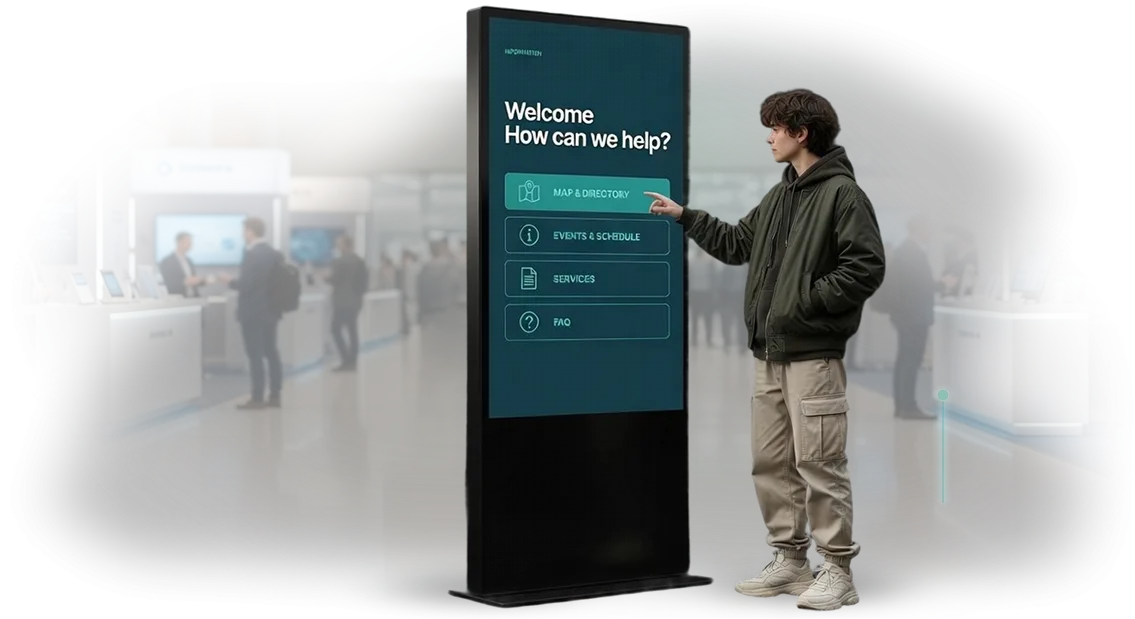
שולחן אינטראקטיבי OKOF: כיצד להגביר את מעורבות הלקוחות
מבקר ניגש לדוכן, מעיף מבט על תצוגה סטטית, ותוך שניות עובר למתחרים.
ללא מעורבות, אפילו תערוכה מתוכננת היטב הופכת לקישוט בלבד: המבקר אינו זוכר את המותג, אינו בוחן את המבחר, ואינו עוצר לשוחח עם יועץ. החברה משקיעה בעיצוב, בעוד המשאב המרכזי שלה—תשומת הלב של האורח—נותר בלתי מנוצל.
השולחן האינטראקטיבי OKOF פותר בעיה זו: נגיעה במסך מפעילה תרחיש שמנחה את המבקר מעניין ראשוני ועד להצעה הנכונה.
שולחן המגע הופך עיון פסיבי למעורבות פעילה—האורח בוחר מה לצפות, דפדף בקטלוג ומשווה אפשרויות.
זה שומר על תשומת הלב ללא מעורבות צוות: אנשים מבלים זמן רב פי כמה מול המסך, מה שנותן להם זמן להבחין בהטבה שחשובה להם אישית.
עבור עסקים, שולחן אינטראקטיבי הוא לא רק גאדג'ט אלא כלי למשיכת לקוחות והגדלת המרות. כשמנהל משוחרר מלחזור על אותן שאלות, הוא מקדיש זמן לאלה שכבר מוכנים לקנות.
במקביל, כל אורח מקבל הדגמה באיכות גבוהה באותה מידה—ללא קשר לתפוסת האולם ולניסיון הצוות.
אילו תוצאות תקבלו לאחר התקנת פתרון מסך מגע
שולחן אינטראקטיבי הוא לא רק פריט עיצובי מרשים אלא כלי עבודה שמספק תוצאות מדידות. לאחר ההתקנה, תקבלו מדדים ספציפיים שניתן להעריך ולהרחיב למיקומים אחרים.
- הגדלת טווח הגעה לקהל. אורחים מבלים זמן רב פי כמה ליד השולחן מאשר ליד דוכן סטנדרטי או מתקן ברושורים. לכל מבקר יש זמן לבחון את ההצעה שלכם, כך שטווח ההגעה לקהל מתעניין גדל ללא הוצאות פרסום נוספות.
- יותר פניות. תרחישים מובנים אוספים אנשי קשר ישירות במהלך האינטראקציה: בקשות, הרשמות, הזמנות הדגמות. אתם מקבלים זרם של לידים שכבר בחנו את המוצר ומוכנים לשוחח עם מנהל.
- הגדלת מודעות למותג. אינטראקטיביות תוססת נזכרת וגורמת לאנשים לרצות לשתף את החוויה ברשתות החברתיות. כל אורח מביא עוד 2–3 מכרים, ועבור המותג של החברה שלכם זהו טווח הגעה נוסף בחינם.
- הפחתת עומס על הצוות. השולחן עונה על שאלות נפוצות ומציג את הקטלוג, המפה והמבצעים ללא צורך בעובד. הצוות מתפנה למכירות וייעוץ בפועל, מה שמשפר את היעילות הכוללת.
- החזר השקעה מהיר. המרת רכישה והחשבון הממוצע גדלים בעוד שעלות רכישת הלקוח יורדת—הלקוח מתקשר עם הדוכן בעצמו, ללא המתנה למנהל.
כל המדדים מתועדים במערכת הסטטיסטיקה: אתם רואים אילו תרחישים עובדים הכי טוב ואילו זקוקים לשיפור. אנליטיקה מאפשרת לכם לשפר תוצאות חודש אחר חודש מבלי לבזבז תקציב על ערוצים לא אפקטיביים.
פורמטים לצרכי העסק שלכם
בבחירת ציוד אינטראקטיבי קל לטעות: אתם רוצים להפתיע אורחים, להישאר במסגרת התקציב, ולגרום לזה לעבוד ללא רבב.
אבל אותו תרחיש נראה אחרת על דגם עומד, שולחני או מובנה—מה שמוביל לאפקט "לא נכון" ולהוצאה מבוזבזת.
לכן אנחנו מתחילים לא עם קטלוג אלא עם המטרות שלכם: היכן יעמוד השולחן, מי ייגש אליו, מה המבקר צריך לעשות, וכמה זמן יש לו. לאחר מכן אנו בוחרים פורמט שממקסם המרה למ"ר—ולא להפך.
הפורמט משפיע ישירות על נוחות האורח ועל האופן שבו החלל עובד עבורכם. להלן תרחישים אופייניים שיעזרו לכם להעריך במהירות איזו אפשרות מתאימה ביותר למיקום שלכם.
| פורמט | למי | מה זה נותן ללקוח |
|---|---|---|
| עומד | קניונים, אולמות תצוגה, מוזיאונים, אזורי המתנה | תופס את תשומת הלב של עוברי אורח, משלב אותם במשחק ומחזיק אותם ליד המסך—עד 5–7 דקות |
| שולחני | בתי קפה, מסעדות, דלפקי קבלה, דוכני תערוכה | עובד עם תפריט, קטלוג או מבצע בגובה נוח—האורח לא מתעייף ומקבל החלטות מהר יותר |
| מובנה | רהיטים, קירות, קיוסקי מידע, אזורי סלפי | חוסך מקום ומשתלב בעיצוב הפנים—נראה כמו חלק מהחלל, לא כמו ציוד |
אם אתם מתלבטים בין פורמטים—למשל, עומד לעומת שולחני—נציע כיצד לבדוק את ההשערה תוך יום. לעתים קרובות מתברר שפורמט אחד מספיק, והשני מתווסף מאוחר יותר כשהמיקום "ממריא".
אגב, על סמך ניסיון עם פרויקטים לרשתות קמעונאיות, שולחן שולחני ליד הקופה מגדיל את החשבון הממוצע באמצעות מכירות נוספות, בעוד ששולחן עומד בכניסה מייצר את 3–5 הדקות הראשונות של מעורבות, שממירות מאוחר יותר לביקור אצל איש מכירות.
המפתח הוא שהפורמט והתרחיש יתאימו—לא רק "שיהיה מסך". נבנה פתרון למיקום שלכם ונעזור לכם להעריך החזר השקעה כבר בשלב הבריף.
ספרו לנו כיצד החלל שלכם מסודר כיום—נציע 2–3 אפשרויות עם הערכת עלות ואפקט צפוי.
כיצד עובד פיתוח Turnkey: שלבים ולוחות זמנים
כל העבודה מתבצעת לפי נוהל ברור: אתם יודעים את לוחות הזמנים, העלות והיקף המשימות בכל שלב מראש. אנו מטפלים במחזור המלא—מרעיון ועד התקנה ותמיכה—כך שאינכם צריכים להיכנס לפרטים טכניים. התוצאה היא שולחן אינטראקטיבי OKOF מוכן לשימוש שפותר משימות עסקיות מהיום הראשון.
-
בריף וניתוח משימה. אנו דנים היכן ימוקם הקיוסק, מי הקהל שלכם, ואילו מטרות הוא צריך לכסות: ניווט, קטלוג, מצגת או בידור. הבנה ברורה של המשימה מונעת איטרציות מיותרות בשלבים מאוחרים יותר.
-
קונספט ואישור. אנו מציעים תרחיש שימוש, מבנה סעיפים והיגיון מסך. אתם מקבלים תוכנית ברורה שניתן להתאים לפני תחילת הפיתוח—זה חוסך תקציב וזמן.
-
עיצוב בסגנון המותג. אנו מעצבים את הממשק כך שיתאים לסגנון הארגוני שלכם: צבעים, גופנים, פריסת אלמנטים. במקביל, אנו מעצבים את המעטפת כך שהשולחן האינטראקטיבי OKOF ישתלב בהרמוניה בחלל—לובי, חנות או תערוכה.
-
אישור עיצוב. אתם רואים כיצד כל מסך ייראה ועורכים שינויים על סמך דוגמאות ברורות. אנו נועלים את העיצוב המאושר ואינם משנים אותו ללא ידיעתכם.
-
פיתוח והרכבה. המהנדסים שלנו מתכנתים את היגיון הפעולה של הקיוסק ומרכיבים את החומרה. אתם מקבלים מערכת אחת מכווננת ולא אוסף של רכיבים מפוזרים.
-
בדיקות עם תרחישים אמיתיים. אנו בודקים כיצד הקיוסק מתמודד עם עומס, באיזו מהירות מבקרים מוצאים את מה שהם צריכים, והאם הוא מגיב נכון לכל הפעולות. אנו מתקנים כל בעיה לפני שהדוכן נראה לעין הלקוח הראשון.
-
השקה ותמיכה. אנו מספקים, מתקינים, מגדירים ומכשירים את הצוות שלכם. לאחר ההשקה, אנו נשארים בקשר: מעדכנים תוכן, עוקבים אחר ביצועים ופותרים כל בעיה במהירות.
כתוצאה מכך, אתם מקבלים לא רק קיוסק אינטראקטיבי אלא כלי עבודה שמספק ערך מיידי: הוא מקצר תורים בדלפק המידע, מגדיל את זמן השהייה של האורחים ומגביר את מודעות המותג.
כל השלבים ולוחות הזמנים קבועים בחוזה, והאישורים מתבצעים בפורמט נוח לכם—פנים אל פנים או מקוון.
מה כולל פתרון מסך המגע המלא
אנו מנהלים כל פרויקט אזור אינטראקטיבי במתכונת Turnkey. מה שתזמינו—קיוסק מידע, שולחן אינטראקטיבי או פאנל מסך מגע—אתם מקבלים חבילה מלאה מוכנה לשימוש ביום ההשקה.
החבילה הסטנדרטית כוללת:
- ערכת ציוד. אנו בוחרים חומרה על סמך המשימות והחלל שלכם: קיוסק עומד, מסך צמוד קיר או שולחן מסך מגע. כל המכשירים נבדקים לפני המשלוח.
- תוכנה. אנו מפתחים את הממשק ואת היגיון הפעולה למשימה שלכם—קטלוג, מפה, חידון, סקר. אנו מתקינים ומגדירים את התוכנה; אתם רק צריכים לשנות תוכן.
- התקנה והפעלה. אנו מביאים את הציוד, מתקינים אותו באתר שלכם ומחברים אותו. אנו בודקים את התרחישים כך שמבקרים יוכלו להתחיל להשתמש בו מיד.
- הכשרת צוות. אנו מראים לצוות שלכם כיצד להפעיל את המערכת, להעלות חומרים חדשים ולטפל בבעיות נפוצות. ההכשרה אורכת לא יותר משעה.
- אחריות ותמיכה. אנו מספקים אחריות רשמית על החומרה והעבודה שבוצעה. אנו זמינים בשעות העבודה כדי לסייע בהגדרות, תוכן או החלפת ציוד.
- קבלת העבודה. אתם מקבלים את העבודה לאחר שתאשרו שהכל פועל לפי התרחיש שלכם. אם נדרשים שיפורים, אנו מבצעים אותם לפני האישור הסופי.
מקרה בוחן: מכירות עלו ב-34% לאחר השקת חלון ראווה אינטראקטיבי
מבקרי "סבר" הגיעו לארוחת ערב אך rarely הזמינו מעבר לתפריט הראשי: קינוחים, משקאות ייחודיים ופריטים עונתיים נעלמו מעין. מלצרים לא תמיד הספיקו להזכיר אותם, ותפריטי נייר לא משכו תשומת לב.
ההנהלה ראתה פוטנציאל במכירות נוספות אך לא ידעה כיצד לעודד בעדינות אורחים לבחור.
הצענו להציב שולחן אינטראקטיבי עם חלון ראווה קולינרי עם מסך מגע בלובי. אורחים מעיינים בתמונות בעצמם, בודקים מרכיבים וקלוריות, ופריטים שהם אוהבים נכנסים ישירות להזמנה שלהם.
השולחן עובד כאזור עצמאי—הוא אינו דורש מעורבות צוות ומושך אפילו את אלה שנכנסו רק לקפה.
האפקט הורגש בחודש הראשון: מכירות פריטים נוספים גדלו ב-34% ונשארו ברמה זו מאז. החשבון הממוצע גדל, ואורחים החלו לבלות 10–15 דקות נוספות—מספיק זמן כדי לחקור את חלון הראווה ולבצע הזמנה.
ביקורים חוזרים הפכו תכופים יותר: השולחן האינטראקטיבי נזכר כמאפיין יוצא דופן של המקום.
"אורחים rarely ניסו את הקינוחים שלנו בעבר, אבל עכשיו זהו מקור הכנסה נפרד. חלון הראווה האינטראקטיבי החזיר את ההשקעה תוך חודשיים, ואנחנו מתכננים להתקין את אותם שולחנות בשני אולמות נוספים," מעיר מנהל המסעדה.
אותה גישה עובדת גם בחלל מוזיאוני: שולחן אינטראקטיבי עם מפת תערוכה וחומרים נוספים הגדיל את זמן הצפייה ומכירות המזכרות ב-28%.
הלקוח מקבל לא "מסך לשם מסך" אלא כלי שפותר בעיה עסקית ספציפית—צמיחת מכירות או מעורבות. ואנחנו מטפלים בפיתוח, השקה ותמיכה כך שתראו תוצאות מדידות.
כיצד לבחור שולחן אינטראקטיבי לפרויקט שלכם
בבחירת שולחן אינטראקטיבי, קל להיקלע למפרטים, אבל הגורם המכריע הוא כיצד בדיוק הוא יעבוד למען המטרה העסקית שלכם.
אותו שולחן יכול להיות שימושי במוזיאון וחסר תועלת באזור המתנה של מרפאה—חשוב להבין את תרחיש השימוש: האם מבקרים חולפים, עוצרים לרגע, או מבלים איתו מספר דקות? זה קובע את תוכן התוכנה, את פורמט ההצגה ואפילו את מידות היחידה.
השאלה הנפוצה ביותר היא תקציב. אבל עדיף קודם להגדיר את קריטריוני ההצלחה: מה השולחן אמור לספק? מודעות מוגברת, תורים קצרים יותר, חשבון ממוצע גבוה יותר, או איסוף אנשי קשר?
ברגע שהמטרה ברורה, קל יותר לבחור את הפתרון הנכון מבלי לשלם יותר מדי על פונקציונליות מוגזמת. אנו תמיד ממליצים להתחיל עם תרחיש פיילוט שניתן לבדוק ולהרחיב במהירות.
המאפיינים הספציפיים של הפרויקט שלכם משפיעים גם על העיצוב וגם על התוכן.
חללים לילדים זקוקים למעטפת עמידה וממשק פשוט; אירועים עסקיים דורשים סגנון קפדני ויכולת לשנות חומרים במהירות; קמעונאות זקוקה לאינטגרציה עם פתרונות תצוגה ומערכת הנהלת חשבונות.
המהנדסים שלנו עוזרים לכם לא רק לבחור מכשיר אלא להגדיר אותו לתהליכים האמיתיים שלכם—מההדגמה הראשונה ועד לפעילות היומיומית.
בסופו של דבר, בחירת שולחן אינטראקטיבי היא תמיד פשרה בין תרחישים, סגנון, אמינות ותקציב. אנו לוקחים על עצמנו משימה זו: אנו מנתחים את המצב שלכם, מציעים פתרון מוצדק, יוצרים אב טיפוס ותומכים בהשקה. כך אתם מקבלים כלי שבאמת פותר את הבעיה שלכם—לא רק משטח יפה בלובי.
תשובות לשאלות נפוצות על פתרונות מסך מגע
לפני הזמנת קיוסק מסך מגע או "שולחן אינטראקטיבי OKOF", מנהלים שואלים את אותן שאלות. אנו עונים על העיקריות—לגבי אחריות, לוחות זמנים, הכשרה ותקלות—כדי שתוכלו לקבל החלטה ללא סיכונים מיותרים.
איזו אחריות ניתנת על השולחן האינטראקטיבי?
אנו מספקים אחריות על הציוד והתוכנה המובנית למשך 12 עד 24 חודשים. אם רכיב נכשל באשמתנו, נחליף ונגדיר אותו מחדש ללא עלות נוספת. לא יהיו לכם הוצאות תיקון במהלך תקופת האחריות.
מה קורה אם הציוד מתקלקל?
אנו מקבלים את הפנייה שלכם ביום יצירת הקשר: תחילה אבחון מרחוק, ובמידת הצורך ביקור מהנדס. זמן תגובה ממוצע הוא עד יום עסקים אחד, ואנו מחזיקים חלקי חילוף נפוצים במחסן שלנו. כלומר, גם עם תקלה חריגה, זמן ההשבתה לא יעלה על מספר ימים.
האם תכשירו צוות ותעזרו בהגדרות?
כן. נגדיר תרחישים למשימות שלכם, נכשיר את הצוות ונספק דפי עזרה קצרים. תוכלו לשנות לוחות זמנים, תוכן ועיצוב ללא מתכנתים—דרך פאנל ניהול פשוט.
האם ניתן לשפר את הפתרון לאחר ההשקה?
כמובן. אתם מעדכנים את כל החומרים בעצמכם, ולשיפורים מורכבים אנו מכינים תוכנית נפרדת עם לוחות זמנים ועלות. כך הפרויקט מתפתח עם העסק שלכם במקום להתיישן תוך שנה.
האם תעזרו ברישום נכס קבוע לפי OKOF?
כן, נכין את המסמכים ונייעץ לגבי קוד הסיווג הנכון. עבור שולחנות אינטראקטיביים וקיוסקים, זהו נוהל סטנדרטי שאנו מטפלים בו באופן קבוע—אתם רק תצטרכו להעביר את הניירת לרואה החשבון שלכם.
הזמינו פיתוח Turnkey של מתחם מסך מגע
כדי לקבל מתחם מסך מגע במתכונת Turnkey, פשוט השאירו בקשה—לאחר מכן אנו מטפלים בכל השלבים: מרעיון ועד השקה ותמיכה טכנית. ספרו לנו על המשימה שלכם, ונבחר פתרון למטרות, לתקציב וללוח הזמנים שלכם.
לאחר יצירת קשר, תקבלו:
- ייעוץ—נעזור לכם להחליט על הפורמט: עומד, צמוד קיר, מובנה בדלפק או מארז מותאם אישית.
- הערכת עלות—נתן לכם מחיר מדויק לפרויקט שלכם, ללא עמלות נסתרות או "הפתעות" בחשבונית הסופית.
- הצעת תצורה—נמליץ על גודל מסך, מבנה וחומרים אופטימליים לחלל ולתנועה שלכם.
- אב טיפוס ממשק—נראה כיצד ייראה המסך ואילו תכונות יכסו את המשימה: קטלוג, מפה, ניווט, מצגת.
- תוכנית יישום—נפרט את שלבי הפיתוח ותאריך ההשקה כדי שתדעו מתי המתחם יתחיל לעבוד עבור המבקרים שלכם.
- תמיכה לאחר ההשקה—עדכוני תוכן, ייעוץ ותמיכה טכנית כך שהקיוסק ימשיך לספק ערך לאורך זמן.
השאירו בקשה—ניצור קשר תוך יום עסקים אחד, נענה על שאלותיכם, נחשב את העלות ונציע לוחות זמנים. כך תקבלו פתרון Turnkey מוכן מבלי להיכנס לפרטים טכניים.