

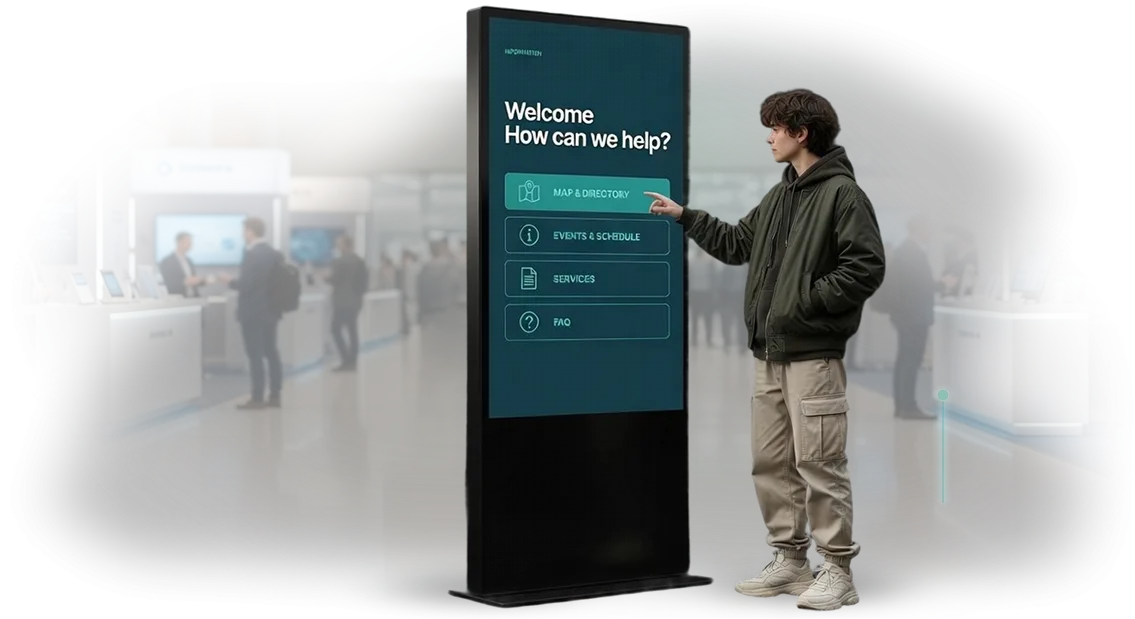
מדוע אינטראקטיביות בתערוכה היא קריטית למוזיאונים צבאיים
המבקר במוזיאון צבאי כיום הוא אדם שגדל בסביבה דיגיטלית.
הוא רגיל לקבל מידע במהירות, בצורה חיה ועל פי דרישה, ולכן דוכן תצוגה קלאסי עם טקסט ותצלומים לרוב אינו זוכה לתשומת לב: העין גולשת על פניו, העניין דועך, ובתוך דקה האורח כבר עבר הלאה.
כתוצאה מכך, תערוכת המוזיאון מאבדת את איכות הליבה שלה — היכולת להחזיק תשומת לב ולהעביר את החוויה הרגשית של ההיסטוריה.
זה לא עניין של להיות "אופנתי" או לקשט את האולמות, אלא סוגיה של יעילות התערוכה עצמה. כאשר מבקר חולף על פני דוכן תצוגה תוך שניות ספורות, המוזיאון נכשל במילוי תפקידו החינוכי וההנצחתי.
אפילו עובדות ייחודיות ומוצגים נדירים אינם זוכים לתשומת לב, והרושם מהביקור הופך מטושטש. עבור מוזיאון צבאי, שבו העברת זיכרון ואמפתיה היא חיונית, אובדן כזה כואב במיוחד.
כאן נכנסות לתמונה הטכנולוגיות הדיגיטליות במוזיאון ומשנות את כללי המשחק. קיוסק אינטראקטיבי למוזיאון הופך התבוננות פסיבית להשתתפות פעילה: המבקר בוחר אישית במה להסתכל, באיזה סדר, וכמה עמוק לצלול לתוך החומר.
נגיעה במסך, ציר זמן מתפתח של אירועים, ליווי קולי — כל אלה מחזיקים את המבקר בנקודה נתונה באולם זמן רב פי כמה מאשר טקסט רגיל. מעורבות המבקרים הופכת לתוצאה מדידה, לא למשאלה מופשטת.
במקביל, האינטראקטיביות אינה מתחרה בתערוכה — היא משפרת אותה. מסמכי ארכיון, מפות קרב, מכתבים ותצלומים מתעוררים לחיים על המסך מבלי להחליף את המקוריים, ועוזרים למבקרים להבין אותם במקום זאת.
גישה זו שומרת בקפידה על האווירה של המוזיאון תוך שהיא הופכת אותה למובנת וקרובה לאורח המודרני — מתלמידי בית ספר ועד ותיקי מלחמה.
אנחנו עוזרים למוזיאונים להציג קיוסקים אינטראקטיביים עם היגיון מדויק זה: ראשית אנו מבינים את מטרות התערוכה שלכם, לאחר מכן אנו מתכננים תרחיש שמחזק את התפיסה, ורק אז אנו מיישמים את הצד הטכני.
כתוצאה מכך, המוזיאון זוכה בכלי שמחזיר את המבקרים לדוכני התצוגה, מחזיק את תשומת ליבם, ומשאיר את אותו טעם לוואי שגורם לאנשים לחזור למוזיאון שוב.
אילו יתרונות מביא קיוסק אינטראקטיבי לתערוכה
מבקרים מגיעים למוזיאון צבאי בשביל רגשות חיים, לא בשביל ויטרינות סטטיות. קיוסק אינטראקטיבי הופך את המפגש עם ההיסטוריה לחוויה אישית: כל אורח יכול לבחור את הגורל, האירוע או החפץ שמדברים אליו.
זה משנה את היחס לתערוכה — אנשים רוצים ליצור איתה אינטראקציה, לחזור אליה ולהמליץ עליה.
מה המוזיאון מרוויח לאחר התקנת הקיוסק:
- תגובה רגשית מהמבקרים: ההיסטוריה הופכת קרובה יותר והמוצגים מובנים יותר.
- יותר זמן שהייה בתערוכה: אורחים נשארים 15–20 דקות נוספות ומצליחים לחקור את מה שנהגו לחלוף על פניו.
- גידול בביקורים חוזרים: הרושם מהחוויה האינטראקטיבית נשאר, ואנשים חוזרים עם משפחה או חברים.
- חיזוק תדמית המוזיאון: ציוד מודרני מראה שהמוזיאון מתקדם עם הזמן ודואג למבקריו.
- משיכת קהל צעיר יותר: פורמטים אינטראקטיביים מערבים תלמידי בית ספר וסטודנטים, שבדרך כלל מתעייפים מהר מסיורים מסורתיים.
כל נקודה מגובה בפרקטיקה. בפרויקטים של הצוות שלנו, אנו רואים כיצד מוזיאונים מציינים עלייה במספר המבקרים ובמספר הביקורות החיוביות במפות ובמדיה החברתית לאחר יישום קיוסקים. זה עובד גם למוניטין וגם לכרטיסים חוזרים.
קיוסק אינטראקטיבי הוא לא רק פיסת טכנולוגיה באולם. זה כלי שהופך ביקור חד-פעמי לקשר מתמשך בין אדם למוזיאון. כלומר, הוא מחזק את המותג ומספק תוצאות מדידות לכל הצוות.
פורמטים של קיוסק אינטראקטיבי למשימות של מוזיאונים צבאיים
מבקרי מוזיאונים צבאיים מחפשים לא תאריכים יבשים, אלא גורלות אנושיים. תיקים אישיים, מכתבים מהחזית, תצלומים — כל אלה קיימים בארכיונים, אבל בדרך כלל נשארים מאחורי זכוכית או באחסון סגור. קיוסק אינטראקטיבי הופך את הארכיון למשאב פתוח שהאורח חוקר בעצמו.
בין פורמטי הקיוסק למוזיאון, אנו מבחינים בשניים בסיסיים: ספר הזיכרון המולטימדיה וקיוסק הארכיון. שניהם חלק מהמולטימדיה המוזיאלית, אבל הם פותרים משימות שונות.
| פורמט | אילו משימות הוא משרת | מה הוא נותן למוזיאון ולמבקרים |
|---|---|---|
| ספר זיכרון מולטימדיה | הצגת סיפורי ותיקים, ביוגרפיות, תצלומים ומכתבים כנרטיב של דפים מתהפכים | המבקר שוקע בסיפורים אישיים, מאזין לזכרונות ומשאיר חותם משלו. הספר הופך למוצג חי וגדל עם ערכים חדשים. |
| קיוסק ארכיון | מתן גישה למסמכים דיגיטליים: פקודות, גיליונות עיטורים, רשומות שירות וחיפוש לפי שם משפחה | האורח מחפש באופן עצמאי במאגר הנתונים ולומד חומרים בקצב שלו. המוזיאון מפחית את עומס העבודה על הצוות ומרחיב את יכולות המחקר |
איך לבחור? אם המשימה היא להעביר זיכרון רגשי, לכו עם ספר הזיכרון: הוא מחזיק תשומת לב ועובד כמוצג המרכזי של האולם. אם העדיפות היא עבודה עם עובדות ומסמכים או חיפוש קרובי משפחה, בחרו בקיוסק הארכיון. מוזיאונים מתקינים לעתים קרובות את שני הפורמטים באזורים שונים: אחד לרגש, השני למחקר.
בשני המקרים, אנו לוקחים על עצמנו את פיתוח המבנה, עיצוב הממשק והתוכן — אנחנו לא רק מתקינים ציוד. הפורמט מותאם לתערוכה ולמטרות שלכם.
איך מפתחים קיוסק: מהבריף ועד ההשקה
בנינו את תהליך פיתוח הקיוסק כך שתראו את התוצאה הבינונית בכל שלב ותוכלו להשפיע על מהלך העבודה. אין "קופסאות שחורות" — רק שלבים ברורים המתועדים בתוכנית ואישורים מחייבים לפני השלב הבא.
עבור מוזיאון, זה אומר לוחות זמנים צפויים, תקציב מבוקר וביטחון שהקיוסק יעמוד בציפיות.
- בריף ומטרות. אנחנו מתחילים עם בריף: אנו דנים במטרות הקיוסק, בקהל, בנושא התערוכה, במיקום ההתקנה ובאילוצים. אתם מקבלים תיאור פרויקט קצר ותוכנית עבודה עם שלבים.
- ניתוח חומרים. אנו לומדים את אוספי המוזיאון: מסמכים, תצלומים, התייחסויות היסטוריות ותסריטי סיורים. אנו בונים את המבנה — כיצד מבקרים יעברו בין סעיפים ומה צריך להיות נקודת המוקד.
- אישור עיצוב. אנו מפתחים את הסגנון החזותי: עיצוב מסך, גופנים, פלטת צבעים והיגיון פריסת כפתורים. לפני ההשקה, אתם רואים כיצד ייראה הממשק ויכולים לבצע שינויים ללא עלות נוספת.
- הרכבה והתאמה. אנו ממלאים את הסעיפים בתוכן, מגדירים תרחישי סיור ומוסיפים חיפוש ברשומות ארכיוניות. אנו מתאימים את הממשק למאפייני המקום: מסך מגע, זוויות צפייה ונוחות למבקרים בגילאים שונים.
- בדיקה בתרחישים אמיתיים. אנו בודקים כיצד הקיוסק מתנהג תחת בקשות טיפוסיות: חיפוש שם משפחה, צפייה בגלריית תמונות, עיון בביוגרפיות. אנו מתקנים ליקויים כדי שהכל יעבוד ללא דופי עד יום הפתיחה.
- השקה והדרכת צוות. אנו מתקינים את הקיוסק במוזיאון, מגדירים את הציוד ומבצעים הדרכה: כיצד להפעיל, לשנות תוכן ולפתור בעיות פשוטות. אנו מספקים מדריך ברור.
- תמיכה לאחר ההשקה. אנחנו נשארים בקשר: אנו עוזרים לעדכן חומרים, להוסיף סיפורים חדשים ולהתאים את העיצוב לתערוכות זמניות. הקיוסק לא הופך ל"טרמינל נשכח" — הוא חי יחד עם התערוכה שלכם.
מה כלול במסירת הקיוסק האינטראקטיבי
לאחר סיום הפרויקט, אתם מקבלים פתרון סוהר — מהחומרה ועד התוכן והדרכת הצוות. להלן הרשימה המלאה של מה שכלול במסירה כדי שתדעו את היקף העבודה מראש ולא תדאגו לגבי שלבים נסתרים.
החבילה כוללת פאנל מגע עם בית חסין ונדליזם המיועד לשימוש אינטנסיבי של מבקרים. אנו מטפלים בהתקנת הציוד, בהגדרה ובבדיקת המערכת באתר. אין צורך לערב קבלנים חיצוניים — הצוות שלנו מכסה הכל.
מה אתם מקבלים בסוף הפרויקט
- פאנל מגע: בית יציב, מסך בהיר וזווית הטיה נוחה לאנשים בגבהים שונים ולמשתמשי כיסאות גלגלים.
- תוכן מוזיאלי: מבנה "ספר הזיכרון", ניווט בתערוכה, ביוגרפיות, תצלומים וחומרים ארכיוניים — בצורה המאושרת.
- התקנת ציוד: הגדרה, חיבור ובדיקת ביצועים ביום המסירה.
- פאנל ניהולי: אתם יכולים לעדכן מידע בעצמכם מבלי לפנות למפתחים.
- הוראות והדרכה: מדריכים תמציתיים לצוות והדגמה באתר של הקיוסק.
- אחריות ותמיכה: ייעוץ, תחזוקה מרחוק ופתרון מהיר של בעיות בשעות העבודה.
טבלת מסירה מסכמת
| מה כלול | למה הוא מיועד | מה המוזיאון מקבל |
|---|---|---|
| פאנל מגע | אינטראקציה עם מבקרים | דרך מודרנית להתחבר להיסטוריה |
| תוכן "ספר הזיכרון" | חיפוש שמות וצפייה בביוגרפיות | גישה לארכיונים ללא סיוע של מדריך |
| התקנת ציוד | מוכן לעבודה ביום המסירה | ללא השבתה וללא קבלנים נוספים |
| פאנל ניהולי | עדכון נתונים על ידי המוזיאון עצמו | מידע עדכני ללא עלות נוספת |
| הדרכת צוות | התחלה מהירה לצוות | הפעלה בטוחה של הקיוסק מהיום הראשון |
| תמיכה ואחריות | פתרון בעיות לאחר ההשקה | שקט נפשי ופעולה יציבה |
אם אתם צריכים מוזיאון צבאי עם דגש על "ספר הזיכרון", אנו נתאים את מבנה התוכן לארכיונים שלכם ונעזור בדיגיטציה של חומרים. בשלב זה, אתם מקבלים פרויקט סוהר מלא — ללא עבודה נסתרת וללא תוספות בלתי צפויות.
מקרה בוחן: כיצד קיוסק אינטראקטיבי החיה את התערוכה
תערוכה טיפוסית של מוזיאון צבאי מורכבת מוויטרינות, דוכנים וטקסטים שמבקרים דולגים עליהם תוך דקות ספורות.
בדיוק עם בקשה כזו הגיע אלינו המוזיאון להיסטוריה צבאית: מסמכי ארכיון וסיפורים אישיים של ותיקים נשארו "משקל מת", ואורחים בילו בממוצע פחות מחמש דקות באולם.
הצענו פתרון בדמות קיוסק ארכיון אינטראקטיבי — דוכן מגע עם ספר זיכרון אלקטרוני וסיפורים מולטימדיים על גורלות הגיבורים. השקנו גרסת פיילוט במיקום אחד כדי למדוד את ההשפעה האמיתית במקום לנחש.
מספרים שמדברים בעד עצמם
חודש אחד לאחר ההשקה, זמן השהייה של המבקרים באולם יותר מהכפיל את עצמו — מארבע לעשר דקות. הקיוסק הפך לנקודת משיכה: אנשים עמדו בתור אליו, ומבקרים רבים חזרו כדי להראות את הסיפורים לקרוביהם.
מעניין שהתנהגות הסיורים השתנתה גם היא: קבוצות החלו לעצור באופן מתוכנן בקיוסק למשך 10–15 דקות, ומבקרים בודדים השתמשו באופן פעיל בחיפוש שם המשפחה — עד 200 שאילתות ביום.
אלה לא "צפיות בדף" מופשטות אלא מעורבות קונקרטית בתוכן התערוכה.
ההשפעה על המוזיאון
לאחר סיום הפיילוט, המוזיאון זכה לא רק בקהל מעורב אלא גם בכלי נוח לעבודה עם משוב.
המבקרים עצמם הוסיפו ערכים ותצלומים לספר הזיכרון האלקטרוני — זה יצר חיבור חי בין דורות והגביר את העניין בתערוכת הקבע.
המדד העיקרי עבורנו הוא בקשה חוזרת. תוצאת הפרויקט הייתה הרחבה: המוזיאון הזמין שני קיוסקים נוספים לאולמות אחרים, וכעבור שישה חודשים פנו אלינו עמיתים מאזור שכן.
הסיפור של המוזיאון הזה הוא דוגמה טיפוסית לאופן שבו אינטראקטיביות הופכת חומרים ארכיוניים לרגש חי ומחזיקה את תשומת לב המבקרים לאורך זמן.
איך לבחור את פורמט הקיוסק הנכון לתערוכה שלכם?
פורמט הקיוסק הנכון נקבע לא לפי טעם אלא לפי מטרות התערוכה. אותו תוכן יכול להיות מוצג דרך קיוסק אנכי לצפייה אישית, שולחן אופקי ללימוד קבוצתי של ארכיונים, או פאנל אינטראקטיבי המשולב בדiorama של חפירה.
אנחנו מסתכלים על התערוכה כמכלול: היכן יעמוד הקיוסק, איזו תנועת מבקרים צפויה, והאם יש צורך בהצגה פעילה או בגישה נוחה לשירות עצמי לחומרים.
תערוכה לא סטנדרטית היא לא מגבלה אלא הזדמנות לפתרון יצירתי. בחללים מוגבלים, מבנים צמודי קיר שאינם תופסים שטח רצפה עובדים היטב.
באולמות גדולים, קיוסקים גבוהים עם מסכים גדולים מתאימים יותר, ולמבקרים עם מוגבלות בניידות, יש לשקול היטב גובה וזווית הטיה. אנו לוקחים את כל זה בחשבון לפני בחירת פורמט.
מה שחשוב הוא איך מבקרים מתקשרים עם הקיוסק: באופן עצמאי או עם מדריך. לשימוש עצמאי, יש צורך בממשק ברור וחיפוש מהיר אחר אדם ספציפי.
כאשר הוא משולב בסיור מודרך, המסך יכול להיות קומפקטי יותר, וחלק מהפונקציות יכולות להיות נשלטות מהטאבלט של המדריך.
אנחנו לא בוחרים "קופסה לתוכן" — אנו מתכננים תרחיש שימוש לנקודה ספציפית בתערוכת המוזיאון הצבאי שלכם. אנו מבקרים באתר, מעריכים תאורה, נתיבי תנועה וארגונומיה, ואז מציעים פורמט שמתאים לעיצוב ומחזק את המשמעות. לעתים קרובות זה כרוך בייצור מותאם אישית למידות האולם.
העיקר הוא שהקיוסק פותח את הארכיון, משמר את זיכרון האנשים ומעורר תגובה רגשית. אנו נעזור לכם לנווט בין האפשרויות ונראה פתרונות המותאמים לתערוכה שלכם — זה חלק מההכנה שלנו ואינו כרוך בהתחייבות.
תשובות לשאלות נפוצות לפני הזמנת קיוסק
לפני הזמנת קיוסק אינטראקטיבי, למוזיאונים צבאיים יש נטייה לשאול את אותן שאלות: האם הציוד יתקלקל באמצע סיור, האם מבקרים יתמודדו עם ממשק לא מוכר, וכיצד יעודכנו חומרים מאוחר יותר. אנו עונים על חששות אלה — בקצרה ולעניין.
האחריות על הקיוסק מכסה את כל הציוד והתוכנה. אם משהו נכשל, אנו מתקנים או מחליפים את המכשיר ללא תשלום — המוזיאון לא מוציא תקציב על תקלות פתאומיות.
אנו גם מספקים תמיכה טכנית: מומחה זמין לפתרון כל בעיה בתוך יום עסקים.
כיצד אנו מעדכנים תוכן אם אנחנו לא בקיאים בטכנולוגיה?
אין צורך במתכנתים. אנו מתקינים פאנל ניהול פשוט: אתם מעלים תצלומים, טקסטים או סרטונים חדשים — והם מופיעים בקיוסק מיד. המפתחים שלנו יערכו הדרכה קצרה לצוות, ולאחריה כל מנהל יכול להוסיף חומר בעצמו.
אנו יכולים גם להגדיר עדכונים אוטומטיים מארכיון חיצוני אם המוזיאון מנהל מסד נתונים אלקטרוני.
מבקרי מוזיאון צבאי נעים מתלמידי בית ספר ועד ותיקים, ולכן אנו הופכים את הממשק לפשוט ככל האפשר: כפתורים גדולים, הנחיות בכל שלב ותמיכה בעבודה עם אצבעות כפפות.
אף אחד לא ירגיש חוסר ביטחון — הקיוסק מקבל את פני המשתמשים עם מסך ראשי ברור ואינו דורש כישורים מיוחדים. אימתנו זאת על פני מאות תערוכות: אפילו אלה שניגשים למסך מגע בפעם הראשונה מבינים זאת בעצמם תוך דקה.
גישה זו כבר עוזרת למוזיאונים ברחבי הארץ — לדוגמה, ביצירת ספר הזיכרון האינטראקטיבי למוזיאון הניצחון, נענינו לכל הבקשות ופתרנו שאלות בשלב הבריף.
אז אם אתם לא בטוחים, נשלח דוגמאות פרויקטים ונענה על כל שאלותיכם באופן אישי. השאירו פנייה, ונכין פתרון המותאם למטרות המוזיאון שלכם.
דונו במשימה שלכם — קבלו קונספט לקיוסק אינטראקטיבי
מוזיאון צבאי הוא לא רק מוצגים אלא גם דיאלוג עם המבקר. אורחים מודרניים, מתלמידי בית ספר ועד ותיקים, מצפים להשתתפות פעילה: דפדוף במסמכי ארכיון, צפייה בקטעי יומני חדשות, השארת רשומה בספר הזיכרון.
קיוסק אינטראקטיבי פותר משימה זו — בתנאי שהתרחיש והממשק מחושבים כראוי.
אנחנו עובדים עם מוזיאונים ומתחמי הנצחה כבר למעלה מ-10 שנים, כך שאנו יודעים לשלב אותנטיות היסטורית עם נוחות של פורמט דיגיטלי.
בייעוץ הראשון, אנו מנתחים את המצב שלכם: תנועת מבקרים, אילו מוצגים זקוקים להשלמה, ואילו סיפורים יש לספר תחילה. תוצאת הפגישה אינה מילים כלליות אלא קונספט קונקרטי לקיוסק אינטראקטיבי המותאם למוזיאון שלכם.
מה תרוויחו מהייעוץ לקיוסק:
- ניתוח מטרות המוזיאון והקהל — תבינו מה בדיוק המבקרים שלכם צריכים.
- הצעת פורמט: ספר זיכרון עם מסך מגע, קיוסק ארכיון עם חיפוש, או מפת תערוכה מולטימדית.
- המלצות על מבנה התוכן — נציע כיצד להציג מסמכים ותצלומים בצורה חיה ואותנטית.
- הערכת לוחות זמנים ושלבי עבודה — תוכנית ברורה מהקונספט ועד ההשקה.
- עלות מחושבת לאחר ביקורת — ללא עבודה נסתרת, כל המספרים שקופים.
- אפשרויות מיקום ועיצוב המתאימות לפנים המוזיאון.
כדי להזמין קיוסק עם אחריות לאיכות, אין צורך ללמוד פרטים טכניים. פשוט תארו את המשימה שלכם — משם, נציע פתרון שמחזק את התערוכה ומדבר אל המבקרים.
השאירו פנייה באתר: נדון בפרטים ונכין קונספט תוך מספר ימים.