

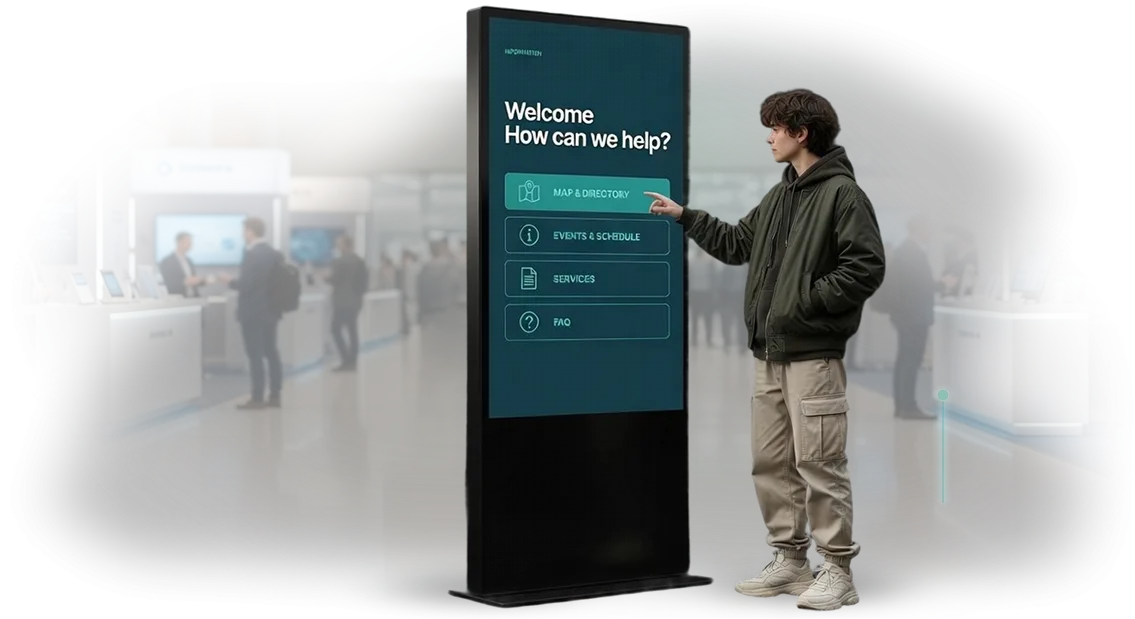
מדוע מבקרים במרכזי תרבות לא תמיד זוכים לעזרה בזמן
במרכז תרבות, מבקרים מגיעים לעתים קרובות בפעם הראשונה: לקונצרט, למפגש מועדון או לתערוכה. הם לא מכירים את מבנה הבניין, והשילוט על הדלתות לא תמיד ברור.
כתוצאה מכך, אנשים מסתובבים במסדרונות, מאחרים לתחילת האירוע, והצוות צריך להפסיק את עבודתם כדי ללוות אורחים לחדר הנכון.
זה מטיל עומס נוסף על המנהלים ומשאיר רושם רע מהביקור. האורחים זוכרים את הטרחה ואת הזמן האבוד, לא את התכנית.
הבעיה חמורה במיוחד במרכזי תרבות גדולים ובמרכזים קהילתיים שיש להם מספר קומות, חדרים רבים וזרימת מבקרים כבדה במהלך אירועים.
עזרת הצוות לא תמיד מגיעה בזמן — ברגעי שיא יש למנהל תור, ואורחים מבולבלים נותרים ליד הכניסה. הפתרון אינו גיוס צוות נוסף, אלא התקנת קיוסק מידע שיכול להראות את המסלול באופן מיידי, ללא הפסקות.
קיוסק מידע פותר את המשימה בכמה הקשות: המבקר בוחר את האירוע או החדר על המסך ומיד רואה את הדרך.
הניווט הופך לברור אפילו עבור אנשים שנמצאים בבניין בפעם הראשונה — ללא מעורבות של מנהל וללא המתנה בתור.
אנחנו מפתחים קיוסקים כאלה למרכזי תרבות ומרכזים קהילתיים כבר יותר מ-10 שנים.
הניסיון שלנו מראה שאחרי התקנת קיוסק, הצוות מפסיק להיות מוסח על ידי שאלות כמו "איפה האולם כאן?", והמבקרים מוצאים את דרכם בשלווה ומגיעים בזמן.
מה קיוסק אינטראקטיבי נותן למנהלי מרכזים קהילתיים
מנהלים במרכזי תרבות ומרכזים קהילתיים עונים מדי יום על עשרות שאלות זהות: איפה האולם, מתי השיעור, איך להירשם. זה גוזל זמן מהצוות ויוצר תורים בדלפק הקבלה.
קיוסק אינטראקטיבי לוקח על עצמו את השירות השגרתי — המבקר מקבל תשובה מיידית, בעוד המנהל מתמקד במשימות אמיתיות.
רשימת יתרונות למנהל:
- מהירות שירות. האורחים מוצאים את לוח הזמנים, מפת האולמות או פוסטר האירועים בעצמם תוך חצי דקה, ללא המתנה בתור. הקיוסק עובד במקביל לדלפק הקבלה, כך שזרימת המבקרים בשעות השיא מהירה יותר.
- הפחתת עומס על המנהל. שאלות נפוצות כמו "איפה?", "מתי?", "איך להירשם?" מטופלות אוטומטית. לצוות נשאר זמן למצבים לא שגרתיים ולתקשורת חיה.
- מידע עדכני ללא עבודה ידנית. לוחות זמנים והודעות מתעדכנים באופן מרכזי — האורחים לא צריכים שלטי נייר שתמיד מאחרים את הזמנים.
- ברור לכל אורח. כפתורים גדולים ורמזים עובדים היטב גם למבקרים צעירים וגם למבוגרים, כולל אלה שאינם משתמשים בסמארטפון.
- תשובות עקביות ללא ויכוחים. הקיוסק תמיד מדויק, כך שהאורחים לא נתקלים ב"אבל אמרו לי אחרת".
- סטטיסטיקה לתכנון. הקיוסק מראה אילו שירותים ותחומים נחיפושים ביותר. זה עוזר ליצור לוח זמנים נוח ולשייך צוות כראוי.
גישה זו הוכחה בפרויקטים שלנו: כבר יותר מעשר שנים אנו מגדירים קיוסקים לצרכים מוסדיים, מאמנים צוות ומספקים תמיכה לאחר ההשקה. המנהל מפסיק להיות מוקד שירות, והאורחים מקבלים את המידע שהם צריכים מהר יותר.
פורמטים של קיוסק אינטראקטיבי: איזה מהם לבחור למשימות שלך
בחירת פורמט הקיוסק משפיעה ישירות על נוחות המבקרים ועל היעילות של המוסד שלך. פתרונות עומדים, צמודי קיר ושולחניים מכסים משימות שונות: מניווט בבניין ועד הרשמה עצמית למועדונים או רשימות אירועים.
המפתח הוא להתאים את הפורמט לאופן שבו אנשים נעים במרחב ולמקום שבו הכי נוח להם לעצור.
עבור מרכזי תרבות ומרכזים קהילתיים, חשוב שהקיוסק לא ייצור תורים וישתלב באופן טבעי בפנים. אנו בוחרים פורמט על סמך נקודת המיקום הספציפית, זרימת המבקרים ותרחיש השימוש. להלן השוואה קצרה שתעזור לך להתמצא.
| פורמט | למי והיכן | מה הוא נותן למבקר |
|---|---|---|
| קיוסק עומד | לובי, מבואה מרווחת, אזור המתנה | מתמודד עם תנועה גבוהה, נראה ממרחק, נוח לחיפוש מידע מהיר ולניווט |
| קיוסק צמוד קיר | מסדרון צר, מבואות מעליות, אזורי כניסה | חוסך מקום, עובד גם כפוסטר וגם כדלפק מידע, מתאים לסשנים קצרים |
| גרסה שולחנית עם מסך מגע | אזור המנהל, דלפק מידע, חללים קטנים | אידיאלי לייעוץ, הרשמות ואינטראקציה אישית — הצוות והמבקר רואים את המסך יחד |
אלה אינן כללים נוקשים: לעתים קרובות פורמט אחד משלים אחר. לדוגמה, קיוסק עומד בלובי מציג את פוסטר האירועים ואת המפה, בעוד קיוסק צמוד קיר עוזר למבקרים למצוא את דרכם לאולם ספציפי.
אנו מתכננים את המערכת כך שכל מסך עונה על השאלה המרכזית של המבקר ומקל על הצוות.
אנו נציע את התצורה האופטימלית למשימות שלך, נחשב את העומס ונכין אבות טיפוס למסך. פשוט תאר את תרחיש השימוש — משם, אנחנו מטפלים בבחירת הפורמט, העיצוב וההשקה.
כיצד מפתחים קיוסק אינטראקטיבי ב-6 שלבים
אנו מבנים את הפרויקט כך שתמיד תבין מה קורה ומה אתה מקבל בכל שלב. כל התפקידים מוגדרים בבירור: אתה מקבל החלטות, ואנחנו אחראים לתוצאה וללוחות הזמנים.
- בריף וראיון. במשך 1–2 פגישות אנו מנתחים את משימות הקיוסק, פרופיל המבקר ותרחישי ההתנהגות שלו. אנו מקבלים הבנה ברורה אילו תוכן ופונקציות הם בעדיפות — לפנאי, ניווט או הרשמה לשיעורים.
- אב טיפוס ואישור. אנו יוצרים מודל אינטראקטיבי שתוכל "לחוש" עם העכבר. אתה רואה את מבנה התפריט ואת ההיגיון של המסך לפני תחילת הפיתוח, ותוכל לבצע שינויים ללא כתיבה מחדש של קוד.
- קונספט עיצובי. אנו יוצרים 2–3 אפשרויות עיצוב בסגנון המוסד שלך. אנו מאשרים מודל אחד ונועלים אותו כך שהסגנון החזותי לא יסטה מאוחר יותר בפרויקט.
- הרכבת תוכן ותכנות. אנו ממלאים את הקיוסק בחומרים שלך — פוסטרי אירועים, תיאורי מועדונים, לוחות זמנים. במקביל, אנו מגדירים את ההיגיון של המסך כך שמבקר בכל גיל ימצא את מה שהוא צריך ב-2–3 הקשות.
- בדיקות והטמעה. אנו בודקים תרחישי משתמש אמיתיים, פעולה על ציוד מקצועי ועמידות לשימוש ממושך. ביום ההשקה אנו טוענים את הקיוסק באתר ומספקים הדרכת מנהלים.
- השקה ותמיכה. אתה מקבל את העבודה, אנו תומכים בהשקה, ובמהלך תקופת האחריות אנו מעדכנים במהירות תוכן ופונקציות. אם האולם משנה את מערך האירועים — אתה יכול לעדכן את הכרטיס בעצמך תוך כמה דקות.
הדבר העיקרי שאתה מקבל הוא יכולת חיזוי. לאחר אישור אב הטיפוס והעיצוב, אתה יודע מראש איך הקיוסק ייראה ואיך הוא יעבוד ביום הפתיחה.
אתה לא צריך להבין את הצד הטכני, ואנחנו דואגים שהמסך לא יקפא בשעות שיא או ידרוש פיקוח מתמיד.
מה כלול במסירת קיוסק אינטראקטיבי: החבילה המלאה
אתה מקבל פתרון מוכן לחלוטין, לא סט של "חומרה" וקבצים שאתה צריך להרכיב ולהגדיר בעצמך. אנחנו אחראים לתוצאה סופית: אנו מספקים, מתקינים, מחברים, ממלאים במידע ומאמנים את הצוות שלך. כל מה שאתה צריך לעשות הוא לחבר את הקיוסק לשקע ולהתחיל להשתמש בו.
החבילה כוללת מספר בלוקים: ציוד, תוכנה, תוכן ותיעוד. להלן היקף המסירה כדי שתוכל להבין בדיוק מה אתה מקבל ואילו משימות הוא יכסה.
-
קיוסק עם מסך מגע על מעמד פלדה — מעטפת נגד ונדליזם, מוגן מפני אבק ולחות, מיועד לאזורים עם תנועה גבוהה. אלכסון המסך נבחר עבור החלל שלך: ממעמד קומפקטי בלובי ועד פאנל בגודל מלא במבואה.
-
מודול יחידת מערכת — מחשב תעשייתי עם קירור פסיבי (ללא מאווררים רועשים). הוא פועל מסביב לשעון, לא מתחמם במזג אוויר חם ועמיד בפני תנודות מתח. כל זה מוסתר בתוך המעטפת ומוגן מפני גישה לא מורשית.
-
תוכנת קונסיירז' וירטואלי — ממשק עם מפת בניין, ניווט בחדרים ולוח אירועים. המערכת עצמה מדריכה מבקרים למומחה הנכון ומציגה חדשות ועדכוני אירועים. עדכוני תוכן נעשים דרך פאנל ניהול נוח, ללא מתכנת.
-
תוכן מותקן מראש — מבנה מדורים, טעינת פוסטר אירועים, רשימת מועדונים ואנשי קשר. אנו עוזרים לך לאסוף את המידע בהתחלה ומראים לך כיצד לשמור אותו מעודכן.
-
מערך תיעוד — מדריך למנהל, הוראות להחלפת חומרים מתכלים ונוהל בדיקה יומיומי שגרתי. הכל כתוב בשפה פשוטה עם תמונות — מתאים לצוות ללא רקע טכני.
-
הדרכה לצוות שלך — 1–2 שעות תרגול: איך להפעיל, לעדכן את פוסטר האירועים, להחליף באנר ומה לעשות במצב חריג. ההדרכה מתקיימת מרחוק או באתר, לפי העדפתך.
-
אחריות ותמיכה טכנית — הסכם שירות לתחזוקת ציוד ותוכנה. אתה אף פעם לא מתמודד עם הטכנולוגיה לבד: אנו מגיבים לפניות תוך יום עסקים אחד, וחלקי חילוף תמיד במלאי.
בסופו של דבר, אתה מקבל קיוסק מידע מוכן לחלוטין שניתן להציב בלובי כבר מחר — עם תוכנה מוגדרת, תיעוד וצוות מיומן. ללא הרכבה עצמית, ללא חיפוש אחר קבלני משנה, ללא התמודדות עם רכיבים לא תואמים. רק כלי עבודה שעוזר למבקרים ומקל על המנהלים שלך.
מקרה בוחן: קיוסק צמצם את התור בקופות — מדדי הפרויקט
במרכזי תרבות ומרכזים קהילתיים, בעיה קלאסית היא התור בקופות. מבקרים מאחרים לתחילת הסשן שלהם, הצוות עובד על גבול היכולת, ומתח נבנה בכניסה. זה פוגע גם במוניטין וגם בהכנסות: חלק מהאורחים פשוט מסתובבים ועוזבים.
פתרנו את הבעיה הזו עבור מרכז תרבות אזורי אחד — נקרא לו ארמון התרבות "מיר". פיתחנו קיוסק אינטראקטיבי שמטפל במכירת כרטיסים, רשימות אירועים וניווט באולמות.
חודש לאחר ההשקה, זמן השירות הממוצע למבקר ירד משלוש דקות ל-40 שניות, והתור בקופות נעלם. במשך ערב של שעתיים, הקיוסק עיבד עד 120 כרטיסים — פי שניים מקופאי בעומס שיא.
| מדד | לפני ההטמעה | עם קיוסק |
|---|---|---|
| מהירות שירות | 3 דקות לאורח | 40 שניות |
| תור בקופות לפני אירוע | 15–20 אנשים | 2–3 אנשים |
| כרטיסים שנמכרו בשעתיים | 35–40 | 120 |
| אחוז ביקורים חוזרים | 40% | 68% |
התוצאה מדברת בעד עצמה: מבקרים הולכים לאולם ללא לחץ, והצוות כבר לא קופאים — הם יכולים לעסוק בתקשורת חיה עם אורחים.
רבעון לאחר מכן, ההנהלה הזמינה שני קיוסקים נוספים למקומות שכנים, ומוסדות תרבות סמוכים פנו אלינו לפתרונות דומים. הקיוסק השתלם לא רק במהירות, אלא גם בנאמנות הקהל.
איך לבחור את הפורמט הנכון של קיוסק אינטראקטיבי?
בחירת פורמט קיוסק אינטראקטיבי מתחילה לא במסך, אלא בתנאים שבהם הוא יפעל. עבור מרכז תרבות או מרכז קהילתי, הקריטריונים העיקריים הם שטח הרצפה הזמין, תנועת החדרים והתקציב שאתה מוכן להקצות לציוד דיגיטלי. על ידי מענה על שלוש השאלות האלה, אתה פוסל אוטומטית חצי מהאפשרויות הלא מתאימות.
כשהמקום מוגבל, עדיף להסתכל על פאנלים צמודי קיר או מעמדים עומדים קומפקטיים. הם תופסים פחות ממ"ר, לא יוצרים מכשולים בלובי ומשתלבים בקלות בפנים הקיימים.
במקביל, כמות המידע לא סובלת: קיוסק כזה יכול להכיל רשימות אירועים, ניווט והודעות מועדון.
אם זרימת מבקרים גדולה עוברת דרך המבואה, מהירות הפעולה ויציבות המבנה חשובות ביותר. מסך מגע גדול ומעמד אמין מאפשרים לשרת כמה אנשים ברצף ללא תורים או עיכובים, ומעטפת חזקה עמידה בשימוש קבוע. פורמט זה נוח גם להפעלת סקרים ואיסוף משוב מבקרים.
התקציב כאן אינו על קניית הדגם היקר ביותר, אלא על אורך החיים והחזר ההשקעה.
קיוסק שנבחר כראוי מחזיר את עצמו על ידי הפחתת עומס הצוות והגדלת הנוכחות באירועים, ולכן כדאי להחליט מראש אילו פונקציות הן בעדיפות: ניווט, רשימות אירועים או הרשמה למועדונים.
אנו עוזרים לך לבחור פורמט לבניין ספציפי ולחשב את עומס הציוד יחד איתך. על סמך הניסיון שלנו בפרויקטים של מרכזי תרבות, לאחר ניתוח מקדים של שטח הרצפה וזרימות המבקרים, לקוחות רק לעתים רחוקות משלמים יותר מדי עבור אפשרויות שאינן בשימוש. פשוט ענה על כמה שאלות — ותקבל המלצה מותאמת למקרה שלך.
ספקות נפוצים בהזמנת קיוסק אינטראקטיבי
ספקות לפני הזמנת קיוסק אינטראקטיבי הם נורמליים: אתה אחראי לתוצאה ורוצה שהציוד יעבוד שנים. הפחדים העיקריים של הלקוחות תמיד מסתכמים באותם דברים: האם הטכנולוגיה תתקלקל, מי יתחזק אותה, והאם יהיו בעיות ניהול. קל לטפל בחששות אלה אם ניגשים לפרויקט באופן שיטתי.
אנו משתמשים בפתרונות מוכחים ובציוד מקצועי, כך שהקיוסקים פועלים בשימוש יומיומי ללא השבתות. במקביל, מערכות האבחון העצמי שלנו מאותתות על תקלות פוטנציאליות מראש — תקלות לא קורות בפתאומיות, והתחזוקה הופכת למתוכננת ולא לחירום.
באשר לניהול, ממשק המנהל מעוצב עבור צוות מרכז תרבות או מרכז קהילתי ללא הכשרה מיוחדת.
שינוי תוכן, עדכון פוסטר האירועים והוספת מידע עזר אורכים כמה דקות, ואבטחת הנתונים מובטחת ברמת ארכיטקטורת השרת — הגישה וההרשאות מופרדות לכל עובד.
מה קורה אם הקיוסק מתקלקל במהלך אירוע?
אנו מתכננים מערכות כך שתקלות קריטיות לא קורות ברגע החשוב ביותר. פעולה סטנדרטית כוללת אבחון מרחוק: מומחה רואה סיכונים מראש ופותר אותם מרחוק או בזמן שנוח לך.
אם אכן מתרחשת תקלה, התמיכה מגיבה תוך כמה שעות, ובמהלך תקופת האחריות השירות ניתן על חשבוננו.
כמה קשה יהיה לצוות לעדכן מידע על הקיוסק?
ממשק הניהול מעוצב להיות קרוב ככל האפשר לתוכנות משרדיות פשוטות: אין צורך בתכנות. עובד משנה את פוסטר האירועים או נתוני עזר דרך טופס נוח, בדיוק כמו עריכת מסמך. אנו גם מאמנים את צוות מרכז התרבות במפגש קצר אחד — בדרך כלל לא יותר משעה.
מי אחראי על בטיחות הנתונים שהמבקרים מכניסים?
המידע מאוחסן בצד שרת מאובטח, לא על הקיוסק עצמו. הגישה לנתונים מופרדת בקפדנות: אתה תמיד שולט במי שיש לו זכויות לצפייה ולשינוי. גישה זו מגנה מפני גניבת מדיה וגם מפני גישה חיצונית לא מורשית.
קבל חישוב עבור קיוסק אינטראקטיבי למשימות שלך
עבור מרכזי תרבות ומרכזים קהילתיים, קיוסק אינטראקטיבי הוא כלי שעוזר למבקרים למצוא במהירות את האולם הנכון, לוח זמנים של מועדון או פוסטר אירועים.
אבל כדי שהקיוסק יפתור את המשימות הספציפיות שלך, יש לחשב מראש את התצורה, הפונקציונליות והעלות.
זו הסיבה שהפכנו את התהליך לפשוט ככל האפשר: אתה משאיר פנייה, ותוך יום עסקים אחד אתה מקבל חישוב והצעה מסחרית עם לוחות זמנים ספציפיים.
מה קורה אחרי הפנייה שלך:
- אתה מתאר את המשימה: היכן יוצב הקיוסק, מי הקהל ואילו פונקציות חשובות — ניווט, לוח זמנים, פוסטר אירועים, תשלום או משהו אחר.
- אנו מבהירים את הפרטים: במידת הצורך, אנו שואלים שאלות על המתחם, מספר המבקרים ותרחיש השימוש הצפוי.
- אנו מכינים חישוב אישי: אנו בוחרים את הציוד והתוכנה למשימה שלך, ללא אפשרויות מיותרות שמגדילות את התקציב.
- אנו שולחים הצעה מסחרית ולוחות זמנים — בדרך כלל תוך יום עסקים אחד לאחר קבלת הפנייה.
- לאחר האישור, אנו קובעים את תוכנית העבודה, השלבים ותאריך ההשקה. אתה תמיד יודע מה ייעשה ומתי.
- במידת הצורך, אנו מקיימים פגישה או הדגמה כדי שתוכל לראות איך הקיוסק יעבוד בחלל שלך.
גישה זו מאפשרת לך לעבור במהירות מרעיון לפתרון עובד. אתה מקבל חישוב שקוף, לוחות זמנים ברורים והבנה של מה יעלה הפרויקט ואילו תוצאות הוא יביא. השאר פנייה — ונכין עבורך הצעה מסחרית היום.