

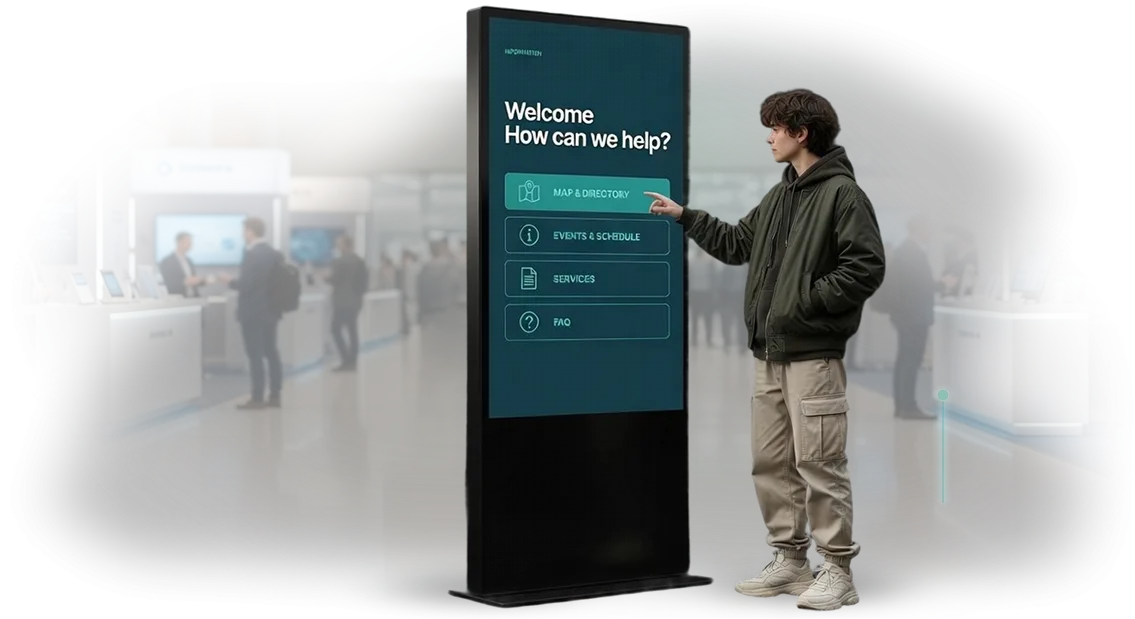
קיוסקים לבתי קזינו ומרכזי הימורים: למה אורחים עוזבים
אורח בקזינו מגיע בשביל ריגוש וחוויות בלתי נשכחות, אבל לעתים קרובות נתקל בכאוס ניווטי: מסדרונות ארוכים, אזורים מרובים, מסעדות, אזורי מופעים — ולא ברור לאן ללכת.
במקום לשחק, האדם מבזבז זמן בחיפוש אחר האולם או השולחן הנכון, מתעצבן, ובסופו של דבר עוזב מוקדם יותר מהמתוכנן.
זו לא בעיה של "מפה לא נוחה" — זו אובדן הכנסות ישיר: כל דקה שאורח עומד בטל היא הימור, הזמנת מסעדה או רכישת כרטיס למופע שהחמיצו.
זה בולט במיוחד במתחמים גדולים שבהם האורח צריך להבין את הפריסה לבדו. מאבטח או מנהל יכולים לעזור, אבל לא תמיד יש להם מידע מדויק, והאורח עצמו מהסס לשאול שוב.
כתוצאה מכך, המבקר מרגיש חוסר ביטחון, המעורבות שלו יורדת, והוא חוזר פחות. שימור מבקרים תלוי ישירות בכמה קל להם לנווט במרחב המתחם.
קיוסק מידע פותר את הבעיה הזו: האורח יכול למצוא באופן עצמאי את האזור, האירוע או השירות הנכונים בכל רגע, בלי להסיח את דעת הצוות או לבזבז זמן.
פתרון כזה לא רק מפשט את הניווט בקזינו אלא גם משפר את הרושם הכללי מהמתחם — הוא נראה מודרני וקשוב. עבור הבעלים, זה אומר יותר ביקורים חוזרים, שהות ארוכה יותר של אורחים וחשבון ממוצע גבוה יותר.
אנחנו מפתחים מערכות אינטראקטיביות למתחמי בילוי כבר למעלה מ-10 שנים ומבינים איך להפוך ניווט ממקור תסכול לכלי להכנסות נוספות.
אנחנו עוזרים לסגור את הפער בין הרצון של האורח לבלות לבין היכולת שלו למצוא במהירות את מה שהוא מחפש.
מה קיוסק אינטראקטיבי נותן למבקרים ולעסק
עבור בתי קזינו ומרכזי הימורים, המטרה המרכזית היא להחזיק את תשומת הלב של האורח ולעודד אותו לנסות יותר שירותים. האורח לא רוצה לחפש את האולם הנכון או לעמוד בתור בדלפק המנהל.
קיוסק אינטראקטיבי מספק מיידית מסלול, עונה על שאלות ומציע מה מעניין קורה כרגע.
אנחנו מתכננים קיוסקים לפי הצרכים הספציפיים של כל מתחם. הנה מה שאתם מקבלים:
- ניווט דיגיטלי — האורח מוצא מסעדה, מופע, אזור VIP או כספומט בכמה נגיעות בלבד. הצוות משוחרר משאלות חוזרות ונשנות ויכול להקדיש זמן לאורחים שמייצרים יותר הכנסות.
- חשבון ממוצע גבוה יותר — הקיוסק מציג הצעות ומבצעים מותאמים אישית לפי השעה ביום. אורחים מזמינים משקאות, ארוחות או כרטיסים לעתים קרובות יותר כי הם רואים אותם ברגע הנכון.
- מעורבות אורחים — משימות אינטראקטיביות וחידונים הופכים את זמן ההמתנה לבידור. אורחים מבלים יותר זמן וחוזרים ברצון רב יותר, והם משתפים חוויות ברשתות החברתיות.
- משוב ללא טפסי נייר — סקר קצר על המסך לוקח דקה מזמנו של האורח ונותן לכם תמונה ברורה: עד כמה כל מבקר מרוצה מהשירות ואילו תחומים דורשים שיפור.
כל תרחיש מותאם לפורמט שלכם — ממועדון ועד מתחם גדול. אנחנו תומכים בפרויקט בכל שלב, כך שהקיוסק פועל בצורה אמינה ומחזיר את ההשקעה באמצעות ביקורים חוזרים ומכירות נוספות.
פורמטים של קיוסקים אינטראקטיביים לבתי קזינו
פורמט המכשיר הוא לא רק "חומרה" — הוא כלי לפתרון משימה ספציפית: לעזור לאורח, להקל על הצוות ולהגדיל הכנסות.
בתי קזינו ומתחמי בילוי מריצים מספר תרחישים בו-זמנית — מהרשמה מהירה וניווט ועד הימורים והזמנת משקאות. קיוסק אוניברסלי אחד ממעט לכסות את כל הצרכים, ולכן אנחנו מציעים מספר סוגי מכשירים לתרחישים שונים.
| פורמט | למה הוא משמש | מה הוא נותן למתחם שלכם |
|---|---|---|
| קיוסק מסך מגע | דלפק מידע, הזמנת שירותים, הפעלת מיני-משחקים | מפחית עומס על הצוות, מזרז שירות לאורחים |
| עמדת שירות עצמי | רישום אורחים, הנפקת כרטיס מועדון, תשלום | מפחית תורים, משפר את מהירות השירות, אוסף נתוני אורחים |
| קיוסק ניווט | מציאת אולמות, מסעדות, בילויים, אירועים | עוזר לאורחים לנווט בקלות, מגביר את הביטחון שלהם ואת זמן השהייה במתחם |
| קיוסק רצפתי / נייד | משיכת תשומת לב בכניסה, קידום אינטראקטיבי | יוצר אפקט וואו, מגביר מעורבות וטווח הגעה של פעילויות קידום |
בחירת הסוג הספציפי תלויה במטרה שלכם. לדוגמה, אם המשימה היא להפחית תורים באזור הרישום, עמדת שירות עצמי עם אינטגרציה למערכת החשבונאות שלכם היא הבחירה.
אם אתם צריכים להחזיק את תשומת הלב של אורח בלובי, משתמשים בקיוסק מסך מגע אינטראקטיבי עם משחקים או תצוגת תפריט.
אנחנו נבחר את השילוב האופטימלי של פורמטים ונאחד אותם למערכת אחת כך שנתוני פעילות האורחים לא יאבדו והכל מנוהל מחלון אחד.
חשוב לציין, כל הפורמטים פועלים על פלטפורמה אחידה. זה אומר שאתם מקבלים פתרון מגובש ולא אוסף של מכשירים מנותקים: עדכוני תוכן אורכים דקות, לא ימים, ותמיד אפשר להוסיף תרחישים חדשים — מכרטיסי מתנה ועד שולחנות אינטראקטיביים לאורחי VIP.
איך מיישמים קיוסק אינטראקטיבי
כל פרויקט במתחם מתחיל בשאלות וציפיות. מבננו את שלבי היישום כך שתוכלו לראות מה קורה מהבריף ועד ההשקה והתמיכה. האורחים שלכם מקבלים שירות שימושי, ואתם מקבלים לוחות זמנים ברורים ושליטה בכל שלב.
- בריף וסקירת אתר — אנחנו לומדים את המשימות, מיקום הקיוסק וזרימות האורחים. אתם מקבלים מפרט טכני ברור והבנה איך הקיוסק ישתלב במרחב.
- תוכנית ואב-טיפוס — אנחנו מציגים את תרחישי הפעולה ופריסת המסכים. אתם רואים את הממשק לפני תחילת הפיתוח ויכולים לבצע שינויים ללא עלויות נוספות.
- יישום — אנחנו בונים את הממשק והתוכנה תוך התחשבות במאפיינים הייחודיים של קזינו: ניווט, הזמנת שולחנות ונתוני עזר לאורחים. אתם מקבלים מוצר שעובד עבור הקהל שלכם.
- בדיקות — אנחנו מוודאים את היציבות והשימושיות של התרחישים. כל הבעיות נפתרות לפני ההתקנה במתחם.
- התקנה והשקה — אנחנו מתקינים את הקיוסק, מחברים אותו למערכות המתחם ומכשירים את הצוות. הקיוסק מושק ללא השבתה ממושכת ובמעורבות מינימלית של הצוות שלכם.
- תמיכה — אנחנו מעדכנים תוכן, מנטרים ביצועים ומנתחים פעילות אורחים. אתם אף פעם לא נשארים לבד עם הטכנולוגיה.
גישה זו הופכת את היישום לצפוי: אתם יודעים את לוחות הזמנים, רואים תוצאות בכל שלב ומקבלים קיוסק שעובד עבור העסק שלכם מהיום הראשון.
מה כלול במסירת הקיוסק ובתוכנה שלו
התשובה הסטנדרטית לשאלה "מה בדיוק אני מקבל" היא רשימת חלקים: מסך, מארז, תוכנה. אנחנו ניגשים לזה אחרת: אתם מקבלים פתרון מפתח מלא שעובד עבור האורח ועבור ההכנסות מהיום הראשון. החבילה כוללת הכל — מציוד ועד הכשרת צוות שיעבדו איתו.
הנה מה שכלול במסירה:
- קיוסק מפתח מלא — לוח מגע, מארז, רכיב שרת והגנה מפני אבק ולחות: הכל מוגדר, נבדק ומוכן להפעלה באתר שלכם.
- תרחישים למתחם שלכם — ניווט לאזורי משחק ומסעדות, לוחות זמנים של מופעים וטורנירים, חוקי משחק, מבצעים ותוכנית נאמנות. האורח מוצא את התשובה תוך 30–40 שניות בלי להסיח את דעת הצוות.
- פאנל ניהול לעדכוני תוכן — המנהל משנה פוסטרים, מבצעים ותרחישים בעצמו בלי לערב מתכנת; השינויים מתפרסמים תוך כמה דקות.
- הכשרת צוות — הדרכה למנהלים ולצוות שירות האורחים, עם תרגול בטיפול בשאלות נפוצות.
- תמיכה ותחזוקה — התקנה באתר, ניטור יציבות, עדכוני מערכת מתוזמנים וייעוץ לאורך כל חיי השירות.
חבילה זו מכסה את נקודות הכאב המרכזיות של המתחם: אורחים מפסיקים להסיח את דעת הצוות בשאלות, התורים בדלפק המידע מתקצרים, והעובדים מתמקדים באורחים במקום במפת המתחם.
היישום אורך בין כמה שבועות לחודש — תלוי במספר הקיוסקים ובמורכבות התרחישים.
דוגמת יישום: איך קיוסק הפחית תורים בקזינו
בקזינו עם תנועה גבוהה, נתקלנו במצב טיפוסי: בשעות הערב נוצר תור בדלפק המידע, המנהלים היו עמוסים בשאלות, וחלק מהאורחים עזבו בלי לקבל תשובה.
הצענו קיוסק מידע אינטראקטיבי שמטפל בפניות שגרתיות: הוא מראה את הדרך לאולם המשחקים, מסביר את חוקי תוכנית הנאמנות, עוזר להזמין שולחן או מזמין מנהל אישי.
התוצאות הופיעו תוך שבועיים. בחודש הראשון, הקיוסק טיפל ביותר מ-15,000 פניות — בערך מחצית מכל פניות דלפק המידע. זמן התגובה הממוצע ירד מ-9 דקות ל-30 שניות, ותורים בשעות השיא פשוט הפסיקו להיווצר.
אורחים מקבלים את המידע שהם צריכים באופן מיידי בלי להתרחק מהמשחק, בעוד הצוות מתפנה לעבודה אישית עם אורחי VIP.
אחרי ארבעה חודשים, מדדנו את המדד החשוב ביותר למתחם — נאמנות. חלק הביקורים החוזרים בקרב אורחים שהשתמשו בקיוסק גדל ב-18% בהשוואה לאלה שפנו למנהלים.
זה צפוי: אנשים זוכרים לא רק את המשחק אלא גם איך קיבלו אותם. כשכל השאלות נפתרות תוך חצי דקה, המתחם נתפס כקשוב ומתקדם טכנולוגית, ואורחים חוזרים שוב.
עבור הבעלים והמנהל, זה אומר צמיחה בהכנסות ללא הוצאות פרסום נוספות: אורח מרוצה מבקר לעתים קרובות יותר ומביא חברים. הקיוסק מחזיר את ההשקעה בדיוק באמצעות ביקורים חוזרים והפחתת עומס על הצוות.
אנחנו מתאימים את התרחישים לכל פורמט מתחם ומשלבים את הקיוסק עם תוכנית הנאמנות או מערכת ההזמנות כדי לספק תוצאות מדידות כבר בשבועות הראשונים לפעילות.
איך לבחור את פורמט הקיוסק הנכון למשימה שלכם?
בחירת קיוסק מתחילה לא במפרט טכני אלא במשימות שהוא יפתור.
בקזינו או מרכז הימורים, פורמט נייח עובד היטב כנקודת מידע קבועה: אורחים מתרגלים למיקום שלו, מוצאים את המסלול למסעדה או לאולם קונצרטים, ולומדים על תוכניות נאמנות עדכניות. קיוסק כזה פועל כל יום בלי להזיז אותו והופך לחלק מוכר מהניווט.
פורמט נייד, לעומת זאת, בנוי לתרחישים גמישים.
אם אתם צריכים לתמוך באירוע פרטי באולם פרימיום, להחיות את אזור הכניסה בערב חג, או להקים במהירות תוכן אינטראקטיבי ליד לוח טורניר, הקיוסק מובא למקום שבו צריך אותו באותו רגע.
זה פתרון למבצעים זמניים כשאתם רוצים למשוך את תשומת לב האורחים להצעה ספציפית.
המדריך המרכזי בבחירה הוא זרימת המבקרים ועקרון המיקום. פורמט נייח מחזיר את ההשקעה בעומס קבוע ומשחרר את הצוות משאלות חוזרות.
פורמט נייד הוא הבחירה כשניידות והיכולת לבדוק אזורים שונים בלי עבודות שיפוץ הן בראש סדר העדיפויות. במהלך ייעוץ, אנחנו קובעים יחד איזו אפשרות מתאימה למצב שלכם ומציעים את הפתרון הנכון.
אנחנו עוזרים לכם לבחור את פורמט הקיוסק למשימה שלכם: אנחנו מנתחים את פריסת המתחם, תרחישי אורחים טיפוסיים ותכונות נדרשות.
פשוט צרו קשר — ותקבלו המלצה מותאמת למאפייני העסק שלכם, כך שההחלטה תהיה מבוססת ותעבוד למען התוצאות שלכם.
ספקות נפוצים לפני רכישת קיוסק אינטראקטיבי
לפני רכישת קיוסק אינטראקטיבי לקזינו או מרכז בילוי, לבעלים יש את אותן שאלות. בואו נתייחס לחששות המרכזיים — מתקלות ועד תקופת החזר השקעה — ונראה איך הם נפתרים בפועל.
מה אם הקיוסק יתקלקל באמצע שעות השיא?
תקלת קיוסק היא הפחד המרכזי של כל אירוע או מתחם עם זרימת מבקרים קבועה. הסיכון הזה מסולק: אנחנו משתמשים בציוד מקצועי שעומד בעומסים גבוהים ומחברים ניטור בריאות מרחוק.
אם אכן מתעוררת בעיה, המערכת מתריעה לנו לפני שהאורח בכלל מבחין בה, ואנחנו מפעילים שחזור מרחוק.
כל העבודה מכוסה באחריות, ותחזוקת השירות כבר כלולה בעלות. במקרה קריטי, אנחנו מספקים במהירות מכשיר חלופי כך שהמתחם שלכם לעולם לא עומד בטל אפילו לדקה.
האם הצוות לא יתקשה עם ציוד מורכב?
הקיוסק מתוכנן עבור העובדים שלכם, לא עבור מתכנתים. התוכן מתעדכן דרך פאנל ניהול ברור: שנה תיאור שירות, העלה תפריט חדש, הוסף מבצע — זה לוקח כמה דקות.
ההכשרה מתבצעת מרחוק כשיחת הדגמה קצרה. בדרך כלל מספיק מפגש אחד כדי שהצוות יעבוד בביטחון עם המערכת. אחרי זה, אתם מתנהלים לבד, ואנחנו נשארים זמינים לייעוץ.
האם פתרון כזה לא יקר מדי, ומתי הוא מחזיר את ההשקעה?
הקיוסק מחזיר את ההשקעה באמצעות שני אפקטים: הוא מקל על הצוות — מטפל בשאלות שגרתיות, ניווט ורישום — ומושך את תשומת לב האורח, ומגדיל את החשבון הממוצע. מבקרים מזמינים שירותים נוספים לעתים קרובות יותר וחוזרים שוב.
בפרויקטים שלנו בבתי קזינו ומרכזי הימורים, החזר ההשקעה מתרחש תוך מספר חודשים. נספק לכם חישוב עלות מדויק לפורמט שלכם — בהתבסס על תנועת רגליים ומטרות הקיוסק.
כמה מהר אפשר להשיק את הקיוסק?
הניסיון של הצוות מאפשר לנו לספק פרויקט מפתח מלא תוך 2–3 שבועות: מתרחישי אינטראקציה ועד התקנה והכשרת צוות. אתם מקבלים פתרון עובד עד התאריך היעד שלכם — בלי עיכובים או הפתעות.
כבר השקנו קיוסקים באזורי רישום, אזורי lounge וליד מסעדות קזינו. אורחים מעריכים את הנוחות, והצוות משוחרר משגרה. צרו קשר — נחשב עבורכם את החזר ההשקעה למתחם שלכם.הזמינו פיתוח קיוסק וקבלו תוכנית יישום
קיוסק קונסיירז' בקזינו או מרכז הימורים הוא לא רק מסך עם תפריט. הוא עוזר לאורחים למצוא במהירות את האולם הנכון, ללמוד על אירועים ותוכניות נאמנות, ומקל על הצוות משאלות שגרתיות.
אבל כדי שההשקעה תשתלם, חשוב לראות מראש איך הקיוסק ישתלב במתחם שלכם, אילו תרחישים יניבו תוצאות וכמה זמן תימשך ההשקה.
לכן אנחנו מתחילים לא בקוד אלא בתוכנית. אתם שולחים בקשה — אנחנו עורכים ייעוץ קצר, מבהירים את המשימות, ותוך כמה ימים שולחים לכם הערכת פרויקט יחד עם מפת דרכים ליישום.
בלי "נבין בהמשך": אתם רואים את השלבים, לוחות הזמנים והיקף העבודה מההתחלה.
מה כלול בתוכנית:
- ייעוץ על פורמט הקיוסק: רצפתי, צמוד קיר, עם מסך מגע או מציאות רבודה — מותאם למרחב שלכם ולזרימת האורחים;
- הערכת פרויקט: לוחות זמנים, היקף עבודה, ציוד נדרש ואינטגרציות עם המערכות שלכם;
- מפת דרכים: מהכנת החלל ועיצוב ועד התקנה, הגדרה ובדיקות;
- תרחישי אורחים: ניווט, הזמנת שולחנות, מידע על מבצעים ובילויים;
- הכשרת צוות והוראות להתחלה מהירה;
- המלצות לתמיכה ועדכוני תוכן לאחר ההשקה.
שלחו בקשה באתר שלנו — נחזור אליכם תוך יום עסקים אחד, נענה על שאלותיכם ונכין הערכה מותאמת למתחם שלכם.
כך אתם מקבלים לא רק מוצר אלא תוכנית ברורה איך הקיוסק יתחיל לספק ערך לאורחים שלכם ולעסק שלכם.