

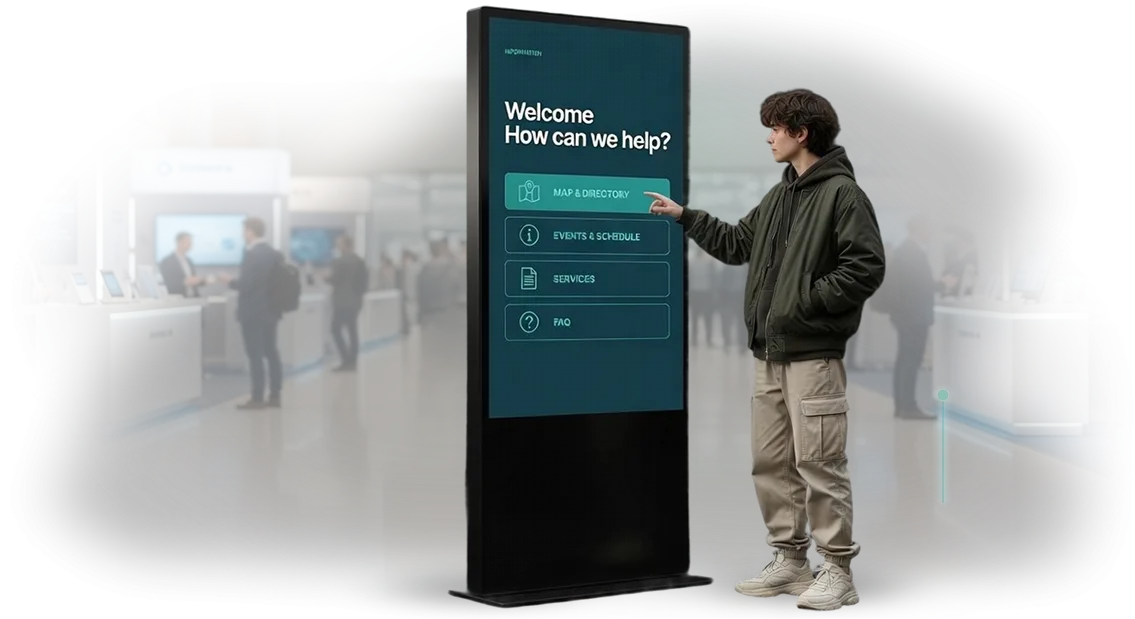
מדוע קהילות קוטג'ים מאבדות לקוחות ותושבים
בקהילות קוטג'ים, אנשים הולכים לאיבוד לפני שהם בכלל זוכים להעריך את היתרונות של מגורים שם. אורח לא יודע היכן משרד ההנהלה, כיצד להגיע לגן השעשועים, או אילו שירותים זמינים.
תושב מבזבז זמן בחיפוש אחר מידע עדכני על שעות הפעילות של התשתיות. כתוצאה מכך, הרושם הראשוני נהרס, והאמון בקהילה יורד.
עבור היזם וחברת הניהול, זהו הפסד ישיר: קונה פוטנציאלי עוזב מבלי לקבל החלטה כי הוא לא ראה סדר בדרך שבה המרחב מאורגן.
תושבים קיימים פונים למאבטחים ולמנהלים עם אותן שאלות, ומסיחים את דעת הצוות ממשימות אמיתיות. כל מקרה כזה הוא הזדמנות שהוחמצה להגברת נאמנות ולמכירת הנכס הבא.
ניווט בתוך הקהילה וגישה למידע הם חלק מהשירות שאנשים משווים מול איכות הפיתוח. אם אין מערכת שילוט ברורה בשטח, אפילו בתים איכותיים וגינון מטופח לא יצילו את המוניטין. הלקוח מסיק שאיש כאן לא חושב על הנוחות שלו.
לכן אנו מציעים התקנת קיוסק אינטראקטיבי עם קונסיירז' וירטואלי. אורחים ותושבים יכולים למצוא תשובות לשאלותיהם בכל עת: מפה, אנשי קשר לשירותים, חוקי מגורים ולוח אירועים.
המידע מתעדכן מרחוק, והממשק ברור אפילו למי שמשתמש במסך מגע בפעם הראשונה.
קיוסק כזה פותר את הבעיה של לקוחות אבודים ותושבים לא מרוצים. במקום תורים וכאוס — גישה מהירה לנתונים; במקום שאלות למאבטחים — פתרון עצמאי של בעיות.
הקהילה הופכת לשקופה וידידותית, מה שמשפיע ישירות על מכירות ונאמנות. אנו לוקחים על עצמנו את הפיתוח, ההגדרה והתחזוקה — כל מה שנותר לכם הוא ליהנות מהתוצאה.
מה מקבלים עם קונסיירז' וירטואלי
תושבי קהילת קוטג'ים מצפים לתשובות מהירות ומידע ברור מחברת הניהול. במקום לעמוד בתור במשרד ולקרוא ללא הרף למנהל, אפשר לקבל הכל במקום, בזמן נוח.
קונסיירז' וירטואלי בקיוסק אינטראקטיבי מטפל במשימות אלה: הוא עובד מסביב לשעון, אף פעם לא מתעייף, ועונה על שאלות נפוצות באופן מיידי.
יתרון: שירות לתושבים
הקיוסק הופך לנקודת כניסה יחידה: שעות פעילות תשתיות, אנשי קשר לשירותים, לוח אירועים וטופס הזמנת אישור כניסה לאורחים. תושב מקדיש דקה לבדיקת מידע או הגשת בקשה — במקום להתקשר למשרד ולחכות לתשובה.
יתרון: מידע אוטומטי
הודעות, שינויים בלוח הזמנים, מסמכים שימושיים — הכל מתעדכן באופן מרכזי, ללא מעורבות המנהל. מגדירים פעם אחת, והנתונים נמשכים אוטומטית. הסיכון למידע מיושן מתבטל: התושבים תמיד רואים את הגרסה העדכנית. אלה היתרונות של הקיוסק לפעילות השוטפת של הקהילה.
יתרון: הפחתת עומס העבודה על הצוות
הקיוסק לוקח על עצמו חלק מהפניות: שאלות חוזרות על שעות פעילות, תעריפים, שירותים ואירועים כבר לא דורשות מעורבות צוות. חברת הניהול מקבלת יותר זמן פנוי לתושבים ולבעיות האמיתיות שלהם, במקום משימות שגרתיות.
יתרון: תדמית מודרנית לקהילה
קיוסק היי-טק בלובי או במחסום מאותת שהקהילה מתפתחת ודואגת לנוחות. עבור קונים פוטנציאליים, זהו טיעון חזק בבחירת קוטג', ועבור תושבים נוכחיים — סיבה לגאווה במקום המגורים. עיצוב מודרני וממשק מחושב מחזקים את מעמד השטח.
במשך למעלה מ-10 שנות עבודה, הצוות שלנו פיתח עשרות פתרונות כאלה עבור מתחמים פרבריים ומתקנים מסחריים. הקונסיירז' הווירטואלי מחזיר את ההשקעה בחודשים הראשונים על ידי הפחתת עומס העבודה על הצוות והגברת שביעות רצון התושבים.
אנו מטפלים בכל המחזור: אנו מנתחים משימות, יוצרים את הממשק, מתקינים את הקיוסק ומכשירים את הצוות שלכם.
פורמטים של קיוסק אינטראקטיבי לקהילות קוטג'ים
קהילת קוטג'ים מודרנית היא עיר זעירה: מועדון משלה, גני שעשועים, אזורי ספורט ומספר כניסות. לאורחים ולתושבים חדשים יש שלל שאלות: היכן אולם התצוגה, איך מגיעים לבית הקפה, למי להתקשר בנושאי תשתית.
מנהלים מבזבזים זמן במתן אותן תשובות, ואנשים ממתינים — זהו חיכוך מיותר וסיבה לחוסר שביעות רצון.
הצוות שלנו יודע שקיוסק אוניברסלי אחד רק לעתים רחוקות מכסה את כל המשימות. לכן אנו מציעים פורמטים שונים לכל נקודת מגע עם תושב או אורח. להלן התרחישים האופייניים שחברות ניהול ויזמים מזמינים לרוב.
| פורמט קיוסק | למי | מה הוא נותן ללקוח |
|---|---|---|
| עמדת מידע | אורחים, תושבים חדשים, מבקרים באולם תצוגה | מקל על עומס המנהל, מספק תשובות מיידיות לשאלות על הקהילה וחוקי המגורים |
| קונסיירז' וירטואלי | תושבים המעדיפים לטפל בעניינים בעצמם | הנפקת אישורי כניסה לאורחים, בקשות שירות, אנשי קשר לשירותים — ללא שיחות ותורים |
| לוח שילוט דיגיטלי | מבקרים בכניסה, ליד המועדון, ליד אזורי ספורט | עוזר לאנשים להתמצא בשטח, מגביר נאמנות ומפחית את זרם שאלות "איך מגיעים" |
הפורמט נבחר על פי המיקום והמשימה הספציפיים. לכניסה — לוח שילוט דיגיטלי גדול; ללובי המועדון — עמדה עם מדריך כללי; לאזור הכניסה — קונסיירז' וירטואלי עם תרחישים משלו.
שילוב של שניים או שלושה קיוסקים יוצר אפקט של עובד דיגיטלי מלא: הוא מקבל את פני האורחים, עונה על שאלות נפוצות ומראה את המסלול — בעוד האנשים שלכם מתמקדים בעניינים חשובים יותר.
הכל מעוצב בהתאם למיתוג הקהילה, פועל לחיזוק ההכרה ולא נגדה.
כיצד אנו מפתחים קיוסק: שלבי הפרויקט
פיתחנו תהליך שקוף וברור ללקוח: אתם תמיד יודעים באיזה שלב נמצאת העבודה ומתי התוצאה תהיה מוכנה.
אנו קובעים לוחות זמנים בתוכנית, מאשרים כל שלב ביניים, ואיננו מוסרים את הפרויקט עד שהקיוסק עובד עבורכם — מיידע תושבים ואורחים בכל עת.
- בריף וניתוח משימה. אנו מקשיבים למה שהקיוסק אמור לעשות בקהילה שלכם: דלפק מידע, מפה, שילוט, הודעות, תקשורת עם ההנהלה. אנו מבהירים את קהל היעד, נקודות ההתקנה והפונקציות הנדרשות — על בסיס זה אנו מכינים הערכת עלות ולוח זמנים.
- אב טיפוס ומבנה. אנו מציגים את זרימת המסכים: כיצד מבקר יחפש מידע ואילו קטעים הוא רואה. אנו מאשרים את ההיגיון לפני תחילת העיצוב, כך שלא יהיו עבודות חוזרות בהמשך.
- קונספט עיצובי. אנו מפתחים את הסגנון החזותי ומשלבים אותו במיתוג הקהילה. אנו מאשרים את ערכת הצבעים, הגופנים והממשק על גבי מוקאפים — תוכלו לבצע עריכות לפני תחילת הפיתוח.
- פיתוח ותוכן. אנו בונים את הקיוסק: מפות, מתקני תשתית, שירותי חירום, חדשות ולוח אירועים. אנו מחברים מערכת עדכון נוחה כך שתוכלו לשנות תוכן בעצמכם ללא מתכנת.
- בדיקות והתקנה. אנו מוודאים פעולה על חומרה אמיתית ומגדירים אותה למסך ולמארז שלכם. אנו מתקינים במיקום הנבחר, מחברים לחשמל ובודקים את כל התרחישים.
- השקה והדרכה. אנו מגדירים הפעלה אוטומטית, מראים לצוות שלכם כיצד להעלות מידע, ומספקים הוראות ברורות וגישה — תוך שעה הצוות שלכם יוכל לעבוד באופן עצמאי.
- תמיכה ופיתוח. אנו נשארים בקשר: מעדכנים תוכן, מוסיפים קטעים ומנטרים את הפעולה. אתם מקבלים שירות יציב ללא תקלות או השבתות.
מה כלול בפתרון המפתח-ביד לקהילה
אנו מספקים לא רכיבים בודדים אלא מערכת מידע מלאה ומפתח-ביד. עבור קהילה, משמעות הדבר היא שאינכם צריכים להרכיב חומרה בעצמכם, להזמין עיצוב, למצוא מתקינים או להבין את ההגדרות — אנו מטפלים בכל התהליך ומוסרים פתרון עובד.
- קיוסק מסך מגע במארז מוגן — מתאים להתקנה חיצונית ופנימית, עובד בקור ובחום, ועמיד בפני ונדליזם.
- תוכנה עם מפת קהילה אינטראקטיבית, מדריך שירותים, אנשי קשר לביטחון וחירום, לוחות זמנים ולוח מודעות.
- עיצוב מותאם אישית — המארז וכל ממשקי המסך נוצרים בסגנון המותג של הקהילה: לוגו, צבעים, ניווט ברור.
- משלוח והתקנת הקיוסק באתר: הכנת השטח, כבילה, הגדרת רשת ובדיקת פעולה — אין צורך למצוא קבלנים.
- הכשרת מנהלים: אנו מראים כיצד לעדכן מידע, לשנות הודעות ולהוסיף שירותים ללא מעורבות מתכנתים.
- הגדרת תוכן ראשונית: אנו אוספים וטוענים נתונים על תשתיות, שירותים ואנשי קשר כך שהקיוסק מספק ערך מיידית לאחר ההשקה.
- אחריות ותמיכה טכנית: אנו מעדכנים את הקיוסק מרחוק, מרעננים תוכן ומגיבים במהירות אם משהו משתבש.
חבילה זו מכסה את כל המחזור — מהרעיון ועד קיוסק עובד שתושבים ואורחים משתמשים בו ללא עזרת ההנהלה.
מקרה בוחן: כיצד קיוסק דיגיטלי פתר בעיית שילוט
בקהילת הקוטג'ים סוסנובי ברג, אורחים הלכו לאיבוד ללא הרף: מציאת בית ספציפי ללא ניווט הייתה קשה, והמאבטחים בילו עד 20 דקות במתן הוראות הגעה.
התושבים התלוננו על עומס במחסום, וחברת הניהול התלוננה על מבול שיחות חוזרות. הבעיה לא הייתה האנשים — אלא היעדר מערכת שילוט ברורה.
התקנו קיוסק אינטראקטיבי בכניסה המרכזית. במקום מפות נייר ושאלות מסביב — מסך מגע עם פריסת הקהילה, חיפוש לפי מספר בית ובניית מסלול. אורח מצא את הכתובת הנכונה תוך 30 שניות ועקב אחר ההוראות החזותיות הברורות.
מקרה בוחן זה של קיוסק אינטראקטיבי לקהילות קוטג'ים הראה שממשק מעוצב היטב מבטל את רוב השאלות לפני שהן בכלל עולות.
תוצאות היישום
בחודש הראשון, הקיוסק היה בשימוש יותר מ-400 פעמים — כמעט אחד מכל שלושה אורחים. הזמן הממוצע למציאת כתובת ירד מ-10–15 דקות לדקה אחת, וגם התושבים וגם צוות האבטחה אישרו את השיפור בניווט.
מספר הפניות בנוסח "איפה הבית הזה?" ירד בחצי, ובסקר שנערך לאחר העונה, 9 מתוך 10 תושבים אמרו שההתמצאות הפכה לקלה משמעותית — עלייה ברורה בשביעות הרצון.
כעבור שישה חודשים, חברת הניהול הזמינה קיוסק שני — בבית ההארחה. ההזמנה החוזרת הייתה האישור הטוב ביותר: הפרויקט החזיר את ההשקעה לא רק במספרים אלא גם בנוחות היומיומית.
אותו קיוסק יכול לפתור את אתגר השילוט גם בקהילה שלכם — ללא כל שינוי בתשתיות.
כיצד לבחור את פורמט הקיוסק המתאים למשימה שלכם?
בחירת פורמט הקיוסק תלויה לא במפרט הטכני אלא במי ישתמש בו וכיצד. תרחיש השימוש קובע מה אתם צריכים: עמדה קומפקטית בדלפק הקבלה, מסך מגע גדול בבניין המשותף, או מסוף חיצוני עמיד בפני ונדליזם.
לקהילות קוטג'ים יש בדרך כלל שלוש משימות: שילוט לאורחים, אספקת מידע מסביב לשעון לתושבים, ויידוע מבקרים במרכז האדמיניסטרטיבי. לכל משימה יש פורמט משלה:
| פורמט | למי | מה הוא נותן ללקוח |
|---|---|---|
| עמדת מסך מגע בדלפק הקבלה | אורחים ומבקרים | תשובות מהירות ללא מעורבות מאבטחים, מפת קהילה, אנשי קשר לשירותים |
| קיוסק חיצוני עמיד בפני ונדליזם | תושבים בכל עת | עמידות למזג אוויר ולוונדליזם, פעולה בקור ובחום, תחזוקה מינימלית |
| מסך אינטראקטיבי בבניין המשותף | תושבים וחברת ניהול | חלון יחיד להודעות, לוחות זמנים, סקרים ושילוט |
מלבד הפורמט, גם הדרישות לקיוסק עצמו חשובות. מידע בקהילה צריך לעבוד בצורה אמינה וללא מעורבות הצוות שלכם.
לכן אנו משתמשים בציוד מקצועי עם הגנה מפני השפעות חיצוניות ועדכוני תוכן מרחוק — לא תצטרכו לנסוע כדי לעדכן מידע ידנית.
אם אינכם בטוחים איזו אפשרות מתאימה לכם — שלחו לנו תיאור של המשימה. אנו נבחר את הפורמט והתצורה לתקציב ולצרכים שלכם, ללא אפשרויות מיותרות או תשלום יתר.
שאלות נפוצות על פיתוח קיוסקים
לפני הזמנת קיוסק לקהילת קוטג'ים, תמיד עולות אותן שאלות: מה לגבי האחריות, מי מתחזק את הציוד, כמה מהר מגיבים לתקלות, ומה מרכיב את העלות.
זה טבעי לרצות להבין בעד מה משלמים וכיצד המערכת תעבוד בעוד שנה או שנתיים.
אנו עונים על השאלות הנפוצות ביותר — באותו אופן שאנו עונים ללקוחות לפני תחילת פרויקט. אם השאלה שלכם לא מופיעה כאן, פשוט כתבו לנו: נדון בפרטים ונשלח לכם הערכת עלות.
איזו אחריות חלה על הקיוסק ומה היא מכסה?
אנו מספקים אחריות על הציוד והתוכנה — לכל התקופה המצוינת בחוזה. במהלך תקופת האחריות, אנו מתקנים בחינם בעיות הקשורות לפגמי ייצור או תקלות תוכנה.
אם הקיוסק ממוקם בקהילה מרוחקת — אין בעיה. המהנדסים שלנו עובדים מרחוק, ורוב הבעיות נפתרות באמצעות אבחון ללא ביקור באתר.
אם יש צורך בהחלפת חלקים, אנו מארגנים משלוח מהיר ותיקון עם זמן השבתה מינימלי — כך שקיוסק המידע חוזר לפעול עבור התושבים במהירות.
מה כוללת תחזוקת הקיוסק לאחר ההשקה?
תוכלו לבחור בפורמט "מפתח-ביד" עם תחזוקה טכנית שוטפת, או להסתפק בעבודות חד-פעמיות לפי הצורך. תחזוקה בסיסית כוללת ניטור פעולת המערכת, עדכון חומרי עזר ובדיקת מסך המגע והמארז.
אנו מציעים לוח זמנים נוח — למשל, בדיקות חודשיות. התושבים תמיד רואים מידע עדכני, ואתם לא צריכים לדאוג שמשהו נתקע איפשהו. בסופו של דבר, הקיוסק עובד בצורה אמינה ואתם לא מוסחים על ידי פרטים טכניים.
ממה מורכבת עלות הפיתוח?
העלות תלויה בפורמט הקיוסק, במערך הפונקציות ובמורכבות העיצוב. עבור קהילת קוטג'ים, מה שבדרך כלל נדרש הוא מפת שטח, שילוט, אנשי קשר לשירותים, חדשות וקטע הודעות — זהו פונקציונליות סטנדרטית, והמחיר שלה צפוי.
בשלב הבריף, אנו קובעים את היקף העבודה ומציינים את הסכום המדויק לפני חתימת החוזה.
ללא עמלות נסתרות וללא "שלמו יותר מאוחר יותר". ואם בהמשך תרצו להוסיף קטעים או שירותים חדשים — זהו שינוי קטן ונפרד, ותדעו את העלות מראש.
האם ניתן לעדכן את המידע בקיוסק?
כן, עדכונים הם אחת הנקודות המרכזיות. תושבי הקהילה צריכים ללמוד במהירות על הפסקות מים, אסיפות, עבודות תשתית או הודעות על אירועים. אין צורך להזמין מומחה — הנתונים משתנים דרך פאנל ניהול פשוט.
אנו מכשירים עובד של חברת הניהול במפגש קצר אחד. לאחר מכן, אתם מעדכנים חדשות, מפות, אנשי קשר ותמונות בעצמכם תוך כמה דקות. הגנה מובנית מונעת מחיקה מקרית של קטעים חשובים — אתם משנים רק את מה שצריך.
עד כמה מאובטחים הקיוסק והנתונים שלו?
הקיוסק פועל בסביבה סגורה, ללא גישה חופשית להגדרות המערכת. מבקרים יכולים להשתמש רק בקטעים שאישרתם — למשל, צפייה במפה או גלישה בחדשות. הסיכון להדבקה בווירוס או להתערבות לא מורשית הוא מינימלי.
אם הקיוסק מחובר לתשתית הפנימית שלכם — למשל, למאגר תושבים או למערכת בקרת כניסה — אנו מבודדים את הנתונים ומגבילים את הגישה.
האבטחה מובנית בארכיטקטורה, כך שתוכלו להציב את הקיוסק בביטחון בלובי המשותף או באזור הכניסה.
אם עדיין יש לכם ספקות — עיינו בפרויקטים שהושלמו שלנו או בקשו ייעוץ. אנו נעזור לכם לבחור פורמט ולחשב את העלות עבור המשימה שלכם.הזמינו פיתוח קיוסק אינטראקטיבי עוד היום
אורחים ותושבי קהילת קוטג'ים שואלים את אותן שאלות מדי יום: היכן המרפאה, כיצד להזמין אישור כניסה לאורח, למי לדווח על מקרה חירום, ואילו שירותים זמינים.
אם המנהל שלכם מבזבז זמן על תשובות חוזרות ומידע מתיישן בחוברות נייר — קיוסק אינטראקטיבי פותר בעיה זו מיידית.
אנו מטפלים בכל מחזור הפיתוח המפתח-ביד: מרעיון ועיצוב ועד התקנה, הגדרה ותמיכה טכנית. אין צורך לשכור קבלן נפרד או להיכנס לפרטים טכניים — אתם מתארים את המשימה, ואנו מציעים פתרון לקהילה שלכם. נתחיל בייעוץ ראשון ונכין הערכת עלות לפרויקט.
מה מקבלים בהזמנת קיוסק מהצוות שלנו:
- פיתוח מפתח-ביד — מבריף ועד השקה, ללא צוותי צד שלישי או עבודות נסתרות.
- ייעוץ פונקציונלי — אנו עוזרים להגדיר את הקטעים הדרושים לכם: מפת קהילה, רשימת שירותים, אנשי קשר לשירותים, חדשות והודעות.
- מידע שקל לעדכן — אתם משנים חדשות ותעריפים בעצמכם, ללא מתכנת.
- ממשק ברור לתושבים ולאורחים בכל גיל — כפתורים גדולים, תרחישים פשוטים וחיוג בלחיצה אחת למוקדן.
- הגנה מפני ונדליזם ותנאי מזג אוויר — הקיוסק מותאם להתקנה חיצונית או פנימית.
- תמיכה לאחר ההשקה — אחריות, עדכונים ותמיכה לשמירה על פעילות הפתרון ללא תקלות.
השאירו פנייה באתר — בתגובה, נשלח לכם דוגמאות של הקיוסקים שלנו והערכה ראשונית של לוחות זמנים ותקציב. או התקשרו אלינו לייעוץ קצר: תוך 15 דקות נדון בצרכי הקהילה שלכם ונציע מאיפה להתחיל.