

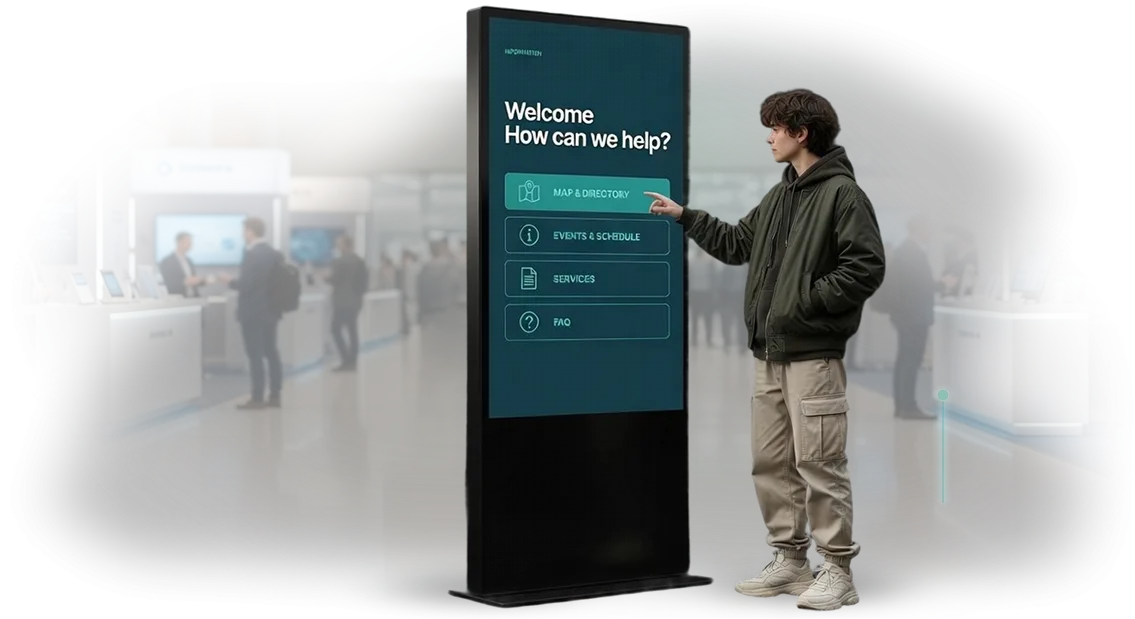
חללי עבודה משותפים מאבדים שוכרים בגלל כאוס ניווטי
כל יום בחלל עבודה משותף חוזרת אותה סצנה: אורח או שוכר מבזבז 5–10 דקות יקרות בחיפוש אחר חדר ישיבות, אזור שקט או העובד הנכון.
הניווט בחלל העבודה המשותף מוגבל לרוב למפת נייר מיושנת, כך שאנשים מסתובבים, מאחרים, וחווים חוויה שלילית עוד לפני שהתחילו לעבוד. אפילו חלל טוב מתחיל להרגיש לא נוח.
בינתיים, פקידי הקבלה עונים על אותן שאלות שוב ושוב: איפה הקפה, איך מגיעים לחדר הישיבות, איפה המדפסת.
עייפות הצוות משאלות גוברת עם כל משמרת: הם לא יכולים להגיע למשימות חשובות, והשוכרים רואים תורים במקום עזרה מהירה. זה הורס את השירות שבגללו אנשים מגיעים לחלל עבודה משותף.
כשדברים בסיסיים לא עובדים, שימור השוכרים נפגע. שוכר מחדש חוזה לא רק בגלל המחיר אלא גם בגלל הנוחות. אם מציאת חדר ישיבות כל יום הופכת למשימה מורכבת, חללי עבודה משותפים מאבדים דיירים והכנסה יציבה.
קונסיירז' וירטואלי לחלל עבודה משותף פותר את כל הבעיה: קיוסק אינטראקטיבי בלובי ובכל קומה ממפה את המסלול לנקודה הנכונה, עונה על שאלות נפוצות, ולוקח על עצמו את השגרה של פקיד הקבלה.
השוכרים מפסיקים לבזבז זמן, העובדים חוזרים לעבודה משמעותית, ואתם מקבלים ניווט בחלל עבודה משותף ללא עלויות כוח אדם. אנו מפתחים פתרונות כאלה עבור החלל שלכם כך שהסדר מורגש מהסף והשוכרים נשארים אתכם לאורך זמן.
מה קונסיירז' וירטואלי נותן לאורחים ולעובדים שלכם
מהירות ונוחות מוערכים בחלל עבודה משותף. אורח שלא יכול למצוא במהירות חדר ישיבות או לבדוק את לוח הזמנים מבזבז זמן ומתוסכל. עובדים נאלצים להפסיק את עבודתם כדי לענות על אותן שאלות.
קונסיירז' וירטואלי פותר זאת מיד. קיוסק עם מסך מגע בלובי או באזורים משותפים מספק גישה מהירה למידע: מפת החלל, לוח אירועים, הזמנת חדרי ישיבות, הוראות ותשובות לשאלות נפוצות.
אורח מוצא את מה שהוא צריך תוך חצי דקה — בלי להתקשר לפקיד הקבלה או לחפש מידע בהודעות.
עבור האורח, זו דאגה וודאות, כלומר רגשות חיוביים מהימצאות בחלל. חלל עבודה משותף שבו הכל מסודר בנוחות נזכר, ואנשים חוזרים. נאמנות האורחים גדלה, והמלצות מפה לאוזן מביאות מבקרים חדשים.
העובדים משוחררים מחזרתיות שגרתית. פקיד הקבלה כבר לא צריך להסביר כל פעם איפה חדר הישיבות או איך להתחבר ל-Wi-Fi.
הזמן שנחסך מופנה לעבודה עם שוכרים, ארגון אירועים ופיתוח העסק — הדברים שבאמת מייצרים הכנסה.
תדמית מודרנית היא תוצאה נוספת. קיוסקים טכנולוגיים מראים שהחלל מתעדכן עם הזמן ודואג לאנשים. אנו מיישמים פרויקטים כאלה באמצעות ציוד מקצועי וכלים מחודדים, כך שהתוצאה יציבה.
בפנייה לצוות שלנו, אתם מקבלים פתרון שעובד עבור המוניטין שלכם, חוסך משאבי כוח אדם ומגביר את נאמנות הלקוחות של חלל העבודה המשותף.
פורמטי קיוסק לחללי עבודה משותפים: בחרו לפי המשימה
כל חלל עבודה משותף פוגש את האורח בנקודות שונות: בכניסה, ליד חדרי ישיבות, באזור lounge או בבית קפה. שם עולות שאלות חוזרות — איך מגיעים לחדר ישיבות, איפה חדר פנוי, אילו שירותים כלולים בתעריף.
אם מסך עונה עליהן, פקיד הקבלה משוחרר משגרה, והאורחים לא מחכים לעזרה. נותר לבחור את פורמט הקיוסק שפותר את המשימה הספציפית.
| פורמט קיוסק | למי / מיקומים | מה זה נותן ללקוח |
|---|---|---|
| קיוסק עומד | אזור כניסה, דלפק קבלה, מסדרונות | רישום עצמי וניווט, הפחתת עומס על הצוות |
| קיוסק צמוד קיר | חדרי ישיבות, קירות ליד מעליות, אזורים משותפים | חיפוש מהיר של חדר פנוי והזמנה ללא פנייה לצוות |
| קיוסק שולחני | אזורי lounge, בתי קפה, שולחנות קטנים | הצגת שירותים ותעריפים, מכירות נוספות ללא מנהל |
| קונסיירז' וירטואלי על טאבלט | תרחישים ניידים: ליווי אורח, קידום מחוץ לאתר | תשובות מיידיות לשאלות נפוצות בכל מקום, ייעוץ חי ללא תור |
כל הפורמטים עובדים על מערכת ניהול אחת: אתם מעדכנים את התוכן פעם אחת, וזה חל על כל המסכים. כך תוכלו להתחיל עם קיוסק עומד בלובי ולהוסיף מאוחר יותר קיוסק צמוד קיר ליד חדרי ישיבות או טאבלט לאירועי אורחים. בכל מקרה, אתם מקבלים שירות מודרני שמגיב למבקרים באופן מיידי וללא שגיאות.
שלבי השקת קיוסק אינטראקטיבי במפתח מלא
השקת קיוסק אינטראקטיבי לחלל עבודה משותף היא תהליך מובנה היטב, לא רק קניית 'חומרה' בקופסה. אנו מנהלים את הפרויקט מהבריף הראשוני ועד לרגע שבו מבקרים מתחילים להשתמש בקיוסק. אתם מקבלים תוכנית שקופה, לוחות זמנים ברורים ואדם אחראי אחד בכל שלב.
- בריף פיתוח — אנו מתעדים את המשימות: ניווט, הזמנת חדרי ישיבות, לוח זמנים, תשובות לשאלות נפוצות. אנו קובעים אילו פעולות הקיוסק מוריד מפקיד הקבלה.
- אב טיפוס עיצובי לקיוסק — אנו יוצרים אב טיפוס חזותי שמתאים לעיצוב הפנים ולסגנון המותג של חלל העבודה המשותף. אתם רואים את הממשק העתידי לפני תחילת הפיתוח.
- אישור קונספט — אנו מאשרים את מבנה התפריט, הטקסטים והלוגיקה של זרימת העבודה. עריכות בשלב זה אינן דורשות עבודה חוזרת או עלויות נוספות.
- פיתוח וציוד — אנו מגדירים ציוד מקצועי וממשק לתרחישים אמיתיים: מציאת חדרי ישיבות פנויים, מפת קומה, פרטי קשר של שוכרים.
- התקנה והגדרה — אנו מספקים, מתקינים את הקיוסק במקום נוח, מחברים אותו לרשת ולשירותים הפנימיים של חלל העבודה המשותף.
- בדיקת קיוסק — אנו מוודאים פעולה בתנאים אמיתיים: מהירות תגובה, דיוק ניווט והתנהגות בזמן תקלות. אנו מוודאים שמבקרים לא ייתקלו בשגיאות.
- השקה ותמיכה — אנו מאמנים פקידי קבלה, מוסרים את מדריך ההפעלה ונשארים זמינים לשיפורים ועדכונים.
מה כלול במסירת קיוסק אינטראקטיבי
חבילת הקיוסק האינטראקטיבי לחלל עבודה משותף כוללת את כל הדרוש להשקת מערכת מידע ללא גיוס מפתחים וללא תשלומים נסתרים. להלן מה שאתם מקבלים עם מסירת הפרויקט.
- תוכנה במפתח מלא. מערכת קונסיירז' וירטואלי מוכנה עם קטלוג שירותים, מפת חלל, לוח זמנים של חדרי ישיבות וניווט.
- רישיונות תוכנה. מונפקים לחברה שלכם עם זכות שימוש במספר בלתי מוגבל של קיוסקים בתוך החלל שלכם.
- תמיכה ועדכונים. עדכוני תכונות ואבטחה שוטפים, תמיכה טכנית בשעות העבודה — מחוברת בערוץ מאובטח.
- הוראות לצוות. דפי עזר פשוטים וסרטונים קצרים לפקידי קבלה: איך לעדכן תוכן, להוסיף אירוע, לשנות לוח זמנים.
- גישה לניתוחים. לוח מחוונים עם נתונים: אילו קטעים פופולריים, אילו שאילתות מחפשים הכי הרבה ומתי יש שיאי פניות.
- הדרכת צוות. אנו מתקינים ומראים לכם איך לשנות טקסטים, תמונות ומפה ללא ידע בתכנות.
- אחריות השקה. אנו עוזרים לחבר את הקיוסק למערכות הפנימיות שלכם ומוודאים שהכל עובד לפני הפתיחה.
לאחר היישום, אתם מנהלים את התוכן בעצמכם, ואנו אחראים ליציבות. כך הקיוסק הופך לא להוצאה חד-פעמית אלא לכלי שמפחית את העומס על דלפק הקבלה ומשפר את איכות השירות בחלל העבודה המשותף.
מקרה בוחן: איך קיוסק הקל על דלפק הקבלה במרכז עסקים
בחלל עבודה משותף עם 300 עמדות עבודה, דלפק הקבלה ענה על עשרות שאלות שגרתיות כל יום: איפה חדר הישיבות, איך מגיעים ליציאה, איך מתחברים ל-Wi-Fi.
פקידי הקבלה פיזית לא יכלו לעמוד בקצב של קבלת אורחים וטיפול בהזמנות — זה האט את כל הפעולות בחלל.
התקנו קיוסק אינטראקטיבי עם מפת קומות וספריית שירותים. אורחים מצאו את המשרד שהם צריכים בעצמם, בדקו זמינות חדרי ישיבות ולמדו את חוקי חלל העבודה המשותף — ללא מעורבות פקיד הקבלה.
מה השתנה לאחר ההשקה
בחודשיים הראשונים, הקיוסק טיפל ביותר מ-4,500 פניות — כ-75 פניות ביום שנפלו בעבר על דלפק הקבלה. העומס על פקידי הקבלה ירד בכמעט חצי, וזמן ההמתנה לתשובה בדלפק ירד מחמש דקות לדקה אחת.
הזמנה חוזרת לא איחרה לבוא: שישה חודשים לאחר מכן, הנהלת מרכז העסקים הזמינה קיוסק שני לבניין הסמוך וביקשה להוסיף ניווט לבית הקפה ולכספומט הקרובים.
המלצת לקוח
"אורחים הפסיקו לשאול שאלות על ניווט, וצוות הקבלה סוף סוף הגיע למשימות הליבה שלהם. הקיוסק החזיר את עצמו תוך שלושה חודשים — אנו מתכננים להתקין את אותם קיוסקים בכל המיקומים שלנו", אומר ראש מרכז העסקים "סטנציה".
מקרה בוחן זה מראה: קיוסק אינטראקטיבי בחלל עבודה משותף הוא לא רק עמדת מידע אלא כלי שמקל על הצוות ומשפר את איכות השירות. רוצים את אותה תוצאה? ספרו לנו על החלל שלכם — נמצא פתרון למשימות שלכם.
איך לבחור קיוסק שלא יתיישן תוך שנה?
קיוסק לא מתיישן כשבוחרים אותו לא לפי מפרטים אלא לפי תרחישי שימוש. לפני שמסתכלים על דגמים, החליטו אילו משימות הוא יפתור: צ'ק-אין מהיר, חיפוש חדרי ישיבות, ניווט בין קומות, רישום לאירועים.
פורמט שנבחר נכון עובד שנים כי רק החלק התוכנתי משתנה, לא המבנה עצמו.
פורמט קיוסק הוא לא עניין של טעם אלא עניין של שטח הרצפה וזרימת המבקרים שלכם.
מסך צמוד קיר חוסך מקום וחיוני במסדרונות, עמדת מסך מגע עובדת טוב יותר לאזור הקבלה, וקונסיירז' נייד על גלגלים מתאים לחללים גדולים שבהם צריך לגשת לאורח.
העיקר הוא שהמבנה מאפשר להחליף או להרחיב פונקציונליות במהירות ללא החלפת הציוד.
לוחות הזמנים להשקה תלויים במורכבות האינטגרציה. אם כבר יש לכם מערכת הזמנות ואתם רוצים לחבר אליה קיוסק, ההשקה נמשכת בדרך כלל שבועיים עד שישה שבועות.
שאלו את הקבלן לאילו מערכות הם כבר התחברו, ובקשו תוכנית ברורה עם תאריכים — זה יגן עליכם מהפתעות.
אינטגרציה עם מערכת הזמנות היא נקודה מרכזית שלקוחות מתעלמים ממנה לעתים קרובות. הקיוסק צריך לא רק להציג את לוח הזמנים אלא להזמין חדרי ישיבות ועמדות עבודה בזמן אמת, בסנכרון עם מערכת החשבונאות שלכם. בלי זה, הצוות יצטרך לשכפל רישומים ידנית, מה שמוביל לבזבוז זמן ושגיאות.
עלות הפיתוח היא לא חשבון חד-פעמי אלא השקעה בסקלביליות. בחרו פתרון שקל להרחיב: הוספת מודול חדש או חיבור מסך נוסף זולה יותר מהחלפת המערכת כולה בעוד שנה.
אנו בונים קיוסקים כך שיישארו שימושיים בעוד שנתיים ושלוש — אתם פשוט מוסיפים תכונות במקום להתחיל את הפרויקט מאפס.
שאלות נפוצות על יישום קונסיירז' וירטואלי
כל פרויקט מתחיל בשאלות, ויישום קונסיירז' וירטואלי מעלה שאלות רבות במיוחד: מה קורה אם הציוד מתקלקל, באיזו תדירות תצטרכו לעדכן מידע, והאם תצטרכו איש IT ייעודי.
אספנו את השאלות הנפוצות ביותר ממנהלי חללי עבודה משותפים וענינו עליהן בקצרה — ללא פרטים טכניים, רק מה שמשפיע על העבודה והתקציב שלכם.
מה קורה אם הקיוסק מתקלקל?
הציוד והתוכנה מכוסים באחריות שלנו. במקרה של תקלה, אנו מתקנים או מחליפים את המכשיר במהירות האפשרית, וניטור מרחוק מאפשר לנו לשים לב לבעיה לפני שהמבקרים מדווחים עליה. אתם לא צריכים להבין בטכנולוגיה — פשוט פנו אלינו, ואנחנו נטפל בשאר.
באיזו תדירות יהיה צורך לעדכן תוכן, ומי יעשה את זה?
התוכן משתנה דרך פאנל פשוט מבוסס דפדפן: העלו קובץ חדש, שנו לוח זמנים, הוסיפו שוכר — הכל תוך כמה דקות. אין צורך במתכנת או קבלן.
צוות הקבלה יכול לעדכן מידע בעצמם בכל עת, ובמידת הצורך, אנו יכולים גם לבצע עדכונים בתיאום מראש.
האם צריך איש IT כדי לעבוד עם קונסיירז' וירטואלי?
לא, אין צורך בידע מיוחד. אנו מאמנים את הצוות שלכם תוך 1–2 שעות, ופאנל הבקרה נראה מוכר כמו אתר או אפליקציה. לאחר מכן, העובדים עובדים ללא העזרה שלנו, ואם עולות שאלות — תמיכה טכנית זמינה בשעות העבודה.
איזו אחריות יש על התוכנה ומה כוללת התמיכה?
אנו מספקים אחריות על כל העבודות וגם תומכים במערכת לאחר ההשקה: אנו מעדכנים את התוכנה, מנטרים אבטחה ועוזרים להגדיר תכונות חדשות. אתם לא נשארים לבד עם המערכת — זה חלק מהשירות, לא חיוב נוסף.
אם יש לכם שאלה נוספת — פנו אלינו ישירות, אנו מגיבים תוך יום עסקים אחד. כך תוכלו להעריך את כל פרטי היישום מראש ולבחור את הפתרון שמתאים לחלל שלכם.קבלו הערכת עלות ולוח זמנים להשקה תוך יום אחד
כל חלל עבודה משותף שואף לעזור לאורחים ולשוכרים למצוא במהירות את המידע שהם צריכים. אבל לפני הזמנת קיוסק, הבעלים צריך להבין: כמה זה עולה ומתי הפרויקט יעלה לאוויר.
הסרנו את כל אי-הוודאות — אתם מקבלים הערכת עלות ותוכנית יישום תוך יום אחד.
הגשת בקשה אחת מספיקה כדי שמהנדס יפנה אליכם ויברר את צרכי החלל. תדונו בתרחישי שימוש: קונסיירז' וירטואלי, ניווט בין אולמות, לוח זמנים של חדרי ישיבות, מידע לשוכרים חדשים.
אתם לא צריכים להיות מומחים טכניים לייעוץ — אנו מדברים בשפת העסק שלכם והופכים את הרצונות שלכם לפתרון קונקרטי.
בתוך היום הראשון, אתם מקבלים:
- ייעוץ מהנדס — ניתוח המשימות של חלל העבודה המשותף שלכם ופורמט קיוסק מתאים.
- הדגמה — אנו מראים איך המערכת תעבוד בסביבה אמיתית.
- הערכת עלות — מספרים מדויקים ללא תוספות נסתרות או עבודות "בלתי צפויות".
- לוח זמנים להשקה — לוח זמנים ריאלי שמתחשב בלוח הזמנים שלכם ובתפוסת החלל.
- הזמנת פיתוח קיוסק — לאחר הערכת העלות, תוכלו לעבור מיד לפרויקט ולהגדרת המשימות.
לאחר מכן ההשקה מתנהלת לפי תוכנית שקופה: אתם רואים באיזה שלב נמצא הפרויקט ושולטים בלוח הזמנים. זה מאפשר לעשרות חללי עבודה משותפים להשיק קיוסקים אינטראקטיביים ללא פספוס מועדים או חריגה מתקציבים נוספים.
השאירו בקשה להערכת עלות — מהנדס אישי יגיב תוך יום עסקים אחד. תקבלו ייעוץ, הדגמה ומספרים מדויקים כדי לקבל החלטה. התחילו עם הודעה קצרה: אנחנו נטפל בשאר.