

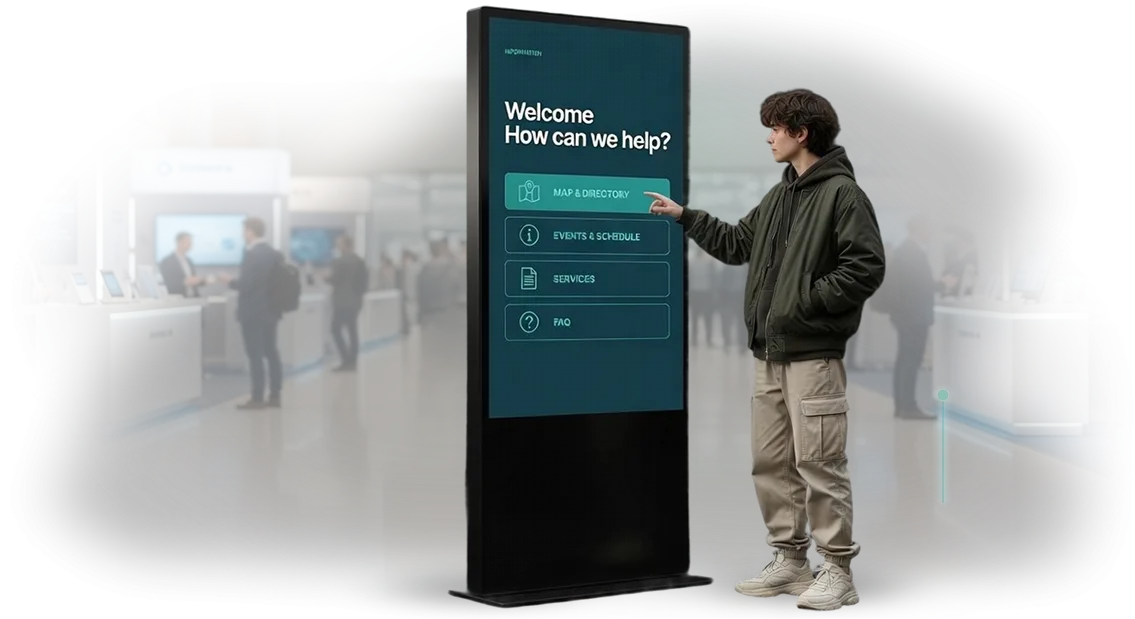
מבקרים הולכים לאיבוד במוזיאונים ובגלריות — וההכנסות נפגעות
מבקרים במוזיאונים ובגלריות מגיעים לעיתים קרובות ללא תוכנית ברורה. הם זקוקים להכוונה: היכן האולם, כמה זמן לוקח להגיע לתצוגה, מה כדאי לראות קודם.
צוות הכניסה אינו יכול פיזית להקדיש זמן לכל אורח — בשעות השיא נוצר תור בדלפק, ואותן שאלות חוזרות עשרות פעמים. כתוצאה מכך, אנשים מבלים זמן בחיפוש במקום ליהנות מהתערוכה, וחלק מהאולמות נותרים ללא תשומת לב.
זה פוגע הן ברושם והן בכסף: מבקר לא מרוצה משוטט במוזיאון זמן קצר יותר, נוטה פחות לבקר בבית הקפה ובחנות המזכרות, אינו חוזר שוב, ואינו ממליץ על המקום למכריו.
ניווט שאינו מנוצל אינו רק מטרד למבקרים — הוא אובדן הכנסות מביקורים חוזרים, משירותים נוספים ומביקורות חיוביות שמביאות אנשים חדשים.
הפתרון הוא קיוסק אינטראקטיבי למוזיאון הפועל כדלפק מידע חכם. הוא מציע מסלול, מספר על אולמות ותצוגות, עונה על שאלות נפוצות, ומקל על הצוות.
בצוות שלנו אנו מפתחים מערכות כאלה לצרכים של מקום ספציפי: הניווט למבקרים הופך ברור, והעובדים מתמקדים בתקשורת חיה במקום לחזור על אותה אינפורמציה.
כך המוזיאון משפר את רמת השירות שלו ושומר על ההכנסות שאיבד בעבר בשל ציפיות לא ממומשות של האורחים.
חמש סיבות להתקין קיוסקים אינטראקטיביים כבר עכשיו
קיוסקים אינטראקטיביים כבר מזמן חדלו להיות חידוש אופנתי. במוזיאונים ובגלריות הם מגבירים את העניין בתערוכה, חוסכים במשאבים ומייצרים הכנסה.
הצוות שלנו יוצר לוחות מגע וקיוסקים למרחבי תרבות כבר יותר מ-10 שנים — מגלריות קטנות ועד מוסדות פדרליים.
יתרון 1: הגברת מעורבות המבקרים
מבקרים זוכרים את מה שהם יכולים לראות ולשמוע. לוח מגע הופך את צפייה בתצוגות למסע: סיפורים, סרטונים ומודלים תלת-ממדיים מחזיקים את תשומת הלב פי שלושה יותר מאשר תוויות רגילות. האורחים נשארים באולם זמן רב יותר וחוזרים לעיתים קרובות יותר.
יתרון 2: הקלה על הצוות מעומס שגרתי
עובדי המוזיאון מבזבזים זמן על שאלות טיפוסיות: היכן המלתחה, איך מגיעים לאולם. הקיוסק האינטראקטיבי עונה מיידית, והצוות מתמקד בתקשורת חיה.
יתרון 3: מכירות נוספות
הקיוסק יכול למכור: כרטיסים לתערוכות מתחלפות, מזכרות, מדריכי שמע. לפי הנתונים שלנו, כל מבקר עשירי מבצע רכישה דרך הקיוסק — ההוצאה הממוצעת גדלה ללא מעורבות קופאי.
יתרון 4: ניתוח תחומי עניין של הקהל
קיוסקים אוספים סטטיסטיקות אנונימיות: אילו תצוגות נבחרות לעיתים קרובות יותר, היכן אנשים מתעכבים. האוצרים משתמשים בנתונים כדי לשפר את התערוכה. זהו כלי מחקר חינמי ללא סקרים.
יתרון 5: החזר השקעה מהיר וסקלאביליות
העמדה האינטראקטיבית פועלת ללא הפסקות ומחליפה תפקיד של פקיד קבלה, תוך שהיא מוכרת באופן פעיל יותר. קיוסקים מחזירים את עצמם תוך מספר חודשים באזורי כניסה.
פורמטים של קיוסקים לצורכי מוזיאונים וגלריות
משימות מוזיאוניות שונות דורשות פורמטים שונים. קיוסק שולחני נוח ליד ויטרינה, קיוסק עומד — בלובי ובתערוכות מתחלפות, וקונסיירז' וירטואלי — בכניסה.
הבחירה הנכונה משפרת את הרושם מהתערוכה, עוזרת למבקרים להתמצא ומפחיתה את עומס העבודה על הצוות.
| פורמט | למי | מה הוא נותן ללקוח |
|---|---|---|
| קיוסק מגע שולחני | אולמות תצוגה, ויטרינות עם מידע מפורט | משלים את התצוגות עם סיפורים, תמונות וסרטונים מבלי להעמיס על החלל |
| קיוסק עומד | לובי, מבואות, תערוכות גדולות | מושך תשומת לב, קובע מסלול, מתאים לניווט בין אולמות ולפוסטרים של אירועים |
| קונסיירז' וירטואלי | אזור כניסה, קבלה, אזור המתנה | עונה על שאלות טיפוסיות, עוזר לבחור מסלול, מספר על כרטיסים ואירועים |
הקונסיירז' הווירטואלי שימושי במיוחד כאשר זרם המבקרים גדול והצוות החי אינו מספיק לענות לכולם. הוא פועל ללא הפסקות וזמין בשעות השיא, וגם אוסף שאלות של אורחים — אתם רואים מה מעסיק את הקהל.
מוזיאונים וגלריות משלבים לעיתים קרובות פורמטים: קיוסק עומד בלובי מושך אורחים, קיוסקים שולחניים ליד ויטרינות מעמיקים את הסיפור, וקונסיירז' וירטואלי דואג למבקר בכניסה.
אנחנו נעזור לכם לבחור את הסט האופטימלי, תוך התחשבות במבנה החלל, בזרמי המבקרים ובסגנון התערוכה.
איך אנחנו יוצרים קיוסק ב-6 צעדים
תהליך שקוף הוא המפתח לשקט הנפשי של הלקוח. אתם תמיד יודעים באיזה שלב נמצא הפרויקט, מה כבר נעשה ומה יקרה בהמשך.
אנחנו עובדים לפי נוהל בן שישה שלבים ליצירת קיוסק אינטראקטיבי — ללא "קופסאות שחורות" וללא הפתעות בלוחות זמנים.
- בריף ומטרות המוזיאון. אנו מנתחים כיצד מבקרים נעים כיום, היכן נוצרים תורים ושאלות מביכות. אנו מתעדים את המטרות: ניווט, עומס על הקופה, עומק צפייה בתערוכה.
- אב-טיפוס תרחיש. אנו מסכמים על היגיון המסך, הטקסטים והרמזים. אתם רואים את המבנה של הקיוסק העתידי לפני תחילת הפיתוח.
- עיצוב מותאם למותג. ממשק שמתאים לסגנון המוזיאון ואינו מסיח את הדעת מהתצוגות. אנו בודקים ניגודיות, כפתורים גדולים וקריאות לכל הגילאים.
- פיתוח ופאנל ניהול. אנו מתקינים ציוד מקצועי ופאנל שליטה שדרכו העובדים משנים באופן עצמאי לוחות זמנים, פוסטרים והצעות מיוחדות.
- בדיקות עם מבקרים. אנו רואים היכן אנשים נתקעים, מה הם מדלגים, אילו שאלות נותרות ללא מענה. אנו מבצעים תיקונים לפני ההשקה, לא אחריה.
- השקה, הדרכה ותמיכה. אנו מתקינים את הקיוסק, מוסרים לעובדים מדריך הוראות ברור ותומכים בפרויקט: עדכונים, עריכות תוכן מהירות, ייעוצים.
כתוצאה מכך, אתם מקבלים פיתוח קיוסק במפתח פתוח עם לוחות זמנים צפויים ותקציב ברור. הוא פועל באופן אמין ומביא ערך למבקרים מהיום הראשון.
מה אתם מקבלים לאחר השקת הקיוסק
לאחר ההשקה, הקיוסק פועל כעובד דיגיטלי מלא: הוא מקבל את פני המבקרים, מציע מסלול, מספר על תצוגות ומפחית את עומס העבודה על הצוות. אתם מקבלים מערכת שלמה, לא אוסף של חלקים נפרדים. המחיר כולל את כל המחזור — מציוד ועד הדרכה ואחריות.
הנה מה שכלול בפרויקט הקיוסק האינטראקטיבי:
- ציוד והתקנה. קיוסק מגע מקצועי עם מארז מוגן, התקנה באולם, הגדרת רשת ואספקת חשמל. אין צורך לחפש קבלנים — הקיוסק מגיע מוכן לעבודה.
- ממשק ועיצוב. עיצוב מסך בסגנון המוזיאון או הגלריה שלכם, ניווט ברור, התאמה לקבוצות מבקרים שונות — מתלמידי בית ספר ועד קשישים.
- תוכן ומילוי. תיאורי תצוגות, מפות אולמות, פוסטרים, מדריכי שמע — הכל מועלה ומאורגן על ידי המומחים שלנו. כל שנותר לכם הוא לבדוק את הטקסטים.
- פאנל ניהול. כלי פשוט לעדכון מידע ללא מתכנתים: הוספתם תערוכה חדשה, שיניתם שעות פתיחה — והמבקרים רואים זאת מיד.
- הדרכת צוות. מפגש מעשי למנהלים ולמלווים: כיצד להפעיל את הקיוסק, להחליף תוכן ולפתור שאלות מבקרים טיפוסיות.
- אחריות ותמיכה. במהלך תקופת האחריות — תחזוקה, עדכוני מערכת וייעוצים. אם קורה משהו, אתם יודעים למי להתקשר.
תצורה זו מטפלת בחששות העיקריים של הלקוח: שלא יהיה מי שיתחזק את הקיוסק, שהתוכן יתיישן, ושהחומרה תתקלקל דווקא בשיא התערוכה.
אנחנו לוקחים על עצמנו את כל הסיכונים — אתם מקבלים כלי עובד, לא "מסך יקר בפינה". לאחר ההשקה, הקיוסק מתחיל לספק ערך מיד: מבקרים מוצאים את דרכם מהר יותר, הצוות מוסח פחות, והמוזיאון נראה מודרני יותר.
מקרה בוחן: הטמעת קיוסק במרחב תרבותי
במוזיאונים ובגלריות, מבקר הולך לאיבוד בקלות: ללא הכוונה, קשה למצוא את האולם הנכון, ומידע על תערוכות מתחלפות נותר לעיתים קרובות ללא תשומת לב.
זה פוגע ברושם מהביקור ומונע מהמוזיאון הכנסות משירותים נוספים — סיורים, מדריכי שמע, מזכרות.
פתרנו בדיוק משימה כזו במוזיאון אזורי עם זרם גדול של אורחים. קונסיירז' וירטואלי בקיוסק אינטראקטיבי החליף את דלפק המידע: על המסך — מפת אולמות, תרחישי מסלול ופוסטר האירועים העדכני. מוזיאון ההיסטוריה העירונית הפך למקום של מקרה בוחן זה של קיוסק אינטראקטיבי.
הטמעה עבור המוזיאון
הקיוסק הותקן בלובי, ליד המלתחה. אורח בוחר תרחיש — "בעוד 30 דקות", "בעוד שעה", "עם ילדים" — והמערכת מדגישה את האולמות הנדרשים, המעלית, בית הקפה וחנות המזכרות.
נתוני אירועים ולוחות זמנים של סיורים נמשכים אוטומטית, כך שהעובדים אינם צריכים לעדכן מידע ידנית.
הקיוסק גם מוכר כרטיסים לסיורים ומציע שירותים נוספים — מדריך שמע ואזור צילום. זה הקל על הקופה והגדיל את ההוצאה הממוצעת של המבקר.
תוצאות ההטמעה
בשלושת החודשים הראשונים, הקיוסק היה בשימוש יותר מ-14,000 פעמים. האורחים הפסיקו לשאול לכיוונים, ומכירות השירותים הנוספים גדלו ב-22%.
הנהלת המוזיאון קיבלה סטטיסטיקות ברורות: אילו אולמות פופולריים, מתי שיא זרם המבקרים, אילו אירועים מושכים תשומת לב. זה אפשר להתאים את לוח הזמנים של הסיורים ואת מיקום המלווים.
בהתבסס על תוצאות תקופת הפיילוט, המוזיאון הזמין קיוסק שני לסניף שלו — הזמנה חוזרת יציבה אישרה את ערך הפתרון.
מה אם יש לי דרישות ספציפיות לקיוסק?
דרישות ספציפיות לקיוסק אינן מכשול אלא משימת עבודה מוכרת. לכל מוזיאון או גלריה יש את הייחודיות שלו: מאפיינים אדריכליים, היגיון תערוכה, פרופיל מבקרים, זהות מותג.
פתרון סטנדרטי מוכן לרוב אינו מתאים לתנאים אלה, ולכן אנו מתייחסים לכל פרויקט כאל פרויקט אישי.
הכל מתחיל בבריף ובביקור באתר: אנו מקשיבים לאילו משימות הקיוסק צריך לפתור — ניווט, מכירת כרטיסים, קטלוג אינטראקטיבי, מדריך שמע, או הכל יחד. לאחר מכן אנו מציעים פתרון שמתחשב בגודל המתחם, בזרמי המבקרים ובמותג שלכם.
אם נדרשים מיקום לא סטנדרטי, עיצוב מארז יוצא דופן או תרחיש אינטראקציה מיוחד — גם זה נדון בשלב התכנון.
אנו מתאימים את הקיוסק לתשתית שלכם: אינטגרציה עם מערכת ניהול המבקרים, שירות הכרטוס או אתר המוזיאון. אנו חושבים על נוחות לקהלים שונים — ילדים, קשישים, אורחים עם מוגבלויות, תיירים זרים. אנו מתחשבים גם בדרישות האבטחה במרחבים ציבוריים וגם בנוחות התחזוקה.
במשך שנות עבודה, יישמנו קיוסקים לא סטנדרטיים רבים במיוחד עבור מוזיאונים וגלריות — זה מאפשר לנו לצפות קשיים ולהציע פתרונות שיעבדו באופן אמין בתפעול אמיתי.
אתם מקבלים לא רק עמדה עם מסך, אלא כלי שעוזר למבקרים להתמצא ומגדיל את ההחזר על ההשקעה באמצעות אוטומציה ונוחות.
לכן, אם יש לכם משאלות מיוחדות — מהפורמט ועד הפונקציונליות — זו סיבה לפרויקט מעניין, לא לסירוב. תארו את המשימה שלכם, ואנחנו נציע אפשרויות יישום תוך התחשבות בלוחות זמנים ותקציב.
בדרך כלל דיון מקדים אורך יום עבודה אחד, ולאחריו אתם מקבלים הצעה מסחרית ברורה.
תשובות לשאלות לפני ביצוע הזמנה
הרכבת קיוסק למוזיאון או לגלריה נראית מסובכת: צריך חומרה, תוכנה, תוכן — וכל זה לא צריך להישבר ביום הפתיחה.
ספקות הם טבעיים — במיוחד כשהבניין מלא במבקרים וכל דקת השבתה גורמת לחוסר שביעות רצון של אורחים ושאלות מההנהלה.
במשך שנים של עבודה עם מרחבי תרבות, למדנו להפיג את החששות האלה כבר בשלב הדיון. להלן תשובות לשאלות שאנו שומעים לרוב מלקוחות לפני תחילת הפרויקט.
אנחנו לא חברת IT, אין לנו מתכנת משלנו. האם נוכל להתמודד עם התחזוקה?
לא תצטרכו להיכנס לפרטים טכניים. אנחנו לוקחים על עצמנו את כל המחזור: תכנון, הרכבה, הגדרה ובדיקות. לאחר ההשקה, אתם מקבלים מדריך הוראות מאויר פשוט — הפעלת הקיוסק דורשת רק לחיצה על כפתור אחד.
כל השאר פועל אוטומטית: המערכת נדלקת מעצמה, מציגה את המסכים הנדרשים וחוזרת למצב ההתחלתי לאחר כל אורח.
אם משהו דורש התערבות, אנחנו פותרים זאת מרחוק, ובמקרים קיצוניים — אנו מגיעים לאתר. כל שנותר לכם הוא לוודא שהקיוסק מחובר לחשמל.
כמה זמן אורך פרויקט כזה? הפתיחה שלנו בעוד חודשיים.
לוח הזמנים הטיפוסי הוא ארבעה עד שישה שבועות אם התוכן מוכן או שאנחנו עוזרים לאסוף אותו. במהלך זמן זה, אנו מספיקים לעצב את הממשק, למלא אותו בטקסטים ותמונות, להגדיר את היגיון הניווט ולבצע בדיקות על ציוד אמיתי.
אם לוחות הזמנים צפופים, אנו יכולים להאיץ לשלושה שבועות — אבל לשם כך, עליכם לספק חומרים ואישורים במהירות. כשפותחים אולם מאפס, אנו ממליצים לתקצב שבועיים-שלושה נוספים למקרה של עריכות.
מה קורה לאחר ההשקה? האם נישאר לבד עם בעיות?
לא. לאחר מסירת הפרויקט, אנחנו לא נעלמים. במהלך תקופת האחריות, אנו מתקנים כל תקלת תוכנה ללא תשלום ועוזרים בעדכון מידע — למשל, החלפת פוסטר אירועים או הוספת אולם חדש למפה.
אם תרצו לפתח את הקיוסק הלאה — להוסיף מדריך שמע או מפת ניווט — נציע הרחבה ברורה ללא "שכתוב הכל מאפס". אתם תמיד יודעים מי אחראי על הפרויקט ובאילו ערוצים תוכלו לקבל עזרה במהירות.
מבקרים נוגעים במסכים לעיתים קרובות. עד כמה מבנה כזה אמין?
אנחנו בוחרים במיוחד ציוד המיועד לשימוש אינטנסיבי במקומות ציבוריים: מארז מוגן, ציפוי מסך עמיד בפני שחיקה ומערכת המונעת תקלות אקראיות. הקיוסק שורד גם מסיבת יום הולדת של ילדים וגם תור של קבוצות בית ספר.
אנו מתקינים בנוסף הגנה מפני הקפאות: אם משהו משתבש, המערכת מאתחלת את עצמה אוטומטית תוך מספר שניות. המבקר ככל הנראה אפילו לא ישים לב לתקלה — הוא פשוט ימשיך להשתמש בקיוסק.
במה הקיוסק שלכם טוב יותר מאשר פשוט לשים טאבלט על עמדה?
טאבלט הוא פתרון זמני שנשבר, נגמרת לו הסוללה ברגע הגרוע ביותר, ונראה לא רציני עבור חלל עם תערוכת קבע.
קיוסק הוא פתרון מלא: פעולה יציבה לאורך כל יום העבודה, גובה ועיצוב נוחים לאורחים, המתאימים לסגנון המוזיאון.
יתר על כן, אנו יוצרים מערכת שאינה זקוקה לאדם בקרבתה: המבקר יבין את הניווט לבד, ויהיו לכם פחות שאלות מאורחים ויותר זמן לעבודה הליבה שלכם.
קבלו ייעוץ והערכת פרויקט מדויקת
עבור מוזיאון וגלריה, קיוסק אינטראקטיבי הוא לא רק מסך אלא כלי שעוזר למבקרים להתמצא, ללמוד על תצוגות ולשתף התרשמויות. כדי שהוא יביא ערך ולא יעמוד בטל, חשוב להבין מראש את המשימות, הפורמט והתקציב. אנחנו עוזרים ללקוחות לעבור את הדרך הזו ללא הוצאות מיותרות: מהרעיון ועד ההשקה.
לאחר פנייתכם, תקבלו בריף, הערכת עלות מדויקת, אב-טיפוס ממשק והצעה מסחרית — כל מה שצריך כדי להחליט על התחלת הפרויקט. ננתח את המצב שלכם ונציע אפשרות שמתאימה לחלל ולהיגיון התערוכה.
מה כלול בהערכת העלות:
- ניתוח משימות הקיוסק — ניווט, מידע, מכירת כרטיסים או מציאות רבודה.
- בחירת פורמט ומיקום — עומד, צמוד קיר, עמדה ניידת, תוך התחשבות בזרמי מבקרים.
- פיתוח אב-טיפוס ממשק בסגנון המותג והתערוכה שלכם.
- הערכת עלות ללא תשלומים נסתרים — כל העבודות, הרישיונות והציוד מפורטים מראש.
- לוחות זמנים ושלבים — לוח זמנים ברור מאישור העיצוב ועד השקת ניסיון.
- המלצות תוכן — טקסטים, תמונות, סרטונים ומדריכי שמע שמעסיקים את האורחים.
- תמיכה לאחר ההשקה — הדרכת צוות, עדכוני חומרים ותמיכה טכנית.
השאירו פנייה לייעוץ — ותוך שני ימי עבודה תקבלו מסמכים שמראים מיד את העלות, היקף העבודה ולוחות הזמנים. זה חינמי וללא התחייבות: אתם מקבלים החלטה רק כשאתם בטוחים בתוצאה.