

הבעיה של המלונות: האורחים נמאסו מתורים בדלפק הקבלה
יום שישי בערב, דלפק הקבלה — תור של שש משפחות, מותשות אחרי הטיסה. בזמן שהפקיד מעתיק את נתוני הדרכון למערכת, האורחים בוהים בטלפונים שלהם, חושבים לא על הבריכה, אלא על איך להגיע לחדר כמה שיותר מהר ולשכוח מהיום הזה.
כל דקת המתנה בדלפק הרישום היא פגיעה בנאמנות. אורח לא יכתוב בביקורת שה-"PMS שלכם איטי" — הוא יכתוב "שירות נוראי". והמשפט הזה יידבק למוניטין שלכם לנצח, ויפחיד אורחים עתידיים.
מניסיוננו, חוסר שביעות רצון מהצ'ק-אין מוריד ישירות את חלקם של ההזמנות החוזרות — אנשים לא חוזרים למקום שבו קיבלה אותם תור עייף.
הבעיה מחמירה בשעות השיא: הגעות המוניות, כנסים, טיסות מוקדמות. יש רק דרך אחת להתמודד עם העומס — להאיץ את התהליך עצמו.
קיוסק אינטראקטיבי למלונות לוקח על עצמו את השלבים הסטנדרטיים: האורח מאשר את פרטיו בעצמו, מקבל כרטיס מפתח, והולך לחדרו תוך 2–3 דקות. קונסיירז' וירטואלי מראה את הדרך, מסביר על אפשרויות ארוחת הבוקר, ומשתף בשעות הספא — ללא צורך בצוות.
בינתיים, הצוות מתפנה משגרה ומתמקד במה שבאמת מוסיף ערך: טיפול באורחים, טיפול במצבים לא סטנדרטיים, ואינטראקציות אישיות. מהירות הצ'ק-אין הופכת ליתרון תחרותי, והשירות לאורחים נשאר חם ואנושי.
הטמעת קיוסק אינה עניין של החלפת אנשים — היא עניין של הקלת עומס העבודה שלהם והעלאת איכות השירות. אנחנו נעזור לכם להקים את התהליך כך שאורחים יעזבו את הלובי עם חיוך, ודלפק הקבלה יפסיק להיות צוואר בקבוק.
מה משתנה במלון אחרי התקנת קיוסק
אורחים מפסיקים לעמוד בתור בדלפק הקבלה: הצ'ק-אין אורך כמה דקות במקום המתנה ארוכה. הפקיד מקבל את פני האורח עם מפתח מוכן וחיוך, במקום לבזבז זמן על ניירת, שיחות טלפון, וחזרה על אותן תשובות לאותן שאלות.
הקיוסק מטפל בפעולות השגרתיות: רישום, אימות מסמכים, הנפקת מפתחות ואישורים — ועושה זאת מסביב לשעון, ללא הפסקות או עייפות משמרות.
אוטומציה של דלפק הקבלה משחררת עד כמה שעות של זמן עבודה של הצוות ביום. הזמן הזה מושקע בשירות חי: קבלת פנים לאורח, הצעת מסלול, פתרון בקשה חריגה.
האורח מרגיש שמטפלים בו, והמלון בונה מוניטין של מקום שבו כל פרט מחושב.
הקיוסק הופך לערוץ מכירה נוספת שעובד ללא מעורבות צוות. על המסך, האורח רואה ארוחות בוקר, טיפולי ספא, הסעות וטיולים בדיוק ברגע הנכון — בזמן הצ'ק-אין או לפני היציאה.
זו תזכורת עדינה שהופכת את השאלה הפשוטה "מה המלון מציע" לשירות נוסף בתשלום. המלון מעלה את החשבון הממוצע, והאורח לא מבזבז זמן בחיפוש מידע בדלפק הקבלה.
התאמה אישית בונה נאמנות: הקיוסק זוכר את העדפות האורח — משקאות אהובים, סוג מיטה, שעת צ'ק-אין. בביקור הבא הכל כבר מסודר, והמלון מקבל את פני האורח כמו חבר ותיק.
האורח נהנה מנוחות עקבית, חוזר לעתים קרובות יותר, וממליץ על המלון למכריו. כל אורח נאמן מביא לקוחות חדשים ומוריד את עלויות הפרסום.
כתוצאה מכך, הקיוסק מחזיר את השקעתו דרך חיסכון בזמן הצוות וצמיחה בהכנסות נוספות. אנחנו מיישמים בדיוק את התרחישים שהמלון שלכם צריך: מרישום פשוט ועד לתוכנית נאמנות חכמה. אתם מקבלים עובד בעל ידע טכנולוגי שעובד 24/7 ולעולם לא מתעייף.
פורמטים של קיוסק אינטראקטיבי: עמדה, מסך מידע, קונסיירז'
בחירת פורמט קיוסק אינה עניין של טכנולוגיה — היא עניין של תרחישים: היכן האורחים נתקלים בקשיים הכי גדולים וכמה מהר אתם רוצים להוריד עומס מהצוות. עבור מלונות, אנחנו מציעים שלושה פורמטים בסיסיים: עמדת רישום, מסך מידע וקונסיירז' וירטואלי. כל אחד פותר בעיה משלו: מהאצת צ'ק-אין ועד מכירה נוספת מסביב לשעון.
| פורמט קיוסק | מתי לבחור | מה המלון מקבל |
|---|---|---|
| עמדת רישום | עומס אורחים גבוה, תורים בדלפק הקבלה, ביקורים חוזרים תכופים | צ'ק-אין בשירות עצמי תוך 2–3 דקות, הקלת עומס על הפקידים, פחות שגיאות הזנת נתונים |
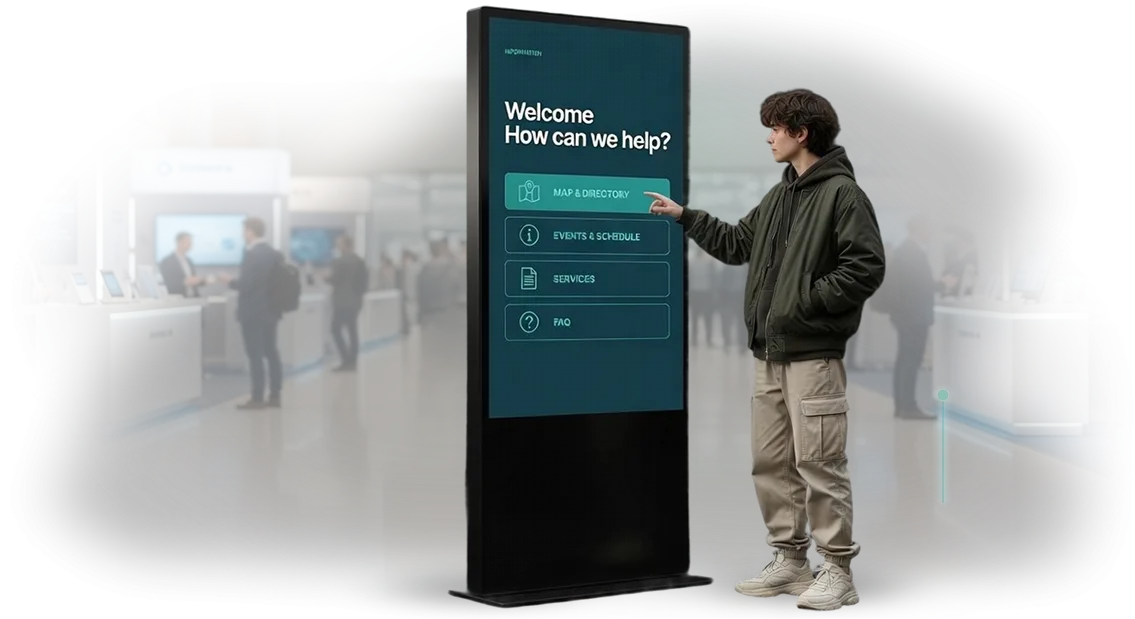
| קיוסק מידע | אורחים צריכים ניווט במתחם, לוחות זמנים ומידע על שירותים | תשובות מיידיות לשאלות נפוצות, גישה למפות ומבצעים, חיסכון בזמן הצוות |
| קונסיירז' וירטואלי | המטרה היא למכור שירותים נוספים ולתמוך באורחים 24/7 | המלצות אוטומטיות למסעדות, ספא, טיולים, חשבון ממוצע גבוה יותר ללא מעורבות צוות |
אף אחד מהפורמטים אינו דורש החלפת דלפק הפקיד — קיוסקים משלימים אותו ולוקחים על עצמם פעולות שגרתיות. כל הפתרונות רצים על ציוד מקצועי עם תוכנה מכווננת היטב, כך שאורחים לא מבחינים בתקלה אפילו בשעות השיא.
מלונות часто משלבים פורמטים: מסך מידע ליד המעלית, עמדה בלובי, קונסיירז' באזור הטרקלין.
אנחנו עוזרים לבחור את התצורה האופטימלית לתקציב ולמטרות שלכם — ממסך בודד ועד למערכת מקיפה שמשתלבת בצורה חלקה עם תשתית המלון שלכם.
בסופו של דבר, אתם מקבלים לא רק מכשיר, אלא כלי שמגביר את נאמנות האורחים ומחזיר את השקעתו דרך הכנסות גבוהות יותר משירותים נוספים.
איך מתנהל הפיתוח: מהבריף ועד להשקת הקיוסק
תהליך ברור פירושו תוצאה צפויה. בנינו את הפיתוח כך שבכל שלב אתם מבינים מה קורה ויכולים להשפיע על החלטות מפתח. אין "קסם": עבודה עקבית, אבני דרך ברורות לאישור, ואחריות ישירה ללוחות זמנים.
-
בריף וניתוח. אנחנו נפגשים (פרונטלית או מרחוק) ומפרקים את המשימות של הקיוסק: מי האורחים שלכם, אילו תרחישים הם צריכים, ואיזה מידע קריטי. אנחנו גם מתחשבים בפריסת הלובי ובמערך דלפק הקבלה כך שהקיוסק ישתלב בחלל.
-
קונספט ואב-טיפוס. אנחנו מציעים את מבנה התפריט ואת לוגיקת הניווט — איך אורח ימצא תשובות. אנחנו מיישרים קו על תרחישים: צ'ק-אין, הזמנות, מידע על מלונות ואטרקציות. אתם רואים את הלוגיקה לפני שהעיצוב מתחיל.
-
עיצוב ואישור. אנחנו מעצבים את הממשק בסגנון המותג שלכם: צבעים, פונטים, אווירה. אנחנו מציגים מוקאפים של מסכים מרכזיים ומבצעים תיקונים עד לאישור מלא — בלי הפתעות בהשקה.
-
פיתוח ובדיקות. אנחנו מגדירים את לוגיקת הקיוסק: חיבור לנתונים שלכם, טיפול בתרחישים, הגנה מפני פעולות שגויות של משתמשים. אנחנו בודקים עם מצבים אמיתיים: תורים, הקשות случайные, אורחים שלא מכירים את הממשק.
-
התקנה והגדרה באתר. אנחנו מספקים את הציוד, מתקינים אותו ומחברים אותו לרשת שלכם (או מריצים אותו עצמאית). אנחנו מגדירים מצבי פעולה, עדכונים וניטור כך שהקיוסק לא ידרוש התערבות יומיומית.
-
השקה והדרכה. אנחנו מוודאים ביצועים בתנאים אמיתיים ומספקים הוראות קצרות לצוות דלפק הקבלה: איך להפעיל מחדש את הקיוסק, מה לעשות במצב חירום. אנחנו גם מייעצים כיצד להשתמש בנתוני הקיוסק לשיפור השירות.
-
תמיכה והתפתחות. אחרי ההשקה, אנחנו נשארים בקשר: אנחנו עוזרים לעדכן תוכן, להוסיף תרחישים חדשים ולוודא שהמערכת פועלת בצורה אמינה. המלון משתנה — הקיוסק משתנה איתו.
גישה זו נותנת לכם שקיפות ושליטה. אתם תמיד יודעים מה קורה, איזה שלב מגיע הבא, ומתי הקיוסק יתחיל לקבל את פני האורחים.
מה כלול במסירת קיוסק למלונות
אתם מקבלים חבילה מוכנה להפעלה, לא רק מכשיר. כל מה שצריך כדי להשיק קיוסק בלובי או בדלפק הרישום מוגדר, נבדק ומועבר עם הציוד.
- קיוסק עם תוכנה מותקנת מראש. המכשיר מגיע מוגדר לצרכי המלון שלכם: מידע עזר, מפת מתחם, שירותים ואנשי קשר של מחלקות.
- עיצוב מסך בסגנון המלון. אנחנו מעצבים את הממשק סביב המותג שלכם: צבעים, לוגו, פונטים, תמונות של חדרים ומסעדה. אורחים מזהים מיד את הסגנון של המלון.
- תרחישי מסך. אנחנו ממפים את לוגיקת הניווט: מהתפריט הראשי ועד לתשובה לשאלה ספציפית של אורח — איך מגיעים לספא, מתי ארוחת הבוקר, איפה החניה.
- הוראות לצוות. דפי עזר פשוטים לפקידים: איך להדליק את הקיוסק, לעדכן תוכן, ומה לעשות במצב חירום.
- עדכוני תוכן. אתם יכולים לשנות מידע על אירועים, מבצעים או שעות פתיחה בעצמכם — ללא צורך במתכנת. במידת הצורך, אנחנו נטפל בעדכונים עבורכם.
- אחריות ותמיכה טכנית. הציוד והתוכנה מכוסים באחריות. אם משהו צריך כוונון או שיפור, אנחנו זמינים מרחוק, וברוב המקרים הבעיה נפתרת תוך יום עסקים.
החבילה הסופית מורידה מכם את כל הדאגות הטכניות: הקיוסק עובד מהיום הראשון, אורחים מקבלים שירות נוח, והצוות מקבל כלי מובן שאינו דורש ידע מיוחד. כל מה שנשאר לכם הוא לקבל את תודות האורחים.
מקרה בוחן: התור בצ'ק-אין ירד ב-40%
בנכס של רשת מלונות, שבו הצבנו קיוסק במלון פלאזה, דלפק הרישום הפך לצוואר בקבוק בשעות השיא.
אורחים שהגיעו אחרי טיסות חיכו 15–20 דקות, מזוודות נערמו בכניסה, והפקידים בקושי הספיקו להנפיק מפתחות — לא נשאר זמן לענות על שאלות או למכור שירותים נוספים.
הצענו ליישם קיוסק אינטראקטיבי לצ'ק-אין בשירות עצמי. האורח מניח מסמך על הסורק, רואה את מספר החדר על המסך, ומקבל כרטיס מפתח תוך 2–3 דקות.
הפקיד מתערב רק כשצריך עזרה: אורחים ללא הזמנה, צ'ק-אין מוקדם, או בקשות מיוחדות.
חודש אחרי ההשקה, מדדנו את התוצאות: התור בצ'ק-אין ירד ב-40%, וזמן הטיפול קטן פי חמישה. הדלפק כבר לא היה צוואר בקבוק — כשהגיעה קבוצה של 20, חצי מהאורחים הלכו לקיוסק, וכולם צ'ק-אין תוך שעה.
למעשה, ביטלנו את הצורך בדלפק שני, והמלון יכול היה להפנות את הזמן המשוחרר של הפקידים לטיפול באורחים ולמכירת שירותים נוספים.
עכשיו הקיוסק פועל במצב סטנדרטי, והמלון משתמש בו גם לניווט: אורחים מוצאים על המסך את המסעדה, מרכז הספא ולוח האירועים. הלקוח כבר הזמין קיוסק שני לבניין נוסף — ההוכחה הטובה ביותר שהפתרון מספק ערך.
איך לבחור פורמט קיוסק למלונות?
בחירת קיוסק אינטראקטיבי למלון מתחילה לא בטכנולוגיה אלא בשלוש שאלות פשוטות: כמה אורחים עוברים בלובי, אילו משימות הקיוסק צריך לבצע, ומה התקציב המוקצה להשקה ולתמיכה.
התשובות מייד פוסלות אפשרויות מיותרות: בית הארחה קטן צריך רק מסוף מידע קומפקטי אחד, בעוד מלון גדול עם מסעדה, ספא ואולמות כנסים עדיף שישרת קונסיירז' וירטואלי מלא.
הקריטריון הראשון הוא כמות האורחים ועומסי השיא. אם תור נוצר מעת לעת בדלפק הקבלה, הקיוסק צריך להקל על הפקידים: רישום עצמי, הזמנת שירותים נוספים, הזמנת מונית.
עם זרימת מבקרים קטנה, פונקציות בסיסיות מספיקות — מפת מתחם, לוח ארוחות בוקר, אנשי קשר של מחלקות. כאן הפוקוס אינו על מהירות המכשיר, אלא על כמה תרחישים הוא מטפל ללא מעורבות צוות.
הקריטריון השני הוא מערך המשימות. ככל שהמלון מציע יותר שירותים, כך ערכו של תרחיש "חכם" עם תזכורות והמלצות אישיות גדל.
קונסיירז' וירטואלי עוזר לאורחים לתכנן את היום, להזמין שולחנות, לבדוק תחזית מזג אוויר ולהשאיר ביקורות — כל זה מעלה את איכות השירות ומוריד שגרה מהעובדים.
אם המשימות מוגבלות לניווט ומידע עזר, אין טעם לשלם יותר מדי עבור אינטגרציות מורכבות.
הקריטריון השלישי הוא תקציב כולל עדכונים. תפריט פשוט יכול לשנות פקיד, אבל מערכת המלצות ואינטגרציה עם PMS עדיף להשאיר לקבלן.
הגישה הנכונה היא לבחור אפשרות שקל להרחיב: להשיק ניווט קודם, ואז להוסיף מודול הזמנות מקוונות בעונה הבאה. כך אתם מקבלים עלויות צפויות וקיוסק שגדל עם המלון.
המפתח הוא לא לרדוף אחרי פונקציונליות מקסימלית, אלא להתחיל מתרחישי אורחים. קיוסק מחזיר את השקעתו כשהוא מבטל תורים, מאיץ צ'ק-אין ומספק לאורחים שירות שימושי בכל שעה. ספרו לנו על המלון שלכם — נמליץ על הפורמט האופטימלי ללא הוצאות מיותרות.
מה אם הקיוסק מתקלקל? טיפול בחששות שלכם
הפחד מתקלות מובן: אף אחד לא רוצה שקיוסק יקפא ביום שבו מגיעה קבוצה גדולה או בדיוק כשהאורח מחפש את הספא.
אבל אנחנו מתכננים קיוסקים כך שתקלות אינן סבירות — ואם משהו בכל זאת קורה, זה לא יעצור את דלפק הקבלה: תמיד אפשר לבצע צ'ק-אין לאורח בדרך הרגילה בזמן שמומחה פותר את הבעיה.
אנחנו עונים על חששות לא עם הבטחות אלא עם נהלים כתובים: שירות אחריות, אבחון מרחוק והדרכת צוות כלולים כולם בחוזה הבסיסי. כך זה עובד בפועל.
מה קורה אם הקיוסק מתקלקל?
אנחנו משתמשים ברכיבים תעשייתיים אמינים, כך שתקלות נדירות. אם אחת בכל זאת מתרחשת, אתם פונים אלינו, ואנחנו מבצעים אבחון מרחוק כמה שיותר מהר. ברוב המקרים, אנחנו פותרים את הבעיה מרחוק מבלי להסיח את דעת הצוות שלכם.
אם יש צורך בהחלפת ציוד, אנחנו מספקים יחידה חלופית — כך שהשירות לאורחים לעולם לא מופרע. ובזמן שהתיקון מתבצע, אתם פועלים כרגיל, מכיוון שהקיוסק משלים את הדלפק ולא מחליף אותו.
מי מעדכן את התוכן אם המסעדה נסגרת או המחירים משתנים?
עדכונים לא דורשים מתכנת. הצוות יכול לשנות תפריט, שעות פעילות, מבצעים ומפה דרך ממשק ברור — תוך כמה דקות, אפילו מהסמארטפון. אנחנו מגדירים הרשאות גישה כדי למנוע מחיקה случайная של נתונים חשובים.
אם יש צורך בעדכון עונתי גדול, אנחנו לוקחים אותו על עצמנו כחלק מהתחזוקה: אתם שולחים חומרים, אנחנו מטפלים בעיצוב ובדיקות.
האם הצוות יצליח עם ההדרכה והתמיכה?
ההדרכה אורכת 1–2 שעות: פקידים וצוות דלפק הקבלה לומדים את התרחישים המרכזיים והמצבים האופייניים. אנחנו מספקים מדריכי וידאו קצרים וכרטיס עזר לדלפק. המהנדסים שלנו זמינים כל השבוע בטלפון ובצ'אט — אין ערוצי תמיכה מעורפלים או המתנה של ימים רבים.
האם אתם נותנים אחריות, ומהם התנאים?
כן, אנחנו מספקים אחריות רשמית על ציוד ועבודה. התנאים מפורטים בחוזה כבלוק אחד ברור: זמני תגובה, החלפת רכיבים ועלויות שירות. אתם יודעים מראש מה כלול ומה לא — בלי הפתעות.
אז תקלת קיוסק אינה כאב הראש שלכם — היא זרימת העבודה שלנו. אתם מקבלים אחריות קבלן, זמני תגובה כתובים ותמיכה — בעוד אורחים פשוט נהנים משירות נוח.הזמינו פיתוח קיוסק: קבלו הערכת עלות לפרויקט שלכם
השאירו פנייה לפיתוח קיוסק למלון שלכם — ונכין הערכת עלות לפרויקט הספציפי שלכם.
קונסיירז' וירטואלי עובד בלובי, ליד המסעדה או באזור החניה: עוזר לאורחים לבצע צ'ק-אין במהירות, למצוא את הקומה הנכונה וללמוד על שירותים ואטרקציות. אנחנו נבחר פורמט שמתאים לפנים שלכם ובאמת שימושי למבקרים שלכם.
אחרי הפנייה שלכם, תקבלו:
- אפשרויות פתרון — בחירה בין קיוסק עומד, צמוד קיר או דלפק על סמך החלל, תנועת הרגליים וסגנון הלובי שלכם.
- הערכת עלות שקופה — עלות הפיתוח, הציוד וההשקה מחושבת ללא עמלות נסתרות או אפשרויות מיותרות.
- לוחות זמנים ריאליים — תוכנית שלב אחר שלב עם תאריכים, מהבריף ועד ההתקנה, כך שתהיו מוכנים לפתיחת העונה או לאירוע.
- דוגמאות מלונות — מבחר פרויקטים שהשלמנו בתחום האירוח: מה עובד, אילו תרחישים אורחים בוחרים, ואיך הקיוסק מקל על דלפק הקבלה.
- המלצות אינטגרציה — איך לחבר את הקיוסק למערכת ההזמנות, כרטיסי הגישה או שירות העזר שלכם כך שהנתונים יישארו מעודכנים.
- שירות ואחריות — תמיכה לאחר ההשקה, עדכוני תוכן ותיקון מהיר במקרה של תקלה.
כל פרויקט מתחיל בבריף קצר: אתם מספרים לנו על המטרות שלכם, ואנחנו מציעים את הפתרון האופטימלי. הערכת העלות ובחירת הפורמט הן ללא התחייבות.
שלחו פנייה — נגיב תוך יום עסקים אחד, נבהיר את הפרטים ונכין הצעה שמתאימה גם לתקציב שלכם וגם לציפיות האורחים שלכם.