

מדוע מפעלים תעשייתיים וארגוני ייצור זקוקים לקיוסק מידע
כל בוקר במפעל תעשייתי מתחיל בתור במחסום הכניסה. עובדים ממתינים לטיפול באישורי כניסה, אורחים וקבלנים מבזבזים זמן בחיפוש אחר המשרד הנכון, והמאבטחים נאלצים לענות על אותן שאלות במקום לבצע את תפקידם הישיר.
מבקרים מאחרים לפגישות, ספקים מתעכבים, והמפעל נראה פחות מאורגן. התוצאה — דקות אבודות למאות אנשים, עיכובים בתהליכי הייצור וחוסר שביעות רצון של העובדים.
בינתיים, המחיר של זמן השבתה כזה גבוה יותר ממה שנראה במבט ראשון.
כל יום, הקצין התורן או המזכירה מוסחים על ידי עשרות שיחות ובקשות אישיות כמו "איך מגיעים לשם", "איפה מקבלים אישור", "עם מי קובעים פגישה". משימות אלה אינן דורשות מעורבות אנושית, אך הן אוכלות זמן עבודה ויוצרות מתח בכניסה.
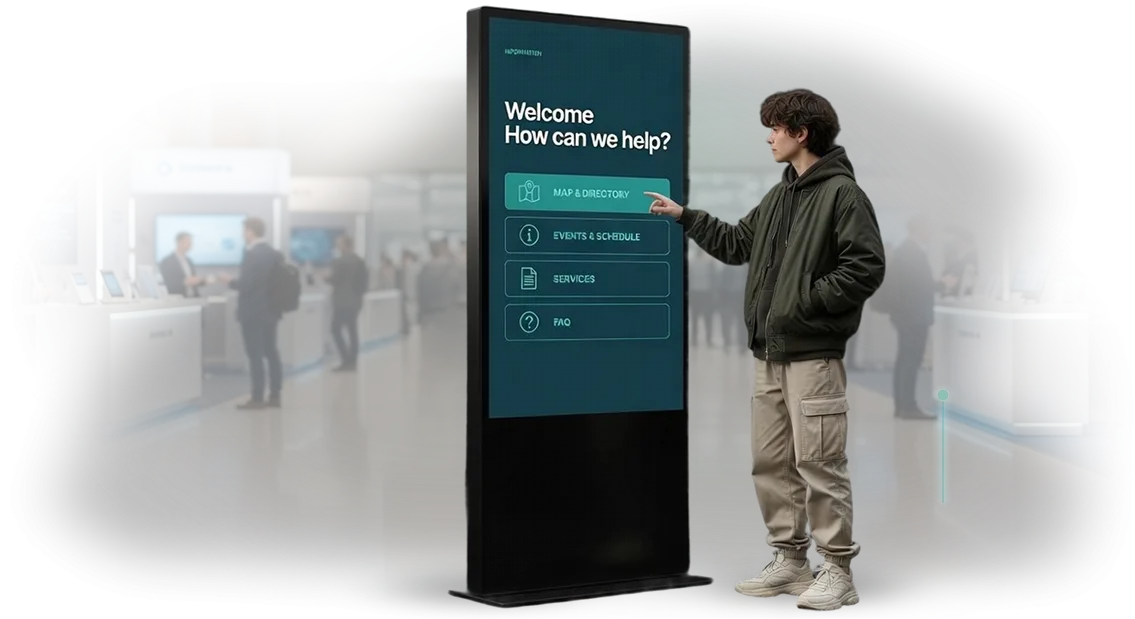
קונסיירז' וירטואלי למפעל פותר את הבעיה מהשורש. קיוסק מידע למפעל לוקח על עצמו שאלות שגרתיות: הוא מציג את המסלול, נותן את מספר המשרד, מנפיק אישור כניסה או מספק את האישור הנדרש. רק כמה נגיעות במסך — והאדם ממשיך בדרכו במקום לעמוד בתור.
מסוף מידע לתעשייה לא רק מיידע. הוא מקצר את זמן ההגעה ליעד, מפחית את העומס על שירות האבטחה והופך את תהליכי המפעל לשקופים יותר. זה לא מותרות, אלא כלי עבודה שמחזיר את השקעתו כבר מהחודש הראשון לפעילות.
אנחנו מתכננים פתרונות כאלה למשימות של מפעל ספציפי: תוך התחשבות במערכת בקרת הכניסה, הלוגיסטיקה הפנימית ודרישות שירות האבטחה. כתוצאה מכך, אתם מקבלים שירות מהיר לעובדים ולאורחים ללא עלויות כוח אדם נוספות.
מה מספק קיוסק אינטראקטיבי במחסום ובבית המלאכה
אורחים ועובדי מפעל רגילים לבזבז זמן בהמתנה: שהמזכירה תענה בטלפון, שימצאו מלווה, שיסבירו להם את הדרך לבית המלאכה.
קיוסק אינטראקטיבי במחסום ובבית המלאכה לוקח על עצמו את השגרה הזו, והמומחים שלכם משתחררים לשעות של משימות אמיתיות.
המערכת פועלת בשלוש נקודות מפתח: היא מקבלת את פני האורח, בודקת אותו מול רשימת הכניסה, מציגה את המסלול ורושמת את הביקור ביומן. להלן היתרונות העיקריים שהמפעל מקבל כבר בחודש הראשון לפעילות.
אורחים מוצאים את דרכם בכוחות עצמם — ללא שיחות טלפון או מלווים
ניווט במפעל הוא נקודת הכאב הנפוצה ביותר באתרים גדולים. האורח לא יודע היכן נמצא המחסום, היכן בית המלאכה, היכן הקפיטריה, ועובד מוסח מעבודתו כדי להסביר את הדרך.
קיוסק בכניסה ובנקודות מפתח בשטח מציג את המסלול למחלקה הרצויה: שלב אחר שלב, עם מספרי מבנים ונקודות ציון.
כתוצאה מכך, המבקר מגיע בדיוק בזמן, לא מסתובב בשטח ולא מטריד את הצוות. עבור העובדים שלכם, זה אומר עשרות פחות הסחות דעת ביום, ועבור האורח — תחושה שהמפעל פועל כמו שעון.
בקרת ביקורים — שקופה וללא יומני נייר
כל ביקור נרשם אוטומטית: מי הגיע, למי, באיזו שעה, מתי עזב. הלקוח רואה את התמונה העדכנית במחסום בכל רגע — בניגוד ליומן נייר, שבו הנתונים מופיעים באיחור ודורשים הזנה ידנית.
זה חשוב במיוחד למתקנים מאובטחים: כניסה רק לפי רשימה, הודעת הגעה, התראה אוטומטית לעובד המקבל. הנתונים לעולם לא אובדים ותמיד זמינים לבדיקה — בדוח נוח, לא בערימת ניירות.
המזכירות מפסיקה להיות שירות מידע
צוות הקבלה והמשרד הקדמי מקדיש עד שליש מזמן העבודה לשאלות זהות: איך מגיעים, איפה מחליפים בגדים, אילו מסמכים נדרשים. הקיוסק עונה על שאלות אלה מסביב לשעון, ללא הפסקות וללא גורם אנושי.
המזכירה מטפלת בתפקידיה הישירים במקום לחזור על הוראות הגעה למבקר העשרים של היום. המנהל רואה חיסכון אמיתי בזמן גם בעובדה שהקיוסק לא יוצא לחופשת מחלה, לא מוסח ולא מתעייף עד סוף המשמרת.
פורמטים של קיוסק: איזה מהם לבחור למשימה שלכם
באתר תעשייתי, מאות אנשים מצטלבים מדי יום: עובדים מחפשים את בית המלאכה הנכון, אורחים מקבלים אישורי כניסה, ומשלחות לומדות על ההיסטוריה של המפעל.
כל בקשה חוזרת על עצמה עשרות פעמים ביום, ותשובות גוזלות זמן מהמזכירות, מהאבטחה ומהמנהלים. קיוסק אוניברסלי ממעט לכסות את כל התרחישים — לכן אנו בוחרים את הפורמט לפי נקודת ההתקנה והמשימה הספציפית.
כך אתם מקבלים תוצאה מהירה מבלי לשלם יותר מדי על פונקציות מיותרות. השווינו את האפשרויות העיקריות למצבים אופייניים במפעל:
| פורמט | למי | מה הוא נותן ללקוח |
|---|---|---|
| קיוסק עומד למפעל | מחסומים, לובי, אזורי המתנה | מבטל תורים לטיפול באישורי כניסה, מקל על האבטחה והמזכירות |
| קיוסק מידע צמוד קיר | קפטריות, מסדרונות, חדרי הדרכה | מאפשר לעובד למצוא משרד, תפריט או לוח משמרות תוך 10–15 שניות — פחות איחורים וצפיפות |
| עמדת קונסיירז' וירטואלי | מוזיאוני מפעל, אזורי תצוגה, חדרי קבלה | מדריך את האורח לאורך המסלול, מספר על בתי המלאכה וההישגים בעצמו — משפר את הרושם מהביקור ואת מעמד החברה |
ברוב הפרויקטים אנו משלבים פורמטים: קיוסק עומד במחסום, קיוסק צמוד קיר בקפטריה, עמדה במוזיאון או באזור הקבלה.
כך נוצרת מערכת ניווט אחידה בכל השטח, ואתם רואים אילו חומרים מבוקשים ומעדכנים אותם ללא התקנה מחדש של ציוד.
כיצד מתבצע יישום קיוסק באתר שלכם
יישום קיוסק במפעל או בארגון תעשייתי בנוי כך שהפרויקט מתנהל ללא השבתה ואינו מתנגש עם התקנות שלכם. להלן השלבים מהבריף הראשון ועד לתמיכה שאתם עוברים יחד איתנו.
-
בריף והגדרת משימה. אנו דנים במה הקיוסק אמור לעשות: ניווט בין מבנים, חיפוש עובדים, הוראות למבקרים. אנו מגדירים את המטרה ואת קהל היעד.
-
סקירת אתר ואילוצים. אנו בוחנים את מיקומי ההתקנה, נקודות גישה לחשמל ורשת, ודרישות שירות האבטחה. אנו מתחשבים בהוראות בקרת הכניסה הפנימיות שלכם.
-
תוכנית פרויקט ואישור. אנו מכינים מסמך עם לוחות זמנים, היקף עבודה ורשימת האישורים הנדרשים. אתם מקבלים תוכנית שקופה שניתן לתקן לפני תחילת העבודה.
-
יישום. אנו מעצבים את הממשק בסגנון המותג שלכם ומפתחים תוכנה על ציוד מקצועי — זה מבטיח פעולה יציבה בתנאי בית מלאכה, מחסן או מחסום.
-
בדיקות והפעלת ניסיון. אנו בודקים תרחישים: חיפוש בית מלאכה, הצגת מסלול, טעינת נתונים, תגובה לתקלות. לאחר בדיקות מוצלחות, אנו משיקים את קיוסק המידע לפעילות שוטפת.
-
הדרכת עובדים ומסירת תיעוד. אנו מלמדים מנהלי מערכת לעדכן מידע ומספקים הוראות קצרות לצוות. שינויים מבוצעים על ידי העובד שלכם ללא צורך במתכנת.
-
תמיכה ופיתוח. אנו תומכים בקיוסק לאחר ההשקה: מעדכנים מידע, מסייעים בהוספת פונקציות חדשות ומגיבים במהירות לפניות. פרויקט קיוסק המידע ממשיך לעבוד עבורכם.
מה כלול במסירת קיוסק והתקנתו
בהזמנת קיוסק במפתח מלא, אתם מקבלים לא רק מסוף אלא מערכת עבודה מוכנה שמתחילה לספק ערך מהיום הראשון.
אנו לוקחים על עצמנו את כל המחזור — מהמעטפת ועד להדרכת הצוות — ואחראים לתוצאה הסופית, לא ל"חלקי חומרה" בודדים. להלן תכולת הערכה שמכסה את הצרכים של אורחים ועובדי ייצור כאחד.
- מעטפת ומסך המותאמים למפעל. אנו מתקינים עמדה עמידה לרעידות ותנודות טמפרטורה. המסך המוגן נשאר קריא גם תחת תאורה חזקה של בית המלאכה — העובד לא יצטרך לפזול מול סנוור.
- תפריט פשוט ותוכנה מותקנת מראש. כל המורכבות הטכנית מוסתרת מאחורי ממשק אינטואיטיבי: מפת גישה, מסלול לאתר, לוח משמרות — בשתיים או שלוש נגיעות. העובדים שלכם לא צריכים להבין בטכנולוגיה; הם מבינים מיד את היגיון המסך.
- תוכן המותאם למשימות שלכם. אנו מוסיפים את פריסת המחסום, מפות בתי מלאכה, הוראות בטיחות ורשימות בדיקה לעובדים חדשים. התוכן מוצג בפורמט מובן: טקסט, דיאגרמות וסרטונים קצרים במקום הוראות נייר יבשות.
- אינטגרציה עם מערכת החשבונאות שלכם. אנו מחברים את הקיוסק למערכת ניהול כוח האדם שלכם (גיליונות נוכחות, 1C, מערכת בקרת כניסה). עובד מתעד בכניסה למחסום — הנתונים מיד בדוח, ללא הזנה ידנית ושגיאות. חיסכון בזמן למחלקות משאבי אנוש ובטיחות בעבודה.
- הדרכת צוות ומנהלי מערכת. אנו עורכים הדרכה: מראים כיצד לעבוד עם המערכת, כיצד לעדכן מידע וכיצד לפעול במצב חירום. לא תצטרכו לגייס מומחה IT נפרד לתחזוקה.
- אחריות ותמיכת שירות. אנו כוללים שירות אחריות וניטור מרחוק של מצב הקיוסק. אם המכשיר זקוק לטיפול, נגיע ונתקן את הגורם כדי שהמסוף לא ישבת או יעכב את הפעולות.
- ניהול מרחוק ועדכונים. לוח זמנים או רשימת קבלנים השתנו? אנו מעדכנים תוכן והגדרות מרחוק, ללא ביקור באתר. אין צורך לכנס פגישה — המידע מתעדכן תוך זמן קצר.
מקרה בוחן: קיוסק מידע לתעשיית בניית המכונות
כך נראה יישום של קיוסק מידע במפעל לבניית מכונות עם כמה מבני ייצור. מאות אנשים עברו במחסום מדי יום: מומחים מוקצים, קבלנים, נהגי משאיות.
מנהלים חזרו עשר פעמים ביום על המיקום של מחלקת התכנון או המחסום של בית מלאכה מס' 3 — בשעות השיא התורים הגיעו ל-10–15 אנשים, ומציאת המשרד הנכון ארכה עד 15 דקות. הלקוח ביקש מאיתנו להקל על קבוצת הכניסה ולזרז את הגישה לאורחים.
תוצאת היישום
התקנו קיוסק אינטראקטיבי עם מפת אתר, חיפוש עובדים ומידע עזר. המבקר בוחר את המחלקה בעצמו, מקבל את המסלול ובמידת הצורך אישור כניסה מודפס.
בתוך חודשיים, הקיוסק טיפל ביותר מ-5,000 בקשות — 80% מהפניות לדלפק המידע עוברות דרכו כעת.
זמן קבלת המידע קוצר מ-15 ל-2 דקות, התורים במחסום נעלמו, והמנהלים הפסיקו להיות מוסחים מבקרת הכניסה. סקר מובנה הראה: 9 מתוך 10 אורחים דירגו את הניווט כברור ונוח.
משוב לקוח
"אורחים מגיעים לשטח מהר יותר, עובדים הפסיקו לתת הוראות הגעה במהלך שעות העבודה. הזמנו קיוסק שני לבניין החדש" — כך העריך ראש מחלקת ה-IT של המפעל את התוצאה.
עבדנו בתהליך מבוסס: אספנו את מפת האתר, הזנו לוחות זמנים ומספרי טלפון של מחלקות, ותיאמנו את הממשק עם התקנות הפנימיות.
ההשקה ארכה שבועיים, ותמיכת הצוות שלנו מאפשרת ללקוח לעדכן נתונים תוך דקות ספורות ללא קריאה למפתח.
כיצד לבחור קיוסק לאתר תעשייתי?
בחירת קיוסק מידע לאתר תעשייתי מתחילה לא בקטלוג אלא בתשובה לשלוש שאלות: מי ישתמש בו, היכן הוא יעמוד ואיזו משימה הוא צריך לפתור.
אין מעטפת אוניברסלית — אותה קופסה יכולה להיות נוחה בחדר ישיבות ולא מתאימה לבית מלאכה עם רעידות ואבק. לכן תחילה העריכו את תנאי האתר ואת זרימת האורחים, ורק אז הסתכלו על דגמים.
מספר המבקרים ועומסי השיא הוא הקריטריון הראשון לבחירת קיוסק. לעשרה עד עשרים איש ביום, מספיק פורמט קומפקטי צמוד קיר או עומד, בעוד שלמאות, יש צורך במבנה יציב עם מסך קריא ממרחק.
אזור ההתקנה משפיע גם הוא על הבחירה: מסדרון צר דורש אפשרות צמודת קיר, לובי — אפשרות עומדת, שטח חיצוני — מעטפת מוגנת.
המשימות קובעות איזה קיוסק לחפש. אורח צריך למצוא בית מלאכה או מחסן — מערכת מידע עם מפה מספיקה.
אם אתם צריכים קונסיירז' וירטואלי שעונה על שאלות אופייניות ומספר על מוצרים, תצטרכו פונקציונליות רחבה יותר ותרחיש תקשורת מחושב היטב.
הגדירו אילו פעולות המבקר אמור לבצע: קבלת מסלול, השארת בקשה, צפייה בסרטון או הורדת מסמכים. הממשק ועומק התוכן תלויים בכך.
התקציב לא צריך להיות הקריטריון היחיד, אבל כדאי לשקול אותו יחד עם האפקט. פתרון איכותי מחזיר את השקעתו באמצעות חיסכון בזמן עובדים והפחתת העומס על המזכירות — עובדים עונים פחות על שאלות חוזרות ומתמקדים במשימות שמייצרות הכנסה.
מעטפת יקרה שלא לצורך למשימה פשוטה היא תשלום יתר, בעוד שמעטפת זולה מדי נכשלת במהירות בשימוש פעיל. העריכו את עלות הבעלות הכוללת, לא רק את מחיר הרכישה.
אנו עוזרים לכם לבחור בחירה מושכלת: אנו מנתחים את זרימת המבקרים, תנאי המיקום ומשימות עסקיות, ואז מציעים פורמט שמתאים לאתר הספציפי שלכם.
ניסיון היישום שלנו במפעלים תעשייתיים אפשר לנו לחדד תרחישים אופייניים, כך שאתם מקבלים פתרון עובד ללא הפתעות בתפעול. שלחו לנו את פרמטרי האתר שלכם — נמצא את האפשרות המתאימה ונראה כיצד היא תעבוד בהקשר שלכם.
שאלות נפוצות על תפעול ותחזוקת קיוסק
בשלב בחירת הקיוסק, לקוחות שואלים לרוב על אמינות ונוחות תפעול. זה מובן: המסוף חייב לעבוד ללא תקלות בבית מלאכה או במחסום ולא לדרוש מעורבות מתמדת של העובדים שלכם. להלן טיפלנו בשאלות אופייניות — עם תשובות כנות ללא פרטים טכניים.
האם המסוף יעבוד בבית מלאכה מאובק? עד כמה הוא אמין?
אנו מרכיבים קיוסקים בעיצוב תעשייתי: מעטפת מחוזקת, הגנה מפני אבק ולחות, רכיבים המיועדים לפעילות 24/7.
המסוף לא מפחד מרעידות או תנודות טמפרטורה, ולכן הוא עובד ללא תקלות במפעל ואינו דורש התערבות צוות. עבורכם, זה אומר מינימום השבתה וביטחון שמידע המבקרים זמין תמיד.
מי יעדכן את המידע על הקיוסק?
העובד שלכם יכול לבצע שינויים ללא הכשרה מיוחדת. עדכונים מבוצעים מרחוק דרך לוח בקרה נוח: העלו קובץ חדש, שנו את מפת הגישה או רשימת אנשי הקשר — ותוך דקות ספורות המידע כבר על המסך. אין צורך לקרוא לקבלן בכל פעם שלוח זמנים משתנה או מתווספת מחלקה חדשה.
האם זה משתלם למפעל? האם זה יחזיר את ההשקעה במהירות?
הקיוסק לוקח על עצמו שאלות שגרתיות שבעבר הסיחו את דעתם של מזכירות, אבטחה ומומחים טכניים. מבקרים מוצאים את דרכם בשטח מהר יותר, ממתינים פחות לתשובות, ועובדים מתמקדים במשימותיהם במקום לחזור על הסברים.
המסוף עובד ללא חופשות או הפסקות — בפועל, עלויות היישום מוחזרות בתוך השנה הראשונה באמצעות חיסכון בזמן עבודה.
מה כולל שירות האחריות?
אנו מספקים אחריות רשמית על חומרה ותוכנה. אם מתעוררת בעיה, אנו מתקנים אותה ללא עלות תוך זמן קצר, ובמהלך התיקון אנו מספקים מסוף חלופי — שירות המידע לא נפסק.
לאחר תום האחריות, ניתן להאריך את התמיכה על בסיס קבוע כדי לשמור על פעילות יציבה של הקיוסק לאורך שנים.
האם הקיוסק יתחבר למערכות הפנימיות שלנו?
כן, המסוף משתלב בקלות עם מסד הנתונים, מערכת החשבונאות או הפורטל הפנימי שלכם. הוא מציג מידע עדכני מהמערכות שלכם: עובדים, מחלקות, מסמכים, לוחות זמנים.
לא תצטרכו לבנות מחדש את התשתית — נתאם על פרוטוקולי החלפה ונגדיר הכל בצד שלנו.
שלחו בקשה להערכת עלות פרויקט קיוסק מידע
הערכת עלות פרויקט קיוסק מידע אורכת יום עבודה אחד. אנו ננתח את המשימות של הארגון שלכם, נמליץ על פורמט מתאים ונספק עלות ריאלית המחושבת לאחר סקר, כדי שתוכלו לקבל החלטה ללא סיכונים מיותרים.
עבור אתרים תעשייתיים, אמינות ונוחות תחזוקה חשובים. לכן אנו מתייחסים לכל פרויקט כאל אובייקט הנדסי: אנו חושבים על עמידות לעומסים, יתירות ונוחות ניהול כך שהקיוסק יעבוד ללא תקלות לאורך שנים.
מה תקבלו לאחר פנייתכם:
- ייעוץ עם מומחה ניווט ומידע המותאם למאפייני הארגון שלכם.
- הערכת עלות לקיוסק מידע בפורמט שלכם: עומד, צמוד קיר, עם לוח מגע או מעטפת נגד ונדליזם.
- בחירת תצורה לתנאי בית מלאכה, מחסן או מחסום — תוך התחשבות בתאורה, אבק ותנודות טמפרטורה.
- הצעת מבנה תוכן: מפת גישה, לוח משמרות, אנשי קשר של מחלקות, הוראות בטיחות.
- חוזה שקוף עם לוחות זמנים קבועים ושלבי פרויקט ברורים.
- הדרכת צוות ותמיכה טכנית לאחר ההשקה.
שלחו בקשה להערכת עלות קיוסק — ולמחרת תדעו את העלות המחושבת לאחר הסקר וכמה זמן ייקח היישום.
קיוסקי מידע לקונסיירז' וירטואלי הם התמחות הליבה שלנו: למעלה מעשר שנות ניסיון ועשרות יישומים באתרים תעשייתיים מאחורינו.