

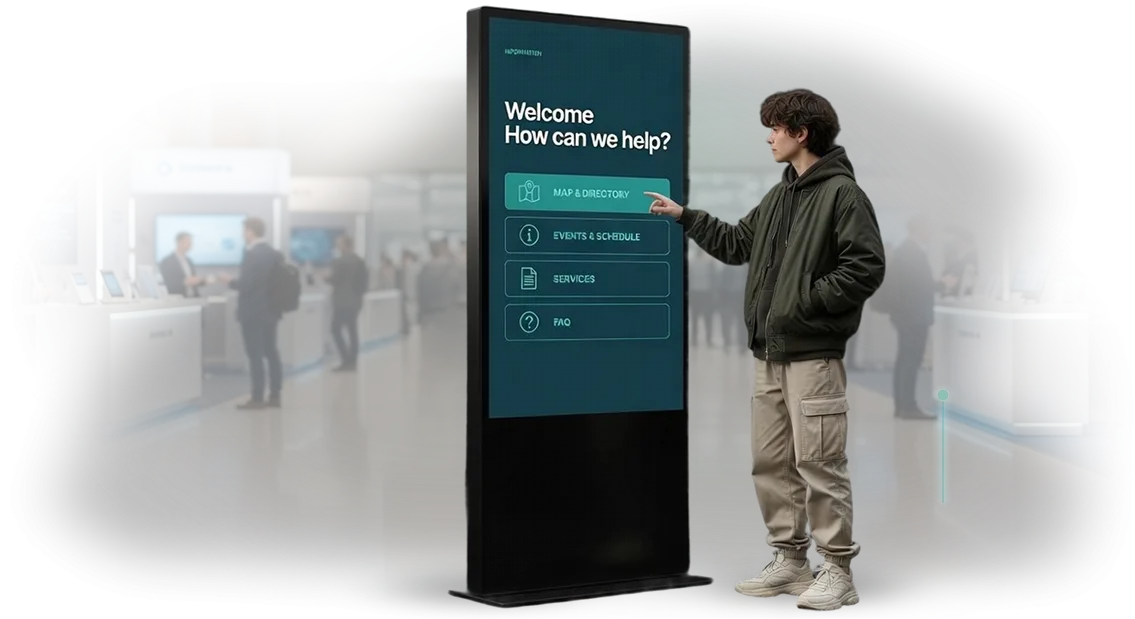
מרכז תעסוקה: קיוסק רושם מבקרים תוך דקה
מבקרים מגיעים למרכז התעסוקה עם צרכים שונים: אחד זקוק לקצבאות, אחר צריך הפניה להכשרה, ושלישי זקוק לעזרה במציאת משרות פנויות.
כל עוד הכל נרשם ידנית, תור חי מצטבר בכניסה, אנשים נהיים לחוצים, ומומחים מבזבזים זמן יקר על מילוי טפסים במקום לעשות עבודה משמעותית.
ככל שהעומס גדול יותר, כך גדל הבלגן — במיוחד בשעות הבוקר כשכולם מגיעים להגשת מסמכים.
קיוסק אינטראקטיבי במרכז התעסוקה מבטל את הבלגן הזה כבר מההתחלה. מבקרים רואים מסך ברור, בוחרים את המומחה או השירות שהם צריכים, ומקבלים כרטיס תור אלקטרוני תוך דקה.
התור נקבע ללא מעורבות של פקיד קבלה: המערכת עצמה מציעה את המשבצת הפנויה הקרובה ורושמת את הביקור. הצוות משוחרר ממשימות שגרתיות, ומבקרים כבר לא מצטופפים סביב הדלפק.
עבורך כמנהל, זה אומר סדר בלובי, זרימת אנשים צפויה, והפחתת עומס על העובדים. הקיוסק מטפל במגע הראשוני, בשאלות סטנדרטיות ובהפניית מבקרים למשרדים הנכונים.
כל מידע התורים נכנס למערכת התורים האלקטרונית המשותפת, כך שאתה תמיד רואה את התמונה העדכנית — כמה אנשים ממתינים, אילו שירותים מבוקשים, והאם יש מחלקות עמוסות מדי.
בנינו קיוסקים כאלה עבור מוסדות ממשלתיים ואנחנו יודעים להתאים את הממשק לקטגוריות מבקרים שונות — ממחפשי עבודה צעירים ועד אנשים מבוגרים שזקוקים לכפתורים גדולים והנחיות על המסך. הקיוסק אינו דורש כישורים מיוחדים ופועל באופן אמין לאורך כל היום.
אם מרכז התעסוקה כבר משתמש בתור אלקטרוני, אנו משלבים רישום עצמי במערכת הקיימת — לא תצטרכו לשנות את התהליכים הקבועים שלכם.
מה משתנה לאחר השקת קיוסק תור אלקטרוני
לאחר השקת קיוסק התור האלקטרוני, מרכז התעסוקה מפסיק להידמות לתחנת רכבת בשעת עומס. מבקרים כבר לא מצטופפים מחוץ למשרדים או מתווכחים מי הגיע ראשון — המערכת עצמה קובעת סדר והופכת את התהליך לברור לכולם.
התור האלקטרוני לוקח על עצמו את השגרה, בעוד עובדים ואורחי המוסד מקבלים קצב יום צפוי.
השינוי הראשון והבולט ביותר הוא תורים קצרים יותר. התור החי מוחלף בתור אלקטרוני שקוף: כל מבקר רואה את המספר שלו ואת זמן ההמתנה המשוער במקום לעמוד במסדרון למשך זמן לא ידוע.
זה מפחית לחץ וגם מסדר את הזרימה — אנשים מגיעים בזמן הנכון במקום שעה לפני הפתיחה.
השינוי החשוב השני הוא מהירות השירות. העובד רואה את התור האלקטרוני מראש ויודע מי מגיע הבא, כך שהוא יכול להתכונן לפגישה ולסיים כל ייעוץ מהר יותר.
בפועל, זמני ההמתנה יורדים מעשרות דקות לכמה דקות בלבד, ומומחים יכולים לשרת יותר מבקרים במהלך יום העבודה מבלי למהר או לאבד איכות.
התוצאה השלישית היא נוחות המבקרים — אנשים מגיעים לרוב למרכז התעסוקה בתקופות קשות בחייהם.
במקום צפיפות והמתנה חרדתית ליד הדלת, אדם יושב בשלווה באזור ההמתנה, יודע מתי ייקרא, ולא דואג לפספס את תורו.
ניווט ברור על מסך הקיוסק עוזר אפילו לאלה שמשתמשים בציוד מסוג זה בפעם הראשונה.
לבסוף, גם עבודת העובדים עצמם משתנה. מחלוקות עם מבקרים על "אני הייתי ראשון" נעלמות, יש פחות שגרה ופחות שאלות מיותרות — יש עכשיו מקום להתמקד במהות הייעוץ.
בסופו של דבר כולם מרוויחים: המוסד פועל בצורה רגועה יותר, מבקרים עוזבים עם פתרון לבעיותיהם, ולצוות יש יותר זמן ואנרגיה למשימות חשובות באמת.
פורמטי הטמעת קיוסק למרכזי תעסוקה
עומס העבודה במרכז תעסוקה משתנה: בימים מסוימים יש מעט מבקרים, בימים אחרים עשרות מגיעים בבת אחת. זמני ההמתנה והרושם מהסוכנות תלויים באופן ארגון התורים והמידע.
לכן אנו מתאימים את פורמט הקיוסק לזרימת המבקרים שלכם: מקיוסק בודד ועד מספר נקודות רישום עצמי עם תור אלקטרוני.
למרכז קטן יותר, קיוסק בודד מספיק: הוא מספק הכוונה ללא מעורבות צוות ומאפשר למבקרים לקבוע פגישה.
אם הזרימה קבועה, אנו מתקינים מספר קיוסקים ומחברים אותם לתור משותף — מומחים מקבלים עומס שווה ואנשים לא מצטופפים במסדרון.
| פורמט | למי מתאים | מה זה נותן למבקר |
|---|---|---|
| קיוסק בודד | מרכז קטן עם זרימה של עד עשרות אנשים ביום | הכוונה ורישום בשירות עצמי, פחות לחץ על קבלת הפנים |
| מספר קיוסקים עם תור אלקטרוני | מרכז עם זרימה קבועה ומספר דלפקי שירות | חלוקה שווה של מבקרים, מערכת קריאה שקופה, פחות עימותים |
| נקודות רישום לפי אזורים | מרכז גדול עם שירותים במשרדים שונים | שליטה מלאה בתורים, הפחתת זמני השבתה, אנליטיקה לניהול |
כל הפורמטים פועלים על פלטפורמה אחת, כך שתוכלו להתחיל עם קיוסק אחד ולהתרחב ככל שהזרימה גדלה. אנו נעצב את התרחיש, נכין את הציוד, ונשיק את התור האלקטרוני עם אחריות.
איך הפרויקט מתנהל: מהבריף ועד השקת הקיוסק
תהליך שקוף הוא מה שמאפשר לכם לישון בשקט. אנו מפרקים את הפרויקט לשלבים ברורים, שכל אחד מהם אתם יכולים לראות ולאשר. זו הסיבה שהטמעת קיוסק במרכז תעסוקה היא צפויה וללא עיכובים, ולא "קופסה שחורה".
-
בריף. אנו נפגשים איתכם ואוספים דרישות: מי המבקרים שלכם, אילו שירותים הם צריכים, איך הקיוסק ישתלב בלובי, ואיך הוא יעבוד עם התור האלקטרוני. התוצאה היא מפרט טכני ברור שאתם מאשרים.
-
תוכנית ולוח זמנים. אנו קובעים לוחות זמנים, היקף עבודה, נקודות בקרה ואחראים. אתם מקבלים תוכנית פרויקט ריאלית, מאשרים אותה — ואז אנחנו עובדים בלי "תוספות" או עיכובים מפתיעים.
-
אב טיפוס של ממשק. אנו מראים איך המסך ייראה ואיך הוא יעבוד: קטעים, כפתורים ותרחישי הזמנת שירותים. אתם רואים את המוצר העתידי לפני שהתכנות בכלל מתחיל ויכולים לשנות את ההיגיון.
-
יישום. אנו מגדירים את מערכת הקיוסק ומחברים אותה למסד הנתונים ולתור האלקטרוני שלכם. בשלב זה אתם מקבלים תוצאות ביניים לבדיקה ויכולים להשפיע על הפרטים.
-
בדיקות. אנו בודקים תרחישי מבקרים: רישום, חיפוש שירות, הדפסת כרטיסים וניווט בתפריט. אנו מתקנים כל בעיה לפני ההשקה כדי שהקיוסק יעבוד ללא רבב מהיום הראשון.
-
השקה והדרכה. אנו מתקינים את המכשיר בלובי, מדריכים את הצוות ועוזרים עם המבקרים הראשונים. אתם אף פעם לא נשארים לבד עם טכנולוגיה חדשה.
-
תמיכה. אנו עונים על שאלות, מעדכנים את לוח הזמנים ורשימת השירותים, ומפקחים על פעילות יציבה. ההשקה היא לא סוף הפרויקט — היא התחלה של פעילות ארוכה וחלקה.
גישה זו עזרה לעשרות ארגונים — ממועצות קטנות ועד מרכזי תעסוקה גדולים — להשיק קיוסקים ללא החמצת מועדים או עלויות מיותרות. אתם תמיד יודעים באיזה שלב אתם ומה הלאה.
מה כלול בחבילת האספקה למוסד
חבילת האספקה היא פתרון מלא ומפתח: לאחר ההתקנה, הקיוסק מוכן לקבל את המבקרים הראשונים. הרכבנו את כל מה שהמוסד צריך בערכה אחת — מממשק הפונה ועד נהלי צוות.
לא תצטרכו לקנות או לשפר מודולים נפרדים בנפרד — הכל כבר מוגדר ונבדק.
מה כלול בחבילה
- ממשק מבקרים — מסך קיוסק ברור עם ניווט בשירותי מרכז התעסוקה, רישום לתור אלקטרוני וצפייה בסטטוס הפנייה. מותאם במיוחד לאנשים בכל הגילאים, כולל אלה שמשתמשים בקיוסק מסך מגע בפעם הראשונה.
- תחנת עבודה למנהל — תוכנה לצוות המוסד: ניהול תורים, שינוי לוח זמנים, סטטיסטיקת ביקורים והתאמות שירות מהירות. הכל בחלון אחד, ללא הגדרות מורכבות.
- תור אלקטרוני ולוח תצוגה — חלוקת מבקרים אוטומטית וקריאה לתור הבא באמצעות לוח תצוגה או הודעה קולית. זה מבטל בלבול, ומומחים זוכים לזמן לשירות בפועל במקום לתאם אנשים.
- הוראות לצוות — דפי עזר קצרים ומדריכים שלב-אחר-שלב: איך להתחיל משמרת, מה לעשות במקרה של תקלה, ואיך לסגור את התור בסוף היום. עובד יכול להתעדכן תוך 15 דקות, ללא הכשרת IT נפרדת.
- מדריך תפעול ונהלים — מסמכים המסדירים את פעולת הקיוסק והתור האלקטרוני, כולל פעולות במצבי חירום. מתאים לביקורות פנימיות ולהעברות משמרות.
- תמיכה טכנית ועדכונים — אנו תומכים בחבילה לאחר ההשקה: מעדכנים טפסים ושירותים של מרכז התעסוקה, מפקחים על יציבות ועוזרים בכל פעם שעולות שאלות.
כל הרכיבים משולבים זה בזה ופועלים כמערכת אחת.
אנו מגדירים את החבילה כך שתתאים לרשימת השירותים של מרכז התעסוקה שלכם, כך שהצוות רואה מיד את המחלקות והנהלים הספציפיים שלהם, ומבקרים מקבלים מידע עדכני ללא צורך בסיוע.
מקרה בוחן: צמצום זמן ההמתנה של מבקרים ל-5 דקות
מבקרים במרכז התעסוקה הגיעו בבוקר כדי לתפוס דלפק שירות — ועדיין הפסידו 20–25 דקות בתור החי.
בזמן שאנשים עמדו ליד הדלפקים, פקידים הזינו נתונים ידנית, ושאלות "מי הבא?" הוכרעו בקול ובמתח כללי.
המצב האט את כל המחלקה: עובדים ענו על אותן שאלות עשר פעמים, ואנשים מותשים עזבו בלי לקבל שירות כלל.
הצענו להתקין קיוסקים אינטראקטיביים עם תור אלקטרוני והזמנת פגישות. מבקרים בוחרים את השירות שהם צריכים בעצמם, מקבלים כרטיס, ורואים על המסך מתי יגיע תורם.
המערכת אוספת נתונים מראש, כך שעד שהמבקר מגיע לפקיד, כל המידע כבר גלוי — אין צורך לשאול שוב, והעבודה מתקדמת מהר יותר.
מה השתנה לאחר ההשקה
ההמתנה ירדה מ-25 דקות לחמש בשעות השיא. אנשים הפסיקו להצטופף במסדרון: הקיוסק מחלק את הזרימה בעצמו, מבקרים יושבים בשלווה באזור ההמתנה ומחכים למספר שלהם על התצוגה.
הצוות שוחרר משגרה — עכשיו הם מתמקדים בשירות עצמו במקום להסביר לאיזה דלפק לגשת.
התוצאה השנייה היא איכות נתונים גבוהה יותר. מבקרים בוחרים את השירות מרשימה במקום להסביר אותו מילולית, כך שיש פחות שגיאות הזנה ופחות הפניות שגויות ל"דלפק הלא נכון". זה הפחית את העומס על הפקידים והאיץ את השירות.
למה זה עובד עבור מרכז תעסוקה
הקיוסק מסיר את נקודת הכאב המרכזית — כאוס בתורים ועומס על הצוות. המערכת קלה לפריסה בכל סניף: היא לא דורשת החלפת רהיטים או הכשרת צוות מורכבת, והאלגוריתמים מוגדרים להתאים לנהלים המקומיים.
לאחר ההשקה, הלקוח האריך את חוזה התמיכה והוסיף קיוסקים למחלקות שכנות — המערכת הוכיחה את עצמה בפעילות יומיומית.
איך לבחור את הפורמט המתאים לצרכים שלכם?
בחירת פורמט מתחילה לא במספר המסכים, אלא במטרות מרכז התעסוקה שלכם. אם מבקרים מגיעים בעיקר לאישורים והזמנת פגישות, קיוסק אחד או שניים עם תור אלקטרוני מספיקים.
אם אתם צריכים להקל על דלפקי שירות במספר שירותים, להוסיף הגשת בקשות בשירות עצמי ולספק מידע, מספר העמדות גדל — אבל לא בהכרח בבת אחת.
מדד המפתח הוא עומס שיא. העריכו כמה אנשים עוברים בלובי בשעות העמוסות וכמה זמן אורכת פעולה אחת בקיוסק. זה יראה כמה מכשירים אתם באמת צריכים כדי להימנע מתורים.
לעתים קרובות מתברר ששתיים או שלוש עמדות מספיקות לשני מומחי תורן, בעוד ששירות עצמי מלא דורש ארבע או חמש עם אזורי המתנה.
הגישה שלנו היא מודולרית. אתם בוחרים סט בסיסי של תרחישים: תור אלקטרוני, הזמנת פגישה עם מומחה, הדפסת כרטיסים ואישורים. מאוחר יותר תוכלו להוסיף מידע על משרות פנויות, סקרי מבקרים או אינטגרציה עם מערכת הנהלת החשבונות שלכם — בלי להחליף ציוד.
כלומר, אתם לא משלמים על תכונות שאינכם צריכים בהתחלה, ומרחיבים את המערכת ככל שהעומס גדל.
אם אינכם בטוחים, אנו מנתחים את זרימת המבקרים שלכם וממליצים על הפורמט האופטימלי. אנו מבצעים מדידות על סמך שעות שיא ורשימת השירותים שלכם, כך שאתם מקבלים בדיוק את מספר הקיוסקים וסט התרחישים שמחזיר את ההשקעה במרכז התעסוקה שלכם.
שאלות נפוצות על קיוסקים ותורים אלקטרוניים
מנהלי מרכזי תעסוקה שואלים אותנו לרוב על אמינות הקיוסק, דיוק הנתונים ולוחות זמנים להשקה. אנו עונים נקודה אחר נקודה — ללא פרטים טכניים, אבל עם אחריות ברורה.
מה קורה אם הקיוסק מתקלקל?
תחזוקת הקיוסק כלולה בפרויקט מהיום הראשון. אנו מגדירים ניטור מרחוק: המהנדס שלנו רואה בעיה לפני שהמבקרים בכלל שמים לב שהמכשיר הפסיק לפעול.
במקרה של תקלה חמורה, טכנאי יגיע או שהמכשיר יוחלף ביחידת גיבוי כדי שהתור האלקטרוני ימשיך לעבוד.
באיזו מהירות מתעדכן מידע המשרות הפנויות?
המידע מסונכרן דרך פאנל הניהול עם מסד נתוני המשרות שלכם. הצוות מבצע שינויים בעצמו — מוסיף מודעות, מעדכן שעות פעילות של המרכז ומרענן נתוני עזר. הקיוסק והתור האלקטרוני מציגים את אותו מידע ללא צורך בהפעלה מחדש של המכשיר.
האם העובדים צריכים הכשרה?
ההכשרה כלולה באספקה ואורכת 1–2 שעות. אנו מראים איך לקבל בקשות, להפעיל את התור האלקטרוני ולשנות לוחות זמנים. לאחר ההשקה, התמיכה נמשכת: אנו מייעצים בטלפון, במייל או בצ'אט מאובטח.
כמה זמן אורכת ההשקה?
פרויקט טיפוסי אורך כמה שבועות: בריף, ממשק בסגנון שלכם, תוכן משרות, בדיקות עם התור האלקטרוני שלכם והתקנה. אם אתם צריכים תרחיש רישום פשוט, אנחנו יכולים להשיק אפילו מהר יותר.
רוצים לראות קיוסק בפעולה ולהעריך איך הוא יכול להפחית תורים במרכז שלכם? השאירו פנייה — נראה לכם הדגמה ונחשב לוחות זמנים לצרכים הספציפיים שלכם.הזמינו ייעוץ על קיוסקים
השאירו פנייה דרך הטופס באתר — ותוך יום עסקים אחד נחזור אליכם עם הערכת עלות לפרויקט.
משם זה פשוט: אנו קובעים לוחות זמנים, מכינים את ההסכם ומשיקים את הקיוסק במרכז התעסוקה שלכם מבלי להפריע לפעילות השוטפת.
זו התוכנית:
- פנייה. אתם משאירים פרטי קשר — אנו מבהירים את המשימות והציוד הקיים.
- הערכה. אנו מכינים עלות מחושבת לאחר בדיקה ולוחות זמנים שמתאימים לתקציב ולפורמט הקיוסק שלכם.
- אישור. אנו דנים בתרחישי מבקרים ובמבנה התפריט — מהזמנת מומחה ועד הנפקת כרטיסים.
- פיתוח. אנו מגדירים את הממשק ואת האינטגרציה עם התור האלקטרוני ומערכת ההזמנות שלכם.
- בדיקות. אנו בודקים תרחישים על מכשירים אמיתיים: הזמנה, הדפסת כרטיסים, צפייה בתור.
- השקה. אנו מתקינים את התוכנה, מדריכים את הצוות ומוסרים הוראות וסיסמאות.
- תמיכה. אנו נשארים בקשר: עדכונים, התאמות, ייעוץ.
מה תקבלו לאחר הפנייה אלינו:
- הערכת עלות ולוחות זמנים ברורה תוך יום עסקים אחד — בלי "פרטים טכניים שנשמרים לשלב מאוחר יותר".
- קיוסק מוכן לשימוש שמפחית את העומס על פקידי הקבלה ומאיץ את שירות המבקרים.
- עבודה במפתח: מתרחישים ועד השקה — אין צורך לשכור קבלנים או ללמוד תכנות.
- אחריות שהקיוסק יפעל באופן אמין בשעות השיא כשמרכז התעסוקה רואה את זרימת הפונים הגבוהה ביותר.
- תמיכה לאחר ההשקה: נעזור לשנות לוחות זמנים, להוסיף משרות פנויות או לעדכן את טופס הרישום.
קיוסק במרכז תעסוקה הוא לא רק תור אלקטרוני. זה אומר תורים קצרים יותר, הזמנה מהירה עם המומחה הנכון, וסדר בלובי אפילו בימים העמוסים ביותר.
כל מבקר בוחר את הזמן והמטרה של הביקור שלו — לפקידים נשארת הרבה פחות שגרה.
השאירו פנייה — נסביר איך זה יעבוד במוסד שלכם ספציפית ונראה דוגמאות של פרויקטים שכבר פעילים. ההערכה ללא התחייבות.