

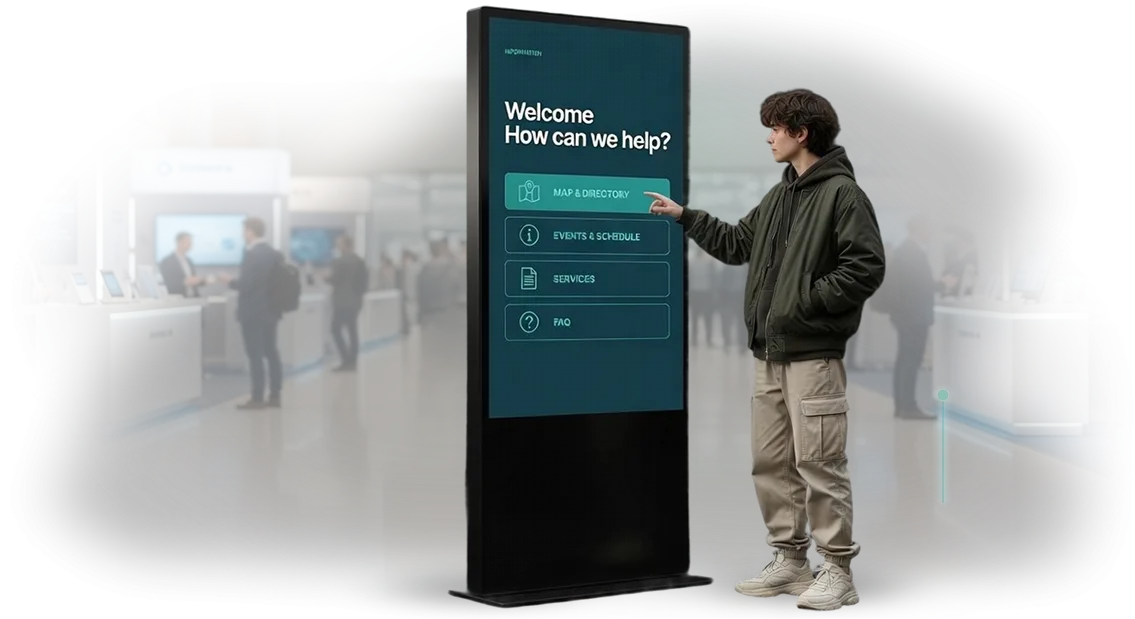
ללא תוכן בידורי, קיוסקים לא מייצרים רווח
אורחים מגיעים לאירוע בשביל חוויות, לא בשביל תפריט עם שישה פריטים ולוגו על מסך מגע.
אם קיוסק אינטראקטיבי באירוע רק מספק מידע עיוני, מבחינים בו ושוכחים אותו תוך כמה שניות — התקציב לחומרה ולפיתוח הופך לשורת הוצאה חסרת תועלת, והדוכן נשאר ריק.
תוכן בידורי לקיוסק משנה את התסריט: במקום "הסתכל והמשיך הלאה", זה הופך ל"נשאר, שיחק, הזמין עמיתים, צילם תמונות". משחק קצר, חידון, אנימציה יוצאת דופן או מחולל ממים עם לוגו המותג שומרים על תשומת הלב למשך מספר דקות.
במהלך הזמן הזה, המבקר מצליח לזכור את החברה, לשתף את התוצאה ברשתות החברתיות ולחזור לדוכן שוב — משיכת תשומת הלב לדוכן מפסיקה להיות תלויה במתנות ובכמות הקד"מיים.
התנהגות כזו משפיעה ישירות על החזר ההשקעה: כל דקת אינטראקציה היא דקה של מגע עם הקהל שניתן להפוך לליד, להסכם, או לפחות להכרת המותג. כשקיוסק מבדר, הוא מושך אנשים, ולכן אוסף נתונים ואנשי קשר. מצגת רגילה לא מתקרבת אפילו לאפקט הזה.
אנחנו סוגרים את הפער הזה: אנחנו מתכננים בידור אינטראקטיבי למטרות הספציפיות של האירוע — ממשחקים פשוטים ועד תרחישי תלת-ממד מלאים שרצים על פאנלי מגע ועובדים ללא תקלות.
אתם מקבלים קיוסק שאנשים עומדים בתור אליו — וזה ניתן למדידה לפי מספר האינטראקציות והביקורים החוזרים בדוכן.
מה משתנה לאחר הטמעת קיוסק אינטראקטיבי
תגובות חיות של אורחים הן הדבר הראשון שתבחינו בו לאחר השקת הקיוסק. המסך הבהיר והמצגת דמוית המשחק מושכים אפילו את אלה שהיו חולפים על פני הדוכן. אנשים עוצרים, מנסים, דנים ומזמינים חברים — תור חי של מבקרים מעורבים נוצר באזור שלכם.
המעורבות הזו משפיעה ישירות על הכרת המותג. אורח שיצר משהו במו ידיו או חווה חוויה יוצאת דופן מצלם את התוצאה בטלפון ומשתף אותה ברשתות החברתיות. כל פוסט הוא עשרות אנשי קשר חדשים עם הקהל שלכם שממשיכים לעבוד הרבה אחרי שהאירוע מסתיים.
הפורמט המשחקי הוא לא רק בידור אלא כלי לאיסוף נתונים. בזמן האינטראקציה עם הקיוסק, האורח משאיר ברצון פרטי קשר בתמורה לפרס, קוד קידום או תוצאה אישית.
אתם מקבלים מאגר של לידים חמים שכבר מתעניינים במוצר שלכם, ותוכלו להעביר אותם מיד למחלקת המכירות או להשתמש בהם לשליחת דיוורים.
התוצאה קלה למדידה: מספר סשני המשחק, אנשי הקשר שנאספו, גידול בעוקבים וביקורים חוזרים בדוכן שלכם. המספרים האלה מראים איך הקיוסק מחזיר את ההשקעה ועוזרים להבין איזה פורמט בידורי מהדהד הכי טוב עם הקהל שלכם.
אנחנו לוקחים על עצמנו את כל המסע: אנחנו מנתחים את המשימה שלכם, יוצרים תרחיש למקום ספציפי ומבטיחים פעילות יציבה בשעות העמוסות ביותר. היישום לוקח זמן מינימלי, ותראו את האפקט כבר באירוע הראשון.
פורמטים של תוכן בידורי לקיוסקים אינטראקטיביים
פורמטים שונים מערבים אחרת: חלקם מחזיקים אורח לדקה, אחרים לעשר, והופכים את ההמתנה למשחק ויוצרים תור סביב הדוכן.
המשימה של הלקוח היא לבחור לא את "הכי היי-טק", אלא את זה שפותר את המטרה העסקית שלו: לבדר את האורח, לחנך, לאסוף אנשי קשר או להציג את המוצר באור חיובי.
הפורמטים העיקריים ומתי הם עובדים
| פורמט | למי | מה הוא מספק ללקוח |
|---|---|---|
| קיוסק משחק (יישום תלת-ממד) | אירועים, תערוכות, אזורי טרקלין | שומר על תשומת הלב למשך 5–10 דקות, יוצר עניין אמיתי ותור; אורחים חוזרים לנסות שוב |
| חידוני קיוסק | מצגות, הדרכות, אירועי חברה | מערב אפילו קהלים פסיביים, מאפשר לבדוק ידע ולזכור עובדות מפתח על החברה |
| מצגת אינטראקטיבית | תערוכות מוצר, חדרי תצוגה, תמיכה במכירות | עוזרת להציג את הנקודות המרכזיות תוך 2–3 דקות, מעניקה לאורחים עצמאות וחוויה בלתי נשכחת |
| קונסטרוקטור או סימולטור תלת-ממד | פעילויות מותג, אזורי קידום | נותן לאורחים תפקיד של יוצרים — הם "יוצרים" משהו, מצלמים את התוצאה ומשתפים ברשתות החברתיות |
כל אחד מהפורמטים האלה מרחיב את טווח ההגעה: האורח לא רק מקבל מידע, הוא משתתף בעצמו. אחרי 1–2 דקות בקיוסק, הוא כבר מעורב רגשית ובלי להבין זאת, לומד יותר על המוצר או המותג מאשר מכל ברושור.
יתרון נוסף: אפשר לשלב בקלות את כל הפורמטים ביישום אחד. לדוגמה, חידון קצר לפני המשחק התלת-ממדי הראשי מחמם את העניין, ומצגת אינטראקטיבית משלימה את החוויה בכך שהיא מזמינה את האורח להשאיר פרטי קשר.
כדי לבחור את הפורמט המתאים למשימה שלכם, פשוט ספרו לנו על הקהל והמטרה שלכם. אנחנו נציע תרחיש שמספק תוצאות מדידות: זמן מוגדל בדוכן, מספר אורחים מעורבים או ביקורים חוזרים נוספים.
איך עובד פיתוח קיוסקים: מבריף ועד השקה
פיתוח קיוסק אינטראקטיבי הוא לא רק התקנת ציוד; זה יצירת כלי שמבדר אורחים ועובד עבור העסק שלכם. השלמנו עשרות פרויקטים ובנינו תהליך ברור: מבריף ועד השקה ותמיכה. להלן שלבי פיתוח הקיוסק שאנו עוקבים אחריהם בכל פרויקט.
- בריף וניתוח משימה. אנחנו נפגשים, דנים במטרות, בקהל ובמיקום הקיוסק. על סמך התוצאות, אנחנו מתעדים את הדרישות — זה הבסיס של כל הפרויקט.
- קונספט ואישור פרויקט. אנחנו מציעים תרחיש אינטראקציה וסגנון ויזואלי. אתם מבצעים תיקונים לפני תחילת הפיתוח — זה מונע עלויות מיותרות.
- אב טיפוס עיצובי וסטוריבורד. אנחנו מראים איך ייראו המסכים והממשק. אתם רואים את הקיוסק העתידי לפני תחילת התכנות ויכולים להתאים פרטים.
- פיתוח תוכן בידורי. אנחנו יוצרים סצנות תלת-ממד, אנימציות ואינטראקטיביות במנוע Unity המקצועי. זה מבטיח פעילות חלקה ותגובתיות של מסך המגע.
- בדיקות ואיתור תקלות. אנחנו בודקים את הקיוסק בתנאים אמיתיים ומדמים תרחישים שונים. אנחנו מתקנים את כל הבעיות לפני שהקיוסק רואה את המבקר הראשון שלו.
- השקת הקיוסק האינטראקטיבי. אנחנו מביאים את הפתרון למקום, מתקינים את התוכנה ובודקים כל מצב. אנחנו מאמנים את הצוות שלכם כדי שיוכלו לסייע לאורחים.
- תמיכה ושיפורים. אנחנו נשארים בקשר לאחר ההשקה. אנחנו פותרים בעיות במהירות ועוזרים לעדכן תוכן כדי לשמור על הקיוסק מודרני.
מה כלול במסירת הקיוסק האינטראקטיבי
אנחנו מכינים חבילת מסירה מלאה לקיוסק כך שתקבלו לא "חומרה עם תוכן" אלא פתרון עובד עבור האורחים שלכם. הכל כבר מוגדר, נבדק ומוכן להפעלה ביום הפתיחה או האירוע — אתם רק מחברים ומשתמשים.
- תוכן בידורי מותאם למשימה שלכם. אנחנו יוצרים סצנות תלת-ממד, משחקים, חידונים וקטלוגים אינטראקטיביים שמערבים מבקרים ושומרים אותם בקיוסק.
- ציוד מקצועי. מארז מעוצב היטב, פאנל מגע והגנה מפני נזק מקרי — בסגנון אחיד שמתאים לעיצוב הפנים של המקום.
- התקנת קיוסק בשטח. אנחנו מספקים, מתקינים, מחברים ומבצעים בדיקה סופית של כל התרחיש: מהפעלה ועד החלפת תוכן.
- הדרכת צוות. אנחנו מראים בבירור לעובדים שלכם איך להפעיל את הקיוסק, להחליף מצבים, לחדש חומרים ולפתור תקלה אופיינית בלי להזמין מהנדס.
- ניהול תוכן. אנחנו מספקים מערכת שדרכה תוכלו לעדכן טקסטים, תמונות, סרטונים ומשימות משחק בעצמכם. עדכנתם תפריט, מבצע או תוכנית — השינויים מופיעים בקיוסק תוך דקות.
- תמיכה טכנית לאחר ההשקה. אנחנו עוזרים בתחזוקה מונעת, עונים לשאלות הצוות ומשחזרים פעילות במהירות אם משהו משתבש.
אתם מקבלים שירות אחד, לא אוסף של רכיבים מקבלנים שונים. היקף העבודה ולוחות הזמנים קבועים בחוזה, כך שכל השלבים שקופים, והצוות יכול להתחיל לעבוד עם הקיוסק מהיום הראשון.
מקרה בוחן: איך קיוסק אינטראקטיבי הכפיל את תשומת הלב לדוכן
בתערוכות, תשומת הלב של האורחים מפוזרת: עשרות דוכנים בוהקים מסביב, ולהחזיק אדם זה קשה יותר מאשר למשוך אותו. כדי להתמודד עם זה, פיתחנו קיוסק אינטראקטיבי עם תוכן בידורי לרשת פארקי המשפחה ParkLand. המטרה הייתה לערב מבקרים ולגרום להם להישאר בדוכן במקום לחלוף על פניו.
במקום תמונה סטטית, האורחים נכנסו לתרחיש משחקי: הם השיקו נסיעה וירטואלית, השלימו מיני-קווסט וקיבלו קוד קידום להנחה. חומרי דוכן סטנדרטיים נקראים תוך שניות, בעוד המשחק שומר על תשומת הלב למשך מספר דקות.
הקיוסק פעל ללא מעורבות צוות — התור יצר עניין אמיתי, וכל אורח חדש משך עוד סקרנים.
סטטיסטיקת המעורבות אישרה את האפקט. במהלך שלושת ימי התערוכה, הקיוסק אסף יותר מ-1,200 סשנים, זמן האינטראקציה הממוצע היה 2 דקות ו-40 שניות, וכל מבקר שלישי חזר לדוכן שוב.
לפי הערכת הלקוח, תשומת הלב לדוכן הוכפלה בהשוואה לאירוע דומה קודם.
זה לא היה חד-פעמי: אחרי הצלחת הקיוסק, הלקוח הזמין שלושה אזורים אינטראקטיביים נוספים לפארקים שלו. תוצאות הפרויקט הפכו לבסיס לאסטרטגיית שיווק חדשה לכל העונה — זה האפקט שאנחנו משיגים בכל מקרה של קיוסק אינטראקטיבי.
אם הדוכן שלכם צריך יותר מבקרים ותוצאות מדידות, אנחנו ניצור את אותו תרחיש עבור המשימה שלכם.
שאלות נפוצות על פיתוח קיוסקים אינטראקטיביים
לפני הזמנת קיוסק אינטראקטיבי, ללקוחות תמיד יש שאלות מעשיות: האם לוחות הזמנים יחליקו לפני האירוע, מי אחראי לפעילות רציפה ביום ההשקה, וכמה פעמים יהיה צורך לעדכן תוכן. להלן החששות האופייניים — ותשובות קצרות שיעזרו לכם לקבל החלטה.
מה אם הקיוסק יתקלקל ביום האירוע?
אנחנו עובדים לפי נוהל קפדני: לפני כל השקה אנחנו מבצעים בדיקות, ובמהלך האירוע אנחנו נשארים בקשר. אם משהו משתבש, נתחבר לקיוסק מרחוק ונפתור את הבעיה תוך 15–20 דקות בלי להפריע לפעילות המקום.
כמה מהר נוכל לקבל קיוסק מוכן?
זמן הפיתוח האופייני לקיוסק בידורי הוא שבועיים עד ארבעה שבועות, כולל כל המחזור: קונספט, עיצוב, הרכבה והגדרה. אם האירוע כבר קרוב, נדון בלוח זמנים מואץ, אבל לא על חשבון האיכות.
האם אני יכול לעדכן את התוכן בקיוסק בעצמי?
כן. לאחר מסירת הפרויקט, אתם מקבלים ממשק אינטואיטיבי לשינוי קבצים: פשוט החליפו מדיה או טקסטים בלי מעורבות של מתכנת. אנחנו יכולים גם להגדיר טעינת עדכונים אוטומטית אם המשימה דורשת זאת.
מה האחריות מכסה?
האחריות מכסה חומרה ותוכנה: אנחנו מחליפים חלקים ומתקנים תקלות בתוך התקופה המוסכמת. למשך משך התיקונים, אנחנו מספקים קיוסק חלופי כך שהאירוע או המיקום שלכם לא יעצרו.
אם יש לכם שאלות נוספות על קיוסק אינטראקטיבי לתוכן בידורי, פנו אלינו ישירות: נסביר איך נפתור את המשימה הספציפית שלכם ונעמוד בלוח הזמנים.שלחו בקשה לפיתוח קיוסק אינטראקטיבי
שלחו בקשה, ותוך מספר שעות תקבלו הערכת עלות ראשונית לקיוסק אינטראקטיבי המותאם למשימה שלכם. אנחנו לא "מוכרים" שיחת טלפון: קודם אנחנו מנתחים את התרחיש, הקהל ופורמט האירוע, ואז מציעים פתרון שמתאים לתקציב וללוח הזמנים שלכם.
לאחר שליחת הבקשה, אתם מקבלים:
- ייעוץ עם מומחה — נדון במשימה שלכם ונמליץ איזה פורמט קיוסק ימקסם את מעורבות האורחים.
- הערכה ראשונית — נחשב את עלויות הפיתוח עבור התרחיש שלכם, ללא עמלות נסתרות או "אותיות קטנות".
- תוכנית יישום — נציג את השלבים, לוחות הזמנים והאחראים כדי שתדעו מתי תקבלו את המוצר המוגמר.
- ניתוח קהל — נייעץ איזה תוכן ומכניקות יחזיקו את תשומת הלב של המבקרים הספציפיים שלכם.
- אפשרויות אינטגרציה — נסביר איך הקיוסק ישתלב בתשתית הקיימת שלכם, מהמיקום ועד העיצוב.
- דוגמאות פרויקטים — נשלח מקרי בוחן רלוונטיים כדי שתראו איך פתרנו משימות דומות.
אתם מקבלים מידע לקבלת החלטה, לא התחייבות להזמין. כל ייעוץ הוא כבר עבודת פרויקט: אנחנו שואלים שאלות הבהרה, חוקרים את המקום שלכם ומציעים יישום ספציפי.
אם אתם צריכים להזמין קיוסק אינטראקטיבי לתוכן בידורי, שלחו בקשה. נחזור אליכם תוך יום עסקים אחד, נענה על שאלותיכם ונעזור לכם לקבל ייעוץ ולחשב את העלות.
צרו איתנו קשר — ותוך יום תדעו איך להפוך קיוסק לכלי שמושך תור ומקדם את המותג שלכם.
איך לבחור את פורמט הקיוסק המתאים לאירוע שלכם?
לפני בחירת ציוד ספציפי, כדאי לענות על השאלה המרכזית: מה צריך לקרות למבקר לאחר האינטראקציה עם הקיוסק? אם המטרה היא לבדר ולהחזיק את האורח לכמה דקות, הפורמט צריך להיות בוהק, דמוי משחק ובלי צורך בלמידה.
אם המשימה היא לספר על מוצר או שירות, ארכיטקטורת המידע, הניווט ומהירות קבלת התשובה עולים לחזית.
לתוכן בידורי, הפורמט המתאים ביותר הוא קיוסק אינטראקטיבי עם סצנת תלת-ממד ותרחיש פשוט: אסוף, נחש, צבור נקודות. המבקר נכנס לעניין מהמגע הראשון, ואלמנט ההתרגשות גורם לו להזמין חברים ולחזור בעצמו.
לקהל עסקי, פאנל מגע עם קטלוג, מפה או שאלון מתאים יותר — שבו מבקר רוצה לקבל במהירות פרטים ספציפיים ולהמשיך הלאה.
הגורם המכריע הוא תמיד מיקום ההתקנה ופורמט האירוע. בתערוכה עם זרם אורחים, הקיוסק חייב לעבוד בלי ליצור תורים, למשוך תשומת לב מרחוק ולהתחיל אינטראקציה תוך כמה שניות.
באזור המתנה, ליד מזנון או בלובי, ההפך חשוב: האפשרות לחקירה מעמיקה. אורחים רוצים לסובב בשלווה מודל תלת-ממדי, לצפות במצגת או לבחור תרחיש בעצמם.
קריטריון נוסף הוא התנהגות הקהל שלכם. לצעירים ולמשפחות עם ילדים, אינטראקטיביות משחקית בוהקת עם פרסים ודירוגים עובדת היטב — משהו שהם רוצים לשתף ברשתות החברתיות.
לקהל מקצועי, ממשק מאופק עם מבנה הגיוני עדיף, שבו כל מסך עונה על שאלה ספציפית ולא גורם לאנשים לחפש את מה שהם צריכים.
אנחנו עוזרים לכם לבחור את הפורמט המתאים בשלב הבריף: אנחנו מנתחים את הקהל, המקום ומטרת האירוע, מציעים תרחיש ורק אז עוברים ליישום.
כתוצאה מכך, אתם מקבלים קיוסק שלא רק עומד באולם אלא עובד לקראת התוצאה שלשמה הוא נועד.