

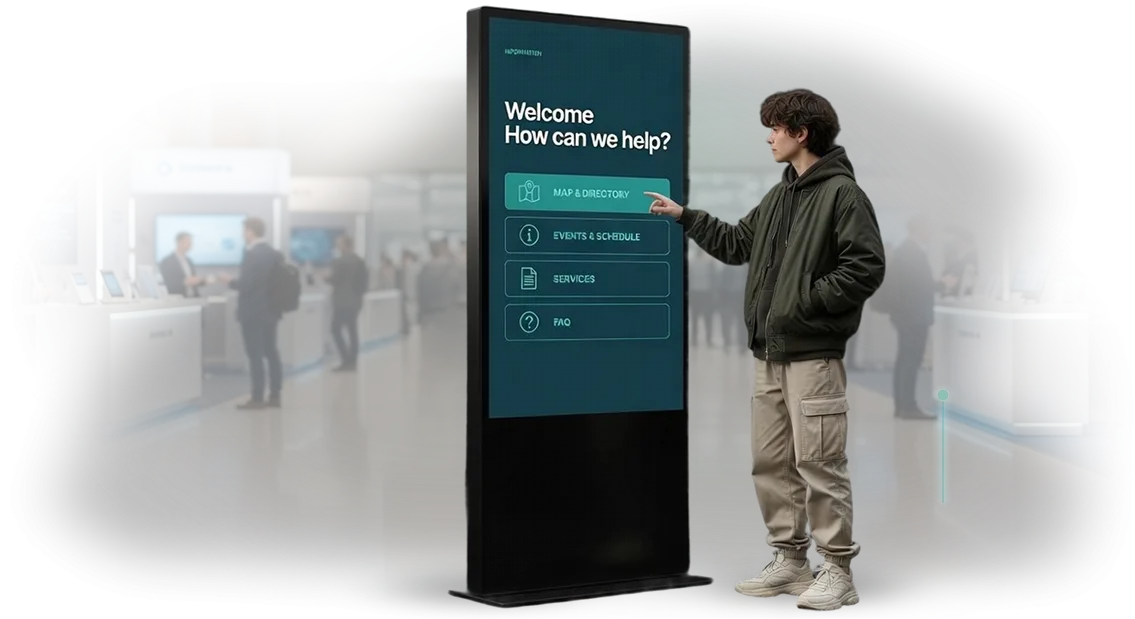
קיוסקים אינטראקטיביים לאנדרואיד: מבקרים לא מוצאים מידע
מבקר שלא מוצא את המחלקה, המשרד או התערוכה שהוא צריך חווה את תרחיש "השעה האבודה". הוא מסתובב במעגלים, סורק את השילוט, וניגש לצוות עם אותן שאלות שוב ושוב.
במקום רגשות חיוביים מהחלל שלכם, האדם חווה עייפות ותסכול — ואלה הרגשות שהוא זוכר.
המצב הזה עולה לעסק יותר ממה שנראה. עובדים מוסחים ממכירות ומעבודה אמיתית עם לקוחות כדי להסביר כיוונים, התורים בדלפק המידע גדלים, ומבקר שבילה דקות נוספות בחיפוש לא סביר שירצה לחזור.
המוניטין נפגע פעמיים: אורח לא מרוצה מדבר על החוויה שלו הרבה יותר פעיל מאשר אחד מרוצה.
שילוט ולוחות רגילים לא פותרים את הבעיה: המידע עליהם סטטי, ושאלות המבקרים תמיד שונות. מה שצריך כאן הוא קיוסק אינטראקטיבי לאנדרואיד — מסוף חכם למבקרים שעונה מיידית על שאלות ניווט ומידע.
קיוסק אנדרואיד כזה מוריד מהצוות את הבקשות השכיחות ביותר, עובד ללא הפסקות, ולא מתעייף לקראת הערב.
בצוות שלנו אנחנו מפתחים קיוסקים למידע כבר למעלה מ-10 שנים ויודעים להפוך אותם לנקודת כניסה לחלל שלכם. נציע מסלול, נספר למבקרים על מבצעים ושירותים, ונעזור בהזמנות — כך שאף אורח לא יישאר ללא תשובה. אנחנו מטפלים בכאב הזה במלואו, ומה בדיוק כולל הפתרון — נסביר בהמשך.
מה קיוסק אינטראקטיבי נותן לעסק שלכם
קיוסק אינטראקטיבי הוא לא רק מסך עם תפריט אלא כלי מכירות ושירות מלא. הוא מושך מבקרים בעצמו, עונה על שאלות נפוצות, ומקל על הצוות.
היתרונות של קיוסק אינטראקטיבי נראים מהיום הראשון: מעורבות גבוהה יותר, פחות משימות שגרתיות, ויותר סדר במידע.
יתרון: אורחים מתערבים בעצמם, ללא סיוע צוות
מסך אינטראקטיבי לעסק מושך תשומת לב ושומר עליה: המבקר בוחר מה לצפות, היכן להקיש, ומה לחקור.
זה הופך את ההמתנה לזמן פרודוקטיבי — האורח מעיין בקטלוג, במבצעים או במפת המתחם, בעוד העובדים לא מבזבזים אנרגיה על אותן תשובות חוזרות.
הקיוסק עובד ביציבות זהה בשעות השיא ובתקופות שקטות. היתרונות של הקיוסק בולטים במיוחד כשזרימת האנשים גדולה וכל שאלה לוקחת זמן: המסך מטפל בעד שליש מהפניות האופייניות.
יתרון: הצוות מתמקד במשימות אמיתיות במקום בשאלות חוזרות
יועצים ומנהלים מקבלים זמן למה שבאמת חשוב: שיחות עם לקוחות, סגירת עסקאות, טיפול במצבים חריגים. הקיוסק לוקח על עצמו ניווט, מחירים, תנאי מבצעים והזמנת שירותים.
לבעל העסק זה אומר יעילות גבוהה יותר ללא הרחבת הצוות. עובדים עובדים בצורה משמעותית יותר, ומבקרים לא עומדים בתור למידע שהקיוסק מספק בשניות.
יתרון: ניהול תוכן הקיוסק לוקח דקות, לא ימים
ניהול תוכן הקיוסק מתוכנן כך שהלקוח מבצע שינויים בעצמו: מעלה מחירון חדש, מחליף באנר, מוסיף הודעה — והמידע המעודכן כבר על המסכים. אין צורך לחכות למפתח או להבין מערכות מורכבות.
התוכן מתעדכן מרחוק ומיידית, כך שכל המסכים ברשת פועלים לפי סטנדרט אחיד. מבצעים, חדשות ותפריטים תמיד תואמים למציאות — זה מסיר את הסיכון של מידע מיושן וחוסר שביעות רצון של לקוחות.
יתרון: החלטות מבוססות מספרים, לא ניחושים
הקיוסק אוסף סטטיסטיקות אנונימיות: אילו מדורים נצפים הכי הרבה, היכן מבקרים מתעכבים, ומה הם מתעלמים ממנו. לשיווק ולניהול זו מפה מוכנה של תחומי עניין של הקהל — אפשר להתאים את המבחר, את הדגשים בתפריט או את פריסת האזורים בזמן.
ההשקעה בקיוסק מחזירה את עצמה לא רק דרך חיסכון בזמן הצוות אלא גם דרך חשבון ממוצע גבוה יותר, ביקורים חוזרים וכיסוי רחב יותר של תוכנית הנאמנות. קיוסק אינטראקטיבי עובד לצמיחת העסק 24/7, ללא הפסקות או סופי שבוע.
הצוות שלנו מטפל בפיתוח פתרונות כאלה — אנחנו בונים קיוסקים סביב המטרות של הלקוח ותומכים בפרויקט לאחר ההשקה. ספרו לנו היכן אתם מתכננים להתקין את המסך — נייעץ לכם אילו יתרונות של קיוסק אינטראקטיבי יהיו מרכזיים עבורכם ספציפית.
פורמטים של קיוסק אינטראקטיבי למשימות עסקיות
יש יותר פורמטים של קיוסק אינטראקטיבי ממה שנדמה: לכל משימה עסקית יש תרחיש משלה.
קיוסק מסך מגע לקניון עוזר לאורחים לנווט וללמוד על מבצעים, קיוסק ניווט מקל על הצוות, וקיוסק קטלוג מציג מוצרים שלא היו נכנסים לחלון הראווה.
אנחנו מיישמים את כל הפורמטים על אפליקציית אנדרואיד — זה נותן השקה מהירה, עדכונים גמישים ופעולה על חומרה משתלמת.
הטבלה שלהלן מכסה את הפורמטים העיקריים של קיוסקים שאנחנו בונים לעסקים. בחרו את המתאים — או שלבו פונקציות במסוף אחד.
| פורמט | למי זה מיועד | מה זה נותן ללקוח |
|---|---|---|
| קיוסק מסך מגע לקניון | מנהלי קניונים, בעלי נכסים | מבקרים מוצאים חנויות, בתי קפה ואירועים בעצמם; פחות שאלות לצוות |
| קיוסק ניווט | משרדים, מרכזים עסקיים, מרפאות | אורחים ועובדים בונים מסלול ללא עזרה חיצונית; דלפק המידע מקבל הקלה |
| קיוסק קטלוג | אולמות תצוגה, חנויות, סלונים | כל המבחר עם תמונות ומחירים זמין גם עם חלון ראווה קטן; הלקוח מעיין ובוחר |
| חלון ראווה אינטראקטיבי | אירועים, תערוכות, כנסים | מושך את תשומת לב האורחים, משתף אותם במשחק או בסקר, אוסף אנשי קשר |
| הזמנה עצמית והזמנת תורים | בתי קפה, מרפאות, מרכזי שירות | תורים קצרים יותר, הקלה לצוות, הלקוח מקבל את השירות מהר יותר |
זו לא רשימה מלאה. אם אתם צריכים פורמט אחר — למשל, קיוסק להזמנת שירותים או סקר אינטראקטיבי לאירוע — נרכיב פתרון מהמודולים הנדרשים למשימות שלכם.
איך עובד פיתוח קיוסק אנדרואיד
תהליך ברור הוא חצי מההצלחה. פיתוח קיוסק אנדרואיד נראה מסובך רק עד שמפרקים אותו לשלבים. אנחנו מלווים את הלקוח מהבריף הראשון ועד ההשקה ומעבר לכך, כך שתמיד תדעו מה קורה ומה לצפות בעוד שבוע.
- בריף וניתוח משימה. אנחנו דנים היכן הקיוסק יעמוד, מי המבקרים שלכם, ואילו פעולות הם צריכים לבצע: לצפות בקטלוג, להזמין, לקבל ייעוץ. על בסיס זה אנחנו מגדירים את התרחישים והלוגיקה של האפליקציה העתידית.
- אישור אב טיפוס ופריסה. אנחנו מציגים את מבנה המסכים ואת לוגיקת הניווט. אתם רואים את הממשק העתידי לפני תחילת הפיתוח ומבצעים תיקונים על הנייר — זה מהיר וזול יותר מאשר לעבוד מחדש על קוד מוכן.
- פיתוח האפליקציה. אנחנו בונים את הממשק, מחברים קטלוגים, טפסים ואינטגרציות עם המערכות שלכם. אנחנו עובדים באיטרציות קצרות ושולחים תוצאות ביניים לבדיקה כל כמה ימים.
- בדיקות ותיקון באגים. אנחנו בודקים תרחישים על חומרה אמיתית: איך המסך מגיב למגע, כמה מהר נפתחים מדורים, מה קורה בתקלות. חשוב שהקיוסק יפעל ביציבות ללא מעורבות צוות.
- השקה והדרכה. אנחנו מתקינים את האפליקציה, מגדירים עדכונים אוטומטיים והגנה מפני תקלות מקריות. אנחנו מעבירים מפגש הדרכה קצר לצוות שלכם — איך להדליק את הקיוסק, למלא נייר במדפסת ולפתור בעיות אופייניות.
- תמיכה וצמיחה. אנחנו נשארים בקשר לאחר ההשקה: מעדכנים תוכן, מוסיפים מדורים חדשים ומבטיחים שהקיוסק ממשיך לספק ערך.
חשוב שבכל שלב אתם מקבלים תוצאה קונקרטית: קודם פריסה מאושרת, אחר כך אב טיפוס עובד, ולבסוף האפליקציה הסופית. זה מסיר סיכון ושומר על הפרויקט בשליטה. אתם לא מחכים ש"הכל יהיה מוכן" — אתם רואים התקדמות מהיום הראשון.
מה כלול במסירת קיוסק אינטראקטיבי
אנחנו מבנים את מסירת הקיוסק כך שתקבלו מערכת עובדת, לא אוסף חלקים. אין צורך לחפש קבלני משנה — אתם מקבלים חבילה אחת: מתוכנה ועד התקנה והדרכת צוות.
הנה מה שכלול בחבילת קיוסק המידע:
- תוכנת קיוסק לאנדרואיד — אפליקציה מותקנת מראש ומוגדרת לתרחישים שלכם: קטלוג, הזמנות, סקרים, ניווט. אנחנו מטפלים בעדכונים ובעריכת תוכן.
- עיצוב ממשק — מסכים רספונסיביים בסגנון המותג שלכם, ניווט ברור, הכנת טקסטים ותמונות להעלאה.
- חומרה ומעטפת — מסוף מגע, מעטפת עמידה לוונדליזם, אביזרי הרכבה וחיבורים. הכל נבדק לפני המשלוח.
- התקנת הקיוסק — ביקור מהנדס, הגדרה במיקום הרצוי, חיבור לרשת ובדיקת כל הפונקציות באתר.
- תיעוד לצוות שלכם — הוראות ברורות להדלקה, החלפת חומרים מתכלים וצעדים ראשונים במצבי חירום.
- הדרכת צוות — מפגש קצר שלאחריו מנהל יכול להעלות תוכן חדש ולטפל במשימות אופייניות בעצמו.
- אחריות ותמיכה — אם משהו מפסיק לעבוד, אתם פונים אלינו: אנחנו פותרים מרחוק או שולחים מהנדס לאתר.
גישה זו מסירה משא ומתן עם ספקים מרובים ואת הסיכון שרכיבים לא תואמים זה לזה. אתם מקבלים גורם אחד אחראי לתוצאה — וקיוסק שיכול לעלות לאוויר מיד לאחר ההתקנה.
דוגמת יישום: קיוסק אינטראקטיבי הגדיל נאמנות בקניון
כשאלפי מבקרים עוברים בקניון מדי יום, דלפק המידע הופך לצוואר בקבוק: תורים, שאלות חוזרות, צוות מותש. המנהל רואה ירידה בנאמנות אבל לא יודע איך לתקן זאת ללא השקעה גדולה. ב-TRC "Gallery" פתרנו את הבעיה עם קיוסק אינטראקטיבי.
פיתחנו והתקנו מסוף מבוסס אנדרואיד באטריום המרכזי. אורחים מוצאים מחלקה, מבצע או אירוע בעצמם, והצוות מקבל הקלה. תוצאות התקנת הקיוסק נמדדו במשך חודשיים והושוו לנתונים מלפני ההשקה.
| מדד | לפני ההתקנה | אחרי ההתקנה |
|---|---|---|
| זמן ממוצע למציאת חנות | 10–12 דקות | 3–4 דקות |
| פניות לדלפק המידע | כל השאלות ברצף | ירידה של 40% |
| חלק הביקורים החוזרים | רמת בסיס | עלייה של 18% |
הנתונים האלה הם התוצאה העסקית. אורחים מגיעים ליעדם מהר יותר וזוכרים את הנוחות. נאמנות המבקרים גדלה ללא תקציבי פרסום: האדם חוזר שוב.
לבעל הקניון, היתרון הוא הפחתת העומס על המנהלים. הצוות מטפל רק בבקשות מורכבות; הקיוסק לוקח שאלות אופייניות. במקביל, קל לעדכן את הקיוסק האינטראקטיבי בקניון למבצעים ושוכרים חדשים.
זו דוגמת יישום של קיוסק שמקל על העומס בכל חודש ומגדיל מכירות חוזרות. ולשיווק, הוא הופך לנקודת איסוף נתונים על פניות מבקרים.
איך לבחור פורמט קיוסק אינטראקטיבי למשימה שלכם?
פורמט הקיוסק האינטראקטיבי למשימה נקבע לא על ידי החומרה אלא על ידי תרחיש התנהגות המבקר. ראשית, ענו מה האדם צריך לעשות: למצוא מידע במהירות, לבחור מוצר, לבצע הזמנה, לקבוע פגישה, או פשוט לקבל רושם.
סוג הקיוסק תלוי בזה — ניווט, שירות, חלון ראווה או תדמית. כך שהשאלה הנכונה מצמצמת מיד את הבחירה.
הקריטריון השני הוא החלל הפיזי וכמות הזמן שיש למשתמש. באזור מעבר עם תנועה גבוהה, מעטפת אנכית עם כפתורים גדולים על המסך נוחה, כך שהפעולה אורכת 10–15 שניות.
באזור המתנה או אולם תצוגה, אפשר להשתמש במסך אופקי שבו המבקר לומד פרטים. אם הקהל מעורב — שקלו התאמת גובה המסך והמעטפת.
השלב השלישי הוא באיזו תדירות התוכן משתנה והאם הקיוסק מחובר למערכות שלכם. עדכונים יומיים של מבצעים ומלאי דורשים העלאת נתונים מרחוק, ואינטגרציה עם מערכת הנהלת חשבונות דורשת הגדרת החלפת נתונים.
בחירת פורמט קיוסק אינטראקטיבי למשימה היא תמיד פשרה בין נוחות האורח לפשטות הניהול עבור הצוות שלכם.
כדי להימנע מלימוד של מאות מעטפות ומסכים, נסחו תשובות לשלוש שאלות: מי הקהל שלכם, איזו פעולה הם צריכים לבצע, ואיזה תרחיש על המסך תומך בכך.
ברגע שיש לכם את התשובות, איך לבחור קיוסק מתבהר גם בלי לצלול לטכנולוגיה.
ואם אתם לא בטוחים — בואו לייעוץ קיוסקים: ננתח את המשימה שלכם, נציע שניים או שלושה פורמטים מתאימים, נראה דוגמאות, ונעזור לכם להחליט לפני תחילת הייצור.
שאלות נפוצות על פיתוח ותמיכה בקיוסקים
לפני הזמנת קיוסק אינטראקטיבי, לרוב הלקוחות יש אותן שאלות: האם הציוד יתקלקל, כמה מהר אפשר לעדכן תוכן, מי אחראי לתוצאה, ומה האחריות מכסה. אנחנו עונים ישירות, בלי אותיות קטנות.
מה קורה אם הקיוסק מפסיק לעבוד?
הקיוסק נשאר תחת התמיכה שלנו. אם מתרחשת תקלה, אתם פונים למוקד התמיכה — מומחה בודק את המערכת מרחוק או מהנדס מגיע לאתר ופותר את הבעיה.
למשך משך התיקון, אנחנו מספקים ציוד חלופי, כך שהאירוע או נקודת הפעולה לא נעצרים.
איך מעדכנים מידע על הקיוסק?
אין צורך במפתחים לכל קובץ: אתם משנים תוכן דרך חשבון אישי פשוט. הרשאות גישה, העלאה נוחה של טקסטים, תמונות וסרטונים — עדכונים מופיעים על הקיוסק תוך דקות, ושיחת הדרכה קצרה אחת מספיקה כדי להכשיר איש צוות.
מי מטפל בתמיכה בקיוסק לאחר ההשקה?
בדרך כלל אנחנו נשארים הקבלן לכל אורך חיי השירות: אנחנו מנטרים ביצועים, מתקינים עדכוני מערכת, מחליפים חומרים מתכלים בזמן, ושולטים ביציבות. אין צורך לחפש מומחה נפרד.
מה האחריות על הקיוסק והאפליקציה?
אנחנו מספקים אחריות על החומרה והתוכנה לתקופה הנקובה בחוזה. במהלך תקופת האחריות, תיקונים והחלפת רכיבים הם ללא עלות.
לאחר סיומה — גם אז אנחנו לא משאירים אתכם ללא תמיכה: אנחנו מציעים תחזוקה מורחבת בתנאים נוחים.
הזמינו פיתוח קיוסק אנדרואיד אינטראקטיבי
השאירו פנייה — ונהפוך מסוף רגיל לכלי שמוכר, מיידע ומבדר את הלקוחות שלכם. אתם מקבלים קיוסק אינטראקטיבי במפתח אחד: מרעיון ועיצוב ועד התקנה והגדרה. אנחנו לוקחים על עצמנו את כל השלבים כדי שאתם תנהלו את העסק שלכם במקום להתעמק בפרטים טכניים.
בהזמנת פיתוח קיוסק אנדרואיד מאיתנו, אתם מקבלים:
- פתרון למשימה שלכם — אנחנו בוחרים את התרחיש והממשק לפי המאפיינים העסקיים שלכם: קטלוג, ניווט, הזמנות, סקרים, פרסום.
- ממשק ברור — אורחים מבינים תוך שניות; אין צורך בהדרכת צוות.
- השקת קיוסק בזמן — אנחנו קובעים מועדים בחוזה ואחראים לתוצאה.
- פלטפורמת אנדרואיד מודרנית — פעולה יציבה על ציוד מקצועי שקל לתחזק.
- אחריות ותמיכה — אנחנו נשארים בקשר לאחר ההשקה: עדכונים, ייעוצים, שיפורים.
- מדרגיות — קל להוסיף מסכים חדשים או לשנות פונקציונליות ככל שהעסק גדל.
אנחנו עובדים מרחוק, כך שאתם מקבלים איכות ותנאים נוחים ללא קשר לעיר שלכם. תארו את המשימה שלכם — נציע פתרון ונעריך את לוח הזמנים. מלאו את הטופס או התקשרו: נתחיל בדיון על התרחיש שלכם.