

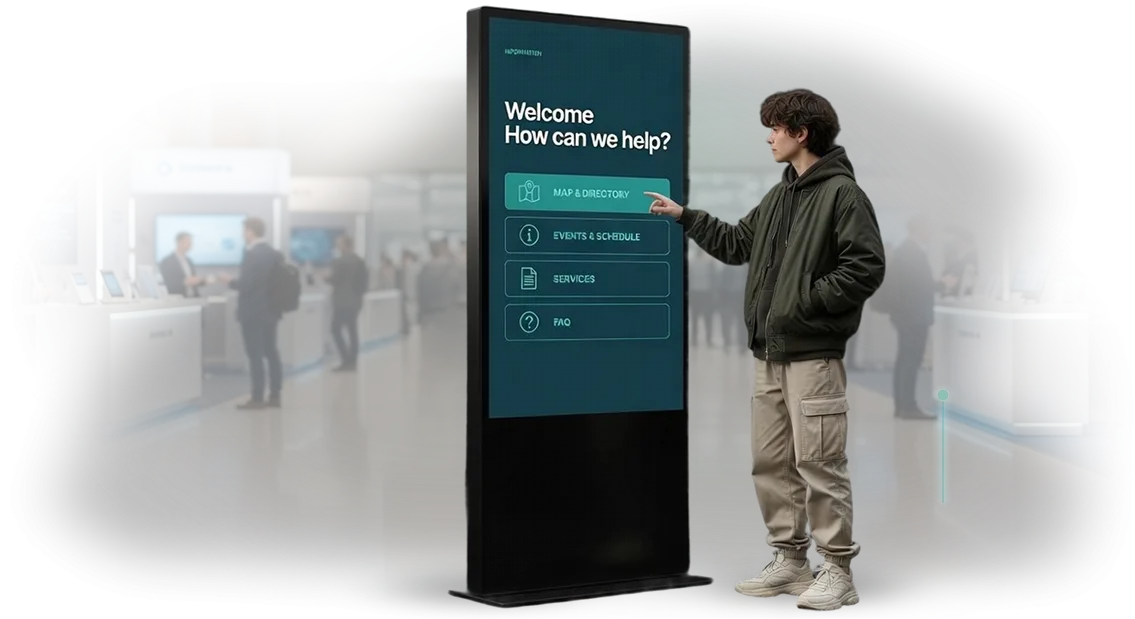
קיוסקים אינטראקטיביים של Windows: כיצד לשמר לקוחות
מבקרים לא אוהבים לחכות: אם המידע שהם צריכים לא נמצא תוך 30 שניות, הם פונים למתחרה. בקניון, מרפאה או תערוכה, זה אומר אובדן של לא רק לקוח אחד אלא גם של ההמלצות שלו.
מבקר מודרני רגיל לקבל תשובות מיידיות, אבל במרחב ציבורי הוא נשאר לבד עם הניווט — ולעתים קרובות עוזב בלי לקבל עזרה. כל מקרה כזה משמעותו הכנסות אבודות ופגיעה בתדמית המותג.
פתרונות מסורתיים — שלטי נייר, דלפקי קבלה — לא יכולים לענות על שאלות בכל זמן. הצוות עסוק, תורים גדלים, ומבקרים מתעצבנים. קיוסק Windows אינטראקטיבי עובד באופן אוטונומי: הוא מציג מפה, נותן הוראות הגעה, ועונה על שאלות נפוצות. זה משחרר את הצוות, מזרז את השירות, ומפחית את עומס העבודה על העובדים.
למה דווקא Windows? זו תשתית אמינה לטרמינלי מידע. קיוסק Windows מתחבר בקלות למאגרי המידע שלכם — למשל, למערכת הנהלת חשבונות או ל-CRM — כך שהמידע תמיד עדכני.
עדכוני תוכן אורכים דקות ומתבצעים מרחוק, ללא ביקור מהנדס. עבור עסק, זה אומר עלויות תפעול נמוכות וזמינות מתמדת של המידע שאנשים צריכים.
אנחנו יוצרים פתרונות כאלה כבר שנים רבות. אנחנו עוזרים לכם לבחור את קיוסק Windows המתאים, לפתח ממשק ידידותי למשתמש, ולהשיק אותו במתחם שלכם.
כתוצאה מכך, אתם מקבלים כלי שלא רק מיידע אלא שומר על לקוחות — הם מוצאים את מה שהם צריכים מהר יותר, עוזבים פחות בלי רכישות, ומוכנים יותר לחזור.
היתרונות של קיוסקים אינטראקטיביים: הגדלת נאמנות ומכירות
קונים מודרניים מעריכים מהירות ועצמאות. קיוסק אינטראקטיבי עוזר לשרת לקוח מהר יותר בלי לאבד איכות — והופך נקודת מגע לכלי למכירות ואיסוף נתונים.
שירות מהיר יותר
הקיוסק לוקח על עצמו פעולות שגרתיות: ניווט, חיפוש מוצרים, הגשת בקשות והזמנת שירותים. הלקוח לא צריך לחכות לצוות — הוא פותר את המשימה שלו בכמה הקשות. התורים מתקצרים, והצוות יכול לתת יותר תשומת לב לבקשות מורכבות.
עבור העסק, זה אומר תפוקה גדולה יותר במקום בלי לגייס אנשים נוספים. ככל שהשירות מהיר יותר, כך ההמרה ממבקר לקונה גבוהה יותר.
הגדלת מכירות וסל קניות ממוצע
מבצעים, מוצרים חדשים והמלצות אישיות יכולים להיות ממוקמים על מסך הקיוסק. בזמן שלקוח מזמין או מחפש מידע, הוא רואה מוצרים משלימים והצעות מיוחדות. זה עובד כמו איש מכירות נוסף, ומגדיל בעדינות את סל הקניות הממוצע.
הקיוסק מציע מה לשלב עם פריט שכבר נבחר ומזכיר ללקוחות שירותים ששכחו. כתוצאה מכך, כל אינטראקציה מביאה קצת יותר הכנסה — בלי מעורבות צוות.
הגדלת הכרה ונאמנות
טרמינל אינטראקטיבי הוא אלמנט בולט במרחב מודרני. הוא בונה תדמית של חברה מתקדמת טכנולוגית שאכפת לה מנוחות הלקוח. אנשים זוכרים את חוויית השירות החיובית, חוזרים שוב, וממליצים עליכם לחברים.
אורחים מרבים לצלם ממשק או תהליך אינטראקציה יוצא דופן. חשיפה חינמית במדיה החברתית היא בונוס נחמד להגדלת טווח ההגעה והכרת המותג.
איסוף נתוני לקוחות
הקיוסק אוסף אנליטיקה אנונימית: אילו מדורים מבוקשים, מה נבחר הכי הרבה, וכמה זמן לוקח תשלום. נתונים אלה עוזרים לשפר את המבחר, להתאים שיווק, ולמצוא נקודות חולשה בשירות. החלטות מתקבלות על סמך עובדות, לא ניחושים.
הפחתת עומס העבודה על הצוות
עובדים מפסיקים לחזור על אותו מידע מאה פעמים. הקיוסק עונה על שאלות טיפוסיות, מספק מידע עזר, ומקבל בקשות — לצוות נשאר זמן לתקשורת אנושית ולמצבים לא סטנדרטיים. זה מפחית תחלופה, עייפות ועלויות שירות, בעוד האיכות גדלה.
פורמטים של קיוסק Windows אינטראקטיבי: פתרון לכל נישה
כל עסק מתמודד עם השאלה: איך מורידים עבודה שגרתית מהצוות ונותנים ללקוחות שירות מיידי? קיוסק Windows אינטראקטיבי פותר משימה זו ללא קשר לענף — מדוכן מידע בלובי ועד טרמינל עיבוד הזמנות. להלן הפורמטים שאנו מיישמים, המותאמים ליעדים העסקיים שלכם.
| פורמט | למי | מה זה נותן ללקוח |
|---|---|---|
| קיוסק מידע | בנייני מנהלה, מרפאות, משרדים | ניתוב מבקרים, הפחתת עומס על המזכירות, ניווט ללא תורים |
| טרמינל הזמנות | מכוני יופי, מרכזים רפואיים, גופים ממשלתיים | הזמנה עצמית דרך קיוסק Windows, פחות שיחות טלפון, לוח זמנים עדכני |
| קטלוג מוצרים | קמעונאות, אולמות תצוגה, פלטפורמות B2B | בחירת מוצרים ללא יועץ, בקשות רכישה, מבחר רחב יותר במקום |
| תצוגת שירותים | בנקים, תקשורת, נקודות מידע | הצגת שירותים ותעריפים, הכרה גדולה יותר, תורים קצרים יותר |
בחרו את הפורמט המתאים — ואנחנו נתאים אותו לתהליכים שלכם: נגדיר אינטגרציה עם ה-CRM, מערכת הנהלת החשבונות או תוכנת המלאי שלכם. בסופו של דבר, קיוסק Windows הופך לערוץ מכירות ושירות עצמאי שעובד לפי הכללים שלכם. פיתוח, בדיקות והשקה הם במפתח מלא, כך שכל מה שנשאר לכם הוא למדוד את התוצאות.
שלבי פיתוח קיוסק אינטראקטיבי: מהרעיון להשקה
תהליך ברור הוא חצי מהקרב. מבננו את העבודה כך שתראו את התוצאה בכל שלב ותבינו מה קורה. אין "קופסאות שחורות": אתם יודעים מראש את לוח הזמנים, שלבי הפיתוח ומה תקבלו.
- בריף וניתוח משימה. אנו מגדירים מה הקיוסק צריך לעשות: ליידע, לאסוף בקשות, להריץ סקרים. אנו קובעים את פרופיל המשתמש והתרחישים — למשל, ניווט במבנה או קטלוג שירותים.
- תכנון והערכת עלות. אנו יוצרים תוכנית מפורטת, מחלקים את העבודה לשלבים, ומציינים את העלות המדויקת. אתם רואים בעד מה אתם משלמים ויכולים להתאים את היקף הפיצ'רים אם צריך.
- אב טיפוס עיצובי ואישור פרויקט. אנו מראים איך המסך ייראה ואיך מבקר יתקשר עם הקיוסק. לאחר אישורכם, אנו נועלים את העיצוב ועוברים ליישום.
- פיתוח. אנו בונים את האפליקציה עצמה: ממשק, לוגיקה וחיבור למערכות שלכם — למשל, CRM או מסד נתונים. אנו משתמשים בכלים מקצועיים המבטיחים פעולה יציבה על החומרה של הלקוח.
- בדיקות ותיקון באגים. אנו בודקים את כל התרחישים: סטנדרטיים ולא סטנדרטיים. אנו מוודאים שהקיוסק לא קופא, מעבד מגעים כראוי, ולא מאבד נתונים.
- השקת קיוסק והדרכה. אנו מתקינים את האפליקציה, מגדירים אותה לחומרה שלכם, ומריצים יום ניסיון. אנו מאמנים את הצוות שלכם: איך להדליק, לאתחל ולפתור תקלות פשוטות.
- תמיכה ופיתוח. אנו נשארים בקשר לאחר ההשקה. אנו מעדכנים תוכן, מוסיפים פיצ'רים ומנטרים יציבות. אתם תמיד יכולים לפנות אלינו — התגובה שלנו מהירה.
תהליך עבודה זה מאפשר לכם לשלוט בתהליך ולבצע שינויים בזמן. וזה מאפשר לנו להבטיח שהקיוסק יושלם בזמן ובלי הפתעות ביום הפתיחה.
מה כלול במסירת קיוסק: חבילה מלאה לעסק שלכם
אתם מקבלים לא "חומרה עם תוכנה" אלא פתרון מוכן במפתח מלא — מהמעטפת ועד הדרכת צוות. לא תצטרכו לקנות, להרכיב או להגדיר שום דבר בעצמכם: הקיוסק מגיע, מתחבר לחשמל, ומתחיל לעבוד ביום ההשקה.
הנה מה שכלול בחבילה הסטנדרטית:
- מעטפת וקיוסק מסך מגע. מבנה יציב שמשתלב בעיצוב של חנות, אולם תצוגה או לובי. עמיד לוונדליזם ומוגן מאבק — הציוד עובד באופן אמין גם בסביבות עם תנועה רבה.
- מסך מגע עם תגובה מכוילת. המבקר נוגע במסך — המערכת מגיבה מיידית. אין מגעים "תקועים" ואין לקוחות מתוסכלים.
- תוכנה ברישיון. אנו עובדים על Windows — פלטפורמה יציבה ומוכרת. הרישיון מונפק לחברה שלכם; עדכונים ותמיכה טכנית כלולים.
- תבניות תוכן מוכנות. אנו מתאימים את מבנה התפריט, הכפתורים והסגנון החזותי למותג שלכם. כל מה שנותר לכם הוא להעלות מחירים או מבצעים עדכניים.
- הוראות והדרכת צוות. מדריך ברור לעובדים וסשן קצר כדי שהצוות יוכל לשנות תוכן ולפתור תקלות פשוטות בלי לקרוא למהנדס.
- גישה מרחוק לניהול. אתם מעדכנים את המידע בקיוסק מהמחשב שלכם — אין צורך לנסוע למקום ולצרוב את המכשיר ידנית.
- אחריות ותמיכה. אנו עוזרים בשעות העבודה ומתחברים למערכת מרחוק כשצריך. אם נדרש תיקון, אנו מחליפים רכיבים בלי השבתה ממושכת.
חבילה זו מכסה את כל המחזור: ציוד, תוכנה, עיצוב ותמיכה. אתם מקבלים קיוסק שמוכר, מיידע או מבדר אורחים מהיום הראשון — והצוות שלכם משקיע בו זמן מינימלי.
מקרה בוחן: איך קיוסק החזיר את ההשקעה במגזר השירותים
בואו נראה דוגמה אמיתית לאיך קיוסק אינטראקטיבי מחזיר את עצמו במגזר השירותים.
רשת המרפאות «זדורוביה+» פנתה אלינו: דלפק הקבלה היה מוצף בתורים, מנהלים ענו על אותן שאלות שוב ושוב, וחולים עזבו בלי לקבוע תור.
הצענו ליישם קיוסק Windows בלובי של המרפאה. תוך שבועיים הכנו את הממשק: לוחות זמנים של רופאים, קביעת תורים, מחירי שירותים והנפקת כרטיסים.
מה השתנה לאחר ההשקה
התור בדלפק הקבלה ירד בשני שלישים, ו-40% מהתורים החדשים בחודש הראשון עברו דרך הטרמינל. המנהלים השתחררו לשאלות מורכבות והפסיקו להיות מוסחים על ידי שגרה. הצוות עצמו ציין: "הקיוסק הפך למנהל שני."
היישום לא דרש החלפת ציוד או הסבה ממושכת: הצוות הודרך תוך יום, והמטופלים הבינו לבד.
החזר השקעה
האפקט הכלכלי נובע מהפחתת זמן ההשבתה של הרופאים — פחות תורים אבדו בגלל תורים. המרפאה החזירה את ההשקעה תוך שישה חודשים ואז הזמינה קיוסקים לשני סניפים נוספים. הזמנה חוזרת היא ההוכחה הטובה ביותר שהפתרון עובד.
זה לא סיפור חד-פעמי: אותה גישה מתאימה למרפאות, למרפאות שיניים, למרכזי שירות ממשלתיים ולכל עסק שירות עם זרם מבקרים קבוע. תנו חלק מהשגרה לקיוסק — התוצאות הראשונות יופיעו בתוך החודש הראשון.
תשובות לשאלות נפוצות על קיוסקים
יישום קיוסק הוא לא קניית קופסה — זה השקת ערוץ תקשורת חדש עם לקוחות. לכן ללקוחות יש שאלות דומות לפני קבלת החלטה: אמינות, לוחות זמנים, אחריות, והיכולת של המערכת להשתלב בתהליכים קיימים. אספנו תשובות לשאלות הנפוצות ביותר.
כמה אמין הקיוסק ומה קורה אם הוא מתקלקל?
הקיוסק בנוי על ציוד מקצועי המיועד לפעולה מסביב לשעון במקומות ציבוריים — זה לא מחשב משרדי. אנו נותנים אחריות גם על הציוד וגם על התוכנה, ובמקרה של תקלה, אנו מטפלים בתיקון בעצמנו. זמן ההשבה הממוצע הוא יום עד שלושה ימי עסקים, תלוי במרחק מהמקום.
כמה מהר אפשר להשיק את הקיוסק?
מסגרת הזמן הסטנדרטית מבריף ועד קיוסק עובד היא 2–4 שבועות. הזמן תלוי במורכבות העיצוב ובמספר האינטגרציות. אם אתם צריכים פונקציונליות סטנדרטית בלי גרפיקה מותאמת אישית, השקה אפשרית תוך 7–10 ימים. אנו מאשרים את כל השלבים מראש, כך שאתם תמיד יודעים מתי הקיוסק יתחיל לעבוד.
האם אפשר להתאים את הקיוסק לסגנון הארגוני שלנו?
כן, זה שלב חובה. הקיוסק הופך להרחבה של המותג שלכם: צבעים, לוגו, גופנים, תמונות וטקסטים — הכל מותאם לקונספט החזותי שלכם. כתוצאה מכך, המסך נראה כאילו עוצב במיוחד עבור החברה שלכם, לא נקנה מקטלוג.
האם הקיוסק משתלב עם ה-CRM או מערכת הנהלת החשבונות שלנו?
הקיוסק יכול להחליף נתונים עם ה-CRM, שירותי ההזמנות, מערכות קביעת התורים או ניהול המלאי שלכם. זה אומר שמידע מהקיוסק נכנס אוטומטית לתהליכי העבודה שלכם: בקשות, טפסים, הזמנות — בלי העברה ידנית.
אנו מתכננים את האינטגרציה באופן אישי למערכת שלכם, כך שהצוות שלכם לא צריך לשנות את הכלים שהוא רגיל אליהם.
מה כלול באחריות ובתמיכה?
האחריות מכסה גם את הציוד וגם את התוכנה. בזמן שהקיוסק פועל באתר שלכם, אנו נשארים בקשר: אנו מעדכנים את המערכת לפי הצורך, מנטרים יציבות ועוזרים לשנות תוכן כשנדרש.
התמיכה כלולה לכל תקופת שיתוף הפעולה — לא תישארו לבד עם המכשיר לאחר ההשקה.
אם לא מצאתם תשובה לשאלתכם — שלחו אותה אלינו, ונכין פתרון מותאם אישית על סמך המשימה ולוח הזמנים שלכם.הזמינו קיוסק: ייעוץ והערכת עלות
שלחו בקשה כדי לדעת את העלות המדויקת של הקיוסק שלכם — וקבלו הערכה תוך יום עסקים אחד. נייעץ לכם על פורמט, מסכים ותרחישי אינטראקציה, כדי שנוכל להציע פתרון למשימות שלכם ולא תבנית מקטלוג.
אנחנו לא צריכים בריף טכני מוכן: נבין את המשימה תוך כדי שיחה. שלחו לנו תיאור או קבעו שיחה — נטפל בהכל בעצמנו, נראה לכם אפשרויות ונצביע על מקומות שבהם אפשר לחסוך. תקבלו תוכנית עבודה שקופה ולא תשלמו יותר מדי עבור אפשרויות מיותרות.
לאחר פנייתכם, תקבלו:
- ייעוץ, שבו נפרק את המשימה שלכם ונציע פתרונות אופטימליים;
- הערכת עלות לקיוסק על סמך התרחיש שלכם, מספר המיקומים ולוח הזמנים להשקה;
- אב טיפוס ממשק, כדי שתוכלו לראות מראש איך המסך ייראה;
- תוכנית עבודה עם לוחות זמנים ברורים — מאישור ועד התקנה והגדרה;
- המלצות על תוכן, מיקום ותמיכה שוטפת;
- תמיכה לאחר ההשקה ויכולת לשפר את הקיוסק ככל שהעסק שלכם גדל.
זה לא מחייב אתכם לכלום: נשלח את ההערכה, נדון בפרטים — ורק לאחר החלטתכם נתחיל לעבוד. כדי להזמין קיוסק או לברר את העלות, שלחו בקשה דרך הטופס או כתבו לנו. נגיב תוך יום עסקים אחד, עם מספרים קונקרטיים ולוחות זמנים.
איך לבחור את פורמט הקיוסק המתאים למשימה שלכם?
בחירת קיוסק מתחילה לא במסך או במעטפת, אלא בשאלה: מה אדם צריך להיות מסוגל לעשות בטרמינל שלכם? אם המטרה היא לקבל מידע במהירות, קיוסק שולחני קומפקטי עם תפריט פשוט יספיק.
אם אתם צריכים הזמנת תורים, הגשת בקשות או ניווט במבנה, תצטרכו קיוסק רצפתי פונקציונלי עם מסך מגע נוח. המקרה השימוש הוא שקובע את גודל התצוגה, סוג המעטפת ומערך האפשרויות הנוספות.
בבחירת פורמט, חשוב לשקול שלושה דברים: איפה הקיוסק עומד, זרם המבקרים, וכמה פעמים המידע משתנה. בלובי עם תנועה רבה, טרמינלים רצפתיים עם מסכים גדולים עובדים הכי טוב — הם נראים מרחוק ולא יוצרים תורים.
לאזור המתנה קטן, מכשיר שולחני מספיק; הוא יכול להשתלב בקלות גם בחלל מוגבל. ואם אין מנהל בקרבת מקום, הקיוסק חייב לעבוד באופן אוטונומי: עם מעטפת מוגנת, עדכוני תוכן מרחוק וממשק אינטואיטיבי.
חשוב לא פחות להבין עד כמה התרחיש צריך להיות מורכב. קיוסק ללוח זמנים או קטלוג עדכני לא דורש לוגיקה מורכבת — פשוט טעינו את המידע ועדכנו אותו דרך פאנל ניהול.
לסקרים, מבצעים או קטלוגים אינטראקטיביים, טרמינלים עם גרפיקה בהירה ויכולת לשנות תרחיש במהירות מתאימים יותר. אנו תמיד ממליצים על פורמט שפותר את המשימה הספציפית בלי לשלם יותר מדי על פונקציות מיותרות.
קיוסק Windows אינטראקטיבי נותן לנו את הגמישות ליישם כל אחד מהתרחישים האלה: פעולה יציבה, עדכונים קלים ואינטגרציה חלקה עם השירותים שלכם.
אנו עוזרים לכם לבחור את הקיוסק כבר בשלב הבריף — אנו מנתחים את זרם המבקרים, את תפקיד הטרמינל ואת התוצאה הצפויה, ואז מציעים את הפתרון האופטימלי. כך, אתם מקבלים לא "סתם חומרה" אלא כלי שפותר את המשימה שלכם ומספק ערך מהיום הראשון.