

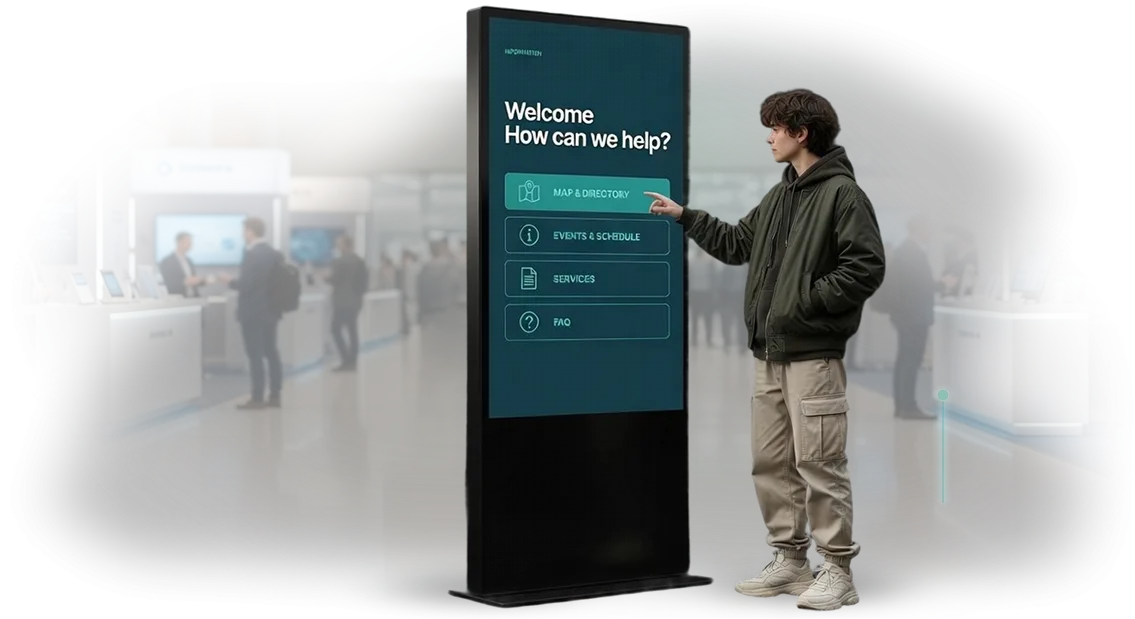
קיוסקים אינטראקטיביים לבתי חולים: איך פותרים את בעיית הניווט
מטופל בבית חולים נמצא תמיד תחת לחץ: בניין חדש, מסדרונות ארוכים, שלטים שקשה להתמצא בהם.
בזבוז זמן בחיפוש אחר חדר, תורים בדלפק הקבלה, ושאלות קבועות כמו "איפה עושים בדיקות?" הן תמונה מוכרת גם למבקרים וגם לצוות.
העובדים נאלצים להפסיק את תפקידם כדי לתת הוראות הגעה, והמטופלים צוברים חרדה עוד לפני שהם רואים רופא.
קיוסקים אינטראקטיביים פותרים את בעיית הניווט במהירות וללא מעורבות של פקיד קבלה. מסך מגע עם מפת בית חולים וחיפוש לפי מחלקה, רופא או חדר פועל כדלפק אלקטרוני—המטופל מקבל מסלול תוך 10-15 שניות. בינתיים, הצוות מטפל במשימות שלו, ותנועת המבקרים זורמת בצורה חלקה ללא עומס.
הקיוסק האלקטרוני בכניסה או בדלפק הקבלה הוא המגע החזותי הראשון של המטופל עם בית החולים.
הקיוסק מיד דואג לשאלה המרכזית "לאן אני הולך", נותן ביטחון, ומקצר את הזמן הכולל שמבלים במוסד הרפואי. זה גם יתרון מוניטיני: שירות דיגיטלי מודרני בונה תדמית של מרפאה שהמטופלים יכולים לסמוך עליה.
קיוסקים כאלה חשובים במיוחד בבתי חולים עם עומס מטופלים גדול: במרפאות, בבתי חולים רב-תחומיים ובמרכזי אבחון. העומס על דלפק המידע יורד, התורים מתקצרים, והמטופלים לא נכנסים לחדר הרופא מתוסכלים.
אנחנו עובדים עם ההיבטים הרפואיים הספציפיים באמצעות ציוד מקצועי וכלים מוכחים, כך שהקיוסק יפעל בצורה אמינה מהיום הראשון ולא ידרוש מעורבות תמיכה מתמדת.
ניווט בבית החולים באמצעות קיוסק אינטראקטיבי הוא גם נוחות למטופל וגם חיסכון במשאבים לצוות שלך. ככל שהמבקרים מוצאים חדר מהר יותר, כך המסדרונות מתפנים מוקדם יותר, תורי הרישום מתקצרים, המבקרים נשארים מרוצים, ולצוות יש יותר זמן לעבודה בפועל.
ספרו לנו על בית החולים שלכם, ואנחנו נציע תוכנית מיקום והיגיון פעולה לקיוסק המותאמים לזרימת המטופלים שלכם.
מה קיוסקים נותנים לבתי חולים: 5 יתרונות מרכזיים
תורים בדלפק הקבלה, שאלות לפקיד הקבלה על לוחות זמנים, תנועה כאוטית בלובי—סצנה מוכרת בכל מרפאה.
המבקרים מבזבזים זמן על בירורים והמתנה, הצוות עונה על אותן שאלות עשר פעמים, ובמקום לשרת אנשים הם עוסקים בניירת. קיוסק אינטראקטיבי מסיר את הנטל הזה והופך את הכאוס למסלול ברור ומהיר.
הראשון והחשוב ביותר הוא הפחתה ניכרת בתורים בדלפק הקבלה. פעולות מפתח: קביעת תור לרופא, קבלת כרטיס, בדיקת לוח זמנים או אימות סטטוס בקשה—המבקר עושה אותן לבד, בלי לחכות בדלפק.
הצוות הרפואי מקבל הקלה מהר יותר, והמטופלים מבלים בממוצע עד שלוש דקות במקום חצי שעה. בשעות השיא, זה ההבדל בין עומס במסדרון לזמן נוח במרפאה.
היתרון השני הוא תמיכת מידע מובנית. הקיוסק עובד כמו דלפק מידע בכל קומה: תוכנית בניין מדויקת, רשימת חדרים, הוראות שלב אחר שלב לבדיקות דם ושעות קבלה של רופאים.
המבקרים מפסיקים לדאוג שילכו לאיבוד במרחב לא מוכר ויבזבזו זמן יקר בחיפוש. הם בטוחים שכל מידע על פעילות המוסד זמין בלחיצה אחת.
השלישי הוא פישוט ההזמנה והרישום. מטופלים יכולים לבחור זמן נוח, לראות משבצות פנויות ולקבל אישור ללא מעורבות של פקיד.
זה מרחיב את אפשרויות ההזמנה העצמית ומפחית את הסיכון לאי-התאמות: מינימום קלט ידני פירושו פחות שגיאות נתונים. עבור ההנהלה, זה גם מספק תצוגה שקופה של לוחות הזמנים של הרופאים שבוע קדימה.
היתרון הרביעי הוא הקלה על הצוות משאלות שגרתיות. פקידי הקבלה כבר לא צריכים לחזור על הוראות הגעה, לוחות זמנים או הוראות הכנה לבדיקות. הזמן שהתפנה מופנה לאינטראקציה חיה עם מטופלים ולטיפול במצבים לא סטנדרטיים. כתוצאה מכך, איכות השירות משתפרת והתסכול של שני הצדדים מהמתנה ארוכה פוחת.
לבסוף, הקיוסק יוצר תחושה של מוסד מודרני ואכפתי. מרחב טכנולוגי ונוח מגביר את אמון המטופלים ומחזק את המוניטין של המרפאה.
הלקוח מקבל לא רק מסוף בכניסה, אלא מנגנון עבודה לשיפור השירות—מובן, מדיד ומורגש מהיום הראשון להתקנה.
פורמטים של קיוסקים אינטראקטיביים לצורכי מוסד רפואי
במוסד רפואי, מסוף מסך מגע פותר כמה משימות בבת אחת: מהזמנת תורים לרופא וניווט במבנים ועד מידע על כללי הכנה לבדיקות.
המפתח הוא בחירת פורמט שמתאים לפריסה ולזרימת המטופלים מבלי לדרוש עיצוב מחדש של הלובי.
שלושה סוגים בסיסיים של קיוסקים מכסים כמעט את כל התרחישים של בתי חולים ומרפאות:
| פורמט | למי | מה זה נותן ללקוח |
|---|---|---|
| קיוסק רצפתי | לובי מרווח ואזורי המתנה | עמדה יציבה עם מסך גדול, נוחה לאנשים בגבהים שונים, נראית היטב ואינה חוסמת את התנועה |
| קיוסק צמוד קיר | מסדרונות צרים, דלפקי קבלה, משרדים | חוסך מקום, מותקן על הקיר, מטופלים לא צריכים לגשת לעמדה נפרדת |
| קיוסק מידע רפואי | אזורי מידע וקבלה | משלב לוחות זמנים של רופאים, מפות מחלקות ומידע עזר בממשק אחד |
| מסוף מסך מגע | נקודות קביעת תורים ותשלום | תיאום מהיר עם מומחה, הוצאת כרטיס, בדיקת סטטוס ביקור |
זה לא רק "מסך בלובי." ממשק מחושב על מסוף מסך מגע מפחית את העומס על פקידי הקבלה ומקצר תורים—מטופלים מוצאים את החדר ומזמינים תורים בעצמם.
עבור המוסד, זה אומר פחות פניות לדלפק הקבלה ולוח זמנים צפוי יותר של תורים.
אם אתם צריכים לשלב ניווט, תזמון והזמנה במכשיר אחד, קיוסק רצפתי או צמוד קיר עובד בהתאם לשטח הפנוי.
אנחנו נעזור לכם לבחור את הסוג המתאים ללובי שלכם, לזרימת המבקרים ולרשימת השירותים, וגם נתאים את הממשק לפרטי המרפאה שלכם.
איך מתנהל פיתוח קיוסק: מהבריף ועד ההשקה
בנינו את התהליך כך שבכל שלב אתם מבינים מה קורה ומה אתם מקבלים. אתם לא צריכים להבין בפרטים טכניים—אתם שולטים בלוח הזמנים, בתקציב ובתוצאה. כך מתנהלת העבודה על קיוסק למרפאה או לבית החולים שלכם.
שלבי העבודה
- בריף והתעמקות. אנחנו דנים במשימות הקיוסק: היכן הוא ימוקם, מי ישתמש בו, ואילו פונקציות נדרשות—הזמנת תורים, ניווט בין מחלקות או תשלום עבור שירותים. אנחנו מתעדים את הדרישות ולוחות הזמנים.
- אב-טיפוס ותרחישים. אנחנו מציגים את מבנה המסך באמצעות דיאגרמות פשוטות: איך מבקר בוחר רופא, מקבל מפת בניין ומקבל כרטיס. אתם רואים את ההיגיון לפני תחילת העיצוב.
- אישור עיצוב ופריסה. אנחנו יוצרים עיצוב ויזואלי בסגנון הארגוני שלכם, תוך התאמה למסך מגע: כפתורים גדולים, גופנים קריאים. אתם מבצעים תיקונים לפני אישור הפריסה.
- פיתוח והרכבה. אנחנו בונים את האפליקציה ומשלבים את המערכות הנדרשות—לוחות זמנים של רופאים, מאגרי חדרים, התראות. אנחנו שולחים הדגמות ביניים באופן קבוע כדי שתוכלו לראות את התוצאה החיה.
- בדיקות. אנחנו בודקים את הקיוסק מול תרחישים אמיתיים: לחיצות ארוכות, קלט שגוי, תקלות רשת. אנחנו מוודאים שאפילו מבקר מבוגר יכול להתמודד ללא סיוע.
- השקה ותמיכה. אנחנו מתקינים את התוכנה על הקיוסק, מגדירים עדכונים מרחוק ואוספים משוב אחרי ימי הפעילות הראשונים. לאחר מכן אנחנו ממשיכים לתמוך בפרויקט.
בסוף, אתם מקבלים קיוסק עובד ללא הפתעות: הכל מסוכם מראש, ובדיקות לפני ההשקה מבטלות "בעיות התחלתיות." כל מה שנשאר הוא לחבר את הקיוסק לחשמל ולהפעיל אותו—אנחנו נטפל בשאר.
מה כלול במסירה: חבילה מלאה לקיוסק שלכם
כשאתם מזמינים קיוסק במפתח פתוח, אתם לא מרכיבים פתרון מחלקים: בנפרד מחפשים ספק ציוד, בנפרד קבלן פיתוח, ובנפרד הגדרה.
חבילת מסירה מלאה פירושה שכל האלמנטים כבר מתואמים זה עם זה—והמערכת מתחילה לעבוד ביום ההשקה, לא אחרי תהליך הגדרה ארוך.
כלול במסירה הסטנדרטית לבתי חולים ומרפאות:
- עמדת מסך מגע — מעטפת עמידה עם מסך עמיד בפני ונדליזם המיועדת לשימוש מתמיד בלובי: ממחלקת קבלה ועד מרפאת ילדים.
- תוכנת קיוסק — מפת מחלקות, לוחות זמנים של רופאים, הזמנת תורים ומידע על שירותים ומסמכים נדרשים.
- עיצוב ממשק בסגנון הארגוני שלכם — מטופלים מזהים מיד את בית החולים וסומכים על המידע על המסך.
- התקנה והגדרה באתר — מומחים מספקים את הקיוסק, מחברים אותו לרשת שלכם ובודקים את כל תרחישי הפעולה.
- הדרכת צוות — קורס קצר לפקידי קבלה ורשמים בתוספת כרטיס עזר לצוות התורן.
- תמיכה טכנית ואחריות — תחזוקת ציוד ועדכוני תוכנה לכל אורך חיי השירות.
חבילה אחת פירושה נקודת אחריות אחת: קבלן אחד אחראי גם על הציוד, גם על התוכנה וגם על הדרכת הצוות. כל מה שנשאר לכם הוא לעקוב אחר התוצאות: תורי רישום קצרים יותר, פחות שאלות מטופלים ואמון גדול יותר בבית החולים.
מקרה בוחן: איך השקנו ניווט במרכז רפואי
המבקרים במרכז הרפואי מתמודדים עם אותה נקודת כאב: מבנים רבים, מספור חדרים מסובך וצוות עסוק במטופלים.
אנשים מאחרים לתורים שלהם, תורים גדלים בדלפק המידע, ופקידי הקבלה מסבירים את אותו מסלול עשר פעמים במקום להזמין תורים.
השקנו ניווט אינטראקטיבי למרפאה עירונית רב-תחומית. במקום שלטי נייר—קיוסקים עם מסך מגע בלובי: המטופל בוחר מומחה על המסך, מקבל מסלול קצר והולך ישר לחדר. מקרה הפיתוח ארך שלושה שבועות מהבריף ועד ההתקנה.
תוצאות היישום
ההשפעה נראתה כבר בחודש הראשון לפעילות:
- יותר מ-8,000 מבקרים השתמשו בקיוסקים—כמעט מחצית מהתנועה היומית;
- הזמן הממוצע למציאת חדר ירד מ-7 ל-2 דקות;
- העומס על פקידי הקבלה ירד בשליש בערך, והם התמקדו בהזמנות מטופלים;
- המרפאה הפחיתה את מספר המאחרים, ואיתם פחות הפרעות ללוחות הזמנים של הרופאים.
חודשיים לאחר מכן, הלקוח חזר עם בקשה חדשה—להרחיב את הניווט לבניין השני ולהתאים את הממשק למחלקת ילדים. הזמנה חוזרת היא האישור המרכזי עבורנו: הלקוח ראה תוצאה מדידה והחליט להרחיב את הפתרון.
אם מבקרים הולכים לאיבוד במרפאה שלכם ופקידי הקבלה מוצפים בשאלות "איך מגיעים", אותה תוצאה אפשרית תוך כמה שבועות. אנחנו נציג הדגמה על תוכניות הקומה שלכם ונחשב את ההשפעה לזרימת המטופלים שלכם.
איך לבחור פורמט קיוסק למשימות שלכם?
בחירת קיוסק מתחילה לא במראה, אלא בשאלה: איזו משימה הוא צריך לפתור בבית החולים שלכם—ניווט, הזמנת תורים לרופא, הוצאת כרטיסים או תשלום עבור שירותים?
גם פורמט המכשיר וגם התצורה שלו תלויים בכך: עמדה רצפתית ללובי עם תנועה רבה, מסך צמוד קיר למסדרון או פאנל קומפקטי ליד חדר.
ככל שתגדירו את המטרה בצורה מדויקת יותר, כך קל יותר לבחור ציוד שמשרת אותה במקום פשוט לתפוס מקום.
הגורם השני החשוב הוא מספר המבקרים שישתמשו בקיוסק מדי יום. אם כמה מאות אנשים עוברים בלובי, אתם צריכים תצורה אמינה עם תגובה מהירה ומעטפת עמידה בפני ונדליזם.
עבור אזורים פנימיים עם שימוש נדיר, הדרישות מתונות יותר, ואפשר לבחור פתרון קל יותר ללא אפשרויות נוספות—זה משפיע ישירות על התקציב.
השלישי הוא תנאי ההתקנה: גישה לשקע חשמל, תאורה והיכולת למקם את הקיוסק במעבר. לא תמיד יש מקום לעמדה רצפתית, ולפעמים נדרשת הטיית מסך עבור אנשים עם צרכים מיוחדים.
אנחנו עוזרים לקחת בחשבון את הניואנסים האלה בשלב הבריף כדי שהקיוסק לא ידרוש שינויים לאחר ההשקה וישתלב בחלל הקיים.
התקציב הוא בדרך כלל המגבלה העיקרית, אבל כאן חשוב להבחין בין חיסכון סביר לעלויות נסתרות.
קיוסק זול עם אורך חיי מסך נמוך בפעילות 24/7 יכול להיכשל בשנה הראשונה, והחלפתו יכולה לעלות יותר מפתרון אמין מההתחלה. אנחנו בוחרים תצורה לתקציב שלכם כך שהפונקציונליות המרכזית נשמרת וזמן השבתה נמנע.
אם אתם לא בטוחים איזה פורמט מתאים למוסד שלכם, התחילו בשיחה קצרה איתנו. נשאל את השאלות הנכונות, ננתח את זרימת המבקרים והמשימות, ואז נציע שתיים או שלוש אפשרויות עם הבדל ברור בעלות וביכולות.
זה לוקח קצת זמן, אבל יחסוך לכם טעויות בבחירת קיוסק והוצאות מיותרות על עבודה חוזרת.
שאלות נפוצות על פיתוח קיוסקים אינטראקטיביים
לפני תחילת פרויקט, ללקוחות יש אותן שאלות: כמה מהר הקיוסק יחזיר את ההשקעה, מה קורה אחרי תקופת האחריות, ומי אחראי על התחזוקה.
אנחנו עונים בכנות—בשלב המשא ומתן אנחנו מתעדים את כל ההסכמות בחוזה כדי שתבינו על מה אתם משלמים ואיזו תמיכה תקבלו.
כיסינו בקצרה את ארבעת החששות המרכזיים—מספיק כדי לקבל החלטה ולהמשיך לדיון בתרחיש שלכם.
איזו אחריות ניתנת על קיוסק אינטראקטיבי?
אנחנו נותנים אחריות על התוכנה ועל כל הציוד שנמסר עם הקיוסק. במהלך תקופת האחריות, אנחנו מתקנים שגיאות ומחליפים רכיבים פגומים ללא עלות—זה בדרך כלל לוקח לא יותר מיומיים עסקיים.
אם אתם משתמשים בחומרה משלכם, האחריות מכסה את התוכנה ותמיכה מרחוק. כל התנאים מתועדים בחוזה, כך שלא יהיו הפתעות.
מי מתחזק את הקיוסק לאחר ההשקה?
לאחר ההשקה, אנחנו נשארים בקשר: ניטור מרחוק, עדכוני תוכן ועזרה לפקידי הקבלה. אם משהו נשבר, אנחנו מקבלים את הבקשה ופותרים את הבעיה, ובמידת הצורך שולחים מהנדס.
אתם יכולים לבחור חבילת תחזוקה לפי העומס שלכם: מבסיסית (אנחנו מגיבים תוך יום) ועד פרימיום (תמיכה עדיפה ובדיקות מניעה קבועות).
כמה זמן לוקח הפיתוח?
פרויקט טיפוסי—קיוסק עם לוחות זמנים של תורים, ניווט והזמנה—אורך 4-6 שבועות. תרחישים מורכבים, אינטגרציות עם מערכת רפואית או מספר מיקומים עשויים לקחת יותר זמן, אבל אנחנו נותנים לוח זמנים מדויק לאחר הבריף.
אנחנו עובדים בשלבים: אתם רואים תוצאות ביניים כל 1-2 שבועות. ההשקה הסופית מגיעה לאחר בדיקות על הציוד שלכם ויחד עם הדרכת צוות.
במה תלויה העלות?
העלות מורכבת מהיקף המסכים והתרחישים, הצורך באינטגרציה עם מערכות ההזמנות שלכם וחבילת התמיכה שנבחרה. לאחר הבריף, אנחנו מספקים הערכה שקופה המפורטת לפי שלבים.
אנחנו לא ממליצים לחסוך בבדיקות ותמיכה—זה משפיע על פעילות רציפה של הקיוסק בשעות השיא. בדרך כלל אנחנו מציעים שתיים או שלוש אפשרויות לתקציבים שונים כדי שתוכלו לבחור את האופטימלית.
בואו נדון בפרויקט הקיוסק האינטראקטיבי שלכם
קיוסק אינטראקטיבי בבית חולים הוא לא רק מסך, אלא כלי שמקל על פקידי הקבלה ועוזר למבקרים למצוא במהירות את החדר או הרופא הנכון.
אבל כדי שהקיוסק יעבוד ספציפית במוסד שלכם, צריך לתכנן אותו נכון: מסלולים, לוחות זמנים וממשק לאנשים בגילאים שונים.
אנחנו מפתחים קיוסקים במפתח פתוח: מתרחישים ועד התקנה ותמיכה. בקשת ייעוץ היא הצעד הראשון לפתרון שמפחית את עומס העבודה של הצוות ומגביר את שביעות רצון המטופלים.
לאחר פנייתכם, תקבלו:
- ניתוח המשימה שלכם והצעה לפורמט הקיוסק;
- הערכת עלות ולוח זמנים לפיתוח לפי התרחיש שלכם;
- המלצות על מיקום ותוכן המערכת האינטראקטיבית;
- דוגמאות לפתרונות לבתי חולים ומרפאות;
- ייעוץ בנושא אינטגרציה עם מערכות תזמון וניווט;
- תוכנית פעולה ברורה ללא תנאים נסתרים.
לאחר מכן, נכין הצעה מסחרית ואב-טיפוס ראשוני של הממשק. תראו איך הקיוסק ישתלב בלובי או באזור ההמתנה לפני שתחליטו להמשיך בפיתוח.
כדי להזמין קיוסק או לקבל הערכת עלות, השאירו בקשה—נחזור אליכם תוך יום עסקים אחד. נדון במשימה, נענה על שאלותיכם ונציע את הפתרון האופטימלי לבית החולים שלכם.