

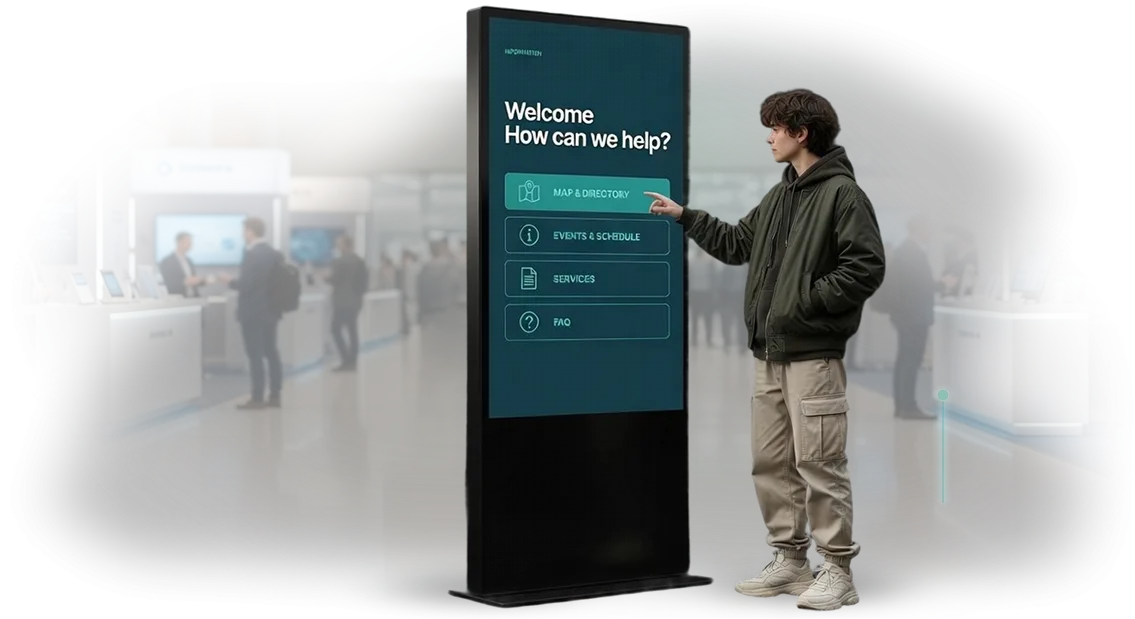
מוזיאונים מאבדים מבקרים בגלל תערוכות סטטיות
מבקר מגיע למוזיאון בשביל חוויה, אבל מקבל שורות של ויטרינות עם תוויות. תערוכה סטטית מחזיקה תשומת לב רק לכמה שניות: האורח מעיף מבט על המוצגים, קורא את הכיתובים, ועוזב.
מוזיאונים מאבדים מבקרים לא כי התערוכה משעממת, אלא כי היא לא מדברת אל המבקר בשפה שלו — שפת האינטראקציה והגילוי.
בלי דיאלוג חי עם המוצגים, העניין דועך במהירות. מבקרים לא מתמהמהים באולמות, לא חוזרים עם חברים, ולא ממליצים על המוזיאון כמקום ששווה לבקר בו.
כתוצאה מכך, מספר המבקרים יורד, ואיתו גם ההכרה וההשפעה התרבותית של המוזיאון. קיוסקים אינטראקטיביים פותרים את הבעיה הזו בכך שהם הופכים צפייה פסיבית לחקירה פעילה.
קיוסקי מידע עוזרים למבקרים לבחור מסלול משלהם, להתעמק בפרטים, ולמצוא תשובות לשאלות שלהם.
מעורבות מבקרים דרך מסכי מגע ותסריטי מולטימדיה משנה את האופן שבו תופסים את התערוכה: המוצג מתעורר לחיים, הסיפור מקבל קול, והאורח מרגיש כמו חוקר.
טכנולוגיה מוזיאלית היום אינה תחליף למוצגים, אלא גשר בין האוסף לרגש שגורם לאנשים לרצות לחזור.
מה משתנה לאחר הטמעת קיוסקים אינטראקטיביים
מבקרי מוזיאון היום מצפים לא רק להתבוננות, אלא להשתתפות. קיוסקים אינטראקטיביים הופכים את הצפייה בתערוכה לדיאלוג חי: האורח בוחר את עומק ההתעמקות, לומד את הסיפורים שמאחורי המוצגים, ומרגיש כמו מגלה. במקום צפייה פסיבית — אינטראקציה פעילה שנזכרת ויוצרת רצון לחזור.
בפורמט הזה, הזמן המושקע בכל מוצג גדל באופן ניכר. במקום לתת לעיניים לרחף בין האולמות, מבקרים לומדים את החומר בעיון, עונים על שאלות, ומשתתפים בחידונים ומשחקים.
ככל שהאורח נשאר יותר זמן במוזיאון, כך שביעות הרצון שלו גבוהה יותר והסבירות שימליץ על המוזיאון לחברים ומכרים עולה.
קיוסקים אינטראקטיביים עובדים גם עבור התדמית של המוזיאון. ציוד מודרני נתפס כסימן לדאגה למבקרים ולנכונות להתעדכן בזמן.
זה מושך צעירים ומשפחות עם ילדים, יוצר נושאים חדשותיים לתקשורת ולרשתות חברתיות, וכך מגדיל את החשיפה של המוזיאון ללא הוצאות פרסום נוספות.
לבסוף, קיוסקים נותנים למוזיאון את הדבר החשוב ביותר — הבנה של הקהל שלו. נתונים שנאספים על אילו נושאים אורחים בוחרים, כמה זמן הם מבלים במוצגים ספציפיים, ומה הם מחפשים לרוב עוזרים לשפר סיורים ותערוכות.
המוזיאון הופך למדויק ומעניין יותר, ומספר המבקרים גדל — כי כל אורח הבא מקבל בדיוק את החוויה שבגללה הגיע.
פורמטים של קיוסקים למשימות מוזיאליות שונות
מבקרי מוזיאון לעיתים קרובות הולכים לאיבוד באולמות: שלטים רגילים לא עונים על שאלות, והצוות עסוק. קיוסק מסך מגע פותר את הבעיה הזו — המבקר מוצא את האולם הנכון, חוקר את המוצגים, ומתכנן מסלול.
פורמטי הקיוסקים מותאמים למשימת התערוכה: פאנל מסך מגע אנכי בכניסה, שולחנות אינטראקטיביים באזור המשפחתי, או עמדת ניווט בלובי. הציוד מותקן באופן לא פולשני ופועל בצורה אמינה גם בשעות השיא.
גישה זו הופכת את הניווט לאינטואיטיבי עבור המוזיאון ואינה דורשת מעורבות מתמדת של הצוות.
איזה פורמט מתאים למוזיאון שלך
| פורמט | למי | מה הוא נותן למבקר |
|---|---|---|
| פאנלי מסך מגע | אולמות תצוגה קבועים | חקירה מעמיקה של מוצגים: מבקרים בוחרים סרטונים ותמונות משלהם בלי להצטופף ליד הוויטרינה |
| שולחנות אינטראקטיביים | אזורי ילדים ומשפחה | למידה משותפת: כמה אנשים נוגעים במסך בו זמנית — מעניין גם לילדים וגם למבוגרים |
| עמדות ניווט | אזור הכניסה, לובי | עונות על השאלה "איפה האולם?": מבקרים רואים את המפה ופונים ישר ליעד שלהם |
אנחנו משלבים פורמטים בתוך מוזיאון אחד: עמדות ניווט בכניסה, פאנלי מסך מגע באולמות, ושולחנות אינטראקטיביים באזור הילדים.
זה הופך את התערוכה למובנת יותר, ומבקרים מבלים שם יותר זמן — מה שמשפיע ישירות על הרושם שלהם מהמוזיאון ועל הסבירות לביקור חוזר.
התוצאה היא פחות כאוס באולמות, יותר עצמאות למבקרים, ותמיכה מלאה לאחר ההשקה: אנחנו מעדכנים תוכן, מוסיפים אולמות חדשים, ומנטרים את הציוד.
איך מפתחים ומשיקים קיוסק
העבודה איתנו פשוטה: התהליך מחולק לשלבים ברורים, ובכל שלב אתה יודע מה קורה ומה תקבל. אנחנו קובעים לוחות זמנים והיקף עבודה בחוזה, מלווים את הפרויקט עם מנהל ייעודי, ולא נעלמים אחרי ההשקה.
- בריף ומטרות. אנחנו מתקשרים או נפגשים, דנים במטרות הקיוסק: מה המבקר צריך לראות, אילו חומרים להציג, איך למדוד אפקטיביות. התוצאה היא מפרט טכני שאפשר להבין בלי ידע בקוד.
- אישור אב טיפוס ופריסה. אנחנו מעצבים את מבנה המסך: תפריט ראשי, מדורים, ניווט. אתה רואה את הקיוסק העתידי לפני תחילת הפיתוח ויכול לבצע עריכות — זה מונע עבודה חוזרת בשלב הסופי.
- פיתוח ממשק. אנחנו בונים מסכים עם סגנון המותג שלך, טקסטים, תמונות וסרטונים. אנחנו מתאימים אותו למסך האנכי של הקיוסק ומוסיפים כפתורים גדולים ורמזים — כדי שיהיה נוח לכולם, כולל קשישים וילדים.
- בדיקות והגנה מפני תקלות. אנחנו בודקים איך הקיוסק מתנהג בשימוש ממושך, בהפרעות אינטרנט, ובנגיעות אקראיות. הפעלה אוטומטית, שחזור מקריסה, והגנה מפני "קפיאה" — הכל מוגדר לפני ההתקנה.
- התקנה והשקה. אנחנו מספקים, מתקינים, מחברים ומגדירים את הציוד. אנחנו נותנים לצוות שלך הדרכה קצרה על איך להדליק, לכבות, ולהחליף קבצים. הקיוסק מתחיל לעבוד ביום ההשקה.
- תמיכה ועדכונים. אחרי ההשקה, אנחנו נשארים בקשר: מעדכנים מידע, מוסיפים מוצגים חדשים, ופותרים בעיות מרחוק. אם משהו משתנה במוזיאון, אתה פשוט שולח לנו חומרים ואנחנו מפרסמים אותם.
הגישה הזו כבר עזרה לעשרות מוזיאונים וחללי תצוגה להשיק אזורים אינטראקטיביים בלי כאוס או הפתעות. אתה מקבל תוצאה צפויה בלוח זמנים מוסכם ולא מסיח את דעת הצוות שלך מהעבודה המרכזית שלו.
מה כלול בחבילת הקיוסק האינטראקטיבי
כשמוזיאון בוחר קיוסק אינטראקטיבי, חשוב להבין מה כלול בחבילה ומה עלול להתברר מאוחר יותר כ"תוספת תשלום". אנחנו מרכיבים חבילה מלאה: מהמארז ועד הממשק, התקנה והדרכת צוות. להלן היקף האספקה כדי שתוכל לתכנן תקציב ולוח זמנים בלי הפתעות.
- ציוד — קיוסק מסך מגע עם מארז עמיד בפני ונדליזם, המיועד לזרם מבקרים קבוע. העמדה משתלבת בעיצוב הפנים של המוזיאון ולא מפריעה לצפייה במוצגים.
- עיצוב ממשק מותאם אישית — מסכים, כרטיסי מוצגים וניווט מעוצבים בהתאם לזהות החזותית של המוזיאון שלך. מבקרים מבינים אינטואיטיבית איך לנוע בין האולמות ולגשת למידע.
- תוכנה — מערכת ניהול תוכן ידידותית: אתה משנה טקסטים, תמונות וסרטונים בעצמך בלי לערב מפתחים.
- התקנה והגדרה — נספק את הקיוסק, נגדיר אותו במקום הנכון, נחבר אותו לרשת, ונבדוק את כל תרחישי ההפעלה. כל מה שנשאר לך זה להפעיל את החשמל.
- הדרכת צוות — אנחנו מקיימים מפגש למנהלים ומלווים: איך להתחיל סיור, לערוך חומרים, ולפתור בעיות פשוטות בלי לקרוא לטכנאי.
- אחריות ותמיכה — הציוד והעבודה מכוסים באחריות; במהלך תקופת השירות, אנחנו מבקרים לתחזוקה מונעת ומספקים עזרה מרחוק אם הקיוסק קופא.
חבילה כזו מכסה את כל השלבים — מהרכישה ועד התפעול השוטף. המוזיאון לא צריך לחפש קבלנים נפרדים לחומרה, עיצוב והתקנה: אנחנו לוקחים אחריות מלאה על התוצאה ומספקים את הקיוסק בדיוק כפי שדמיינת אותו.
מקרה בוחן: קיוסק מוזיאלי הגדיל את המעורבות פי 3
במוזיאון ההיסטוריה העירונית הייתה בעיה מוכרת: מבקרים עברו בתערוכה בממוצע של 20 דקות, בלי להתעכב על רוב המוצגים.
תוויות טקסט וסיורים סטנדרטיים הניבו תוצאות יציבות אך מוגבלות — אבל המוזיאון רצה להשאיר אורחים יותר זמן ולמשוך חדשים.
הזמן הממוצע שהושקע במוצג בודד היה כ-40 שניות, ואחרי המעבר באולם, אנשים לעיתים קרובות לא זכרו מה ראו בהתחלה.
כדי לשנות זאת, יצרנו קיוסק אינטראקטיבי עם מפת מסך מגע. כל מוצג בולט קיבל "נקודה" משלו על המסך: הקשה עליה פתחה תצלומים נדירים, סיפורים קצרים, והקלטות אודיו באיכות גבוהה.
האורח בחר את עומק ההתעמקות שלו — מתיאור קצר ועד סיפור מפורט של כמה דקות. הקיוסק לא דרש החלפת ויטרינות: הוא הוצב במרכז האולם, ומדריכי הטיולים למדו להשתמש בו במסלוליהם תוך יום.
תוך חודש ראינו שינויים מדידים. הזמן הממוצע במוצג גדל פי שלושה — מ-40 שניות ל-2 דקות — ומשך הביקור הכולל גדל ב-35%.
חלק הביקורים החוזרים הוכפל, ומבקרים החלו להשאיר ביקורות מפורטות יותר ולהביא מכרים לעיתים קרובות יותר. הקיוסק לא רק בידר; הוא יצר סיבה לחזור — המוזיאון מתכנן לעדכן את המידע רבעונית עם חומרים עונתיים חדשים.
עבורנו זה פרויקט מוצלח גם כי המוזיאון חזר עם הזמנה חוזרת: אנחנו מייצרים קיוסקים לשני אולמות נוספים ומחברים אותם לתוכנית סיורי הילדים.
אם אתה מחפש פתרון דומה למוזיאון שלך, ספר לנו איך מבקרים עוברים כיום בתערוכה, ואנחנו נציע אפשרות שמגבירה מעורבות בלי שיפוץ גדול של האולמות.
איך לבחור את הפורמט הנכון למוזיאון שלך?
אין קיוסק אחד שמתאים לכל מוזיאון — וזה נורמלי. הפורמט צריך לפתור את המשימה הספציפית שלך: למשוך מבקרים חדשים, לחשוף את התערוכה לעומק רב יותר, להפחית תורים בקופות, או לאסוף משוב. זה קובע את סוג עמדת מסך המגע, מיקומה והממשק שלה.
הקריטריונים המרכזיים הם מטרה, תקציב, שטח רצפה והתנהגות מבקרים. אם יש לך אולמות גדולים ומבקרים מתעכבים ליד מוצגים, הגיוני להציב כמה קיוסקים קומפקטיים עם מידע מפורט.
אם השטח מוגבל והמטרה העיקרית היא לכוון אנשים במהירות, מספיק פאנל אחד צמוד קיר עם מפה ולוח אירועים. כל אפשרות פותרת את המשימה שלה במקום "סתם לשבת בפינה".
הנקודה החשובה השנייה היא תרחיש השימוש. תחשוב איך מבקרים באמת נעים במוזיאון: האם הם עוצרים ליד ויטרינות, עושים מסלולים קצרים, מגיעים בקבוצות או לבד? הקיוסק צריך להשתלב בתרחיש הזה, לא לאלץ אנשים לשנות הרגלים.
לדוגמה, פאנלים אינטראקטיביים שקטים נוחים יותר למבקרים בודדים, בעוד מסך גדול עם מידע כללי עדיף לקבוצות שצופות מרחוק.
התקציב גם משפיע על הבחירה, אבל זה לא תמיד אומר פשרה. אנחנו נבחר פתרון שמספק אפקט מקסימלי למוזיאון הספציפי שלך: מפאנל מסך מגע פשוט עם מפה ועד מדריך אינטראקטיבי מלא עם תרחישים מרובים. מה שחשוב הוא שאתה משלם על מה שבאמת עובד עבורך, לא על תכונות נוספות שאף אחד לא משתמש בהן.
לכן אנחנו תמיד מתחילים בייעוץ ראשוני — אנחנו דנים במטרות שלך, בוחנים את הפריסה, ומנתחים זרמי מבקרים. יחד אנחנו קובעים את הפורמט האופטימלי, ורק אז מכינים הצעה עם לוחות זמנים והיקף עבודה ספציפיים.
אתה מקבל לא "קיוסק למוזיאון" מופשט, אלא כלי שפותר את המשימה שלך ומחזיר את ההשקעה דרך עניין של מבקרים. השאר בקשה — נבחן את המקרה שלך ונמליץ על הפתרון הטוב ביותר.
שאלות נפוצות וחששות לפני השקת קיוסק
הספקות לפני השקת קיוסק תמיד זהים: האם הציוד יפעל ללא תקלות, מי יתחזק אותו, והאם הקיוסק יוכל להשתלב עם המערכות הקיימות של המוזיאון.
החששות האלה מוצדקים — קיוסק שקורס ביום פתיחת התערוכה מערער את אמון המבקרים. לכן אנחנו בונים את הפרויקט כך שלא תצטרך לחשוב על זה.
כמה קשה לתחזק קיוסק? האם צריך להעסיק עובד ייעודי?
אנחנו מטפלים בהתקנה והדרכה של הצוות שלך: כל עובד מוזיאון יבין תוך חצי שעה איך להדליק את הקיוסק, לשנות מידע, ולהגיב למצבים אופייניים.
אחרי זה, המערכת פועלת לבד, ואנחנו מנטרים את מצבה מרחוק ומונעים תקלות לפני שמבקרים שמים לב.
מה קורה אם הקיוסק מתקלקל במהלך הפעילות?
אנחנו משתמשים בציוד מקצועי המיועד לפעילות סביב השעון בחללים ציבוריים. כל הרכיבים מכוסים באחריות, ובמקרה של תקלה, אתה מקבל החלפה ותיקון בזמן הקצר ביותר — זמן ההשבתה נמדד בשעות, לא בימים. למוזיאונים גדולים, אנחנו מספקים תרחישי השקה חלופיים למצבי כוח עליון.
האם הקיוסק יעבוד עם מערכת הכרטוס וקטלוג המוצגים שלנו?
כן, זו משימה סטנדרטית. אנחנו מחברים את הקיוסק למאגרי הנתונים שלך, שירות הכרטוס, או האתר הקיים — מבקרים רואים את לוח הזמנים העדכני, מידע על מוצגים, ויכולים לקנות כרטיסים ישירות מהמסך. האינטגרציה לא יוצרת "מערכת אקולוגית" חדשה; היא מרחיבה את מה שכבר יש לך.
מי יעדכן את התוכן בקיוסק?
אתה, בלי מתכנתים. אנחנו מגדירים פאנל ניהול ברור: החלפת הודעות אירועים, תיאורים ותמונות אורכת כמה דקות. אם תרצה, נוכל להגדיר עדכונים אוטומטיים מהקטלוג שלך או מהרשתות החברתיות.
דון איתנו בפרויקט הקיוסק האינטראקטיבי שלך
לדון בפרויקט קיוסק אינטראקטיבי פירושו להבין מראש מה תהיה התוצאה עבור המוזיאון שלך: איך מבקרים יתקשרו עם התערוכה, כמה זמן הם יבלו מול המסך, ואיזו חוויה הם ייקחו איתם.
אנחנו מספקים ייעוץ בכל הנושאים — מהרעיון ועד ההשקה — כך שתוכל להסתמך על עובדות ולא על ניחושים.
כשאתה משאיר בקשה לפיתוח, אתה מקבל:
- ייעוץ עם מומחה בפתרונות אינטראקטיביים למוזיאונים;
- הערכת עלות ראשונית המותאמת לתקציב שלך — בלי עמלות נסתרות;
- לוחות זמנים ריאליים לפיתוח בהתבסס על הקלט שלך;
- הצעה לפורמט ותוכן הקיוסק המותאמים לתערוכה שלך;
- דוגמאות לפרויקטים דומים ומקרי בוחן מתעשיית המוזיאונים;
- תוכנית צעדים הבאים: מה נדרש ממך ומה אנחנו לוקחים על עצמנו.
כאן אנחנו לא רק אוספים דרישות — אנחנו עוזרים לך לנסח את המשימה כך שהתוצאה תהיה קיוסק שמצדיק את ההשקעה. הייעוץ אינו מחייב: אחרי השיחה, תוכל להשוות אפשרויות ולקבל החלטה מושכלת.
כדי לקבל ייעוץ, הערכת עלות ולוחות זמנים ראשוניים, השאר בקשה בעמוד זה — ניצור איתך קשר תוך יום עסקים אחד.