

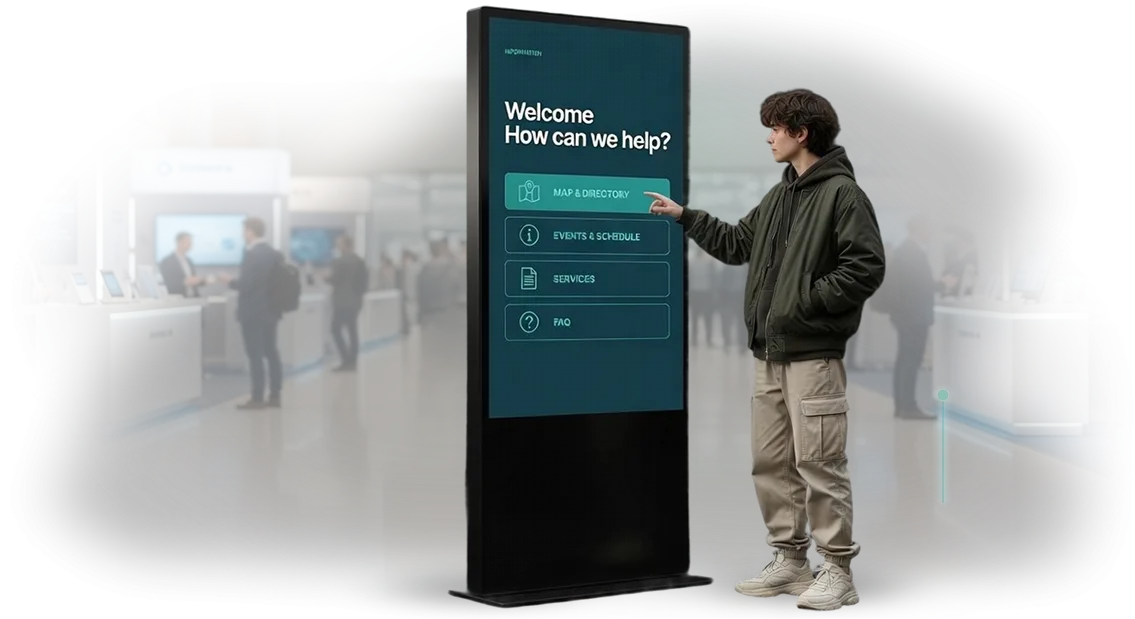
קיוסקי מידע למכוני מחקר: הכאב והפתרון
במכון מחקר, מבקר פוגש עשרות מבנים, קומות, מעבדות וחדרי ישיבות. שלטי נייר מסורתיים מתיישנים, והסברים מצד הצוות גוזלים זמן שעדיף היה להשקיע בעבודה.
התוצאה — איחורים לכנסים, משלחות שהולכות לאיבוד, ואורחים מתוסכלים שמגבשים דעה על המכון על סמך רושם ראשוני.
האתגר הנוסף הוא שהמידע לא נשאר רלוונטי לאורך זמן: לוחות זמנים של סמינרים משתנים, חברי צוות חדשים מצטרפים, משרדים נסגרים.
פוסטרים ולוחות מודעות דורשים החלפה מתמדת, אבל גם חומרים מעודכנים לא תמיד עונים על השאלה הספציפית — היכן נמצא אדם מסוים או איך מגיעים לאולם הכנסים. המכון זקוק לכלי שנותן לכל מבקר תשובה מדויקת באופן מיידי.
כלי כזה הוא קיוסק אינטראקטיבי — מסוף מידע מודרני עם מסך מגע. הוא מציג מפה אינטראקטיבית, מציע מסלולים בין מבנים, מספק לוחות זמנים לאירועים ונתוני מחלקות, פועל ללא הפסקות, ואינו דורש מעורבות צוות.
בעזרתו, מבקרים מוצאים את המשרד או האולם הנכון בעצמם תוך דקה, והעובדים מפסיקים להיות מוסחים על ידי שאלות שגרתיות.
אנו מפתחים יישום HTML5 קל לשימוש עבור קיוסקים עם מסך מגע המותאם למכוני מחקר — כזה שקל לעדכן ואינו דורש ניהול מורכב.
הקיוסקים שלנו כבר עוזרים לארגונים לחסוך בזמן הצוות וליצור תדמית מודרנית和高טק של המכון בעיני האורחים. הכאב הזה — זמן אבוד וכאוס ניווטי — נפתר לחלוטין על ידי מסוף מידע מוגדר כהלכה.
מה תרוויחו מהטמעת קיוסק אינטראקטיבי
מבקר במכון מחקר — בין אם סטודנט פוטנציאלי, חוקר או שותף — מצפה לא רק לסביבה מדעית אלא גם לשירות נוח.
קיוסק אינטראקטיבי נותן מענה למספר משימות בבת אחת: הוא עוזר למבקרים להתמצא במהירות במבנים, מספק מידע אמין על תחומי מחקר, ויוצר תדמית של ארגון מודרני.
הנה מה שתרוויחו מהטמעה:
- ניווט משופר. מפות מבנים, חיפוש משרדים ומסלולים לאולמות הרצאות — מבקרים מפסיקים ללכת לאיבוד ולבקש הנחיות מהצוות.
- מידע על פעילות. תיאורי מעבדות, לוחות זמנים לאירועים, כללי ביקור ואנשי קשר מחלקתיים — הכל במקום אחד.
- תדמית משופרת. קיוסק אינטראקטיבי נראה מודרני ומדגים שהמכון מתקדם עם הזמן. זה מחזק את האמון במותג הארגון.
- חיסכון בזמן הצוות. עובדים מוסחים פחות על ידי שאלות שגרתיות ומתמקדים בעבודה מדעית או אדמיניסטרטיבית.
- תוכן עדכני. אתם והקולגות שלכם מעדכנים מידע ללא מפתחים — הוסיפו ידיעה או שנו לוח זמנים תוך דקות ספורות.
- תקן הצגה אחיד. מידע מובנה על מחלקות ושירותים הופך את תדמית המכון לאחידה ומקצועית.
- אנליטיקת עניין. תוכלו לראות אילו נושאים מבקרים צופים בהם ביותר ולשפר חומרים אינפורמטיביים בזמן.
אנו מתמחים בפתרונות אינטראקטיביים לארגונים מדעיים וחינוכיים. אנו מעצבים ממשקים המובנים גם לתלמיד בית ספר וגם לפרופסור, והופכים את חוויית מסך המגע לחזקה ואמינה. אתם מקבלים כלי שעובד עבור התדמית שלכם ועוזר למבקרים מדי יום.
פורמטים של קיוסק מידע: איזה מהם מתאים לכם?
קיוסק מידע במכון מחקר נותן מענה למספר משימות בבת אחת: הוא מקבל את פני האורחים, עוזר להם להתמצא במבנים, מציג לוחות זמנים לכנסים ומספק גישה למאגרי מידע.
אבל אותו פורמט לא עובד עבור לובי, מסדרון צר ואזור קבלה — לכן חשוב להבין מראש בדיוק כיצד הקיוסק ישמש.
הפורמט קובע כיצד מבקרים תופסים את המכשיר: קיוסק עומד מושך תשומת לב ומשמש כנקודת ניווט מרכזית, קיוסק צמוד קיר משתלב בחלל ואינו חוסם מעבר, ומסוף מגע נייח נוח לשאילתות ולעבודה עם מידע. אנו עוזרים לכם לבחור את האפשרות הנכונה ולהתאים אותה למשימות המכון.
| פורמט | למי הוא מיועד | מה הוא נותן למבקר |
|---|---|---|
| קיוסק עומד | לאולמות, לובי ואזורים עם תנועה גבוהה | יוצר נקודת כניסה בולטת, עמיד בשימוש אינטנסיבי, משמש כמרכז ניווט ראשי |
| קיוסק צמוד קיר | למסדרונות, לובי מעליות ואזורים ליד אולמות כנסים | חוסך מקום, תמיד נגיש, עוזר למבקרים להתמצא במהירות מבלי להעמיס על העיצוב הפנימי |
| מסוף מגע נייח | לאזורי קבלה, ספריות, דלפקי מידע ואזורים אדמיניסטרטיביים | מספק גישה ללוחות זמנים, מאגרי מידע ושירותים פנימיים ללא מעורבות צוות |
עבור מכוני מחקר, אנו שמים דגש על אמינות ופשטות: מארזים עמידים, משטח מגע יציב וממשק ברור. מבקרים יבינו את המכשיר ללא הדרכה, והצוות שלכם לא יוסח על ידי שאלות חוזרות.
שלבי פיתוח קיוסק: מהבריף ועד ההשקה
תהליך ברור הוא המפתח להשקה חלקה. אנו מבינים שעבור מכון מחקר, דיוק, לוחות זמנים צפויים ומינימום אישורים מיותרים הם חשובים.
לכן מבננו את העבודה כרצף ברור של שלבים: אתם תמיד יודעים באיזה שלב נמצא הפרויקט ומה הצעד הבא.
- בריף והבנת המשימה. אנו מתחילים בדיון על מטרות הקיוסק: אילו חומרים מדעיים להציג, מי קהל היעד, ואילו תכונות חשובות. על בסיס זה, אנו מנסחים מפרט טכני שמאושר על ידכם — הוא הופך לבסיס לכל העבודה.
- עיצוב המבנה והתרחישים. אנו מפתחים את הלוגיקה של המסכים, הניווט ותרחישי האינטראקציה. אתם מקבלים תרשים המראה כיצד מבקרים ינועו בין סעיפים ואיזה תוכן הם יראו.
- יצירת מוקאפים ואישורים. אנו מכינים עיצוב ויזואלי באיכות גבוהה. אנו מציגים מספר אפשרויות עיצוב ומשכללים אותן כך שיתאימו לסגנון המכון. אתם מאשרים את המראה המדויק של הקיוסק לפני תחילת התכנות.
- פיתוח והרכבה טכנית. אנו כותבים את התוכנה, מגדירים את מסכי המגע ומחברים את המודולים הנדרשים. אנו עורכים הדגמות ביניים כדי שתוכלו להעריך את ההתקדמות ולבקש שינויים.
- בדיקות על חומרה אמיתית. אנו מוודאים את ביצועי הקיוסק בתנאים מציאותיים: מהירות תגובה, עמידות ונוחות השימוש בממשק. אנו מתקנים את כל הבעיות לפני ההתקנה.
- השקה והדרכת צוות. אנו מתקינים את הקיוסק במיקום הנכון, מגדירים אותו לפרמטרי החדר ומדריכים את הצוות. העובדים שלכם יוכלו לנהל תוכן באופן עצמאי ולטפל בבעיות בסיסיות.
- תחזוקה ועדכונים. אנו נשארים בקשר לאחר ההשקה. אנו מעדכנים חומרים אינפורמטיביים, עוזרים בשיפורים ומנטרים פעילות יציבה. הקיוסק ימשיך לספק ערך לאורך זמן ללא מעורבותכם.
מה כלול במסירת קיוסק אינטראקטיבי
כאשר אתם מזמינים קיוסק אינטראקטיבי, אתם לא מקבלים "חומרה עם תוכנה מותקנת מראש" — אתם מקבלים פתרון מלא ומפתח.
אנו מטפלים בכל שלב: מהגדרת התוכנה לצרכי המכון ועד התקנה פיזית באולם, בלובי או באזור ההמתנה. אין צורך לשכור קבלנים, להבין בטכנולוגיה או להתמודד עם תקלות ביום הראשון.
המומחים שלנו מגיעים לאתר, מרכיבים את המבנה, מחברים אותו לרשת ולחשמל, ולאחר מכן בודקים את כל תרחישי השימוש.
לאחר ההשקה, איש צוות מקבל הוראות ברורות והדרכה קצרה: כיצד להפעיל את הקיוסק, לשנות תוכן, לעדכן לוח זמנים או להוסיף מרצה חדש למאגר. זה לוקח לא יותר משעה — לאחר מכן, המערכת פועלת מעצמה.
הנה היקף המסירה המלא:
- תוכנה — מערכת ניהול תוכן מורשית שהוגדרה מראש למבנה המכון שלכם: סעיפים על מעבדות, חוקרים, פרסומים ותחומי מחקר.
- קיוסק עם מסך מגע — המארז והמסך המותאמים לחללים ציבוריים: הגנה מפני אבק ולחות, מבנה עמיד בפני ונדליזם ועמידות לפעולה רציפה משעות הפתיחה ועד הסגירה.
- התקנה וחיבור — הגדרה באתר, תצורת רשת, הסתרת כבלים ובדיקת יציבות מבנית.
- הדרכת צוות — מפגש מעשי למנהלים ומזכירות: פעולות בסיסיות, החלפת קבצים והפעלה מחדש במצבים בלתי צפויים. אנו מקליטים מדריך וידאו קצר שנשאר אצלכם.
- מדריך למשתמש — מסמך ברור בעברית: כיצד להפעיל את המכשיר, מה לעשות אם הוא קופא, ולאן לפנות לתמיכה.
- אחריות ותמיכה טכנית — במהלך תקופת האחריות, אנו פותרים כל בעיה במהירות מרחוק ובמידת הצורך, מגיעים לאתר כדי להחזיר את פעולת הקיוסק.
חבילת המסירה מעוצבת כך שהקיוסק מספק ערך מהיום הראשון: מבקרים מוצאים את המידע הדרוש להם על המכון בעצמם, והעובדים שלכם נשארים ממוקדים במשימות הליבה שלהם.
סעיפים נוספים, עיצוב חדש או אינטגרציה עם מאגר הנתונים שלכם מוגדרים בשלב הבריף, אבל גם לאחר ההשקה תוכלו להגיש בקשה — אנו נבצע את השינויים.
מקרה בוחן: קיוסק אינטראקטיבי למכוני מחקר
עבור המכון המדעי «המכון ללימודים מתקדמים», פיתחנו קיוסק אינטראקטיבי שפתר את בעיית הניווט בקמפוס גדול.
מאות מבקרים עוברים בכניסה מדי יום: סטודנטים פוטנציאליים, משתתפי כנסים וחוקרים אורחים. דלפק המידע לא עמד בקצב השאלות השגרתיות, ואורחים הלכו לאיבוד במבנים.
הקיוסק הותקן בלובי של הבניין הראשי. על מסך המגע, מבקרים מוצאים כל בניין, אולם הרצאות, לוח זמנים לסמינרים ואנשי קשר לאיש הצוות הנכון.
הממשק מעוצב לאנשים ללא הכשרה מיוחדת: כפתורים גדולים, מפה עם מסלולים וסיכום הניתן להדפסה. הנתונים מסונכרנים אוטומטית עם המערכת הפנימית, כך שהמידע תמיד עדכני.
מה השתנה לאחר ההשקה
התוצאות ניכרו כבר בחודש הראשון. חלקם של המבקרים שמצאו באופן עצמאי את המשרד הנכון עלה מ-60% ל-90%, וזמן החיפוש הממוצע נחתך בחצי. שביעות רצון האורחים, על פי סקרים, עלתה ב-20 נקודות אחוז — ל-92%.
מנהלי דלפק המידע הפסיקו לבזבז זמן על שאלות חוזרות והתמקדו בפתרון משימות מורכבות. לפי הערכת ראש המחלקה, זה שחרר עד שלוש שעות עבודה ביום.
המכון היה מרוצה מהתוצאה — שישה חודשים לאחר מכן, קיבלנו הזמנה לקיוסק שני עבור מרכז הכנסים.
עבורנו, זו אישור לכך שקיוסקים אינטראקטיביים מבוקשים לא רק בחללים מסחריים אלא גם בסביבה המדעית. פורמט זה מקל על עומס הצוות, מזרז ניווט ובונה תדמית מודרנית למוסד.
שאלות נפוצות על פיתוח קיוסק אינטראקטיבי
אנו יודעים שכאשר מזמינים פיתוח קיוסק, ללקוחות יש שאלות טיפוסיות: כמה זמן זה ייקח, כיצד תעבוד אינטגרציה עם מאגרי מידע, מי יתחזק את זה, ואילו סיכונים עלולים לצוץ.
ריכזנו תשובות לשאלות המרכזיות כדי שתוכלו להעריך את הפרויקט לפני דיון בפרטים.
כמה זמן לוקח פיתוח קיוסק?
לוח הזמנים תלוי בנפח התוכן ובמספר המסכים — בדרך כלל משבועיים עד חודשיים. אנו קובעים את לוח הזמנים בחוזה ומספקים שלבים לפי התוכנית המוסכמת, כך שתמיד תדעו מתי הפתרון יושק.
האם קשה לשלב את הקיוסק עם מאגרי המידע שלנו?
אנו מחברים את הקיוסק לרוב מאגרי המידע והמערכות הנפוצים באמצעות פורמטים מוסכמים של חילופי נתונים. הלקוח אינו צריך להיכנס לפרטים: כתוצאה מכך, הקיוסק מציג נתונים עדכניים ללא עדכונים ידניים, והצוות חוסך זמן בהכנת חומרים.
מה לגבי תחזוקה לאחר ההשקה?
אנו מספקים אחריות וחוזה שירות אופציונלי. הצוות מנטר פעילות יציבה, עוזר בעדכון תוכן ופותר בעיות במהירות. אתם רק צריכים לספר לנו על מידע חדש — אנו נטפל בשאר.
אילו סיכונים אפשריים וכיצד אתם מטפלים בהם?
הסיכונים העיקריים הם עיכובים בלוח זמנים, אי-תאימות חומרה וקשיים הקשורים לתוכן. אנו ממזערים אותם בשלב הבריף: אנו אוספים דרישות, מאשרים מוקאפים מראש ובודקים תאימות. רוב הבעיות נפתרות לפני ההשקה, כך שלא יהיו הפתעות ביום המצגת.
אם יש לכם שאלות נוספות — כתבו לנו, ונענה ספציפית לפרויקט שלכם.מוכנים להתחיל? קבלו הצעה מסחרית
ספרו לנו על המשימה שלכם — ותוך יום עסקים אחד תקבלו הצעה מסחרית עם אומדן עלות שקוף לפרויקט שלכם.
אנו עובדים עם מכוני מחקר ברחבי הארץ, ולכן אנו מבינים כמה חשובים לוחות זמנים, תקציב ודיווח ברור בכל שלב.
הזמנת קיוסק היא פשוטה: פשוט השאירו בקשה באתר או התקשרו אלינו. לאחר מכן, אנו מטפלים בכל — משכלול הרעיון ועד ההשקה והתמיכה הטכנית.
אתם אף פעם לא נשארים לבד עם קבלן: מנהל אישי ממונה אליכם שעונה על שאלות ומעדכן אתכם בכל שלב.
מה תקבלו מיד לאחר הפנייה:
- אומדן עלות ולוח זמנים תוך יום עסקים אחד;
- תוכנית עבודה עם שלבים ברורים ותוצאות לכל אחד;
- המלצות על פורמט הקיוסק למשימות המכון שלכם — מניווט ועד תערוכות מולטימדיה;
- אב-טיפוס ממשק לפני תחילת הפיתוח, כדי שתוכלו לראות את המוצר העתידי לפני ההשקה;
- תקציב קבוע ללא תוספות נסתרות;
- חוזה עם אחריות ותמיכה לאחר ההשקה.
גישה זו מאפשרת לכם להשיק את הפרויקט ללא עיכובים: אתם יודעים מראש מה תקבלו, על מה אתם משלמים ומתי הקיוסק יתחיל לעבוד.
רוב הלקוחות חוזרים אלינו לפרויקטים הבאים — כי התהליך שקוף והתוצאה פותרת את משימות המכון.
השאירו בקשה — ונכין הצעה מסחרית לפרויקט שלכם היום. נדון בפרטים, נענה על שאלותיכם ונציע פתרון שמתאים לתקציבכם.
כיצד לבחור את פורמט הקיוסק הנכון למשימה שלכם?
התחילו בשאלה המרכזית: מה מבקר אמור להיות מסוגל לעשות בקיוסק באותן 15–20 שניות?
אם המשימה היא לכוון אורח במהירות בין מבנים או לוחות זמנים לכנסים, או למצוא את המעבדה הנכונה, פורמט עם כפתורים גדולים ותפריט ברור מספיק.
אם אתם רוצים להציג מחקר, להמחיש נתוני פרויקטים ולאפשר לאנשים לחקור חומרים לעומק, אתם צריכים תרחיש נרחב יותר — למשל, פאנל מגע עם סעיפים שבהם אורחים בוחרים נושא ומבלים מספר דקות עם המידע.
כך בחירת הפורמט מתחילה בשאלה "כמה זמן אדם מוכן להשקיע מול המסך."
הקריטריון השני הוא הסביבה הפיזית וזרימת המבקרים. בלובי רועש שבו מאות סטודנטים מתאספים בין שיעורים, מארז נייח חזק שעומד בשימוש אינטנסיבי וקל לתחזוקה עובד הכי טוב.
למוזיאון שקט, ספרייה או חלל תערוכה, מעמד אלגנטי שמשתלב בעיצוב הפנים מתאים יותר.
חשבו גם על נגישות: אנשים עם מוגבלויות וילדים בסיורים צריכים להיות מסוגלים לגשת בנוחות לקיוסק — זה עניין של נוחות, לא של טכנולוגיה.
הנקודה השלישית היא מי יעדכן את התוכן וכיצד. במכון מחקר, לוחות זמנים, הודעות על אירועים, רשימות מרצים ותוצאות מחקר משתנים באופן קבוע.
בחרו פורמט שמאפשר לצוות שלכם לערוך מידע בעצמם: לשנות חדשות, להוסיף מצגות, לעדכן ניווט ללא מעורבות מפתחים. זה מסיר את נקודת הכאב הגדולה ביותר של בעל המערכת והופך את הקיוסק לכלי חי ולא לתצוגה סטטית.
ולבסוף — קנה מידה ונקודת מבט. קיוסק למסדרון אחד ונווט לקמפוס שלם פותרים משימות שונות, והפורמט נבחר אחרת עבור כל אחד.
אנו עוזרים לכם להחליט בשלב הבריף: אנו לוכדים את התרחישים שלכם, חוקרים את המתחמים, מבהירים את הקהל ומציעים פתרון שנותן מענה למשימה מבלי לשלם יותר מדי על פונקציונליות מיותרת. פורמט שנבחר נכון משתלם דרך שימוש בפועל על ידי המבקרים שלכם.