

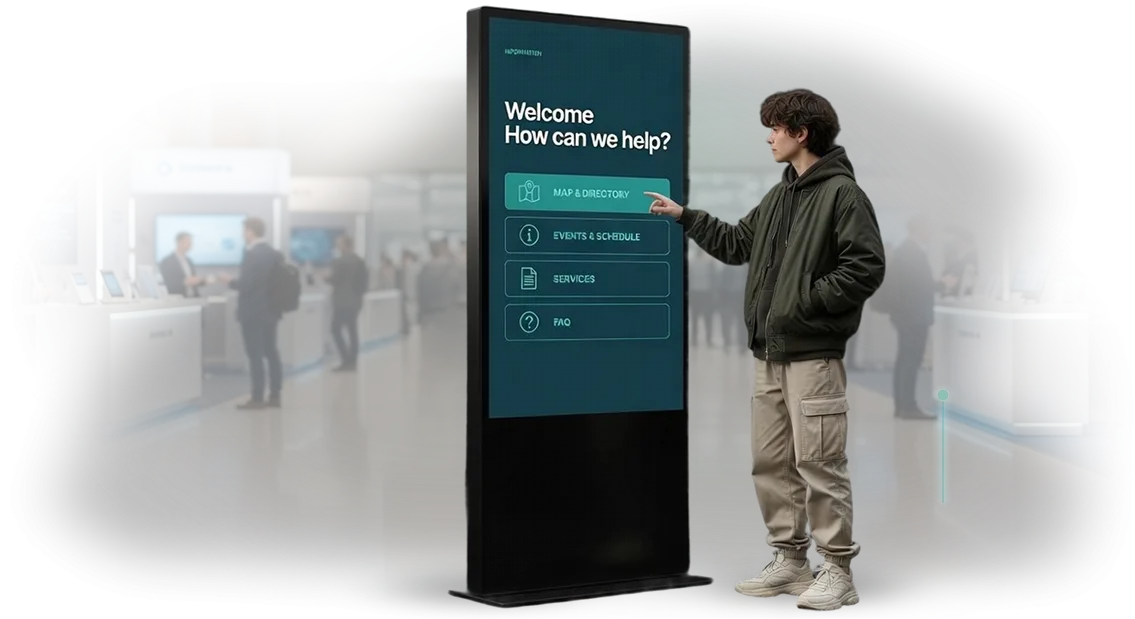
בעיות של מפעלים תעשייתיים בתערוכות: איך פותרים אותן
תערוכה עבור מפעל תעשייתי היא לא רק השתתפות באירוע ענפי, אלא הזדמנות לבנות מאגר לקוחות פוטנציאליים תוך ימים ספורים.
אבל לעתים קרובות הכל מסתכם באותו דבר: הדוכן הולך לאיבוד בין השכנים, המבקרים חולפים על פניו, ולמנהלים אין זמן להציג את כל קו המוצרים.
ציוד מורכב ופתרונות טכנולוגיים אי אפשר להסביר על פלייר — צריך כלי חי שמחזיק את תשומת הלב.
כתוצאה מכך, בסוף היום הדוכן צבר רק כמה עשרות אנשי קשר, ורובם נשארים ללא המשך טיפול. בעוד מומחה מספר למבקר אחד בפירוט על מכונה או קו ייצור אוטומטי, עוד כמה לקוחות פוטנציאליים חולפים על פניו. כך אובדים לידים יקרי ערך, ותקציב התערוכה לא מחזיר את עצמו.
קיוסק אינטראקטיבי פותר את הבעיה הזו על ידי מעורבות המבקר ואוטומציה של הצגת המוצר. האורח בוחר קטגוריה מעניינת בעצמו, לומד מפרטים, צופה בסרטונים על יישומים — כל זאת ללא מעורבות של מנהל.
צוות הדוכן מתפנה בינתיים לשיחות עם אלה שכבר מוכנים לשיחה מעמיקה.
הקיוסק עובד גם כחלון ראווה וגם ככלי לייצור לידים: מבקר משאיר פרטי קשר, לוקח חומרים שיווקיים, נרשם להדגמה.
עבור מפעלים תעשייתיים, זה אומר יותר פניות איכותיות ישירות מהתערוכה ומסלול ברור מעניין להצעה מסחרית.
הפורמט הזה גם בולט באופן ניכר את הדוכן ובונה תדמית של יצרן מודרני מונחה טכנולוגיה — בדיוק מה שזוכרים אחרי שהאירוע מסתיים.
מה קיוסק אינטראקטיבי נותן לעסק שלך
בעולם ה-B2B המודרני, תשומת הלב של לקוח פוטנציאלי היא המשאב הנדיר ביותר. בתערוכה או באולם תצוגה, יש לך רק כמה שניות לעניין מבקר, ופוסטרים או ברושורים רגילים לא יכולים להתמודד עם זה.
קיוסק אינטראקטיבי עובד כמו מגנט: תוכן נע, היכולת לחקור את המוצר בעצמך, לצפות במפרטים ולהשאיר פנייה במקום — זה מבטיח לעצור אנשים ליד הדוכן שלך.
הערך המרכזי של פתרון כזה הוא הפיכת מבקר אקראי לליד מוסמך. במקום להסתכל באופן פסיבי על תצוגה, אדם מתחיל ליצור אינטראקציה עם המוצר שלך דרך ממשק אינטראקטיבי, ואתה מקבל את פרטי הקשר שלו ועניין בפריטים ספציפיים.
עבור מפעל תעשייתי, זהו מסלול ישיר להגדלת מספר הפניות ללא הגדלת תקציב הפרסום — הקיוסק עובד בשבילך בכל שעה, גם כשמנהל עסוק במשא ומתן.
בנוסף, קיוסק מגע מודרני משפר באופן ניכר את תדמית החברה בעיני לקוחות ושותפים. כשהאורחים רואים שהמפעל משקיע בטכנולוגיה והופך את המידע על מוצריו לנוח, זה מגביר אוטומטית את האמון במותג.
ועל רקע מתחרים שעדיין מציגים סרטונים סטטיים, הדוכן שלך נתפס כחדשני ואמין.
זיכרון הוא אפקט חשוב נוסף. פורמט אינטראקטיבי נזכר הרבה יותר טוב ממצגת רגילה: אחרי התערוכה, לקוחות נזכרים בקיוסק שלך עם הקטלוג החי, לא בדוכן השכן עם מחלק הפליירים.
זה עובד ליצירת אסוציאציה יציבה — "המותג שלך — מקצועיות וטכנולוגיה מתקדמת" — דבר שחשוב במיוחד עבור מפעלים תעשייתיים שבהם החלטות מתקבלות לא באופן ספונטני, אלא אחרי ניתוח מעמיק.
כתוצאה מכך, קיוסק אינטראקטיבי הוא לא רק מסך עם תמונות, אלא כלי מכירות עובד שמשלב משיכת תשומת לב, איסוף פניות וחיזוק המותג.
כל אחד מהמבקרים שלך מקבל הזדמנות ללמוד מוצרים בקצב שלו, ואתה מקבל תוצאה מדידה בצורת אנשי קשר ועניין גובר במפעל.
פורמטים של קיוסק אינטראקטיבי למפעלים תעשייתיים
עבור מפעל תעשייתי, קיוסק מידע הוא לא רק מסך, אלא כלי שמקל על עומס העבודה של הצוות ומפשט את החיים לאורחים, ספקים ועובדים חדשים.
כל מבקר במחסום, בכנס או באולם תערוכה רוצה להבין במהירות לאן ללכת ומה קורה סביבו. אם צריך לחפש תשובות ידנית, זמן אובד ונוצר רושם של חוסר ארגון.
אנחנו מתכננים קיוסקים סביב תרחישים אמיתיים של המפעל — מניווט ועד הצגת מוצר. הפורמט נבחר לפי המשימה: מכונה אחת מחליפה את דלפק המידע, קטלוגי נייר וחלק מעבודת המזכירות.
| פורמט קיוסק | לאילו מצבים | מה הוא נותן למפעל |
|---|---|---|
| עמדת מידע | מחסום, אולם ראשי, אזור המתנה | עובדים ואורחים מוצאים תשובות בעצמם: שעות עבודה, בקרת כניסה, חוקים פנימיים, הודעות. פחות שיחות והסחות דעת לצוות |
| קטלוג אלקטרוני | אולם תערוכה, חדר תצוגה, משא ומתן עם לקוחות | הקונה רואה את כל מגוון המוצרים, המפרטים ותמונות המוצר ללא מעורבות מנהל. הם ניגשים למשא ומתן כבר מוכנים |
| מפת מסלול ושטח | מחסום, חניה, אזור כניסה | מבקר מוצא בקלות את הבניין, המחסן או המשרד הנכון. הסיכון לאיחור מופחת, ונהגים ואנשי לוגיסטיקה מעבדים מסמכים מהר יותר |
| קיוסק לכנסים | פורומים תעשייתיים, ימי פתוח, אירועים | תוכנית, מרצים, מפת אולמות והרשמת משתתפים במקום אחד. אורחים שואלים פחות את המארגנים ומוכנים יותר ללמוד חומרים |
קל לעדכן קיוסק כזה — המידע משתנה תוך דקות, ללא הדפסה מחדש של עמדות או הזמנת מבנים חדשים. אתה גם רואה אילו קטעים מבוקשים: סטטיסטיקת מגע תראה מה האורחים מחפשים ואיפה הם מתעכבים. זהו מידע לשיפור הניווט ופיתוח התצוגה ללא מחקר נוסף.
שלבי פיתוח קיוסק אינטראקטיבי במפתח מלא
פיתוח קיוסק למפעל תעשייתי הוא לא רק התקנת מסך, אלא כלי לפתרון משימות ספציפיות: ניווט באתר, הדרכה, מידע עזר, דוחות. אבל כדי שהוא יעבוד ללא תקלות ויביא ערך, נדרש תהליך מובנה היטב.
אנחנו מטפלים בכל השלבים — מהבריף ועד ההשקה והתמיכה — כך שלא תבזבז זמן על פרטים טכניים ותקבל תוצאה צפויה.
-
בריף ואודיט. אנחנו צוללים לפרטים הספציפיים של המפעל: מי ישתמש בקיוסק ולמה, איפה הוא ימוקם, איזה נתונים נדרשים. אנחנו מתעדים את הדרישות ומסכמים על הערכת העלות.
-
עיצוב. אנחנו יוצרים את מבנה המסך ותרחישי העבודה. אתה רואה אב טיפוס לפני הפיתוח — אנחנו מונעים עבודה חוזרת לאחר מכן.
-
עיצוב ויזואלי. אנחנו מתאימים את הממשק לשליטה במגע: אלמנטים גדולים, ניגודיות, שימושיות בכל תנאי. הקיוסק נראה מקצועי וברור.
-
פיתוח ואינטגרציה. אנחנו ממלאים את המערכת בתוכן, מחברים אותה לנתונים שלך ומגדירים טעינה אוטומטית. אנחנו משתמשים בציוד מקצועי — פעולה יציבה מסביב לשעון.
-
בדיקות. אנחנו בודקים את כל התרחישים על מכשיר אמיתי ומבטלים ליקויים לפני ההשקה.
-
השקה. אנחנו מתקינים את התוכנה ומכשירים את העובדים שלך לעדכן מידע. הקיוסק מוכן לחלוטין לפעולה.
-
תמיכה. אנחנו מספקים תחזוקה, גיבוי וייעוץ. כשהמשימות משתנות, אנחנו משפרים את הפונקציונליות.
מה כלול במסירה: החבילה המלאה
החבילה המלאה של קיוסק מגע היא לא רק התקנת תוכנה. אנחנו מוסרים כל מה שצריך כדי שתנהל את המערכת באופן עצמאי: מעיצוב וצד שרת ועד הכשרת עובדים.
אין כאן מסירה "גולמית" — אתה מקבל כלי מוכן שניתן להשתמש בו מיד בבית המלאכה, במחסום או בכיתת הדרכה.
- תוכנה — מערכת מוגדרת ויציבה לעבודה עבור קיוסק המגע. היא נפתחת אוטומטית, לא דורשת תחזוקה מסובכת ומיועדת לפעולה מסביב לשעון.
- עיצוב למותג שלך — ממשק עם צבעי החברה, לוגו וניווט ברור. מבקרים ועובדים מבינים מיד היכן למצוא מידע, והקיוסק נראה כמו חלק מהסגנון הארגוני שלך.
- פאנל ניהול — כלי נוח לעדכון תוכן ללא מעורבות מפתחים. אתה משנה הוראות, דיאגרמות, חדשות או לוחות זמנים בעצמך — רק כמה קליקים והשינויים כבר על המסך.
- הוראות הפעלה — מדריך מפורט למומחים שלך: איך להפעיל את הקיוסק, להחליף תוכן ולפתור בעיות נפוצות. הכל כתוב בשפה פשוטה, ללא מורכבות טכנית.
- הכשרת עובדים — מפגש מעשי לאחראים על הקיוסק. אנחנו מראים איך להשתמש בפאנל הבקרה ולהגיב למצבי חירום כדי שהצוות שלך ירגיש בטוח.
- חבילת תיעוד — סט תיעוד טכני ומשתמש עבור מחלקת התפעול שלך. זה מפשט תקנות פנימיות והליכי קבלה.
- תמיכה באחריות — אחרי ההשקה, אתה לא נשאר לבד עם המערכת. אנחנו עוזרים עם שאלות, עדכונים וייעוץ כדי שהקיוסק יפעל ללא השבתות.
מקרה בוחן: איך קיוסק הגדיל לידים למפעל תעשייתי
דוכן רגיל בתערוכה תעשייתית הוא מחלק ברושורים: מבקרים לוקחים, דפדפו והולכים, ומספקים מינימום אנשי קשר.
המפעל ההנדסי PromStankoMash נתקל בזה ישירות — בתערוכה תעשייתית גדולה הם אספו לא יותר מ-20 פניות ביום, למרות שתנועת המבקרים הייתה גבוהה פי שלושה.
הצענו להחליף את המצגת הסטטית בקיוסק אינטראקטיבי שמנחה מבקרים להגשת פנייה.
במקום קטלוג משעמם — מסך מגע עם היסטוריית חברה ויזואלית, מוצרים ומחשבון בחירת ציוד. המבקר בוחר את המפרט הרצוי בעצמו ומקבל הצעה מסחרית תוך כמה דקות בלבד.
הקיוסק רץ על ציוד מקצועי, כך שגם בשעות השיא הוא לא קפא או נפל — וזה קריטי כשהלקוח עומד מול המסך.
התוצאה עלתה על הציפיות: מספר הלידים מהתערוכה גדל ב-40% לעומת השנה הקודמת. הזמן הממוצע בדוכן עלה מ-40 שניות ל-4-5 דקות — אנשים לא לקחו ברושור וחלפו על פניו, אלא למדו את המוצרים בעיון.
אנשי הקשר הפכו מוסמכים יותר: מחצית מהפניות הכילו פרמטרים ספציפיים ובקשה לחישוב עלות.
מה זה נתן למפעל בסופו של דבר?
מנהלי מכירות קיבלו לקוחות חמים עם בקשה מוכנה, לא כרטיסי ביקור פושרים עם "נראה, אולי." תוך רבעון לאחר התערוכה, עוד 30% מהחוזים החדשים הגיעו מהלידים האלה.
אחרי ההצלחה בתערוכה, המפעל הזמין מאיתנו קיוסקים נייחים לחדרי התצוגה שלו — עכשיו הפורמט האינטראקטיבי עובד עבורם באופן קבוע, לא רק במהלך אירועים.
המקרה הזה אינו חד-פעמי. עשינו פרויקטים דומים ליצרני ציוד וחברות מתכת, והזמנות חוזרות מאשרות: הקיוסק מחזיר את עצמו דרך צמיחה מדידה בפניות והפחתת עבודת מחלקת המכירות עם אנשי קשר "קרים".
אם אתה צריך את אותה תוצאה בתערוכה שלך או בתצוגה קבועה — אנחנו לוקחים על עצמנו פיתוח, תוכן והשקה במפתח מלא.
איך לבחור את פורמט הקיוסק הנכון?
בחירת פורמט קיוסק מתחילה לא במראה החיצוני, אלא במשימות שהוא צריך לפתור במפעל שלך.
עבור מחסום או אזור המתנה, קיוסק מגע עומד עם מסך גדול מתאים — הוא נראה לעין, מתמודד עם תנועה כבדה ומספק במהירות את המידע הנדרש.
עבור בית מלאכה או מחסן עם אבק, רעידות ותנודות טמפרטורה, דגם נייח מוגן הוא הגיוני יותר, ועבור משרד מנהל או חדר ישיבות קטן, מסוף שולחני קומפקטי מספיק.
הקריטריון הבא הוא תרחיש השימוש. אם עובדים צריכים לבדוק במהירות מפת מסלול, לוח משמרות או הוראה, בחר קיוסק עם תפריט פשוט וכפתורים גדולים המיועדים לעבודה גם עם כפפות עבות.
אם הקיוסק מיועד לאורחים ולקוחות, הוסף ניווט שטח ברור, חומרי מצגת ויכולת להשאיר פנייה.
חשוב באיזו תדירות התוכן ישתנה: קיוסקי מגע מודרניים מתעדכנים מרחוק, כך שאתה יכול לשנות מידע ללא הבזקה או קריאה למומחה.
קח בחשבון גם את התנאים הפיזיים של המיקום: גישה לשקע חשמל, הגנה מלחות ונזק מכני, התקנת רצפה או קיר.
מעטפת אמינה ומסכי מגע מקצועיים הם לא גחמה, אלא ערובה לכך שהקיוסק לא ייכשל ברגע הכי לא מתאים ולא ידרוש תיקונים תכופים.
כבר יישמנו פרויקטים למתקנים תעשייתיים שבהם הציוד פועל מסביב לשעון, כך שכאשר בוחרים פורמט אנחנו תמיד מסתמכים על תנאי הפעלה אמיתיים, לא על מפרטים מופשטים.
המסקנה פשוטה: ראשית, נסח מה בדיוק הקיוסק צריך לעשות — ליידע, לנווט, לאסוף נתונים או להחליף חלק מעבודת המזכירות. לאחר מכן הערך את מיקום ההתקנה ואת מספר המשתמשים ביום.
בהתבסס על נתונים אלה, נציע פורמט מתאים ונכין הערכת עלות. אם יש ספק, שלח לנו את תוכנית הרצפה או תמונות של המתחם — תוך כמה ימים נציע את הפתרון האופטימלי ונסביר למה הוא יעבוד ספציפית בשבילך.
שאלות נפוצות על פיתוח קיוסקים
מנהלי מפעלים תעשייתיים, לפני הזמנת קיוסק, שואלים לרוב לא על ה"פנים", אלא על אמינות: האם זה יחרוג מלוחות הזמנים, מי יהיה אחראי אם משהו נשבר, והאם הפתרון יתיישן בעוד שנה.
זה הגיוני — הקיוסק פועל בבית מלאכה או במחסום שבהם השבתה יקרה. להלן תשובות לארבע השאלות המרכזיות שאנו שומעים מלקוחות.
מהם לוחות הזמנים האמיתיים לפיתוח ומה האחריות מכסה?
פרויקט סטנדרטי אורך 3 עד 6 שבועות מאישור העיצוב. תקופה זו כוללת עיצוב ממשק, הרכבת אב טיפוס ובדיקות על ציוד מגע אמיתי. האחריות על העבודה היא 12 חודשים ומכסה את כל שגיאות הממשק ותקלות לוגיות.
הציוד מטופל על ידי הספק; אנחנו מטפלים בכל חלק התוכנה ואחראים לכך שהקיוסק יפעל ללא תקלות על בסיס יומי.
מה אם צריך לשנות משהו אחרי שנה — להוסיף קטע חדש או לעדכן נתונים?
עדכונים לא דורשים עצירת הקיוסק. אנחנו מבצעים את כל השינויים מרחוק: אתה שולח חומרים חדשים או תיאור משימה, ואנחנו מעדכנים את התוכן והממשק על השרת.
עבור עריכות פשוטות — למשל, שינוי לוח זמנים או הוספת מסמך — אנחנו אפילו לא צריכים להגיע לאתר. העדכון מתרחש תוך 1-2 ימי עסקים, בעוד הקיוסק ממשיך לפעול כרגיל.
האם הקיוסק צריך להשתלב בתשתית ה-IT הקיימת של המפעל? אילו קשיים מתעוררים?
אנחנו עובדים עם קיוסקים מבוססי HTML5 — זה אומר שהם רצים בכל דפדפן על כל מחשב תעשייתי או מסך משולב. לא נדרשת תוכנה נוספת מיוחדת, והמערכת עצמה לא מתנגשת עם מערכות הנהלת חשבונות קיימות או שירותים ארגוניים.
נתונים מהקיוסק יכולים להיות מועברים ל-CRM הפנימי שלך או ל-1C דרך ערוץ מאובטח — אם צריך, נייצא את הסטטיסטיקות הרלוונטיות לפורמטי הדיווח שאתה רגיל אליהם.
אם הפתרון מוכן אבל נשארו שאלות, פשוט שאל את המהנדס שלנו ישירות.
הזמנת פיתוח קיוסק: השלבים הבאים
ברגע שהחלטת על המשימות של קיוסק המידע, השלב הבא הוא דיון בפרטים עם הצוות שלנו. נבקש מידע בסיסי על המפעל שלך, תרחישי השימוש והתוצאה הצפויה, ולאחר מכן נכין הצעה מסחרית שקופה.
אין "אותיות קטנות" או תנאים נסתרים — רק מה שהעובדים והלקוחות שלך באמת צריכים.
הגשת פנייה אורכת כמה דקות, ולאחר מכן אתה מקבל:
- חישוב עלות מדויק למשימות שלך — ללא עמלות נסתרות או אפשרויות כפויות.
- תוכנית עבודה ברורה עם לוחות זמנים לכל שלב — מהבריף ועד ההשקה והכשרת הצוות.
- המלצות על מיקום ובניית הקיוסק, תוך התחשבות בפרטים הספציפיים של המפעל התעשייתי.
- דוגמאות לפרויקטים שהושלמו בענף שלך, כדי שתבין מראש איך הפתרון עובד בפועל.
- חוזה עם מחיר קבוע ואחריות על התוצאה, בתוספת תשלום בשלבים לפי התקדמות.
- מנהל ייעודי שמטפל בפרויקט מהשיחה הראשונה ועד קבלת הקיוסק.
השאר פנייה באתר או כתוב לנו בהודעה — נגיב תוך יום עסקים אחד, נבהיר את הפרטים ונכין הערכת עלות ראשונית. אתה לא מפסיד כלום מלבד כמה דקות, ובתמורה מקבל תוכנית פעולה ברורה והערכת תקציב ריאלית.
בואו נתחיל בשיחה קצרה כדי לצלול למשימה שלך — ותבין עם מי אתה מתעסק.