

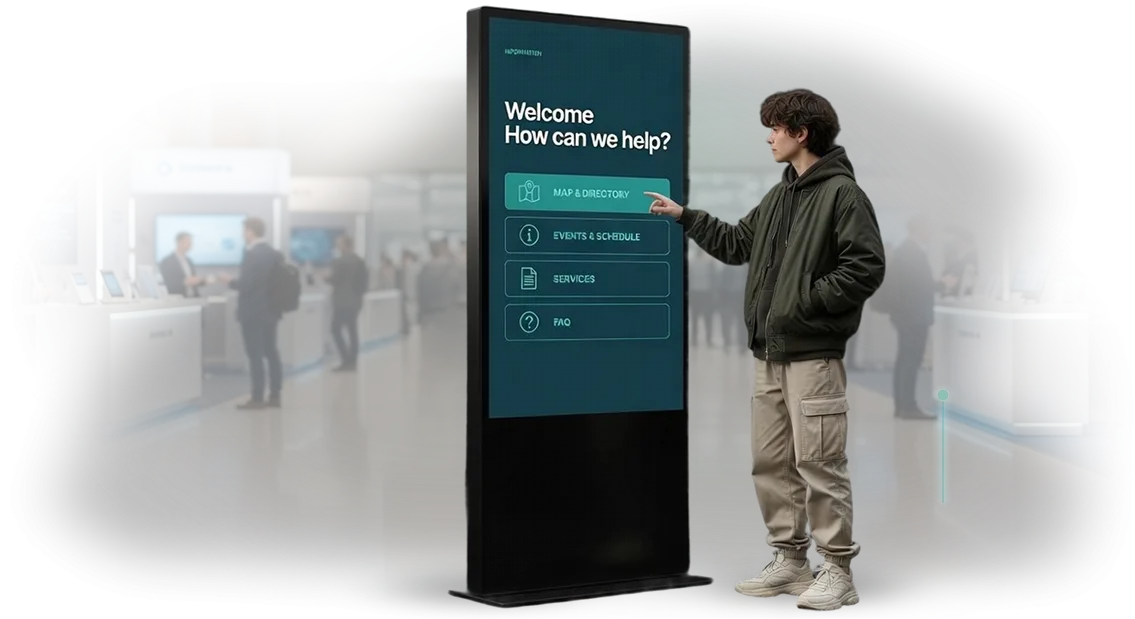
כיצד קיוסקים אינטראקטיביים פותרים את נקודות הכאב של מרכזי שיקום
מטופלים המגיעים למרכז שיקום נמצאים לעיתים קרובות במצב של לחץ ואי-נוחות פיזית. קשה להם לנווט בבניין לא מוכר, למצוא את המשרד הנכון או ללמוד את לוח הזמנים של הטיפולים.
במקביל, מנהלים וצוות רפואי עמוסים בשאלות חוזרות: "איפה משרד הפיזיותרפיה?", "מתי הפגישה הבאה?", "עם מי אני קובע תור?". זה יוצר תורים, עיכובים ומתח נוסף — גם למבקרים וגם לצוות.
קיוסקים אינטראקטיביים עוזרים לפתור בעיות אלה באופן שיטתי. על מסך המגע, מטופל או מלווה שלו יכולים למצוא באופן עצמאי את המסלול למשרד הנדרש, לראות את לוח הזמנים הנוכחי של הטיפולים ולקרוא מידע על מומחים.
ניווט משופר הוא אחד היתרונות המרכזיים: במקום לשאול סביב ולחפש, אדם רואה מפה ברורה של המרכז עם נקודות מסלול. זה מפחית חרדה וחוסך זמן לפני ואחרי טיפולים.
עבור הצוות, קיוסק מידע הופך לעוזר דיגיטלי שמטפל בבקשות שגרתיות. עובדים מפסיקים להיות מוסחים על ידי שאלות חוזרות ויכולים להתמקד באחריות הישירה שלהם — טיפול במטופלים וביצוע פרוצדורות.
בנוסף, הקיוסק עוזר לארגן את זרימת המבקרים: הזמנה מראש, תזכורות ורישום במקום מתרחשים ללא מעורבות של המנהל.
כתוצאה מכך, קיוסקים אינטראקטיביים יוצרים סביבה שבה מטופלים מרגישים רגועים ובטוחים יותר, והמרכז פועל ביעילות רבה יותר. פחות תורים, פחות לחץ, יותר סדר.
עבור הבעלים והמנהל, זה אומר איכות שירות גבוהה יותר, שביעות רצון מוגברת של מטופלים ומוניטין חזק יותר למתקן.
יישום פתרון כזה משתלם על ידי הפחתת עומס העבודה של הצוות ושיפור חוויית הלקוח — בדיוק מה שחשוב למרכז שיקום מונחה תוצאות.
מה אתה מקבל מהטמעת קיוסקים עם מסך מגע
הטמעת קיוסקים עם מסך מגע היא לא רק התקנת מסך נוסף בלובי. זה כלי שמתייחס בו-זמנית לצרכים של מבקרים, צוות והנהלת המרכז.
מטופלים מקבלים ניווט מהיר ופחות לחץ, עובדים מקבלים פחות עבודה שגרתית, ומנהלים מקבלים צמיחה בת-קיימא בשביעות רצון ונאמנות.
מבקרים במרכזי שיקום מגיעים לעיתים קרובות חרדים ולא בטוחים. חשוב להם להבין לאן ללכת, מתי הטיפול מתחיל ומה לעשות הלאה.
קיוסק מסך המגע עונה על שאלות אלה באופן מיידי: הוא מציג מפה של המרכז, לוחות זמנים של מומחים, הנחיות הכנה ותשובות לבקשות נפוצות.
אדם לא ממתין בתור למנהל ולא הולך לאיבוד בסביבה לא מוכרת — מה שאומר שהוא מרגיש שמטפלים בו מהצעד הראשון.
הצוות מפסיק לשמש כדלפק מידע. מנהלים כבר לא חוזרים על אותו מידע עשר פעמים במשמרת — מטופלים מוצאים אותו בקיוסק בעצמם.
עובדים מפנים את הזמן שהתפנה למשימות חשובות באמת: קבלת פנים למטופלים, עזרה לאנשים מבוגרים וטיפול במצבים לא סטנדרטיים.
העבודה במרכז הופכת רגועה ומאורגנת יותר, והצוות נעשה מסביר פנים יותר כי הם פחות מותשים משאלות חוזרות.
עבור ההנהלה, קיוסק מסך מגע הוא הוכחה נראית לעין לגישה מודרנית לשירות. מרכז שאכפת לו מנוחות המטופל זוכה ליותר אמון ומקבל ביקורות חיוביות.
הקיוסק פועל מסביב לשעון, אינו דורש הפסקות ותמיד מספק מידע מדויק באותה מידה. זה מפחית את העומס על המנהלים, מזרז את השירות ובסופו של דבר מגדיל את שביעות הרצון הכללית ואת מספר הביקורים החוזרים.
התועלת הכוללת של היישום מורכבת משלושה מרכיבים: מבקרים מרוצים, צוות ללא עומס ומוניטין של מרכז אמיתי ממוקד לקוח.
כל אחד מאלה מחזק את האחרים — וזו בדיוק הסיבה שקיוסקים עם מסך מגע הופכים לסטנדרט במתקני שיקום מודרניים.
פורמטים של קיוסק מידע למרכזי שיקום
מבקרים במרכז שיקום מגיעים עם מטרות שונות: מישהו מחפש משרד ספציפי, מישהו צריך לקבוע תור עם מומחה, ומישהו רוצה ללמוד על תוכניות החלמה.
הלובי תמיד עמוס, וצוות הקבלה פיזית לא יכול לענות על כל שאלה — מה שמוביל לתורים, בזבוז זמן ותסכול.
פורמט קיוסק שנבחר כראוי פותר את הבעיה הזו לפני שהיא נוצרת. המערכת מטפלת בשגרה: היא מציעה מסלולים, מציגה לוחות זמנים ומנהלת הזמנות — הכל ללא מעורבות צוות.
כל מה שנשאר הוא לבחור עיצוב שמשתלב באופן אורגני בלובי שלך ואינו חוסם את זרימת האנשים.
| פורמט קיוסק | למי הוא מתאים | מה הוא נותן ללקוח |
|---|---|---|
| עמדת מסך מגע | מרכזים עם זרימת מבקרים גדולה שבה ניידות חשובה | ניתן להזיז בין הלובי, המסדרונות ואזורי ההמתנה. מותאם בקלות לאירועים זמניים או מבצעים |
| קיוסק צמוד קיר | לובי קטן, מסדרונות צרים, אזורים ליד מעליות ומדרגות | חוסך מקום, אינו חוסם כיסאות גלגלים או מלווים. תמיד נראה לעין, אינו חוסם מעבר |
| קיוסק עצמאי עם מסך רחב | לובי מרווחים ואזורי המתנה | מושך תשומת לב, יוצר תדמית מודרנית למרכז. נוח לאנשים עם רמות ניידות שונות — אפשר לגשת ממרחק נוח |
בחירת הפורמט תלויה בפריסה ובמטרות של המרכז שלך. אם זרימת המבקרים מפוזרת על פני מספר קומות, מסכים צמודים לקיר ליד מעליות יבטלו את שאלות "איפה המשרד שלי".
אם הלובי הוא נקודת המשיכה המרכזית, קיוסק עצמאי הופך לנווט הראשי ומפחית את העומס על המנהלים.
במקרים של ספק, אנו ממליצים על הפתרון האופטימלי: נחשב תנועה, נסקור את תוכנית הרצפה ונציע פורמט שמחזיר את ההשקעה בתוך השבועות הראשונים. פשוט שלחו לנו את התוכנית — אנחנו נעשה את השאר.
שלבי השקת קיוסק במפתח מלא
הטמעת קיוסק מסך מגע במרכז שיקום היא לא רק הרכבת מסך והתקנת אפליקציה. חשוב שהעוזר הדיגיטלי יהיה מובן למטופלים, נוח לצוות ולא ידרוש תחזוקה תכופה.
לכן אנו בונים את שלבי פיתוח הקיוסק יחד איתך: מהבריף הראשון ועד תמיכה מלאה. אתה תמיד יודע מה קורה בכל שלב ואיזו תוצאה אתה מקבל.
כיצד עובד היישום
-
בריף וסקירת משימות. אנו לומדים למה מבקרים מגיעים לרוב: הזמנת טיפולים, ניווט בין מחלקות ומידע על תוכניות. אנו מגדירים את התרחישים ורשימת הסעיפים שיביאו תועלת מרבית למרכז שלך.
-
אב-טיפוס וקונספט. אנו מציגים את מבנה התפריט ואת לוגיקת הניווט — איך מטופל מוצא את מה שהוא צריך בשתיים או שלוש הקשות. אתה מבצע שינויים לפני תחילת הפיתוח, מה שמונע עבודה חוזרת יקרה.
-
עיצוב מסך מגע. אנו מתאימים את הממשק לכפתורים גדולים, ניגודיות גבוהה ואייקונים ברורים. אנו לוקחים בחשבון קבוצות מבקרים שונות — אנשים מבוגרים, מטופלים בהחלמה מפציעות ואלה שמשתמשים בקיוסק מסך מגע בפעם הראשונה.
-
פיתוח אפליקציית אינטרנט ואינטגרציות. אנו בונים את הקיוסק על פלטפורמת HTML5 כך שהוא פועל באופן אמין על חומרה שונה וניתן לעדכן אותו בקלות ללא החלפה מלאה. אנו מחברים את מערכות התזמון, מאגרי המידע של השירותים או חומרי העזר שלך.
-
בדיקות משתמשים. לפני ההשקה הרשמית, אנו נותנים לצוות המרכז ולמבקרים לנסות את הקיוסק. אנו אוספים משוב, מתקנים תרחישים לא ברורים ומשכללים את הממשק עד שהוא נוח.
-
השקה ותמיכה. אנו מתקינים את הקיוסק במיקום הנכון, מגדירים אותו לשעות הפעילות שלך ומכשירים מנהלים. לאחר ההשקה, אנו מתחזקים גם את החומרה וגם את התוכנה, ועוזרים לעדכן תוכן: לוחות זמנים, הודעות ואנשי קשר.
מה כלול במסירת הקיוסק
מסירת הקיוסק הסטנדרטית היא לא "קופסה עם חומרה" אלא מערכת עבודה מלאה במפתח מלא. אתה מקבל את הציוד, התוכנה, התוכן והכשרת הצוות — הכל יחד, בפרויקט אחד, ללא חיפוש קבלנים לחלקים בודדים.
הפתרון כולל:
- עמדת מסך מגע — מעטפת עמידה ומסך המותאמים לשימוש מסביב לשעון בלובי. הדגם נבחר על סמך השטח והסגנון של מרכז השיקום כך שהמסוף נראה מתאים ואינו חוסם מעבר.
- תוכנה — מערכת ניהול תוכן מותקנת ומוגדרת. אתה לא צריך מתכנת כדי לעדכן מידע: מנהל יכול לשנות את לוחות הזמנים של הטיפולים, רשימות המומחים והחדשות בעצמו.
- תוכן וממשק — תפריט מאורגן לפי שירותי המרכז: כיווני שיקום, מחירים, הזמנת תורים ומידע שימושי למטופלים ולקרוביהם. המבנה מפותח סביב הצרכים הספציפיים של המחלקה שלך.
- התקנה והפעלה — משלוח, התקנה באתר, חיבור ובדיקה של כל תרחישי הפעולה. הקיוסק מתחיל לעבוד מהיום הראשון, ללא "גימורים" על ידי הצוות שלך.
- הכשרת צוות — מדריך קצר למנהלים על העלאת תוכן חדש ופתרון בעיות אופייניות. אנו מספקים דף עזר ברור ומבצעים הדרכה בזמן נוח, כולל בפורמט מרחוק.
שירות אחריות ותמיכה טכנית הם גם חלק מהמסירה. זה אומר שבמקרה של תקלה או שאלה על פעולת הקיוסק, אתה לא צריך להבין לבד: הצוות שלנו מטפל בבקשה, ונוהל השחזור מוגדר מראש.
כתוצאה מכך, אתה מקבל לא אוסף רכיבים אלא כלי מוכן שמקל על המנהלים ומאיץ את דלפק הקבלה. מטופלים רואים את המידע שהם צריכים ומזמינים טיפולים בעצמם — ללא תורים ושאלות מיותרות לצוות.
מקרה בוחן: כיצד קיצרנו את זמן ההמתנה של מבקרים פי 3
עבור מרכז השיקום «ווססטנובלנייה», פיתחנו קיוסק אינטראקטיבי שהחליף כרטיסי נייר ורשם אנושי בכניסה. בעבר, כל מטופל חדש בילה 5–7 דקות ברישום, ובשעות השיא נוצר תור של 10–15 אנשים בדלפק.
המנהל הוסח על ידי שאלות חוזרות, ואנשים עם מוגבלות בניידות התעייפו מלעמוד.
ערכנו בריף, חקרנו את זרימת המבקרים ובנינו קיוסק עם ממשק ברור: המטופל בעצמו בוחר את מטרת הביקור, מסמן את המסמכים שלו ומקבל כרטיס למומחה הנכון. היישום ארך שלושה שבועות, כולל הכשרת צוות וריצת ניסיון עם זרימת מבקרים אמיתית.
תוצאות לאחר החודש הראשון
לאחר חודש של פעולת קיוסק, זמן ההמתנה הממוצע ירד פי 3 — מ-9 ל-3 דקות. כל יום, הקיוסק משרת כ-120 מבקרים, עם 70% מהרישומים שהושלמו ללא מנהל.
התורים בלובי כמעט נעלמו, והצוות עבר לעזור למטופלים במקום לעבד בקשות.
מנהל המרכז ציין שהעומס על דלפק הקבלה ירד בחצי, והמבקרים הפכו רגועים יותר ונוטים יותר להגיע בתיאום. שישה חודשים לאחר מכן, המרכז הזמין מאיתנו קיוסק שני לבניין השני שלו — המדד הטוב ביותר לכך שהפתרון עובד.
גישה זו מתאימה לא רק למתקנים רפואיים: בכל מקום שבו יש זרימת אנשים וצורך בהזמנה מהירה, קיוסק אינטראקטיבי מחזיר את ההשקעה דרך מהירות השירות והפחתת עומס הצוות.
כיצד לבחור את פורמט הקיוסק הנכון לצרכים הספציפיים שלך?
התחל עם השאלה "מה הקיוסק צריך לעשות", לא עם הדגם. במרכז שיקום, הוא מטפל לעיתים קרובות במספר משימות: הזמנת טיפולים, ניווט בין בניינים, מידע על לוחות זמנים וסקרי מבקרים. המשימה המרכזית קובעת גם את פורמט הקיוסק וגם את התצורה שלו.
קריטריוני הבחירה מחולקים בנוחות לשלוש קבוצות: מי ישתמש בו, היכן המכשיר ממוקם וכמה פעמים.
לדוגמה, קיוסק עומד בלובי מתאים לניווט והזמנה עצמית, בעוד דגם קומפקטי צמוד קיר מתאים ליד משרד רופא או במסדרון מחלקה.
אם הזרימה עולה על מאה אנשים ביום, כדאי לבחור מעטפת עם הגנה מוגברת והרכבה קבועה.
מיקוד נפרד הוא הקהל. במרכזי שיקום, המשתמשים הם לעיתים קרובות אנשים מבוגרים ומטופלים עם מוגבלויות. עבורם, כפתורים גדולים, תוויות ברורות, הטיית מסך מתכווננת והנחיות קוליות חשובים. קיוסק מסך מגע למתקן רפואי צריך להסיר מחסומים, לא ליצור אותם.
ה"פנים" חשובים לא פחות מנקודת מבט תהליכית: האם הקיוסק יכול להחליף נתונים עם מערכת ההזמנות שלך, האם ניתן לשנות לוחות זמנים ללא מתכנת, והאם אתה רואה סטטיסטיקות שימוש?
זה משפיע על כמה מהר הקיוסק מתחיל לחסוך זמן צוות בפועל ולהפחית תורים בדלפק הקבלה.
כאשר אתה מביא את הפרמטרים האלה יחד — משימות, מיקום, קהל, אינטגרציה ועומס — בחירת הפורמט הופכת ברורה.
לכן אנו מתחילים עם בריף ובחירה: אנו עוזרים לקבוע את התצורה האופטימלית, כך שתקבל כלי עבודה, לא רק מסך בלובי.
תשובות לשאלות נפוצות על קיוסקים
מנהלי מרכזי שיקום שמזמינים קיוסק מודאגים לרוב משלושה דברים: אמינות חומרה, מהירות השקה ותאימות למערכות קיימות. צברנו מספיק ניסיון כדי להפיג את הספקות האלה. אנו עונים ללא פרטים טכניים — רק מה שחשוב לעסק שלך.
מה קורה אם הקיוסק מתקלקל?
אנו משתמשים ברכיבים עמידים לתקלות המיועדים לשימוש אינטנסיבי. במקרה של תקלה, חלים אחריות ותמיכה מהירה: אנו פותרים את רוב הבעיות מרחוק, ובמידת הצורך, מחליפים ציוד במהירות. זמן ההשבתה ממוזער — מבקרים וצוות לא שמים לב להפרעות. זה מגן על הכספים והמוניטין שלך.
כמה מהר נקבל קיוסק עובד?
פרויקט טיפוסי אורך 3–4 שבועות במפתח מלא: מבריף ועד התקנה והכשרת צוות. אנו עובדים ללא אישורים מיותרים ומעדכנים אותך בכל שלב. אם אתה צריך בדחיפות, אנו יכולים לדון בלוח זמנים מואץ. אנו מבינים שזמן הוא כסף, ולכן אנו עומדים בלוחות זמנים מוסכמים.
האם הקיוסק יעבוד עם מערכת ההזמנות שלנו?
כן, אינטגרציה עם התוכנות שלך היא חלק סטנדרטי מהפרויקט. הקיוסק ימשוך לוחות זמנים עדכניים וזמינות בעצמו ויעביר נתוני הזמנה למערכת הנדרשת. ללא רישום כפול — חיסכון בזמן צוות. עבור המבקרים שלך, זה אומר מידע עדכני בכל עת.
אלה השאלות הבסיסיות, אבל לכל מרכז יש את המאפיינים שלו. כתבו לנו — נסקור את המקרה שלכם ונציע פתרון. אנו מגיבים תוך יום עסקים אחד.הזמנת פיתוח קיוסק אינטראקטיבי לארגון שלך
מרכז שיקום הוא מקום שבו כל מבקר זקוק לתשומת לב, תמיכה ומידע ברור. מנהלים מבלים לעיתים קרובות זמן רב על שאלות חוזרות על לוחות זמנים, משרדים ושירותים.
קיוסק אינטראקטיבי פותר את זה: אורחים מוצאים את המידע שהם צריכים בעצמם, בעוד הצוות מתמקד בדברים חשובים באמת. אנו עוזרים לך להזמין קיוסק שמתאים למרכז שלך בצורה מושלמת ומפשט את עבודת העובדים שלך.
לאחר פנייה אלינו, תקבל:
- ייעוץ ראשוני: אנו דנים במטרות המרכז שלך, בזרימות המבקרים ומציעים את תכונות הקיוסק האופטימליות.
- חישוב עלות קיוסק שקוף: אתה יודע את התקציב מראש, ללא תוספות נסתרות או חשבונות מפתיעים.
- אבות-טיפוס של מסך לפני הפיתוח: אתה רואה איך הקיוסק ייראה ויפעל, ומבצע שינויים לפני שאנו מתחילים.
- לוחות זמנים ברורים ותשלום בשלבים: אתה שולט בכל שלב במקום לשלם "בעיוורון".
- הכשרת צוות והוראות פשוטות: הצוות שלך יתחיל להשתמש בקיוסק ביום ההשקה.
- אחריות פיתוח ותמיכה לאחר ההשקה: אנו נשארים בקשר ופותרים בעיות במהירות.
- הרחבה לסניפים אחרים: אנו מוסיפים סעיפים חדשים או מסנכרנים קיוסקים בעת הצורך.
שלח בקשה באתר — זה לגמרי לא מחייב. תקבל ייעוץ, דוגמאות מהעבודה שלנו והערכה ראשונית של לוחות זמנים ועלות. פיתוח קיוסק למרכז שיקום הוא פשוט כשיש לך צוות מנוסה לצידך. הזמן קיוסק היום כך שבתוך חודש המבקרים שלך כבר ישתמשו בשירות מודרני.