

קיוסקים לאוניברסיטאות: למה קמפוסים מאבדים מועמדים פוטנציאליים
מועמד פוטנציאלי נכנס לקמפוס בפעם הראשונה — ומיד נתקל בכאוס: שלטים מיושנים, מבנים שנראים דומים, וכיתה שאליה צריך להגיע תוך 10 דקות.
באותו רגע, התדמית של האוניברסיטה בעיני האורח מתקבעת: אם קשה למצוא את הדרך כאן, כנראה שגם ארגון תהליך הלמידה רעוע לא פחות.
מועמדים מודרניים גדלו עם טלפונים ביד; הם רגילים לקבל תשובות מיידיות. שלטי נייר וצוות מבולבל בכניסה משמעותם זמן אבוד ועצבים מרוטים.
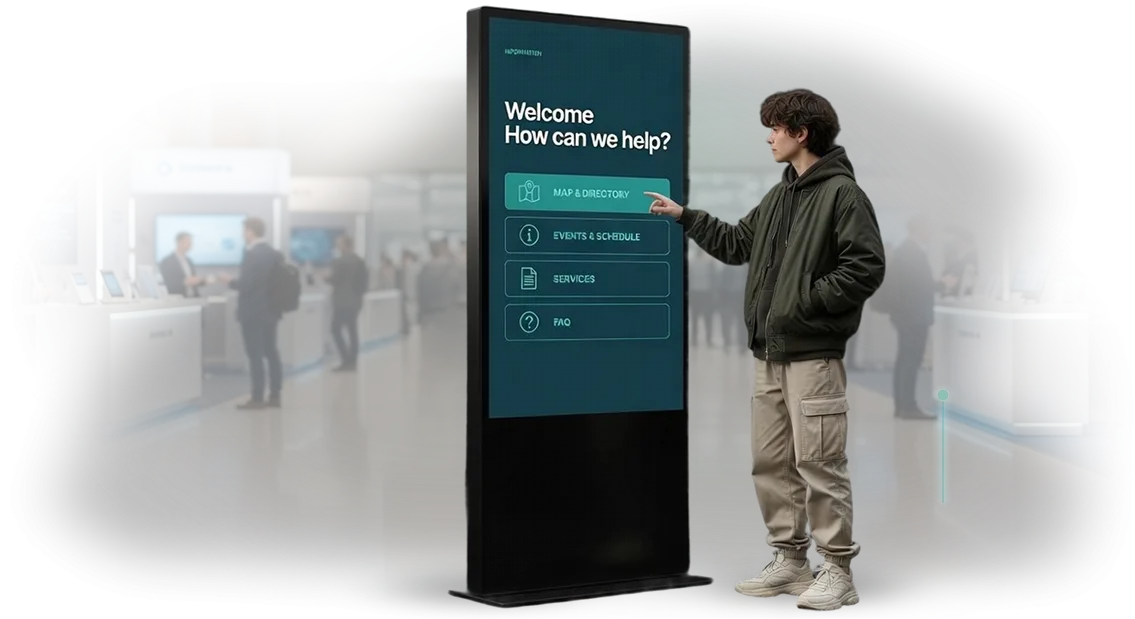
קיוסקים אינטראקטיביים עם ניווט בקמפוס פותרים זאת בכמה הקשות: הם עוזרים למצוא כיתה, מראים את הקפיטריה הקרובה ומציגים מפת מבנים.
גישה זו יוצרת רושם של מוסד טכנולוגי ואכפתי — וזה משפיע ישירות על ההחלטה להגיש מועמדות.
קיוסקים עושים יותר מסתם ניווט. הם מקבלים את פני האורחים בכניסה, משתפים מידע על פקולטות, מציגים לוחות זמנים של ימים פתוחים ועונים על שאלות נפוצות ללא מעורבות של מנהל.
כתוצאה מכך, הקמפוס הופך לפשוט ונעים יותר, והאוניברסיטה זוכה בכלי נוסף כדי לשמור על תשומת הלב של מועמדים והוריהם.
אנחנו עוזרים לאוניברסיטאות להטמיע קיוסקים אינטראקטיביים שמתאימים לעיצוב הקמפוס וקלים לעדכון לאירועים חדשים. אנחנו מטפלים בפיתוח, בהתקנה ובתמיכה — כל מה שנשאר לכם זה לקצור את הפירות בדמות אורחים מרוצים וסיכוי גבוה יותר לרישום.
אילו משימות קיוסקים אינטראקטיביים פותרים באוניברסיטה
לכל אוניברסיטה יש את אותה נקודת כאב: מבנים רבים, חדרים וזרמי מידע. אורחים ומועמדים הולכים לאיבוד, סטודנטים מחפשים לוחות זמנים, ומנהלים עונים על אותן שאלות שוב ושוב. קיוסקים אינטראקטיביים מקלים על העומס הזה והופכים את חיי הקמפוס לקלים יותר.
ניווט נוח לאורחים ולמועמדים
מסופי מגע בלובי ובכניסות עוזרים לאנשים למצוא במהירות את המבנה, הכיתה או המחלקה הנכונים. מפת הקמפוס יכולה לתכנן מסלול, להציג לוחות זמנים של שיעורים ולהראות שעות פעילות של מחלקות. המבקר מקבל תשובה תוך דקה — בלי תורים ובלי לחפש מאבטח.
הפחתת העומס על מנהלים ומזכירות
שאלות נפוצות כמו "איפה לשכת הקבלה?" או "איך מגיעים לספרייה?" כבר לא מסיחות את דעת הצוות מהעבודה. הקיוסק מטפל בפניות שגרתיות, בעוד המנהלים מתמקדים במשימות שדורשות מעורבות אנושית.
התדמית של אוניברסיטה מודרנית
קיוסקים אינטראקטיביים הם סימן נראה לעין לבשלות הדיגיטלית של האוניברסיטה. הם פועלים באותו סגנון ויזואלי כמו האתר, מציגים הישגים, חדשות ותוכניות אקדמיות. מועמדים והוריהם זוכרים מוסד כזה — וזה מניע הכרה ומוניטין.
נגישות מידע לכולם
מסופים הופכים מידע לזמין בכל עת — בלילה, בחגים, בימי פתוח. הממשק ברור לאנשים בכל הגילאים, ואלמנטים גדולים עם מבנה מחושב היטב נוחים גם למי שנתקל במסך מגע בפעם הראשונה. כך אנו מיישמים עקרונות של סביבה נגישה באוניברסיטה.
אלה בדיוק המשימות שאנחנו פותרים בצוות שלנו: אנחנו מעצבים קיוסקים שמשתלבים בקלות בתשתית של אוניברסיטה ומתחילים לספק ערך מהיום הראשון.
פורמטים של קיוסקים אינטראקטיביים למשימות אוניברסיטאיות
קמפוס אוניברסיטאי משרת כמה קהלים שונים: מועמדים בימי פתוח, סטודנטים בין שיעורים, אורחים ושותפים. לכל אזור יש זרימה משלו, שאלות משלו וזמן אינטראקציה משלו.
אותו קיוסק אינו יעיל באותה מידה בלובי, בחוץ או במסדרון צר — צריך פורמט שמתאים למשימה הספציפית.
זיהינו שלושה סוגים עיקריים שמכסים תרחישים אוניברסיטאיים טיפוסיים. ההשוואה תעזור לכם להבין איזה קיוסק למקם בכל מיקום ספציפי.
| פורמט | היכן למקם | מה זה נותן לאוניברסיטה |
|---|---|---|
| קיוסק עומד | לובי, אטריום, אזור המתנה | מסך גדול מושך תשומת לב ושומר על עניין. אידיאלי למפה אינטראקטיבית, לוח אירועים ומידע למועמדים. מאפשר ניווט בכל המבנה |
| קיוסק צמוד קיר | מסדרונות, כניסות לכיתות, ספרייה, דיקנט | קומפקטי, לא תופס שטח רצפה. פותר משימות מקומיות: לוחות זמנים של פקולטות, איתור מרצים, הודעות דחופות. ניתן להתקנה בכל מקום שבו נוצרים תורים מול הצוות |
| קיוסק חיצוני | כניסה לקמפוס, ליד תחנת אוטובוס, ליד חניה | עובד בכל מזג אוויר ומוגן מפני ונדליזם. עוזר למבקרים להתמצא לפני הכניסה: מפת קמפוס, מבנים, הוראות הגעה. מפחית את זרימת השאלות במלתחה ובדלפק הביטחון |
התוצאות הטובות ביותר מגיעות משילוב פורמטים. קיוסק חיצוני מקבל את פני האורח ומראה את הכיוון, קיוסק עומד עוזר בניווט בתוך המבנה, וקיוסקים צמודים לקיר פותרים שאלות ספציפיות במקום.
גישה זו מפחיתה את העומס על הצוות ויוצרת רושם של אוניברסיטה טכנולוגית שאכפת לה מאנשים.
איך עובד פיתוח קיוסקים לאוניברסיטה: שלבים ולוחות זמנים
יכולת חיזוי חשובה בפרויקטים של קיוסקים באוניברסיטה: הציוד חייב להיות מוכן לקמפיין הקבלה או ליום הפתוח.
לכן התהליך מחולק לשלבים עם מועדים ברורים ונקודות אישור — אתם תמיד יודעים איפה הפרויקט עומד ומה תקבלו בסופו.
-
בריף ואיסוף דרישות. אנחנו דנים במשימות, בקהל ובתרחישי השימוש. אנחנו קובעים את מבנה המידע, אינטגרציות נדרשות ולוח זמנים משוער.
-
אב טיפוס עיצוב ממשק. אנחנו יוצרים ממשק ידידותי למגע בסגנון האוניברסיטה. בשלב אישור האב טיפוס, אפשר לבצע עריכות לפני תחילת הפיתוח.
-
פיתוח לוגיקה אינטראקטיבית. אנחנו מגדירים ניווט, חיפוש, מפת קמפוס, גישה ללוחות זמנים ולוח אירועים. המערכת פועלת ביציבות על מסך מגע תחת כל עומס מבקרים.
-
מילוי תוכן. אנחנו מתאימים טקסטים, תמונות ומסמכים למסך הקיוסק. מובנית עריכה מרחוק — הצוות שלכם יכול לעדכן מידע בעצמו.
-
בדיקת חומרה. אנחנו בודקים תרחישי משתמש, מהירות תגובה ותקינות כל הסעיפים. עד ההשקה, אתם מקבלים מערכת מלוטשת בלי הפתעות.
-
מסירה, התקנה והשקה. אנחנו מספקים את הקיוסק, מתקינים אותו בנקודת הניווט ומגדירים הפעלה אוטומטית ועדכונים. הוא פעיל לחלוטין ביום המסירה.
-
תמיכה טכנית. כוללת ניטור מרחוק, עדכוני תוכן ושיפורי פיצ'רים ככל שהאוניברסיטה גדלה. מומחה ייעודי נשאר בקשר — הפרויקט אף פעם לא נשאר ללא תמיכה.
גישה זו מאפשרת לנו לציין את לוח הזמנים כבר בהתחלה: פרויקט טיפוסי אורך שלושה עד חמישה שבועות — מהשיחה הראשונה ועד קיוסק עובד בלובי.
מה כלול במסירת קיוסק אינטראקטיבי
קיוסק אינטראקטיבי הוא לא רק מסך על מעמד. אנחנו מספקים פתרון מוכן ומפתח ביד: המעטפת, התוכנה, מילוי התוכן, ההתקנה והדרכת הצוות. הצוות שלכם מקבל כלי עובד מהיום הראשון, בלי לערב מתכנתים או קבלנים חיצוניים נוספים.
כל מה שכלול בחבילה מרוכז ברשימה שקופה. אתם רואים את היקף העבודה המלא ואת לוח הזמנים מראש, ואחרי ההשקה פשוט משתמשים בתוצאה.
-
מעטפת עם מסך מגע מובנה — עמידה, מוגנת מפני ונדליזם, מעוצבת ללובי, מסדרונות ואזורים עם תנועה רבה. לא דורשת תחזוקה מיוחדת ונראית מסודרת בכל חלל.
-
תוכנת קיוסק — כפתורים גדולים, ניווט ברור, תגובה מהירה. מועמדים וסטודנטים מבינים זאת תוך שניות, ללא עזרת הצוות.
-
מערכת ניהול תוכן — אתם מעדכנים לוחות זמנים, לוח אירועים, מפת קמפוס וחדשות האוניברסיטה בעצמכם. השינויים מופיעים מיידית — בלי לבנות מחדש את האפליקציה, בלי נסיעות למפתחים ובלי שרשראות אישור ארוכות.
-
התקנה והגדרה באתר — אנחנו מחברים את הציוד, מכוונים זוויות צפייה ובודקים קישוריות ותפעול תקין. זה בדרך כלל לוקח יום או יומיים, אפילו עבור קבוצת קיוסקים.
-
הוראות והדרכת צוות — מדריכים קצרים למנהלים, מאבטחים ומתנדבים. הלמידה אורכת 15–20 דקות, ואז הצוות עובד בלי שאלות.
-
אחריות ותמיכה טכנית — ייעוץ בטלפון ובמסנג'ר, עם ביקורים באתר במידת הצורך. הקיוסק אף פעם לא נשאר ללא שירות אחרי ההשקה.
עבור אוניברסיטה, זה אומר שקמפיין קבלה וימי פתוח עוברים בלי שאלות אינסופיות של "איך מגיעים למבנה X?". הקיוסק מציע מסלולים, עונה על שאלות נפוצות ומשחרר את הצוות.
וכשצריך לשנות את מסך הפתיחה למחזור קבלה חדש — זה לוקח כמה דקות דרך מערכת ניהול התוכן.
מקרה בוחן: איך קיוסק אינטראקטיבי שיפר את הניווט
בקמפוסים גדולים, מבקרים וסטודנטים הולכים לאיבוד: מבנים פזורים בשטח, מספרי חדרים מבלבלים, ובימי שיא — עונת הקבלה או תחילת שנת הלימודים — העומס על דלפקי המידע מוכפל.
תורים מתארכים, הצוות מוסח על ידי אותן שאלות, ואורחים עוזבים עם חוויה שלילית עוד לפני שהתחילו להתעסק עם האוניברסיטה.
פתרנו זאת עבור אוניברסיטה גדולה על ידי התקנת רשת של קיוסקים אינטראקטיביים עם מפות קמפוס, חיפוש חדרים ומסלולים למשרד הנכון.
הפרויקט נמסר במפתח ביד: מעיצוב הממשק ועד ההשקה בכל נקודה מרכזית — בכניסה הראשית, ליד דיקנטים ובאזורי מנוחה.
עיר האוניברסיטה (שם שונה) קיבלה מערכת ניווט אחידה שעובדת ללא מעורבות צוות וברורה למשתמשים בכל גיל.
המדדים המרכזיים של הפרויקט תועדו לאחר חודש של פעילות: הזמן הממוצע למציאת מבנה ירד מ-12 ל-4 דקות, התור בלשכת הקבלה בימי שיא הצטמצם פי שלושה, וחלקם של המבקרים שביקשו עזרה מהצוות ירד ביותר מחצי.
לאחר ההשקה, 87% מהאורחים ציינו שהקיוסקים עזרו להם למצוא את הדרך במהירות, ו-9 מתוך 10 אמרו שיחזרו לאוניברסיטה שוב.
סמסטר לאחר מכן, האוניברסיטה הזמינה קיוסקים נוספים למבנים חדשים — הפרויקט החוזר היה האישור הטוב ביותר לכך שמערכת הניווט מחזירה את ההשקעה.
המקרה הזה אינו חד-פעמי: יישמנו פתרונות דומים באוניברסיטאות ובמרכזים עסקיים, ובכל פעם ראינו את אותה דינמיקה — פחות תורים, צוות רגוע יותר, מבקרים מרוצים.
אם המתקן שלכם מתמודד עם כאוס ניווט, צרו קשר — נראה לכם איך אפשר לפתור זאת בפורמט ובקנה המידה שלכם.
איך לבחור את פורמט הקיוסק הנכון למשימה שלכם?
בחירת הקיוסק הנכון מתחילה לא בדגם אלא במשימות שהוא צריך לפתור בקמפוס שלכם.
ניווט למועמדים ביום פתוח, שירות מידע שגרתי לסטודנטים, לוחות זמנים של שיעורים, מפת מבנים או מידע על אירועים — לכל תרחיש יש דרישות משלו למסך, לנקודת ההתקנה ולממשק. אם תקבעו את התרחישים המרכזיים קודם, בחירת התצורה הופכת לפשוטה ומהירה יותר.
הפורמט תלוי ישירות בפריסה ובזרימות התנועה. בלובי מרווח של המבנה הראשי, קיוסק עומד עם מסך גדול עובד היטב: הוא נראה מרחוק, משרת כמה מבקרים בו-זמנית והופך לנקודת משיכה בולטת.
במעברים צרים, ספריות או לשכות קבלה, עמדה קומפקטית צמודת קיר יעילה יותר — היא לא חוסמת מעברים, תמיד באופק וזולה יותר להתקנה.
לאירועים זמניים, יחידה ניידת על גלגלים עובדת היטב — אפשר להזיז אותה בין כיתות ולובי.
הפונקציונליות מוגדרת על ידי שלוש שאלות: מי משתמש בקיוסק, באיזו תדירות, ואיזו תוצאה המבקר צריך לקבל.
לזרימה המונית, תפריט פשוט עם כפתורים גדולים ומפה מספיק; למשימות עמוקות יותר, מוסיפים חיפוש חדרים, הדפסת אישורים, רישום לתורים או סריקת קוד QR.
העיקר לא להעמיס על המערכת באפשרויות מיותרות, אחרת זמן האינטראקציה גדל והערך יורד.
כמו כן, זכרו שהקיוסק חייב לחיות בתוך סביבת המידע של האוניברסיטה: סגנון העיצוב, מבנה הנתונים ומודל הניהול.
פתרון עם עדכוני תוכן מרחוק חוסך מכם הליכה לכל מיקום בכל פעם שלוח הזמנים משתנה, ולוח בקרה ברור מאפשר לצוות ללא הכשרה טכנית לקחת אחריות על המידע.
אנחנו עוזרים לכם לבחור קיוסק לצרכים הספציפיים של הקמפוס שלכם: אנחנו מנתחים תוכניות מבנים, צפיפות תנועה ומשימות משתמש אמיתיות, ואז מציעים תצורה וממשק אופטימליים. זה מפחית את הסיכון למיקום לא נכון והופך את מערכת המידע לשימושית מהיום הראשון. השאירו פנייה — נבחן את התרחיש שלכם ונבחר את הפורמט הנכון.
חששות נפוצים ותשובות על קיוסקים
כשבוחרים קיוסק מידע לאוניברסיטה, צוותים שואלים שוב ושוב את אותן שאלות: האם הציוד ייכשל ביום הפתוח, עד כמה הנתונים מאובטחים, ומי יעדכן את לוח הזמנים. אנחנו עונים על הספקות הנפוצים כדי שתוכלו לקבל החלטה בבהירות מלאה.
מה אם הקיוסק יקפא באמצע קמפיין הקבלה?
אנחנו מתכננים קיוסקים עם מרווח ביטחון מובנה: הם פועלים באופן אוטונומי ללא אתחול, והמערכת מנטרת את מצבה ומתאתחלת במהירות לאחר כל תקלה. בשנים של עבודה, לא היו לנו שיבושים באירועים גדולים.
עד כמה הקיוסק מאובטח עבור הנתונים של האוניברסיטה והסטודנטים?
הגישה לתוכן מוגדרת לפי תפקידים, וכל השינויים נבדקים לפני הפרסום. הקיוסק לא מאחסן נתונים אישיים — הוא רק מציג את המידע שנטען אליו, כך שהסיכונים לאוניברסיטה מינימליים.
באיזו תדירות יהיה צורך לעדכן מידע, ומי עושה זאת?
אתם מעדכנים לוחות זמנים, חדשות ומפות דרך פאנל ניהול נוח — זה לוקח דקות ולא דורש מתכנת. אנחנו מאמנים את הצוות שלכם, מספקים הוראות ברורות ומשתלטים על התמיכה הטכנית במידת הצורך.
אילו ערבויות אתם נותנים אחרי ההשקה?
אנחנו חותמים על חוזה עם תקופת אחריות ותמיכה טכנית: במהלך האחריות, אנחנו מתקנים כל תקלה במהירות ומספקים ציוד חלופי במידת הצורך. אתם פועלים ללא השבתה ודאגה.
אם עדיין יש לכם שאלות על התרחישים הספציפיים של האוניברסיטה שלכם, שאלו אותנו ישירות. נשיב תוך יום עסקים אחד, נכין לוח זמנים והערכת עלות, ונראה כיצד הקיוסק ישתלב בתשתית שלכם.הזמינו פיתוח קיוסק לקמפוס שלכם
השאירו פנייה לפיתוח — ונחזור עם תוכנית קונקרטית לקמפוס שלכם. זה בדרך כלל לוקח יום עסקים אחד: אנחנו עולים לשיחה, מבהירים את המשימות ומראים כיצד הקיוסק יפתור ניווט לאלפי סטודנטים ואורחים. לאחר מכן תקבלו הערכת עלות שקופה, אב טיפוס ממשק ותאריכי השקה מדויקים.
אנחנו עובדים כצוות אחד עם האוניברסיטה שלכם: אנחנו מטפלים בהכל — מהקונספט והעיצוב ועד מסירת הציוד, ההתקנה והדרכת הצוות. אתם לא צריכים להיכנס לפרטים טכניים, לתאם קבלנים או לפקח על התהליך. אתם פשוט מקבלים קיוסק מוגמר שעובד מהיום הראשון.
מה תקבלו אחרי הפנייה:
- ייעוץ ראשוני — נעבור על תרחישי שימוש בקיוסק ספציפית לקמפוס שלכם.
- אב טיפוס מסך לפני תחילת הפיתוח — אתם מאשרים את הממשק לפני שנכתבת שורת קוד ראשונה.
- פיתוח במפתח ביד: מהמעטפת ומסך המגע ועד התוכנה והעיצוב המותגי.
- הדרכת מנהלים והוראות ברורות — הצוות שלכם ייקלט תוך שעה.
- אחריות על ציוד ותמיכה לאחר ההשקה — אנחנו פותרים בעיות במהירות, ללא מעורבותכם בעניינים טכניים.
אנחנו צוות עם 10 שנות ניסיון ביצירת פתרונות אינטראקטיביים לחינוך. אנחנו עובדים מרחוק, כך שהקמפוס שלכם יכול להיות בכל עיר. השאירו פנייה היום — מחר נדון כיצד הקיוסק שלכם יעזור למועמדים, לסטודנטים ולאורחים.