

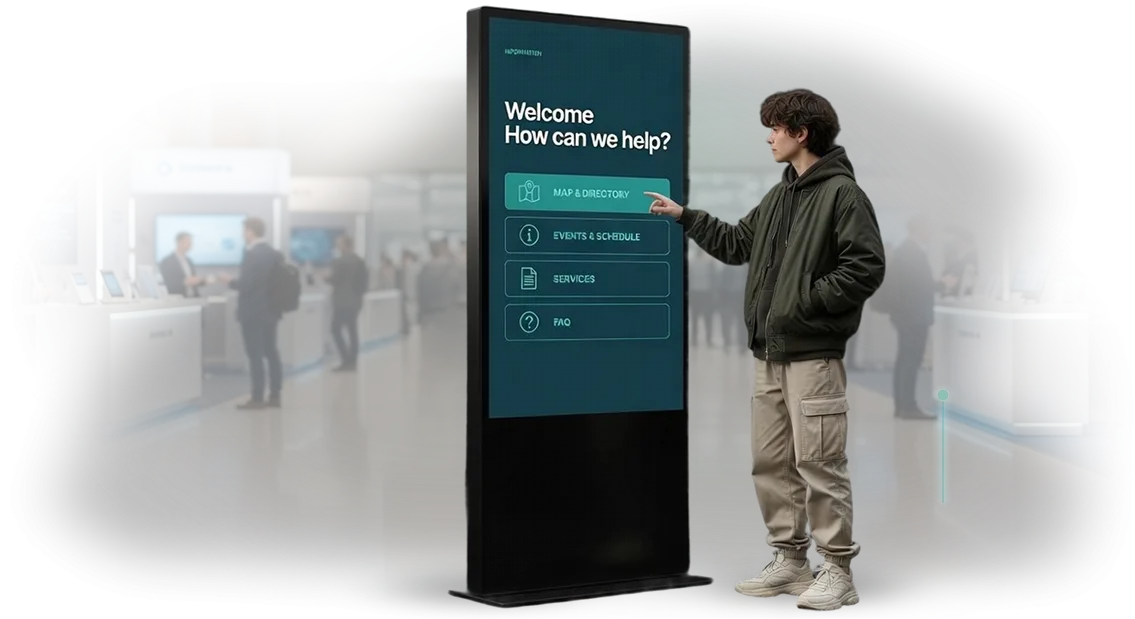
מדוע אתם מאבדים לקוחות ללא קיוסק תורים אלקטרוני
תורים ארוכים הם הסיבה העיקרית לכך שלקוחות עוזבים מבלי להמתין לתורם. מבקר מודרני אינו מוכן לעמוד בלובי ללא מידע: אם לא ברור כמה זמן תימשך ההמתנה ומתי יגיע תורו, הוא פונה למתחרה — לעיתים קרובות לצמיתות.
אובדן לקוח בשלב זה כמעט בלתי נראה: האדם פשוט נעלם מבלי להשאיר פנייה או להסביר מדוע.
ודווקא הרושם הראשוני של הלובי הוא שקובע אם אורח יחזור. המון כאוטי, תור של "במזל", וצוות לא קשוב יוצרים תחושת שירות ירוד לפני שנאמרה מילה אחת.
כתוצאה מכך, גם ההכנסות וגם המוניטין נפגעים: מבקרים לא מרוצים מספרים למכריהם על החוויה השלילית, ופרסום שלילי מפה לאוזן מתפשט מהר יותר מכפי שלקוחות חדשים יכולים לפצות על כך.
קיוסק תורים אלקטרוני משנה זאת כבר מהצעד הראשון: האורח בוחר את השירות על המסך, מקבל מספר, ורואה את זמן ההמתנה בפועל.
במקום כאוס בלובי, יש סדר ברור; במקום שאלות לפקיד הקבלה, יש התחלה מהירה של שירות עצמי. כלומר, השירות מתחיל לפעול לפני שהלקוח מגיע אפילו לדלפק — והשמירה עליו הופכת לקלה יותר.
אנו מיישמים קיוסקי תורים אלקטרוניים במפתח מלא: אנו מגדירים תרחישים לתהליך שלכם, משיקים ותומכים בהם. הלקוחות שלנו שומרים על לקוחותיהם ללא הרחבת צוות וללא הפסדים בעומסי שיא.
מה ישתנה לאחר יישום תור אוטומטי
תור אוטומטי מסיר את מקור התסכול העיקרי — המתנה כאוטית. מבקר מצ'ק-אין בקיוסק תוך 20–30 שניות ומיד רואה כמה זמן נותר עד לפגישה שלו.
הצוות מפסיק להתמודד עם המון חי ומשרת אך ורק לפי הסדר, כך שזמן הביקור הממוצע יורד. כתוצאה מכך, יותר אורחים עוברים בשטח ביום, וההכנסה לשעת עבודה גדלה.
מערכת שקופה מגבירה את שביעות הרצון מעצמה. אנשים מרגישים שמתייחסים אליהם בהגינות: אף אחד לא עוקף בתור, זמן ההמתנה ברור, ואת הזמן הפנוי אפשר לנצל באזור ההמתנה או בגלישה במסכים. אפילו בעומסי שיא גבוהים, לקוחות נשארים רגועים — ההמתנה מפסיקה להיות חוויה שלילית.
אורחים מרוצים הופכים ללקוחות חוזרים. מי שעבר את התהליך פעם אחת במהירות וללא לחץ, סביר יותר שיחזור וימליץ עליכם למכריו.
ביקורים חוזרים הם ערוץ המכירות הזול ביותר: אין צורך להוציא תקציב על פרסום, רק צריך להימנע מלבריח אנשים עם תור.
לבסוף, האוטומציה מקלה על הצוות. עובדים כבר לא מבזבזים זמן בניסיון להבין מי עמד אחרי מי ואינם חווים לחץ בשעות השיא. הם מתמקדים בעבודה המרכזית שלהם: ייעוץ, מכירה, פתרון בעיות. זה מפחית תחלופת עובדים ומשפר את איכות השירות.
בסיכום, תור אלקטרוני הופך את השירות למהיר יותר, את האורחים לנאמנים יותר, ואת הצוות ליעיל יותר. אלה שינויים שמורגשים כבר בשבועות הראשונים וממשיכים לעבוד עבורכם בכל יום.
פורמטי קיוסק לתרחישי שירות שונים
בחירת קיוסק מתחילה לא במעטפת אלא בשאלה: היכן וכיצד ישתמשו בו המבקרים?
קיוסק חיצוני חייב לשרוד גשם וכפור, קיוסק מגע חייב להשתלב בעיצוב הקבלה, וקיוסק לקביעת פגישות חייב לחסוך מהפקידים שאלות חוזרות.
ללא הבנה של הפורמט, קל לשלם יותר מדי עבור תכונות שאינן בשימוש או להזמין פתרון שביר לסביבה תובענית.
אנו לא מוכרים "קופסאות" — אנו מתכננים את תרחיש השירות. ראשית אנו בוחנים את תנועת המבקרים, נקודות המיקום ואחריות הצוות, ולאחר מכן מציעים סוג קיוסק ספציפי ותור אלקטרוני עם העדיפויות הנכונות. להלן פתרונות אופייניים לתעשיות שונות.
תרחישים אופייניים
| פורמט | למי זה מיועד | מה זה נותן ללקוח |
|---|---|---|
| קיוסקים חיצוניים | בנקים, אצטדיונים, מסופים עם גישה 24/7 | עובדים בכל מזג אוויר ומוגנים מפני ונדליזם — שירותים זמינים 24/7 ללא צוות |
| קיוסקי מגע | קבלות, לובי של מרכזים עסקיים, אולמות תצוגה | מבקרים מוצאים הנחיות, קטלוגים או מידע בעצמם ללא הסחת דעת של הפקיד |
| קיוסקי קביעת פגישות | מרפאות, מכוני יופי, שירותים ממשלתיים | מבקרים בוחרים את השירות, המומחה והשעה בעצמם — ללא שיחות או תור חי |
| קיוסקי תורים אלקטרוניים | מרכזי שירות, סניפי דואר, בנקים, דלפקי רישום | מנפיק כרטיס לחלון הנכון, מחלק עדיפויות ומפחית עימותים בדלפק |
בכל אפשרות, אנו מתאימים אישית את הממשק לשירותים שלכם ומחברים אינטגרציה עם מערכת החשבונאות הפנימית שלכם. אם אינכם יודעים איזה פורמט יעבוד, נביא קיוסק הדגמה ונבדוק אותו במיקומכם. כך תראו את התנהגות המבקרים לפני ההשקה ותקבלו החלטה ללא סיכון.
שלבי הפרויקט: מהבריף ועד ההשקה והתמיכה
אנו לוקחים על עצמנו את כל הדרך — מהקונספט הראשון ועד קיוסק עובד במקום שלכם. אין צורך להחזיק קבלנים בצוות: מנהל פרויקט אחראי אחד מדבר אתכם בשפה פשוטה ומנחה כל שלב דרך נקודות ביקורת ברורות.
-
בריף וניתוח. אנו מתעדים היכן וכיצד מבקרים יצטרפו לתור, אילו תרחישים הם הנפוצים ביותר, ומה צריך להופיע על המסך. על בסיס זה, אנו מחשבים את העומס ובוחרים פורמט קיוסק שמתאים לחלל הספציפי שלכם.
-
הצעה מסחרית. אנו מציגים את העלות, ההרכב ולוחות הזמנים בהערכה שקופה. לאחר אישור התקציב, אנו מעגנים את כל ההסכמות במסמך.
-
אב-טיפוס עיצובי. אנו מציירים את המראה החזותי ואת היגיון המסך: איך נראה הצ'ק-אין, היכן לוחצים, מה המשתמש רואה לאחר האישור. אתם בודקים ועורכים את אב-הטיפוס לפני תחילת הפיתוח — זה מונע עבודה מחדש יקרה בהמשך.
-
אישור והנדסה. אנו מאשרים את העיצוב, מיקום הקיוסק ותוכנית החיבור. אנו מתחשבים בנגישות למבקרים ובחלוקת תנועה כך שלא ייווצר תור חדש במסוף עצמו.
-
פיתוח והגדרה. אנו מרכיבים את הקיוסק, מגדירים אותו לתרחישים שלכם ומשלבים אותו עם מערכת התורים האלקטרונית. אנו מריצים בדיקות תחת עומס אמיתי כדי להבטיח שהצ'ק-אין עובד ללא תקלות בשעות השיא.
-
התקנה. אנו מספקים, מתקינים ומחברים את המבנה במיקום הנבחר. אנו בודקים התקנה, כבלים ויציבות פעולה לפני הפתיחה.
-
הדרכה והשקה. אנו מאמנים את העובדים שלכם — מהמנהל ועד צוות החזית — ומספקים מדריך למצבים אופייניים. לאחר ההשקה, אנו נשארים בקשר: אנו תומכים במערכת ומעדכנים תרחישים ככל שהצרכים שלכם משתנים.
כל שלב מתועד, כך שאתם תמיד יודעים היכן אתם עומדים ומה יקרה בהמשך.
מה כלול במסירה ובתמיכה
כאשר אתם מזמינים קיוסק תורים אלקטרוני, אתם מקבלים יותר מסתם מכשיר — אתם מקבלים כלי מוכן לשימוש במפתח מלא. אנו מטפלים בכל השרשרת: מעיצוב וייצור ועד השקה ותמיכה שוטפת.
החבילה כוללת את כל מה שצריך כדי שהצוות יתחיל לעבוד מהיום הראשון ומבקרים יראו ניווט מחושב היטב ללא עיכובים.
- ציוד ואבות-טיפוס עיצוביים — מעטפת, מסך, אלמנטים עיצוביים ממותגים. הקיוסק נראה מסודר, משתלב בעיצוב הפנים ומושך תשומת לב.
- תוכנה — מערכת תורים אלקטרונית המוגדרת לתרחישים שלכם: רישום לתור, קריאה לחלון, ניהול זרימת מבקרים. הממשק מובן לאנשים בגילאים שונים.
- התקנה, הגדרה ובדיקות — המהנדסים שלנו מחברים את הקיוסק, מגדירים תקשורת עם התשתית שלכם ומוודאים שכל התהליכים פועלים כראוי.
- הוראות ומדריכים מוכנים — כרטיסי עזר קצרים לצוות ולמבקרים, וכן תיעוד מלא למנהלים. הדרכת הצוות אורכת לא יותר משעה.
- אחריות ותמיכה טכנית — במהלך תקופת האחריות, אנו מגיבים במהירות לפניות, פותרים בעיות מרחוק או באתר, ומעדכנים את המערכת בעת הצורך.
- פיתוח עתידי למשימות שלכם — אם יופיעו תרחישים חדשים לאחר ההשקה (שירותים נוספים, אינטגרציות, דוחות), אנו מבצעים שינויים ללא החלפת ציוד.
כל התנאים קבועים בחוזה ובמפרט: תכולת המסירה, לוחות זמנים, התחייבויות אחריות והיקף התמיכה. אתם יודעים בדיוק מה אתם מקבלים ובעד מה אתם משלמים — ללא עבודה נסתרת או חשבוניות נוספות.
גישה זו מאפשרת לכם להתמקד במה שחשוב ביותר: שיפור איכות השירות וייעול ניהול המבקרים.
מקרה בוחן: כיצד שילשנו את מהירות השירות
הנה מקרה אמיתי: עבור רשת מרפאות השיניים DentaLux, פרסנו תור אלקטרוני בדלפקי הרישום.
לפני כן, מטופלים חיכו בממוצע 20 דקות לפגישתם: הפקיד הוסח על ידי שיחות טלפון, ניירת ושאלות אישיות, בעוד התור החי יצר חרדה.
הצענו פתרון פשוט — קיוסקי מידע עם מסכי מגע. מטופלים מבצעים צ'ק-אין בעצמם, בוחרים את השירות ורואים את זמן ההמתנה הנוכחי. הפקיד צריך רק לקרוא למטופל הבא — ללא צעקות על פני האולם או ויכוחים על מי היה הבא.
תוצאות בשבועיים הראשונים
זמן ההמתנה הממוצע ירד מ-20 דקות ל-7 דקות — הפחתה פי שלושה. מספר המטופלים שעזבו מבלי להיראות כמעט נחצה. הזמנות לביקורים חוזרים גדלו מכיוון שאנשים הפסיקו לשייך את המרפאה לתורים.
הסוד טמון בלוחות מגע תעשייתיים שעומדים בלחיצות מתמשכות ופועלים ללא תקלות. הגדרנו את הממשק כך שכל מטופל, כולל מבוגרים, יוכל להשתמש בו. לא נדרשה הדרכת צוות.
מדוע המרפאה קיבלה בדיוק תוצאה זו
לא רק התקנו ציוד — מבנה מחדש את כל התהליך: מאזור ההמתנה ועד לוגיקת הקריאה. הקיוסק מציג זמני המתנה אמיתיים, כך שמטופלים לא חשים כאוס. והפקיד זוכה לזמן לטפל במטופלים במקום להתעסק בשגרה.
חודש לאחר מכן, המרפאה הזמינה קיוסקים לשני סניפים נוספים. זהו הסימן הטוב ביותר לכך שהפתרון משתלם. אם אתם רוצים את אותה תוצאה — ספרו לנו על האתגר שלכם, ונחשב את ההשפעה על זרימת המבקרים שלכם.
כיצד לבחור את הפורמט הנכון למשימה שלכם?
בחירת קיוסק אינה שאלה של "איזה מסך גדול או יפה יותר" אלא שאלה של התאמה לתהליכים העסקיים שלכם.
אותו מכשיר יכול להאיץ תור במקום אחד וליצור כאוס במקום אחר אם לא לוקחים בחשבון את זרימת המבקרים, שעות הפעילות וסוגי השירות.
לכן, ראשית אנו בוחנים מה באמת קורה אצלכם: כמה אנשים עוברים ביום, האם יש שעות שיא, וכיצד הצוות מטפל כיום בפניות.
לאחר שהעומס ברור, אנו מטפלים באינטגרציה עם מערכת החשבונאות שלכם. קיוסק לא צריך לעבוד לבד — הוא חלק מהמעגל הכולל: רישום, תור, נתוני לקוחות, דוחות.
המהנדסים שלנו מגדירים את חילופי הנתונים עם המערכת הקיימת שלכם כך שהצוות לא יצטרך להזין נתונים ידנית.
זה מסיר את הפחד הגדול ביותר של הבעלים: "ניישם קיוסק ואז נצטרך לעשות הכל מחדש." אנו משתלבים עם מה שכבר עובד ומרחיבים את היכולות שלו.
אם תרחישים סטנדרטיים אינם מתאימים, אנו מציעים פתרונות מותאמים אישית. לדוגמה, הזמנה מראש דרך הקיוסק, כרטיסי עדיפות לקטגוריות אורחים מסוימות, זיהוי מסמכים או התראה אוטומטית לצוות כאשר לקוח מגיע.
אפשרויות כאלה משנות את תפיסת התור: במקום המתנה מעצבנת, יש תהליך ברור שחוסך זמן גם למבקרים וגם לצוות.
הכלל המרכזי הוא להתחיל מהמשימה, לא מהמכשיר. אנו עורכים ביקורת קצרה, מחשבים את הזרימה היומית הממוצעת ומציעים פורמט שיעבדו בתנאים הספציפיים שלכם.
אם אינכם בטוחים, אנו מבקרים במיקומכם, בוחנים את נקודת ההתקנה ומציעים 2–3 אפשרויות עם הבדלים בעלות ובפונקציונליות. אתם בוחרים את האפשרות שבה הערך ללקוח וההחזר על ההשקעה הם הגבוהים ביותר.
שאלות נפוצות על יישום ותפעול
יישום קיוסק תורים אלקטרוני תמיד מעלה שאלות: מה יקרה אם הוא יתקלקל, האם הצוות יתמודד עם המערכת החדשה, ומתי ההשקעה תשתלם. להלן אנו מתייחסים לחששות המרכזיים — בקצרה ולעניין.
מה אם הציוד יתקלקל? האם יש אחריות ושירות תיקונים?
אנו מספקים אחריות על כל הרכיבים והעבודה — בדרך כלל מ-12 חודשים, עם אפשרות להארכה. במקרה של תקלה, אתם פשוט משאירים פנייה: המהנדסים שלנו מאבחנים את המערכת מרחוק ובמידת הצורך מחליפים את המודול במהירות. זמן ההתאוששות הממוצע הוא יום עסקים אחד, כך שהתור לא יעצור.
אנו מציעים גם תחזוקה שוטפת: בדיקות מתוזמנות, ניקוי ועדכוני תוכנה. זה משתלם יותר מאשר תיקון "לאחר מעשה" ומונע השבתה בשעות השיא.
האם קשה להכשיר את הצוות? האם נצטרך לשכור מנהל נפרד?
ממשק הקיוסק מעוצב כך שכל עובד יכול לשלוט בו תוך 15–20 דקות. אנו מאמנים מנהלים וקופאים — פנים אל פנים או באמצעות שיחת וידאו, עם הוראות מוקלטות.
בפועל, הצוות מתחיל לעבוד באופן עצמאי כבר ביום הראשון, והטעות הנפוצה של הנפקת כרטיס שגוי נעלמת.
הצוות שלכם לא צריך להשתנות: הניהול אורך לא יותר משעה בשבוע ואינו דורש ידע טכני.
כמה מהר משתלמת ההשקעה בקיוסק?
תקופת ההחזר האופיינית היא 6 עד 18 חודשים, תלוי בזרימת הלקוחות ובעומס. החיסכון מגיע משלושה מקורות: שחרור עובד בדלפק הרישום, פחות שגיאות בקביעת פגישות, ושביעות רצון גבוהה יותר של לקוחות שמובילה ליותר ביקורים חוזרים.
לדוגמה, עם 300 מבקרים ביום, קיוסק מחליף כשליש מעבודתו של פקיד. בנוסף, עומס העבודה של הצוות בשעות השיא יורד — אתם נמנעים משעות נוספות ותחלופה. אנו מחשבים את ההחזר המדויק בשלב הבריף וכוללים אותו בהצעה המסחרית.
מה אם לקוחות לא יתרגלו לשירות עצמי?
קיוסקים מודרניים הם אינטואיטיביים: כפתורים גדולים, הנחיות על המסך ותרחיש מוכר של "בחרו שירות — קבלו כרטיס". אנו מגדירים את הממשק לקהל היעד שלכם, כולל מצב נגיש למבוגרים ולאנשים עם מוגבלויות.
הניסיון מראה שבתוך שבועיים, 80% מהמבקרים בוחרים בקיוסק על פני הדלפק. אם חלק מהלקוחות עדיין זקוקים לעזרה, איש צוות יכול לסייע תוך 10 שניות — זה לא יוצר צווארי בקבוק.
איך מתבצעת ההשקה, והאם יש תמיכה לאחר היישום?
אנו מלווים את הפרויקט משלב מדידת זרימת המבקרים ועד החודש הראשון לתפעול. ביום הראשון, המומחה שלנו עובד ליד הקיוסק כדי לעזור למבקרים ולצוות להסתגל.
לאחר חודש, אנו מבצעים בדיקת בקרה: אוספים נתונים סטטיסטיים, מתקנים תרחישים ומשנים טקסטים וכפתורים במידת הצורך.
לאחר ההשקה, מנהל ומהנדס ייעודיים נשארים זמינים. נושאי אחריות ופיתוח מטופלים לפי נוהל: פנייה — אבחון — פתרון. אם השירותים שלכם משתנים, אנו מעדכנים במהירות את תרחישי הקיוסק מרחוק, ללא ביקור באתר.
צרו קשר — נשלח לכם חישוב החזר עבור זרימת הלקוחות שלכם ונענה על כל שאלה נוספת.מוכנים להאיץ את שירות הלקוחות? בואו נתחיל עכשיו
תורים הם לא רק המתנה — הם אובדן הכנסה ישיר. כל מבקר שעוזב הוא לא רק מכירה אבודה אלא גם המלצה שלילית ברשתות החברתיות. הצוות מבזבז זמן בחזרה על הסברים, מה שמאט את השירות עוד יותר.
קיוסק תורים אלקטרוני מסיר את הנטל הזה, אבל התוצאה תלויה במידת ההשתלבות הנכונה של המערכת בתהליכים שלכם.
אנו נעזור לכם להבין זאת ללא סיסמאות וללא תשלומים מראש. השאירו פנייה, ולאחר שיחה קצרה תדעו איזה פורמט מתאים לזרימה שלכם, מה זה עולה ומתי ההשקעה תשתלם. הנה מה שאתם מקבלים:
- ייעוץ בנושא ארגון תורים המותאם לתרחיש הספציפי שלכם — ללא תבניות גנריות או אפשרויות כפויות.
- חישוב עלות שקוף: ציוד, תוכנה, התקנה ותמיכה שוטפת.
- הצגת פתרונות תוך התחשבות בפרטים שלכם: שעות שיא, מספר חלונות, סוגי מבקרים.
- מפת דרכים להשקה עם לוחות זמנים קונקרטיים ואחראים — מההכנה ועד יום העבודה הראשון.
- הערכת השפעה במספרים: כמה זמן ההמתנה יקטן וכמה צוות ישוחרר.
- דוגמאות מפרויקטים דומים כדי שתראו איך זה עובד בפועל.
זה לא מחייב אתכם בשום צורה. תקבלו מספרים קונקרטיים, אפשרויות והערכה כנה — וההחלטה תישאר בידיכם. מלאו טופס קצר: נחזור אליכם בזמן נוח, נענה על כל שאלותיכם ונכין הצעה אישית. בואו נתחיל עכשיו?