

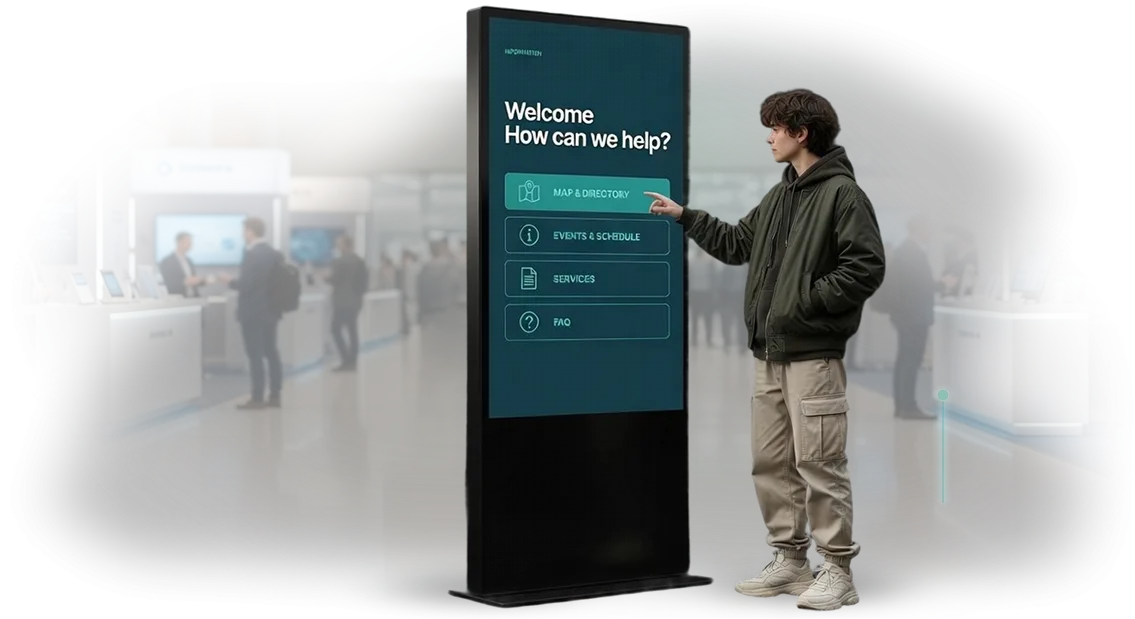
קיוסקים ללא שירותי ענן מאבדים לקוחות — למה זה קורה?
לקוח ניגש לקיוסק כדי לבדוק מבצעים עדכניים או שעות פעילות — ורואה מידע מלפני שבוע. האמון בחברה מתאדה ברגע: אם עוזר דיגיטלי טועה בדברים הקטנים, מה הערובה לשירות המרכזי?
כל מקרה כזה הוא לא רק אי-נוחות — אלא לקוח שאבד בפועל ועבר למתחרה.
הסיבה היא מערכתית: ללא אינטגרציית ענן, ניתן לעדכן את התוכן של קיוסק אינטראקטיבי רק באתר — ידנית, מכשיר אחר מכשיר. זה איטי, יקר, וגוזל ימים שמתורגמים להפסד הכנסות לעסק.
בזמן שאתם סוחבים כונני USB מאתר לאתר, המבצע מסתיים והלקוחות כבר רואים הצעות מיושנות.
הסיבה השנייה היא בלתי נראית אך חשובה לא פחות. קיוסק שאינו מחובר לשירותי ענן הוא עיוור: אתם לא יודעים מה המבקרים מחפשים, באיזה שלב הם נתקעים, או היכן הם נושרים. ניהול כלי כזה בעיוורון פירושו קבלת החלטות על סמך אינטואיציה ולא על סמך נתונים.
אינטגרציית ענן לקיוסק אינטראקטיבי פותרת את שתי הבעיות בבת אחת. עדכון תוכן מרחוק תוך דקות — במכשיר בודד או בכל הרשת בלחיצה אחת.
המערכת גם אוספת סטטיסטיקות שימוש, ומראה אילו קטעים מבוקשים ואילו דורשים שיפור.
עבור הלקוח, זה אומר שירות צפוי: הלקוח תמיד רואה מידע עדכני, והעסק מקבל תמונה מדויקת של הביקוש.
אנחנו מעצבים קיוסקים עם שירותי ענן כסטנדרט, לא כאופציה — כך שחוסר אינטגרציה לעולם לא מוסר את הלקוחות שלכם למתחרים.
מה אינטגרציית שירותי ענן מספקת: 3 יתרונות לעסק שלכם
קיוסק סטטי ללא ענן הוא מסך שעליכם לעדכן ידנית. חיבורו לשירותי ענן הופך אותו לכלי חי: התוכן משתנה מרחוק, ההצעות מותאמות לכל מבקר, וכל פעולה הופכת למדד שימושי.
אנחנו עוזרים לעסקים לממש את היתרונות הללו תוך מספר ימים, ללא החלפת ציוד.
יתרון 1: עדכון תוכן תוך דקות
שינויים במבצעים, מחירים או לוחות זמנים אינם דורשים עוד ביקור בכל קיוסק. פשוט ערכו שינויים בלוח הבקרה בענן — והתוכן החדש מופיע על המסכים מיד. זה חוסך שעות עבודה לעובדים ומאפשר לכם להגיב לשוק מהר יותר מהמתחרים.
יתרון 2: התאמה אישית לכל מבקר
הענן מאחסן את היסטוריית האינטראקציות, כך שהקיוסק מתחיל להבין מי עומד מולו. ניתן להציג לאורח חוזר בונוס, למצטרף חדש הצעת welcome, וללקוח קבוע המלצות על סמך בחירות קודמות. תרחישים אלה מגבירים את הנאמנות ואת סל הקניות הממוצע.
יתרון 3: אנליטיקת מכירות והתנהגות
כל נגיעה במסך הופכת לנתון: אילו מוצרים נצפים יותר, באילו שלבים המבקרים נתקעים, ומה הם מזמינים בסופו של דבר. דוחות חזותיים ברורים בענן מראים אילו תרחישים מייצרים רווח ואילו כדאי לשפר. זה הופך החלטות על מבחר ופרסום למבוססות ראיות — מונעות מספרים, לא מאינטואיציה.
גורמי צורה לקיוסק: איזה מהם לבחור למשימה שלכם
בבחירת גורם צורה לקיוסק, קל ללכת לאיבוד בפרטים טכניים. מה שבאמת חשוב הוא רק דבר אחד — היכן המכשיר יעמוד, מי ייגש אליו, ואיזו משימה עליו לפתור.
המראה, תרחיש האינטראקציה, ומהירות השלמת הפעולה הרצויה על ידי המבקר — כולם תלויים בכך.
ברגע שרואים את ההבדל בין דוכן עומד ללוח צמוד קיר, הבחירה נעשית קלה יותר. אנחנו עוזרים לכם לבחור גורם צורה על סמך ההקשר הספציפי שלכם: משרד מכירות, חלל ציבורי או רצפת קמעונאות.
אינטגרציית שירותי ענן, בינתיים, מאפשרת לעדכן מבצעים, קטלוגים ולוחות זמנים בכל המכשירים בו-זמנית — ללא ביקור מתקין או השבתה כלשהי.
השוו את האפשרויות האופייניות:
| גורם צורה | למי | מה הוא נותן ללקוח |
|---|---|---|
| קיוסק מסך מגע עומד | חנויות, אולמות תצוגה, אולמות תערוכות | מושך תשומת לב עם מסך גדול ותרחיש gamified, מעלה את סל הקניות הממוצע באמצעות מכירות נוספות, ומקל על הצוות ממשימות שגרתיות. |
| דלפק אינטראקטיבי | מסעדות, מרפאות, משרדים אדמיניסטרטיביים | משתלב בצורה קומפקטית באזורי המתנה, מקבל הזמנות והזמנות מקום, מקצר תורים וזמן שירות. |
| לוח צמוד קיר | מוקדי תחבורה, אזורי כניסה, לובי | מספק גישה מהירה לניווט, לוחות זמנים ומידע שימושי ללא מעורבות צוות; עובד במקומות עם תנועת רגלים קבועה. |
כל גורמי הצורה פועלים על פלטפורמה אחת: אתם יוצרים תוכן בעורך קל לשימוש, ושירותי הענן מסנכרנים אותו בכל הקיוסקים ברשת.
זה אומר ששינויים מופיעים על המסכים מיד, ואתם יכולים לראות סטטיסטיקות לכל מיקום בכל רגע, ולהבין איזה גורם צורה מספק את הערך הרב ביותר.
איך פועל פרויקט אינטגרציה: שלבים עבור הלקוח
אינטגרציה של קיוסק עם שירותי ענן אינה הגדרה חד-פעמית אלא תהליך רציף שבו כל שלב מקרב את העסק שלכם לפתרון עובד.
הצוות שלנו, עם ניסיון של 10 שנים, חילק את הפרויקט לשלבים שקופים כך שתמיד תבינו מה קורה, מתי יופיעו התוצאות הראשונות, ועל מה מושקע לוח הזמנים. להלן איך נראה פרויקט אינטגרציה טיפוסי.
-
בריף וסקירת משימה — אנו מנתחים מה אתם רוצים להשיג מהקיוסק: אילו נתונים לשלוח לענן, כיצד לעדכן תוכן, אילו דוחות אתם צריכים. אנו שואלים את השאלות הנכונות כדי שלא נצטרך לבנות את הפתרון תוך כדי תנועה.
-
תוכנית והערכת עלות — אנו קובעים את היקף העבודה, לוח הזמנים והעלות. אתם מקבלים מסמך ברור: מה אנחנו עושים, למה, ומתי. אין שלבים נסתרים — רק אלה שמשפיעים על התוצאה.
-
אישור — אנו דנים בתוכנית איתכם ועם הקבלנים שלכם, אם יש כאלה. אנו מבהירים אילו שירותי ענן אתם כבר משתמשים בהם ואילו נדרשים לזרימת העבודה החדשה. אנו חותמים על ההסכם ומתחילים.
-
יישום ואינטגרציה — אנו מגדירים את הקיוסק ומחברים אותו לשירותי הענן שלכם: סנכרון נתונים, עדכון תוכן, איסוף סטטיסטיקות. אנו משתמשים בציוד מקצועי ובכלים מוכחים, כך שהפרויקט שלכם לעולם לא נתקע.
-
בדיקות והשקה — אנו בודקים כל תרחיש: כיצד הקיוסק מתנהג בעומס שיא, מה קורה כשהחיבור לענן נופל, והאם הנתונים מחושבים נכון. לאחר מכן, אנו מכניסים את המערכת לפעולה.
-
תמיכה ופיתוח — אנו נשארים בקשר: אנו עוקבים אחר ביצועי הקיוסק, מעדכנים תוכנה, ועוזרים להוסיף תכונות חדשות. אם משהו משתנה בעסק שלכם, אנו מתאימים במהירות את האינטגרציה.
התוצאה — אתם מקבלים מערכת מלאה ועובדת, לא הדגמה גסה. בכל שלב אתם מקבלים תוצרים ברורים: מסמכים, תרחישי בדיקה ודוחות. זה מאפשר לכם לשלוט בתקציב ובלוח הזמנים, ומעל הכל, לתכנן את התפתחות הפרויקט בביטחון.
מה אתם מקבלים בחבילה לאחר השקת הקיוסק
לאחר ההשקה, אתם מקבלים יותר מסתם ציוד — אתם מקבלים כלי עסקי מוכן לשימוש שמתחיל לספק ערך מיד. אנו מוסרים את הפרויקט במפתח פתוח (turnkey) — עם תוכנה מוגדרת, אינטגרציית שירותי ענן, ותיעוד שהצוות שלכם יכול להבין. להלן חבילת המסירה המלאה.
- קיוסק מוגדר עם תוכנה ואינטגרציית שירותי ענן — המכשיר עובד מיד לאחר ההתקנה, כל הנתונים מסונכרנים אוטומטית, ואינכם צריכים להיכנס לפרטים טכניים.
- תיעוד לצוות שלכם — מדריכים תמציתיים להשקה, תחזוקה שוטפת ותרחישים אופייניים. ללא ז'רגון טכני מורכב: הצוות שלכם יכנס לעניינים תוך שעה.
- הדרכת עובדים — אנו מקיימים מפגש מעשי למנהלים ומפעילים: כיצד לנהל תוכן, לעדכן מידע, ולהגיב למצבים בלתי צפויים.
- אחריות חומרה ותוכנה — אחריות רשמית בתוספת התמיכה שלנו במסגרת החוזה. אם משהו משתבש, אנו פותרים זאת במהירות, ללא השבתה.
- ניטור ותמיכה מרחוק — אנו יכולים לראות את מצב הקיוסק ותשתית הענן, כך שרוב הבעיות נפתרות לפני שהן משפיעות על הלקוחות שלכם.
- עדכונים ושיפורים — ככל שהעסק שלכם גדל, ניתן להרחיב את הקיוסק בתכונות חדשות; עדכוני תוכן וממשק אינם דורשים החלפת ציוד.
בסופו של דבר, אתם מקבלים ביצועי קיוסק צפויים ושקט נפשי: הצוות מיומן, התיעוד זמין, ואנו מטפלים בכל העניינים הטכניים. כל מה שנשאר הוא ליהנות מהתוצאה — שירות מהיר ומבקרים מרוצים.
מקרה בוחן: כיצד קיוסק הגדיל המרה בקניון
רשת הקניונים Gulliver התמודדה עם בעיה אופיינית: מבקרים הלכו לאיבוד, לא ראו מבצעים, ועזבו בלי לקנות דבר.
פתרנו זאת עם קיוסקים אינטראקטיביים עם אינטגרציית ענן — חלונות ראווה, קטלוג החנויות והמבצעים מתעדכנים אוטומטית ממסד נתונים יחיד בזמן אמת. מנהלים משנים הנחות או מוסיפים אירוע, ותוך מספר דקות כל הקיוסקים מציגים נתונים עדכניים.
התוצאות הופיעו בתוך החודש הראשון. ההמרה ממעורבות בקיוסק לביקור בחנות המיועדת הגיעה ל-38%, והסל הממוצע של קונים אלה היה גבוה ב-18% מהממוצע בקניון, הודות לקודי קידום מכירות והמלצות מותאמות אישית.
האינטראקציות עם המפה האינטראקטיבית גדלו ב-26% — המבקרים החלו לתכנן את המסלולים שלהם והלכו לאיבוד פחות.
השוכרים שמו לב להשפעה: הבקשות להשתתף במבצעי הקיוסק גדלו באופן ניכר. ורשת הקניונים עצמה הזמינה את הפתרון לשלושה נכסים נוספים שלה — עבורנו, הזמנה חוזרת היא המדד העיקרי לאמינות.
עבורנו, דוגמה זו מאשרת: קיוסק אינטראקטיבי עם אינטגרציית ענן אינו שלט אלקטרוני אלא כלי מכירות.
הפרויקט הראה כיצד ערוץ אחד הופך למערכת אקולוגית שמספקת ערך מדיד ומגבירה המרה עבור כל המעורבים — מבקרים, שוכרים ובעלים.
כיצד לבחור גורם צורה לקיוסק לצרכי העסק שלי?
בחירת קיוסק מתחילה לא במודל מכשיר אלא בשאלות: מה הקיוסק צריך להשיג בעסק שלכם, מי ישתמש בו וכיצד, ואיזו תוצאה אתם רוצים להשיג.
אותו גורם צורה יכול להיות פתרון מצוין לרישום מבקרים ובלתי מתאים לחלוטין לקטלוג מוצרים באולם תצוגה. לכן אנו מגדירים תחילה יחד איתכם את תרחיש השימוש — הוא הבסיס לבחירת גורם הצורה.
אם המשימה היא שירות מהיר בתור (הזמנות, תשלום, חלוקת כרטיסים), קיוסק שולחני או עומד קומפקטי נוח יותר. אם צריך למשוך תשומת לב ולהחזיק אורח בדוכן או בתצוגה, מסך מגע גדול עם ממשק תוסס מתאים.
אבל גורם הצורה הוא רק חצי מהפתרון. אינטגרציית שירותי ענן חשובה לא פחות: היא מאפשרת לעדכן תוכן, לשנות מבצעים ולקבל סטטיסטיקות שימוש ללא ביקור מהנדס באתר. זה משפיע ישירות על מהירות התגובה של הצוות וקלות הניהול.
אנחנו לא מציעים "לקחת את הקיוסק הגדול ביותר" או "את האפשרות הזולה ביותר". אנו מנתחים את המטרות שלכם, את אתר ההתקנה, את תנועת המבקרים ואת דרישות העיצוב.
לאחר מכן אנו בוחרים גורם צורה שפותר בדיוק את הבעיה שלכם ומפעילים רק את הפונקציונליות שאתם צריכים. אם אינכם צריכים עיבוד תשלומים, אינכם משלמים עבור אופציה זו.
אם אתם צריכים איסוף פרטי קשר, אנו בונים אינטגרציית CRM דרך שירות ענן מההתחלה כך שהנתונים מגיעים אוטומטית.
המפתח הוא לא לבלבל בין צורה למטרות. קיוסק "למראית עין" או "רק שיהיה" לא יספק שום ערך.
אנו עוזרים לכם לנסח דרישות ברורות: איזה תוכן צריך להיות לו, באיזו תדירות הוא מתעדכן, כמה אנשים ישתמשו בו ביום, והאם יש צורך במשוב.
על סמך נתונים אלה, אתם מקבלים קיוסק שבאמת עובד עבור העסק שלכם: הוא מגביר את מהירות השירות, אוסף נתונים ומשפר את תפיסת המותג.
חששות נפוצים: תשובות לשאלות על תפעול קיוסקים
בעת הטמעת קיוסקים אינטראקטיביים, לקוחות שואלים לרוב את אותם דברים: האם הציוד ייכשל ברגע קריטי, עד כמה מוגנים נתוני האורחים, ומי אחראי לפעולה רציפה.
אלה השאלות הנכונות — הצלחת האירוע ומוניטין המותג תלויים בהן. בואו נטפל בחששות העיקריים נקודה אחר נקודה.
מה אם הקיוסק יתקלקל במהלך אירוע?
תקלות הן נדירות: לפני ההשקה, אנו בודקים כל קיוסק למשימה הספציפית שלכם ומשתמשים בציוד מקצועי המיועד לשימוש אינטנסיבי. אבל אם תקלה אכן מתרחשת, לא תישארו לבד עם הבעיה.
הצוות שלנו זמין: נבצע אבחון מרחוק, ובמידת הצורך נחליף את המכשיר או נשקם את הפעולה במהירות.
זמן התגובה הממוצע הוא תוך יום עסקים אחד. זה מספיק כדי לשמור על האירוע במסלול ולהבטיח שהאורחים לא ישימו לב לקשיים טכניים.
האם זה בטוח לאחסן ולהעביר נתוני מבקרים?
הנתונים שהאורחים מכניסים לקיוסק — שם, מספר טלפון, תשובות לסקרים — מועברים לשירותי ענן בערוץ מאובטח. אנו מתכננים את האינטגרציה כך שמידע לא נשאר על המכשיר יותר מהנדרש ונגיש רק לחברה שלכם.
זה תואם לדרישות סטנדרטיות לעיבוד נתונים אישיים, ורק עובדים מורשים מקבלים גישה ללוח הבקרה בענן. לא תצטרכו לדאוג לדליפות.
מה קורה בזמן הפסקת אינטרנט?
הקיוסק ממשיך לעבוד באופן עצמאי: סקרים, רישומים ושאלונים נשמרים על המכשיר ונשלחים אוטומטית לשירות הענן לאחר שחזור החיבור. המבקרים לא מבחינים בהפרעה, ואתם מקבלים נתונים מלאים ללא אובדן.
במילים אחרות, אפילו אינטרנט לא יציב במקום לא יפריע לאיסוף הנתונים או יפגע בחוויית האורחים.