

שילוב קיוסקים עם מערכות ניווט: למה אתם צריכים את זה
מבקר נכנס לבניין ותוך דקה הולך לאיבוד: השילוט לא עוזר, הצוות עסוק, והמחלקה שהוא צריך מתגלה כאגף אחר. המבקר עוזב בלי להשיג את מטרתו, והעסק מאבד לקוח. הבעיה אינה אורח לא קשוב, אלא ניווט שלא מצליח להתמודד עם זרימת האנשים האמיתית.
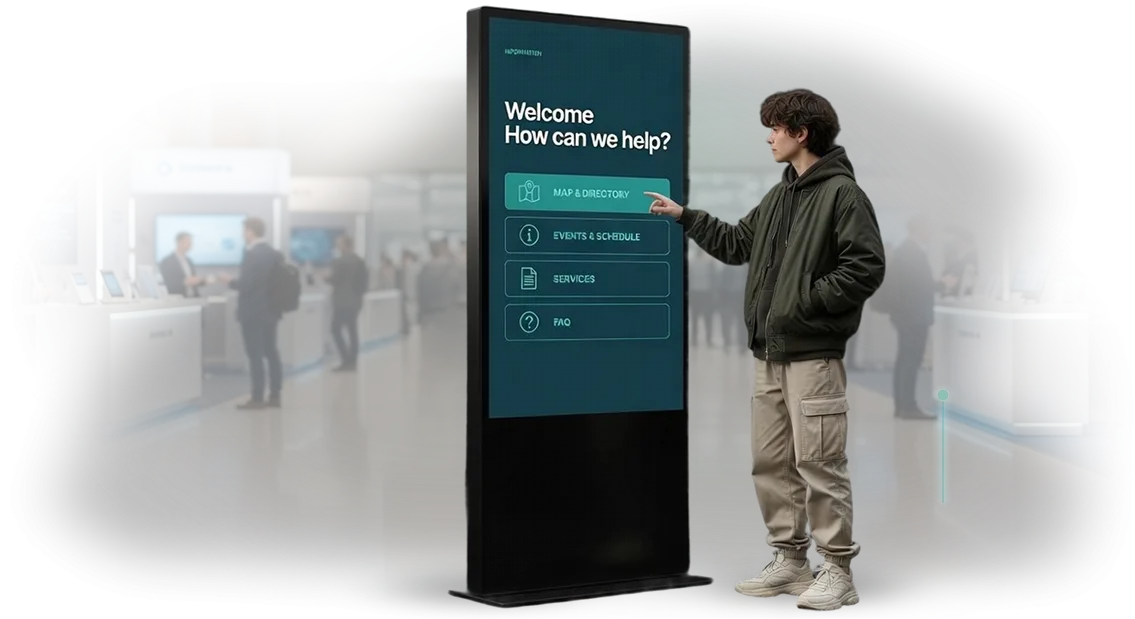
קיוסק אינטראקטיבי המחובר למערכת ניווט הופך בניין למרחב ברור וקל להבנה. המסך מציג מפת בניין אינטראקטיבית עם חיפוש לפי מחלקות, שירותים ומשרדים.
האורח בוחר יעד, הקיוסק מציג מסלול פשוט ומספק הנחיות שלב אחר שלב בלי לדרוש ממנו לקרוא תרשימים מורכבים. במהותו, זהו קיוסק ניווט לבניין שעובד באופן אינטואיטיבי ומהיר.
עבור עסקים, זה מתורגם לתוצאות קונקרטיות: הצוות מופרע פחות בשאלות "איפה אני מוצא…?", השירות מואץ, וחלקם של המבקרים שבאמת מגיעים ליעדם גדל באופן ניכר. פחות אנשים עוזבים בלי למצוא את מטרתם — כלומר פחות מכירות אבודות.
מערכת ניווט קיוסק גם מראה אילו יעדים מבוקשים ביותר: אתם רואים אילו שירותים ואזורים מבוקשים ויכולים להשתמש בנתונים אלה כדי לחדד את הניווט ואת מיקום הנקודות המרכזיות.
אנחנו מתאימים את הפתרון למתקן ספציפי: קניון, מרכז עסקים, מרפאה, תחנת רכבת או מוסד ממשלתי. שילוב הקיוסק–ניווט מיושם כך שהמערכת סופגת שינויי תכנית ועדכוני רשימת שוכרים ללא השבתה.
בסופו של דבר, אתם מקבלים כלי שחוסך זמן למבקרים, מפחית עומס על הצוות ומגביר נאמנות — בלי להיכנס לפרטים טכניים.
יתרונות עסקיים של קיוסקים אינטראקטיביים
קיוסק אינטראקטיבי הוא לא רק מסך עם תפריט, אלא כלי שמסיר מטלות שגרתיות מהעובדים ומעניק למבקרים עצמאות.
אורחי מרכז עסקים או מתחם אירועים שואלים לעתים קרובות את אותן שאלות: איפה חדר הישיבות, איך מגיעים למחלקה מסוימת, אילו שירותים זמינים. הקיוסק עונה להן מיידית, ללא מעורבות אנושית.
כתוצאה מכך, התור בדלפק הקבלה מתקצר, והעובדים מתמקדים במשימות חשובות באמת במקום לחזור על הוראות הגעה מאה פעמים. המבקר מקבל מידע מיידית — זה מגביר את נאמנותו: הוא מרגיש שדואגים לו וחש רמת שירות מודרנית.
גישה עצמית למידע חוסכת זמן לאורח ומפחיתה לחץ: אין צורך לחפש מנהל או לחכות שמומחה יתפנה.
עבור מרכז עסקים או חברה, הקיוסק הופך לחלק ממערכת הניווט ומהזהות הארגונית. ממשק מעוצב היטב, לוגו והנחיות ברורות — כל אלה מחזקים את ההכרה במותג.
אפילו אינטראקציה קצרה עם הקיוסק מעצבת את הרושם של החברה כאמינה ומתקדמת טכנולוגית. זהו יתרון בולט של הקיוסק האינטראקטיבי על פני שילוט רגיל: הוא לא רק מצביע לכיוון אלא מטביע את המבקר בסביבת המותג.
יתרון נוסף הוא הפחתת עומס העבודה על הצוות. מנהלים, מאבטחים ומזכירות מפסיקים להיות "לשכת מידע" ומתמקדים בתפקידיהם הליבה.
והמבקרים מרגישים בטוחים יותר: הם מנהלים את התהליך בעצמם, מוצאים את המיקום שהם צריכים ומקבלים תשובות בכל עת, גם כשדלפק הקבלה עמוס.
בסופו של דבר, הקיוסק מספק ערך בכמה חזיתות: פחות שגרה לצוות, נאמנות גבוהה יותר של מבקרים וחיזוק ניכר לתדמית החברה.
לקוחות חוזרים שוב כי השירות הפך למהיר ונוח יותר — כלומר ההשקעה בקיוסק משתלמת דרך שביעות רצון גבוהה יותר ופניות חדשות.
פורמטי קיוסק למשימות שונות
פורמט הקיוסק אינו שאלה עיצובית — זו שאלה של איך המבקר יתקשר עם הניווט שלכם.
טרמינל עומד עובד היטב בלובי ובאטריומים, קיוסק צמוד קיר חוסך מקום במסדרונות, וקיוסק חיצוני ממשיך לעבוד היכן שאזור הכניסה מסתיים. בחירת הפורמט משפיעה ישירות על כמה אנשים ישתמשו במערכת ויימנעו מלכת לאיבוד.
להלן טבלת השוואה למשימות טיפוסיות. היא תעזור לכם לבחור אפשרות עבור החלל, התנועה והתרחישים של המבקרים שלכם.
| פורמט | היכן הוא עובד | מתי לבחור | מה הוא מספק |
|---|---|---|---|
| קיוסק מידע עומד | לובי של קניונים, מרכזי עסקים, שדות תעופה | תנועה רגלית גבוהה, חלל עמוס, צורך בתפוקה גבוהה | התמצאות מהירה ללא סיוע צוות, הקלה על דלפק המידע |
| קיוסק ניווט צמוד קיר | מסדרונות צרים, אזורי מעליות, מעברים, מוסדות ממשלתיים | המקום מוגבל אך המסלולים מורכבים ודורשים הנחיה | חוסך שטח רצפה, ניווט בכל נקודת החלטה |
| טרמינל מסך מגע חיצוני | אזורי כניסה, שטחים מסביב, חניונים | צורך להראות את המסלול לפני שהמבקרים בכלל נכנסים לבניין | יותר אנשים מגיעים ליעדם, פחות מבקרים אבודים |
| קיוסק לקניון | קיוסקי מידע ליד כניסות, ליד דרגנועים, מתחמי מזון | עוגן גדול, תכנית רב-מפלסית, אזורי אירועים | זמן שהייה ארוך יותר, הנחיות לחנויות ומבצעים |
| קיוסק לשדה תעופה | אזורי צ'ק-אין, שערי עלייה, אזורי מעבר | זרימת נוסעים גבוהה, מעט זמן, צורך בלוגיסטיקה ברורה | פחות טיסות שהוחמצו, הפחתת עומס על הצוות |
עברו על רשימת הבדיקה: מהי זרימת המבקרים בשעות השיא, כמה נקודות כניסה והצטלבויות מסלולים יש, האם יש צורך להראות את המפה לפני הכניסה לבניין.
התשובות קובעות את הפורמט — אנחנו נעזור לכם לבחור את האפשרות האופטימלית למשימה ולתקציב שלכם, ונגדיר את מערכת הניווט לבניין הספציפי שלכם.
שלבי יישום פרויקט במפתח מלא
יישום קיוסק במפתח מלא הוא תהליך יחיד שבו הלקוח לא צריך להיכנס לפרטים טכניים.
אנחנו עוברים ברצף את כל השלבים — מהבריף ועד ההשקה — ומתעדים לוחות זמנים והערכות תקציב כך שתקבלו כלי ניווט עובד ללא הפתעות או עלויות נסתרות.
-
בריף ומטרות — אנחנו דנים היכן ימוקם הקיוסק, מי המשתמשים העיקריים ואילו תרחישי ניווט חשובים. אתם מקבלים רשימה מובנית של שאלות והמלצות, לא רק טופס למילוי.
-
תכנית עבודה והערכת עלות — אנחנו קובעים לוחות זמנים, שלבים ומחיר סופי. לאחר האישור, התכנית נותרת ללא שינוי, וכל התאמה נדונה מראש ואינה משפיעה על התקציב הכולל.
-
אב-טיפוס עיצובי — אנחנו יוצרים אב-טיפוס ממשק בסגנון המותג שלכם, תוך התחשבות בלוגיקת תנועת המבקרים. אתם מאשרים את האב-טיפוס לפני הייצור, כך שתיקונים בשלב זה אינם דורשים תשלום נוסף.
-
ייצור הקיוסק — אנחנו מייצרים את המעטפת ומגדירים את התוכנה, תוך שילוב עם מערכות הניווט שלכם. אנו משתמשים בציוד מקצועי ובכלים מוכחים כך שהקיוסק פועל באופן אמין בשימוש רציף.
-
התקנה וחיבור — אנחנו מספקים ומתקינים את הקיוסק במיקום המוסכם, מחברים אותו לחשמל ולמערכות המידע של הבניין. אנו בודקים את כל התרחישים לפני פתיחת הדלתות למבקרים כדי למנוע בעיות ביום הראשון.
-
השקה לתפעול — אנחנו מבצעים בדיקות סופיות על תרחישים אמיתיים, מוסרים הוראות ומכשירים את הצוות שלכם. הקיוסק נכנס לשירות מיד לאחר חתימת פרוטוקול הקבלה.
-
תמיכה לאחר אחריות — אנחנו נשארים בקשר: מעדכנים תוכן, מסייעים עם מערכת הניווט ומגיבים במהירות אם עולות שאלות. אתם אף פעם לא נשארים לבד עם הציוד לאחר ההשקה.
מה כלול במסירת קיוסק אינטראקטיבי
קיוסק אינטראקטיבי הוא לא רק פאנל מסך מגע, אלא פתרון מוכן לעבודה שמספק ערך מהיום הראשון. אנחנו מספקים את כל החבילה במפתח מלא: אתם לא צריכים לתאם מספר קבלנים או להרכיב את המערכת מחלקים נפרדים.
המסירה הסטנדרטית כוללת את כל האלמנטים הדרושים:
- קיוסק מסך מגע במעטפת מוגנת — ציוד המיועד לפעילות מסביב לשעון במקומות עם תנועה גבוהה.
- תוכנה עם מערכות ניווט — מפת בניין, חיפוש משרדים ושירותים, מסלולים למיקום הרצוי, קטלוג שירותים.
- עיצוב ממשק מותאם אישית — עיצוב בזהות הארגונית שלכם, כפתורים גדולים, לוגיקה ברורה, התאמה לתרחישים שונים.
- התקנה וחיבור באתר — הגדרה, כבילה, תצורת רשת ובדיקת כל הפונקציות.
- הכשרת צוות — איך לעבוד עם הקיוסק, לעדכן מידע ולטפל בשאלות נפוצות של מבקרים.
- הוראות תפעול — חומרים ברורים לצוות ולמנהלים.
- תמיכת אחריות — סיוע ואבחון מרחוק לכל תקופת השירות.
כל העבודה מתבצעת בשלבים: ראשית אנו מעצבים את הממשק, לאחר מכן מייצרים ומתקינים את הקיוסק, ורק לאחר שהצוות שלכם סיים הכשרה אנו מוסרים את המערכת לתפעול.
כך אתם מקבלים לא אוסף חלקים, אלא כלי עובד שעוזר למבקרים להתמצא במהירות ומפחית את העומס על הצוות.
מקרה בוחן: איך קיוסק הגדיל המרה בקניון
מבקרים הולכים לאיבוד בקניון גדול, מבזבזים דקות בחיפוש אחר המחלקה שהם צריכים, ולעתים קרובות עוזבים בלי לקנות כלום — פשוט כי לא הצליחו למצוא את החנות.
דלפק המידע מוצף בקריאות "איפה…", והצוות מוסח מהאורחים על ידי הוראות הגעה חוזרות ונשנות.
פתרנו את הבעיה עבור קניון מרכזי: התקנו קיוסקים אינטראקטיביים עם ניווט במרכז הקניות והבילוי «גלריה» — אחד המקומות המתוירים ביותר בעיר. הקיוסק מראה את המסלול למחלקה תוך 10 שניות במקום מספר דקות.
תוצאות לאחר החודש הראשון: זמן חיפוש המחלקה ירד ב-50%, ומספר הפניות לדלפק המידע ירד בשליש.
מה זה אומר עבור העסק
מהירות החיפוש משפיעה ישירות על ההמרה. הקיוסקים שימשו יותר מ-20,000 פעמים, וכל מבקר שלישי נכנס לחנות היעד שלו לאחר שימוש בניווט — המרת הקניון הכוללת גדלה ברבע.
דלפק המידע שוחרר משליש מהפניות השגרתיות. הצוות עבר למתן סיוע חי לאורחים במקום לחזור על "איפה המעלית". האורחים הפכו פחות מתוסכלים, נשארו במרכז זמן רב יותר וחזרו בתדירות גבוהה יותר.
הפרויקט ממשיך לפעול: אנחנו מעדכנים מפות, מוסיפים מבצעי שוכרים והנחיות לאירועים. לאחר שלושת החודשים הראשונים, הקניון הזמין הרחבת המערכת לכניסות נוספות — ההזמנה החוזרת מאשרת שהקיוסק מחזיר את ההשקעה.
איך לבחור קיוסק למערכות הניווט שלכם?
בחירת קיוסק מתחילה לא במראה או במפרט הטכני, אלא בשאלה: איך הוא ישתלב בניווט שכבר קיים במתקן שלכם.
למבקרים לא אכפת איזה מעבד נמצא בפנים — מה שחשוב הוא למצוא בית קפה, חדר ישיבות או מחלקה תוך 30 שניות. לכן, הקיוסק צריך להיות הרחבה של מערכת הניווט שלכם, לא אי נפרד שיוצר בלבול.
ראשית, העריכו את היקף המתקן ואת לוגיקת תנועת המבקרים. עבור קניון גדול או מרכז עסקים עם עשרות נקודות, אתם צריכים דגם שמתחבר בקלות לקטלוג אובייקטים אחיד ומעדכן נתונים בזמן אמת.
עבור משרד קטן או אולם תצוגה, פתרון קומפקטי עם תפריט ברור מספיק. טעויות בשלב זה עולות ביוקר: לאחר ההשקה, אתם עשויים לגלות שהקיוסק לא תומך בפורמטי המפה שלכם או לא יכול להציג שינויי תכנית עדכניים.
השלב הבא הוא לבדוק תאימות של הקיוסק למערכת הניווט הקיימת שלכם. בדקו אילו פורמטי נתונים הפלטפורמה שלכם משתמשת בהם והאם הקיוסק יכול לעבוד איתם ללא שכפול ידני של מידע.
אם המערכת האחראית על הניווט כבר אוספת נתונים על נקודות עניין ומסלולים, הקיוסק צריך לשלוף אותם אוטומטית.
זה חוסך לצוות שלכם הזנת נתונים כפולה ומונע מצבים שבהם מסך הקיוסק מציג נתונים מיושנים בעוד המפות מציגות מידע עדכני.
התקציב כאן פועל לא כמחיר המעטפת, אלא כהשקעה בדיוק הניווט. פשוט להתקין מסך זה לא מספיק — אתם צריכים שרשרת מכווננת היטב של "קיוסק — ארכיטקטורת שרת — מערכת ניווט".
זה מה שמבטיח פעולה יציבה בשעות השיא, כאשר עשרות מבקרים ניגשים לקיוסק בו-זמנית. אנחנו עובדים עם משימות כאלה באופן קבוע: אנו בוחרים פתרון התואם את התשתית הקיימת שלכם כך שתקבלו תוצאה צפויה ללא הפתעות לאחר ההשקה.
הקיוסק הנכון הוא זה שהמבקר אף פעם לא חושב עליו: הוא פשוט מוצא את המיקום הרצוי בכמה הקשות.
אם אתם שוקלים לעדכן את הניווט במתקן שלכם, התחילו בביקורת של המערכת הנוכחית ובהבנה ברורה של כמה אנשים משתמשים בה ובאיזו תדירות.
עם הנתונים האלה, בחירת הדגם הופכת לשקופה, והשילוב עם מערכת הניווט הופך למהיר וללא כאבים עבור הצוות שלכם.
שאלות נפוצות על תפעול קיוסק
קיוסק הוא הפנים הדיגיטליות של החברה שלכם: הוא מקבל את פני המבקרים, עוזר בניווט ויוצר את הרושם הראשוני. באופן טבעי, ללקוחות יש שאלות על אמינות: האם הציוד יתקלקל, מי יטפל בו, איך מעדכנים מידע. להלן אנו עונים על החששות העיקריים — בקצרה ולעניין.
איזו אחריות ניתנת על הקיוסק ומה היא מכסה?
אנחנו מספקים אחריות על כל הציוד וההתקנה — מהמעטפת ועד מסך המגע. אם מתרחשת תקלה במהלך תקופת האחריות, אנחנו מגיעים ומתקנים על חשבוננו.
האחריות מכסה את פעולת כל המודולים: מסך, מעטפת, לוחות בקרה, ספק כוח ותוכנה.
מה כולל תחזוקת קיוסק?
תחזוקה שוטפת היא מניעה, לא תיקון תגובתי. אנחנו בודקים את מצב המסך, התושבות והקירור, מעדכנים את התוכנה ומנקים את המערכת. זה בדרך כלל לוקח כמה שעות בחודש, והקיוסק ממשיך לפעול ללא השבתה.
מה קורה אם הקיוסק מתקלקל?
תהיה לכם ערוצי תקשורת ישירים עם מהנדס. ב-30–40 הדקות הראשונות, אנחנו מסייעים בטלפון או מרחוק — רוב הבעיות נפתרות ללא ביקור באתר. אם הבעיה היא חומרתית, אנחנו מגיעים תוך 1–2 ימי עסקים ומשחזרים את הפעולה. עבור מתקנים קריטיים, אנו מציעים יחידת גיבוי למשך התיקון.
איך מעדכנים תוכן בקיוסק?
עדכון אורך לא יותר מ-10–15 דקות ואינו דורש ידע מיוחד. אתם שולחים חומרים חדשים ואנחנו מעלים אותם מרחוק, או שאנו מגדירים גישה לחשבון אישי שבו תוכלו לשנות באופן עצמאי באנרים, תפריטים, מפות וכל קבצים. אין צורך בהבהוב או טרחה טכנית.
גישה זו מבטיחה שהקיוסק פועל כמו שעון: אתם מתמקדים בעסק שלכם במקום להתעסק בטכנולוגיה. אנחנו פותרים את כל הבעיות במהירות, בשקיפות ובמינימום מאמץ מצידכם.מוכנים לדון בפרויקט שלכם? השאירו פנייה
השאירו פנייה — ואנחנו נכין עבורכם תכנית פרויקט תוך יום עסקים אחד. בלי הבטחות מופשטות: אתם מקבלים פרטים קונקרטיים על פורמט, לוח זמנים ותקציב לפני שהעבודה בכלל מתחילה.
- בקשת יישום קיוסק. אתם שולחים פנייה דרך האתר או בטלפון — אנחנו יוצרים קשר באותו יום כדי לברר את סוג המתקן (קניון, מוזיאון, תחנת רכבת, מרכז עסקים) ואת הדרישות הבסיסיות.
- ייעוץ קיוסק. אנחנו דנים במטרות: לאן צריך להנחות מבקרים, איזה מידע להציג, וכיצד השילוב עם מערכות ניווט ישנה מסלולים. אנחנו עונים על שאלותיכם ומצביעים על מה שלעתים קרובות מתעלמים ממנו.
- הצעת פורמט. לאחר דיון קצר, אנחנו מעצבים את האפשרות האופטימלית: קיוסק מסך מגע, קיוסק צמוד קיר או שולחן אינטראקטיבי. אנחנו מראים כיצד הניווט שלכם יוטמע בממשק ואילו תרחישים הוא יפתח.
- חישוב עלות קיוסק. אנחנו שולחים הערכת עלות עם סעיפים ברורים: ציוד, פיתוח ממשק, התקנה, השקה ותמיכה. בלי עמלות נסתרות.
- הדגמת קיוסק. אתם רואים את הממשק המוגמר על מסך או כאב-טיפוס, בודקים תרחישי ניווט hands-on ומבצעים שינויים לפני חתימת החוזה.
- השקה ותמיכה. אנחנו מתקינים את הציוד, מגדירים קישוריות לשרת ומכשירים את הצוות שלכם. לאחר מכן — תמיכה טכנית ועדכוני תוכן לפי ההסכם.
כל שלב מתועד בכתב — אתם שומרים תיאור של הפתרון והערכת העלות. אתם לא מסתכנים בכלום מלבד כמה דקות של שליחת הפנייה.