

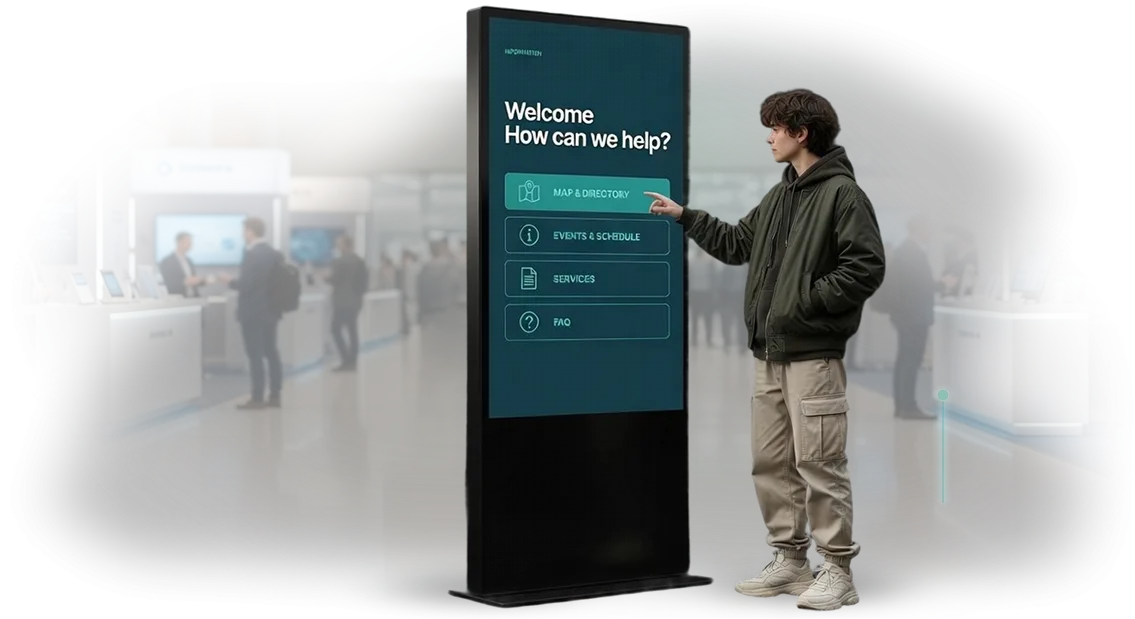
קיוסקים עם מערכות ניהול מלאי: היפטרו מהתורים
תורים הם לא רק אי-נוחות למבקרים — הם אובדן הכנסות ישיר. כשמתלכדים יותר משלושה או ארבעה אנשים בתור לקופה, חלק מהלקוחות מסתובבים ועוזבים, ואחרים הולכים למתחרים.
הדבר חריף במיוחד בשעות השיא, כשעומס הלקוחות הוא הגבוה ביותר ומהירות השירות יורדת עקב פעולות ידניות.
קיוסק אינטראקטיבי פותר את הבעיה הזו: הלקוח מוצא את המוצר, בודק זמינות ומבצע הזמנה תוך דקה, בלי צורך לדבר עם הצוות. אבל הנקודה המרכזית היא שהקיוסק לא עובד לבד; הוא עובד יחד עם מערכת ניהול המלאי שלכם.
משמעות הדבר היא שרמות המלאי, המחירים והמבצעים תמיד מעודכנים, והלקוחות רואים רק את מה שבאמת זמין.
אינטגרציה עם ניהול המלאי מסירה פערים בין חנות הרשת לבין המחסן האמיתי. הלקוחות כבר לא נתקלים במצב שבו מוצר נמצא בקטלוג אבל חסר על המדף.
ואתם לא צריכים לסנכרן נתונים ידנית — הכל מתעדכן אוטומטית. כתוצאה מכך, העומס על היועצים יורד, השירות מהיר יותר, והתורים מפסיקים להיות סיבה לאובדן מכירות.
אנחנו מתכננים ומיישמים קיוסקים כאלה לצרכים הספציפיים של כל עסק: מחיפוש מוצרים פשוט ועד לולאת שירות עצמי מלאה. אנו מגדירים את החיבור למערכת המלאי שלכם כך שהקיוסק הופך להרחבה של המחסן והקופה שלכם, לא לאי נפרד.
זהו פתרון שמשתלם על ידי צמצום תורים, הגדלת ערך ההזמנה הממוצע ובניית נאמנות לקוחות.
אילו יתרונות מספקים קיוסקים אינטראקטיביים
קיוסקים אינטראקטיביים מזמן הפסיקו להיות רק מסכי מידע — היום הם כלי מן המניין שמספק ערך מדיד לעסק. הם עוזרים להגדיל מכירות, להקל על הצוות ולהפוך את שירות הלקוחות למהיר ונעים יותר. בואו נסקור את היתרונות המרכזיים שתקבלו מיד לאחר ההשקה.
היתרון הראשון והמרכזי הוא ערך הזמנה ממוצע גבוה יותר. הקיוסק יכול להציע מוצרים משלימים ומבצעים ברגע התשלום, כך שלקוחות נוטים יותר להוסיף משהו נוסף.
הניסיון מראה שהצעות על המסך המעוצבות היטב מגדילות את סכום הרכישה ב-10–20% — זה הכנסה נוספת בלי עלויות פרסום.
היתרון השני הוא הפחתת עומס העבודה על הצוות. קופאים ויועצים מפסיקים לבזבז זמן על פעולות שגרתיות: קליטת הזמנות, חיפוש מוצרים, מענה על שאלות חוזרות.
העובדים מתמקדים במה שבאמת חשוב — עזרה ללקוחות, בקרת איכות ויצירת אווירה נעימה.
היתרון השלישי הוא מחירים מעודכנים. הודות לאינטגרציה עם מערכת ניהול המלאי, הקיוסק תמיד מציג מידע עדכני על זמינות ומחיר.
זה מבטל שגיאות הנגרמות מהגורם האנושי ואת התסכול של הלקוחות כשהמחיר על המדף שונה מהמחיר בקבלה.
לבסוף, נוחות הלקוח. שירות עצמי אומר שהלקוחות שולטים בתהליך: הם בוחרים, משלמים ולא עומדים בתור. זה חשוב במיוחד בשעות השיא. כשהלקוחות נוחים, הם חוזרים — וביקורים חוזרים הם הבסיס להכנסות יציבות.
אנחנו לא רק מפתחים קיוסקים, אלא גם מטפלים בכל האינטגרציה עם המערכות שלכם, כך שתקבלו פתרון עבודה מלא. הקיוסקים שלנו משתלבים בקלות בתהליכים הקיימים ומתחילים לספק ערך מהיום הראשון.
פורמטים של קיוסקים לעסקים ולאירועים
קיוסק הוא לא רק מסך, אלא כלי שעובד עבור התוצאות שלכם. הפורמט צריך להתאים למשימה: לעזור לאורחים להתמצא, למכור מוצרים, לאסוף הזמנות ולהקל על הצוות.
אנחנו מציעים שלושה פורמטים עיקריים, שכל אחד מהם ניתן להתאמה אישית לעסק שלכם ובמידת הצורך לשלב עם מערכת ניהול מלאי.
| פורמט קיוסק | למי הוא מיועד | מה הוא נותן ללקוח |
|---|---|---|
| עומד על רצפה | קניונים, תערוכות, אולמות תצוגה, לובי | מושך תשומת לב, ניווט במבנה, קטלוג עם מלאי ומחירים עדכניים, פחות שאלות לצוות |
| צמוד קיר | חנויות, בתי מרקחת, מכוני יופי, חניונים | חוסך שטח רצפה, חיפוש מוצרים מהיר, בדיקת זמינות במערכת המלאי, הזמנה עצמית או קביעת פגישה |
| שולחני | בתי קפה, מסעדות, דלפקי מידע, אירועים | תפריט קומפקטי עם מבצעים, הזמנה עצמית, אינטגרציה עם קופה ומחסן — ערך הזמנה ממוצע גבוה יותר ופחות שגיאות |
ללא קשר לפורמט, הקיוסק עובד בשיתוף פעולה עם מערכת ניהול המלאי שלכם: מלאי, מחירים, מבצעים ומוצרים חדשים נמשכים אוטומטית. הלקוחות תמיד רואים מידע עדכני, ואתם לא צריכים לעדכן נתונים ידנית בכל מכשיר. הצוות מקדיש פחות זמן לשאלות שגרתיות ומתמקד במכירות.
כל הפורמטים זמינים עם מסכי מגע ומארזי הגנה המיועדים לשימוש אינטנסיבי. אנו נבחר פתרון לחלל ולמשימות שלכם, והגדרת האינטגרציה עם מערכת המלאי שלכם תסיר פעולות מיותרות מהעבודה היומיומית שלכם.
שלבי הטמעת קיוסק עם אינטגרציית מלאי
כדי שהקיוסק יהיה כלי מכירה עובד ולא רק מסך, מבננו את תהליך ההטמעה כמפת דרכים ברורה. בכל שלב אתם יודעים מה קורה, אילו נתונים נכנסים למערכת החשבונאות ומתי הקיוסק יתחיל לספק ערך. גישה זו מבטלת החמצת מועדים ואי-הבנות.
-
בריף וסקירת תהליכים. אנו לוכדים את המשימות: אילו מוצרים, מחסנים ומחירים חשובים, וכיצד הקיוסק צריך להשתלב בחשבונאות הנוכחית שלכם. זה הבסיס לכל העבודה.
-
אב-טיפוס ותרחישים. אנו מראים על מודל כיצד מבקר מחפש מוצר, מבצע הזמנה ורואה רמות מלאי. אתם מאשרים את התרחיש לפני תחילת הפיתוח — בלי הפתעות.
-
פיתוח ממשק ולוגיקה. אנו בונים את הקיוסק עם תפריט ברור ותגובה מהירה, כך שלקוחות חוזרים במקום לעזוב.
-
אינטגרציה עם מערכת החשבונאות (1C). אנו מגדירים חילופי נתונים אוטומטיים: מלאי, מחירים, הזמנות. בלי העברה ידנית או שגיאות.
-
בדיקות עם תרחישים אמיתיים. אנו מוודאים פעולה עם מוצרים שונים, רמות עומס ואמצעי תשלום. אנו מתקנים הכל לפני ההשקה.
-
השקה והדרכת צוות. אנו מתקינים את הקיוסק, מחברים אותו ומראים לעובדים כיצד לסייע למבקרים. אנו מספקים מדריך הוראות קצר.
-
תמיכה שוטפת. אנו עוקבים אחר הפעולה, מעדכנים נתונים ומשכללים תרחישים למשימות חדשות. זה מבטיח פעולה יציבה לאחר השקת הקיוסק.
חבילת אספקה: מה כלול בקיוסק שלכם
בעת רכישת קיוסק, חשוב להבין בדיוק מה אתם מקבלים תמורת כספכם. אנו מרכיבים את החבילה כך שלא תצטרכו להוסיף או לקנות שום דבר נוסף: חומרה, תוכנה ואינטגרציה עם מערכת ניהול המלאי שלכם כבר כלולים בפתרון.
הנה ממה מורכבת חבילת הקיוסק:
- מסוף מגע — מכשיר אמין עם מסך נגד ונדליזם שקל להתקין באזור מסחרי, בלובי או בדלפק מידע. הוא מיועד לפעילות 24/7 ודורש תחזוקה מועטה.
- תוכנת קיוסק — ממשק שתוכלו לאכלס במוצרים, מבצעים ותיאורים בלי עזרת מתכנתים. המערכת קולטת אוטומטית מחירים ומלאי עדכניים ממערכת החשבונאות שלכם, כך שהנתונים תמיד טריים.
- קטלוג מוצרים — מבנה קטלוג מוכן עם תמונות, מפרטים ומחירים. ניתן להעלות תוכן אוטומטית, והעדכונים מתבצעים בלי לעצור את הקיוסק.
- הדפסת קבלות ומסמכים — הלקוח מקבל קבלה, תזכורת או חשבונית ישירות מהמסך. זה מפשט את עיבוד ההזמנות ומפחית את העומס על הצוות.
- התקנה והגדרה — מומחים מספקים את המסוף, מתקינים אותו, מחברים אותו לאינטרנט ולמערכת החשבונאות שלכם ובודקים את כל תרחישי הפעולה.
- מדריך והדרכה — תיעוד ברור לעובדים שלכם: כיצד לעדכן את המבחר, לשנות פריסות ולטפל במצבים טיפוסיים.
- תמיכה — לאחר ההשקה, אתם לא נשארים לבד עם הטכנולוגיה. הצוות שלנו מספק ייעוץ טלפוני ועוזר בהגדרות לאורך כל חיי השירות.
חבילה זו מכסה את כל ההיבטים המרכזיים: מאספקת הציוד ועד לפעולתו החלקה יחד עם מערכת החשבונאות שלכם. אתם מקבלים כלי מוכן לחלוטין להשקה, לא אוסף רכיבים שעדיין צריך להבין איך לחבר.
כתוצאה מכך, הקיוסק מתחיל לספק ערך — צמצום תורים, הדרכת לקוחות ואיסוף נתונים — ביום התקנתו.
דוגמה אמיתית: גידול במכירות לאחר השקת קיוסק
רשת חנויות הנוחות "בליצקי" התמודדה עם בעיה אופיינית לקמעונאות: תנועת הלקוחות גדלה, אבל ערך ההזמנה הממוצע נשאר שטוח.
מבצעים ומוצרים חדשים אבדו בין פליירים מנייר, הלקוחות בילו זמן רב בחיפוש אחר מה שהם צריכים ועזבו בלי לקנות. ההנהלה החליטה לנסות פורמט מכירה דיגיטלי וביקשה מאיתנו דוגמה ליישום קיוסק אינטראקטיבי.
הצענו להתקין קיוסקים באזור הקופות ולחבר אותם למערכת החשבונאות של החנות.
כתוצאה מכך, הקיוסק הפך לא רק למסך פרסום, אלא לעוזר אישי: הוא מציג מבצעים עדכניים, מראה רמות מלאי וממליץ על מוצרים שמשתלבים עם פריטים שכבר נבחרו.
איך התנהל היישום
תוך שבועיים פרסנו קיוסקים ב-12 חנויות של הרשת. האינטגרציה עם מערכת ניהול המלאי פועלת בזמן אמת, כך שהמחירים והזמינות על המסך תמיד תואמים למה שיש על המדף.
תכננו גם תרחיש ללקוחות שרוצים למצוא מוצר במהירות: חיפוש ומפת חנות פותרים זאת תוך שניות. הודות לכך, הקיוסקים לא יוצרים תורים חדשים אלא מקלים על הצוות.
העובדים לא נאלצו ללמוד ציוד מסובך — הלקוח קיבל לוח בקרה אינטואיטיבי, וההדרכה ארכה יום אחד.
מה הראו התוצאות
לאחר חודשיים, הרשת סיכמה את התוצאות הראשונות. ערך ההזמנה הממוצע עלה ב-15%, התורים לקופה הצטמצמו בכמעט שליש, וכ-40% מהמבקרים השתמשו בקיוסק במהלך ביקורם.
מכירות המוצרים במבצע גדלו ניכר, ושאלות כמו "איפה הפריט הזה" כמעט נעלמו.
הצלחת הפרויקט אישרה שהקיוסקים מחזירים את ההשקעה בתוך החודשים הראשונים לפעילות. לאחר הפיילוט, הלקוח הרחיב את הרשת ב-8 חנויות נוספות והמשיך לפתח את הפרויקט איתנו.
איך לבחור את פורמט הקיוסק הנכון?
פורמט הקיוסק הנכון הוא לא עניין של עיצוב או רכיבים טכניים — זה עניין של המטרות שלכם.
אנחנו עוזרים לכם לבחור תצורה לחלל הספציפי שלכם, לזרימת המבקרים ולתרחישי הפעולה, כך שלא תשלמו יותר מדי על תוספות מיותרות ותקבלו בדיוק את התוצאה שהפרויקט נועד להשיג.
הקריטריון הראשון הוא השטח והמיקום של המקום. באזור קופה קומפקטי או במסדרון צר, אתם צריכים דגם צמוד קיר או עומד עם טביעת רגל רדודה.
בלובי מרווח או בכניסה, הגיוני יותר להציב קיוסק בגודל מלא עם מסך גדול שמושך תשומת לב מרחוק ומשמש כאלמנט ניווט.
הקריטריון השני הוא זרימת המבקרים וכמה זמן כל מבקר מוכן להשקיע מול המסך. אם יש הרבה אנשים והם ממהרים, אנו בוחרים תרחיש מהיר: כפתור אחד או שניים והצגת מידע מיידית.
אם המבקרים מוכנים לעיין בקטלוג או לבחור מוצר, מתאים יותר פורמט עם חיפוש נוח ומדורים נוספים שאינו יוצר תורים.
הנקודה החשובה השלישית היא האם אתם צריכים הדפסת מסמכים או קבלות.
לדוגמה, כשהקיוסק צריך להנפיק כרטיס תור, תעודת משלוח או אישור הזמנה, אנו מתקינים מדפסת מובנית ומעצבים את המבנה כך שיהיה קל להחליף נייר ושלא יאכזב אתכם ביום העמוס ביותר.
במקביל, אנו תמיד משלבים את הקיוסק עם מערכת ניהול המלאי שלכם — גרסאות צמודות קיר, עומדות ועם הדפסה עובדות עם מערכת החשבונאות באותה אמינות.
אז כשאתם בוחרים פורמט, אתם יכולים להתמקד בנוחות ללקוחות ולעובדים שלכם, ואנחנו נטפל בכל העניינים הטכניים — מחילופי נתונים ועד עדכוני מבחר.
שאלות נפוצות לפני הזמנת קיוסק
לפני הזמנת קיוסק אינטראקטיבי, לקוחות שואלים לעתים קרובות את אותן שאלות: איך הוא יעבוד עם מערכת החשבונאות, מה קורה אם הוא מתקלקל, באיזו תדירות מתעדכנים מוצרים ועד כמה הנתונים מאובטחים. להלן תשובות קצרות לחששות הנפוצים ביותר.
אם השאלה שלכם לא ברשימה, שאלו אותה ישירות — מהנדס יחזור אליכם תוך יום עסקים אחד.
האם קשה לחבר קיוסק למערכת ניהול המלאי שלנו?
לא, זו משימה סטנדרטית. אנו מגדירים חילופי נתונים עם מערכות חשבונאות פופולריות — 1C, מובי סלד ואחרות. לאחר ההגדרה, הקיוסק מקבל אוטומטית מלאי, מחירים ותיאורים עדכניים, ואתם ממשיכים לעבוד בתוכנה המוכרת לכם.
מה קורה אם הקיוסק מתקלקל או קופא?
הקיוסק בנוי על רכיבים תעשייתיים ומיועד לעומס סביב השעון. אם אכן מתרחש כשל, הוא יופעל מחדש אוטומטית ויחזור לפעולה ללא מעורבות הצוות.
במקרה של תקלה חמורה, יש לנו נוהל החלפה — בדרך כלל זה לוקח לא יותר מיומיים.
איך יתעדכנו מוצרים ומחירים?
אתם משנים את כרטיס המוצר במערכת החשבונאות, והקיוסק קולט את השינויים במרווח מוגדר (לדוגמה, פעם בדקה). אין צורך בפעולות ידניות: מחירים, מלאי ותיאורים תמיד תואמים למה שהמנהל שלכם רואה במחשב.
האם זה בטוח להעביר נתונים לקיוסק?
אנו משתמשים בערוצים מאובטחים, והגישה למערכת החשבונאות מוגבלת לקריאה בלבד של המדריכים הדרושים. הקיוסק לא יכול לשנות מלאי או מחירים — הוא רק מקבל נתונים ומציג אותם למבקרים. זה מונע שגיאות מקריות וגישה לא מורשית.
אם אינכם בטוחים אם קיוסק יתאים לפורמט העבודה שלכם, שלחו לנו תיאור של המשימות שלכם. נבדוק תאימות ונציע פתרון שלא יחייב החלפת מערכת החשבונאות הנוכחית שלכם.קבלו הערכת עלות למשימה שלכם
כל פרויקט פיתוח קיוסק אינטראקטיבי הוא ייחודי: הפורמט, המיקום, תרחיש הפעולה ואופן חיבור הקיוסק למערכות ניהול המלאי שלכם — כל אלה חשובים.
כדי לקבל פתרון מדויק ולא "ממוצע תעשייתי", אתם צריכים הערכת עלות המבוססת על המשימה הספציפית שלכם — וזה בדיוק מה שנכין לאחר שליחת הבקשה שלכם.
השאירו בקשה ונכין הצעה מסחרית שקופה עם לוחות זמנים והיקף עבודה ברורים. תקבלו לא רק מספרים, אלא את התמונה המלאה: איזה קיוסק מתאים לכם, איך הוא משתלב בתהליך העסקי שלכם ומתי ניתן להשיקו.
מה תקבלו לאחר פנייה אלינו
- ייעוץ עם מומחה — נעזור לכם להחליט על הפורמט והפונקציות של הקיוסק לצרכים שלכם.
- בחירת תצורה אופטימלית — מסך מגע, מארז, תוכנה, ציוד היקפי — הכל מותאם לתרחיש שלכם.
- הערכת עלות — אומדן הכולל אינטגרציה עם מערכות ניהול המלאי שלכם, ללא תשלומים נסתרים.
- תוכנית יישום ולוחות זמנים — לוח זמנים שלב אחר שלב מאישור ועד השקה, כדי שתוכלו לתכנן תקציב ומשאבים.
- מפרט טכני לצוות שלכם — תיאור ברור של מה ייעשה וכיצד זה יעבוד.
- תמיכה בכל השלבים — אנו זמינים מהבריף ועד קבלת הפרויקט ומעבר; נכשיר צוות במידת הצורך.
הזמנת קיוסק היא פשוטה: שלחו בקשה דרך הטופס או צרו קשר בכל דרך שנוחה לכם. נגיב תוך יום עסקים אחד, נבהיר את הפרטים ונכין הערכת עלות למשימה שלכם — ללא התחייבות מצדכם.