

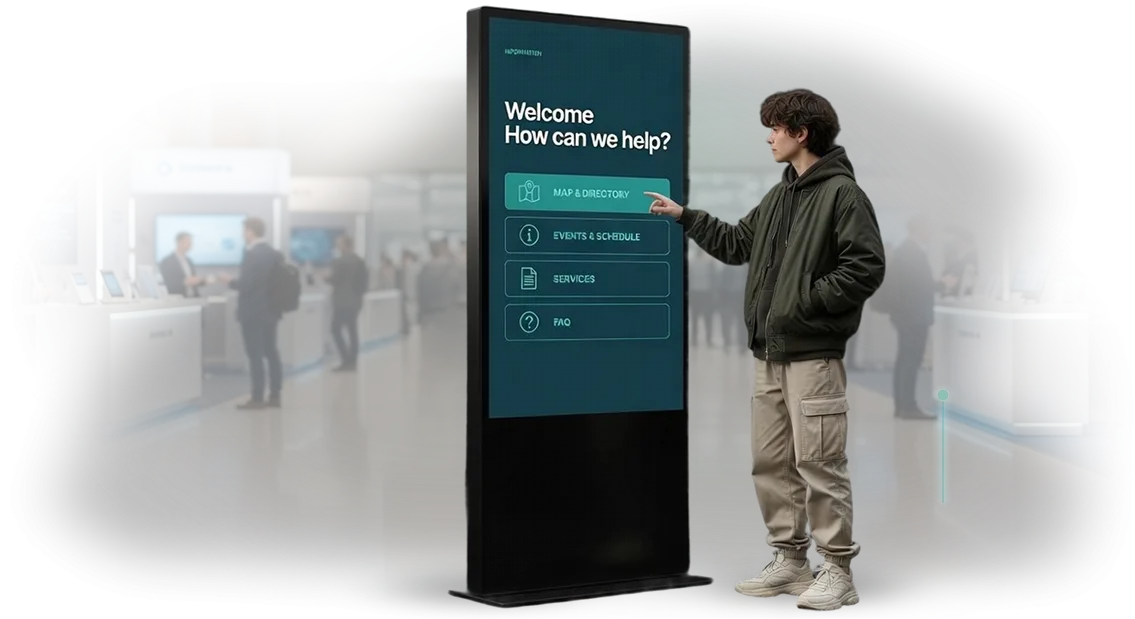
שילוב קיוסקים עם מערכות ניהול אירוח
מלון פוגש את האורח שלו מהדקה הראשונה — ולעתים קרובות דווקא כאן האדמית אובדת. התור בדלפק הקבלה, ההמתנה לצ'ק-אין, השאלות החוזרות לפקיד הקבלה — כל אלה יוצרים מתח וגורמים לאורח לפקפק ברמת השירות.
במקביל, הצוות מבזבז זמן על פעולות שגרתיות במקום להקדיש תשומת לב לאורחים הנוכחים ולפתור משימות חשובות באמת.
קיוסקים אינטראקטיביים מסירים את העומס הזה: האורחים משלימים באופן עצמאי את ההרשמה, מקבלים את המפתח שלהם ומקבלים את המידע הדרוש להם על שירותי המלון תוך דקות ספורות.
הקיוסק משתלב עם מערכות ניהול האירוח, כך שנתוני ההזמנות והצ'ק-אין מתעדכנים אוטומטית — ללא הזנה כפולה, עיכובים או שגיאות. הצוות יכול לראות מי כבר נכנס ומי רק מתקרב לדלפק, ולהיערך מראש להגעתו.
עבור בעל המלון, אוטומציה משמעותה לא רק אורחים מרוצים, אלא גם ביצועים יעילים יותר של הצוות. הצוות מפסיק להיות מפעילי הזנת נתונים ומתמקד באיכות השירות, במכירות נוספות ובמצבים חריגים.
העומס על דלפק הקבלה פוחת בשעות השיא, וככל שהתפוסה גדלה, לא תמיד יש צורך להרחיב את הצוות — הקיוסק לוקח על עצמו את הפעולות החוזרות.
הקיוסק מחזיר את ההשקעה באמצעות צ'ק-אין מהיר יותר, פחות שגיאות ועלייה בביקורים חוזרים: האורחים זוכרים היכן קיבלו אותם במהירות ובנוחות.
אנחנו עוזרים להגדיר את האינטגרציה כך שתתאים לתהליכי ניהול המלון שלך, כך שכל המערכת תעבוד כמנגנון אחד — מהמגע הראשון במסך ועד לנתונים בדוחות שלך.
בסופו של דבר, אתה מקבל מלון שבו הטכנולוגיה דואגת לאורחים בשקט, והצוות מתמקד במה שבאמת דורש מעורבות אנושית.
קיוסקים אינטראקטיביים למלונות: מה הם מביאים לאירוח שלך
אורחים מגיעים למלון כדי להירגע, והדבר הראשון שהם רואים הוא תור ההרשמה ושירות איטי. קיוסק אינטראקטיבי המשולב במערכת ניהול האירוח שלך משנה את הרושם הזה כבר מהדקות הראשונות. בואו נראה מה זה נותן לאורחים, לצוות ולמנהל.
אורחים: מהירות ועצמאות
הקיוסק מאפשר לאורחים לבצע צ'ק-אין תוך דקות ספורות: לאמת את ההזמנה שלהם, לקבל מפתחות, לשלם עבור שירותים נוספים. זה חשוב במיוחד למגיעים בשעות מאוחרות, לנסיעות עסקים ולמשפחות עם ילדים. האורח שולט בתהליך בעצמו — פחות לחץ, יותר אמון במלון.
הקיוסק מקל על הצעת שדרוג חדר, טיפולי ספא או טיולים. האינטגרציה עם מערכת ניהול האירוח מעבדת את ההזמנה באופן מיידי, והאורח מקבל הצעה מותאמת אישית ללא המתנה או שיחות טלפון מיותרות. התוצאה — שביעות רצון גבוהה יותר ומכירות נוספות.
צוות: פחות שגרה, יותר אכפתיות
הפקידים משוחררים מפעולות חוזרות: הזנת נתונים, אימות הזמנות, עיבוד תשלומים. הם מפנים את הזמן המשוחרר לאינטראקציה אישית — עזרה בבקשות חריגות, המלצות על מקומות בעיר, יצירת אווירת אירוח. העומס על הצוות פוחת, בעוד איכות השירות עולה.
מנהל: שליטה וצמיחה בנאמנות
כל פעולות הקיוסק מתועדות אוטומטית במערכת ניהול האירוח. המנהל רואה את התמונה העדכנית: כמה מהר משרתים את האורחים, אילו שירותים מבוקשים והיכן מתרחשים עיכובים. נתונים אלה עוזרים לשפר תהליכים ולקבל החלטות מושכלות.
הקיוסק מחזק את הנאמנות: הצעות מותאמות אישית על סמך היסטוריית ביקורים, ברכות לאורחים קבועים, רישום מחדש מהיר. ככל שיש פחות חיכוך בכל שלב, כך האורח חוזר ברצון רב יותר וממליץ על המלון.
בסופו של דבר, קיוסק אינטראקטיבי המשולב במערכת ניהול האירוח שלך הוא אכפתיות לאורחים, תמיכה בצוות ותרומה לתוצאה הכספית.
פורמטי קיוסק: בחרו לפי המשימות שלכם
פורמט הקיוסק הנכון קובע כיצד האורחים ישתמשו בשירות שלך, כמה מקום הוא יתפוס וכמה מהר הוא יתחיל לספק ערך. בחירה לא נכונה יוצרת תורים ואי-נוחות, בעוד בחירה מוצלחת מקלה על הצוות ומגבירה את נאמנות המבקרים.
לכן, חשוב לבסס את ההחלטה לא על מפרטים טכניים, אלא על התרחישים של העסק שלך.
אנחנו עובדים עם כל הפורמטים המרכזיים — עומדים, צמודים לקיר ושולחניים — ועוזרים לכם לבחור את האופטימלי לזרימת האורחים ולשטח הרצפה שלכם. הטבלה שלהלן מציגה מצבים אופייניים כדי שתוכלו להתמצא במהירות.
| פורמט קיוסק | למי הוא מתאים | מה הוא נותן ללקוח |
|---|---|---|
| קיוסק עומד | מסעדות מזון מהיר, קניונים, תחנות רכבת — מקומות עם זרימת מבקרים גבוהה | מושך תשומת לב, עובד כנקודת שירות עצמי נפרדת, מקל על הקופה ומפחית תורים. |
| קיוסק צמוד קיר | מסדרונות צרים, אזורי כניסה, לובי מעליות — היכן שאין מקום לעמדה נפרדת | חוסך מקום, מאפשר בירורי מידע מהירים או הזמנות ללא הפרעה לתנועת האורחים. |
| קיוסק שולחני | קבלת מלון, מרפאה, מכון יופי — אזור הפקיד | קומפקטי, מזרז עיבוד, עוזר לצוות לשרת אורחים מהר יותר וללא שגיאות. |
אנחנו מבינים שלכל עסק יש ניואנסים משלו, ולכן אנחנו לא רק מוכרים קיוסק — אנחנו מציעים פתרון מותאם למשימות שלכם. מנהל יבהיר את תרחיש השימוש, יעזור לבחור את הפורמט וישלב אותו בקפידה בתהליכים הנוכחיים שלכם.
אתם מקבלים כלי מוכן שעובד למען נוחות הלקוחות ויעילות הצוות מהיום הראשון.
שלבי הפרויקט: מהבריף ועד ההשקה
אנחנו מבינים: עבור מלון, מסעדה או מתחם בילוי, הטמעת קיוסק אינטראקטיבי אסור שתשבש את פעילות השירות. לכן התהליך שקוף: בכל שלב אתם מבינים את לוח הזמנים, את התפקיד שלכם ואת מה שאתם מקבלים כתוצאה. להלן איך אנחנו עובדים.
שלבי העבודה
-
בריף — אנו דנים במשימות ובציפיות: אילו פונקציות האורחים צריכים, היכן ימוקמו הקיוסקים וכיצד הם צריכים לעבוד עם מערכת ניהול האירוח שלכם. אתם משתפים את התהליכים הנוכחיים שלכם, ואנחנו מציעים פתרונות.
-
תוכנית ואישור — אנו קובעים את ההיקף, לוח הזמנים והשלבים. אתם רואים את התוכנית, קובעים סדרי עדיפויות ומאשרים אותה. בלי הפתעות.
-
עיצוב ותרחישים — אנו מעצבים ממשק אינטואיטיבי לאורחים ומגדירים תרחישים: הרשמה, הזמנת שירותים, ניווט, תשלום. אנו מיישרים את המראה והתחושה עם המותג שלכם.
-
פיתוח ואינטגרציה — אנו מגדירים את תוכנת הקיוסק ומחברים אותה למערכת ניהול האירוח שלכם. ההזמנות ונתוני השירותים מעודכנים בזמן אמת.
-
בדיקות — יחד עם הצוות שלכם, אתם מנסים את הקיוסק בתנאים אמיתיים. אנו מבצעים התאמות עד שהכל עובד כנדרש.
-
השקה — אנו מתקינים את הציוד, מגדירים אותו ומכשירים את הצוות. הקיוסק מתחיל לספק ערך מהיום הראשון.
-
תמיכה לאחר ההשקה — אנו נשארים בקשר: מנטרים יציבות, מעדכנים תוכן ופותרים בעיות במהירות אם תנאי ההפעלה משתנים.
מה כלול במסירה ובהתקנה
אתם מקבלים פתרון סוהר — מעמדת המגע ועד צוות מיומן. אנו מטפלים בכל המחזור: אספקת הציוד, התקנה והגדרת התוכנה, ושילוב הקיוסק עם מערכות ניהול האירוח שלכם.
אינכם צריכים להבין בפרטים הטכניים — אתם פשוט מקבלים את התוצאה ומשתמשים בכלי החדש שלכם לטיפול באורחים.
מה כלול בחבילת המסירה וההתקנה:
- קיוסק מגע על ציוד מקצועי, המיועד לשימוש אינטנסיבי בלובי או בדלפק הקבלה.
- התאמת ממשק למותג ולמשימות שלכם: קטלוג שירותים, חדרים, תפריט מסעדה, לוח אירועים.
- אינטגרציה עם מערכות ניהול אירוח — הקיוסק מקבל אוטומטית נתונים עדכניים על חדרים זמינים, מחירים ושירותים, ללא הזנה ידנית.
- הכשרת צוות: הוראות לפקידים ולעובדים בחזית כיצד לעדכן תוכן ולטפל במצבים אופייניים.
- אחריות על ציוד ותוכנה: אם מתרחשת תקלה, אנו מחליפים רכיבים במהירות ומעדכנים את התוכנה.
- השקה ותמיכה: אנו מחברים את הקיוסק לרשת שלכם, מוודאים את פעולתו עם המערכות שלכם ונשארים זמינים במהלך החודש הראשון.
בסופו של דבר, אתם מקבלים כלי יציב שמשפר את איכות השירות, מפחית תורים ומקל על הצוות שלכם. נתוני האורחים מסונכרנים עם מערכות ניהול האירוח שלכם — במהירות, בדיוק וללא מעורבות עובדים.
מקרה בוחן: כיצד קיוסק הפחית את העומס על דלפק הקבלה ב-40%
דלפק הקבלה במלון הוא צוואר הבקבוק הגדול ביותר בשעות הצ'ק-אין. האורחים עייפים אחרי הנסיעה, התורים גדלים והפקידים חוזרים על אותן שאלות.
כל דקת המתנה פוגעת ברושם השירות, ובעונה הגבוהה זה מתורגם להזמנות אבודות ולביקורות שליליות.
במקרה בוחן זה, פתרנו את הבעיה עבור מלון כפרי: התקנו קיוסק צ'ק-אין עצמי אינטראקטיבי ושילבנו אותו עם OPERA PMS. כעת האורח מאשר את ההזמנה, מזין נתונים ומקבל את מפתח החדר בעצמו — ללא פקיד.
האינטגרציה עם מערכת ניהול האירוח ארכה פחות משבוע, והצוות נדרש ליום הכשרה אחד בלבד.
מדדנו את התוצאה לאחר חודש: זמן ההרשמה ירד ב-40%, ודלפק הקבלה כבר לא היה צוואר בקבוק.
בשעות השיא, לפקידים יש זמן להקדיש תשומת לב לאורחים עם בקשות מיוחדות ולטפל בבעיות לא סטנדרטיות, במקום לעבד צ'ק-אין רגילים.
גם האורחים הרגישו בהבדל: דירוג שביעות הרצון הממוצע עלה ב-18%, וחלק ההזמנות החוזרות גדל. הביקורות מזכירות כעת יותר ויותר צ'ק-אין מהיר והיעדר תורים — דבר שבעבר היה מקור התלונות העיקרי.
עבור המלון, זו לא רק אוטומציה, אלא צמיחה בנאמנות ובהכנסות: אורח מרוצה חוזר וממליץ על המלון לחברים.
אנחנו תומכים בפרויקט גם לאחר ההשקה: מעדכנים תרחישים, מנטרים יציבות תפעולית ומבצעים שינויים במהירות אם התהליכים העסקיים מתפתחים.
אינטגרציה עם התשתית שלכם: אפשרויות ולוחות זמנים
קיוסק מספק ערך כשהוא עובד לא לבד, אלא כחלק מהתשתית שלכם. חיבורו למערכת ניהול האירוח מסיר הזנה ידנית מרישום החשבונות, מפחית שגיאות ומספק תמונה עדכנית של הזמנות, זמינות והעדפות אורחים. אנו מטפלים בכל ההגדרה — מבדיקות תאימות ועד להפעלה.
האינטגרציה יכולה להשתנות בעומקה: מסנכרון תפריט פשוט ועד למחזור המלא של "הזמנה-תשלום-חשבונאות-מלאי".
כבר יישמנו פתרונות לעסקים הפועלים על iiko ומערכות דומות, כך שאנחנו מבינים איזו תוכנית תתאים לכם וכמה זמן זה ייקח.
| אפשרות אינטגרציה | למי היא מתאימה | תוצאה עסקית | לוח זמנים משוער |
|---|---|---|---|
| סנכרון בסיסי | בתי קפה וברים עם תפריט קבוע | מחירים והרכב מנות עדכניים בקיוסק ללא עדכונים ידניים | 3–5 ימים |
| חשבונאות הזמנות ותשלומים | מסעדות במחזור מלא | הזמנות נכנסות אוטומטית למערכת, משמרות נסגרות מעצמן, היסטוריה זמינה בדוחות | 1–2 שבועות |
| אינטגרציה עמוקה | מלונות, רשתות, מתחמים גדולים | מאגר אורחים אחיד, חשבונאות נאמנות, מחיקות מלאי ואנליטיקה מתקדמת במערכת שלכם | 2–4 שבועות |
לוח הזמנים מושפע מהמוכנות של המערכת שלכם לחילופי נתונים: API פתוח, תיעוד וסביבת בדיקה. ברוב המקרים, אנו מסיימים תוך 1–2 שבועות, וחיבור בסיסי אורך ימים ספורים בלבד.
מהנדסי הצוות שלנו בודקים תאימות מראש, כך שלא תבזבזו זמן על ניסויים והתאמות.
לאחר ההשקה, אנחנו לא נעלמים: אנו מגדירים ניטור, מכשירים צוות ונשארים בקשר כך שהקיוסק ימשיך לעבוד בצורה אמינה בתוך החשבונאות שלכם גם לאחר עדכונים למערכות שלכם. אתם מקבלים לא רק נקודת מכירה, אלא ערוץ ניתן לניהול המשולב בתהליכים העסקיים שלכם.
מה אם הקיוסק מתקלקל או דורש שינוי?
גם אם הקיוסק נכשל או נדרשים שינויים, זה לא יעצור את הפעילות שלכם. הצוות שלנו תומך בכל פרויקט לאחר ההשקה: אנו מטפלים בתחזוקה, תיקונים ושינויים בזמן שהקיוסק פועל באתר שלכם.
תרחיש התקלה הוא הפחד הנפוץ ביותר. יש לנו תהליך מוכח: אתם שולחים בקשה, אנו מבצעים אבחון מרחוק תוך שעה, ואם הבעיה היא באתר, נשלח צוות שירות או נחליף את הקיוסק בקיוסק גיבוי. הודות לניטור מרחוק, אנו רואים את רוב התקלות לפני שאתם בכלל יודעים עליהן.
שינויים חשובים לא פחות. תפריטים, מבצעים ומידע עזר מתעדכנים תוך יום-יומיים, ללא הפרעה לפעילות.
אם אתם צריכים להרחיב פונקציונליות — למשל, לחבר את הקיוסק למערכות ניהול אירוח חדשות או לשנות את לוגיקת ההזמנות — אנו מבצעים את השינויים ובודקים הכל בצד שלנו.
מי אחראי על תיקונים וכמה זמן זה ייקח?
אנו מבצעים תיקונים בעצמנו, לא ארגון צד שלישי. תקלה אופיינית נפתרת תוך 1–2 ימי עסקים. במהלך תקופה זו, אנו יכולים לספק קיוסק חלופי כך שהשירות שלכם לא יעמוד דקה.
האם ניתן לשנות את המידע בקיוסק במהירות?
כן. עדכוני תוכן נעשים מרחוק ואורכים בין כמה שעות לכמה ימים — תלוי בהיקף. ללא ביקורי אתר או הפרעות שירות.
אנו מבינים שחיזוי חשוב לעסק. לכן כל חוזה כולל לוח זמנים תמיכה: זמני תגובה, נהלי החלפת ציוד ואחריות לתוצאות. אתם מתמקדים באורחים שלכם, ואנחנו שומרים על הצד הטכני בשליטה.הזמינו פיתוח קיוסק אינטראקטיבי לפרויקט שלכם
אנו מבינים שהזמנת קיוסק אינטראקטיבי היא לא קנייה של "חומרה", אלא השקעה בשירות שעובד עבור האורחים והעסק שלכם.
לכן אנחנו לוקחים על עצמנו את הפרויקט במפתח סוהר: מהרעיון והעיצוב ועד למסירה, התקנה ואינטגרציה עם מערכות ניהול האירוח שכבר בשימוש במלון, במסעדה או במקום האירועים שלכם.
במהלך השנים, בנינו ספריית פתרונות מוכנים לעסקי אירוח ואירועים, כך שאנחנו לא "ממציאים את הגלגל", אלא מתאימים במהירות פונקציונליות מוכחת למשימה שלכם.
אתם מקבלים מערכת עובדת, לא אב-טיפוס "גולמי": הקיוסק מדריך את האורח בכל שלב — מהרשמה ועד תשלום — ואתם רואים סטטיסטיקה שקופה במערכת המוכרת לכם.
מה אתם מקבלים בהזמנת פיתוח מאיתנו:
- עלות וזמן מדויקים — קבועים בחוזה לפני תחילת העבודה, ללא תוספות נסתרות.
- אינטגרציה עם מערכות ניהול האירוח שלכם — צ'ק-אין, הזמנות, תשלומים ודוחות מתיישרים אוטומטית.
- התאמת ממשק למותג שלכם — האורחים רואים סגנון מוכר ומרגישים אכפתיות מהשנייה הראשונה.
- החזר השקעה מהיר על ידי הפחתת עומס העבודה של הצוות והאצת השירות בשעות השיא.
- אחריות ותמיכה לאחר הפרויקט — אנו מכשירים את העובדים שלכם ונשארים בקשר לאחר ההשקה.
- מדרגיות לצרכים עתידיים — אנו מוסיפים תרחישים חדשים ככל שהעסק שלכם גדל.
השאירו בקשה באתר — ותוך יום עסקים אחד, נכין הצעה מותאמת אישית עם עלות וזמן מדויקים. נראה דוגמאות של פרויקטים דומים ונענה על כל השאלות שלכם. הצוות שלנו — השותף האמין שלכם בפיתוח קיוסקים אינטראקטיביים.