

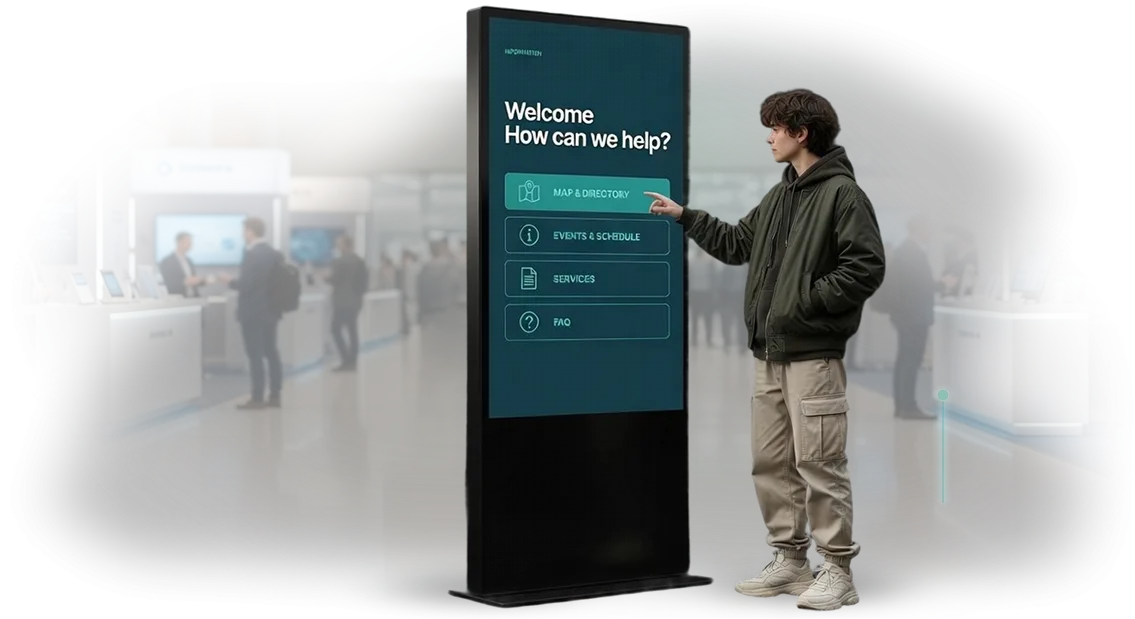
למה אורחים חולפים על פני הדוכן שלך באירוע?
השקעתם כסף בהשתתפות בתערוכה, אבל המבקרים רק מציצים על הדוכן וממשיכים הלאה.
זה בולט במיוחד כשהקהל שלכם הוא משפחות עם ילדים: ילד מושך את ההורים שלו למקום שבו אפשר לשחק, בזמן שאצלכם יש תמונה סטטית וטקסט ארוך.
דוכן משעמם מפסיד לפני שמישהו בכלל ניגש אליו, ותקציב הפרסום שלכם לא חוזר לא בהישגים ולא בקשרים חדשים.
הבעיה היא לא כמות המידע, אלא הדרך שבה הוא מוצג. ילדים צריכים לגעת, לשחק ולהשתתף — מסך מגע רגיל עם תפריט לא מחזיק את תשומת הלב של המבקרים ליותר מכמה שניות.
המשפחה מאבדת עניין ועוברת לשכנים, ואתם נשארים עם דוכן שלא מייצר מעורבות. בסופו של דבר, אתם מפסידים קשרים, זיכרון מותג וסיבה לדבר אחרי האירוע.
קיוסק אינטראקטיבי לתערוכה יכול לשרת את המטרות האלה — אם הוא עשוי בסגנון חינוכי לילדים ומושך מהשנייה הראשונה. אנחנו מעצבים את ה-UX/UI כך ששמירת העניין מתחילה מיד: סצנריונים צבעוניים, אלמנטים גדולים, מכניקת משחק ומשימות קטנות.
הילד חוזר לעוד, אמא ואבא מקבלים דקה רגועה, והדוכן שלכם מקבל זרם של מבקרים שחקרו את המוצר והשאירו פרטי קשר. ככה אנחנו פותרים את הבעיה של "המדריך המשעמם" והופכים את הקיוסק למגנט לאורחים.
אילו משימות עסקיות קיוסק אינטראקטיבי פותר באירוע
מעורבות מבקרים
קיוסק אינטראקטיבי הופך צופה פסיבי למשתתף פעיל. הילד בוחר את הסצנריו שלו, משחק — והאירוע נזכר דרך חוויה אישית. הורים יכולים להעסיק את הילד במשהו מועיל בזמן שהם בוחנים את המוצר שלכם.
אינטראקציה כזו מחזיקה תשומת לב יותר זמן מאשר דוכן רגיל עם ברושורים. מבקרים לא חולפים על פניו — הם נשארים, חוקרים וחוזרים.
אפקט ויראלי
אם הקיוסק מספק תמונה בהירה או תוצאה עם השם של הילד, האורחים משתפים אותה ברשתות החברתיות בעצמם. כל אזכור הוא פרסום חינם למותג בקרב חברים.
מכניקת ה"שיתוף" המובנית מסירה את המחסום: אנשים רוצים להראות את התוצאה בעצמם, כך שההישגים של האירוע גדלים בלי תקציב פרסום.
איסוף קשרים ונתונים
הקיוסק אוסף לידים בעדינות: הילד מצייר, ההורה משאיר מספר טלפון או אימייל בשביל מתנה. אתם מקבלים מאגר לניוזלטרים ולהזמנות לאירועים חדשים.
הנתונים מגיעים אליכם מיד בפורמט נוח — אין צורך לעבד טפסי נייר, והקשרים נשארים פעילים.
נאמנות מוגברת
אינטראקטיביות יוצאת דופן מעוררת רגשות שהופכים למקושרים עם המותג. המשפחה עוזבת עם רושם חיובי וחוזרת שוב — למבצע או למיקום קבוע.
קיוסק בסגנון חינוכי לילדים יוצר את האסוציאציה "אכפת להם מהילדים כאן." זה בונה אמון ומבדל אתכם מהמתחרים.
פורמטים של קיוסקי מידע בסגנון חינוכי לילדים
עבור ילד, קיוסק מסך מגע הוא לא לוח מידע, אלא מקום לשחק ולגלות משהו חדש. אם הממשק משעמם, עם טקסט וכפתורים קטנים, ילד יחלוף על פניו, והורים לא יישארו.
סגנון חינוכי לילדים פותר את הבעיה הזו: אלמנטים גדולים, דמויות מוכרות, תגמולים על פעולות נכונות. הילד מגיע למסך בעצמו, ואתם מקבלים נקודת מגע חיה עם הקהל שלכם.
פיתחנו כמה פורמטים לצרכים שונים של לקוחות. כל סצנריו יכול להיות מותאם למקום שלכם, למותג ולכמות המבקרים.
פורמטים של קיוסקים לילדים
| פורמט | למי | מה הוא נותן ללקוח |
|---|---|---|
| קיוסק משחק | מרכזי ילדים, אזורי המתנה, מסיבות | מבדר ומעסיק ילדים בזמן שההורים עסוקים; יוצר רושם חיובי על המקום |
| קיוסק חינוכי | מוזיאונים, תערוכות, בתי ספר | הופך למידה למסע מרגש: הילד סופג את החומר, והמקום מקבל מעמד של מודרני וחכם |
| ניווט עם דמויות מצוירות | קניונים, פארקים, חללים גדולים | עוזר למשפחות למצוא במהירות את מה שהן צריכות, מקל על הצוות והופך את החלל לידידותי |
| אזור צילום עם דמויות | קמפיינים שיווקיים, פסטיבלים, פתיחות | ילדים והורים מצלמים ומשתפים ברשתות החברתיות — ההישגים גדלים בלי הוצאות פרסום |
כל הפורמטים חולקים סגנון חינוכי לילדים: ניווט ברור, אזורי מגע גדולים וסצנריונים שמחזיקים עניין. נייעץ לכם איזה קיוסק מסך מגע לילדים מתאים לצרכים שלכם — ממסך בודד ועד רשת שלמה על פני כמה אזורים.
איך אנחנו מפתחים קיוסק: מבריף ועד השקה
אנחנו עוקבים אחרי תהליך שקוף לפיתוח קיוסק: קודם כל, אנחנו קובעים את קהל היעד ואת המשימות שהממשק נוצר עבורן, ואז מתכננים סצנריונים, מציירים מסכים ומובילים את הפרויקט להשקה.
זה מונע משלבי הפרויקט להימשך: אתם תמיד מבינים מה קורה בכל שלב ומתי תקבלו את הפתרון המוגמר.
- בריף והתעמקות. אנחנו חוקרים את המקום שלכם, את המבקרים ואת המטרות: מה ילדים צריכים לעשות בקיוסק, אילו פעולות הורים מבצעים, ואילו חומרי מותג ודמויות כבר קיימים.
- קונספט UX וסצנריונים. אנחנו ממפים את המסע של הילד: מתפיסת תשומת הלב ועד סיום משחק או משימה. אנחנו מגדירים את מבנה המסכים ואת לוגיקת הניווט כך שאפילו משתמש קטן לעולם לא ילך לאיבוד.
- אב טיפוס עיצובי. אנחנו יוצרים מודל ממשק אינטראקטיבי בסגנון חינוכי לילדים: כפתורים גדולים, תמונות בהירות, הנחיות ברורות. בשלב הזה אתם רואים איך הקיוסק ייראה ויכולים לערוך שינויים לפני שפיתוח הממשק מתחיל.
- אישור וקפיאת החלטות. אנחנו דנים באב הטיפוס, מבצעים שינויים ומאשרים את הגרסה הסופית. מוקאפ נעול מגן על שני הצדדים מעבודה מיותרת ועוזר לעמוד בלוחות זמנים של הפרויקט.
- פיתוח ממשק והרכבה. אנחנו יוצרים גרפיקה רספונסיבית, אנימציה ולוגיקה: אלמנטים מגיבים למגע, ומשימות מתחילות ומסתיימות בלי קפיאות. אנחנו עובדים על ציוד מקצועי, כך שהתמונה נשארת חדה על כל מסך.
- בדיקות על מכשירים אמיתיים. אנחנו בודקים סצנריונים עם ילדים בגילאים שונים: האם קל ללחוץ על כפתורים, האם הטקסט ברור, והאם מתרחשות שגיאות. אנחנו מתקנים כל בעיה שנמצאה לפני ההתקנה.
- התקנה והשקה. אנחנו מתקינים את התוכנה, מגדירים את הקיוסק במקום שלכם ובודקים אותו בתנאי אירוע. אנחנו מעבירים את המדריך ונשארים זמינים לתמיכה.
מה כלול במסירת קיוסק במפתח פתוח
כשאתם מזמינים קיוסק במפתח פתוח, אתם מקבלים פתרון מוכן, לא אוסף של חלקים מפוזרים. הצוות שלנו מטפל בכל הדרך: מהסקיצה הראשונה של הממשק ועד התקנה, הגדרה והדרכת צוות. כל מה שאתם צריכים לעשות זה לחבר את המכשיר — כל השאר מחושב ונבדק.
חבילת המסירה כוללת את כל מה שצריך להשקה ופעולה יציבה:
- מוקאפים של עיצוב מסכים בסגנון חינוכי לילדים: דמויות בהירות, כפתורים גדולים והנחיות ברורות שמונעות מילד ללכת לאיבוד בתפריט.
- עיצוב ממשק מותאם לשליטה במגע — גדלי אזורי המגע מחושבים בקפידה כך שאפילו פעוטות יוכלו לתקשר בקלות ובנוחות.
- תוכנת קיוסק מוגדרת למשימות שלכם. אתם יכולים לשנות תוכן, להוסיף משחקים חדשים או חידונים בלי לערב מתכנתים — דרך פאנל ניהול פשוט.
- תוכן מוכן להשקה: משימות מרתקות, סיפורים אינטראקטיביים ומשחקי מיני חינוכיים. אם צריך, אנחנו ממלאים אותו בחומרים שלכם — לוגו, דמויות ואלמנטים של מותג.
- מדריך הפעלה מפורט כתוב בשפה פשוטה. כל עובד יכול להבין אותו, גם בלי ניסיון טכני.
- הדרכת צוות: המומחים שלנו מגדירים את הקיוסק ומראים בקצרה איך להשתמש בו, איך להפעיל עדכונים ואיך לטפל בבעיות נפוצות.
- תמיכה טכנית לכל תקופת שיתוף הפעולה: אנחנו עוזרים מרחוק ובמידת הצורך מגיעים במהירות למקום. עם הקיוסק אתם מקבלים תוצאה יציבה, לא קופסה של ציוד.
החבילה הזו מאפשרת לקיוסק לעלות לאוויר יום אחרי ההתקנה — בלי אישורים ארוכים או השקעות נוספות.
מקרה בוחן: איך קהל ילדים הגיב לקיוסק האינטראקטיבי
כשלקחנו על עצמנו את הפרויקט עבור מרכז הילדים "פלנטת הידע", המשימה נשמעה פשוטה: להעסיק ילדים בזמן שהורים ממלאים טפסים או ממתינים לפגישה.
אבל קהל ילדים דורש גישה מיוחדת — מסוף מסך מגע רגיל עם תפריט טקסט לא יעבוד כאן. הצענו קיוסק אינטראקטיבי שהופך בעצמו להרפתקה קטנה: דמויות בהירות, משימות פשוטות עם תגמולים וסאונד.
עיצבנו את הממשק בסגנון משחק חינוכי: כפתורים גדולים, תמונות חיות מוכרות ומשחקי מיני לוגיקה וקשב.
ילד לא קורא הוראות — הוא מיד מבין מה לעשות כי העיצוב מדבר בשפה של הקריקטורות האהובות עליו. במקביל, שמר�ו על נוחות למבוגרים: מידע חיוני וניווט נשארו גלויים בבירור.
התוצאות עלו על הציפיות. המעורבות של ילדים עלתה ב-40% בהשוואה למסך המידע הרגיל שהיה שם קודם. משך הסשן הממוצע היה 10–15 דקות — בזמן הזה ילד משלים 2–3 משחקים וזוכה בתגמול וירטואלי.
הורים מציינים שילדים מבקשים בעצמם לחזור למרכז שוב, מה שאומר שהקיוסק הפך לא רק לבידור, אלא לכלי לשמירת אורחים.
המקרה הזה מראה את הנקודה המרכזית: UX/UI לילדים הוא לא רק "תמונות מצוירות." זו מערכת שבה כל פרט בממשק — גודל כפתור, טון ההנחיות, מהירות התגובה — יוצר תחושה של משחק וביטחון.
בדיוק בגלל זה קיוסקים כאלה מביאים ערך מדיד לעסק: מבקרים מעורבים יותר, פחות ילדים משועממים, והורים רגועים שחוזרים שוב.
איך לבחור את פורמט הקיוסק הנכון למשימה שלכם?
בחירת פורמט קיוסק מתחילה לא מהדגם, אלא משלוש שאלות: מי ישתמש בו, איזו בעיה המסך פותר, ואיפה הוא ימוקם. התשובות שלהן קובעות מיד את הגודל, סוג השליטה ועיצוב הממשק — ולצד אלה, את התקציב.
בסגנון חינוכי לילדים, נקודת הייחוס המרכזית היא הקהל. ילד לא קורא הוראות ולא זוכר תפריטים מורכבים: הוא צריך כפתורים גדולים, תמונות בהירות ותגובה מיידית למגע.
אם הקיוסק משמש גם הורים או צוות, הממשק חייב להישאר ברור למבוגרים — עם סעיפים פשוטים וחזרה מהירה לתפריט הראשי.
השאלה השנייה היא המטרה. קיוסק יכול לבדר, לחנך, ליידע או להדריך מבקרים. במרכז התפתחותי, הגיוני לשלב שני סצנריונים: משימת משחק קצרה מעסיקה את הילד, בזמן שההורה רואה את לוח השיעורים.
לניווט במוזיאון או בקניון, העדיפות שונה — מסך גדול עם מפה שבה הילד בוחר את האובייקט הרצוי בעצמו.
הגורם השלישי הוא המיקום. מעמד רצפתי מתאים ללובי, קיוסק צמוד קיר חוסך מקום במסדרון, ודגם שולחני עובד היטב באזור ילדים.
חשוב לקחת בחשבון את הגובה של ילד: אלמנטים אינטראקטיביים חייבים להיות בהישג יד, והמעטפת חייבת לעמוד בשימוש פעיל בלי סיכון למבקרים קטנים.
בגלל זה אנחנו לא מוכרים "סתם קיוסק", אלא בוחרים פורמט למשימה ספציפית: אנחנו מנתחים את הקהל, המטרות והמיקום, מעצבים את הממשק בסגנון חינוכי לילדים ומציעים את המבנה האופטימלי.
לפני ההתחלה, אנחנו עורכים אודיט ומראים איך הפתרון יעבוד ספציפית בחלל שלכם.
שאלות נפוצות על פיתוח והפעלת קיוסקים
אספנו את השאלות שלקוחות שואלים הכי הרבה לפני השקת קיוסקים. אנחנו עונים בקצרה ולעניין — בלי פרטים טכניים, רק מה שמשפיע על העסק שלכם.
מה אם הקיוסק מתקלקל? מי יתקן אותו וכמה מהר?
ציוד לא מתקלקל לפי לוח זמנים, אז אנחנו מיד כוללים אחריות על הציוד והעבודה בפרויקט. במקרה של תקלה, אתם מגישים בקשה — מהנדס זמין, מאבחן את הבעיה מרחוק ויוצא למקום במידת הצורך. זמן התגובה הממוצע הוא לא יותר מיום, ורוב הבעיות נפתרות מרחוק.
בנוסף, המבנה מתוכנן לשימוש אינטנסיבי באזורים עם תנועה גבוהה. אנחנו משתמשים ברכיבים מקצועיים ומחזקים את המעטפת ואת פאנל המגע — זה מפחית את הסיכון לתקלות כבר בשלב הייצור.
איך אנחנו מעדכנים תוכן? נצטרך להזמין קבלן בכל פעם?
עדכון תוכן הוא קל. אנחנו מגדירים חשבון אישי שדרכו אתם משנים טקסטים, תמונות, סרטונים ולוחות זמנים בכל זמן. עובד בלי ידע מיוחד יכול לעשות את זה בכמה דקות.
אם אתם צריכים עזרה, אנחנו זמינים: אנחנו מכינים חומרים חדשים או מייעצים על הדרך הטובה ביותר להציג מידע. בלי ביקורי אתר או השבתה: תוכן מופיע בקיוסק ברגע שהוא מתפרסם.
האם הקיוסק צריך חיבור אינטרנט קבוע?
לא. הקיוסק עובד לגמרי במצב לא מקוון: כל החומרים מאוחסנים בכונן המובנה, כך שהוא יעבוד גם אם הרשת נופלת. האינטרנט נחוץ רק לעדכוני תוכן ואיסוף סטטיסטיקות — אתם מחליטים מתי להתחבר.
זה חשוב במיוחד למרכזי ילדים ובתי ספר, שבהם יציבות הרשת לא תמיד מובטחת. הילד לא יבחין בהפרעות, ואתם לא תאבדו נתונים.
כמה בטוח הקיוסק לילדים?
סגנון חינוכי לילדים אומר לא רק מראה, אלא גם בטיחות בשימוש. אנחנו מעגלים פינות, בוחרים חומרים לא רעילים ומעצבים את הממשק עם אלמנטים גדולים כך שהילד מרגיש בנוח ומבין הכל. בלי קצוות חדים או חלקים בולטים.
המנהל יכול להגביל את זמן הסשן או את רשימת הסעיפים הזמינים. הורים ומורים מקבלים בדיוק את סצנריו האינטראקציה שהם רואים לנכון.
מה האחריות מכסה וכמה זמן אתם תומכים בקיוסק?
האחריות מכסה את הציוד ואת חלק התוכנה — לשנה או יותר, תלוי בתצורה הנבחרת. לאורך כל התקופה, אתם מקבלים תמיכה עדיפה: עדכוני ממשק, ייעוץ, סיוע מרחוק.
אנחנו מעוניינים שהקיוסק יעבוד לאורך זמן ויביא ערך, אז אנחנו נשארים בקשר גם אחרי סיום הפרויקט.
מוכנים לדון בפרויקט שלכם? השאירו פנייה
השאירו פנייה — ותוך יום עסקים אחד נחזור עם תוכנית ברורה: מה אנחנו עושים, כמה זה עולה ומתי אנחנו משיקים.
אתם לא צריכים להבין בפרטים טכניים — אנחנו מתרגמים את המשימה לשפת תוצאות: קיוסק נוח, מבקרים מרוצים ומודעות מותג מוגברת.
אחרי הפנייה שלכם, נכין סקיצת ממשק חינמית שמראה איך המותג והמשימות שלכם ישתלבו בפורמט מסך מגע.
זה לא "סתם תמונה יפה": תראו את מבנה הסעיפים, את לוגיקת הניווט ואת סגנון העיצוב — כך שתוכלו לקבל החלטה לפני שמשלמים על העבודה.
מה אתם מקבלים אחרי הפנייה שלכם
- ייעוץ — אנחנו מנתחים את המשימות, הקהל וסצנריוני השימוש בקיוסק. אנחנו מייעצים אילו פונקציות באמת נחוצות ואילו אפשר לדלג עליהן בלי לאבד ערך.
- מוקאפ ממשק — סקיצה ויזואלית של המסך הראשי בסגנון הנבחר. תבינו איך הפרויקט שלכם ייראה עוד לפני שפיתוח מתחיל.
- הערכת עלות שקופה — אנחנו קובעים את המחיר לפני תחילת העבודה, בלי תוספות נסתרות. אתם יודעים על מה אתם משלמים כבר בשלב הדיון.
- לוחות זמנים ספציפיים — אנחנו נותנים תאריך השקה מיד אחרי אישור המוקאפ ושולטים בתהליך כדי למסור את הפרויקט בזמן.
- תמיכה לאחר ההשקה — אנחנו עוזרים בהגדרת תוכן, מאמנים את הצוות שלכם ונשארים זמינים אם צריך לשנות משהו.
- המלצות לפיתוח — אנחנו מייעצים איך לעדכן חומרי קיוסק ואיך להשתמש בקיוסק כדי להגדיל מכירות ונאמנות לקוחות.
השאירו פנייה בטופס למטה — והיום נתחיל לחשב את עלות הפרויקט שלכם ונכין את ההצעה הראשונה. זה לא מחייב: אנחנו מראים לכם את הפתרון קודם, ואז אתם מחליטים אם הוא מתאים.