

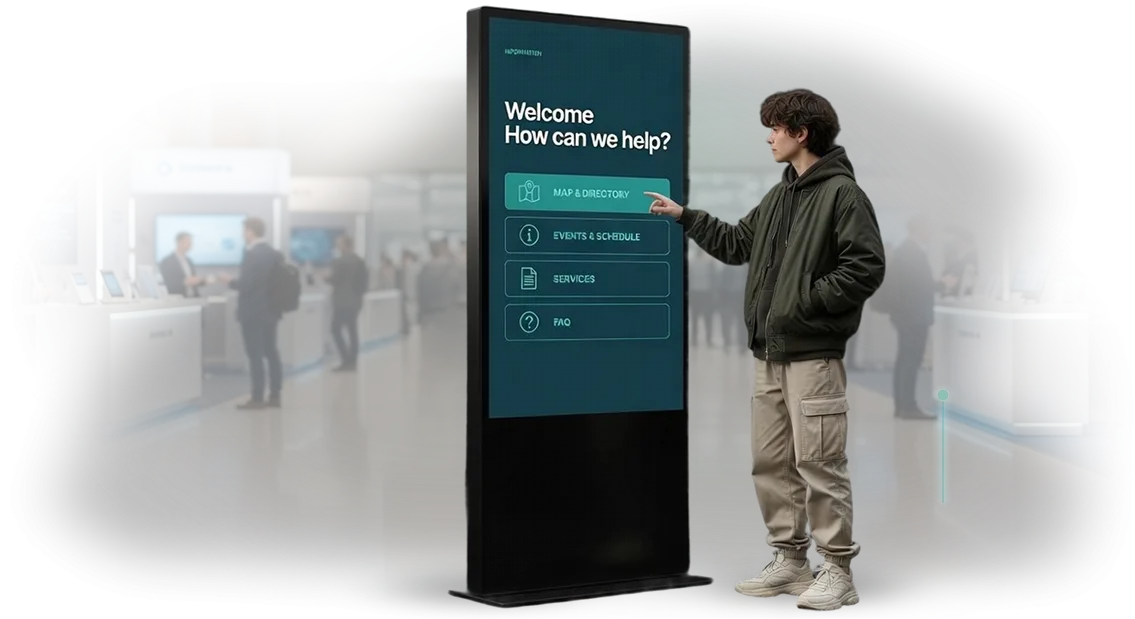
צריך ממשק ידידותי כדי שלקוחות לא יעזבו?
מבקר ניגש לקיוסק מסך מגע, רואה מסך עמוס בכפתורים קטנים ומונחים לא מוכרים — ובתוך 10 שניות פונה לדלפק הקבלה או למתחרה.
ניווט מסובך גוזל עד שליש מהפניות הפוטנציאליות לפני שהאורח בכלל מבין אם הקיוסק מועיל.
זה לא עניין של טכנולוגיה, אלא של תחושה. אנשים סומכים על מה שנראה ברור ומזמין.
ממשק שמקבל אותם כמו יועץ קשוב אינו עניין של "תמונות יפות" — זה כלי לשימור: האורח נשאר, מוצא את מה שהוא צריך, וחווה חוויה חיובית עם המותג שלך.
ממשק ידידותי לקיוסק מסך מגע הוא השקעה במהירות ובמצב הרוח של הלקוחות שלך. כשהאורח מבין תוך 30 שניות איך להזמין או לקבוע שירות, הוא לא מבזבז עצבים וחוזר שוב. כל תרחיש נוח מפחית את העומס על הצוות שלך ומגדיל את ההמרה.
אנחנו מעצבים מסכים שמדברים בשפת המבקר שלך. אזורי מגע גדולים, רמזים חיים, עיצוב ויזואלי רגוע ופעולות ברורות — ללא צורך בהוראות או הדרכה.
אנשים מבינים באופן אינטואיטיבי, ולמותג זה אומר יותר פעולות שהושלמו ופחות אורחים שעוזבים ללא תוצאה.
דיבור עם קיוסק הוא דיאלוג עם החברה שלך. הפכו את השיחה הזו לנעימה וקלה — הלקוחות שלכם יעריכו זאת ויחזרו.
אילו יתרונות מקבלים מקיוסקים ידידותיים למשתמש
אורחים רבים מצפים לאינטראקציה חיה מהחלל. קיוסק מסך מגע ידידותי למשתמש בסגנון מזמין עוזר להם לקבל תשובה בכמה הקשות ומשאיר רושם נעים.
הגברת מעורבות המבקרים
קיוסק אינטראקטיבי מחזיק תשומת לב זמן רב יותר משילוט רגיל. ממשק ברור והנחיות ידידותיות מעודדים אורחים לחקור שירותים, מבצעים והיסטוריית מותג — כל אינטראקציה יוצרת רגש ורצון לחזור.
הכרת המותג והתדמית
הסגנון של המסכים שלך עובד עבור התדמית שלך בדיוק כמו עיצוב אזור הכניסה. קיוסק בצבעי המותג עם איורים חמים יוצר תחושת אכפתיות. ממשק ידידותי מעביר מסר של "אנחנו מעריכים אתכם" שמחזק את ההכרה.
איסוף נתונים לצמיחה
הקיוסק מספק נתונים על התנהגות מבקרים: אילו סעיפים מבוקשים ביותר, מתי יש שעות שיא, מה נשאר ללא מענה. על בסיס זה, ניתן בקלות לשפר את השירות ולשנות ניווט — ללא סקרים או ניחושים.
יתרונות הקיוסקים לעסק שלך
קיוסק נוח מקל על הצוות ומאיץ את השירות. אורחים מקבלים תשובה ברגע הנכון, מה שמגביר את שביעות הרצון ואת הסבירות לביקור חוזר. אתה משלב אכפתיות ללקוח, תדמית מודרנית וכלי ניהול ברורים.
פורמטים של קיוסקים אינטראקטיביים עם ממשק ידידותי
בחירת פורמט קיוסק אינה שאלה של "איפה לשים אותו" אלא של התנהגות מבקרים.
קיוסק עומד מקבל אורחים בכניסה ומיד מושך אותם לתרחיש; קיוסק צמוד קיר חוסך מקום ועובד היטב במעברים צרים; שולחן מסך מגע מכנס סביבו אנשים והופך גילוי מוצרים לחוויה משותפת.
כל פורמט פותר משימה משלו: ניווט, הצגת שירותים, קטלוג, בידור או סקרים.
בצוות שלנו אנחנו עוזרים לך לבחור את האפשרות המתאימה למטרות שלך ולהתאים את הממשק לתרחיש הספציפי שלך. אותו עיצוב יכול לעבוד על מסך אנכי או על משטח אופקי — מה שחשוב הוא שההיגיון של האינטראקציה יישאר אינטואיטיבי וידידותי. התמקד במשימה שלך, ואנחנו נמליץ על הפורמט האופטימלי.
| פורמט קיוסק | למי זה מתאים | מה זה נותן ללקוח |
|---|---|---|
| קיוסק עומד | קניונים, אולמות תצוגה, אזורי כניסה | נראה מרחוק, מושך תשומת לב, מאפשר להציג במהירות קטלוג או מפה — מגביר מעורבות מבקרים |
| קיוסק צמוד קיר | מרפאות, בנקים, משרדים ממשלתיים, מסדרונות ולובי מעליות | לא תופס שטח רצפה שמיש, תמיד באופק, נוח לצ'ק-אין בתור או לקבלת מידע — מפחית עומס על הצוות |
| שולחן מסך מגע | מוזיאונים, אולמות תצוגה, חללים חינוכיים | מכנס קבוצת אנשים, מאפשר תרחיש משותף: להשוות, לחקור, לבחור — מגדיל את זמן השהייה עם המותג ואת כמות המידע שנקלט |
ממשק ידידותי עובד היטב על כל אחד מהמדיה הללו. אנחנו לא רק מעצבים מסך; אנחנו מעצבים תרחיש שמנחה את המשתמש לשלב הבא ואינו דורש הוראות.
לאחר ההשקה, אתה מקבל נתונים ברורים: אילו סעיפים מבוקשים, היכן מבקרים מתעכבים, ומה הם מחפשים לרוב — על בסיס זה ניתן בקלות לשפר גם את התוכן וגם את השירות עצמו.
אם אינך בטוח איזה פורמט מתאים לך ביותר, התחל בשיחה קצרה.
נסביר כיצד כל אפשרות משתלבת בחלל שלך, בהיגיון זרימת המבקרים ובתהליכים הפנימיים שלך, ונציע פתרון שמספק תוצאות מדידות: יותר פניות, שירות מהיר יותר ושביעות רצון גבוהה יותר של לקוחות.
איך פרויקט קיוסק עובר ב-6 שלבים
בנינו את התהליך כך שתראה את התוצאה בכל שלב ותוכל להשפיע עליה. אין הפתעות: לוחות זמנים, עלות והיקף העבודה קבועים מראש, ולאחר ההשקה הקיוסק לא נשאר ללא תמיכה. כל שלבי הפיתוח שקופים — אתה מקבל דוחות ברורים וגרסאות עבודה לאישור.
- בריף וניתוח משימה. אנו לומדים את הקהל שלך, תרחישי השימוש והיעדים העסקיים. אנו קובעים את מטרות הפרויקט כך שהקיוסק פותר בדיוק את המשימה שלך — מניווט ועד מידע ללקוח.
- קונספט ואב-טיפוס. אנו מציעים מבנה מסך והיגיון ניווט בסגנון ידידותי. אתה רואה את אב-הטיפוס לפני תחילת הפיתוח ויכול לבצע שינויים מוקדם — זה חוסך תקציב וזמן.
- אישור עיצוב. אנו מעצבים את ממשק המשתמש בפירוט: כפתורים גדולים, אלמנטים מנוגדים, תוויות ברורות. אנו מאשרים מראה שמשתלב בצורה מושלמת בזהות המותג שלך והוא אינטואיטיבי למשתמשים בכל גיל.
- פיתוח והרכבה. אנו מתכנתים את היגיון הקיוסק, מגדירים תרחישי אינטראקציה ואינטגרציות עם השירותים שלך — למשל, מסד נתונים של קטלוג או טופס משוב. אנו בודקים יציבות על ציוד מקצועי כדי למנוע הקפאות ותקלות ביום ההשקה.
- השקת הקיוסק. אנו מתקינים את המכשיר באתר שלך, מריצים הפעלות ניסיון עם מבקרים אמיתיים ומוודאים שהכל עובד ללא דופי. אנו מאמנים את הצוות שלך לעדכן תוכן בעצמם — לוחות זמנים, מבצעים, חדשות.
- תמיכה וצמיחה. אנו נשארים בקשר לאחר ההשקה: פותרים בעיות במהירות, עוזרים לעדכן חומרים ומרחיבים פונקציונליות ככל שהמשימות שלך גדלות. אתה מקבל לא מוצר חד-פעמי אלא שותף אמין שאחראי לתוצאה.
גישה זו מפחיתה סיכונים ומבטיחה שהקיוסק מספק ערך מהיום הראשון — ללא עיכובים ממושכים או הוצאות בלתי צפויות.
מה כלול במסירת קיוסק אינטראקטיבי במפתח פתוח
כשאתה מזמין קיוסק אינטראקטיבי, אתה רוצה כלי מוכן למשיכת לקוחות, לא סט של חלקים. לכן אנחנו לוקחים על עצמנו את כל המחזור — מעיצוב ועד תחזוקה. חבילת המסירה המלאה כוללת כל מה שצריך להשקה ולפעילות יומיומית:
-
עיצוב ממשק ידידותי: כפתורים גדולים, מסכים ברורים, מותאמים לשליטה במגע. מבקרים מבינים ללא הוראות ומשתמשים בקיוסק ברצון רב יותר.
-
ציוד עם תוכנה מותקנת מראש: המארז, המסך והמחשב מוגדרים למשימות שלך ונבדקים לפני המשלוח. אתה מקבל קיוסק עובד, לא ערכה שצריך להרכיב לבד.
-
התקנה וחיבור באתר שלך: אנו מספקים, מתקינים, מחברים ובודקים את המערכת. אין צורך לחפש קבלני משנה או לבזבז זמן על תיאום.
-
הדרכת צוות: אנו מראים לך כיצד לעדכן תוכן, לשנות מבצעים ולייצא סטטיסטיקות ביקור. העובדים שלך יכולים להתמודד עם זה אחרי היום הראשון, ללא כישורים מיוחדים.
-
אחריות ותמיכה טכנית: אחריות רשמית על ציוד ותוכנה, עזרה בטלפון או מרחוק. אם משהו משתבש, נפתור זאת במהירות כדי שהקיוסק לא ייצא משירות.
-
אפשרויות לשיפורים עתידיים: ככל שהמשימות שלך משתנות, נוכל להוסיף סעיפים, פונקציות או אינטגרציות חדשות. הקיוסק נשאר רלוונטי לשנים, ולא תצטרך להתחיל מאפס.
מקרה בוחן: איך עזרנו למוזיאון להכפיל את זמן השהייה מול המסך
למוזיאון חיי העיר פיתחנו קיוסק אינטראקטיבי עם ממשק ידידותי. בעבר, אורחים היו ניגשים למסך ועוזבים אחרי חצי דקה: התפריט היה עמוס, הטקסטים ארוכים, והמידע הדרוש היה מוסתר מאחורי כמה לחיצות. הקיוסק לא עזר — הוא רק חזר על הטעויות של שלט נייר.
חשבנו מחדש על התרחיש עבור משתמש אמיתי — אדם שבא למוזיאון כדי להירגע, לא כדי להבין ניווט. הפכנו את המסך הראשי לפשוט: כותרת גדולה, שלושה סעיפים ברורים וכפתורים גדולים שקל ללחוץ עליהם.
במקום תיאורים טכניים — סיפורים קצרים על מוצגים, תמונות ושאלות לבדיקה עצמית. כך המבקרים מבינים מיד מה לעשות ולא דואגים "לשבור משהו."
מה השתנה
אורחים הפסיקו לחלוף על פניו. הקיוסק הפך לנקודת מפגש: חלק קוראים בקול, אחרים מוסיפים הערות משלהם, ילדים נמשכים למסך קודם. סגנון הממשק הידידותי סיפק משהו ששלט לא יכול: רגש ומעורבות.
תוצאה
שבועיים לאחר ההשקה, זמן השהייה הממוצע מול המסך גדל מ-40 שניות לדקה ו-40 שניות — יותר מהכפלה. מספר סיפורי המוצגים שהוצגו גדל כמעט פי שלושה, והחידון מושלם כעת על ידי 42% מהאורחים במקום 15% קודם.
המוזיאון קיבל מדד ברור: הקיוסק מחזיר את ההשקעה לא באמצעות טכנולוגיה מורכבת אלא באמצעות ממשק נכון.
מאז, הכנו עוד כמה קיוסקים למוזיאון הזה — וכל אחד הבא הושק מהר יותר כי מערכת העיצוב כבר הייתה מכווננת. הלקוח קיבל לא רק מסך עם מידע אלא כלי שמחזיק תשומת לב וגורם לאנשים לרצות לחזור.
איך לבחור את פורמט הקיוסק המתאים למשימה שלך?
בבחירת קיוסק, רבים חושבים קודם על גודל ומסך, אבל העיקר הוא איך אורחים מתקשרים איתו. שקול שלושה קריטריונים: זרימת מבקרים, שטח החלל והמשימות שהקיוסק צריך לפתור. זה קובע אם דגם עומד, דגם שולחני או פורמט מובנה מתאים לך.
נשווה את האפשרויות העיקריות בטבלה:
| פורמט | מתי לבחור | מה זה נותן ללקוח |
|---|---|---|
| עומד | לובי, תערוכות, קניונים עם תנועת רגלים גבוהה | יציבות, נראות, עובד גם עם תורים ארוכים |
| שולחני | דלפקי רישום, עמדות מידע עם שטח מוגבל | קומפקטיות, נוחות לאינטראקציות קצרות |
| מובנה | תערוכות, משרדים, ניווט במיקומים קבועים | חיסכון במקום, הגנה מפני נזק מכני |
| נייד | מבצעים זמניים, אירועים, מצגות מחוץ לאתר | ניידות, התקנה מהירה בכל מקום |
ככל שהזרימה גבוהה יותר, כך הקיוסק צריך להיות גדול ויציב יותר. לשאלות קצרות, פאנל שולחני מספיק; לתוכן ויזואלי, מסך עומד עדיף. אם הקיוסק הופך לחלק מהחלל, בחר עיצוב מובנה.
ודבר אחרון: לא משנה איזה פורמט תבחר, הממשק חייב להיות ידידותי ומובן מהשנייה הראשונה. ממשקים בסגנון ידידותי הם בדיוק מה שיוצרים בצוות שלנו — מאושר על ידי ביקורות לקוחות וחלק גבוה של פניות חוזרות.
כדי להימנע מטעויות, כתוב לנו: נראה כיצד פורמטים שונים עובדים בתנאים שלך ונעזור לך לבחור. זה ייעוץ ראשוני.
ספקות נפוצים: מה קורה אחרי שהקיוסק מושק?
כמובן, עולות שאלות רבות לפני השקת קיוסק מסך מגע: האם הוא יעמוד בעומס האנשים, כמה מהר אפשר לעדכן מחירים או מבצעים, ומה קורה אם האינטרנט נופל. אל דאגה — התמודדנו עם תרחישים אלה בעשרות פרויקטים. להלן אנו עונים על החששות העיקריים של לקוחות.
הקיוסק קופא פתאום באמצע יום עבודה. מי יפתור את הבעיה וכמה מהר?
אנו מתכננים קיוסקים עם מרווח ביטחון לעומסים אמיתיים — תור של 20 אנשים ומגע פעיל במסך מהבוקר עד הסגירה לא יהוו בעיה. התמיכה שלנו מגיבה במהלך יום העבודה ועוזרת מרחוק תוך דקות.
אם יש צורך בביקור באתר, אנו מגיעים במסגרת הזמנים המוסכמים בחוזה. כל העבודה והציוד מכוסים באחריות, כך שלא תישאר לבד עם תקלה.
באיזו תדירות וכמה קשה לעדכן תוכן — מחירים, חדשות, לוחות זמנים?
העדכון אורך כמה דקות ואינו דורש מתכנת. אתה מקבל חשבון אישי ברור: שנה טקסט, תמונה או וידאו — השינויים מופיעים על מסך הקיוסק מיד.
עובד ללא רקע טכני יכול לעדכן פוסטר, מבצע או תפריט ממש לפני הפתיחה. ללא אישורים ממפתחים וללא המתנה בתור לעריכות.
מה קורה אם האינטרנט נופל בקניון או בתערוכה?
הקיוסק ימשיך לעבוד במצב לא מקוון. כל התוכן החשוב — קטלוגים, מפות, תוכניות אירועים — מאוחסן מקומית, כך שהמבקרים לא ישימו לב לבעיות.
הסנכרון מתרחש אוטומטית כשהרשת חוזרת. עבורך, זה אומר שהקיוסק לא מאבד את הפונקציות שלו אפילו ברגע הכי לא נוח.
מי עוקב אם הקיוסק באמת פועל ועובד כראוי?
אנו מגדירים בקרת סטטוס אוטומטית: אתה יכול לראות אילו קיוסקים פעילים ומתי הוצג התוכן לאחרונה. זה עוזר לך לשים לב במהירות למצב חריג גם אם הצוות עסוק.
עבור רשת קיוסקים, מוגדרות התראות לעובדים אחראיים — אתה תמיד מודע לכך שהמסכים עובדים והמידע מוצג כראוי.
אם עדיין יש לך שאלות על אחריות, יציבות או עדכוני תוכן, כתוב לנו — נציע פתרון למשימה שלך ונראה דוגמאות לפרויקטים דומים.השאר פנייה — נחשב את העלות תוך יום אחד
השאר פנייה לפיתוח קיוסק מידע — ולמחרת תקבל הערכת עלות ולוחות זמנים.
אנחנו יודעים כמה חשוב לתכנן את התקציב וההשקה, ולכן אנחנו לא מעכבים את התשובה ולא מסתירים פרטים מאחורי "מחירים משוערים." מנהל יחזור אליך, יבהיר את המשימה ויכין הצעה לתרחיש שלך: קניון, תערוכה או חלל ציבורי.
תוך יום עסקים אחד, תקבל לא רק מספרים אלא תוכנית עבודה ברורה — מה אנחנו עושים, כמה זמן זה לוקח ואיזו תוצאה תקבל.
מה תקבל לאחר הפנייה שלך:
- הערכת עלות למשימה שלך — תוך התחשבות במספר המסכים, הפונקציות הנדרשות ורמת עיצוב הממשק.
- לוחות זמנים מדויקים לפיתוח: מהדיון הראשון ועד ההשקה, עם שלבים ותאריכים. אתה תמיד מבין מתי הקיוסק יתחיל לעבוד.
- מחיר קבוע בהצעה המסחרית — ללא תוספות נסתרות במהלך הפרויקט.
- דוגמאות לפתרונות דומים והמלצות לממשק בסגנון ידידותי שמושך מבקרים.
- משוב תוך יום עסקים אחד: נחזור אליך, נבהיר פרטים ונענה על כל השאלות שלך.
אתה יכול להשאיר פנייה ממש בעמוד זה: מלא את הטופס, ואנחנו ניקח את הפרויקט לפיתוח. או התקשר אלינו — נדון בפרטים בטלפון וניתן לך הערכת לוחות זמנים ללא המתנה.
תוך 24 שעות, תדע כמה עולה הקיוסק שלך ומתי הוא יופיע במקום הנכון. ממשק ידידותי, הערכה ברורה ולוחות זמנים מדוקדקים — זה מה שאתה מקבל כבר בשלב הפנייה.