

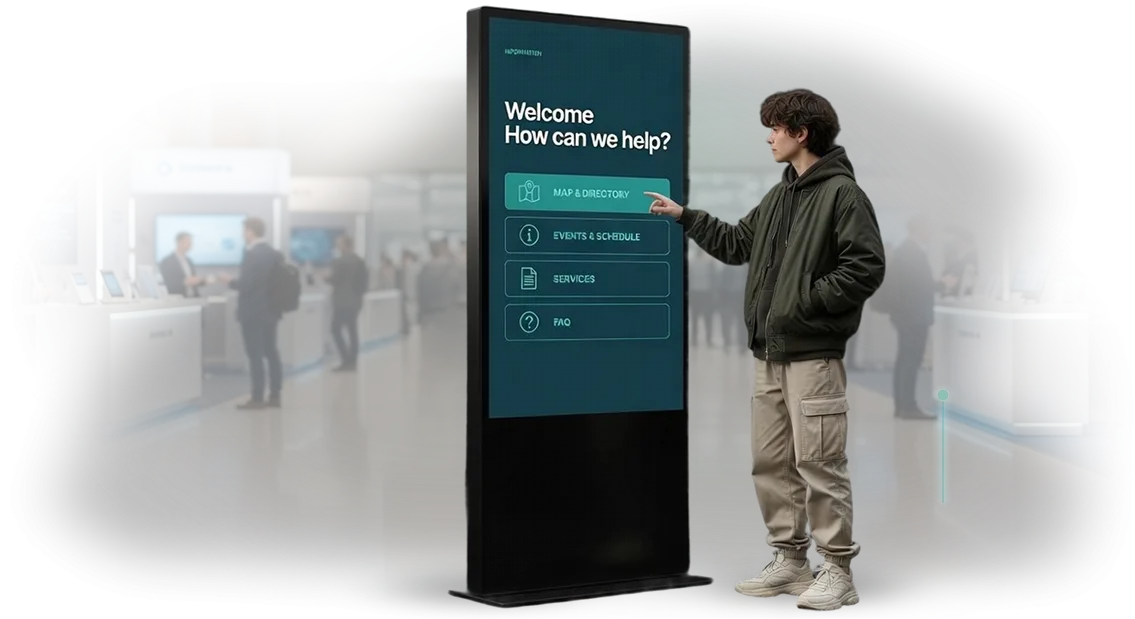
קיוסק ללא סגנון טבעי וידידותי לסביבה מאבד מבקרים
מבקר במרחב אקולוגי — פארק, מלון מוקף ירוק חי, או חנות מזון טבעי — קורא את האווירה תוך שניות. קיוסק מסך מגע טיפוסי עם לוחות פלסטיק בהירים וכפתורים כחולים סטנדרטיים נראה כמו עצם זר כאן.
גם אם המכשיר עובד ללא דופי, אנשים תופסים אותו בתת-מודע כ"טכנולוגיה משרדית" ששוברת את ההרמוניה הטבעית.
התוצאה היא פחות חשיפה ותרחישים שאבדו: האורח לא ניגש, לא מחפש מסלול, לא לומד על המוצר, לא משאיר פרטי קשר.
קיוסקים אינטראקטיביים פותרים את המשימה רק כשהממשק ממשיך את הסביבה במקום לריב איתה. סגנון טבעי לקיוסקים הוא לא קישוט — זו דרך להחזיק תשומת לב.
לכן אנחנו מעצבים קיוסקים עם מסך מגע בסגנון טבעי וידידותי לסביבה: גווני אדמה רגועים, טיפוגרפיה רכה, דימויים טקטיליים של עץ ועלווה, נתיבי ניווט טבעיים ללא רעש ויזואלי.
המשתמש לא מבזבז זמן "להבין את המכונה" — הוא מיד מבין היכן להקיש ומקבל את המידע הדרוש בכמה נגיעות.
כל פרויקט מתחיל בניתוח של אתר ההתקנה והקהל: שמורת טבע או גן בוטני מתאימים לפלטות פסטל טבעיות, מלון אקולוגי מתאים למרקמי עץ ואבן חמים, שוק איכרים מתאים להדגשים ירוקים טריים.
הממשק מתאים עצמו לציפיות האורחים, כך שהקיוסק הופך לחלק טבעי מהחלל ולא ל"חייזר" טכנולוגי.
אנימציות מעבר קצרות, אזורי מגע גדולים ואייקונים פשוטים מסירים חסמים עבור אנשים בכל גיל. המבקר מרגיש בטוח מהמסך הראשון — וזה ישירות מגדיל את מספר התרחישים שהושלמו: מסלולים שנבנו, מוצרים שנצפו, טפסים שמולאו.
אנחנו פותרים את הבעיה של פתרונות גנריים והופכים את הקיוסק לנקודת משיכה, לא למכשול בדרכו של האורח.
מה עיצוב קיוסק בסגנון טבעי נותן לעסק שלך
עיצוב קיוסק מסך מגע בסגנון טבעי הוא לא רק אסתטיקה אלא כלי עבודה שמשפיע ישירות על התנהגות המבקרים ועל תפיסת המותג.
כשהממשק נראה טבעי ורגוע, הוא כובש אנשים לפני המגע הראשון — הם סומכים על קיוסק כזה בתת-מודע יותר מאשר על תפריט סטנדרטי עם באנרים בהירים.
היתרון המרכזי הוא זיהוי. בעוד שרוב הקיוסקים נראים אותו דבר, סגנון טבעי מבדל את המותג שלך מהמתחרים: גוונים רכים, מרקמים טבעיים וטיפוגרפיה אורגנית נזכרים ומזוהים ספציפית עם החברה שלך. מבקר שהשתמש בקיוסק היום ייזכר בקלות במותג שלך מחר.
עיצוב כזה מגביר מעורבות ישירות. משתמשים מרגישים בנוח בממשק ידידותי לסביבה: הוא לא עמוס בצבעים חריפים, לא גורם לגירוי או לרצון לסגור אותו במהירות.
אנשים מבלים יותר זמן בקיוסק, בוחנים אפשרויות וחוזרים אליו שוב — מה שאומר המרה גבוהה יותר לפעולת היעד: הזמנה, רכישה, הרשמה או מנוי.
לבסוף, סגנון טבעי מחזק את המיצוב של מותג ידידותי לסביבה. אם החברה שלך מצהירה על דאגה לסביבה, עיצוב הקיוסק הופך להוכחה הוויזואלית שלה.
מבקרים סופגים את הערכים האלה ברמה חושית, האמון בעסק גדל, ואיתו נאמנות הלקוחות והביקורים החוזרים.
בנוסף, קיוסקים עם מסך מגע בעצמם חוסכים זמן לאורחים ומקלים על הצוות, ובשילוב עם ממשק מחושב הם נותנים לעסק תוצאה מדידה: יותר פניות, תורים קצרים יותר וזרם קבוע של נתונים על העדפות לקוחות.
פורמטים של קיוסק מסך מגע בסגנון טבעי וידידותי לסביבה
כשחלל מעוצב בקפידה עד לפרט הקטן ביותר, קיוסק מסך מגע הופך לחלק מהאווירה ולא לאלמנט זר. הסגנון הטבעי הידידותי לסביבה פירושו גוונים טבעיים רגועים, מרקם עץ, אור רך וצורות אינטואיטיביות.
קיוסקים כאלה משתלבים באופן טבעי בבתי מלון, מוזיאונים, פארקים ומרחבים אחרים שבהם נוחות האורח וכבוד לסביבה חשובים.
| פורמט | למי זה מיועד | מה זה נותן ללקוח |
|---|---|---|
| קיוסק מסך מגע למלון | אורחים, דלפק קבלה, לובי | ניווט מהיר במתחם, מידע על שירותים ואטרקציות, פחות תורים לצוות, תחושת דאגה מהדקה הראשונה |
| קיוסק למוזיאון | מבקרי תערוכות ותצוגות | מסלולים נוחים, תיאורי מוצגים בצורה נגישה, תוכן נוסף שמחזיק תשומת לב ומגדיל את זמן השהייה |
| עמדת מסך מגע לפארק או מרחב אקולוגי | אורחי פארק, תיירים, משפחות עם ילדים | מפות מסלולים, כללי התנהגות, אירועים עדכניים, סיוע בניווט שמפחית עומס על הצוות והופך את הביקור לבטוח יותר |
כל פורמט נוצר למשימות הספציפיות של הלקוח: פאנל צמוד קיר, עמדה עצמאית או שולחן קומפקטי.
העיצוב נשאר בסגנון טבעי אחיד — אנחנו בוחרים חומרים, פונטים ואייקונוגרפיה כך שהקיוסק ייראה כמו הרחבה של הפנים או הנוף.
הממשק ברור באותה מידה לאנשים בכל גיל: אלמנטים גדולים, זרימות פשוטות, ללא שלבים מיותרים. אורחים מוצאים את מה שהם צריכים תוך שניות, ובעל החלל מקבל כלי שעובד לנוחות ורושם חיובי — ובסופו של דבר לביקורים חוזרים.
איך נוצר קיוסק: מהבריף ועד ההשקה
בדרך כלל הלקוח רואה רק את התוצאה: קיוסק יפה שעובד ביום הפתיחה. אבל מאחורי זה עומד תהליך ברור שבו אתה תמיד מבין מה קורה ומתי התוצאה תהיה מוכנה.
בכוונה בניתי את העבודה כך שאתה משתתף רק בהחלטות מפתח — ואת השאר אנחנו עושים בעצמנו.
-
בריף עיצובי. אנחנו מתחילים עם המשימות שלך: מי ישתמש בקיוסק, איזה מידע הוא צריך לספק והיכן הוא יותקן. אנחנו קובעים לוחות זמנים וקריטריוני קבלה — כך שיש לך בהירות על הפרויקט מהיום הראשון.
-
אב טיפוס ותרחישי אינטראקציה. אנחנו מתארים את הלוגיקה של המסכים: מה האדם רואה קודם, היכן הוא מקיש, איך הוא מוצא את מה שהוא צריך. אנחנו מסכמים על מבנה התפריט וכל הנתיבים המרכזיים — ללא הפתעות בהשקה.
-
אישור עיצוב. אנחנו מפתחים את הפתרון הוויזואלי, כולל הסגנון הטבעי הידידותי לסביבה — גוונים טבעיים, צורות רגועות, חומרים טבעיים בגרפיקה. אנחנו מציגים עיצובים של המסכים הראשיים, אתה עורך תיקונים ומאשר את הגרסה הסופית.
-
התאמת הממשק לקיוסק מסך מגע. אנחנו הופכים את העיצוב לממשק עובד: כפתורים גדולים, ניווט נוח באצבע, תוויות ברורות. אנחנו לוקחים בחשבון שאנשים בגילאים ורמות מיומנות שונות יעמדו מול הקיוסק.
-
הרכבה ובדיקות. אנחנו בודקים את כל התרחישים על חומרה אמיתית: אינטראקציה מהירה, שימוש ממושך, שגיאות משתמש אפשריות. אנחנו מוודאים שהקיוסק עובד ביציבות מהיום הראשון.
-
השקת הקיוסק. אנחנו מתקינים את הציוד, מגדירים תוכן ושירותים חיצוניים ומכשירים את הצוות שלך לניהול ותמיכה בסיסית. אחרי ההשקה אנחנו מוסרים הוראות ונשארים בקשר.
-
תמיכה ושיפורים. אנחנו עוקבים אחרי הקיוסק, מנתחים משוב ומבצעים שינויים בתוכן או בלוגיקה כשצריך. הקיוסק חי לצד העסק שלך — אנחנו עוזרים לו לגדול.
גישה זו מספקת את היתרון המרכזי: אתה לא מבזבז זמן על פרטים טכניים ומקבל כלי עובד בתוך לוחות הזמנים המוסכמים. וכל התהליך מהבריף ועד ההשקה נשאר שקוף וניתן לניהול — עם נקודות אישור ברורות.
מה אתה מקבל אחרי פיתוח הקיוסק
אחרי מסירת הפרויקט, אתה מקבל לא רק קיוסק מורכב אלא פתרון עסקי מוכן שניתן להתקין ולהשתמש בו מיד. אנחנו מעבירים את כל החומרים, הזכויות והכלים כך שתוכל לנהל את המכשיר בעצמך ולשנות תוכן ללא מעורבות קבלן. להלן היקף המסירה המלא.
- עיצוב ואבות טיפוס של ממשק בסגנון טבעי וידידותי לסביבה. אתה רואה איך כל עמוד ייראה ומאשר את לוגיקת הניווט לפני שמתחילים בתכנות.
- אפליקציית מסך מגע עובדת, מותאמת לדגם הקיוסק הספציפי. היא רצה ביציבות על ציוד מקצועי, מגיבה למגע ללא עיכוב ולא קופאת בשימוש ממושך.
- מערכת ניהול — פאנל פשוט שדרכו העובדים שלך יכולים לעדכן מבצעים, מחירים, חדשות ותמונות בעצמם. אין צורך בידע בתכנות — פשוט להעלות קובץ או לערוך טקסט.
- קבצי מקור ופרטי גישה. כל שמות המשתמש, הסיסמאות, קוד המקור והחומרים הגרפיים נשארים אצלך. אתה לא קשור למפתח ספציפי ויכול לפתח את הפרויקט עם כל צוות.
- תיעוד טכני: הוראות הפעלה ותחזוקה, מדיניות עדכון תוכן ותיאור של תקלות נפוצות וכיצד לפתור אותן. הכל כתוב בשפה פשוטה, ללא ז'רגון מסובך.
- הכשרת צוות. אנחנו מקיימים שיחת וידאו קצרה, מראים כיצד להעלות חומרים, לשנות לוחות זמנים ולהגיב לדוחות שגיאות. אחרי זה, הצוות שלך עובד באופן עצמאי.
- תמיכה באחריות. במהלך תקופת האחריות, אנחנו מתקנים תקלות תוכנה בחינם ועוזרים בעדכוני מערכת. למצבים דחופים, יש ערוץ תקשורת עם המהנדסים שלנו.
חבילה זו מכסה את כל השאלות מרגע קבלת הקיוסק ועד לפעילות היומיומית. אתה מקבל כלי ברור שמביא ערך אמיתי: הוא מגדיל את זיהוי המותג, מיידע לקוחות ומקל על הצוות. כל מה שנשאר זה לבחור מקום התקנה ולחבר את המכשיר לחשמל.
מקרה בוחן: איך ממשק ידידותי לסביבה הכפיל מעורבות
לרשת מלונות הכפר Eco-Hotel היה קיוסק מסך מגע לניווט בנכס ולהזמנת שירותים. אורחים חלפו על פניו: הממשק הסטנדרטי עם כפתורים קטנים ובאנרים בהירים לא עורר אמון והרגיש "לא במקום" בסביבה הטבעית.
בחודש, לא יותר מ-40 אורחים השתמשו בקיוסק, והמנהלים שמעו יותר ויותר תלונות על קושי.
הצענו לעצב מחדש את הממשק כך שיתאים לסגנון האקולוגי של המלון: גוונים ירוקים וחוליים עמומים, פיקטוגרמות גדולות, מינימום טקסט ומעברים חלקים. הפיתוח ארך שלושה שבועות; עוד יומיים הוקדשו להתקנה ולהגדרת הקיוסק בלובי. הפקדים נשארו אינטואיטיביים — אורחים בוחרים את הסעיף הדרוש במגע הראשון.
תוצאות אחרי ההשקה
חודש אחד אחרי היישום, 82% מהאורחים השתמשו בקיוסק — פי שניים מלפני כן. זמן השהייה הממוצע גדל מ-45 שניות לדקה וחצי: אנשים לא רק מצאו את דרכם, הם חקרו תוכניות ספא ותפריט המסעדה.
הזמנות שבוצעו דרך הקיוסק הביאו למלון גידול של 18% בהכנסות משירותים נוספים לרבעון.
השביעות רצון גם עלתה משמעותית: בסקרים, אורחים נתנו דירוג "מצוין" ב-30% יותר פעמים, ומספר הפניות לדלפק הקבלה ששאלו "איפה נמצא..." ירד בחצי.
הזמנה חוזרת
Eco-Hotel הזמין מאיתנו קיוסקים דומים לשני סניפים נוספים. אנחנו תומכים כעת בממשקים מרחוק, ועדכוני תוכן אורכים למנהל לא יותר משעה בשבוע.
המקרה הזה מראה: עיצוב ידידותי לסביבה הוא לא רק סגנון, אלא כלי עבודה שמגביר מעורבות ומחזיר את ההשקעה בחודשים הראשונים.
איך לבחור את פורמט הקיוסק הנכון למשימה שלך?
בחירת פורמט קיוסק לא מתחילה בחומרה — היא מתחילה במשימה. שאל את עצמך: היכן המבקר יפגוש את המסך — בלובי, באזור המכירה או באזור ההמתנה — ואיזו פעולה אנחנו רוצים שהוא יבצע? לא רק סוג המעטפת תלוי בזה, אלא גם לוגיקת הממשק.
אם אדם צריך למצוא במהירות משרד או מוצר, קיוסק עומד אנכי עם כפתורי ניווט גדולים עובד היטב. כשהמטרה היא להכיר לאורחים את סיפור המותג, מסך אופקי נוח יותר: אנשים יכולים להתקרב ולהשתמש בו כמו בספר. אפשרויות צמודות קיר חוסכות מקום ומתאימות למסדרונות ולחדרים קטנים.
בנפרד, חשוב על הסגנון הוויזואלי. סגנון טבעי ידידותי לסביבה הוא לא רק פלטה של גוונים ירוקים ובז', אלא טיפוגרפיה רגועה, מרקמים טבעיים ומינימום רעש ויזואלי.
ממשק כזה עוזר למבקרים להתמקד בתוכן ונראה טבעי בבתי מלון, מרפאות, מוזיאונים וחנויות אקולוגיות שבהן טון חם ומעורר אמון חשוב.
בבחירת פורמט, הגדר שלושה פרמטרים: נפח התוכן, הגיל הממוצע של הקהל שלך ותדירות עדכון המידע.
מפה אינטראקטיבית, קטלוג שירותים ומערכת מידע דורשים מבנים שונים, והתפריט בנוי כך שהאינטראקציה הראשונה אורכת רק כמה שניות.
אחרי זה, ניצור עיצוב ממשק מותאם אישית בסגנון טבעי ונציע מעטפת שמתאימה לפנים שלך.
גישה זו מאפשרת לך להימנע משני קצוות: תשלום יתר על פונקציונליות מיותרת וקבלת "קיוסק מזוודה" שנראה זר בחלל. שלח לנו תיאור של המשימה שלך — נבחר את הפורמט, נעצב את העיצוב ונספק פתרון סוהר.
התייחסות לספקות נפוצים לגבי פיתוח קיוסקים
ספקות לפני הזמנת קיוסק הם נורמליים. לקוחות חוששים מתקלות, תיקונים ארוכים וממשקים לא נוחים. במשך 10 שנים, למדנו איך להפיג את החששות האלה.
להלן תשובות לשאלות נפוצות על קיוסקים: כיסוי האחריות, תיקון קיוסק מסך מגע ועמידות המסך. קבל החלטות על סמך עובדות, לא ניחושים.
כמה זמן מחזיקים מסכים?
מסכים מתוכננים לפעילות יומיומית. אנחנו משתמשים בפאנלים עם הגנה מפני שריטות ותמונה בהירה — הם עומדים באלפי הקשות. הם מחזיקים שנים.
מה האחריות מכסה, ואיך עובד התיקון?
האחריות מכסה ציוד והתקנה. אם מתרחשת תקלה, אנחנו מגיעים להחליף את המודול תוך כמה ימים; רוב הבעיות נפתרות מרחוק. אנחנו מספקים קיוסק חלופי בזמן שהתיקון מתבצע.
האם אפשר לעצב את הקיוסק בסגנון טבעי וידידותי לסביבה?
כן. אנחנו מפתחים את הממשק עם צבעים טבעיים, צורות רכות וניווט ברור. הקיוסק משתלב בחלל במקום להיראות כמו מכשיר זר.
מה אם מבקרים לא מבינים את הממשק?
אנחנו מעצבים כפתורים גדולים, הנחיות פשוטות ובודקים עם משתמשים אמיתיים. לכן אנשים בכל גיל מוצאים את הקיוסק קל לשימוש.
הזמן פיתוח קיוסק בסגנון טבעי
סגנון טבעי בממשק הוא לא רק תמונה "ירוקה". זה כלי שמפיג מתח של מבקרים, בונה אמון לפני המגע הראשון במסך ומבדל את המותג שלך לטובה בקניון, מלון או אולם תערוכות.
אבל התוצאה תלויה לא רק בעיצוב, אלא גם במידת המחשבה על כל המערכת — מלוגיקת המסך ועד עמידות המעטפת.
כדי "להזמין קיוסק" ולקבל כלי עובד ולא צעצוע יקר, ודא שהפרויקט כולל את הנקודות הבאות. אנחנו כוללים אותן בכל פיתוח — אתה יכול להשתמש ברשימה זו כצ'קליסט כשמדברים עם כל קבלן.
צ'קליסט: מה חייב להיכלל בפרויקט
- מפת מסכים ותרחישים. תיאור של כל שלב של המבקר — מהברכה ועד קבלת המידע הנדרש — ללא מבוי סתום וללא הקשות מיותרות.
- התאמה למגע. כפתורים גדולים וניווט נוח לאנשים בגילאים שונים. מבקרים לא "מפספסים" ומוצאים במהירות את מה שהם צריכים.
- מהירות טעינה. אפילו גרפיקה יפה חייבת להיפתח מיידית, אחרת חצי מהאורחים פשוט ילכו מהמסך. אנחנו משתמשים בארכיטקטורת שרת מכווננת היטב.
- עמידה בספר המותג. צבעי החברה והפונטים שלך, מרקמים ידידותיים לסביבה וחומרים טבעיים בעיצוב — תמונה מגובשת שנשארת בזיכרון.
- עמידות בעומס. קיוסק מידע פועל 24/7 — אנחנו מתכננים אותו כך שהמערכת לא קורסת ביום העמוס ביותר.
- יכולת עדכון תוכן. אתה חייב להיות מסוגל לשנות מבצעים וחדשות בעצמך בלי לחכות למתכנת. זו העצמאות שלך.
- אחריות ותמיכה. תמיכה קבועה לאחר ההשקה וערוץ תקשורת ברור עם המפתח.
כשכל הנקודות מכוסות, "פיתוח קיוסק סוהר" מפסיק להיות הפשטה. אתה מקבל לוחות זמנים צפויים, עלות שקופה המחושבת לאחר בדיקה, ותוצאה שמחזירה את עצמה דרך שירות מהיר יותר ואמון לקוחות. נשאר רק צעד אחד — בקש הצעת מחיר לפרויקט שלך.