

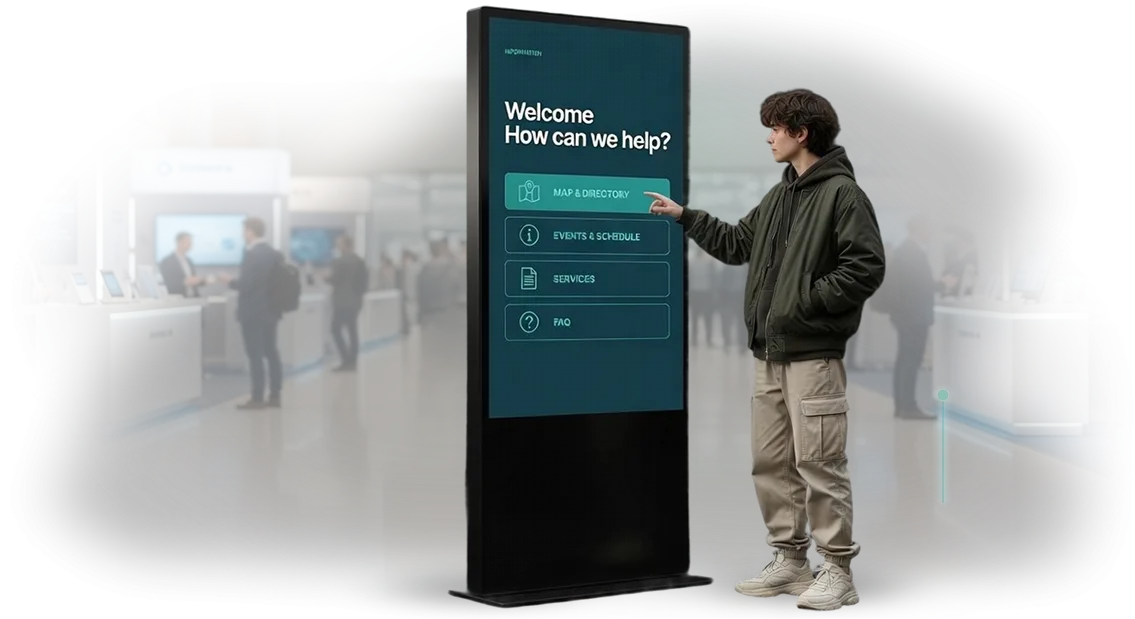
מבקרים חולפים על פני המוצגים? השתמשו בקיוסקים בסגנון מוזיאלי
מבקר מגיע למוזיאון לא כדי לקרוא הוראות, אלא כדי לחוות סיפור. קיוסק רגיל עם תפריט וכפתורים בולט לרעה מתוך התערוכה — מבקרים rarely ניגשים אליו כי הוא נראה כמו terminal תשלום, לא כמו חלק מהתערוכה.
בתערוכות גדולות זה בולט במיוחד: אורחים רוצים לשקוע באווירה, לא להבין את המכניקה של terminal. כתוצאה מכך, אפילו תוכן טוב נשאר בלתי מורגש, והמוצגים ממשיכים לספר את הסיפור שלהם ללא מעורבות האורח.
הפתרון — קיוסקים אינטראקטיביים למוזיאונים בסגנון מוזיאלי אחיד. כשהממשק תואם לאסתטיקה של התקופה, לחומרים ולגרפיקה של התערוכה, הוא הופך להרחבה טבעית של האולם.
אורחים לא חולפים על פניו: הקיוסק מושך תשומת לב כאובייקט, לא כטכנולוגיה, ומעורבות המבקרים מתרחשת באופן טבעי. כך קיוסקים לתערוכות מתפתחים מ-terminal מידע לחלק מהנרטיב.
אנחנו מעצבים פתרונות כאלה כבר למעלה מעשור: אנו מפתחים מערכת עיצוב לכל תערוכה ספציפית, מתאימים את הממשק לשליטה במגע, ומוודאים שהקיוסק עובד באופן אמין מהיום הראשון.
התוצאה היא לא רק עמדה עם מידע, אלא כלי שמגדיל את זמן השהייה של האורחים עם נושא התערוכה.
המטרה של קיוסקים כאלה היא לא לספק מידע, אלא להחזיק תשומת לב למשך 2–3 דקות יותר מהרגיל. זה יוצר עומק תפיסה גדול יותר, יותר תמונות ודיונים, ולמוזיאון — יותר סיבות לביקור חוזר.
הסגנון המוזיאלי הופך את הקיוסק לבלתי פולשני טכנית אך בולט רגשית — וזו בדיוק הסיבה שאורחים לא חולפים על פניו.
מה קיוסק אינטראקטיבי מספק: מעורבות גבוהה יותר, תדמית ונוחות לאורח
קיוסק אינטראקטיבי במוזיאון הוא לא רק עמדת מידע, אלא כלי שמחזיק את תשומת הלב של המבקר. במקום שלט סטטי, האורח בוחר את המסלול שלו, בוחן מוצגים בפירוט, ומקבל תשובות בלי לחכות למלווה.
מעורבות זו הופכת את הסיור לדיאלוג חי: מבקרים מבלים יותר זמן באולם וחוזרים לחומרים שוב.
מבחינת תדמית, הקיוסק הופך את המוזיאון למודרני ופתוח. ממשק בסגנון מוזיאלי, ניווט מחושב ומשוב מישוש יוצרים תחושת דאגה למבקר — זה חשוב במיוחד לאורחים שרגילים לשירותים דיגיטליים. אתם מקבלים תרחיש מוכר מעולם התרבות, לא רק מכשיר על הקיר.
נוחות האורח היא ערך מובחן. הקיוסק עובד ללא תורים, עונה על שאלות נפוצות, מציג את פריסת האולמות ואת הזמן עד לתחילת ההרצאה הבאה. המבקר מרגיש עצמאי, והמוזיאון מפחית את עומס העבודה על הצוות.
למשפחות, תיירים זרים ואנשים עם מוגבלות בניידות, זה לעיתים קרובות מקור הנוחות העיקרי.
צמיחת מבקרים בנויה מפרטים קטנים: ביקורות חיוביות על החוויה, המלצות לחברים, והרצון לחזור לתערוכה חדשה. קיוסקים אינטראקטיביים שמפתיעים בתוכן ובעיצוב הופכים לסיבה עצמאית לבקר במוזיאון. נאמנות גדלה כשהאורח מקבל יותר ממה שציפה.
הצוות שלנו מפתח אינטראקטיבים מוזיאליים על ציוד מגע מקצועי ומטפל בתכנון תרחישים, עיצוב ממשק ותמיכה טכנית. כך שהיתרונות של קיוסק אינטראקטיבי הם לא רק הרעיון שלכם, אלא פתרון מוכן שעובד מהיום הראשון.
פורמטים של קיוסקים בסגנון מוזיאלי: מותאם לתערוכה שלכם
תערוכות מגוונות: חלקן צריכות לספר את הסיפור של כל מוצג בפירוט, אחרות צריכות להדריך מבקרים בפריסה מורכבת של אולמות, ואחרות צריכות להפתיע ולערב. קיוסק אוניברסלי עם תפריט רגיל rarely מכסה את כל התרחישים.
לכן אנו מציעים שלושה פורמטים בסיסיים של קיוסק מגע, כל אחד פותר משימה משלו תוך שמירה על סגנון מוזיאלי אחיד.
פורמטים בסיסיים של קיוסק מידע
| פורמט | למי | מה הוא נותן ללקוח |
|---|---|---|
| קיוסק מידע | מוצגים בודדים, אולמות עם זרימת מבקרים גבוהה | מידע מהיר על אובייקטים, מפות אולמות ותיאורי אוסף — פחות תורים ועומס מופחת על הצוות |
| קיוסק מולטימדיה | אזורים אינטראקטיביים, תערוכות זמניות, מסלולי ילדים | שקיעה בנושא דרך וידאו, מודלים תלת-ממדיים וחידונים — מבקרים מבלים יותר זמן וזוכרים את התערוכה |
| קיוסק ניווט | אזורי כניסה, לובי, מעברים בין אולמות | ניווט ברור בין קומות ומוצגים — מבקרים מוצאים את דרכם בקלות ללא סיוע של מלווה |
כל פורמט מתוכנן לנקודת מיקום ספציפית: אפשר להציב עמדה קומפקטית ליד ויטרינה או פאנל גדול בלובי. הממשק והעיצוב החזותי עוקבים אחרי סגנון המותג של המוזיאון — גופנים, פלטת צבעים ואלמנטים גרפיים.
בגלל זה, הקיוסק נראה כמו חלק מהתערוכה, לא מכשיר טכני זמני. מבקרים קוראים את הניווט באופן אינטואיטיבי, והמוזיאון מקבל כלי שמשפר את איכות השירות ואת טווח ההגעה של המידע.
אנחנו נבחר את הפורמט והתוכן שיתאימו לצרכים שלכם — מאולם בודד ועד מתחם מוזיאלי שלם.
איך אנחנו מפתחים קיוסק: מהבריף ועד ההשקה
אנחנו מארגנים את התהליך כך שתוכלו לראות תוצאות בכל שלב: מהבריף הראשון ועד היום שבו הקיוסק מקבל את פני המבקרים הראשונים. לא תצטרכו להיכנס לפרטים טכניים — אנחנו מנהלים את הפרויקט, מתאמים החלטות מפתח ולוקחים אחריות על לוחות זמנים.
גישה זו נקראת "פיתוח קיוסק במפתח מלא": אתם מקבלים פתרון מוכן, לא אוסף של מסמכים וקבצי מקור.
- בריף ומטרות. בפגישה אישית או מקוונת, אנו קובעים למי מיועד הקיוסק, מה הוא צריך לתת למבקרים, ואיזו משימה הוא צריך לפתור עבור המוסד שלכם. זה הבסיס לכל שלבי פיתוח הקיוסק.
- עיצוב קיוסק. אנו מכינים את מבנה המסך, לוגיקת המעברים ותרחישי התנהגות משתמש. אתם רואים אב-טיפוס ומאשרים אותו לפני תחילת העיצוב.
- עיצוב בסגנון מוזיאלי. אנו יוצרים ממשק שמשלב את האסתטיקה של החלל שלכם עם קריאות על מסך מגע. אנו מתחשבים בסגנון התערוכה, בצבעי המותג ובשימושיות לאנשים בגילאים שונים.
- הרכבת ממשק. אנו הופכים את העיצוב המאושר לתוכנית עובדת: ניווט, אנימציות, חיפוש וכל האלמנטים שתוכננו בתרחיש. בשלב זה, אתם כבר יכולים לנסות את הקיוסק בעצמכם.
- בדיקות ושיפורים. אנו בודקים תרחישים עם מבקרים אמיתיים או עם הצוות שלכם ומתקנים כל נקודה לא נוחה. המטרה היא שאורחים ישתמשו בקיוסק בשמחה וללא רמזים.
- השקה ותמיכה. אנו מתקינים את הציוד, מעלים את התוכן ומכשירים את הצוות שלכם. לאחר ההשקה, אנחנו נשארים בקשר: מעדכנים מידע, מוסיפים קטעים ועוזרים בתחזוקה.
רצף זה מסיר את הסיכון לאי-הבנות: אתם מאשרים כל שלב ומבינים על מה אתם משלמים. ואנחנו מטפלים בתיאום של כל המשתתפים — ממעצב ועד מהנדס — כך שהקיוסק מוכן ופועל ביציבות עד יום הפתיחה.
מה כלול במסירה: חבילה מלאה למוזיאון שלכם
כשאתם מזמינים קיוסק אינטראקטיבי מאיתנו, אתם מקבלים לא רק מכשיר, אלא פתרון מלא במפתח מלא בסגנון מוזיאלי. אנו מרכיבים את החבילה כך שלאחר ההתקנה, כל מה שנותר לכם הוא להפעיל את הקיוסק ולראות מבקרים מתקשרים עם התערוכה. להלן הרשימה המלאה של מה שכלול במסירה.
- חומרת קיוסק — מסך מגע, מעטפת, אלמנטים מגן ויחידת מחשוב. הכל נבחר לתנאי המוזיאון: מאולמות עם תנועה גבוהה ועד חללי תצוגה שקטים.
- עיצוב ממשק מותאם אישית בסגנון מוזיאלי — פריסות מסך, גופנים, פלטת צבעים ואייקונים שמרחיבים את האסתטיקה של התערוכה שלכם במקום לסתור אותה.
- מילוי תוכן — אנו מתאימים את הטקסטים, התצלומים ותיאורי המוצגים שלכם לפורמט המגע. אנו עוזרים לבנות את המידע כך שמבקרים ימצאו במהירות את מה שחשוב.
- תרחישים אינטראקטיביים — ניווט באולמות, פרטי מוצגים, תוספות מולטימדיה. כל מה שהופך את הקיוסק לעוזר מועיל ולא רק ל"שלט אלקטרוני".
- התקנה והגדרה באתר — אנו מספקים, מתקינים ומחברים את הקיוסק, ובודקים את כל תרחישי הפעולה לפני פתיחת הדלתות למבקרים.
- הוראות והכשרת צוות — הנחיות ברורות למנהלים והדרכה קצרה לצוות. העובדים שלכם יסייעו לאורחים בביטחון ויפתרו בעיות קטנות במהירות.
- אחריות ותמיכה — על כל החבילה שנמסרה. אם משהו דורש תשומת לב, תמיד תוכלו לפנות אלינו, ונעזור מרחוק או בביקור באתר.
חבילה זו היא בדיוק מה שבדרך כלל הכוונה ב"קיוסק אינטראקטיבי במפתח מלא" למוזיאון. אתם מקבלים כלי עובד בלי להרכיב אותו חלק אחר חלק מקבלנים שונים, ואתם יכולים להתמקד במה שהכי חשוב — החוויה של המבקרים שלכם.
מקרה בוחן: איך קיוסק אינטראקטיבי החיה תערוכה והגדיל את זמן השהייה של מבקרים
מבקרים לעיתים קרובות חולפים על פני ויטרינות תוך 10-15 דקות בלי לזכור אף מוצג. תערוכת המוזיאון מאבדת את הדבר החשוב ביותר — דיאלוג עם האורח. אנחנו פותרים זאת עם קיוסק אינטראקטיבי שמדבר בשפת התערוכה ומחזיק תשומת לב.
מקרה אחד כזה הוא הטמעת קיוסק למוזיאון 'סיפורים עירוניים'. המשימה שלנו הייתה להחיות את האולם "חיי היומיום בתחילת המאה": המוצגים היו מאחורי זכוכית, ולא היה מי שיספר את סיפוריהם.
במקום קיוסק מידע רגיל, עיצבנו ממשק מגע בסגנון מוזיאלי — עם מרקם עץ, גופנים ארכיוניים ואיורים מהתקופה.
מה השתנה
הקיוסק הפך למדריך אל ההיסטוריה: אורחים בוחרים אובייקט על המסך, רואים את הסיפור שלו, תצלומים קשורים ואפילו סצנות מחיי היומיום. הניווט פשוט — מתאים גם לתלמידי בית ספר וגם לדורות מבוגרים. כתוצאה מכך, מבקרים לא רק קוראים שלטים; הם מתערבים בתרחיש.
תוצאות מדידות
- הזמן הממוצע במוצג גדל מ-45 שניות ל-4-5 דקות.
- בשעתיים הראשונות לפעילות הקיוסק — יותר מ-120 מפגשים אינטראקטיביים.
- מספר האורחים שעוצרים בקיוסק ומגיעים עד סוף האולם שולש.
- צוות המוזיאון ציין שמבקרים החלו לדון במוצגים ביניהם.
פרויקט קיוסק אינטראקטיבי מוצלח זה מאשר: תערוכת מוזיאון הופכת לחיה כשהאורח מקבל תפקיד והזדמנות לאינטראקציה. אחרי האולם הראשון, המוזיאון הזמין מאיתנו קיוסקים לשתי תערוכות נוספות — הסימן הטוב ביותר לאמון.
שאלות נפוצות על פיתוח ותמיכה בקיוסקים
ספקות לפני רכישת קיוסקים בדרך כלל מתמקדים בדבר אחד: איך הטכנולוגיה תתנהג בזרימת המבקרים היומיומית. זה חל על כל פרויקט, ובמיוחד על קיוסקים אינטראקטיביים בסגנון מוזיאלי, שבהם הממשק הוא חלק מהתערוכה.
להלן, אנו עונים על שאלות הקיוסק שמדאיגות את הלקוחות ביותר: אמינות, תמיכה וקלות ניהול.
מה קורה אם הקיוסק מתקלקל?
יש לנו ניטור מרחוק: אנחנו מגיבים לפני שמבקר מבחין בבעיה. במהלך תיקונים, אנו מספקים ציוד חלופי — התערוכה אף פעם לא נעצרת.
מי מעדכן את המידע?
אנשי צוות משנים טקסטים ופוסטרים בעצמם דרך פאנל ניהול פשוט. אנו מכשירים אותם תוך כמה שעות; כל השאר קורה בלי לערב מתכנתים.
איזו אחריות ותמיכה חלים?
אנו מספקים אחריות רשמית על חומרה ותוכנה, בתוספת הסכם תמיכה טכנית. אנו מגיבים לפניות תוך יום עסקים אחד ופותרים את רוב הבעיות מרחוק.
האם המערכת קשה לניהול?
המערכת מתוכננת למי שאין לו רקע טכני: קטעים ברורים, רמזים ותמיכה בעברית. תתפסו את זה מהר, ואנחנו נשארים בקשר בכל שלב.
בואו נדון במשימה שלכם ונכין פתרון שלא ידרוש תשומת לב מתמדת מהצוות שלכם.איך לבחור פורמט קיוסק לצרכים של המוזיאון שלכם?
בחירת פורמט קיוסק אינטראקטיבי למוזיאון היא לא עניין של עיצוב, אלא של משימות ותקציב. אין פתרון אוניברסלי: עמדה קומפקטית בכניסה מתאימה למוזיאון עם זרימת מבקרים קטנה, בעוד מתחם גדול דורש פתרונות גדולים יותר.
אז קודם כל, הגדירו את תרחיש השימוש: האם המבקר צריך לקבל מידע מהיר, למצוא את דרכו בין האולמות, או לצלול לחקירה אינטראקטיבית של המוצגים?
קריטריוני בחירת הקיוסק תלויים בזה: גודל מסך, עמידות לבלאי, מספר המשתמשים בו-זמנית והסגנון החזותי.
פאנל קומפקטי מטפל במהירות במשימות ניווט, בעוד שולחן אינטראקטיבי באולם מאפשר למבקרים לבחון פרטי מוצגים, להשוות ביניהם ולגשת לחומרים נוספים.
ככל שיותר אורחים מתקשרים עם הקיוסק, כך הממשק חייב להיות מחושב יותר כדי להימנע מיצירת תורים.
סוגי קיוסקים נבדלים לפי מטרה: עמדות מידע למידע מהיר, פאנלים מולטימדיה לחקירה מעמיקה, והתקנות אינטראקטיביות כאטרקציה עצמאית.
כל פורמט דורש תקציב משלו ועיצוב UX/UI משלו: להציג טקסט עם תמונות זה דבר אחד, אבל תרחיש שמחזיק תשומת לב וגורם למבקרים לרצות לשתף את החוויה זה דבר אחר.
העצה העיקרית היא להתחיל מהשאלה: "מה המבקר צריך לעשות?" אם אתם לא בטוחים איזה פורמט מתאים למוזיאון שלכם, נספק ייעוץ, נעזור להגדיר את המשימה ונבחר פתרון על סמך המטרות והתקציב שלכם. כך תקבלו קיוסק שבאמת עובד לשיפור חוויית התערוכה.
מוכנים לדון בפרויקט שלכם? שלחו בקשה לקיוסק במפתח מלא
פיתוח קיוסק אינטראקטיבי במפתח מלא הוא משימה שדורשת תשומת לב לפרטים והבנה של המאפיינים של התערוכה שלכם. במיוחד כשמדובר בסגנון מוזיאלי, שבו כל פרט ממשק חייב להשתלב עם האווירה של החלל. שלחו בקשה באתר שלנו, ואנחנו נטפל בכל התהליך: מהקונספט ועד ההשקה.
מה תקבלו אחרי הפנייה:
- ייעוץ אישי — נעזור לכם לקבוע איזה פורמט קיוסק מתאים לתערוכה שלכם;
- הערכת עלות מפורטת עם לוחות זמנים שקופים — תדעו את העלות לפני תחילת העבודה ותוכלו לתכנן את התקציב;
- אבות-טיפוס עיצוב בסגנון מוזיאלי — נפתח סגנון ממשק ממותג שמשתלב בהרמוניה בחלל שלכם;
- אב-טיפוס ממשק — נראה כיצד מבקרים יתקשרו עם הקיוסק ונשלב את המשוב שלכם;
- השקה באתר והגדרת ציוד — נספק, נתקין, נחבר ונבדוק את כל הפונקציות;
- תמיכה טכנית ואחריות — לאחר ההשקה, אנחנו נשארים בקשר ועוזרים בעדכונים.
התהליך מתוכנן כדי להקל עליכם. תוך יום עסקים אחד מהבקשה שלכם, ניצור קשר ונבהיר את המשימות. לאחר מכן נכין הצעה והערכת עלות, ונסכים על העיצוב והמפרט הטכני. אחרי ייצור ובדיקות, נתקין את הקיוסק במקום שלכם.
גישה זו מבטלת הפתעות. אתם מקבלים קיוסק אינטראקטיבי במפתח מלא שמוכן לעבודה מיידית ועוזר למבקרים לחקור את התערוכה שלכם. שליחת בקשה אורכת כמה דקות, ואנחנו נטפל בכל השאר.