

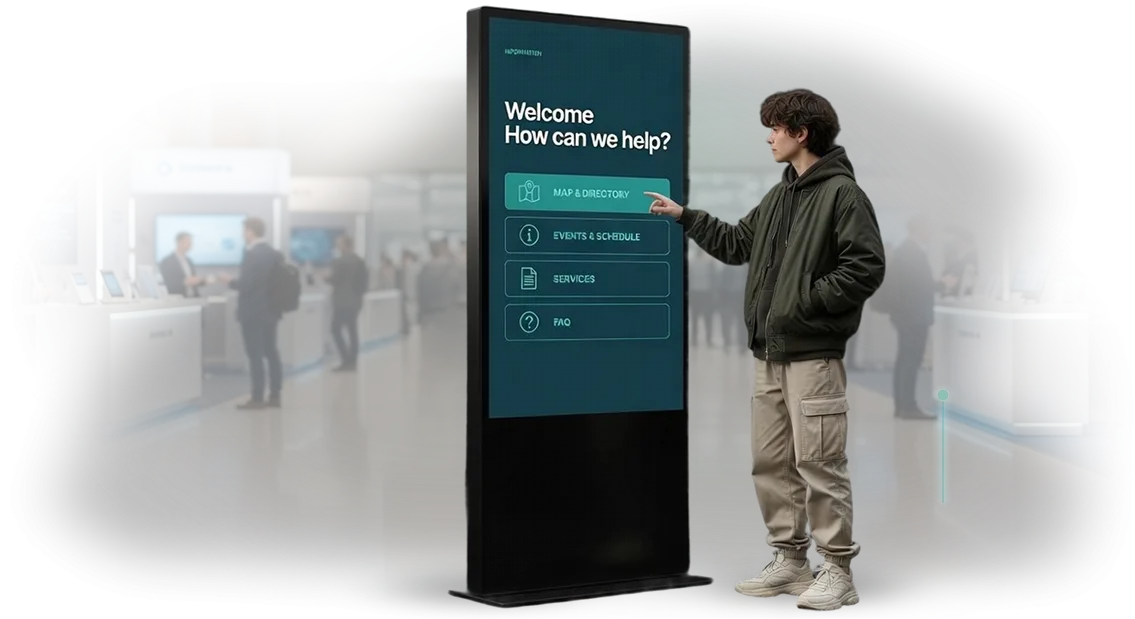
אורחים עוזבים בלי תשובות: קיוסק בסגנון חינוכי מחזיר אותם
מבקרים ניגשים לקיוסק מידע ומצפים לתשובה מהירה, אבל לעתים קרובות עוזבים בידיים ריקות: תפריטים מורכבים, מסך עמוס מדי וניווט מבלבל גורמים לאנשים לוותר.
עבור אירוע, זה אומר לידים אבודים, תורים בדלפק המידע ואורחים לא מרוצים שמעולם לא קיבלו את לוח הזמנים החשוב או את ההכוונה לדוכן הנכון.
הבעיה אינה הנכונות של האורחים להבין, אלא שהממשק מדבר בשפת המערכת, לא בשפת המבקר.
כשאנשים צריכים "לקרוא את מדריך הקיוסק", האירוע מאבד מערכו — במקום מעורבות, מקבלים רוגז ורושם שלילי מהמותג.
הפתרון הוא ממשק בסגנון חינוכי: רמזים פשוטים שמובנים במבט ראשון, זרימות שלב-אחר-שלב ומבנה לוגי שמנחה את האורח ביד.
גישה זו הופכת את הקיוסק ממכשיר טכני לעוזר חי שפותר במהירות את המשימה של המבקר — מאיתור אולם ועד בדיקת לוח הזמנים של ההרצאות.
זו בדיוק הסיבה שאנחנו מעצבים קיוסקים אינטראקטיביים: ממשק שאינו דורש הדרכה, ניווט שמונע שגיאות ולוגיקה המותאמת לתרחישים של אירוע ספציפי.
האורח מקבל תשובה תוך שניות וחוזר לתוכנית, ואילו אתם מקבלים פחות כאוס ויותר מבקרים מרוצים.
אילו יתרונות מקבל הלקוח מקיוסק אינטראקטיבי
מעורבות אורחים
קיוסק אינטראקטיבי הופך המתנה פסיבית להשתתפות פעילה. האורח בוחר את המסלול שלו, עונה על שאלות ואוסף מידע בפורמט דמוי-משחק — זה שומר על תשומת הלב הרבה יותר מאשר דוכן סטטי או פלייר.
בפורמט חינוכי, חשוב במיוחד שמבקרים ירגישו כמו חוקרים, לא כמו מאזינים להרצאה. הקיוסק מספק משוב מיידי: ענה על שאלה — קבל תוצאה, השלם שלב — ראה את ההתקדמות שלך.
חוויה זו נזכרת ויוצרת רצון לחזור, ובמקביל מגבירה את שביעות הרצון הכללית מהאירוע.
הפחתת עומס העבודה של הצוות
העובדים מפסיקים לענות על אותן שאלות מאה פעמים במשמרת. הקיוסק לוקח על עצמו תרחישים סטנדרטיים: ניווט במתחם, לוחות זמנים של הרצאות, תיאורי תערוכות או שירותים ותשובות לשאלות נפוצות. אנשים מקבלים מידע בעצמם, בלי לחכות בתור או לחפש מארגן.
עבור העסק, זה חיסכון ישיר בזמן — אותם עובדים מטפלים בבקשות לא סטנדרטיות, בתקשורת חיה ובמשימות חשובות באמת. באירועים גדולים זה בולט עוד יותר: הקיוסק משרת אורחים מסביב לשעון, אף פעם לא מתעייף ואף פעם לא מאבד סבלנות.
הכרת המותג
העיצוב החזותי של הקיוסק הוא חלק מהתקשורת עם הקהל. כשעיצוב הממשק עוקב אחרי הסגנון הארגוני, עם לוגו, צבעים מוכרים וניסוח ייחודי, אורחים קולטים באופן לא מודע את הסגנון של החברה וזוכרים אותו.
הגישה החינוכית להצגה מוסיפה את האסוציאציה "זה לא רק מידע — זו דאגה למבקר."
אורחים מעורבים משתפים את ההתרשמות שלהם ברשתות החברתיות: הם מצלמים את המסך ומספרים על החוויה יוצאת הדופן. כל אזכור כזה הוא חשיפה חינמית למותג שממשיכה לעבוד גם אחרי שהאירוע נגמר. הקיוסק הופך לנקודת משיכה שסביבה נוצרים תוכן ושיחה חיה.
פורמטים של קיוסק בסגנון חינוכי למשימה שלך
ממשק בסגנון חינוכי אינו על ספרי לימוד משעממים, אלא על הצגה ברורה שעוזרת לאורחים להתמצא במהירות ולזכור את הנקודות המרכזיות.
אנחנו מתאימים את פורמט הקיוסק לנקודת המגע הספציפית: לפעמים צריך ניווט, לפעמים סיפור חי על מוצגים, ולפעמים חלון ראווה עצמאי שתופס תשומת לב.
פורמטים שמכסים את מטרות הלקוח
| פורמט | למי הוא מיועד | מה הוא נותן ללקוח |
|---|---|---|
| קיוסק ניווט | מוזיאונים, מרכזי קניות, מרכזים עסקיים, קמפוסים | מבקר מוצא את המשרד או המוצג הנכון תוך 30 שניות — פחות תורים ופחות שאלות לצוות |
| קיוסק מדריך | תערוכות, גלריות, פארקים, מסלולי טיול | האורח בוחר את עומק ההתעמקות שלו: מהתייחסות קצרה ועד סיפור מפורט — הסיור הופך אישי |
| חלון ראווה תוכני | כנסים, ימי פתוח, הכוונה מקצועית | חומרים בסגנון חינוכי עובדים כמצגת בלי מציג: תופסים תשומת לב ולוכדים את פרטי הקשר של החברה |
אפשר לשלב כל פורמט עם אחר: ניווט בקומה הראשונה, מדריך בתערוכה, חלון ראווה באזור הלובי.
אנחנו עוזרים לכם לבחור תרחיש שמתאים למבנה ולמטרות האירוע שלכם — ובונים את הקיוסק כך שישתלב בפנים ויפעל ללא תקלות כל היום.
בסופו של דבר, אתם מקבלים לא רק ציוד ותוכנות, אלא כלי שהופך את האירוע לברור יותר ומעלה באופן מדיד את רמת המעורבות. במידת הצורך, נוסיף רוסית או אנגלית, ונתאים את העיצוב לסגנון הארגוני שלכם.
איך מתנהל פיתוח קיוסק: 7 שלבים מהבריף ועד ההשקה
שלבי פיתוח הקיוסק מסודרים כך שתראו תוצאה בכל שלב ותוכלו להשפיע על הפרויקט בזמן. להלן הדרך מהבריף ועד ההשקה והתמיכה שעברו כבר עשרות לקוחות.
-
בריף פיתוח. אנחנו דנים במטרות הקיוסק, בקהל, במיקום ההתקנה ובסגנון החינוכי. אנחנו קובעים יעדים וקריטריוני קבלה.
-
תרחיש ומבנה. אנחנו מתכננים את הניווט: אילו מדורים יופיעו על המסך ובאיזה סדר. אנחנו מאשרים את הסכמה — זה מגן מפני שינויים יקרים אחרי עבודת העיצוב.
-
אב-טיפוס ממשק. אנחנו בונים אב-טיפוס אינטראקטיבי שאפשר לבדוק על טאבלט: מעברים ואזורי מגע נראים לפני שמציירים את הסקיצות. עריכות בשלב זה עולות מעט.
-
אישור עיצוב. אנחנו מכינים סקיצות בסגנון חינוכי: פלטה רגועה, אלמנטים גדולים, פיקטוגרמות ברורות. אנחנו מציגים אפשרויות, מבצעים תיקונים ונועלים את הגרסה.
-
יישום. אנחנו מגשימים את הסקיצות: מגדירים שליטה במגע ואינטגרציות. אתם מקבלים קישור בדיקה לבדיקה.
-
השקת קיוסק אינטראקטיבי. אנחנו בודקים על החומרה, מתקינים את הקיוסק, מגדירים הפעלה אוטומטית ומכשירים את הצוות.
-
תמיכה בקיוסק. אנחנו עוקבים אחר יציבות, מעדכנים תוכן ופותרים תקלות מרחוק או בביקור באתר.
כל שלב מסתיים בתוצאה ברורה. אתם מבינים מה הלאה ונשארים בלוח הזמנים.
מה כלול במסירת קיוסק אינטראקטיבי: החבילה המלאה
אנחנו מוסרים את הקיוסק האינטראקטיבי מוכן לחלוטין לעבודה — זו חבילת מפתח-ביד.
לא תצטרכו לחפש בנפרד מעצב, מתכנת, קבלן תוכן וצוות התקנה: אנחנו מכסים את כל השלבים תחת חוזה אחד, ואתם מקבלים פתרון עובד שאפשר להשיק ביום ההתקנה.
- סקיצות עיצוב מסך — אנחנו יוצרים מספר אפשרויות סגנון חזותי, אתם בוחרים את זו שמתאימה, ואז נועלים את הסקיצה הסופית ועוברים לפיתוח.
- עיצוב ממשק הקיוסק — אנחנו מעצבים שליטה במגע עם כפתורים גדולים, ניווט ברור ותגובה מהירה למגעים, כך שכל קבוצת גיל תוכל להשתמש בו ללא סיוע צוות.
- מילוי תוכן — אנחנו מכינים טקסטים, תמונות וסרטונים לכל המדורים, מבנים את המידע ומתאימים אותו למסך כך שמבקרים ימצאו במהירות את מה שהם צריכים.
- הגדרת חומרה — אנחנו בוחרים את לוח המגע ומודול המחשוב לצרכי המתקן שלכם, ובודקים פעילות יציבה והגנה מפני תקלות אקראיות.
- התקנת קיוסק — אנחנו מספקים ומתקינים את המבנה באתר שלכם: חיבור, חיבור לרשת החשמל והגדרת הפעלה אוטומטית בעת אתחול.
- הכשרת צוות — אנחנו מראים איך לעדכן מידע, להחליף באנרים פרסומיים ולהוסיף מדורים חדשים בלי לפנות למתכנת.
- תמיכה לאחר השקה — אנחנו מייעצים בנושאי תפעול, עוזרים בשיפורים ומספקים שירות אחריות לכל התקופה המוצהרת.
מקרה בוחן: קיוסק אינטראקטיבי למוזיאון הכפיל את המעורבות
בנינו קיוסק אינטראקטיבי למוזיאון שותף בסגנון חינוכי: במקום תוויות ארוכות, אורחים קיבלו מדריך מבוסס מגע שמספר להם על המוצגים בעצמו ומציע משחקונים.
המשימה הייתה לא להציב מידע, אלא לתפוס את תשומת הלב של משפחות עם ילדים — האנשים שבדרך כלל חולפים על פני התצוגות תוך כמה דקות.
הצוות שלנו חקר את מסלולי המבקרים ובנה ממשק ש"מעניין מהדקה הראשונה": כרטיסי מוצג גדולים, בחירה לפי אולם וחידון עם פרס. הקיוסק הותקן באולם המרכזי עם הזמנה נוספת לאינטראקציה.
תוצאות היישום
אחרי חודש של מדידות, המעורבות הוכפלה: אורחים בילו 4 דקות מול המסך במקום שתיים קודם לכן. הקיוסק אסף 300+ הפעלות ביום, ועד 450 בסופי שבוע. זה אומר שהקיוסק של המוזיאון הפך לחלק מלא מהסיור, לא רק דוכן.
מבקרים התעכבו ליד התצוגות אחרי שהתעמקו בחומר — עומק הצפייה בתערוכה גדל בשליש. החידון תפס את תשומת הלב: כמעט 70% מהאורחים הגיעו לסיום וחזרו לקיוסק באותו יום לתרחיש חדש.
למה הפרויקט חזר על עצמו
שלושה חודשים לאחר מכן, המוזיאון הזמין קיוסק שני לאגף הילדים. עכשיו המערכת שלנו משמשת כפלטפורמת בסיס לתערוכות חדשות: התוכן מתעדכן בלוח הניהול, והקיוסק מוכן לתערוכה הבאה. זה המדד האמיתי לכך שהממשק פותר את הבעיות של המוזיאון.
המדדים אישרו זאת: גידול במעורבות, בזמן האינטראקציה ובהזמנה חוזרת מהשותף. עבורנו, זה קריטריון ההצלחה העיקרי.
איך לבחור את פורמט הקיוסק הנכון למשימה שלכם?
פורמט הקיוסק נקבע לא לפי עיצוב המעטפת, אלא לפי תרחיש השימוש. כדי לבחור נכון, מספיק לענות על שלוש שאלות: מה המבקר צריך לעשות, כמה זמן יש לו ואיפה ימוקם הציוד. זה העיקר — השאר הם פרטים שאנחנו מטפלים בהם.
בין פורמטי הקיוסק לאירועים, הדגמים העומדים והשולחניים הם המבוקשים ביותר. דגמים עומדים מתאימים לאזורים עם תנועה גבוהה: רישום, ניווט, סקרים. הם מושכים תשומת לב, עומדים בשימוש אינטנסיבי ואידיאליים לתערוכות ופורומים.
דגמים שולחניים הם קומפקטיים — הם מוצבים על דלפקים כשמבקרים צריכים לקבל מידע במהירות או ללמוד חומר בלי לעמוד בתור. לאזורי חוויה סוחפת, אנחנו בוחרים מבנים שהופכים לחלק מהתערוכה.
בסגנון חינוכי, מה שחשוב הוא לא הגודל, אלא הלוגיקה של ההצגה. ילדים ובני נוער נוח להם יותר עם קיוסקים שולחניים הכוללים מכניקת משחק: הם יוצרים אווירה אינטימית ומעודדים ניסוי וטעייה.
לקהל מעורב, פורמט עומד עם אזורי מגע גדולים ורמזים אינטואיטיביים עובד טוב יותר.
קריטריון המפתח הוא המשימה: ליידע, לבדר או לאסוף נתונים. לכן בהתחלה אנחנו דנים בתרחיש, לא במפרט המסך. תוך כמה ימים, הלקוח מקבל המלצה לפורמט שמתאים ללוגיקה של האירוע ולתקציב.
תהיה אשר תהיה האפשרות שמתאימה לכם, הצוות שלנו עובד על ציוד מקצועי ומחזיר נתונים על מעורבות מבקרים. נייעץ לכם איזה קיוסק לבחור, נכוון את התרחיש במידת הצורך ונציע קיוסק אינטראקטיבי למשימה שלכם — מייעוץ ועד השקה. צרו קשר, נדריך אתכם ונראה דוגמאות.
שאלות נפוצות על הזמנת קיוסק אינטראקטיבי
לפני הזמנת קיוסק אינטראקטיבי, לקוחות שואלים את אותן שאלות: עד כמה הוא אמין, כמה מהר אפשר לעמוד בלוח הזמנים ומה קורה לתוכן אחרי ההשקה. להלן תשובות לחששות המרכזיים, כדי שתבינו את התהליך ותרגישו בטוחים בכל שלב.
מה קורה אם הקיוסק מתקלקל במהלך אירוע?
שום דבר לא אמור להתקלקל — אנחנו משתמשים בציוד מקצועי ובכלים מוכחים המיועדים לשימוש אינטנסיבי. אבל גם עם גישה זו, אנחנו מספקים אחריות על המכשיר והתוכנה שלו.
אם נוצר מצב בלתי צפוי במהלך תקופת האחריות, אתם לא נשארים לבד עם הבעיה. אנחנו מקבלים את הפנייה שלכם, בודקים את המערכת מרחוק ומפעילים שחזור מרחוק. אם נדרשת התערבות באתר — אנחנו מגיעים ופותרים את הבעיה. לא תידרש מכם שום שגרת טכנית.
כמה זמן לוקח לייצר ולהשיק קיוסק?
מחזור העבודה הסטנדרטי הוא 3 עד 6 שבועות, תלוי במורכבות העיצוב ובמספר התרחישים. בהתחלה, אנחנו קובעים לוחות זמנים מדויקים בחוזה, כך שאתם יודעים את תאריך הסיום מהיום הראשון.
עיכוב אינו אינטרס של אף אחד: אתם מתכננים אירוע, ואנחנו מעוניינים למסור את הפרויקט בזמן ולזכות בהזמנות חוזרות. כמה ימים לפני ההשקה, אנחנו מבצעים בדיקות כדי שהקיוסק יעבוד ללא תקלות ביום הפתיחה.
איך מעדכנים תוכן אחרי ההשקה?
אנחנו בונים את הממשק כך שתוכלו לשנות טקסטים, תמונות וסרטונים בלי לערב מפתחים. עדכונים אורכים דקות, לא ימים.
אם תרצו, אנחנו מוסרים לכם גישה ללוח ניהול פשוט שבו אתם משנים מידע בעצמכם. אם אתם צריכים שאנחנו נעדכן עבורכם חומרים — אנחנו לוקחים את זה על עצמנו; ללקוחות קבועים, יש פורמט תמיכה מותאם אישית.
האם אתם עובדים בעיר שלנו?
כן, אנחנו עובדים מרחוק בכל רחבי חבר העמים ומחוצה לו, כך שהעיר לא משנה. כל התהליך — מהבריף ועד הבדיקות — מאורגן כך שתקבלו תוצאות בכל אזור.
העיצוב, עבודת העיצוב והתכנות מתרחשים במשרד שלנו, ואנחנו מתקשרים איתכם באינטרנט. המבנה המוגמר נשלח בקפידה, והצוות שלנו או שותף מהימן מרכיב ומגדיר אותו באתר. לוגיסטיקה מלוטשת מאפשרת לנו למסור פרויקטים בדיוק בזמן, ללא קשר למיקום.
בואו נדון בפרויקט שלכם: בקשו קיוסק אינטראקטיבי
כל פרויקט מתחיל בדיאלוג. אנחנו יודעים שקיוסק הוא לא רק קופסה עם מסך, אלא כלי שחייב לפתור משימות עסקיות: לצמצם תורים, להסביר דברים מורכבים ולהעלות את נאמנות המבקרים.
לכן הצעד הראשון הוא תמיד דיון בתרחיש שלכם — בלי תבניות, בלי "פתרונות סטנדרטיים."
השאירו בקשה לקיוסק אינטראקטיבי — וקבלו חישוב עלות לאחר בדיקה יחד עם לוחות זמנים המותאמים למשימה שלכם. ננתח מי ישתמש בקיוסק, באיזה חלל הוא יעמוד, איזה תוכן נדרש ואיך למדוד את התוצאה. אחרי זה, נציע קונספט, ולאחר מכן יישום מפתח-ביד.
מה תקבלו אחרי הפנייה:
- ייעוץ: ננתח את המשימה שלכם, נציע פורמט קיוסק ותרחיש אינטראקציה.
- הערכת עלות קיוסק מפתח-ביד — כולל עיצוב, חומרה, תוכנה והתקנה.
- תוכנית עבודה ברורה: מהבריף הראשון ועד ההשקה, עם לוחות זמנים מובנים בכל שלב.
- אב-טיפוס ממשק בסגנון חינוכי — נראה בבירור איך המסך ייראה ויפעל.
- המלצות תוכן: איך להציג מידע כך שמבקרים יבינו אותו מהמסך הראשון.
- תמיכה טכנית לאחר ההשקה — עדכוני חומרים וסיוע למפעילים.
אפשר לדון בפרויקט הקיוסק שלכם בכל פורמט שנוח לכם: באינטרנט או בטלפון. ספרו לנו על הרעיון שלכם — נציע פתרון שמשתלם דרך שירות מהיר יותר ומעורבות אורחים.
מלאו את הטופס — ועד יום העסקים הבא תקבלו תוכנית פעולה והערכה משוערת. אחרי זה, כל מה שנשאר הוא לאשר את הסקיצה ולהשיק את הקיוסק מפתח-ביד.