

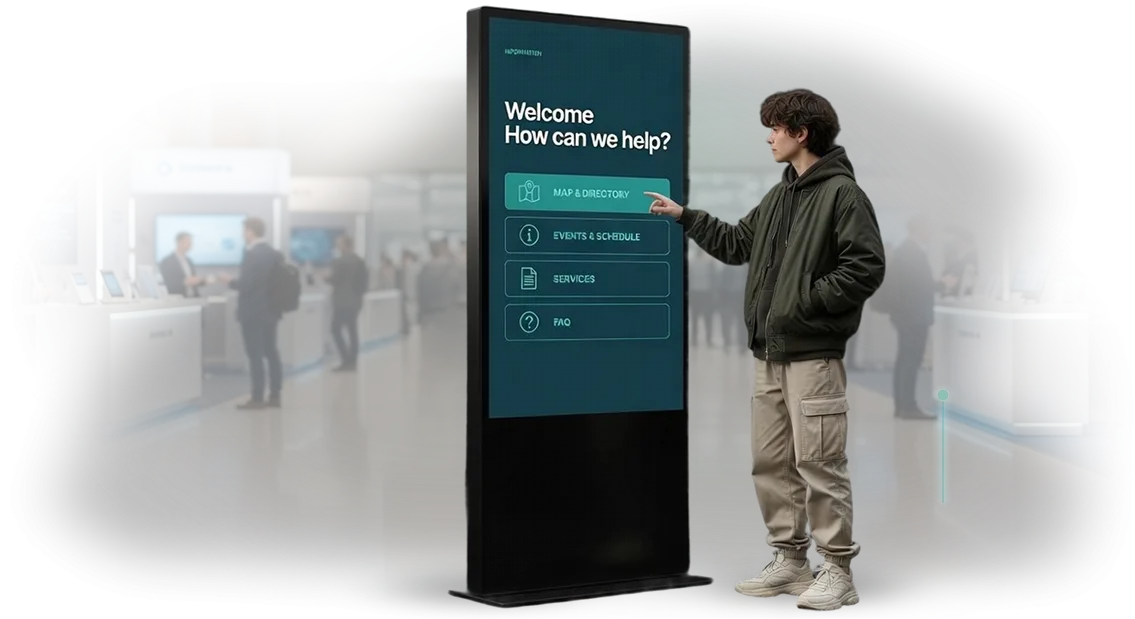
למה הקיוסק שלך מפסיד למתחרים: הכול בסגנון המשחק הבהיר
מבקרים חולפים על פני קיוסקים עם מסך מגע מהר יותר ממה שאתם מצפים. זה לא קשור למהירות המכשיר או לתכונותיו — אלא שממשק משעמם לא נותן לאנשים סיבה לעצור ולהשקיע זמן באינטראקציה.
כשיש גירויים ויזואליים בהירים יותר בסביבה, קיוסק רגיל עם תפריט פשוט מפסיד בתחרות על תשומת הלב של האורחים.
הבעיה מחמירה אם המסך נראה כמו תוכנת משרד ולא כמו חלק מהבידור.
מבקרים לעיתים קרובות תופסים עיצוב קיוסק כזה כ"תזכורת לשגרה": הם לא מקבלים רגש, לא תחושת מעורבות, ולכן לא זוכרים את המותג או את ההצעה שלכם. עבור העסק, זה אומר לא חשיפה, אלא בזבוז זמן ואובדן רווח.
ממשק משחק פותר את הבעיה הזו. סגנון בהיר ודינמי עם אלמנטים חיים הופך קיוסק ממדריך פשוט לכלי בידור מלא שאורחים רוצים ליצור איתו אינטראקציה.
אנשים מגיבים לתנועה, לצבעים עשירים ולתגמול ברור על כל פעולה — מכניקות אלה מחזיקות תשומת לב פי שניים עד שלושה יותר מאשר תפריטים סטטיים.
אנחנו משלבים סגנון זה עם פעולה אמינה על ציוד מקצועי — כך שהקיוסק לא רק נראה מצוין אלא גם פותר בהתמדה את היעדים העסקיים שלכם.
החלפת ממשק משעמם בסגנון משחק בהיר הופכת את המסך למגנט לאורחים: הם חוזרים אליו שוב ושוב, מבצעים יותר פעולות ממוקדות, ועוזבים עם רושם חזק מהמקום שלכם.
זו נקודת הצמיחה שמופיעה במהירות במספרי התנועה וההמרות — וזה בדיוק מה שאנחנו עוזרים לכם לפתור מהיום הראשון של ההשקה.
מה ממשק משחק בהיר נותן לעסק שלכם
ממשק משחק בהיר הופך קיוסק מידע רגיל לנקודת משיכה. מבקרים לא חולפים על פניו — הם רוצים ליצור אינטראקציה עם המסך, להשלים חידונים קצרים, לאסוף בונוסים או לפתוח תוכן.
זה מגביר את מעורבות האורחים: הם מבלים זמן רב יותר בקיוסק, מה שאומר שהם קולטים מידע על המוצרים והשירותים שלכם טוב יותר. אלמנטים של משחק מעוררים רגשות, ורגשות הם הקטליזטור הטוב ביותר לזיכרון.
בניגוד לעמדות סטטיות ותפריטים משעממים, סגנון משחק מחזיק תשומת לב מהשנייה הראשונה. גרפיקה בהירה, ניווט ברור ואלמנטים תחרותיים מונעים מהמבקרים ללכת לאיבוד — הם צוללים לתהליך בעצמם.
גישה זו מבדלת אתכם מהמתחרים וגורמת לאנשים לדבר על המותג שלכם. אפילו אלה שלא משתתפים עוצרים כדי לראות מה קורה — זה תנועה נוספת לקיוסק.
מכניקות משחק וממשק מחושב יוצרים חיבור רגשי עם המותג. סגנון ויזואלי בלתי נשכח, דמויות, אנימציות — כל זה עובד לזיהוי.
לאחר אינטראקציה כזו, לקוח נוטה יותר לזכור את החברה שלכם ולחזור, וגם להמליץ עליכם לחברים. המותג מפסיק להיות מופשט — הוא מקבל אופי וקול.
אינטראקטיביות מאפשרת לכם לאסוף פרטי קשר באופן טבעי. במקום טופס הרשמה משעמם — משימה מרתקת, שבסופה האורח שמח להשאיר אימייל או מספר טלפון תמורת תגמול מובטח.
פרטי קשר אלה הופכים לבסיס לניוזלטרים ולמכירות חוזרות, מה שמחזיר את ההשקעה בפיתוח. אתם מקבלים לא רק שאלונים, אלא נתונים על העדפות הלקוחות.
העיקר שכל זה משפיע ישירות על ההכנסות. קיוסק עם ממשק משחק דוחף, מנחה ומעודד לפעולה: להזמין, להזמין מקום, לקנות. במקביל, אתם מקבלים אנליטיקת אינטראקציה ומבינים במה הלקוחות באמת מתעניינים.
זה משתלם דרך הגדלת המרות ונאמנות, ואם אתם לא בטוחים אם סגנון משחק מתאים לעסק שלכם, נעזור לכם למצוא איזון בין בידור לערך.
פורמטים של פיתוח קיוסק למשימות שונות
לקיוסקים יש משימות שונות: אחד חייב לספק מידע במהירות, אחר חייב לבדר את המבקר, שלישי חייב להפוך לחלק מהמותג. לכן אנחנו מעצבים ממשקים בשלושה פורמטים — מהסטנדרטי ועד לסגנון משחק מותאם אישית. זה מאפשר לכם לבחור פתרון לתקציב, ללוח הזמנים ולמטרה שלכם.
המפתח הוא לא לשלם יותר מדי על משהו שלא עובד עבור העסק שלכם. לכן אנחנו מחשבים כל פורמט למשימה ספציפית: איפה הקיוסק ממוקם, מי משתמש בו, ואיזו תוצאה אתם מצפים לקבל.
פורמטי הפיתוח העיקריים
| פורמט | למי | מה הוא נותן ללקוח |
|---|---|---|
| קיוסק סטנדרטי | קניונים, מרכזים עסקיים, מרפאות, אזורי קבלה | השקה מהירה, השקעה מינימלית, ממשק פשוט וברור לכל גיל |
| עיצוב מותאם אישית | מותגים שמעדכנים את הסגנון הוויזואלי שלהם או משיקים שירות חדש | זיהוי, ממשק רענן, התאמה לזהות המותג |
| קיוסק משחק | מוזיאונים, תערוכות, אולמות תצוגה, אזורי ילדים, אירועים | רגשות, מעורבות מבקרים, תמונות ברשתות חברתיות, הגדלת ביקורים חוזרים |
סגנון משחק הוא לא רק תמונה בהירה. הוא הופך אינטראקציה עם הקיוסק לאירוע קטן: המשתמש משלים שלבים, אוסף בונוסים, משתף תוצאות. גישה זו יעילה במיוחד במקום שבו צריך להחזיק תשומת לב וליצור סיבה לחזור.
אם אתם לא בטוחים איזה פורמט מתאים לכם — בואו לייעוץ. נראה דוגמאות, נסביר על לוחות זמנים ותקציב, ונעזור לכם להחליט בלי הוצאות מיותרות.
איך אנחנו יוצרים קיוסק: מבריף ועד השקה
אנחנו מתחילים עם בריף קצר כדי להבין בדיוק איפה הקיוסק ימוקם, מי הם המבקרים שלכם, ואילו פעולות הם צריכים לבצע. לאחר מכן אנחנו קובעים את התוכנית, לוח הזמנים והתקציב — אתם תמיד יודעים מה קורה בכל שלב.
- בריף וגילוי צרכים. אנחנו דנים במשימות, בקהל היעד ובתרחישי השימוש. אנחנו מבררים איפה הקיוסק יותקן — בלובי, בתערוכה, בחנות — כך שהממשק יתאים לתנאים האמיתיים.
- אב-טיפוס ותרחישים. אנחנו יוצרים זרימת מסכים אינטראקטיבית: איך מבקר מגיע לקטע הנכון, אילו כפתורים הוא לוחץ, מה הוא רואה כתוצאה. אנחנו מאשרים את המבנה לפני תחילת העיצוב.
- קונספט עיצובי בסגנון משחק בהיר. אנחנו מפתחים את העיצוב הוויזואלי שמבדל את הקיוסק מנקודות מגע אחרות. אנחנו מציגים מוקאפים, מבצעים תיקונים ומאשרים את המראה הסופי.
- פיתוח ומילוי תוכן. אנחנו בונים את הממשק, מחברים את הטקסטים, התמונות, הסרטונים והתכונות הנדרשות — סקרים, הזמנות, הדפסה, קודי QR. אתם מקבלים גרסת בדיקה לסקירה.
- בדיקות ותיקון תקלות. אנחנו בודקים ביצועים על ציוד אמיתי: מהירות תגובה, דיוק בקרת מגע והיעדר תקלות. אנחנו מתקנים בעיות לפני ההתקנה.
- השקה ותמיכה. אנחנו מתקינים את הקיוסק, מגדירים אותו ומכשירים את הצוות שלכם. לאחר מכן אנחנו מספקים תמיכה טכנית ומעדכנים תוכן לפי הצורך — הקיוסק ממשיך לעבוד בלי מעורבותכם.
בסופו של דבר, אתם מקבלים לא רק מסך עם מידע, אלא כלי עבודה שמגביר את מעורבות המבקרים ולוקח על עצמו חלק מהמשימות השגרתיות. כל השלבים שקופים: אתם רואים תוצאות ביניים ויכולים להשפיע על התהליך עד ההשקה הסופית.
מה אתם מקבלים כתוצאה מהעבודה
אתם מקבלים לא רק "תמונות ממשק", אלא חבילה מלאה להפעלת הקיוסק. כל התוצאות נאספות לסט אחד — מקונספט העיצוב המאושר ועד הוראות לצוות שלכם וקבצי הדפסה מוכנים. אין צורך להבין או להשיג דבר מקבלנים חיצוניים.
הנה מה שיהיה בידכם לאחר סיום הפרויקט:
- קונספט עיצובי בסגנון משחק בהיר. הזהות הוויזואלית המאושרת שמבדלת את הקיוסק מעמדות טיפוסיות ומושכת את תשומת לב המבקרים. אתם רואים איך המכשיר ייראה בחלל שלכם עוד לפני ההדפסה.
- ממשק קיוסק מוכן למסך מגע. מסכים מחושבים עם אלמנטים גדולים, ניווט אינטואיטיבי ותרחישים ברורים: מהמגע הראשון ועד השלמת הפעולה. המשתמש לא צריך לקרוא מדריך — הכול פשוט עובד.
- תוצאות בדיקות על מכשיר אמיתי. אנחנו בודקים תרחישי אינטראקציה בתנאים כמעט אמיתיים: הקשות אקראיות, מעבר בין מסכים, פעולה ממושכת ללא תקלות. אתם מקבלים ממשק שלא יאכזב אתכם ביום העמוס ביותר.
- מדריך הפעלה לצוות. מדריך קצר וברור: איך להפעיל את הקיוסק, לעדכן מידע, להחליף תוכן ולפתור בעיות נפוצות בלי לקרוא למפתח. העובדים שלכם יבינו את זה תוך חצי שעה.
- קבצי הדפסה. עיצובים מוכנים למעטפת, מדבקות, שלטי מידע או חומרי קידום ליד הקיוסק. הכול בפורמטים הנדרשים עם שוליים מתאימים — מוכן לשליחה לבית הדפוס.
- תיעוד וחומרי מקור. מבנה הממשק, תיאורי מסכים והגיון זרימת העבודה. אם תרצו להרחיב את הפרויקט או להעביר אותו לצוות אחר בעתיד, יש לכם את כל הבסיס.
חבילה זו מכסה את כל השאלות לאחר מסירת הפרויקט: הממשק מוכן, הצוות הוכשר, חומרי ההדפסה בידיים, והתיעוד מאפשר לפתח את הקיוסק בלי להיות תלוי בספק ספציפי.
אתם מקבלים תוצאה ניתנת לניהול ושקופה, לא "קופסה שחורה" שתלויה במפתח אחד.
איך רשת קיוסקים בפארק ילדים הכפילה את זמן השהייה מול המסך
באירוע לאחרונה לרשת פארקי ילדים, אורחים חלפו על פני קיוסקי המידע: תפריטי טקסט לא החזיקו תשומת לב, ילדים השתעממו, והורים בזבזו זמן בחיפוש האולם הנכון.
מסכי מגע קלאסיים עבדו, אבל לא הביאו תועלת — לא לאורחים ולא לפארק עצמו. מקרה בוחן זה של קיוסק בפארק ילדים מראה איך שינוי ממשק הפך מסך מעמדה חסרת תועלת למרכז משיכה.
הצענו סגנון משחק בהיר: דמויות מונפשות גדולות, אייקונים שילד יכול להבין, ו"משימות" אינטראקטיביות קצרות. במקום רשימת קטעים משעממת — מפה עם גיבורים שמראים את הדרך ומבקשים ללחוץ על הכפתור הנכון.
מגע אחד הספיק לשליטה, אבל כל פעולה נתנה משוב מיידי: הדמות שמחה, בלון התפוצץ, או דלת סודית נפתחה.
התוצאה עלתה על הציפיות: זמן ממוצע מול המסך הוכפל — מ-40 שניות לדקה וחצי.
במקביל, התור בקיוסק התקצר כי הילד הפסיק להיות חסר מנוחה והתערב בתהליך בעצמו, בעוד ההורים למדו בשלווה את הניווט.
עבור הפארק, זה אומר פחות חוסר שביעות רצון בקופות ויותר כרטיסי מתקנים שנמכרו — אורחים לא עזבו, הם נשארו יותר זמן.
כך נראו הדינמיקות: בשבועיים הראשונים לאחר ההשקה, מספר האינטראקציות עם הקיוסק גדל ב-65%, ובקשות מידע על תוכנית המופע כמעט שולשו.
והכי חשוב — ילדים חזרו למסך שוב ושוב והביאו חברים, והפכו עמדת מידע רגילה לחלק מהבידור.
מקרה זה הפך לבסיס לשותפות מתמשכת: הפארק הזמין מאיתנו עדכוני תוכן לכל עונה חדשה.
קיבלנו חוזה מחודש לרשת של שלושה מיקומים כי ממשק המשחק הבהיר הוכיח: מסך מעוצב נכון מחזיר את ההשקעה לא דרך החומרה, אלא דרך התנהגות האורחים.
כך קיוסק עם מסך מגע הפך לא רק למכוון דרכים, אלא לכלי שמשפיע על הכנסות ונאמנות משפחתית.
איך לבחור את פורמט הקיוסק הנכון למשימה שלכם?
בחירת קיוסק מתחילה לא במסך ובמעטפת, אלא במשימה. מה האדם צריך לעשות במכשיר: להירשם במהירות, לקבל ייעוץ, לעיין בקטלוג, או לבדר את עצמו בזמן ההמתנה? התשובה מחלקת פורמטים לעמדות שירות פרקטיות ולאזורי משחק ראוותניים לאירועים.
אם המטרה היא להפתיע אורחים ולחזק את זיהוי המותג, בחרו פאנלים אינטראקטיביים בסגנון משחק בהיר. מכניקות משחק הופכות מגע במסך להרפתקה: מבקרים מתחברים רגשית, משתפים התרשמויות ומביאים משתתפים חדשים. פורמט זה עובד מצוין בתערוכות, מצגות ואירועי חברה.
כשהקיוסק צריך לזרז שירות — ניווט, רישום לתור, הנפקת תעודות — מהירות ובהירות הופכות לעדיפות. כפתורים גדולים, טקסט מינימלי, זרימה הגיונית בשניים או שלושה מגעים.
סגנון משחק בהיר מתאים במינונים, כהדגשה שלא מסיחה מהשירות המרכזי אבל הופכת את התהליך לבלתי נשכח.
בחירת הפתרון תלויה גם במיקום ההתקנה. באזורים עם תנועה גבוהה צריך התחלה מהירה ותגובה מיידית. באזורי המתנה אפשר להשתמש בתרחישי משחק ארוכים יותר — הם ממלאים את ההשהיה ומטעינים את המבקרים ברגשות.
אנשי מקצוע יתאימו את הפורמט למשימה שלכם ויציעו פתרונות שכבר הוכחו בפרויקטים דומים.
העצה המרכזית: אל תתחילו מ"כמו כולם", אלא מהיעד והקהל שלכם. תארו את המשימה — נציע פורמט מתאים, ובמידת הצורך נפתח אותו בסגנון משחק בהיר עבור האורחים שלכם.
תשובות לחששות העיקריים לפני הזמנת קיוסק
לפני הזמנת קיוסק אינטראקטיבי, ללקוחות רבים יש את אותן שאלות: האם הציוד יתקלקל, באיזו תדירות צריך לעדכן תוכן, ומה קורה אם משהו משתבש. זה נורמלי — כל השקעה במשהו חדש דורשת ביטחון. אז בואו נטפל בחששות העיקריים ונראה איך אנחנו מכסים אותם.
האם קיוסק בסגנון משחק בהיר אמין?
כן. עיצוב בהיר לא משפיע על עמידות הציוד. אנחנו משתמשים בפאנלי מגע מקצועיים ובמעטפות המיועדות לשימוש אינטנסיבי במרחבים ציבוריים: קניונים, תערוכות, לובי משרדים.
במשך שנים של עבודה, בנינו תהליכי הרכבה ובדיקה אמינים — כל קיוסק נבדק לפני המשלוח, כך שתקלות נשללות.
האם קשה לעדכן תוכן בעצמכם?
לא. אנחנו מוסרים לוח בקרה פשוט שבו אפשר לשנות טקסטים, תמונות וסרטונים תוך דקות ספורות — בלי מפתחים או ידע טכני.
זה עובד כמו בונה אתרים: עדכנו מבצע, הוסיפו סרטון חדש, שינו את לוח הזמנים — והקיוסק מציג מיד מידע עדכני. כך אתם תמיד שולטים ברלוונטיות התוכן.
אילו ערבויות אנחנו מספקים?
האחריות הרשמית על הציוד היא 12 חודשים או יותר. במשך כל התקופה אנחנו נשארים בקשר: עוזרים בהגדרות, עונים על שאלות ופותרים במהירות כל בעיה. אם נדרשים שינויים למשימות חדשות — אנחנו עושים את זה מהר כי אנחנו מכירים את הפרויקט לעומק. הלקוח מקבל לא רק מכשיר, אלא כלי עבודה עם תמיכה.
בסופו של דבר, הזמנת קיוסק היא תהליך צפוי עם לוחות זמנים ברורים ותוצאה ברורה. אתם מקבלים כלי בהיר שמושך תשומת לב, לא מתקלקל, קל לעדכון, ותמיד מגובה בתמיכה שלנו.הזמינו קיוסק שאנשים יזכרו
אתם משקיעים בקיוסק כדי שימשוך תשומת לב, יהיה נוח לאורחים ויפעל למען תוצאות. אבל בלי ממשק מחושב היטב, אפילו יחידה יקרה מסתכנת בלהיעלם מעין: מבקרים חולפים על פניה, וההשקעה לא מחזירה את עצמה. אנחנו עוזרים לכם להימנע מזה — אנחנו מעצבים את האינטראקציה כך שהקיוסק באמת ייזכר.
הזמנת קיוסק בסגנון משחק בהיר היא פשוטה: השאירו פנייה, ואנחנו נעשה את כל העבודה המקדימה עבורכם. אתם תקבלו:
- ייעוץ עם המומחה שלנו — נסקור את המשימה, הקהל ופורמט האירוע שלכם, ונציע פתרון מתאים.
- חישוב עלות מוקדם ולוח זמנים — אתם יודעים את התקציב לפני תחילת הפיתוח ויכולים לתכנן הוצאות.
- אב-טיפוס ממשק בסגנון משחק בהיר — אתם רואים מיד איך הקיוסק ייראה ויכולים לבצע שינויים בלי איטרציות מיותרות.
- אב-טיפוס של מסכי התרחיש המרכזי — בדיוק איך אורחים יתקשרו עם הקיוסק ואילו פעולות הם יבצעו.
- תוכנית יישום והשקה — ברור מי עושה מה ומתי, כך שלא תצטרכו לפקח על כל שלב.
- תמיכה לאחר ההשקה — ביום האירוע אנחנו זמינים, עוזרים בהגדרות ופותרים בעיות אם הן מתעוררות.
השאירו פנייה באתר — זה לא מחייב אתכם בשום צורה. בתגובה, תקבלו ייעוץ, חישוב עלות מוקדם ואב-טיפוס ממשק בסגנון משחק. ואז ההחלטה שלכם: האם הפתרון הזה מתאים למשימות ולתקציב שלכם. אם כן — אנחנו מתחילים לעבוד; אם לא — פשוט תדעו מה אתם צריכים.