

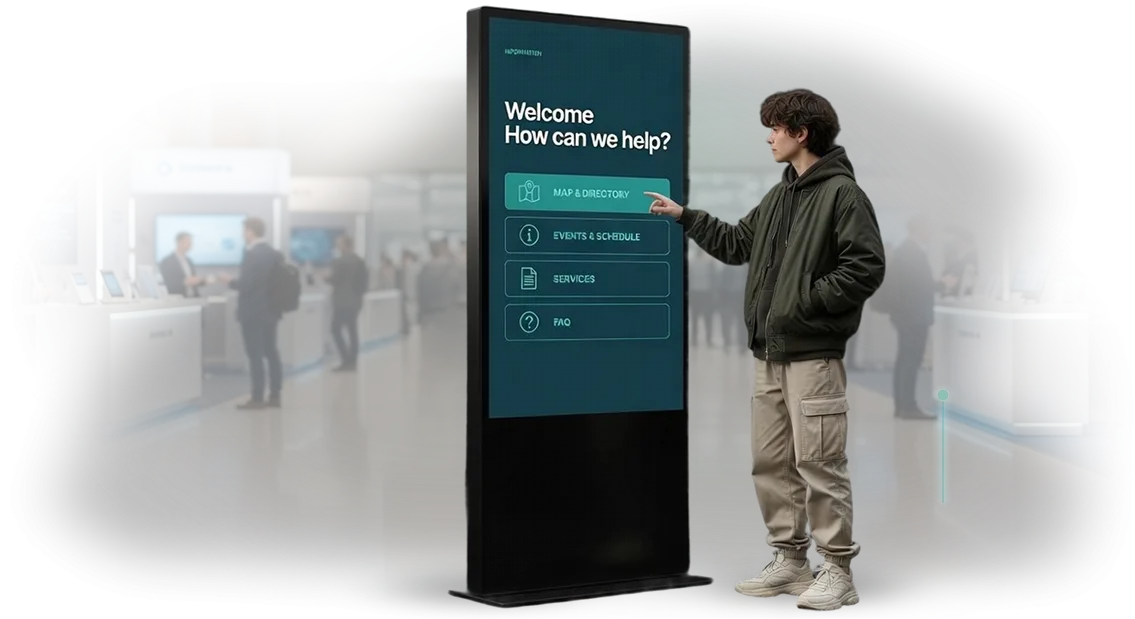
מדוע מטופלים הולכים לאיבוד ללא ניווט דיגיטלי לבתי חולים?
מטופל הנכנס לבית חולים בפעם הראשונה מרגיש אבוד ללא ניווט דיגיטלי לבתי חולים. יש שלטים, אבל הם מצביעים על אגפים וקומות שמעולם לא היה בהם.
כל דקה שמבוזבזת בחיפוש אחר המשרד הנכון מוסיפה לחרדה שלו, ופגישה נמשכת רק 10–15 דקות — חצי מהזמן הזה האדם חושב לא על הבריאות שלו, אלא על איך למצוא את הרופא.
עבור דלפק הקבלה והאחיות, ניווט כזה משמעותו זרם יומי של אותן שאלות. במקום לטפל במטופלים, הצוות הופך לשלטי הכוונה ומבלה שעות במתן הוראות הגעה במקום בעבודה האמיתית שלהם.
זה מאט את השירות ומגביר את עייפות הצוות, והגרוע מכל — המטופל עוזב בתחושה שהכל במרפאה פועל נגדו.
חוסר שביעות רצון הופך לביקורות שליליות ולנטישת מטופלים. מטופלים שמעולם לא הגיעו למשרד או איחרו מאבדים את הפגישה שלהם, והמרפאה מאבדת הכנסות ומוניטין.
בכל שנה התחרות על מטופלים גוברת, ומי שלא השקיע בדרך קלה לרופא מפסיד למרפאות עם שירות מודרני.
אנחנו פותרים את הכאב הזה עם קיוסקים אינטראקטיביים עם ניווט ברור.
המטופל בוחר את המומחה הנדרש על המסך, מקבל מסלול דרך בית החולים, ומגיע לשם תוך כמה דקות — ללא לחץ ועם תחושת שליטה, בעוד הצוות מתפנה לעבודה אמיתית. זו רמת השירות שמחזירה מטופלים וחוסכת משאבי מרפאה.
5 יתרונות מרכזיים: מניווט ועד הזמנת תור לרופא
מטופלים מבזבזים זמן בחיפוש אחר משרד, והצוות עונה על אותן שאלות שוב ושוב. קיוסק פותר את שתי הבעיות מהדקה הראשונה של הביקור: הוא עוזר למצוא את המשרד הנכון ולהזמין תור לרופא ללא מעורבות של פקיד קבלה.
ניווט ללא לחץ
תוך כמה שניות, הקיוסק מציג את המסלול למשרד — ברור אפילו למטופל מבוגר המבקר במרפאה בפעם הראשונה. פחות איחורים, פחות אנשים אבודים במסדרונות.
הזמנת רופא בשתי הקשות
המטופל בוחר את המומחה, התאריך והשעה בעצמו ומקבל אישור פגישה תוך כמה דקות. ההזמנה אורכת כשתי דקות — מהר יותר מאשר המתנה בתור. דלפק הקבלה כבר אינו צוואר בקבוק, וזמני הפגישות מתחלקים באופן שווה יותר.
הקלה על עומס הצוות
פקידי הקבלה מפסיקים לשמש כדלפק מידע ומבלים זמן במה שבאמת דורש רופא או אחות. זה מפחית את עייפות הצוות ומאיץ את השירות.
פחות תורים — יותר מטופלים נאמנים
שירות עצמי מחליק עומסי שיא ומפחית עימותים בלובי. לדוגמה, מרפאת עיר מס' 4 הפחיתה תלונות על ניווט לאחר התקנת קיוסקים וממלאת את לוח הזמנים שלה מהר יותר.
מובן לכל גיל
כפתורים גדולים, רמזים על המסך ובחירת שפה הופכים את הקיוסק לנוח לכולם — מהורים צעירים ועד פנסיונרים. אין צורך ללמוד אפליקציה: מספיקות כמה שניות כדי להבין.
פורמטים של קיוסקים אינטראקטיביים לבתי חולים: מניווט ועד הזמנה
בבית חולים, מבקר מתמודד עם שלוש שאלות: איך מגיעים למשרד, כמה זמן מחכים, ואיך מזמינים תור בלי תור. המשימה של ניווט דיגיטלי לבתי חולים היא להסיר את החסמים האלה, ופורמט הקיוסק הנכון פותר זאת כמו גם צוות נוסף.
אנחנו בוחרים את סוג הציוד לפי התרחיש: מסוף עומד בכניסה בונה מסלול ברחבי הקומה, פאנל צמוד קיר עוזר בניווט במסדרונות, ודלפק קומפקטי מקל על דלפק הקבלה. הנה הפורמטים הבסיסיים שבהם אנו משתמשים במרפאות ובבתי חולים.
| פורמט | למי | מה הוא נותן ללקוח |
|---|---|---|
| קיוסק מגע עומד | אזור כניסה, לובי, מבואה | המבקר רואה מיד את המסלול למשרד ומפסיק ללכת לדלפק המידע |
| פאנל צמוד קיר | מסדרונות, אזורי המתנה, מעברים | בדיקת כיוון מהירה, פחות איחורים ופחות מטופלים "אבודים" |
| דלפק קומפקטי ליד דלפק הקבלה | זרם מטופלים מול החלונות | הזמנת רופא בשירות עצמי, הקלה על פקידי הקבלה בשעות השיא |
| קיוסק הזמנה עצמית עם אישור פגישה | מחלקות חוץ | המטופל מקבל מספר תור תוך דקה — ללא שיחות ותורים מיותרים |
| קיוסק אוניברסלי: ניווט + הזמנה | מרכזים גדולים ובתי חולים | מכשיר אחד מכסה מסלול והזמנה — עלויות ציוד ושטח נמוכות יותר |
איך אנחנו מיישמים קיוסקים: 7 שלבים מבריף ועד השקה
אנחנו משיקים פרויקטי קיוסקים לפי נוהל מבוסס שלוכד עשרות יישומים במרכזים רפואיים.
כך אתה תמיד יודע מה קורה בכל שלב ואיזו תוצאה תקבל — לוחות זמנים ותקציב אינם הופכים להפתעה בדרך.
להלן שבעה שלבים מהבריף הראשון ועד לפעילות היומיומית של הקיוסק:
- בריף ומשימה — אנו לומדים את זרמי המטופלים, מטרות המרפאה ודרישות הניווט. כתוצאה מכך, אתה מקבל מפרט טכני ברור והערכת עלות ללא עבודה נסתרת.
- ביקורת שטח ומסלולים — אנו מבקרים באתר, בודקים נקודות מיקום, נגישות וקישוריות. אנו מבטלים טעויות שעלולות לגרום לקיוסק לחסום מעבר או להיעלם מעין.
- אב טיפוס ניווט — אנו מתכננים את לוגיקת החיפוש לרופאים, משרדים ושירותים באמצעות הנתונים האמיתיים של המרפאה שלך. אתה רואה איך הקיוסק יעבוד לפני כל תכנות.
- עיצוב למותג שלך — אנו מתאימים את המראה לסגנון המרפאה כך שהקיוסק ישתלב בהרמוניה בחלל ויגביר את אמון המטופלים.
- פיתוח ואינטגרציה — אנו מגדירים לוחות זמנים עדכניים, ספריית שירותים והעברת נתונים חלקה. אנו מחברים את הקיוסק למערכת שלך ללא העמסה על מחלקת ה-IT שלך.
- בדיקות עם מטופלים וצוות — אנו מריצים תרחישים אמיתיים, אוספים משוב ומכשירים פקידי קבלה. אתה מקבל פתרון מוכן לעבודה מהיום הראשון.
- השקה, תמיכה ואנליטיקה — אנו מתקינים את הקיוסק, מגדירים ניטור ועדכוני תוכן שוטפים. אתה רואה סטטיסטיקות מסלולים ויכול לשפר את הניווט על סמך נתוני מטופלים בפועל.
לשקיפות הפרויקט, אנו משתמשים בתקן התכנון PMI: לוחות זמנים, תקציב והיקף עבודה מוסכמים בתחילת הדרך ולא צצים במהלך הפרויקט. זה מאפשר לנו להשיק את הקיוסק בדיוק ביום המוסכם ולמנוע מהצוות להיות מוסח על ידי פרטים טכניים.
מה כלול במסירה: ממסכים ועד הכשרת צוות
לא תצטרך להרכיב פתרון מעשרה קבלנים או לתקן ליקויים. אנחנו אחראים לתוצאה סופית: החבילה הסטנדרטית כוללת הכל — ממפת המרפאה ועד הכשרת צוות.
- קיוסקים למרפאה שלך — מארזים עמידים, קלים לתחזוקה, ועיצוב שמתאים לחלל הפנים. מסכים נבחרים לפי החלל כך שהמפה קלה לקריאה.
- ניווט עם מפות קומה — מבקר מוצא את דלפק הקבלה, המשרד, המעבדה וחדר השירותים תוך 30 שניות. פחות שאלות לצוות, פחות איחורים לרופא.
- תוכן סופי — תוכניות קומה, שירותים, לוחות זמנים של רופאים, הוראות. התוכן מעוצב לפי המותג שלך ואינו דורש ידע מיוחד.
- ניהול ללא מתכנתים — פקיד יכול לשנות לוחות זמנים, לסגור משרדים ולפרסם הודעות תוך דקה.
- התקנה והגדרה באתר — מהנדסים מתקינים קיוסקים, בודקים פעולה ומוסרים לפי רשימת בדיקה.
- הכשרת צוות — הדרכה לפקידי קבלה וצוות קבלה: מה לעשות במקרה של תקלה, איך לעזור למבקרים, איך לעדכן מידע.
- שירות ותמיכה — אנו מנטרים את המערכת לאחר ההשקה, מעדכנים תוכן ומחליפים ציוד בעת הצורך. אחריות משנה אחת, ולאחריה חוזה שירות.
כך אתה מקבל לא רק מסכים, אלא שירות מוגמר שחוסך זמן צוות והופך את המרפאה לנוחה יותר. כל התאמות נעשות במסגרת התמיכה — אין צורך לחפש קבלנים חדשים.
מקרה בוחן: מרפאה עם 500 מיטות הפחיתה את זרם השאלות פי 3
כשמטופלים הולכים לאיבוד בדרך למשרד במרפאה עם 500 מיטות, כולם סובלים: אנשים מאחרים ומתעצבנים, פקידי קבלה מוסחים על ידי שאלות חוזרות, ותורים נוצרים בדלפק הקבלה.
כך היה אצל הלקוח שלנו לפני הכנסת הניווט הדיגיטלי. החלטנו להקל על הצוות ולהפוך את דרכו של המטופל לברורה.
הצבנו קיוסקים אינטראקטיביים בכניסות, במעליות ובמעברים בין מבנים. המטופל מזין את שם המשפחה של הרופא או המחלקה ומקבל מסלול על המסך. חודשיים לאחר מכן, מרפאת עיר מס' 7 השוותה את המדדים ותיעדה את התוצאה.
מה השתנה עבור המרפאה
זרם השאלות בדלפק המידע ירד פי 3 — פקידי הקבלה הפסיקו להיות "מפה חיה" וחזרו למשימותיהם.
מספר האיחורים כמעט נחצה: מטופלים מגיעים בזמן, רופאים לא מאבדים זמן פגישה, ולוחות הזמנים משתנים פחות.
תוצאות והזמנה חוזרת
- שאלות בדלפק — פי 3 פחות.
- איחורים — כמעט 50% פחות.
- שביעות רצון מהניווט עלתה ב-31% לפי סקר המרפאה.
- המרפאה הזמינה מערכת לבניין השני שלה — הסימן הטוב ביותר לאמון.
מקרה הבוחן נכלל בדוח תעשייתי על דיגיטציה של שירותי בריאות, והנתונים מאושרים על ידי מערכת עריכה עצמאית. נציג את המסמך בפגישה.
שאלות נפוצות על קיוסקים לבתי חולים
מנהלי בתי חולים שואלים לרוב על התקנה, אמינות ותאימות למערכות קיימות. אנו עונים על השאלות המרכזיות כדי שתבין איך זה עובד בפועל.
איך מתבצעת ההתקנה, והאם היא תפריע לפעילות המחלקה?
ההתקנה אורכת 1–2 ימים ומתוזמנת לשעות של עומס מינימלי — בדרך כלל בלילה או בסופי שבוע. החיבור לרשת ולחשמל אינו דורש שיפוץ; אנו מטפלים בכל ההגדרות והכשרת הצוות.
מה קורה אם הקיוסק מתקלקל?
חלים אחריות ותחזוקת שירות. במקרה של תקלה, מומחה מבצע תחילה אבחון מרחוק ולאחר מכן, במידת הצורך, מבקר באתר או מחליף רכיב. ערכת גיבוי מסופקת לאזורים קריטיים.
האם הקיוסק יעבוד עם מערכת הזמנת התורים שלנו?
כן, הקיוסק מתחבר למערכת ההזמנות שלך דרך ערוץ מאובטח. מטופלים רואים את לוח הזמנים העדכני ויכולים להזמין תור או לבקש רופא — נתונים אינם נשמרים במכשיר ומועברים בסודיות.
איך מעדכנים מידע על הקיוסק?
שינויים בלוח הזמנים או בהודעות נעשים דרך פאנל ניהול פשוט תוך כמה דקות. אין צורך במתכנת — מספיק פקיד הקבלה שלך, והסנכרון עם מאגרי הנתונים מתבצע אוטומטית.
כמה עולה קיוסק כזה, ומתי הוא מחזיר את ההשקעה?
העלות של קיוסק סופי מחושבת לאחר ביקורת; היא תלויה בפונקציות ובמספר המיקומים. ההחזר מגיע מחיסכון בזמן צוות ומגידול בזרם המטופלים: רוב המרפאות הופכות לרווחיות תוך 6-12 חודשים.
הזמן פרויקט פיילוט: 3 שלבים לתוצאות
כדי לראות איך ניווט דיגיטלי משנה את זרם המטופלים, אין צורך לחכות חודשים או לשנות את כל התשתית.
אנו מציעים להשיק פרויקט פיילוט במחלקה אחת — תוך כמה שבועות תראה מספרים אמיתיים: פחות שאלות בקבלה, הזמנת רופא מהירה יותר, מטופלים רגועים יותר, וזמן פנוי לפקידי קבלה.
מה שאתה מקבל לאחר ההזמנה הוא חבילה מלאה, לא רק מסך עם מפה:
- פרויקט קיוסק מותאם לצרכי המרפאה שלך — ממפות בניין ועד הזמנת מומחים.
- ייעוץ על מיקום ותרחישי שימוש.
- השקה מהירה: המסך הראשון עובד תוך כמה ימים לאחר האישור.
- הכשרת צוות: פקידי קבלה ורופאים יודעים איך לעזור למטופלים.
- תמיכה טכנית במהלך הפיילוט ותוכנית הרחבה לכל המרפאה.
- הערכת עלות שקופה: אתה יודע את העלות של כל שלב לפני התחלה.
כדי להתחיל, אתה צריך לבצע שלושה שלבים. השאר בקשה באתר — ניצור איתך קשר תוך יום עסקים אחד. נקיים ייעוץ: ננתח היכן קיוסקים יביאו תועלת מרבית.
נשיק פרויקט פיילוט — עם מדידת תוצאות והמלצות. אנו מטפלים בכל העניינים הטכניים; כל מה שנותר לך הוא להעריך את האפקט.
התחל בקטן כדי לקבל החלטה גדולה. השאר בקשה — ותוך שבוע המטופלים הראשונים ישתמשו בשיטת הניווט החדשה. הצעד הראשון אורך דקה.
איך לבחור פורמט קיוסק לצרכי המרפאה שלך?
בחירת פורמט קיוסק לא מתחילה בדגם הציוד — היא מתחילה בשאלה מה בדיוק המערכת צריכה לפתור במרפאה שלך. חלקם זקוקים לניווט דיגיטלי כדי שמטופלים ימצאו משרדים בכוחות עצמם ולא יצטופפו סביב פקיד הקבלה.
אחרים זקוקים להזמנת רופא ללא תורים ולבדיקת פוליסת ביטוח בשירות עצמי. ועוד אחרים זקוקים לעמדת מידע בלובי שמטפלת בשאלות שגרתיות של הצוות.
אם נקודת הכאב המרכזית היא מסדרונות מבלבלים וזרם של "איפה הרנטגן?", בחר קיוסק עומד או בגובה מלא עם מפה ומסלול.
הפתרון הזה נקרא ניווט דיגיטלי לבתי חולים: המטופל רואה את נקודת "אתה כאן", בוחר את המשרד הנכון ומקבל הוראות שלב אחר שלב.
היתרון הוא שהוא עובד ללא מעורבות צוות ומפחית את העומס על דלפק הקבלה בשעות השיא.
כשהמטרה היא להפחית תורים להזמנות, קיוסק צמוד קיר או קומפקטי בכניסת המחלקה נוח יותר. הוא מציג זמינות של רופאים, עוזר לבחור מומחה ולהזמין תוך כמה דקות.
למרפאות עם תנועה גבוהה, זה לא רק נוחות אלא תוצאה מדידה: פחות מטופלים לא מרוצים, יותר ביקורים שהושלמו, ופחות שיחות למוקד.
אם אתה צריך קיוסק כעוזר אוניברסלי — למידע, הכוונה, מחירי שירותים ומשוב — דלפק מגע נייח בלובי יעבוד. הוא מכסה כמה תרחישים בבת אחת ומחזיר את ההשקעה כי מטופלים מסיחים את דעת הצוות פחות.
חשוב שהממשק יהיה מובן לאנשים בכל גיל: כפתורים גדולים, שפה פשוטה, ומינימום שלבים לתוצאה.
קריטריון הבחירה המרכזי הוא תרחיש הלובי שלך. לך בדרכו של המטופל: איפה הוא עוצר, מה הוא שואל הכי הרבה, איפה נוצרים תורים. הנקודות האלה יצביעו על הפורמט הנכון.
אנחנו עוזרים לך לעשות זאת ללא עלויות נוספות: אנחנו מגיעים, מסתכלים על הזרימה, מחשבים תרחישים ומציעים פתרון שמתאים לתקציב ולחלל הפנים. כל מה שנותר לך הוא לבחור — ואנחנו נטפל בשאר.