

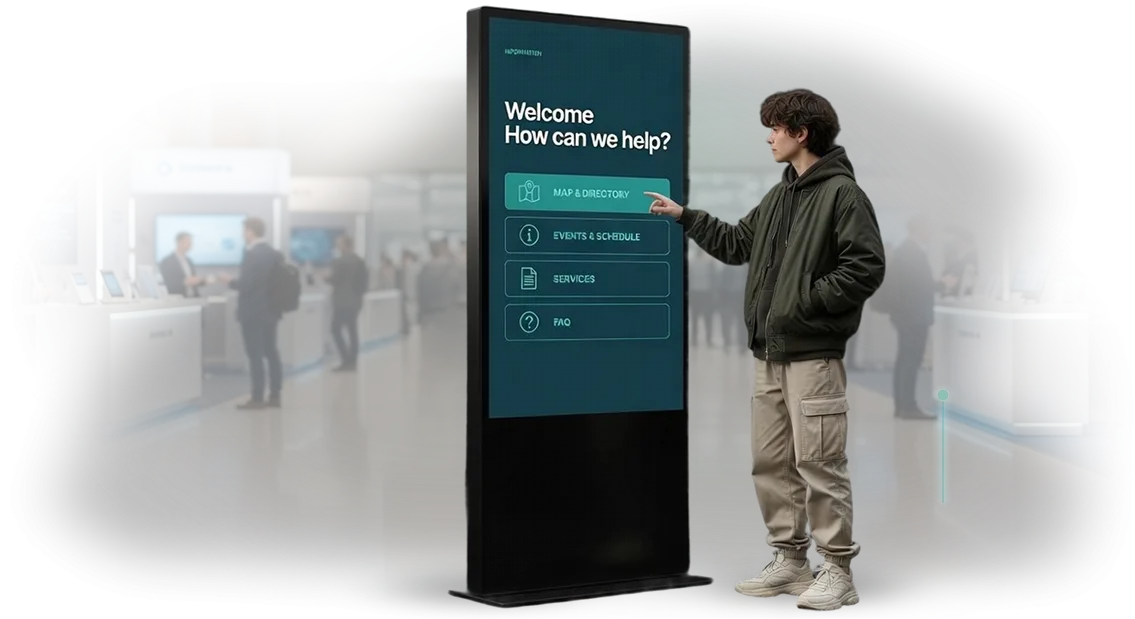
ניווט דיגיטלי הוא: איך לקוחות הולכים לאיבוד לפני שהם מגיעים לקופה
ניווט דיגיטלי הוא היכולת להפוך את שטח המכירה לברור ללא סידורים מחדש או צוות נוסף. בחנות רגילה, מבקר מבלה 10–15 דקות בחיפוש אחר המוצר הנכון, ואם הוא לא מוצא אותו, הוא עוזב בלי לקנות.
בפרויקטים שלנו עבור רשת «Удача», ראינו את אותו דבר שוב ושוב: כמעט שליש מהאורחים הולכים לאיבוד אחרי המדף הראשון, וכל אובדן כזה הוא הכנסה שהוחמצה.
הלקוח לא צריך לזכור את פריסת החנות. הוא מגיע בחיפוש אחר מוצר ספציפי, וכאשר בחנות אין ניווט, עובדים עונים בלי סוף לשאלות "איפה זה?", מבקרים עוזבים בידיים ריקות, והתורים רק גדלים.
זו הסיבה שעמדות אינטראקטיביות הן עוזר חיוני. אורח מזין את המוצר הרצוי, רואה את המסלול על המפה, ומגיע למטרתו תוך שניות.
עבור העסק, זה אומר צמיחה בסל הממוצע ובנאמנות. לקוח שמוצא במהירות את מה שהוא צריך יש לו זמן להסתכל על מוצרים משלימים וחוזר שוב. העמדה עובדת ללא הפסקות ותמיד מציגה מבצעים עדכניים ומיקומי מדפים.
ניווט דיגיטלי הוא לא "מסך עם מפה לשם הטכנולוגיה" אלא כלי להגדלת המרות. אנו מעצבים עמדות סביב המטרות של חנות ספציפית: מחיפוש מוצר פשוט ועד מסלול למבצעים. מבקרים מפסיקים ללכת לאיבוד, והבעלים מקבל צמיחה בהכנסות והפחתת עומס על הצוות.
מה עמדה אינטראקטיבית תיתן לעסק שלך
עמדה אינטראקטיבית היא לא רק מפה אלקטרונית, אלא כלי מן המניין שמקבל את פני המבקר, עוזר לו להתמצא, ומנחה אותו בעדינות למטרתו.
ניווט אינטראקטיבי הופך מרכז קניות או מרפאה מורכבים למרחב מובן: האורח מבלה פחות זמן בחיפוש ומקבל בדיוק את מה שבא בשבילו.
שיפור חוויית הלקוח משפיע ישירות על הרווח — מבקר מרוצה נוטה יותר לחזור ולהמליץ עליך לחברים.
כאשר אדם מוצא מיד את המחלקה, המשרד או המוצר הנכונים, הוא לא מתעצבן. ניווט נוח מפחית מתח ומגביר נאמנות: הלקוח זוכר שהמרחב שלך קל ונעים לשהייה, ובוחר בך שוב.
זה עובד אפילו במתחמים גדולים — העמדה נוטלת על עצמה תפקיד של קונסיירז' מנומס שיהיה קשה לספק בכל קומה.
חלק משאלות המבקרים נפתרות ללא מעורבות צוות: העמדה מציגה את המסלול, עונה על שאלות נפוצות, מציעה זמני המתנה ומטפלת בבקשות פשוטות.
זה מקצר תורים ומשחרר עובדים — הם מפסיקים לחזור על אותו מסלול ומתמקדים במשימות חשובות באמת: ייעוץ, מכירה, טיפול באורחים. מהירות השירות גדלה, וההכנסה למטר רבוע גדלה איתה.
אבל הדבר החשוב ביותר הוא שהעמדה יודעת למכור. כשמחפשים מכונת קפה, היא תציע אביזרים; כשבחירת שירות — אפשרות נוספת; ובקופה, היא תצביע על מבצע משתלם.
הצעות מותאמות אישית כאלה מגדילות את הסל הממוצע ואת צמיחת המכירות ללא מעורבות אנשי מכירות. זו הכנסה נוספת שמופיעה באופן קבוע ואינה דורשת הרחבת צוות.
לסיכום, היתרונות של העמדה ברורים: נאמנות מוגברת, תורים קצרים יותר ונקודות מכירה חדשות. המבקר מקבל חוויה מהירה ונעימה, העובדים מקבלים פחות שאלות שגרתיות, והעסק מקבל כלי שמשתלם דרך המרה גבוהה יותר וסל ממוצע.
עמדה אינטראקטיבית עובדת מסביב לשעון, ללא הפסקות או משוא פנים — ומספקת ערך מהיום הראשון.
פורמטים של פיתוח עמדות למשימה שלך
ניווט דיגיטלי הוא לא רק מסכים, אלא איך מבקרים מקבלים שירות. עמדת קיר חוסכת מקום, עמדת רצפה מתמודדת עם תנועה גבוהה, עמדה חיצונית עובדת מסביב לשעון.
לדוגמה, בלובי של מרפאת «Здоровье+», עמדת רצפה הקלה על דלפק הקבלה: מטופלים נרשמו לרופא בעצמם ובנו מסלול.
אנו בוחרים את העיצוב לפי המיקום והמשימה שלך, כך שלא תשלם עבור תוספות מיותרות. להלן הפורמטים הבסיסיים של עמדות; עבור חלל לא סטנדרטי, נעצב פתרון מותאם אישית.
| פורמט | למי זה מיועד | מה זה נותן ללקוח |
|---|---|---|
| עמדת קיר | מסדרונות צרים, לובי מעליות, מיקומים קטנים | חוסכת שטח רצפה, לא חוסמת מעבר. התקנה מהירה, עלויות מינימליות. מתאימה למפות, לוחות זמנים ורישום לתורים. |
| עמדת רצפה | לובי, אזורי המתנה, מרכזי קניות, מרפאות | מושכת תשומת לב, מתמודדת עם כמויות גדולות. נוחה להזמנות, תשלומים, רישום לכרטיס נאמנות. יכולה להחליף דלפק קבלה. |
| עמדה חיצונית | פארקים, אצטדיונים, קבוצות כניסה, מחסומים | עובדת בכל מזג אוויר ותאורה, מוגנת מפני ונדליזם. מספקת שירות וניווט גם מחוץ לשעות העבודה. |
הפורמט והתצורה המדויקים נבחרים לאחר בדיקת המיקום. כך אתה מקבל עמדה שמתאימה לעיצוב הפנים ומתחילה מיד לספק ערך.
איך הפרויקט מתנהל: מהבריף ועד השקת העמדה
תהליך שקוף הוא חצי מההצלחה. אתה תמיד רואה באיזה שלב נמצא הפרויקט, מה כבר נעשה ומה יקרה בהמשך — ללא עיכובים פתאומיים או עבודה נסתרת.
פיצלנו את הפיתוח לשלבים ברורים כדי שתוכל לשלוט בתוצאה בכל שלב ולערוך שינויים ללא עלויות נוספות.
- בריף ומטרות. אנו מתעדים את מטרות העמדה: ניווט, קטלוג, הזמנה עם מומחה, תצוגת פרסום. אנו קובעים נקודות התקנה ותרחישי שימוש.
- אב טיפוס ומבנה. אנו מציירים את סכמת המסך ואת לוגיקת המעברים. אתה רואה את הממשק העתידי לפני שנכתב קוד כלשהו.
- אב טיפוס עיצובי. אנו מאשרים את המראה: סגנון תאגידי, גופנים, צבעים. אנו מבצעים שינויים לפני תחילת הפיתוח.
- הרכבה ותצורה. המהנדסים שלנו מרכיבים את העמדה: ממשק, תוכן, עדכוני תוכן. אתה מקבל קישור בדיקה לבדיקה.
- פריסה על החומרה. אנו מתקינים את המערכת על העמדה, בודקים את מסך המגע והיציבות — הכל חייב לעבוד מהיום הראשון.
- הדרכה ומסירה. אנו מראים לעובדים שלך איך לשנות תוכן, להוסיף מבצעים ולצפות בסטטיסטיקות. ללא תלות בנו.
- תמיכה ופיתוח. אנו נשארים בקשר: מעדכנים מידע, משכללים פונקציות, מנטרים יציבות. רוב הלקוחות מזמינים מיקום שני ושלישי בדיוק בגלל שהתהליך כבר עבר אופטימיזציה.
התוצאה היא עמדה עובדת במפתח מלא עם ניהול קל וזמן מינימלי שנדרש ממך להשקה.
מה כלול במסירה של עמדה מוכנה
אנו לוקחים על עצמנו את כל המסע — מבחירת ציוד ועד השקה והדרכת צוות. אתה מקבל נקודת ניווט מוכנה, לא ערכת חלקים: העמדה עובדת מהיום הראשון, והעובדים יודעים כיצד להפעיל אותה.
- מעטפת ומסך שנבחרו עבור המתחם ותנועת המבקרים שלך. העמדה לא נראית כמו אלמנט זר — היא משתלבת בעיצוב הפנים ועומדת בשימוש אינטנסיבי.
- מערכת ניווט עם מפה, חיפוש ומסלולים. אנו ממלאים אותה בנתונים שלך: נקודות, שירותים, משרדים, אירועים. המבקר מוצא מיד את מה שהוא צריך ללא עזרת מנהל.
- התקנה וחיבור בשטח. אנו מספקים, מתקינים במיקום המוסכם ומגדירים. ביום ההשקה, העמדה כבר עובדת.
- הדרכת צוות. אנו מראים איך לשנות מידע, להוסיף מבצעים ולנהל מדורים. מעתה, העובדים מנהלים בעצמם — אין צורך במתכנתים.
- אחריות ותמיכה טכנית. אנו מגיבים לפניות, פותרים את רוב הבעיות מרחוק ומבקרים בשטח בעת הצורך.
- עדכוני תוכנה ותוכן. המערכת מתפתחת: אתה מקבל פונקציות חדשות ושיפורים במסגרת תוכנית התמיכה.
- מערכת מסמכים מלאה. מדריך מנהל, תקנות שירות, אישורים — הכל ברור ושקוף.
מקרה בוחן: איך עמדת ניווט החזירה את ההשקעה תוך 4 חודשים
ניווט דיגיטלי הוא כלי שהופך אורחים "אבודים" לקונים. במרכז קניות אחד, אנשים התבלבלו במעברים ועזבו בלי למצוא את החנות הנכונה.
לפי המדידות שלנו, רק 55% מהמבקרים הגיעו ליעדם — כמעט חצי מהתנועה לא הביאה כסף לשוכרים.
התקנו עמדה אינטראקטיבית עם מפה, חיפוש חנויות ומסלולים. שני מסכים הוצבו בכניסה הראשית ובמתחם האוכל, שם זורמת עיקר התנועה. ניווט דיגיטלי בונה את המסלול תוך שניות, מציג את זמן הנסיעה ואפשרויות "בקרבת מקום". אנו עובדים על פלטפורמה מוכחת, כך שהעמדה לא קופאת בשעות השיא ולא יוצרת תור.
המצב
לפני ההשקה, כל אורח שלישי לא הצליח למצוא את המיקום הרצוי. חנויות מרוחקות עמדו ריקות, ושוכרים איימו לעזוב. העמדה פתרה את הכאב המרכזי: המבקר רואה לאן ללכת, כמה זמן זה ייקח ומה מעניין בדרך.
תוצאה
אחרי 4 חודשים, מדדנו את האפקט. חלק האורחים שהגיעו לחנות היעד גדל מ-55% ל-88%. ההמרה לרכישה עלתה ב-12%, זמן הביקור ב-20 דקות, ומחזור השוכרים באזור המרוחק גדל ב-15–18%. ההשקעה הוחזרה תוך 4 חודשים במקום 10 המתוכננים.
כיום «Галактика» משתמשת בעמדות לניתוח תנועה: אפשר לראות לאן אנשים הולכים הכי הרבה ואיפה נקודות הצמיחה. קיבלנו הזמנה חוזרת לשני מסכים והמלצות משוכרים.
אם גם האורחים שלך הולכים לאיבוד, זה לא צירוף מקרים — זו הכנסה אבודה שניתן להחזיר עם ניווט דיגיטלי.
ניווט דיגיטלי: איך לבחור את הפורמט הנכון?
בחירת פורמט ניווט דיגיטלי מתחילה לא במפרט הציוד, אלא במשימה: מה צריך לקרות כשאדם ניגש לעמדה? אם צריך לספק מסלול במהירות, עמדת רצפה או קיר קומפקטית עם מפה גדולה מספיקה.
אם המבקר צריך להירשם, לשלם או לעיין בקטלוג, אתה צריך תחנת מגע מלאה עם ממשק מעוצב היטב.
בבחירה, קחו בחשבון את מיקום ההתקנה, תרחיש השימוש והקהל. בכניסה למרכז קניות או מרפאה, אנשים מחפשים משרד ספציפי — הם צריכים דרך קצרה ממגע ראשון לתשובה.
באזור ההמתנה, המבקר מוכן לדיאלוג: מפה, קטלוג ומידע עזר עובדים כאן היטב. הדרישות לניווט תלויות גם בתדירות שינוי התוכן: עם עדכונים שבועיים, פורמט עם מערכת ניהול תוכן פשוטה נוח יותר.
בנפרד, העריכו את תנאי המיקום — תאורה, תנועת אנשים, גישה לשקעי חשמל ואפשרויות הרכבה. המהנדסים שלנו בוחרים תצורה לכל מתקן, מעמדה קומפקטית בלובי ועד מעטפת מוגנת לחוץ.
אנחנו לא מוכרים "קופסה": העמדה חייבת להשתלם דרך עלייה בפניות, קיצור תורים ושיעור גבוה יותר של פעולות עצמאיות של לקוחות.
הבחירה הסופית היא פשרה בין תקציב, משימות ומיקום התקנה.
אם ניווט עם מפה מספיק, נציע בדיוק את זה; אם אתה צריך דלפק רב-תכליתי, נעצב את הממשק כך שניווט דיגיטלי יהפוך לצעד ראשון ברור למרחב עבור האורחים.
חששות נפוצים: מה אם העמדה תתקלקל?
ציוד במקום הומה אדם נראה שביר: מבקרים לוחצים, מכים, לפעמים מתייחסים אליו ברשלנות. לכן, השאלה "מה אם העמדה תתקלקל" היא הנפוצה ביותר בהזמנה, והיא מוצדקת לחלוטין.
אנו מטפלים בסיכון זה ברמת החוזה: אנו מספקים אחריות על ציוד ותוכנה, ובמהלך תיקונים אנו מספקים עמדה חלופית או מארגנים גישה למידע מטאבלט. להלן תשובות לשאלות הספציפיות שבדרך כלל מעסיקות מנהלים.
מה קורה אם העמדה מפסיקה לעבוד?
קודם כל, התקשרו אלינו — קו התמיכה פעיל בשעות העבודה. נבצע אבחון מרחוק, וברוב המקרים נפתור את הבעיה תוך דקות ספורות.
אם מדובר בחומרה, נביא יחידה עובדת או נחליף את העמדה באחת חלופית כדי שהמבקרים שלך לא ישימו לב להשבתה.
איזו אחריות ניתנת על העמדה?
האחריות הסטנדרטית היא 12 חודשים על חומרה ותוכנה. היא מכסה תיקונים והחלפת רכיבים ללא חיובים נוספים.
עבור מתקנים קריטיים, אנו יכולים להאריך את התקופה ל-24 חודשים ולכלול תמיכה מסביב לשעון — זה מחושב באופן אישי ומתועד בחוזה.
כמה מהר יגיע מהנדס אם העמדה תתקלקל?
המדיניות תלויה בעיר ובמורכבות הבעיה. עזרה מרחוק זמינה מיד ביום הפנייה. אם נדרש ביקור, הוא בדרך כלל מתרחש תוך 1–2 ימי עסקים. אנו מפרטים את כל לוחות הזמנים בחוזה כדי שתהיה לך הבנה ברורה של ההתחייבויות.
האם אנחנו צריכים לתחזק את העמדה בעצמנו?
לא, זו העבודה שלנו. במסגרת חוזה השירות, אנו מבצעים תחזוקה מונעת בעצמנו: מנקים את המעטפת, בודקים את מסך המגע והתוכנה ומעדכנים תוכן. כל מה שאתה צריך לעשות זה לחבר את העמדה לחשמל — אנחנו נטפל בשאר.
מה אם אני רוצה לשנות את המידע על המסך?
זה נעשה ללא קריאה למהנדס: עדכונים נטענים מרחוק דרך פאנל ניהול מאובטח. במידת הצורך, נעזור עם חומרים חדשים או נגדיר עדכונים אוטומטיים בלוח זמנים. הכל רץ על ציוד מקצועי שעומד בשימוש אינטנסיבי במיקומים עם תנועה גבוהה.
אז עמדה מקולקלת היא לא "השבתה ולקוחות אבודים" אלא פרוצדורה סטנדרטית עם לוחות זמנים ברורים ותמיכה. העיקר הוא להגדיר את התנאים מראש, ואז העמדה תעבוד כמו עובד דיגיטלי אמין, לא מקור לדאגה.השאירו פנייה — נעזור לכם לבחור את פורמט העמדה
השאירו פנייה לעמדה דרך הטופס או בטלפון — נחזור אליכם, נבהיר את המשימות שלכם ונעזור לבחור פורמט שמתאים למרחב ולתרחישי המבקרים שלכם.
נדון במטרה: הזמנה עם מומחה, בניית ניווט, קטלוג שירותים או משהו משלכם.
לאחר הפנייה שלך, אתה מקבל:
- ייעוץ מהנדס ומנהל פרויקט — ללא פרטים טכניים, בשפת המשימה שלך;
- הערכת עלות ולוחות זמנים לפרויקט — לפני חתימת החוזה, אתה יודע את התקציב והשלבים;
- בחירת תצורה לתנועה, למתחם ולתקציב שלך — ללא תשלום יתר על פונקציות מיותרות;
- אב טיפוס ממשק לאישור — אתה רואה איך העמדה תיראה לפני תחילת הייצור;
- תוכנית מיקום וחיבור — תוך התחשבות במתחם שלך, בשקעי חשמל ובזרימת המבקרים;
- אחריות ותמיכה לאחר ההשקה — הציוד לא נשאר ללא תמיכה.
עדיף לפנות אלינו לפני תחילת שיפוץ או תכנון החלל: זה חוסך תקציב וזמן.
השאירו פנייה — תוך יום תקבלו חישוב ותוכנית השקה, ולאחר אישור ניישם את הפרויקט שלב אחר שלב "במפתח מלא". התחילו בייעוץ — נסביר את השאר לפי המשימה שלכם.