

ניווט דיגיטלי במטרו: למה נוסעים הולכים לאיבוד בלעדיו
המטרו הוא מערכת מורכבת שבה הנוסע מקבל החלטות בשניות. מעברים מקו אחד למשנהו, צמתים מבלבלים, מסדרונות ארוכים ושלטים שקל לפספס בשעות העומס—כל זה יוצר לחץ ומלחיץ אנשים.
כל נוסע שהולך לאיבוד הוא לא רק רגשות שליליים אלא גם זמן מבוזבז שיכל להיות מושקע בקניות באזורים המסחריים הסמוכים או בתנועה נוחה ברחבי העיר.
הבעיה חריפה במיוחד בשעות העומס: זרם האנשים מואץ, ואלה שמחפשים את השלט הנכון יוצרים עומס וכאוס. חוסר שביעות הרצון של הנוסעים גובר, ואיתו זרם התלונות והביקורות השליליות המופנות למטרו. אפילו תשתית נוחה לא עוזרת אם קשה להתמצא בה.
שלטים אינטראקטיביים ועמדות מידע עוזרים לפתור את הבעיה הזו—ניווט דיגיטלי ברור שעובד בזמן אמת. במקום שלטים סטטיים, רמזים דינמיים: הנוסע רואה את המסלול לקו הרצוי, את הזמן עד להגעת הרכבת ואת הדרך הקצרה ביותר ליציאה.
זו לא רק טכנולוגיה אלא כלי שמפחית את עומס העבודה על הצוות, מקל על מסדרונות המעבר והופך את המטרו לנוח עבור כל אורח בעיר.
אנחנו מפתחים ניווט למטרו שלוקח בחשבון את המאפיינים הספציפיים של תחנות מסוימות ואת זרמי הנוסעים. המהנדסים שלנו מתכננים את לוגיקת הרמזים כך שאדם מקבל החלטות אינטואיטיבית—בלי לקרוא הוראות ארוכות.
כתוצאה מכך, הנוסעים מבלים פחות זמן במעברים, והמטרו זוכה למוניטין של אמצעי תחבורה מודרני ומוכוון אנשים.
מה משתנה במטרו לאחר התקנת עמדות אינטראקטיביות
לאחר התקנת עמדות אינטראקטיביות במטרו, הנוסעים מוצאים את המסלול הנכון מהר יותר: במקום לחפש בעיניים במפות סטטיות, הם מקבלים מסלול תוך שניות. זה מקצר את זמן המעברים, מפחית צפיפות והופך את הנסיעה לנוחה יותר. עבור המפעיל, זה אומר הגדלת קיבולת התחנה ללא בניית אולמות חדשים.
העמדות לוקחות על עצמן שאלות טיפוסיות—איך מגיעים, איפה המעבר, כמה זמן הנסיעה. כתוצאה מכך, העומס על צוות שירות המידע פוחת, והעובדים יכולים להקדיש יותר תשומת לב לנוסעים עם מצבים חריגים. והנוסעים מקבלים תשובות בכל שעה ביום, גם כשדלפק המידע סגור.
כשהניווט עובד מהר וברור, שביעות הרצון מהנסיעה גוברת. הנוסעים מפספסים פחות רכבות, נלחצים פחות במרכזי מעבר לא מוכרים, ומוכנים יותר להשתמש במטרו בעתיד. זה בונה הרגל ומגביר את הנאמנות לתחבורה העירונית בכלל.
עמדות אינטראקטיביות הן לא רק מפות ומסלולים. הן יכולות להציג מידע על אירועי עיר, תעריפים, פעילות של אמצעי תחבורה אחרים ואפילו שירותים לנוסעים עם מוגבלות בניידות.
כך, העמדה הופכת לנקודת מידע שימושי שמעלה את ערך הנסיעה ומקלה על ערוצי תקשורת אחרים.
פורמטים של עמדות מידע למשימה
עמדת מידע במטרו היא לא רק "מסך על הקיר". הפורמט קובע אם הנוסעים ישימו לב אליה ואם היא תוכל לפתור את הבעיה שלהם: למצוא מסלול במהירות, לדעת את זמן הגעת הרכבת או להקל על דלפקי הכרטיסים.
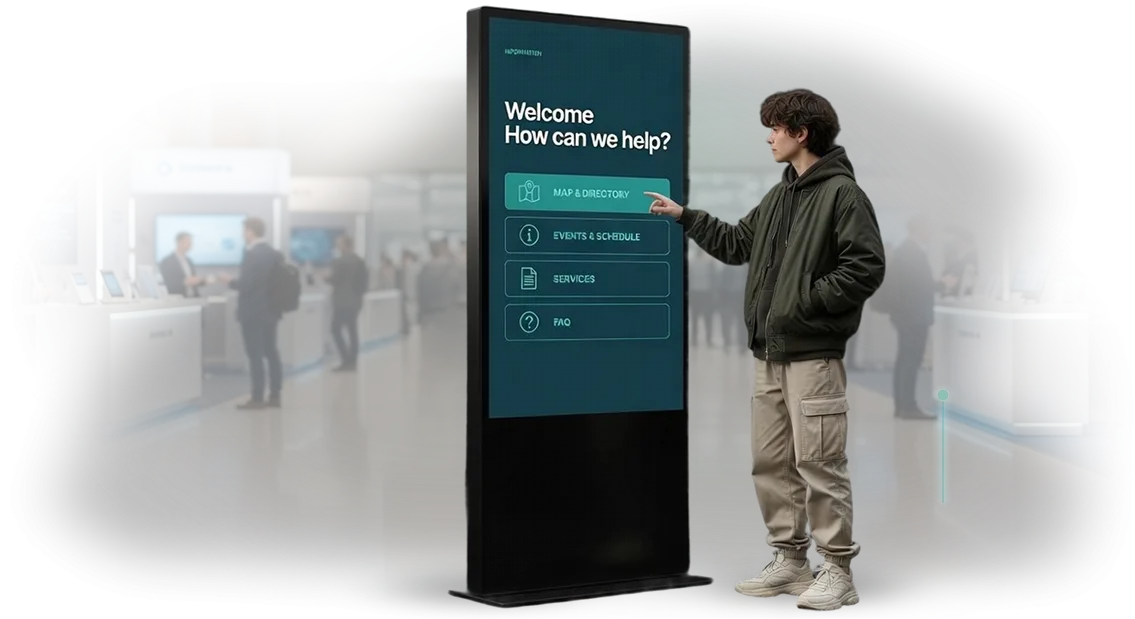
עמדות רצפה עובדות כנקודת משיכה באולם: הן נראות מרחוק, עומדות בעומס רגלי כבד ומתאימות לניווט בתחנה, למפות יציאה ומעבר.
לוחות צמודים לקיר חוסכים מקום ונוחים במסדרונות צרים ובמעברים—במקומות שבהם חשוב מבט מהיר על המפה. מסופי מגע נותנים לנוסעים עצמאות: הם בוחרים את התחנה, השירות או המסלול בעצמם בלי להסיח את דעת הצוות.
עמדת לוח זמנים פותרת את בעיית הוודאות: זמן עד הגעה, שינויים בשירות, תקלות—הכל על מסך אחד.
השוו בין סוגי העמדות כדי לבחור פתרון לתחנה שלכם:
| פורמט | למי | מה זה נותן ללקוח |
|---|---|---|
| עמדת רצפה | אולמות, מעברים, אזורים עמוסים | נראות מרחוק, עמידות לעומס רגלי, נוחות לכל הגילאים |
| לוח צמוד לקיר | מסדרונות צרים, רציפים, מקום מוגבל | חיסכון במקום, חיפוש מידע מהיר, עלות התקנה נמוכה |
| מסוף מגע | נוסעים עצמאיים, תרחישי חיפוש מורכבים | תורים קצרים יותר בדלפקי הכרטיסים, פחות עומס על הצוות, סיוע מסביב לשעון |
| עמדת לוח זמנים | נוסעים שממתינים לרכבות; צוות תפעולי | תזמון מדויק, פחות שאלות, וודאות גדולה יותר בנסיעה |
כל פורמט ניתן להתאמה למבנה התחנה ולסגנון המותג. אנחנו משלבים פתרונות: עמדת רצפה באולם, לוחות צמודים לקיר ליד הרציף.
איך הפרויקט מתנהל: מהבריף ועד ההשקה
כדי שתקבלו בדיוק את התוצאה שאתם צריכים, לא "קופסה עם מסך", בנינו את התהליך כך שאתם שולטים בהחלטות המפתח ורואים את לוחות הזמנים בכל שלב.
אתם לא צריכים להבין בפרטים טכניים—אנחנו מנהלים את הפרויקט מהפגישה הראשונה ועד ההשקה ואחראים לתוצאה.
- ניתוח משימות וזרמי מבקרים. אנחנו לומדים את נקודות המיקום שלכם, את מסלולי האנשים ואת תרחישי השימוש. יחד נקבע אילו פונקציות של העמדה יספקו תועלת מרבית: מסלולים, חיפוש אובייקטים, מידע, חומרים פרסומיים.
- אב טיפוס ואישור. אנחנו מעצבים את המראה, מבנה התפריט והטקסטים. אתם מקבלים אב טיפוס ויזואלי ומאשרים אותו לפני תחילת הייצור—בלי הפתעות בשלב הסופי.
- ייצור והרכבה. אנחנו מייצרים את המעטפת והרכיבים ומרכיבים את המכשיר. אנחנו משתמשים בחומרים אמינים ובציוד מקצועי כדי שהעמדה תפעל ביציבות בעומס גבוה.
- תכנות ותוכן. אנחנו מתאימים את הממשק למשימה שלכם, מעלים תוכן ומגדירים עדכוני נתונים. במידת הצורך, אנחנו מחברים אנליטיקה—אתם רואים אילו סעיפים מבוקשים.
- התקנה והשקה. אנחנו מתקינים את העמדה בשטח, בודקים את כל התרחישים ומבצעים הרצה. אתם מקבלים פתרון עובד מלא, לא רק ציוד מותקן.
- תמיכה ופיתוח. לאחר ההשקה אנחנו נשארים בקשר: מעדכנים תוכן, פותרים בעיות אפשריות ומציעים כיצד לשפר את הניווט על סמך נתוני שימוש.
פרויקט טיפוסי אורך 4-8 שבועות בהתאם למספר המיקומים ולמורכבות הממשק. בכל שלב אתם מקבלים תוצאה ביניים ומבינים מה קורה.
אנחנו אחראים על לוחות זמנים ואיכות—אתם שולטים רק בהחלטות שמשפיעות על נוחות המבקרים שלכם.
מה כלול במסירת עמדות מידע
אנחנו מכינים חבילה שעובדת מיד בשטח—בלי "תביאו את החומרה, ואז תבינו לבד". אנחנו משלבים ציוד, תוכנה, תוכן והתקנה לפתרון אחד כך שצוות המטרו יוכל להפעיל את העמדה ולנהל אותה בלי מחלקת IT נפרדת.
המסירה הסטנדרטית כוללת:
- ציוד מסוף—מעטפת, מסך מוגן ולוח מגע המיועדים לפעילות מסביב לשעון באזורי תנועת נוסעים.
- תוכנת עמדה—מערכת ניווט עם מפת תחנה, חיפוש מסלולים, לוח זמנים ומצב מנהל.
- עיצוב ממשק—מסכים רספונסיביים בסגנון המותג של המטרו: כפתורים גדולים, צבעים מנוגדים ופיקטוגרמות ברורות לאנשים בכל הגילאים.
- העלאת תוכן—מפות, מידע עזר ווידג'טים מנוהלים עם אפשרות עדכון בלי לשכתב קוד.
- פיקוח התקנה—מהנדס מגיע לשטח, מחבר את העמדה, מגדיר תקשורת עם השרת ומבצע הרצת ניסיון.
- הוראות ונהלים—מדריכים קצרים לצוות התחנה ולמנהלים, כולל פעולות לתקלות טיפוסיות.
- תמיכה טכנית—ניטור מרחוק ועדכוני תוכנה לאורך כל חיי השירות.
אנחנו מספקים ציוד עם מרווח ביטחון לרעידות ושינויי טמפרטורה, כך שהעמדה עובדת באופן אמין גם בשעות העומס. הלקוח מקבל לא רק מסוף אלא מערכת סגורה ומלאה: שולם, מחובר, בשימוש—והנוסעים מוצאים את היציאה הנכונה מהר יותר.
מקרה בוחן: תוצאות למפעיל ולנוסעים
לעיר גדולה עם למעלה ממיליון תושבים, פיתחנו ניווט דיגיטלי במטרו עבור המטרו של אחת הערים עם למעלה ממיליון תושבים. בחלק מהתחנות, נוסעים הלכו לאיבוד ליד המעברים, והתור בדלפק המידע ארך 10-15 דקות. זה הכביד על הצוות והרגיז אנשים, במיוחד בשעות העומס.
התקנו עמדות אינטראקטיביות עם מפת קווים, חיפוש תחנות ומסלולים שלב-אחר-שלב. עשינו את הממשק לאינטואיטיבי: הנוסע מזין יעד ומיד רואה את הנתיב האופטימלי, זמן הנסיעה והיציאה הקרובה ביותר.
העמדות הוצבו באזורי תרחישים הגיוניים—ליד כניסות, מעברים ויציאות, במקומות שבהם אנשים עוצרים לרוב.
תוצאות לאחר שלושה חודשים
הדבר העיקרי שמדדנו היה מהירות הניווט. זמן חיפוש המסלול ירד בממוצע ב-40%: נוסע מוצא את הדרך תוך 20-30 שניות במקום 3-5 דקות. מספר הפניות לדלפק המידע בתחנות הפיילוט ירד בכמעט שליש.
זה הקל על העומס בשעות השיא מהצוות ואפשר להם להתמקד במשימות אמיתיות במקום לחזור על מסלולים מאה פעמים.
הנוסעים גם העריכו את הנוחות: הדירוג הממוצע של העמדה בסקר היה 4.7 מתוך 5. יתרה מכך, חלק מהמשתמשים חזרו לעמדות שוב ושוב—הניווט הפך לכלי מוכר ולא לפתרון חד-פעמי.
המפעיל קיבל אנליטיקה ברורה: אילו תחנות ומסלולים מבוקשים ביותר, איפה מתרחשים עומסים. הנתונים האלה עזרו להתאים שלטים וחלוקת זרמים.
לאחר הפיילוט, הרחבנו את הפרויקט לקווים אחרים. המערכת פועלת כעת במצב רגיל, והמפעיל מתכנן להוסיף לעמדות מכירת כרטיסים ומידע על אירועי עיר. הצלחת הפרויקט מאושרת לא רק על ידי מדדים אלא גם על ידי הזמנה חוזרת להרחבה.
תשובות לשאלות נפוצות והתנגדויות
כל ראש מחלקת מטרו שואל את אותן שאלות לפני השקת ניווט דיגיטלי: כמה זה יעלה, כמה מהר אפשר לעשות את זה, מה יקרה עם הציוד והתוכן. אנחנו עונים בקצרה ולעניין—כדי שההחלטה תתקבל בלי אי-ודאות או סיכונים נסתרים.
כמה עולה עמדה ומה קובע את המחיר?
העלות תלויה במספר המיקומים, בגדלי המסכים ובמורכבות האינטגרציה עם המערכות שלכם. אנחנו מחשבים את הפרויקט לפי התקציב והמשימות שלכם, וקובעים את המחיר בחוזה.
לרוב, הלקוחות מחזירים את ההשקעה דרך חיסכון במפות מודפסות וביועצים כבר בשנה הראשונה לפעילות.
מהם לוחות הזמנים של הייצור וההשקה?
פרויקט טיפוסי אורך 2 עד 4 חודשים: מהבריף ועד ההרצה. אפשר לתכנן את לוח הזמנים סביב פתיחת תחנה או עבודות מתוכננות כי אנחנו מכינים ציוד, עיצוב ותוכנה במקביל. כל השלבים מתועדים בלוח זמנים; עיכובים הם בצד שלנו.
מה לגבי אחריות ותחזוקה?
אנחנו מספקים אחריות על הציוד ועל החלק התוכנתי, ואחריה חוזה שירות עם תגובה מהירה. החלפת רכיבים ועדכונים מתבצעים מרחוק או עם ביקור מהנדס, כך שהעמדות לא יושבות בטלות בשעות העומס.
איך מעדכנים תוכן ומשתלבים עם המערכות שלכם?
התוכן מנוהל דרך ממשק פשוט: אתם משנים לוחות זמנים, חדשות ובלוקים פרסומיים בעצמכם בלי מפתחים. במידת הצורך, אנחנו מחברים את העמדות לשירותים שלכם—מצלמות מעקב, התראות או אנליטיקת זרמי נוסעים. תרחישים ספציפיים נדונים בבריף.
הזמינו פיתוח עמדות מידע
במטרו, הניווט קובע כמה זמן נוסע מבלה במציאת היציאה הנכונה, המעבר או המעלית. עמדות מידע ברורות מקלות על צוות דלפק המידע, מפחיתות את זרם השאלות החוזרות והופכות את הנסיעות לנוחות יותר. אנחנו מפתחים ניווט לפורמט של המטרו שלכם ומטפלים בכל התהליך—מהרעיון ועד ההשקה.
כשאתם פונים אלינו, אתם מקבלים:
- ייעוץ בפיתוח ניווט: אנחנו עוזרים לקבוע את פורמט העמדה, הכמות ומיקומי ההצבה.
- חישוב עלות שקוף—הערכה לאחר ניתוח המשימות, בלי עמלות נסתרות או תוספות מפתיעות.
- שליטה בכל שלב: מנהל אישי מריץ את הפרויקט מהבריף ועד ההשקה, ואתם תמיד יודעים מה קורה.
- נוחות לנוסעים: ממשק המיועד למסכי מטרו, תוך התחשבות בתאורה חזקה, אותות חלשים וקבוצות גיל שונות.
- תמיכה לאחר ההשקה: עדכוני מפות ותוכן, תחזוקה, תגובה מהירה לפניות.
- הכשרת הצוות שלכם והעברת הוראות—הצוות ישלוט במערכת בלי להיכנס לפרטים טכניים.
השלב הראשון הוא להשאיר פנייה באתר. תוך יום עסקים אחד, ניצור איתכם קשר, נבהיר את המשימות ונכין הערכת עלות. אם צריך לדון בפרטים בשטח, נגיע לסקר.
הזמינו פיתוח עמדות מידע—והנוסעים ימצאו את הדרך מהר יותר, והצוות שלכם יפסיק לענות על מאות שאלות זהות. השאירו פנייה: אנחנו מוכנים להתחיל בייעוץ.
איך לבחור את פורמט העמדה הנכון?
בחירת פורמט העמדה מתחילה לא בעיצוב אלא בשלוש שאלות: איזו בעיה היא פותרת, איפה היא תוצב ומה התקציב המוקצה.
התשובות מצמצמות מיד את האפשרויות: לניווט במטרו, נדרשים מכשירים עם מסך גדול והגנה מהסביבה; לאזור המידע, עמדות קומפקטיות עם חיפוש מהיר; לפרסום, פאנלים בהירים.
אנחנו עוזרים לכם להבין את המגוון ולבחור עיצוב שעובד למען המטרה שלכם, לא רק שנראה יפה.
הקריטריון המרכזי הוא התנהגות הנוסעים. בשעות העומס, אנשים לא קוראים הוראות: הם צריכים ממשק ברור שמגיב במגע אחד. לכן, לפני שאנחנו ממליצים על פורמט, אנחנו חוקרים את זרם הנוסעים, את הבקשות הטיפוסיות ואת נקודת ההתקנה.
זה עוזר לבחור את גודל המסך האופטימלי, גובה העמדה ושיטת ההרכבה כך שהעמדה לא תפריע לתנועה ותהיה נוחה לתיירים, לאנשים מבוגרים ולנוסעים עם מזוודות.
תקציב הוא לא רק מחיר הציוד אלא גם התפעול העתידי: עדכוני תוכן, תחזוקה, החלפת חלקים. אנחנו מראים בכנות איפה פתרון פשוט מספיק ואיפה כדאי לתכנן יכולות הרחבה.
כך אתם לא משלמים יותר מדי על מודולים מיותרים ומקבלים מסוף שמחזיר את ההשקעה בהפחתת עומס הצוות והגברת שביעות רצון הנוסעים.
אנחנו גם מתחשבים בתנאי ההתקנה: לחות, שינויי טמפרטורה, עומסים נגד ונדליזם ודרישות המטרו. גורמים אלה משפיעים על אמינות המעטפת והמסך, לכן אנחנו מסכמים על אפשרויות מראש ומציעים רק כאלה שיעברו בדיקה. כתוצאה מכך, בחירת הפורמט הופכת לתהליך ברור בלי סיכונים או עיכובים בהשקה.