

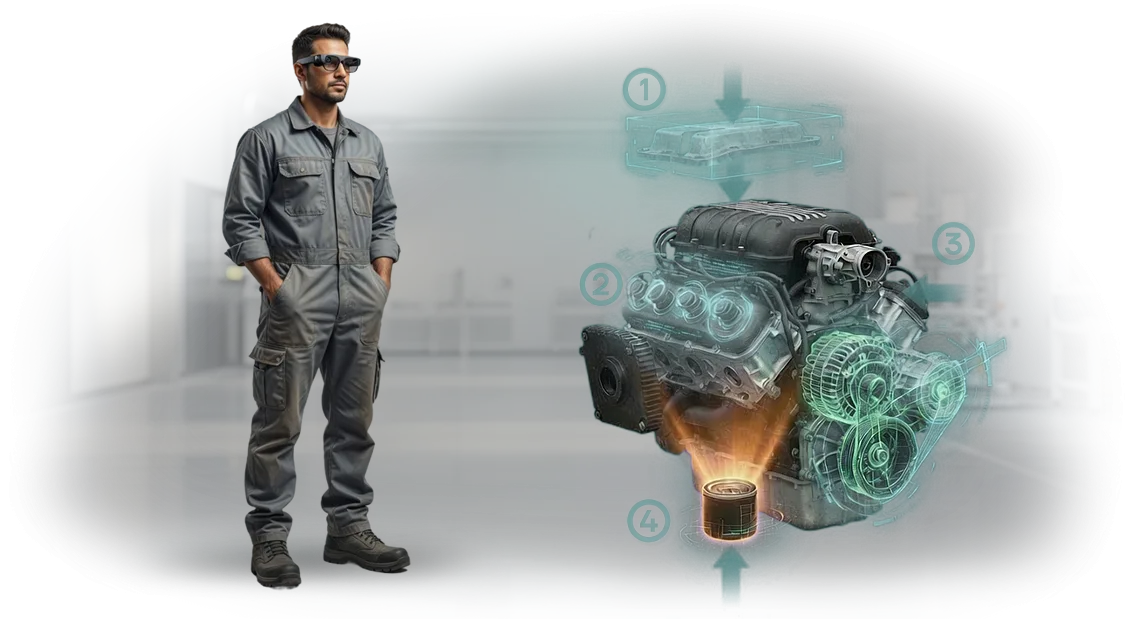
הפסדים ללא הרכבה משותפת בסיוע AR של מבנים משתלבים
הרכבה של מבנים משתלבים מורכבים ללא הוראות AR נותרת תהליך "עיוור": העובד שומר את השרטוטים בזיכרון, עובר בין שרטוטים לרכיבים בפועל, ומבזבז זמן על כל מעבר.
שגיאה ברצף החיבור אינה פער סובלנות—היא משמעותה עיבוד מחדש של הרכבה מוגמרת, רכישת רכיבים חדשים, ופספוס המועד. כל מקרה כזה מעלה את עלות הייצור ומעכב את השקת הציוד.
זמן השבתה מעצים את ההפסדים. כדי להבהיר את רצף ההתקנה, הצוות עוצר ומחפש את המנהל הראשי או את העמוד הנכון בתיעוד.
עשר דקות כאן, חצי שעה שם—בסוף המשמרת מצטברות שעה או שעתיים של זמן קו לא מנוצל, ובמשך חודש זה מסתכם בכמה משמרות עבודה אבודות לחלוטין.
במקביל, האיכות תלויה בניסיון של הרכבה הבודד: אותן הרכבות מבוצעות על ידי צוותים שונים במהירויות שונות ועם שיעורי פגמים שונים.
במונחים כספיים, זה מתורגם לעלות המחושבת לאחר ביקורת: עיבוד מחדש, שעות נוספות, סילוק חלקים פגומים, וקנסות על פספוס מועדי משלוח.
לכך מתווסף סיכון מוניטיני—חברה שמפספסת משלוחים מאבדת חוזים עתידיים כבר בשלב המשא ומתן.
אנו סוגרים את ההפסדים הללו עם הרכבה משותפת בסיוע AR—הרכבה משותפת בסיוע AR של מבנים משתלבים: העובדים רואים את הצעד הבא ישירות על ההרכבה, ללא שרטוטים, ללא המתנה, וללא ניחושים. שגיאות הרכבה נמנעות לפני שהן הופכות לפגמים, וזמן ההשבתה מצטמצם לדקות.
מה מקבלים מהרכבה משותפת בסיוע AR: עלויות נמוכות יותר ופחות פגמים
הרכבה משותפת בסיוע AR מורידה עלויות בכל שלב ייצור: במקום שרטוטים מפוזרים והסברים מילוליים, הצוות עובד עם הנחיה דיגיטלית מדויקת.
מהירות וחיסכון
מבנים משתלבים מורכבים בדרך כלל מאטים כאשר מצטרפים הרכבות ומתאמים פעולות. הנחיות AR מראות מה לחבר ואיפה, ישירות בשדה הראייה של העובד, כך שהצוות לא עושה עבודה מחדש בגלל רצף שגוי. פעולות טיפוסיות אורכות 20–30% פחות זמן—מה שאומר השלמת הזמנות מהירה יותר ומחזור גבוה יותר.
בקרת איכות
המערכת מתעדת כל שלב הרכבה ומשווה אותו למודל הייחוס. המפקח רואה סטייה מיד, במקום ללמוד על בעיה בסוף המשמרת. זה מאפשר התערבות בזמן שהתיקון עדיין זול ומפחית את שיעור הפגמים.
הכשרת עובדים
מתחיל עם הנחיות AR יכול לבצע הרכבה מורכבת בימים הראשונים, במקום לאחר חודשים של התבוננות בעמיתים מנוסים. מומחים מנוסים מבלים פחות זמן בחונכות ויותר במשימות בפועל. זה מאזן את האיכות של כל צוות ומפחית תלות במומחים נישתיים.
היתרונות הללו מסתכמים בתוצאה מדידה: הרכבה מהירה יותר, פחות פגמים, בקרה שקופה, והכשרה ללא השבתה. הרכבה משותפת בסיוע AR למבנים משתלבים מחזירה את עצמה בהזמנה הגדולה הראשונה.
פורמטים של יישום הרכבת AR לצרכים שלך
כל קו ייצור מרכיב ציוד אחרת: חלקם זקוקים לחבילת הוראות AR מלאה במפתח, אחרים זקוקים לתוספת למערכת הדרכה קיימת, וחלקם רק צריכים לאמת את ההשפעה על קטע בודד.
אנו לא כופים תבנית אחת שמתאימה לכולם; במקום זאת אנו בוחרים פורמט יישום על סמך היקף הארגון, סוג הציוד ורמת המיומנות של הצוות.
הטבלה שלהלן מציגה את אפשרויות שיתוף הפעולה העיקריות ואת התועלת שהלקוח מקבל מכל אחת.
| פורמט | למי | מה זה נותן ללקוח |
|---|---|---|
| הוראת AR במפתח | ייצורים שצריכים כלי מוכן בזמן צפוי | מחליף תקנות נייר, מפחית שגיאות הרכבה, ומאיץ את המעבר של קו מוצר חדש לייצור סדרתי |
| שילוב AR עם מערכות ייחוס | ארגונים עם מאגר ידע או מערכת הנהלת חשבונות קיימת | העובד מקבל הנחיות ישירות על ציוד אמיתי; הידע הקיים ממשיך לעבוד בתוך המערכת החדשה |
| מודול הדרכה למתחילים | מחלקות הדרכה שמקליטות עשרות עובדים מדי שנה | מרכיבים חדשים רואים את רצף הפעולות הנכון ואת ההקשר הכולל של הרכבה משותפת; זמן החונכות מצטמצם פי כמה |
| פיילוט על קטע בודד | חברות שרוצות לבדוק את ההשפעה על שולחן עבודה אחד | השוואה ברורה של "לפני ואחרי" על סמך מדדים אמיתיים—בסיס אמין להחלטה על הרחבה |
לאחר הפיילוט, רוב הלקוחות מרחיבים את הוראות AR לקווים סמוכים, ולכן אנו בונים מקום לצמיחה מההתחלה: אתה מתחיל עם קטע אחד, וכמה חודשים לאחר מכן אתה מחבר את שאר הסדנאות.
ניתן לשלב פורמטים: הדרכת מתחילים במודול אחד ומערכת הוראות מלאה לעובדים נוכחיים באחר.
שלח לנו תיאור של הקטע והציוד שלך—אנו נציע את פורמט היישום שמספק תוצאה מדידה הכי מהר: פחות שגיאות הרכבה, קליטה מהירה יותר של עובדים חדשים, ושקיפות גדולה יותר של תהליכי הייצור.
איך הפרויקט מתנהל: 6 שלבים מהבריף לתמיכה
אנו מבינים שמועדים צפויים ותהליך עבודה שקוף חשובים לך. לכן בנינו תהליך שבו אתה לוקח חלק בכל שלב ותמיד יודע מה קורה עם הפרויקט.
התוצאה היא הוראת AR שהעובדים שלך יתחילו להשתמש בה מיד לאחר ההשקה, ללא הסתגלות ממושכת.
-
בריף וטבילה במשימה. אנו לומדים את הציוד שלך, ההוראות הנוכחיות ותהליכי העבודה האמיתיים של העובדים. אתה מקבל הבנה מדויקת של היקף העבודה והערכת זמן ראשונית—ללא הפתעות בלתי צפויות באמצע הפרויקט.
-
תוכנית ותקציב. אנו מגדירים אילו פעולות ייכללו בהוראת AR, כמה זמן ייקח הפיתוח, ואילו אבני דרך למסירה מתוכננות. אתה מאשר את התקציב ואת לוח הזמנים, ואנו ממשיכים לפי ההסכמות הללו.
-
אב טיפוס ואישור. אנו מראים דוגמה עובדת ישירות על הציוד שלך. אתה רואה כיצד עובד יתקשר עם ההוראה ומבצע שינויים לפני שאנו מתחילים להרחיב את הפתרון.
-
פיתוח וגרסאות ביניים. אנו יוצרים ויזואליזציות מפורטות, הנחיות ברורות, והגיון הנחיות לכל שלב. אתה מקבל גרסאות ביניים ובודק שהכל תואם לפעולות האמיתיות שלך.
-
השקה והדרכה. אנו מתקינים את הפתרון על הציוד ומנהלים מפגש הדרכה קצר למנהלים ולצוותים. יחד איתך, אנו בודקים אותו במהלך משמרת—כדי לוודא שהכל נוח ואינו מאט את התהליך.
-
תמיכה ופיתוח. אנו נשארים בקשר לאחר המסירה. אנו מעדכנים הוראות כאשר הציוד משתנה, מוסיפים הרכבות חדשות, ועונים על שאלות העובדים. אתה לא נשאר לבד עם הטכנולוגיה.
מה כלול במסירה: חבילת ייצור מלאה
אתה מקבל לא ארכיון מופשט אלא חבילה עובדת שמשתלבת בייצור בשבועות הראשונים. כל מה שטכנולוגים, מפעילים ומנהלים צריכים מרוכז במערכת אחת, ללא עבודה נוספת מותאמת אישית.
- מודולי AR לפעולות מפתח — הנחיות שלב אחר שלב מוצגות ישירות על הציוד: המפעיל רואה היכן להתקין את ההרכבה, באיזה סדר לחבר חלקים, והיכן למצוא את הכלי הנדרש.
- גיליונות תהליך דיגיטליים במקום נייר — הוראות מתעדכנות תוך כמה דקות ומסונכרנות בכל הסדנאות. גרסה חדשה מגיעה מיד לכל עובד, ללא סיכון של עותקים מיושנים.
- מתודולוגיה לשילוב בתהליכים קיימים — תקנות מוכנות שמסבירות כיצד להטמיע הרכבת AR בגיליונות התהליך ובפקודות העבודה הנוכחיות מבלי לעצור את הקו או לשנות תקני תפוקה.
- הדרכה מעשית לצוות — מפגשים לטכנולוגים ומפעילים עם תרגול על פעולות אמיתיות. תוך יומיים, אנשים עובדים באופן עצמאי ללא מפקח בקרבת מקום.
- תמיכת השקה — המהנדסים שלנו זמינים בתקופת ההפעלה הראשונית ועוזרים להתאים תוכן לדגמים ספציפיים של הציוד שלך.
- לוח ניהול תוכן — הצוות שלך מוסיף הרכבות חדשות, עורך את הרצף, ומשנה הנחיות מבלי לפנות למפתחים.
- הרחבה ללא עיבוד מחדש — כאשר אתה משיק מוצרים חדשים, אתה פשוט מרחיב את מערך המודולים במקום לשכתב את כל המערכת.
זו לא רכישה חד פעמית במפתח אלא כלי שממשיך לעבוד עבור כל מחזור הרכבה עוקב. החבילה כולה—מהסקיצות הראשוניות ועד להכשרת עובדים—מועברת במועדים מוסכמים ומגובה בתמיכת אחריות.
מקרה בוחן: יישום הרכבה משותפת בסיוע AR של מבנים משתלבים
במפעל מתכת PromTechMontazh, הרכבות גדולות עם עשרות רכיבים משתלבים הורכבו.
הצוות בדק שרטוטים וחיכה למהנדס בכל חיבור שנוי במחלוקת—הרכבה טיפוסית ארכה עד שלושה ימים, ובקרת האיכות חשפה שגיאות שאילצו לבצע את ההתקנה מחדש.
יישמנו הרכבה משותפת בסיוע AR: העובדים רואים הוראות שלב אחר שלב ישירות על החלקים, והמהנדס מסמן סטיות מרחוק ומאשר התקנה נכונה בזמן אמת. זה ביטל את זמן ההשבתה הקשור להמתנה ואת רוב השגיאות האנושיות.
נתוני היישום
קטע הפיילוט הראה תוצאות בתוך החודש הראשון: זמן ההרכבה של יחידה טיפוסית ירד מ-18 ל-11 שעות—40% מהר יותר—ומספר שגיאות ההתקנה ירד פי ארבעה.
עלויות העיבוד מחדש וההשבתה ירדו, עם חיסכון מדויק שחושב לאחר ביקורת, והפרויקט החזיר את עצמו תוך 4 חודשים.
מנהל הייצור העריך את ההשפעה והרחיב את הפיילוט לשלוש סדנאות. הכנו הוראות AR לעוד 40 הרכבות והכשרנו טכנולוגים פנימיים לעדכן אותן ללא עזרתנו.
שישה חודשים לאחר מכן, הלקוח חזר עם פרויקט חדש—עכשיו הרכבת AR מושקת במפעל שכן בקונצרן, ואנו ממשיכים לתמוך בתהליך ולחדד את ההוראות למוצרים חדשים.
שאלות נפוצות: ערבויות, בטיחות והחזר השקעה
כל לקוח שואל את אותן שאלות לפני ההשקה: מה קורה אם המערכת נכשלת, כמה מהר ההשקעה תחזיר את עצמה, ומי ילמד את העובדים לעבוד עם המערכת. אנו עונים בכנות ומניסיון—ללא אותיות קטנות וללא כוכביות.
מה קורה אם המערכת נכשלת על הקו?
ההרכבה לא תיעצר. אנו מתכננים הוראות AR כך שכשל במשקפיים לא חוסם את העבודה: העובד יכול תמיד לחזור להוראת נייר או מסך, והמערכת מתחדשת מאותו שלב לאחר אתחול.
הפלטפורמה עצמה רצה על ארכיטקטורת שרת עם יתירות—זה מונע אובדן נתונים והשבתה. אם נדרש, אנו מוסיפים ניטור מסביב לשעון: המהנדסים שלנו רואים כשל לפני שמנהל הרצפה אפילו יודע עליו.
כמה מהר פיתוח הוראת AR יחזיר את עצמו?
בתרחיש טיפוסי, ההחזר אורך 4–8 חודשים. החישוב פשוט: הרכבה מהירה ב-20–30%, פחות שגיאות ועיבודים, וזמן קליטה קצר יותר לעובדים חדשים.
בפרויקט אחד עם יחידות גדולות, הלקוח חסך סכום שנתי משמעותי—שחושב לאחר ביקורת—על פגמים והשבתה בלבד.
אנו מחשבים את ההחזר המדויק בשלב הבריף: אנו מנתחים זמן פעולה, תדירות שגיאות ועלות עיבוד מחדש. אתה מקבל את המספרים לפני שהפיתוח מתחיל, לא לאחר ההשקה.
מי מאמן עובדים לעבוד עם AR?
אנו מאמנים את המדריכים הפנימיים שלך, והם מעבירים את הידע למפעילים מבלי להפריע לייצור. בדרך כלל יום אחד של תיאוריה ויומיים של תרגול על קטע הפיילוט מספיקים.
אנו מתכננים את כל ההוראות להיות פשוטות ככל האפשר: "שים את המשקפיים, הסתכל על החלק, עקוב אחר ההנחיות." עובדים עם 20+ שנות ניסיון לומדים את המערכת תוך משמרת אחת. אין צורך במיומנויות מיוחדות.
כמה בטוח השימוש ב-AR בייצור?
המשקפיים לא חוסמים את הראייה—אלמנטים חשובים של הממשק מופיעים בשדה הראייה ההיקפי, בעוד החלק עצמו נשאר מול העיניים. זה בטוח יותר מאשר להסתכל על טאבלט או שרטוט נייר: המפעיל לא מוסח מהתהליך.
אנו גם מתחשבים בארגונומיה: משקל המכשיר, חיבור לראש, והיכולת לעבוד עם כפפות. לפני ההשקה, אנו עורכים משמרת ניסיון באתר שלך—העובדים עצמם מאשרים שהמערכת נוחה ושום דבר לא מונע מהם לבצע פעולות.
אם עדיין יש לך ספקות—שלח לנו תיאור של ההרכבה או הקטע שלך. המהנדס שלנו ינתח אותו תוך יומיים ויראה בדיוק היכן AR יחסוך זמן ויפחית שגיאות. זה ללא התחייבות.קבל ייעוץ והערכת פרויקט
שגיאות בהרכבת מבני מתכת מורכבים מובילות להשבתה, עיבוד מחדש וסיכונים לעובדים. הרכבה משותפת בסיוע AR פותרת את הבעיה הזו עוד לפני שהקו מתחיל: כל מפעיל רואה הוראות שלב אחר שלב ישירות על החלקים ופועל בסנכרון עם הצוות.
הגיע הזמן לראות איזו תוצאה זה יכול להביא לפעולה הספציפית שלך. השאר בקשה, ואנו ננתח את התהליך שלך, נמליץ על פורמט הוראת AR האופטימלי, ונכין תוכנית יישום עם תקציב מדויק.
הנה מה שתקבל בתגובה לבקשתך:
- ניתוח של תהליך ההרכבה הנוכחי שלך והשגיאות הטיפוסיות שמאטות את הייצור;
- בחירת פורמט הוראת AR המתאים לסוג הציוד ולגודל הצוות שלך;
- תוכנית השקת פיילוט לקטע אחד—כדי שתוכל להעריך את ההשפעה ללא השקעה גדולה;
- חישוב עלות היישום ותקופת ההחזר;
- דוגמאות לפריסות בתעשייה שלך עם מדדים ברורים;
- המלצות לשילוב עם התיעוד הפנימי שלך והכשרת עובדים.
ללא "נחזור אליך בעוד כמה שבועות" מעורפל. אנו נשלח פרטים: תרחיש שימוש אמיתי, היקף עבודה, תקציב והשפעה צפויה. אתה יכול לקבל החלטה תוך יום עסקים אחד.
כתוב לנו בכל מסנג'ר נוח או השאר את פרטי הקשר שלך—אנו נחזור אליך תוך 15 דקות בשעות העבודה, נבהיר את הפרטים ונכין הערכה. הצעד הראשון אורך כמה דקות, והחיסכון הוא חודשים של פעילות יציבה ללא השבתה.
איך לבחור את פורמט הרכבת AR המתאים למשימה שלך?
אין פורמט אוניברסלי להרכבת AR—וזה לטובתך. הבחירה הנכונה חוסכת תקציב ומאיצה את ההשקה; בחירה שגויה מובילה לכלי שאינו בשימוש. ראשית הגדר את המטרה: להפחית את זמן ההרכבה, להוריד את מספר השגיאות, או להכשיר עובדים מהר יותר. הפורמט ועלותו תלויים בכך.
כל תרחיש דורש פתרון משלו. אם מספר מפעילים מרכיבים יחידה, אתה צריך הנחיה משותפת הנראית לכל המשתתפים—היא מבטלת שאלות חוזרות ושומרת על קצב משותף.
לפעולה מורכבת ורב-שלבית, בחר ליווי שלב אחר שלב עם אימות של כל פעולה: זה מונע פגמים. למעבר מהיר, סמן פשוט בתחנת העבודה מספיק.
שקול את המאפיינים של רצפת הייצור—אבק, כפפות, רטט—ואת תדירות עדכוני המודל: עריכת הוראה צריכה לקחת דקות, לא שבועות.
טעות נפוצה היא להזמין "פונקציונליות מקסימלית" ולשלם יותר מדי עבור תכונות שאינן בשימוש. אנו עושים ההפך: ראשית אנו מבצעים ביקורת על התהליך שלך, ואז בוחרים את הפורמט המינימלי המספיק.
הוא פותר בדיוק את המשימה שלך, מתאים לתקציב, ומתרחב ככל שהנפחים גדלים מבלי להחליף את הפלטפורמה. גישה זו כבר עזרה לארגונים להפחית פגמים ולהאיץ הרכבה מבלי לנפח את ההערכה.
תאר את פעולת ההרכבה ואת תנאי העבודה שלך—אנו נציע פורמט מתאים, ואם אין צורך ב-AR, נאמר זאת בכנות. זה חוסך זמן וכסף בשלב הבחירה, לא לאחר הרכישה.