

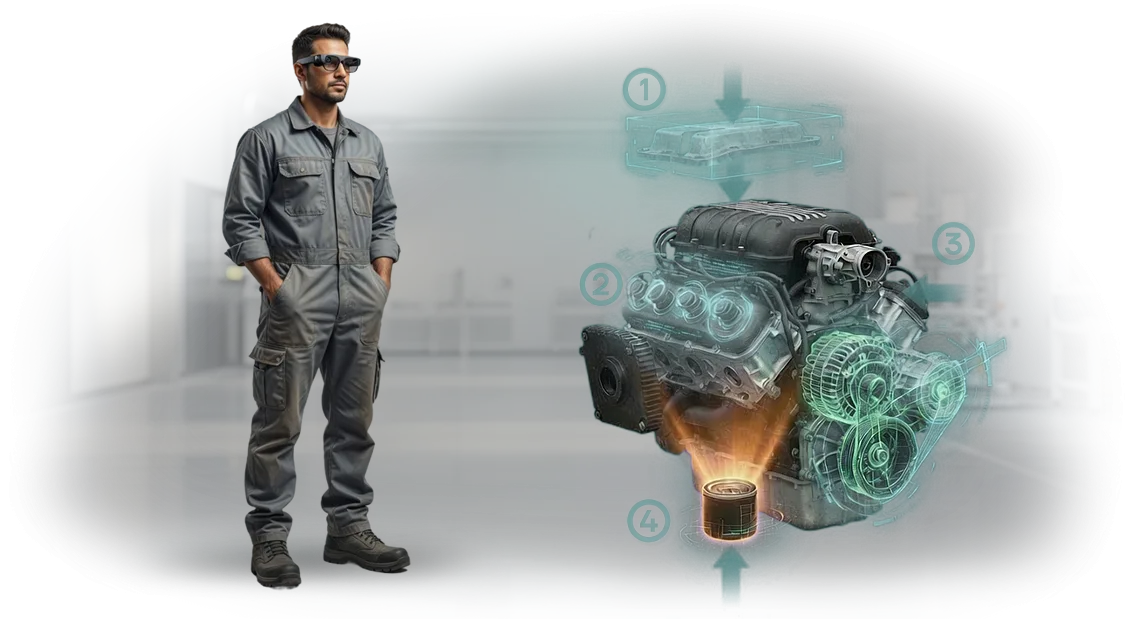
AR לבדיקות: מדוע שיטות ישנות מנקזות את הייצור שלכם
פגם שהוחמץ על פס הייצור אינו רק חלק מקולקל — הוא חשבון עבור השבתה והחלפת ציוד. מפקח שבודק את מצב הרכיבים לפי הוראות נייר מבזבז זמן בחיפוש אחר הפריט הנכון ומסתמך על זיכרון תחת לחץ.
התוצאה תמיד זהה: טעויות חוזרות, ובקרת האיכות הופכת להגרלה שבה מחיר הכרטיס הוא עלות עצירת הייצור.
הגורם האנושי הוא מערכתי. העובד אינו אשם כאשר דיאגרמת הרכיבים בהוראות אינה תואמת לפריסה בפועל של החלקים בגרסת מכונה חדשה, בעוד רצפת הייצור רועשת, חשוכה, ובקושי נותר זמן לפני סוף המשמרת.
בתנאים כאלה, AR לבדיקות אינו מציע קסם — הוא מציע בהירות: העובד רואה סמנים והנחיות ישירות על הציוד ואינו משקיע מאמץ קוגניטיבי בתרגום שרטוט למציאות.
זו אינה בקרה לשם בקרה, אלא כלי שמפחית את כמות הפסולת והפגמים שהוחמצו.
וזה ממשיך הלאה. ביקורות וקנסות על אי-עמידה בתקנים פוגעים בתקציב שכבר יועד לפיתוח.
כשמבקר מגיע ורואה שהבדיקות מתקיימות על סמך תום לב והדפסות ישנות, האמון בייצור מתאדה, ומחיר תיקון הממצאים מוכפל.
השבתות שנגרמות מטעויות מפקחים אינן השערה — הן סעיף הוצאה חוזר שניתן לחשב מכל עצירה.
אנחנו מטפלים בכך. אנו מפתחים הוראות AR שמשתלבות בתהליך הבדיקה הקיים והופכות אותו לשקוף וצפוי.
המפעיל מקבל הנחיות חזותיות ברורות, המפקח מקבל נתונים על התקדמות הבדיקה, והעסק מקבל פחות פסולת ואמון מצד מבקרים.
המטרה שלנו היא שהייצור ירוץ ללא הפתעות, ושהמהנדסים שלכם יקדישו את זמנם לשיפורים במקום להתמודד עם השלכות.
יתרונות מרכזיים: בדיקות מהירות יותר, פחות טעויות, אמון גבוה יותר
הטמעת הוראות AR משנה את ההיגיון עצמו של בדיקת ציוד תעשייתי: במקום תקנות נייר עבות, העובד רואה הנחיות ישירות על הציוד.
זה מזרז בדיקות, מפחית את מספר ההשמטות, והופך את התוצאות לשקופות עבור מבקרים ולקוחות.
בדיקות מהירות יותר — יותר ציוד למשמרת
עם הוראות AR, המפקח אינו צריך להסיח את דעתו בחיפוש אחר הסעיף הנכון במסמך או להתקשר לעמית לצורך הבהרה. המערכת מדגישה את הרכיבים שצריך לבדוק ומתעדת את התוצאה באמצעות רשימת בדיקה בנגיעה אחת.
הזמן לפריט נחתך כמעט בחצי, כך שהצוות מצליח לשרת יותר ציוד במשמרת. עבור העסק, זה חיסכון ישיר בעלויות עבודה ויכולת להגדיל תפוקה ללא הרחבת כוח האדם.
דיוק הבדיקה גדל כי AR לא יאפשר למפקח "לשכוח" לבדוק רכיב חשוב. כל שלב מאושר ישירות בתהליך, והנתונים נכנסים אוטומטית לדוח. זה מפחית את הסיכון לפגמים שהוחמצו, שהופכים מאוחר יותר לתקלות יקרות והשבתות.
אמון גבוה יותר וביקורות קלות יותר
כשכל בדיקה מתועדת אוטומטית עם חותמת זמן והתייחסות לציוד, ההכנה לביקורת מפסיקה להיות תרגיל כיבוי שריפות. הדוח נוצר מעצמו, עם היסטוריית בדיקות מלאה.
מבקרים כבר לא צריכים פתקי נייר — הם רואים נתונים אובייקטיביים שעומדים בדרישות ISO 9001. זה מחזק את אמון הרגולטורים ומגדיל את הסיכויים לעבור ביקורת בהצלחה.
מערכת בקרה שקופה היא גם בעלת ערך עבור הלקוחות שלכם. הם רואים שהציוד נבדק לפי תקן אחיד, לא "בעין". זה מגביר את אמונם באיכות העבודה, מאריך חוזים ומוביל להזמנות חוזרות. בסופו של דבר, הוראות AR עובדות לא רק על המהירות, אלא גם על המוניטין של החברה.
פורמטי AR לבדיקות: ממשימות חד-פעמיות לבקרה רציפה
כיצד לבחור פורמט למשימה שלכם
בדיקת ציוד אינה תמיד אותו דבר: לפעמים צריך בדיקה חד-פעמית לאחר התקנה, לפעמים בקרת מצב יומית, ולפעמים הכשרה מהירה של עובד חדש לתהליך.
פורמט ה-AR לבדיקות חייב להתאים לתדירות, למספר נקודות הבדיקה ולמי שישתמש בו — אחרת, אתם משלמים יותר מדי על פונקציונליות מיותרת או לא משיגים את התוצאה הדרושה.
| פורמט AR | למי | מה הוא מספק לעסק |
|---|---|---|
| בדיקה חד-פעמית | שירות טכני, קבלנים בקבלת ציוד | בדיקה מהירה מבוססת רשימת בדיקה ולכידת פגמים ללא ציוד נייח יקר. התוצאה היא דוח עם תמונות והערות ביום הבדיקה |
| בקרה רציפה | מהנדס ראשי, מחלקת תחזוקה | סיבובים סדירים עם רישום אוטומטי של מדדים. חריגות נראות מיד — פחות השבתות ופחות תיקונים לא מתוכננים |
| הכשרת עובדים והסמכה | מנהלי רצפת ייצור, חונכים | עובדים חדשים לומדים מסלולי בדיקה וכללי בטיחות מהר יותר. טעויות יורדות, והביטחון בעבודה גדל |
מה לבחור למצב שלכם
אם המשימה משתנה, בדיקה חד-פעמית גדלה בקלות לבקרה רציפה או מתווספת לה מודול הכשרה.
אנחנו לא מוכרים מוצר "ארוז"; אנו בוחרים את פורמט ה-AR על סמך תדירות הבדיקות, מספר נקודות הבדיקה והכשרת הצוות.
אתם מקבלים בדיוק את הפונקציונליות שמחזירה את ההשקעה בתהליך שלכם, ומרחיבים אותה לפי הצורך מבלי להחליף את כל המערכת.
גישה זו מאפשרת לכם להתחיל עם קו או סדנה אחת ולהתרחב רק כשהתוצאה הוכיחה את ערכה בפועל. ואנחנו נשארים בקשר בכל שלב — מהבריף הראשון ועד להטמעה ולתמיכה.
שלבי הטמעה: מבריף לתמיכה ופיתוח
הטמעת הוראות AR היא פרויקט ברור עם שלבים מוגדרים היטב, לא "קופסה שחורה". אנו בונים מערכת שאתם שולטים בה מהבריף הראשון ועד לשימוש יומיומי. שקיפות בכל שלב מסירה סיכונים ומאפשרת לבצע תיקונים מבלי לפספס מועדים. להלן שבעת השלבים שאנו עוברים יחד.
שבעה שלבים ל-AR עובד
- בריף וסקירת משימה — אנו מזהים היכן עובדים עושים טעויות ומה לוקח הכי הרבה זמן להסביר.
- תוכנית פתרון והערכת עלות — אתם רואים את הפורמט, לוח הזמנים והעלות לפני תחילת העבודה.
- אישור תרחיש — אנו מראים לכם את הטקסטים וההנחיות החזותיות, ואתם מבצעים עריכות.
- פיתוח תוכן — אנו יוצרים מודלים תלת-ממדיים, אנימציות וממשק, ואתם מקבלים גרסאות ביניים.
- השקה ניסיונית — אנו בודקים על פעולות אמיתיות ומתאימים על סמך המשוב שלכם.
- הכשרת עובדים — תדריך קצר: כיצד להשתמש במערכת ומה לעשות במקרה של תקלות.
- תמיכה ופיתוח — אנו מעדכנים הוראות, מוסיפים תרחישים ומנטרים יציבות.
מדוע זה עובד
הגישה מוכחת בפרויקטים עבור יצרנים בגדלים שונים. לדוגמה, עבור TechnoProm, הטמענו הוראות AR על פס ההרכבה: זמן הכשרת עובדים חדשים נחתך בשני שלישים, ומספר הטעויות ירד בשליש.
התוצאה אינה טכנולוגיה לשם טכנולוגיה, אלא כלי עבודה שהעובדים שלכם משתמשים בו מדי יום. אתם מקבלים שלבים שקופים, לוחות זמנים ברורים, הכשרת צוות ותמיכה ארוכת טווח לאחר ההשקה.
מה כלול במסירה: תיעוד, הכשרה ותמיכה
אנו מוסרים את הפרויקט ככלי מוכן לעבודה, לא כסט של קבצים. המסירה כוללת כל מה שדרוש להשקה ולשימוש יומיומי: מהוראות ה-AR עצמן ועד להכשרת צוות ותמיכה באחריות.
מה בחבילה
אתם מקבלים סט מלא — מההוראות עצמן ועד להרשאות גישה לעובדים. כל הרכיבים ארוזים במערכת אחת ומוכנים לשימוש מיד לאחר ההתקנה.
- הוראות AR לכל הפעולות המרכזיות, מותאמות לציוד שלכם.
- תיעוד: תרחישי שימוש, תקנות ומדריך מנהל.
- מודול ניהול תוכן — המהנדסים שלכם יוכלו לעדכן הוראות ללא מעורבות מפתחים.
- גישה למערכת עם תפקידים והרשאות שהוגדרו לקטגוריות עובדים שונות.
- דוחות שימוש: אילו פעולות נצפות ביותר, היכן עולות שאלות.
הכשרה ותמיכה
לא מספיק להטמיע כלי — הצוות צריך להשתמש בו. לכן אנו מקיימים הכשרות ונשארים איתכם לאחר ההשקה.
- הכשרה: מפגשים מעשיים למהנדסים ומנהלים, עם חומרים מוקלטים לעובדים חדשים.
- אחריות: עדכונים ותיקונים חינם להוראות במהלך תקופת האחריות.
- תמיכה: ערוץ תקשורת ייעודי, אנו מגיבים תוך יום עסקים אחד.
- פיתוח: לפי בקשה, אנו מוסיפים הוראות חדשות ומתאימים קיימות לשינויים בציוד.
מקרה בוחן: כיצד קיצרנו את זמן הבדיקה במפעל ב-40%
הלקוח הוא VoltMax, מפעל לייצור ציוד הידראולי המייצר יותר מ-50,000 יחידות בשנה. בדיקת כל אצווה לעמידה בתקנות הטכניות ארכה בממוצע 2.5 שעות לקו.
במקביל, עד 9% מהמוצרים הלכו לפסולת עקב הגורם האנושי בשלב הבדיקה החזותית.
פיתחנו הוראת AR שמציבה נקודות בדיקה ישירות על הציוד התפעולי. המפקח רואה דרך טאבלט אילו רכיבים לבדוק, באיזה סדר, ואילו סובלנויות נחשבות תקינות. כל התוצאות מתועדות אוטומטית — ללא רשימות נייר וללא הזנת נתונים ידנית.
ההטמעה ארכה שלושה שבועות: סקרנו את התהליכים, הגדרנו תרחישים לשלושה סוגי מוצרים, והכשרנו 12 מפקחים. הם למדו לעבוד עם ההוראה ביום אחד — הממשק אינו דורש כישורים מיוחדים.
תוצאות ההטמעה
חודש לאחר ההשקה, זמן הבדיקה לקו הופחת ב-40% — מ-2.5 שעות ל-1.5 שעות. שיעור הפסולת ירד ב-25%, ומספר הפגמים שהוחמצו הפסיק להיות תלוי במשמרת ובעייפות המפקח. הפתרון החזיר את ההשקעה בפחות משישה חודשים הודות לפחות עבודות חוזרות ותביעות אחריות.
הלקוח השתכנע כל כך ביעילות, עד שהרחיב את הפרויקט לשלוש סדנאות נוספות והזמין תמיכה שוטפת להוראות האינטראקטיביות.
זה מאשר: בדיקות AR אינן ניסוי, אלא כלי עבודה שמחזיר את ההשקעה במהירות.
כיצד לבחור פורמט למשימה שלכם ולא לשלם יותר מדי?
קריטריון הבחירה המרכזי אינו הטכנולוגיה, אלא סדירות המשימה. אם אתם צריכים בדיקת ציוד חד-פעמית — למשל, בעת השקת רכיב חדש או במהלך ביקורת לאחר תקרית — תרחיש AR קצר לפעולה ספציפית מספיק.
זו השקה מהירה ותקציב צפוי: אתם משלמים עבור סשן אחד ומקבלים את התוצאה כאן ועכשיו.
אם נדרשת בקרה רציפה — סיבובים יומיים, בדיקות מתוזמנות, הכשרת עובדים חדשים — אז תרחישים חד-פעמיים הופכים להוצאות אינסופיות.
במקרה זה, יעיל יותר להטמיע מערכת שצוברת הוראות, מעדכנת אותן ומנחה את המפעיל לשלב הבא. היא עולה יותר בהתחלה, אבל זולה פי כמה לכל בדיקה במהלך שנה.
כדי להימנע מתשלום יתר, ענו על שלוש שאלות מראש: באיזו תדירות מתבצעות בדיקות, כמה סוגי ציוד צריך לכסות, ומי ישתמש בהוראות.
אם התשובות הן "מספר פעמים בשנה", "5-10 רכיבים" ו"מהנדס אחד" — תרחיש חד-פעמי מספיק.
אם התשובות הן "יומי", "יותר מ-50 פריטים" ו"צוותי משמרות מתחלפים" — הבחירה הנכונה היא פתרון קבוע.
תקצבו כך: חשבו את העלות של השבתה אחת או טעות אחת במהלך בדיקה. אם היא גבוהה ממחיר פיתוח ה-AR, ההטמעה מחזירה את עצמה מהמניעה הראשונה של תקלה.
כדי לייעל עלויות, אנו תמיד מציעים פיילוט: אתם מתחילים עם פעולה אחת, מעריכים את האפקט על מספרים אמיתיים, ורק אז מרחיבים לכל צי הציוד. כך, אתם משלמים רק על מה שמביא ערך מדיד.
תשובות לשאלות נפוצות: אחריות, אבטחה ותאימות
לפני השקעה בהוראות AR לבדיקות, צריך להיות בטוחים: הפתרון לא ייכשל, הנתונים יישארו בתוך הארגון, והטכנולוגיה תואמת לציוד הנוכחי.
אלה אינן פורמליות, אלא הבסיס שעליו בנויים עבודה רגועה של עובדים ותוצאה צפויה.
אנו שומעים את השאלות האלה מכל מנהל ייצור — ואנו מכניסים את התשובות לחוזה. להלן, אנו מתייחסים לחששות המרכזיים.
מה קורה אם הוראת ה-AR מתקלקלת?
האחריות מוגדרת בחוזה: במקרה של תקלה, מהנדסים מתחברים מרחוק ומשחזרים את הפעולה תוך יום עסקים אחד.
בנוסף, אנו מספקים גישת גיבוי להוראות ממחשב או טאבלט — הייצור לא ייעצר גם אם הרשת אינה זמינה.
כיצד מובטחת אבטחת המידע?
המידע נשאר בתוך הרשת שלכם. רק עובדים מורשים מקבלים גישה, ובתנאים מחמירים, אנו פורסים גרסה מקומית ללא ענן או שירותים חיצוניים.
האם זה ישתלב עם המערכות שלנו?
כן, באמצעות ממשקים סטנדרטיים. לפני התחלה, אנו מבצעים סקירה ומראים תוכנית אינטגרציה: תדעו בדיוק אילו מערכות יושפעו וכיצד תהליך הבדיקה ישתנה.
אם עדיין יש לכם שאלות, אנו מזמינים אתכם להדגמה: נראה כיצד הוראות AR עובדות על הציוד שלכם ונדון באחריות ואבטחה לפרויקט שלכם.הזמינו פרויקט פיילוט וקבלו תוצאות תוך 4 שבועות בלבד
פרויקט פיילוט הוא הדרך הקצרה ביותר לתוצאה ללא סיכון והשקעות גדולות. אנו לוקחים אזור בדיקה או תחזוקה אמיתי אחד, מכינים הוראת AR, ומיישמים אותה תוך 4 שבועות.
אתם מקבלים אפקט מדיד והבנה כיצד הטכנולוגיה עובדת ספציפית על הייצור שלכם.
השאירו פנייה — לאחר שיחה קצרה, נבצע סקירת תהליכים, נכין חישוב עלויות, ונציע תוכנית פיילוט. הנה כל מה שתקבלו:
- סקירת פעולות נוכחיות והנקודות שבהן הוראות AR מחזירות את ההשקעה הכי מהר.
- חישוב עלויות להיקף שלכם: הערכה קבועה ללא תוספות נסתרות.
- תוכנית פרויקט פיילוט: תרחישים, ציוד, לוחות זמנים ותחומי אחריות.
- אב-טיפוס של הוראת AR לפעולה אמיתית — בדקו אותו על העובדים שלכם.
- מתודולוגיית הערכת תוצאות: זמן השלמה, מספר טעויות, מהירות למידה.
- תמיכה במהלך הפיילוט ותוכנית הרחבה לאזורים אחרים.
התחילו בפנייה — נכין את החישוב המקדים והסקירה תוך שני ימי עסקים. אז תחליטו: להיכנס לפיילוט או לדון תחילה בפרטים עם המהנדסים שלנו. בכל מקרה, תקבלו הבנה ברורה של האפקט של בדיקות AR על הציוד שלכם.