

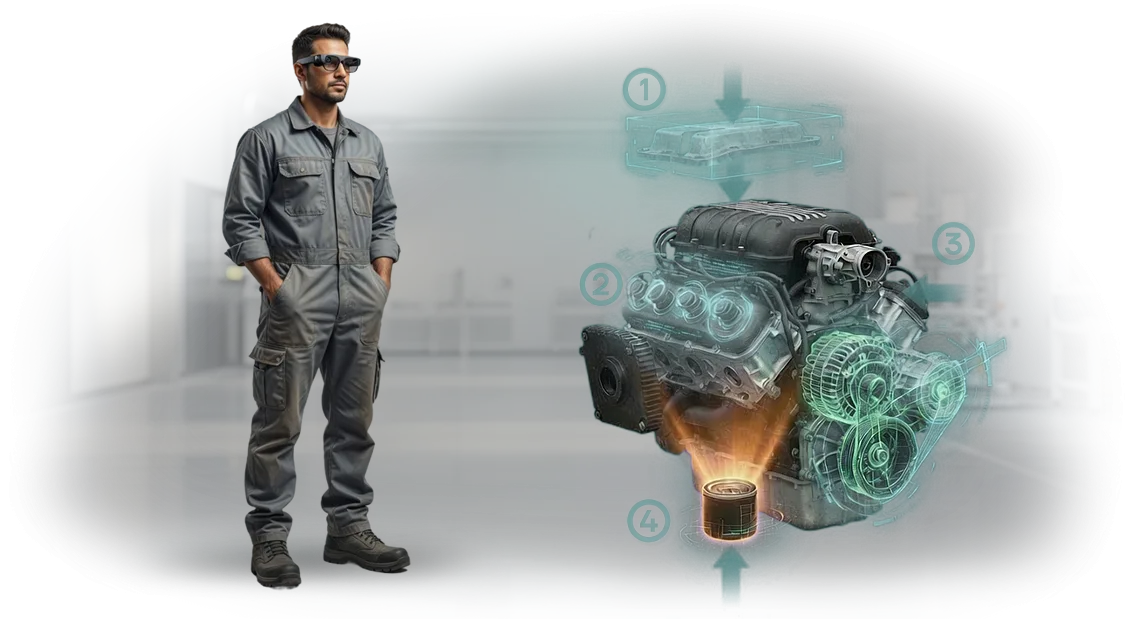
מדריך SOP מבוסס AR: כיצד להפחית את זמן השבתת הציוד
זמן השבתת ציוד עולה יותר מתיקון ישיר: כל עצירת קו פירושה משלוחים שהוחמצו, עובדים בטלים, וסיכון לקנסות חוזיים.
לפי איגוד המהנדסים התעשייתיים, עד 70% מהעצירות הלא מתוכננות נגרמות מהפרות של נהלי תחזוקה, ולא מבלאי רכיבים.
הבעיה אינה כישורי הטכנאים אלא זמינות ההוראות ברגע התיקון. נהלי תחזוקה על נייר יושבים במשרד, עובד מנוסה בחופשה, ועובד חדש פועל על פי ניחושים — כך שהתיקון הופך לניסוי וטעייה.
מדריך SOP מבוסס AR סוגר את הפער הזה: הוראות שלב-אחר-שלב מופיעות ישירות מול עיני המומחה, מקושרות לרכיב הספציפי של המכונה.
הוספת הערות לנהלי תחזוקה במציאות רבודה מקצרת את זמן איתור התקלות ב-30–40% ומבטלת דילוג על פעולות קריטיות.
העובד רואה את רצף הפעולות, הפרמטרים המקובלים ואזהרות סיכון — תיקון ציוד תעשייתי הופך לצפוי, ואיכות העבודה כבר אינה תלויה בוותק.
יתרון נוסף הוא הכשרת עובדים. עובד חדש מבצע החלפת רכיב ראשונה תחת הנחיה דיגיטלית ולא "לפי העין". זה מפחית שגיאות במהלך ההקמה ומאיץ הגעה לפרודוקטיביות סטנדרטית.
אנו מגדירים תרחישי AR סביב נהלי התחזוקה והציוד שלכם: אנו הופכים הוראות קיימות למסלולים אינטראקטיביים, תומכים בהשקה ומעדכנים תוכן כאשר הקו עובר מודרניזציה.
בסופו של דבר, אתם מקבלים תהליך תחזוקה מבוקר, פחות זמן השבתה, ומערכת שקופה לאימות עבודה שבוצעה.
מה אתם מקבלים מהטמעת הוראות AR
נהלים על נייר לא עובדים כשהציוד צריך לפעול ברגע זה. טכנאי הגדרה מדפדף במדריך רב-עמודים, מוסח ומבזבז זמן — וכל שעת השבתה היא עלות משמעותית.
הוראות AR פותרות זאת: העובד רואה הנחיה שלב-אחר-שלב ישירות על הציוד ומבצע פעולות ללא חיפוש העמוד הנכון.
יצרנים מובילים, כמו Siemens, כבר משתמשים במציאות רבודה כדי לתקנן פעולות. בהתבסס על ניסיוננו בהטמעת הוראות AR, אתם מקבלים ארבעה תוצאות מפתח:
יתרונות מרכזיים
- מהירות תגובה. תיקון ואבחון אורכים 30–40% פחות זמן — העובד רואה מיד מה לעשות ובאיזה כלי להשתמש. זמן ההשבתה מופחת.
- פחות שגיאות. הנחיות שלב-אחר-שלב ונקודות ביקורת מונעות דילוג על פעולות. הסיכון להרכבה שגויה יורד פי כמה.
- הכשרה מהירה. עובד חדש מגיע לרמה של טכנאי הגדרה מנוסה תוך ימים, לא חודשים.
- בקרת איכות תחזוקה מלאה. המערכת מאשרת כל פעולה. המנהל רואה את היסטוריית התחזוקה ותקן אחיד לכל הטכנאים.
הטמעת הוראות AR היא תהליך מבוקר: אנו מתאימים תוכן לציוד שלכם, מגדירים נקודות ביקורת ומכשירים צוות. התוצאה היא ביצועי תיקון צפויים ואיכות שאינה תלויה ב"גורם האנושי".
פורמטי הטמעת SOP: בחרו את האפשרות שלכם
כל יצרן מוכן לדיגיטציה בדרכו שלו: חלקם צריכים להכשיר עובדים חדשים במהירות, ואחרים רוצים להמיר את כל הנהלים ל-AR. אנו בוחרים פורמט הטמעה לפי המשימה וההיקף שלכם — ללא הוצאות מיותרות על פונקציונליות שאינה נדרשת.
הטבלה מציגה שלוש אפשרויות טיפוסיות. הן נבדלות ברמת הפירוט, היקף הפעולות ולוחות הזמנים להשקה, אך בכל מקרה העובד מקבל הוראה שלב-אחר-שלב ברורה ישירות על הציוד.
הפורמט נבחר יחד עם הצוות שלכם: אנו לוקחים בחשבון את מורכבות הציוד, רמות המיומנות של הטכנאים ודרישות הבטיחות.
| פורמט | למי הוא מתאים | מה הלקוח מקבל |
|---|---|---|
| הכשרת AR קצרה | הכשרה מהירה, תחלופת עובדים גבוהה, פעולות פשוטות | זמן הכשרה מקוצר ל-2–3 ימים, פחות שגיאות למתחילים, הגעה מהירה לקצב עבודה |
| תקן AR מלא | ציוד קריטי, נהלים מחמירים, ביקורות ובדיקות | תקן תחזוקה אחיד, יכולת מעקב מלאה אחר פעולות, גורם אנושי מינימלי |
| פורמט היברידי | חברות עם רמות מיומנות משתנות של עובדים, תקופת מעבר | התאמה לעובדים מנוסים וחדשים, AR משולב עם הוראות נייר, השקה חלקה |
לא משנה איזו אפשרות תבחרו, אנו מתחילים בפיילוט על קטע אחד ומראים את האפקט במספרים: זמן לכל פעולה, מספר שגיאות, מהירות למידה. לאחר מכן, אנו מרחיבים את הפתרון לשאר המחלקות והאזורים.
הכשרת צוות מתרחשת ישירות על רצפת הייצור — ללא הפרעה לעבודה או שימוש בסימולטורים נוספים.
כיצד הפרויקט עובד: מבריף ועד תמיכה
בנינו את התהליך כך שתדעו מראש את לוחות הזמנים, התקציב ונקודות הבקרה. כל שלב מסתיים בתוצאה ברורה — מסמך מאושר — כך שהפרויקט לעולם לא הופך ל"קופסה שחורה": אתם רואים כיצד ההוראה נבנית ויכולים להשפיע לפני ההשקה.
- בריף וסקר. אנו לומדים את הציוד שלכם, נהלי התחזוקה ושגיאות העובדים האופייניות. אנו קובעים אילו פעולות צריכות לעבור ל-AR ראשון ומה האפקט שיושג: פחות זמן השבתה, הכשרה מהירה יותר, סיכון נמוך יותר לתקלות.
- תרחישים ואבות טיפוס. המהנדסים שלנו הופכים הוראות לתרחישי AR שלב-אחר-שלב: מה העובד רואה, אילו הנחיות הוא מקבל, כיצד הוא מאמת את התוצאה. אתם מקבלים אב טיפוס לאישור — לפני הפיתוח המלא.
- אישור תרחיש. יחד עם המומחים שלכם, אנו משכללים את הניסוח, רצף השלבים ונקודות הביקורת. כל עריכות התוכן נעשות כאן, כך שהגרסה הסופית לא תדרוש עבודה חוזרת.
- פיתוח והרכבה. אנו בונים את הוראות ה-AR עצמן: מודלים תלת-ממדיים, אנימציות, הנחיות טקסט וקול, ומערכת זיהוי אובייקטים. אתם מקבלים מוצר עובד שאינו דורש כישורים מיוחדים מהעובדים — טאבלט או סמארטפון סטנדרטי מספיקים.
- בדיקה באתר. אנו בודקים את ההוראות על ציוד אמיתי יחד עם העובדים שלכם. אנו מוודאים שהתרחישים ברורים ושהשלבים מבוצעים במהירות וללא שגיאות. אנו מכשירים צוות לעבודה עם AR.
- השקה ותמיכה. אנו פורסים את המערכת על המכשירים שלכם ומוסרים הרשאות ניהול. לאחר ההשקה, אנו נשארים בקשר: אנו מעדכנים תוכן כאשר נהלים משתנים ועוזרים להרחיב את ספריית ההוראות לרכיבים חדשים.
לוחות הזמנים תלויים במספר התרחישים ובמורכבות הציוד, אך אנו קובעים אותם בחוזה ועומדים בהם. אנו מתחילים בקטע פיילוט — אתם רואים תוצאות תוך 2–3 שבועות ומחליטים אם להרחיב.
מה כולל מסירת הפתרון לארגון שלכם
מה שחשוב ללקוח אינו מערך הטכנולוגיות אלא התוצאה: מפעילים לומדים נהלים מהר יותר ועושים פחות טעויות. לכן אנו מספקים פתרון מקיף ומפתח — מתהליכי ייצור ועד למכשיר הספציפי על רצפת המפעל.
כיצד ההטמעה עובדת
- סקר והגדרת משימה — אנו לומדים את הנהלים שלכם ובוחרים פעולות שבהן AR יניב אפקט מהיר.
- אב טיפוס על משימה אחת — אנו מראים כיצד ההוראה תיראה על הציוד שלכם.
- פיתוח מערך תרחישים מלא — אנו ממירים את כל הנהלים המרכזיים לפורמט אינטראקטיבי.
- אספקת ציוד והתקנה — אנו בוחרים משקפיים או טאבלטים לתנאי האתר שלכם.
- הכשרת מפעילים וטכנולוגים — אנו מקיימים סדנאות מעשיות ישירות על הרצפה.
- השקה ותמיכה — אנו תומכים בהשקה ומעדכנים הוראות ככל שעולים שינויים.
מה כלול בחבילה
- תרחישי AR מוכנים לציוד שלכם.
- הוראות אינטראקטיביות עם הנחיות שלב-אחר-שלב ורשימות בדיקה.
- חומרת AR (משקפיים או טאבלטים) עם תוכנה מותקנת מראש.
- כלים לניהול ועדכון תוכן ללא עצירת ייצור.
- הכשרה למפעילים ולצוות טכני.
- תמיכה טכנית לכל אורך חיי השירות.
בסופו של דבר, אתם מקבלים פתרון מפתח: מסקר ועד שימוש יומיומי. הכשרת עובדים חדשים מואצת, שגיאות פוחתות, ואיכות ובטיחות התחזוקה מגיעות לרמה חדשה.
מקרה בוחן: כיצד קיצרנו את זמן התיקון ב-30%
דמיינו קו ייצור שבו כל עצירה נושאת עלות משמעותית. זה בדיוק המצב שבו נמצא מפעל עם ציוד סיבובי: החלפת רכיב שנכשל ארכה עד שש שעות, והמומחה הדרוש היה מוזמן שבוע קדימה.
זמני השבתה הצטברו, הזמנות התעכבו, והידע חי רק בראשם של שלושה או ארבעה מהנדסים.
יישמנו הוראות AR ישירות בתחנות העבודה. מכונאי עם משקפי מציאות רבודה רואה אלגוריתם תיקון שלב-אחר-שלב המוצג על המכונה בפועל: רכיב מודגש, רצף פעולות, נקודות ביקורת.
תקן תחזוקה זה מבוסס AR (מדריך SOP מבוסס AR) מחליף נהלי נייר ומונע מצב שבו "כולם פרשו ואין מי שיבצע תיקונים".
תוצאות לאחר חודשיים: זמן התיקון המתוכנן ירד ב-30%, זמן ההשבתה הממוצע הלא מתוכנן ירד מ-5.5 ל-3.8 שעות, והכשרת עובדים חדשים הפכה למהירה פי שניים — עובד חדש שולט בפעולה הבסיסית במשמרת אחת תחת פיקוח חונך.
"בעבר, מכונאי חדש היה צריך שישה חודשים כדי לצבור ניסיון. עכשיו הוא מרכיב משקפי AR ועושה הכל נכון בפעם הראשונה, כמו עמית מנוסה," מציין המהנדס הראשי של המפעל.
יעילות הוראות ה-AR אושרה בהזמנה חוזרת: המפעל יישם תקנים לחמישה רכיבים קריטיים והחל להרחיב את הגישה לקווים אחרים.
אנו ממשיכים לתמוך במערכת — מעדכנים הוראות במהלך מודרניזציה של ציוד ופותרים שאלות במהירות. הלקוח כבר רואה את האפקט לא רק בשעות השבתה אלא גם בביטחון בצפיות הייצור.
כיצד לבחור את הפורמט הנכון למשימה שלכם?
בחירת פורמט הוראות AR אינה שאלה טכנולוגית אלא שאלה של התאמה למשימה שלכם. אין פתרון אוניברסלי: מה שאידיאלי לסדנה קטנה הוא מוגזם למפעל עם אלפי יחידות ציוד. לכן אנו מסתמכים על שלושה קריטריונים: היקף ההטמעה, מאפייני הציוד ורמת המיומנות של הצוות.
פורמטים קלים אופטימליים למפעלים קטנים ולמחלקות עם צי מוגבל של מכונות.
הם נפרסים במהירות, אינם דורשים הגדרה מחדש של תהליכים, ופותרים את נקודת הכאב המרכזית: העובד עוקב אחר הנחיות ישירות על הציוד מבלי להיות מוסח על ידי הוראות נייר. גישה זו מחזירה את ההשקעה כבר מהתיקונים הראשונים.
עבור ארגונים גדולים עם אתרים מרובים ותחלופת עובדים גבוהה, הפורמט חייב לכלול מערכת בקרה: מי סיים הכשרה, היכן מתרחשות שגיאות, אילו הוראות דורשות שכלול. ללא אנליטיקה, הטמעה בקנה מידה גדול היא צעצוע יקר.
בפרויקטים כאלה, אנו יוצרים תרחישים המתחשבים בתפקידי העובדים ובמאפייני הקו.
הגורם המכריע הוא מאפייני הציוד. אם הפעולות מורכבות או מסוכנות, ההוראה חייבת לבדוק כל שלב ולעצור את העובד על שגיאה קריטית. לפעולות פשוטות, הנחיות קצרות מספיקות כדי לא להעמיס על הקשב. עומק התרחיש תלוי בעלות השגיאה: ככל שהעלות גבוהה יותר, כך הפיקוט מפורט יותר.
אל תבחרו פורמט "לנצח": התחילו בקטע פיילוט, מדדו זמן פעולה, שיעורי שגיאות ומהירות הכשרה למתחילים, ואז הרחיבו את מה שעבד. פורמט שנבחר כראוי אינו משנה הרגלים — הוא משתלב בעבודה היומיומית ומניב תוצאות מדידות.
אנו נעזור לכם לבחור את הפורמט למשימה שלכם ונתמוך בפרויקט מפיילוט ועד פריסה מלאה.
שאלות נפוצות על הטמעת הוראות AR
הטמעת הוראות AR מעלה בדרך כלל את אותן שאלות: מחיר, מורכבות, תאימות ובטיחות. אנו עונים על חמש ההתנגדויות המרכזיות — בקצרה ולעניין.
כמה עולות הוראות AR? העלות מחושבת לאחר הסקר ותלויה במספר הרכיבים והפעולות — מרכיב בודד ועד צי שלם. אבל היא מחזירה את עצמה מהר יותר: פחות זמן השבתה, פחות פגמים ופחות זמן הכשרה. אנו מתחילים בקטע פיילוט כדי שתוכלו לראות את האפקט לפני הרחבה מלאה.
האם קשה ליישם? ההטמעה מתרחשת ללא עצירת ייצור: המהנדסים שלנו מכינים תוכן במקביל לפעילות המחלקה. כל מה שאנו צריכים מכם הוא טכנולוג אחד לכמה שעות בשבוע — את השאר אנו מטפלים.
האם AR יעבוד עם הציוד שלנו? אנו בונים הוראות לציוד שלכם, תוך שימוש בנהלים הקיימים שלכם. זה מתאים גם למכונות וגם למכונות מורכבות — הדרישה המרכזית היא שלרכיב יש נוהל תחזוקה.
האם בטוח להשתמש ב-AR על רצפת הייצור?
כן — בתנאי שמקפידים על כללי הבטיחות הסטנדרטיים של רצפת המפעל. העובד רואה הנחיות על טאבלט או במשקפיים מבלי להיות מוסח מהרכיב האמיתי.
כל שלב נבדק מול תקני הבטיחות התעסוקתית שלכם, ופרויקט פיילוט מאפשר לאשר בטיחות לפני פריסה מלאה.
הזמינו פיתוח הוראות AR עוד היום
כל שבוע של השבתת ציוד הוא הכנסה אבודה. הטמעת הוראות AR מפחיתה זמן הכשרה ושיעורי שגיאות, אך יצרנים רבים דוחים את הצעד הזה, מתוך מחשבה שהפרויקט מורכב ויקר.
במציאות, התהליך אורך פחות זמן ממה שנדמה כשיש צוות שמטפל בכל המחזור — מלימוד הציוד ועד השקת הוראות על רצפת המפעל.
אנו עובדים במפתח, כך שלא תצטרכו להיכנס לפרטים טכניים: אתם מקבלים פתרון מוכן, לא דוח על עבודה שבוצעה.
השאירו פנייה — ותוך אותו יום תקבלו:
- בריף — שאלון קצר ללכידה מדויקת של המשימות והמאפיינים של הייצור שלכם.
- הצעה מסחרית — עם עלות שקופה ולוחות זמנים המותאמים להיקף שלכם.
- דוגמת הדגמה — קטע מהוראת AR כדי שתוכלו לראות כיצד זה עובד עבור מפעיל.
- תוכנית הטמעה — שלבים, תחומי אחריות ונקודות בקרה, ללא הפתעות.
- ייעוץ מהנדס — בנושאי אינטגרציה, תאימות והכשרת צוות.
- אחריות תמיכה — לאחר ההשקה אנו נשארים בקשר ומעדכנים הוראות כאשר נהלים משתנים.
אנו משתמשים בציוד AR מקצועי ובפתרונות תוכנה מוכחים — כך שהוראות פועלות באופן אמין גם תחת רעידות ותאורה חלשה. זה ללא התחייבות. אתם מקבלים פרטים: מספרים, לוחות זמנים ודוגמאות — לא הבטחות כלליות.
אם אתם רוצים להפחית זמן השבתה, להאיץ הכשרת עובדים חדשים ולהוריד שיעורי שגיאות, התחילו בצעד פשוט. השאירו בקשת ייעוץ להזמנת הוראות AR במפתח. אנו נכין פתרון למשימה שלכם ונראה כמה מהר ההשקעה שלכם ב-AR מחזירה את עצמה.