

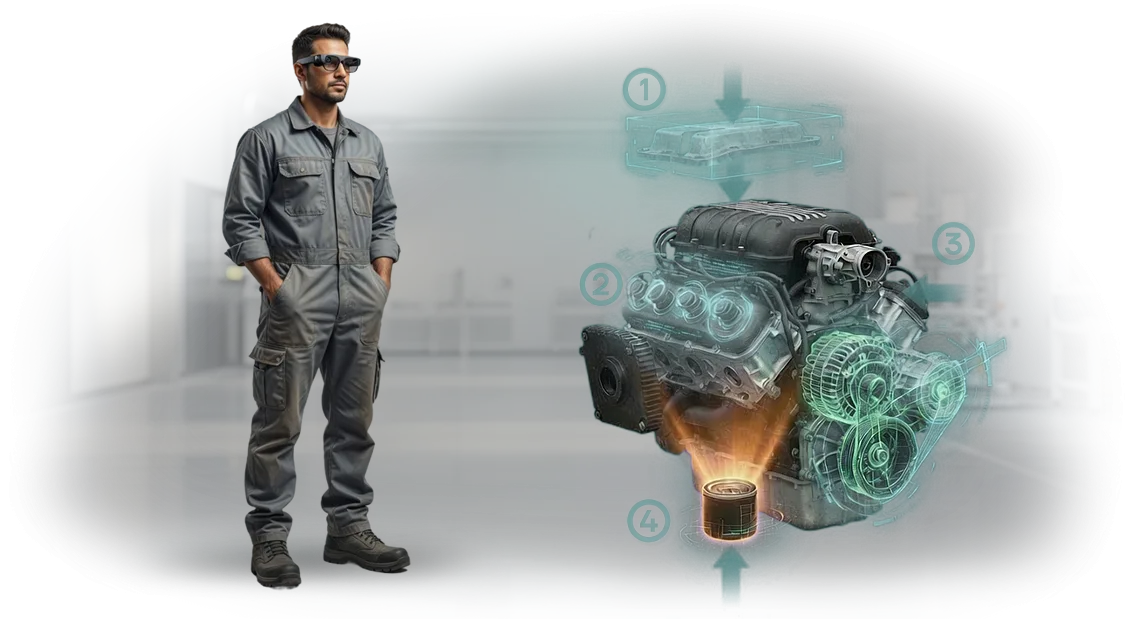
דוגמה להוראת עבודה בייצור: המחיר של טעויות וזמני השבתה
בייצור, המחיר של טעות נמדד לא בשניות, אלא בעצירות של קו הייצור, אצוות פגומות וסיכונים לאנשים.
כשעובד עובד לפי הוראה טקסטואלית רב-עמודית, הוא מבזבז זמן בקריאה, בבדיקה מול שרטוטים ובניסיון להבין מה הכותב התכוון. כל פעולה שלא הובנה כראוי משמעותה השבתת ציוד או סיכון לאדם.
הפסד סמוי נוסף הוא זמן ההדרכה. עובד חדש מבלה שבועות בלימוד התהליך, בעוד שמנטור מנוסה ממש "חי" ליד המכונה שלו, מוסח מהמשימות שלו עצמו. בייצור אמיתי, ההדרכה נמתחת על פני חודשים, ותחלופת עובדים מוחקת את כל ההשקעות. כתוצאה מכך, הפסדי ייצור הופכים לסעיף הוצאה קבוע שנמחק כבלתי נמנע.
אנחנו פותרים את הבעיה הזו על ידי הפיכת פעולות מורכבות לתרחישי מציאות רבודה ברורים, שלב אחר שלב. העובד רואה הנחיות ישירות על הציוד: מה לקחת, איפה ללחוץ, באיזה רצף.
זוהי דוגמה מודרנית להוראת עבודה — דוגמה להוראת עבודה בייצור שאנחנו מתאימים לאתר שלכם ולנהלים שלכם.
גישה זו מקצרת את הזמן עד להגעה למיומנות מלאה, מפחיתה טעויות של עובדים ומשחררת מנטורים. הכי חשוב, היא עוזרת לשמור על בטיחות במקום העבודה ומפחיתה את זמני ההשבתה של הציוד: העובד מוצא את הפעולה הנכונה מהר יותר ומבקש עזרה פחות.
תהליך הייצור הופך ליציב יותר, והמנהל כבר לא צריך לנחש היכן יתרחש הכשל הבא.
כיצד הוראות AR מפחיתות זמני השבתה ומשפרות את הבטיחות
כל דקה של השבתת ציוד היא הכנסה אבודה. הוראות נייר והערות ממנטור מאטות את ההתקנה, וטעויות מפעיל מובילות לפגמים ולפציעות. הוראות AR פותרות את הבעיות האלה: העובד רואה הנחיות ישירות על הציוד בדיוק כשהן נחוצות. זה משפיע ישירות על עמידה בתוכנית הייצור ועל עלות המוצר.
התקנה ותיקון — בלי תנועות מיותרות
הטכנאי כבר לא צריך לדפדף בין נהלים רב-עמודיים. דיאגרמה שלב אחר שלב מופיעה בשדה הראייה שלו, ומראה רכיבים וכוחות מותרים — ישירות על המכונה הפועלת.
זה מקצר את זמן כל פעולה ב-30–40% ומפחית את חלקם של פגמים שנגרמים מרצף פעולות שגוי.
אנחנו משתמשים בפלטפורמת ה-AR התעשייתית המוכחת Vuforia, כך שהוראות עובדות באופן אמין אפילו על ציוד מורכב.
הכשרה מהירה לעובדים חדשים
עובדים חדשים מתאמנים ישירות על רצפת הייצור, בלי לעזוב את המשמרת שלהם. הוראות AR מחליפות מנטור אישי: המערכת עצמה מדגישה את השלבים הבאים ומזהירה מפני אזורים מסוכנים.
כתוצאה מכך, עובד חדש מגיע לרמה של עובד מנוסה תוך ימים במקום שבועות, והסיכון לטעויות ממוזער.
הבטיחות במקום העבודה משתפרת באמצעות בקרת פעולות: המפעיל לא מדלג על שלבים קריטיים ולא יכול לגשת למנגנונים מסוכנים ללא ציוד מגן. כל זה יחד אומר פחות זמני השבתה, איכות יציבה ושקט נפשי לגבי הצוות שלכם.
פורמטי פיתוח: משרטוט ועד הרכבה ב-AR
בחירת פורמט הוראה היא לא שאלה של "נייר או טאבלט" — זו שאלה של המהירות והבטיחות של עבודת העובדים שלכם.
בקו אחד, מפת טקסט מספיקה; באחר, המפעיל צריך לראות בדיוק היכן להפעיל כלי בלי להסיט את המבט מהציוד.
אנחנו מפתחים הוראות בשלושה פורמטים — מהקלאסי ועד האינטראקטיבי המלא. להלן השוואה קצרה: איזה פורמט מתאים למי וכיצד הוא משפיע על מהירות ודיוק. זו לא תיאוריה — כבר יישמנו כל אחת מהאפשרויות במפעלי מכונות ומכשור.
| פורמט | למי | מה הוא נותן ללקוח |
|---|---|---|
| טקסט וגרפיקה | לנהלים, ביקורות, הדרכות | הכנה מהירה, עדכונים קלים, עובד על כל מכשיר |
| מדריכים אינטראקטיביים | למצבים לא סטנדרטיים ופעולות מורכבות | הנחיות שלב אחר שלב, פחות טעויות, הכשרה מהירה יותר |
| הוראות AR | לתחזוקה ותיקון באתר | העובד רואה הנחיות ישירות על הציוד, ידיים פנויות, הכשרה מהירה פי 1.5–2 |
אנחנו לא קושרים את עצמנו לפורמט יחיד: עבור כל פעולה ספציפית, אנחנו בוחרים את האפשרות החסכונית ביותר שמספקת את האפקט הנדרש.
לדוגמה, הוראת עבודה בייצור — אם הפעולה נדירה והסיכון לטעות גבוה, הרכבת AR מחזירה את ההשקעה באירוע בודד.
הוראות AR מועילות במיוחד במקומות שבהם קשה לעצור את הייצור וצריך להכשיר עובדים חדשים במהירות.
ואם אתם מתלבטים, הביאו שרטוט או סרטון של הפעולה — המהנדסים שלנו יכינו דוגמה בשני פורמטים ויראו אותה על הציוד שלכם. תראו את ההבדל בזמן ובדיוק, לא במצגת.
כיצד מתנהל פרויקט: מבריף ועד השקה
אנחנו מבנים את העבודה כך שתראו את התוצאה בכל שלב ותוכלו להשפיע עליה ללא אישורים נוספים או עיכובים. מונה לכם מנהל פרויקט — הוא אוסף דרישות, שולט בלוחות זמנים ועונה על שאלות בכל נקודה בתהליך.
להלן מסלול פרויקט טיפוסי שמכסה הכל מהרעיון הראשון ועד למערכת הוראות עובדת.
-
בריף והבנה של המשימה. בהתחלה, אנחנו לומדים את תהליך הייצור שלכם: אילו פעולות קריטיות, היכן טעויות מתרחשות לרוב, ומי ישתמש בהוראה. אתם מקבלים תוכנית עבודה והערכת עלות לפני תחילת הפיתוח.
-
אישור מפרט טכני. אנחנו קובעים תרחישי שימוש, פורמטים וגבולות אחריות. המפרט הופך למסמך שלפיו אתם מקבלים את התוצאה — בלי "הפתעות" או עבודות חוזרות נסתרות אחרי ההשקה.
-
אב טיפוס ואישור תרחיש. אנחנו מראים הוראת דוגמה על אחד הרכיבים או הפעולות שלכם. אתם רואים את ההיגיון, הטקסטים והעיצוב, מאשרים את הדוגמה, ורק אז אנחנו משכפלים אותה על שאר החומרים.
-
פיתוח ההוראות. המהנדסים שלנו מכינים תוכן לכל הפעולות שנבחרו, ומתאמים נקודות מחלוקת עם מהנדסי התהליך או המנטורים שלכם. הוראות מוגמרות עוברות בדיקה פנימית לדיוק ושלמות.
-
הטמעה והגדרה. אנחנו עוזרים לטעון את ההוראות למערכת שלכם, להתאים אותן למכשירי העבודה ולבדוק אותן בתנאים אמיתיים. במידת הצורך, אנחנו מאמנים עובדים לשימוש בפורמט החדש בלי להפריע לייצור.
-
השקה ותמיכה. אחרי ההשקה, אנחנו תומכים במערכת לזמן מה, אוספים משוב ממפעילים ומבצעים התאמות במהירות. אחרי זה, לפי בקשתכם, אנחנו שומרים על התיעוד מעודכן כך שההוראות לא מתיישנות.
משך הפרויקט הממוצע הוא משבועיים עד חודשיים, תלוי במספר הפעולות. בכל שלב, אתם מבינים מה קורה ומתי התוצאה תהיה מוכנה, וכל השינויים מתועדים במסמך משותף — בלי לאבד משמעות במעבר בין גורמים.
מה כלול במסירה: חבילה של 7 מסמכים
אספנו את כל מה שצריך כדי להשיק הוראות AR: מהבנת התהליכים הנוכחיים ועד חומרים מוכנים למפעילים. החבילה כוללת שבעה מסמכים, כל אחד מכסה משימה משלו — אתם לא מחפשים חלקים חסרים; אתם מקבלים מערכת עובדת מיד.
כל המסמכים מחוברים זה לזה ומבוססים על תהליכי ייצור אמיתיים. זו הסיבה שעובדים שולטים בפעולות מהר יותר וההטמעה אורכת פחות זמן.
הנה בדיוק מה שאתם מקבלים:
- דוח אנליטי ורשימת עבודות — תמונה מלאה של הפעולות שכדאי להמיר לפורמט AR, עם סדרי עדיפויות לפי השפעה.
- הוראות טקסט — מדריכים ברורים שלב אחר שלב לכל תהליך, מתאימים להדפסה ולשימוש בתחנות עבודה.
- סרטונים — פירוט חזותי של פעולות להדרכה ולסקירה ללא נוכחות מדריך.
- תרחישי AR — הנחיות מציאות רבודה שלב אחר שלב שמפחיתות טעויות בקרב עובדים חדשים.
- נהלי עדכון — התהליך לביצוע שינויים בהוראות במהלך שדרוגי ציוד, כך שהחומרים לא מתיישנים.
- חומרי הדרכה למדריכים — תוכניות מוכנות והנחיות להכנת צוות במהירות.
- דוח סופי עם המלצות — תוצאות הטמעה, מדדים ותוכניות להרחבה עתידית.
מקרה בוחן: איך הפחתנו טעויות התקנה ב-60%
יצרן ציוד לעיבוד מתכת, MetallProm, פנה אלינו עם בעיה טיפוסית: טכנאי התקנה התבלבלו ברצף החלפות המכונות, ופגמים הגיעו ל-8% מתפוקת המשמרת.
משלוחים שהוחמצו ועבודות חוזרות עלו למפעל סכום ניכר, והכשרת מומחה חדש ארכה עד שלושה שבועות.
הצענו להחליף נהלי נייר בהוראות AR שלב אחר שלב שמוקרנות ישירות על הציוד.
המפעיל רואה רכיבים מודגשים, רצף פעולות נכון ונקודות בקרה ישירות בשדה הראייה שלו — בלי צורך לדפדף במסמכים או לזכור תהליך מורכב.
במהלך חודשיים של פרויקט הפיילוט, מספר טעויות ההתקנה ירד ב-60%, הפגמים ירדו מ-8% ל-2%, והכשרת עובדים חדשים קוצרה משלושה שבועות לשלושה ימים.
החיסכון מהפחתת הפגמים כיסה את עלות הפרויקט כבר בשלב הפיילוט, והקווים התחילו לעבוד מהר יותר באופן ניכר.
ההטמעה התבצעה בלי לעצור את הייצור: המהנדסים שלנו דיגיטציה של פעולות מפתח באתר הלקוח והתאימו את ההוראות לזרימת העבודה בפועל.
העובדים נזקקו רק להדרכה קצרה אחת — כל השאר אינטואיטיבי, והטכנולוגיה עצמה לא דורשת שינוי של תהליכים.
המפעל העריך את התוצאה המדידה והזמין קו ציוד שני — הוראות AR הפכו לחלק מתקן העבודה שלהם.
עבורנו, זה המדד המרכזי: הלקוח חוזר כי דוגמת הוראת העבודה עבדה בסדנה אמיתית, לא רק במצגת.
איך לבחור את הפורמט הנכון למשימה שלכם?
בחירת פורמט צריכה להתחיל לא בטכנולוגיה אלא בשתי שאלות: עד כמה הפעולה מורכבת, ועד כמה העובד שמבצע אותה מוכן?
לפעולות פשוטות ושגרתיות, הוראות טקסט או תמונה מספיקות — כאן, מציאות רבודה לא תספק תועלת משמעותית. אבל אם הפעולה היא רב-שלבית, דורשת דיוק או משפיעה על בטיחות, הוראת AR מפחיתה את מספר הטעויות ואת זמן ההכשרה.
כשמעריכים מורכבות, שימו לב למספר השלבים, לסבירות הטעות ולעלות של טעות כזו לייצור.
קחו בחשבון גם תחלופת עובדים: במפעלים שבהם עובדים מתחלפים לעתים קרובות, הנחיות AR מאפשרות לעובד חדש לעבוד כמעט מיד, בלי לחכות שמנטור ישחזר את התהליך בראשו.
אותן הוראות עוזרות לעובדים מנוסים לפעול באופן עקבי, במיוחד במשמרות לילה ובעומסי עבודה גבוהים.
הקריטריונים ישתנו לפי ענף. בבניית מכונות ותיקון ציוד, מציאות רבודה חשובה לטיפול ברכיבים שבהם קל לבלבל את הרצף.
בקווי הרכבה, AR עוזרת לשלוט באיכות, ובייצור מסוכן, היא מזכירה לעובדים את דרישות הבטיחות ישירות באזור העבודה. אם המשימה פשוטה יותר, כמו קבלת סחורה במחסן, הוראת עבודה סטנדרטית עם תצלומים מספיקה.
כדי להימנע מתשלום יתר על פונקציונליות מיותרת, אנחנו קודם כל מנתחים את הפעולה שלכם ובוחרים את הפורמט הנכון. באתר פיילוט, אנחנו מדגימים את התוצאה על עובדים אמיתיים, מודדים זמן ביצוע ומספר טעויות, ורק אז מרחיבים את הפתרון.
ייעוץ כזה אורך יום עד יומיים ועוזר לכם לקבל החלטה על סמך מספרים, לא הנחות.
שאלות נפוצות: מאיפה להתחיל ומה אנחנו מבטיחים
נתחיל בנקודה המרכזית: אתם לא צריכים להבין בטכנולוגיה. שלחו לנו הוראה קיימת או סרטון תהליך — המהנדסים שלנו יבינו את הפרטים בעצמם ויציעו פורמט נוח לעובדים שלכם.
אנחנו עונים על שאלות לפני חתימת החוזה, כך שאתם מבינים מראש את לוח הזמנים, העלות והיקף העבודה.
להלן תשובות לשאלות שמנהלי ייצור שואלים לרוב.
כמה זמן ייקח הפיתוח?
לוח זמנים טיפוסי להוראה הראשונה הוא שבועיים עד ארבעה שבועות. זה תלוי במספר השלבים ובמורכבות הציוד. אנחנו קובעים את לוח הזמנים בחוזה ומסכימים על לוח זמנים שלבי: כל שבוע אתם רואים תוצאת ביניים.
כמה זה עולה?
אנחנו מחשבים את העלות למשימה הספציפית שלכם: מספר פעולות, פורמט (טלפון, טאבלט, משקפי AR) והצורך באינטגרציה עם התיעוד שלכם. ברוב המקרים, עלות הפרויקט מחושבת אחרי ביקורת של היקף העבודה.
אחרי הבריף, אנחנו נותנים לכם את המספר המדויק ונועלים אותו — הוא לא משתנה במהלך התהליך.
איך אתם משתלבים עם הוראות קיימות?
אנחנו לא שוברים את התהליכים הקיימים שלכם. הוראת ה-AR משלימה מדריכי נייר ומערכות אלקטרוניות: העובד מכוון את המצלמה לציוד או סורק קוד QR — ורואה הנחיה שלב אחר שלב. הנהלים שלכם נשארים הבסיס; אנחנו עובדים איתם.
אילו ערבויות אתם נותנים?
אנחנו מבטיחים השקה זהירה: אנחנו מתחילים בפיילוט על קו אחד, מאמנים את המומחים שלכם ומבצעים התאמות לפי תוצאות הבדיקות. אם הוראה לא עוברת את הביקורת, אנחנו משפרים אותה על חשבוננו. אחרי ההשקה, אנחנו תומכים ומעדכנים תוכן כשהציוד משתנה.
מוכנים לקבל הוראת עבודה? שלחו פנייה
אל תבזבזו זמן על אישורים ארוכים ופרטים טכניים. שלחו פנייה — נייעץ לכם בנוגע למשימה ונתן לכם תחושה של לוח הזמנים והתקציב.
תלמדו איך הוראת AR תשתלב בייצור שלכם ומה היא תספק בחודש הראשון: הכשרה מהירה יותר, פחות טעויות, שליטה פשוטה יותר.
אנחנו יודעים לנוע במהירות ממילים למעשים. אחרי השיחה הראשונה, נכין הערכת פרויקט ראשונית, ובתוך שני ימי עסקים נשלח הצעה מסחרית ותוכנית הטמעה — עם שלבים ברורים, עלות וגורמים אחראיים. בלי עמלות נסתרות ובלי המתנות ארוכות.
כך תהיה בנויה העבודה:
- פנייה — אתם שולחים בקשה, ואנחנו יוצרים קשר תוך יום עסקים אחד.
- ייעוץ — אנחנו מבהירים את הפרטים ובוחרים את פורמט ההוראה האופטימלי לציוד שלכם.
- הערכת פרויקט — אנחנו מחשבים מאמץ, לוחות זמנים ועלות, תוך התחשבות במאפייני הייצור שלכם וברמת המיומנות של העובדים.
- הצעה מסחרית — אתם מקבלים מסמך שקוף עם מחיר קבוע.
- תוכנית הטמעה — מפת דרכים מפורטת: שלבים, תאריכים, גורמים אחראיים, תוצאות צפויות.
- הטמעה והשקה — אנחנו פורסים את ההוראה המוגמרת, מאמנים עובדים ותומכים בהם אחרי ההשקה.
- תמיכה — אנחנו מתאימים את ההוראה כשהנהלים או הציוד משתנים.
אתם מקבלים הוראה מוגמרת ועובדת, לא הבטחות מופשטות. העובדים יוכלו להשתמש בה מיד אחרי ההשקה — בלי הכשרה ארוכה או עבודות חוזרות. שלחו פנייה, ותוך יומיים תדעו בדיוק איך זה עובד עבור הפרויקט שלכם.